
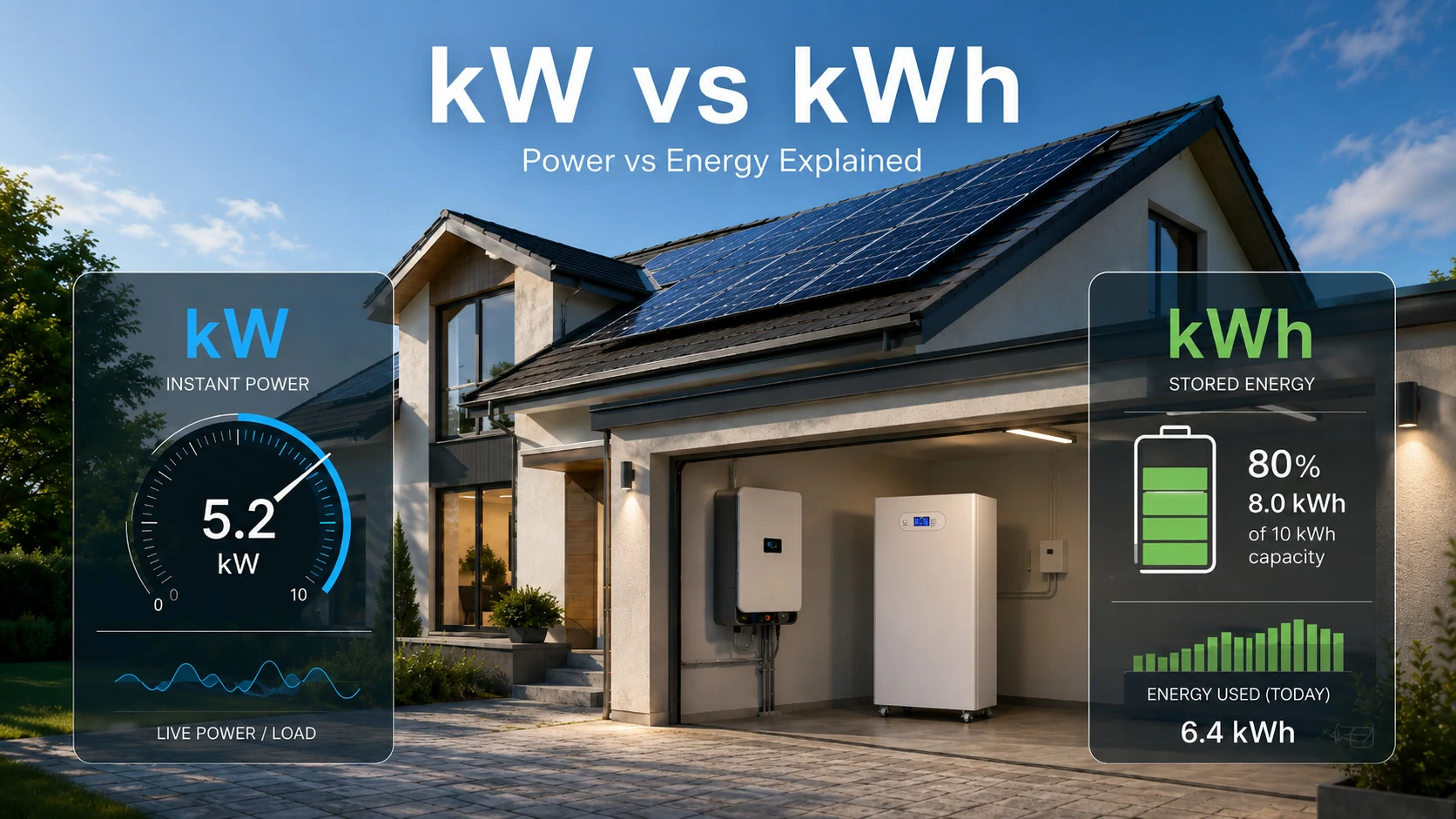
If you are comparing solar panels, home batteries, inverters or electricity bills, you will see two terms again and again: kW and kWh.
They look almost the same, but they do very different jobs.
kW tells you how much power is being used, produced or delivered at one moment. kWh tells you how much energy is used, produced or stored over time.
That difference sounds small, but it matters when you are sizing a solar system, choosing a battery, checking an electricity bill or planning backup power for a home or business.
A 10 kW solar system is not the same thing as a 10 kWh battery. A 5 kW inverter is not the same thing as 5 kWh of stored energy. And a home that uses 20 kWh per day does not necessarily need a 20 kW solar system.
This guide explains kW vs kWh in a practical way, using real home energy, solar battery and EV charging examples.
Quick Answer: kW vs kWh
| Term | Full Name | What It Measures | Simple Meaning | Common Use |
|---|---|---|---|---|
| kW | Kilowatt | Power | How fast electricity is used or produced right now | Solar system size, inverter output, appliance power, EV charger rating |
| kWh | Kilowatt-hour | Energy | How much electricity is used or stored over time | Electricity bills, battery capacity, solar generation, daily energy use |
A simple formula connects them:
kWh = kW × hours
For example:
| Example | Calculation | Energy Used |
|---|---|---|
| 1 kW heater running for 1 hour | 1 kW × 1 hour | 1 kWh |
| 2 kW air conditioner running for 3 hours | 2 kW × 3 hours | 6 kWh |
| 5 kW solar system producing strongly for 4 hours | 5 kW × 4 hours | 20 kWh |
| 7 kW EV charger running for 5 hours | 7 kW × 5 hours | 35 kWh |
A similar basic example: a 100-watt light bulb running for 10 hours uses 1,000 watt-hours, which equals 1 kWh.
An Easy Way to Remember It
Think about water.
kW is like the flow rate from a tap.
It shows how fast energy is moving at a specific moment.
kWh is like the total water collected in a tank.
It shows how much energy has accumulated over time.
A large tap can fill a tank quickly. That is high kW.
A large tank can hold more water. That is high kWh.
This is why a battery needs both ratings. The kWh rating tells you how much energy it can store. The kW rating tells you how much power it can deliver to loads at one time.
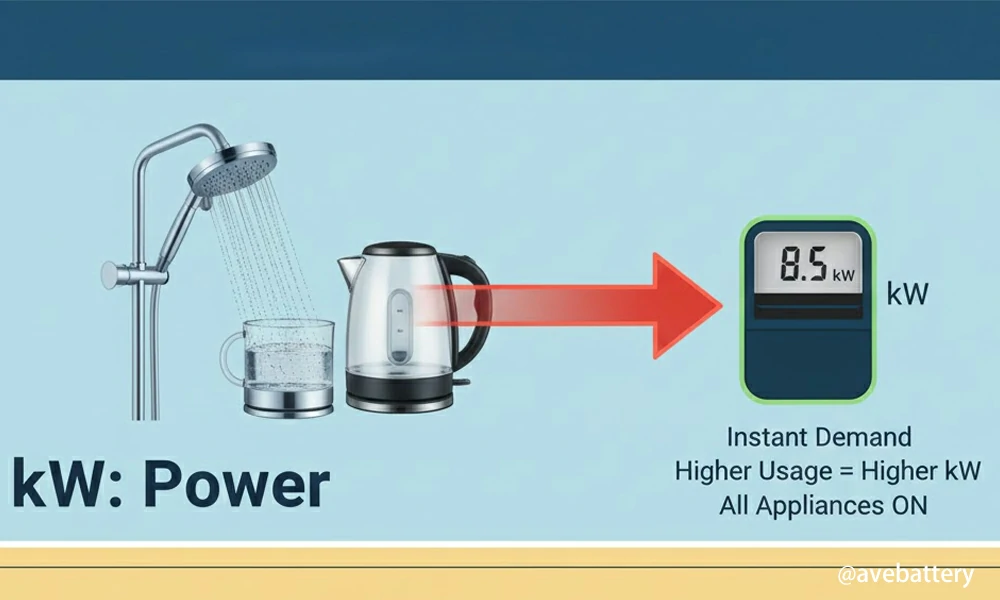
What Is a kW?
A kilowatt, written as kW, is a unit of power.
1 kW equals 1,000 watts.
Power is the rate at which electricity is being used, produced or delivered. In home energy systems, kW usually appears in places like:
- Solar panel system size
- Inverter output rating
- Battery charge and discharge power
- Appliance power draw
- EV charger speed
- Generator output
- Peak demand for commercial users
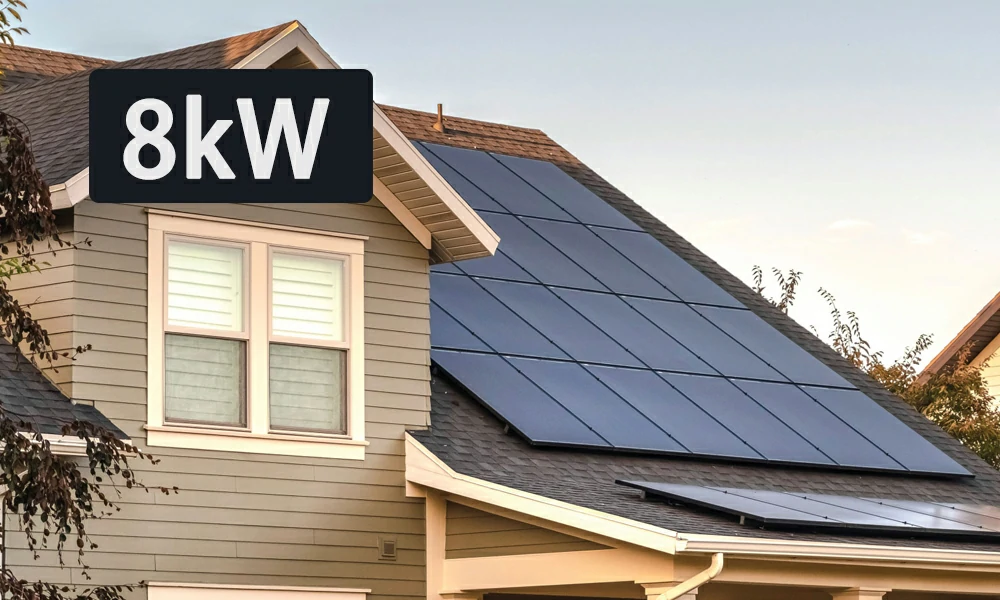
For example, when someone says they have a 6 kW solar system, they are talking about the system’s rated power capacity under standard test conditions. It does not mean the system produces 6 kWh every hour of every day.
The Australian Government explains that rooftop solar system size refers to the total power-generating capacity of all solar panels, measured in kW. A system with 19 panels rated at 350W each would be 6,650W, or 6.65 kW.
Common kW Ratings in Daily Life
| Device or System | Typical Power Range |
|---|---|
| LED light | 0.005–0.02 kW |
| WiFi router | 0.01–0.03 kW |
| Refrigerator while running | 0.1–0.3 kW |
| Television | 0.08–0.2 kW |
| Microwave | 0.8–1.5 kW |
| Electric kettle | 1.5–2.5 kW |
| Clothes dryer | 2–5 kW |
| Split air conditioner | 1–4 kW |
| Home EV charger | 3.5–22 kW |
| Residential solar inverter | 3–10 kW |
| Home battery discharge output | often 3–10 kW depending on model |
The higher the kW rating, the more electricity the device can use or deliver at a given moment.
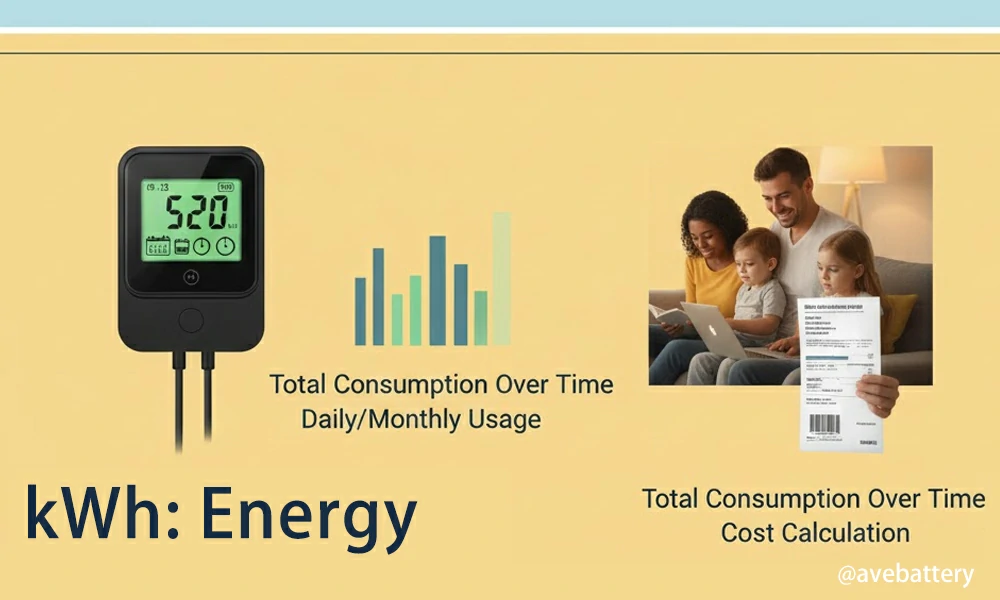
What Is a kWh?
A kilowatt-hour, written as kWh, is a unit of energy.
It measures the total amount of electricity used, produced or stored over a period of time.
This is the number you usually see on an electricity bill. Your bill does not only care how powerful your appliances are. It cares how long you use them and how much energy they consume in total.
Energy.gov states that utility bills usually show the kilowatt-hours used, and the difference between one meter reading and the next is the energy consumed during that billing period.
Common kWh Examples
| Situation | Approximate Energy |
|---|---|
| 100W light running for 10 hours | 1 kWh |
| 1 kW heater running for 5 hours | 5 kWh |
| 2.5 kW air conditioner running for 4 hours | 10 kWh |
| Household using 20 kWh per day | 600 kWh per 30 days |
| 10 kWh battery | stores around 10 kWh before efficiency and usable-capacity limits |
| 5 kW solar system producing for 4 strong sun hours | about 20 kWh |
In solar and battery storage, kWh is especially important because it tells you how much energy is available after the sun goes down, during peak-price periods or during a grid outage.
kW vs kWh in One Practical Example
Let’s say a home has:
- A 5 kW solar system
- A 5 kW inverter
- A 10 kWh battery
- Daily electricity use of 20 kWh
These numbers describe different things.
The 5 kW solar system tells you the potential solar power output at a moment under good sunlight.
The 5 kW inverter tells you the maximum AC power the inverter can deliver at one time.
The 10 kWh battery tells you how much energy the battery can store.
The 20 kWh daily usage tells you how much electricity the household uses over a full day.
So, if that home runs a 3 kW air conditioner and a 2 kW oven at the same time, the instant load is 5 kW. If those loads run together for 2 hours, the total energy used is 10 kWh.
That is the core of kW vs kWh.
Why People Confuse kW and kWh
People often mix them up because both terms appear in solar quotes, battery datasheets and electricity bills.
Here are the most common mistakes.
Mistake 1: Thinking a 10 kW solar system is a 10 kWh system
A 10 kW solar system describes power capacity. It may produce many kWh per day, but actual generation depends on sunlight, roof angle, shading, weather, inverter size and local conditions.
Mistake 2: Thinking a 10 kWh battery can power any load
A 10 kWh battery stores energy, but it still has a maximum output rating in kW. If the battery can only discharge at 5 kW, it cannot support 8 kW of simultaneous loads by itself.
Mistake 3: Choosing a battery only by kWh
A battery with enough kWh may still be unsuitable if its kW output is too low for the loads you want to run.
For example, a home may have enough battery capacity to run lights, WiFi, refrigeration and small appliances overnight. But if the same home also wants to start air conditioning, electric heating, a pump or EV charging, the battery and inverter output must be checked carefully.
Mistake 4: Ignoring usable capacity
Battery capacity is often shown as nominal or total capacity, but homeowners and installers should also check usable capacity. SolarQuotes explains that nominal capacity is the total amount of energy a battery can store, while usable capacity is the amount that can actually be accessed. Depth of discharge, backup reserve and degradation can all affect the real energy available to the user.
kW vs kWh on an Electricity Bill
Most residential electricity bills mainly charge for kWh.
If your bill says you used 600 kWh in a month, that means your home used 600 units of electrical energy during the billing period.
A simple cost calculation looks like this:
Electricity cost = kWh used × price per kWh
For example:
| Monthly Usage | Energy Price | Energy Cost |
|---|---|---|
| 400 kWh | $0.30/kWh | $120 |
| 600 kWh | $0.30/kWh | $180 |
| 900 kWh | $0.30/kWh | $270 |
This is why reducing kWh consumption can directly reduce energy charges.
However, kW can still matter. Some business tariffs and certain residential plans include demand charges, where the bill is affected by the highest amount of power drawn from the grid at one time.
That means energy users may need to manage both:
- Total kWh consumption
- Peak kW demand
This is where solar batteries, smart energy management and load shifting can become valuable.
kW vs kWh in Solar Panels
Solar panel systems are usually sold by kW.
For example:
- 5 kW solar system
- 6.6 kW solar system
- 10 kW solar system
- 20 kW commercial solar system
This tells you the system’s rated power capacity, not the exact daily energy production.
A 10 kW system does not produce 10 kWh per day. It may produce more than that on a sunny day and less than that on a cloudy day.
A simple estimate is:
Daily solar generation = solar system size in kW × effective sun hours
For example:
| Solar System Size | Effective Sun Hours | Estimated Daily Generation |
|---|---|---|
| 5 kW | 4 hours | 20 kWh |
| 6.6 kW | 4 hours | 26.4 kWh |
| 10 kW | 4 hours | 40 kWh |
| 20 kW | 4 hours | 80 kWh |
This is only a simplified estimate. Real production depends on location, panel orientation, seasonal sunlight, shading, inverter efficiency and system design.
For solar buyers, the key is this:
kW tells you the size of the solar system. kWh tells you how much energy that system actually produces.
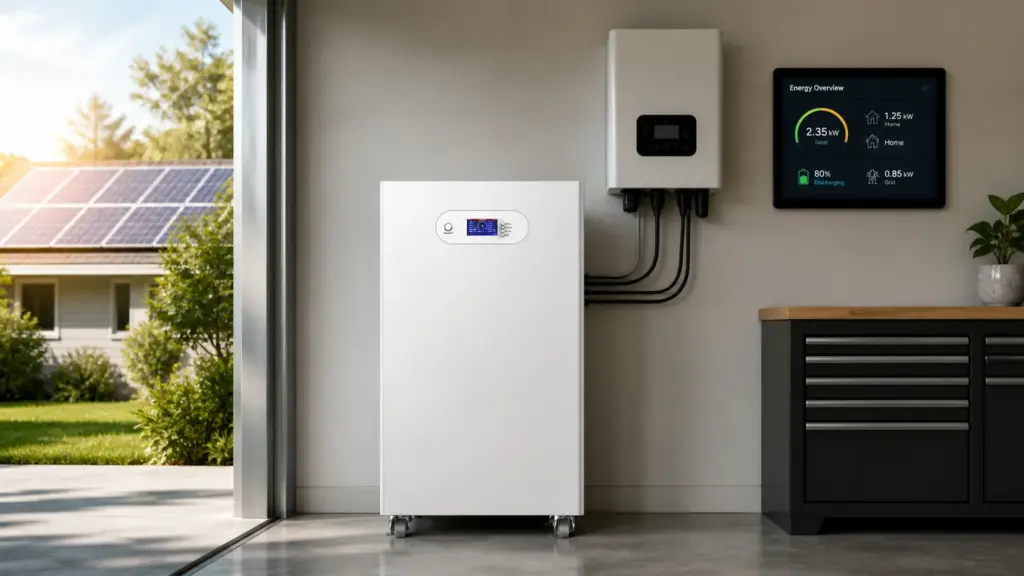
kW vs kWh in Solar Batteries
Solar batteries use both kW and kWh ratings.
This is where the difference becomes very important.
Battery kWh: How Much Energy It Stores
A battery’s kWh rating tells you how much energy it can store.
For example:
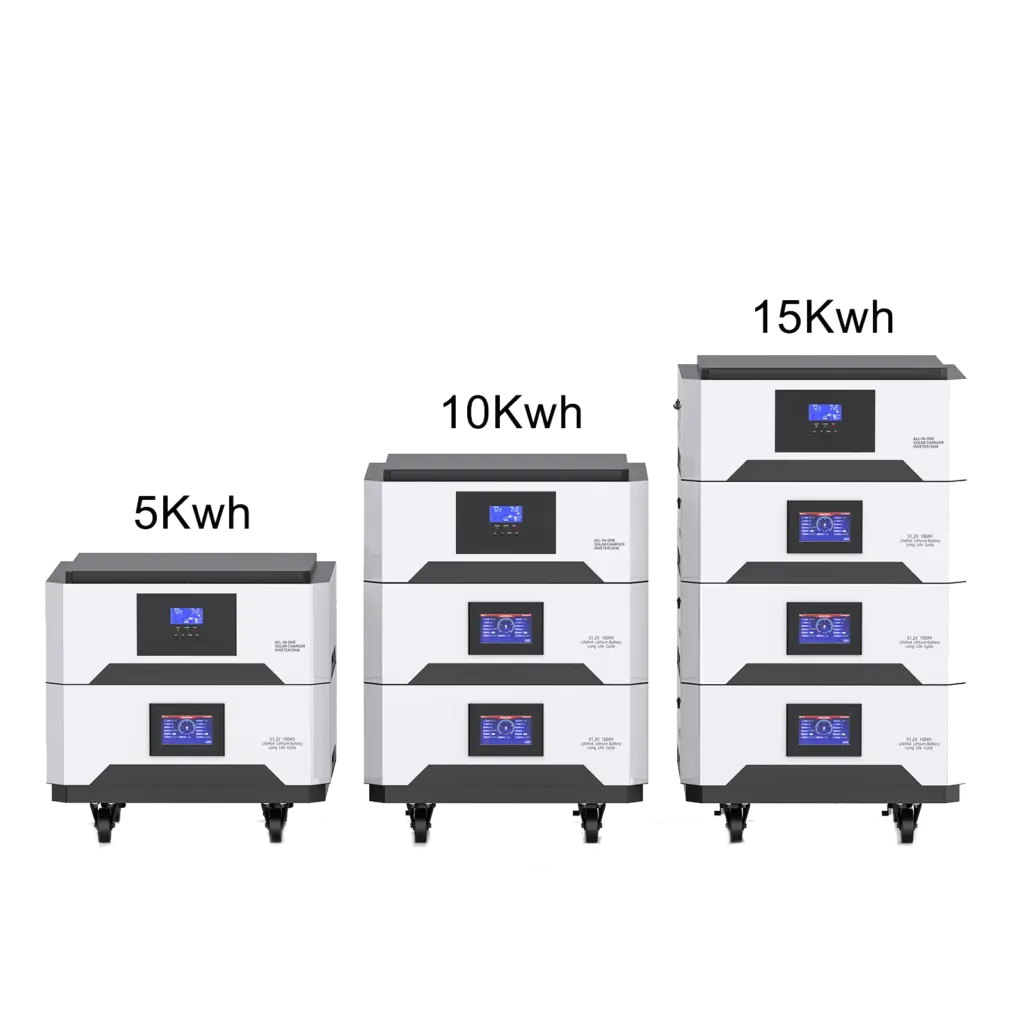
- A 5 kWh battery may cover light evening loads.
- A 10 kWh battery may cover essential overnight usage for many homes.
- A 15 kWh battery may suit larger households or longer backup needs.
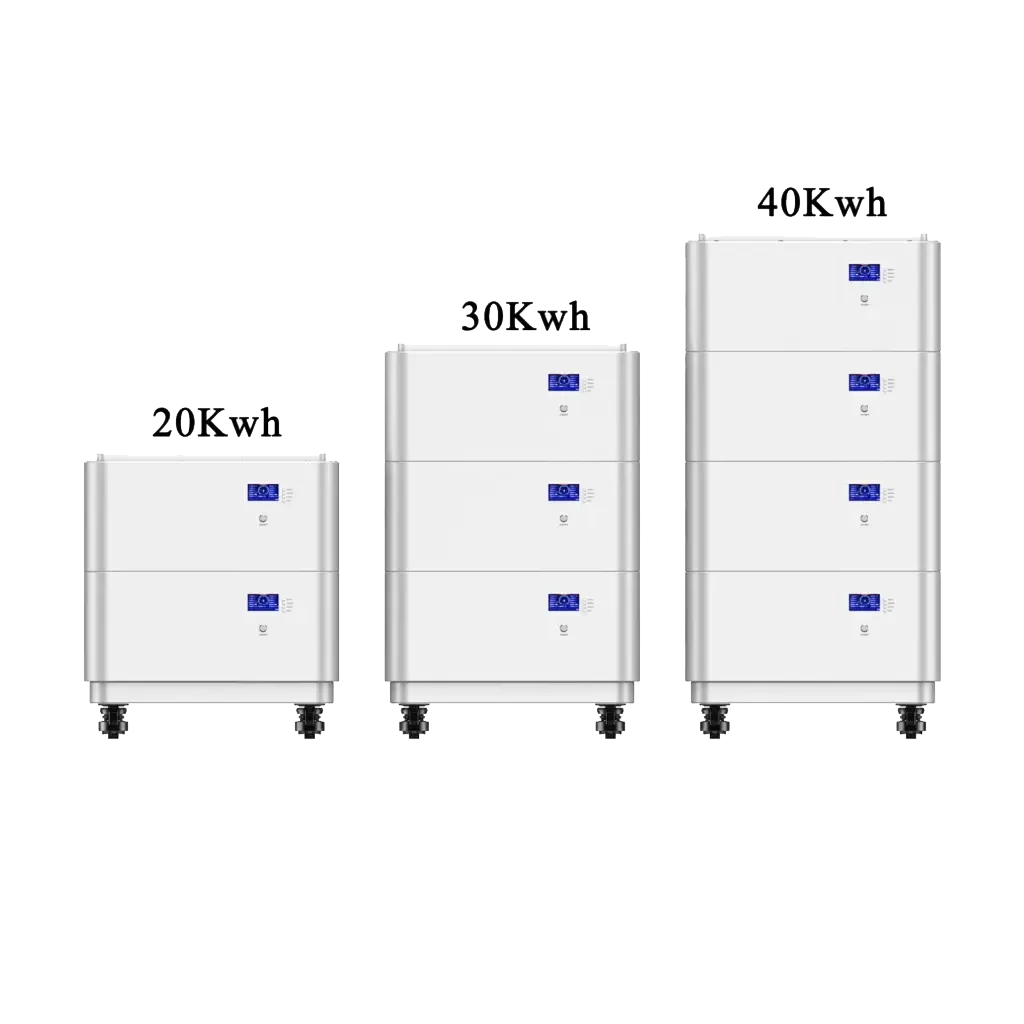
- A 30 kWh solar battery may be used for whole-home backup, larger villas, small businesses or off-grid projects.
The exact size depends on actual daily usage, night-time consumption, backup expectations and solar charging ability.
Need help matching battery capacity, inverter output and backup requirements for a residential project?
Avepower provides residential energy storage solutions for installers, distributors, EPCs and OEM/ODM partners. Share your project country, solar system size, daily kWh usage and backup load requirements, and our team can help recommend a suitable battery configuration.
Battery kW: How Much Power It Can Deliver
A battery’s kW rating tells you how much power it can provide at one time.
For example, a battery may store 15 kWh but only discharge 5 kW continuously. That means it may have enough stored energy for the night, but it cannot run every high-power appliance at the same time.
This matters for:
- Air conditioners
- Electric ovens
- Water pumps
- EV chargers
- Heat pumps
- Electric water heaters
- Commercial equipment
- Backup loads during outages
Solar Choice also explains that batteries have both power capacity in kW and energy storage capacity in kWh, which is why buyers should check both ratings rather than only looking at one number.
kW vs kWh in EV Charging
EV charging is another area where kW and kWh are often confused.
The charger is rated in kW.
The EV battery capacity is measured in kWh.
For example:
- A 7 kW home charger delivers up to 7 kW of charging power.
- If it runs for 5 hours, it can deliver about 35 kWh before charging losses.
- An EV with a 60 kWh battery needs more time to charge than one with a 40 kWh battery, assuming the same charger and similar efficiency.
EV battery capacity is measured in kWh, while charger power is measured in kW; charger kW and charging time determine the energy delivered.
For homes with solar batteries, EV charging should be planned carefully. A high-power EV charger can quickly exceed the discharge capacity of a home battery or consume a large share of stored energy.
Matching Battery Capacity to Real Energy Use
At Avepower, we usually look at kW and kWh together when discussing residential and commercial energy storage projects.
A home battery should not only have enough storage capacity on paper. It should also match the real operating conditions of the project, including:
- Daily and night-time kWh consumption
- Inverter compatibility
- Peak load requirements
- Backup load priorities
- Solar system size
- Communication protocol
- Installation space
- Expansion needs
- Local certification requirements
- OEM or ODM customization needs
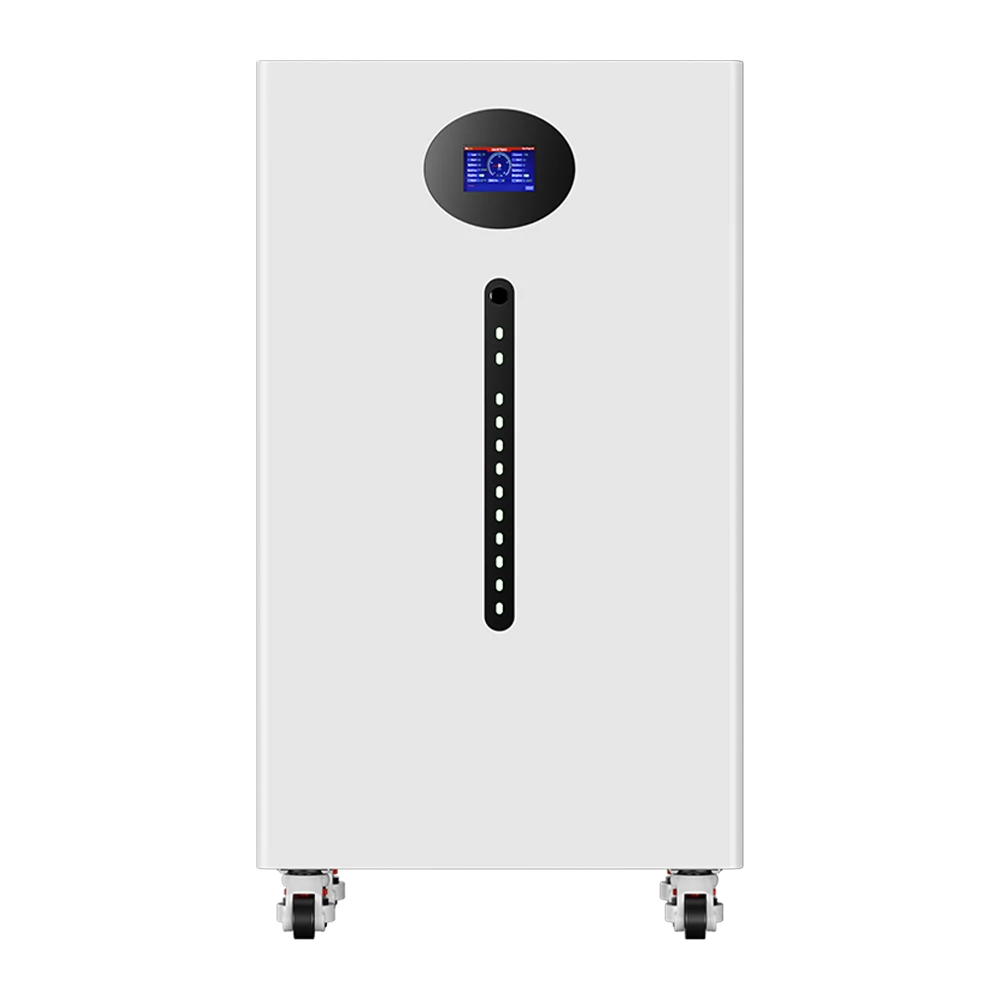
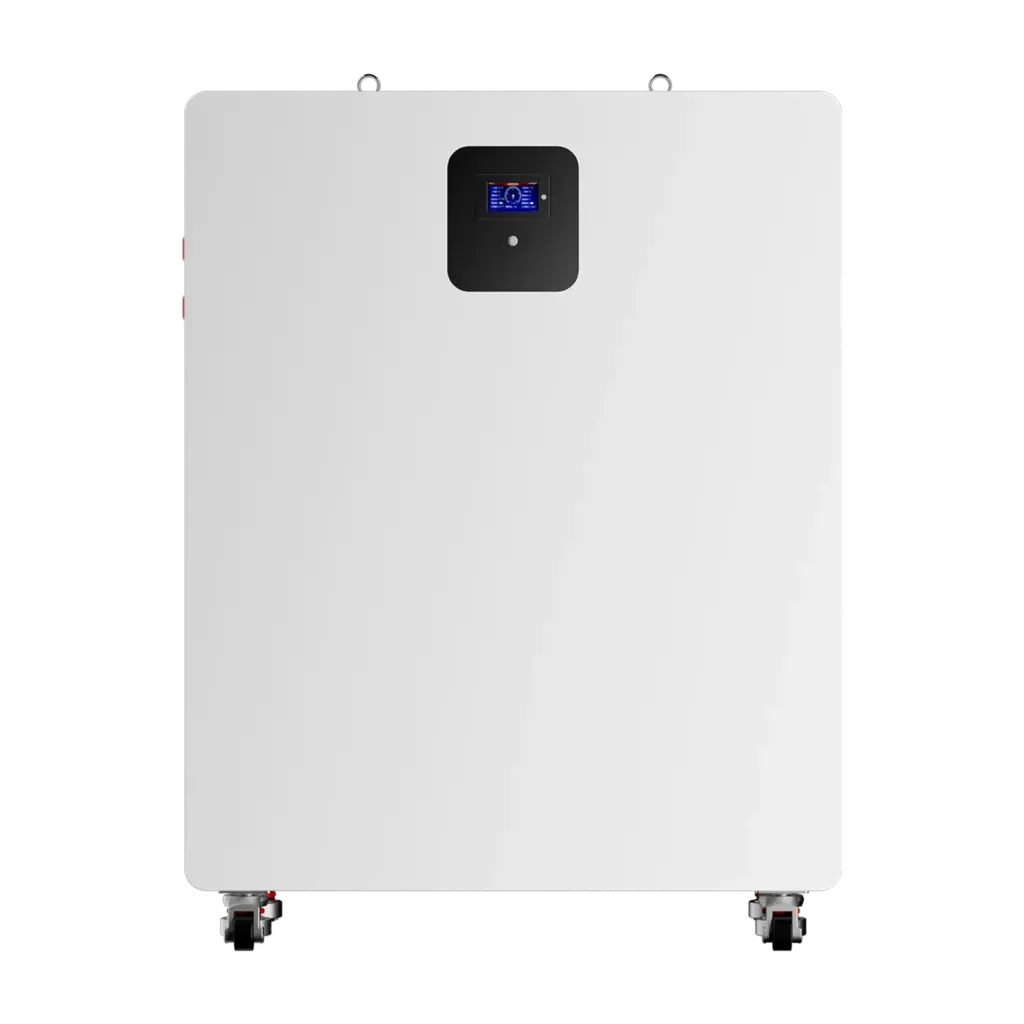
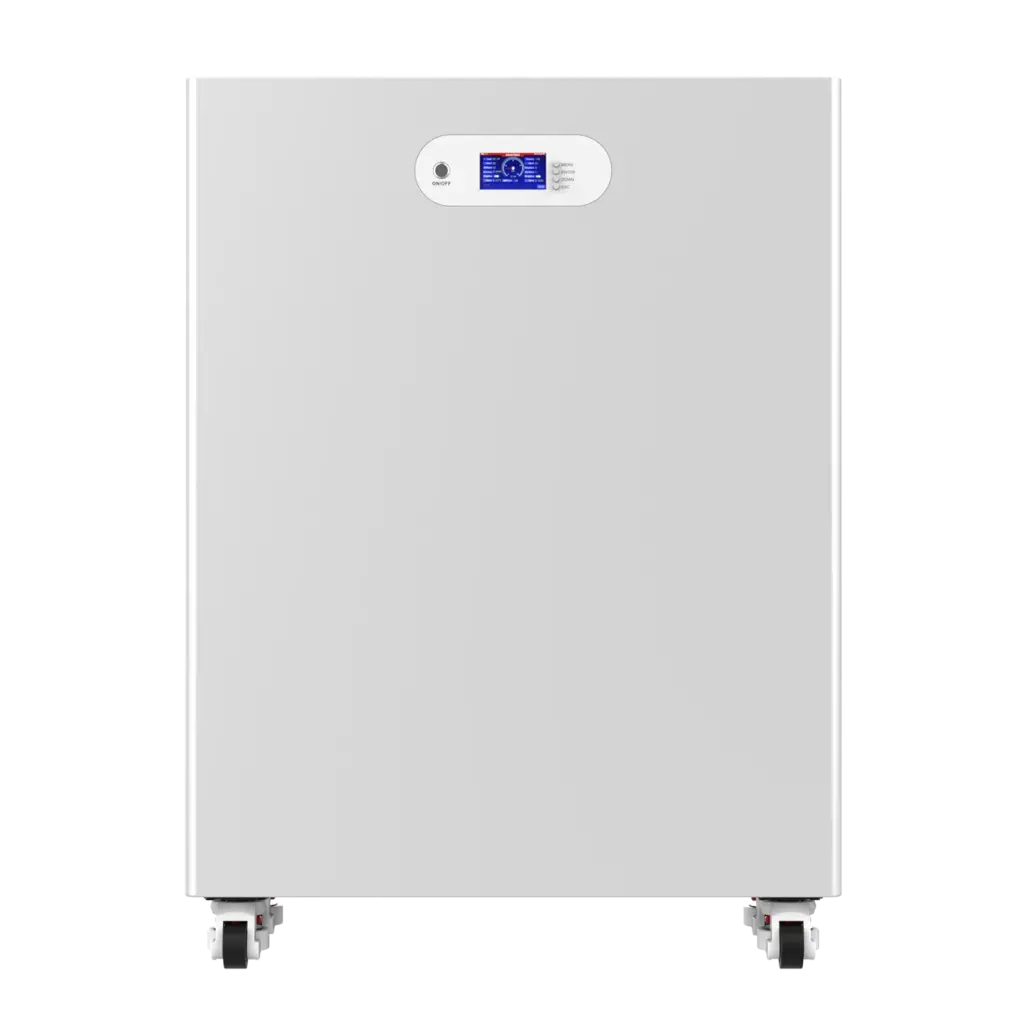
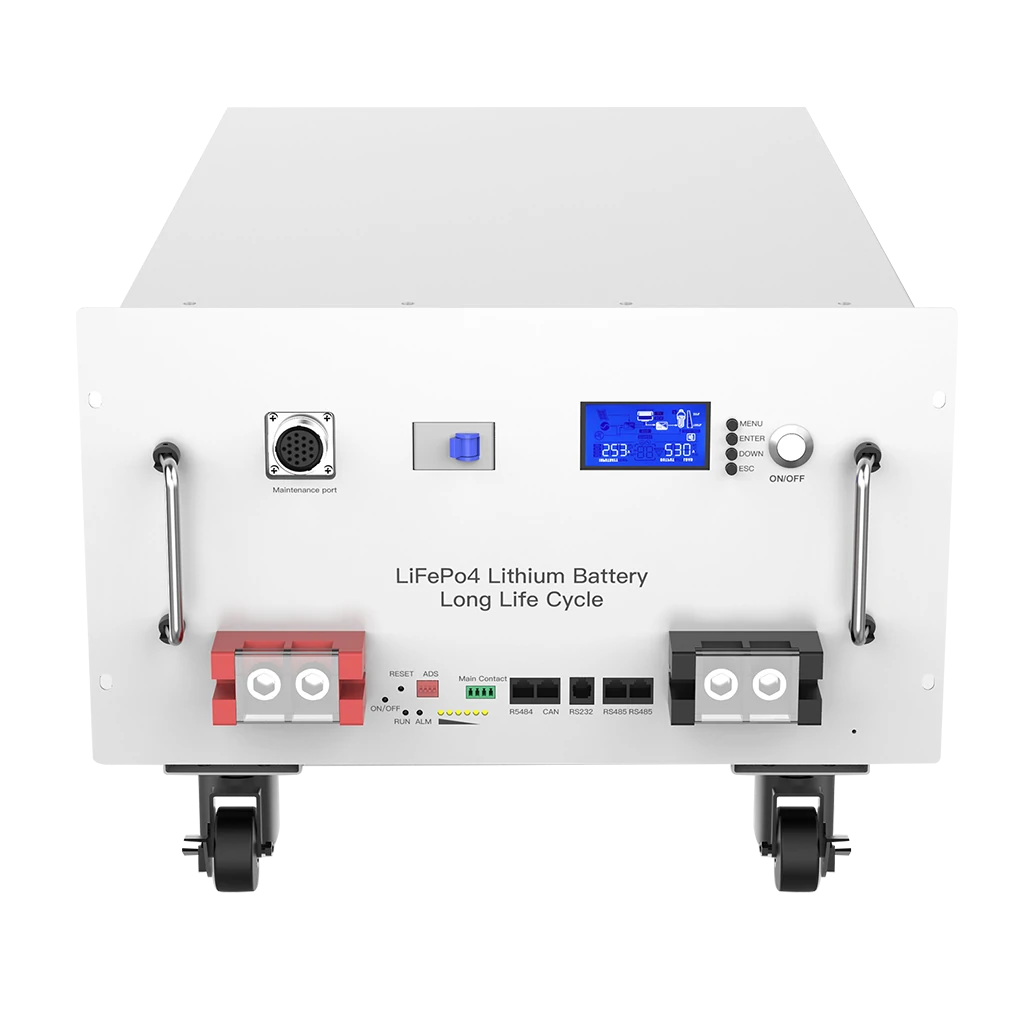
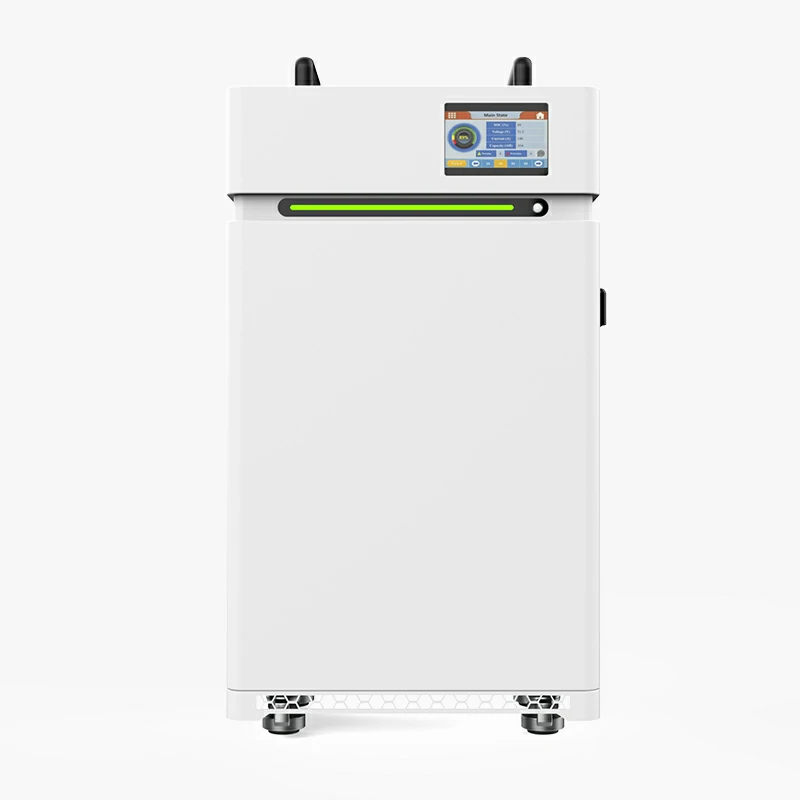
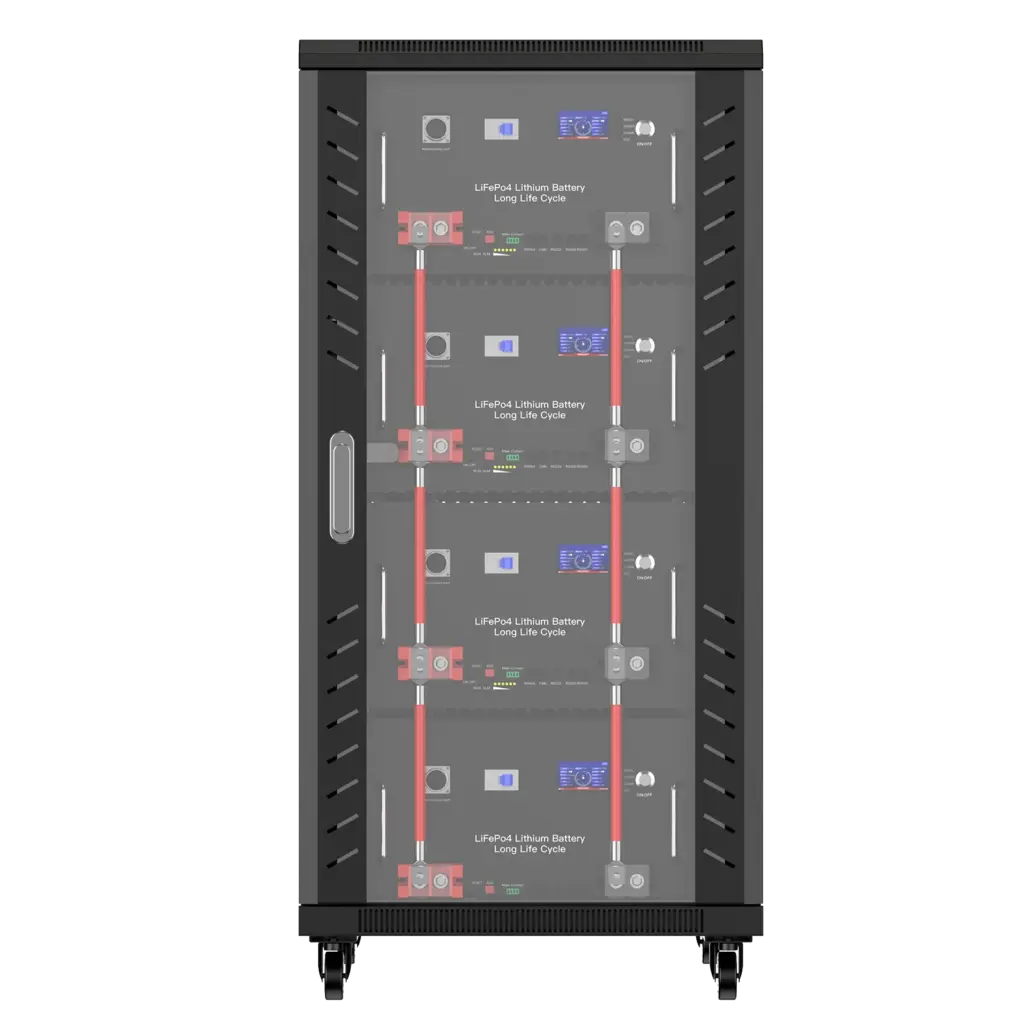
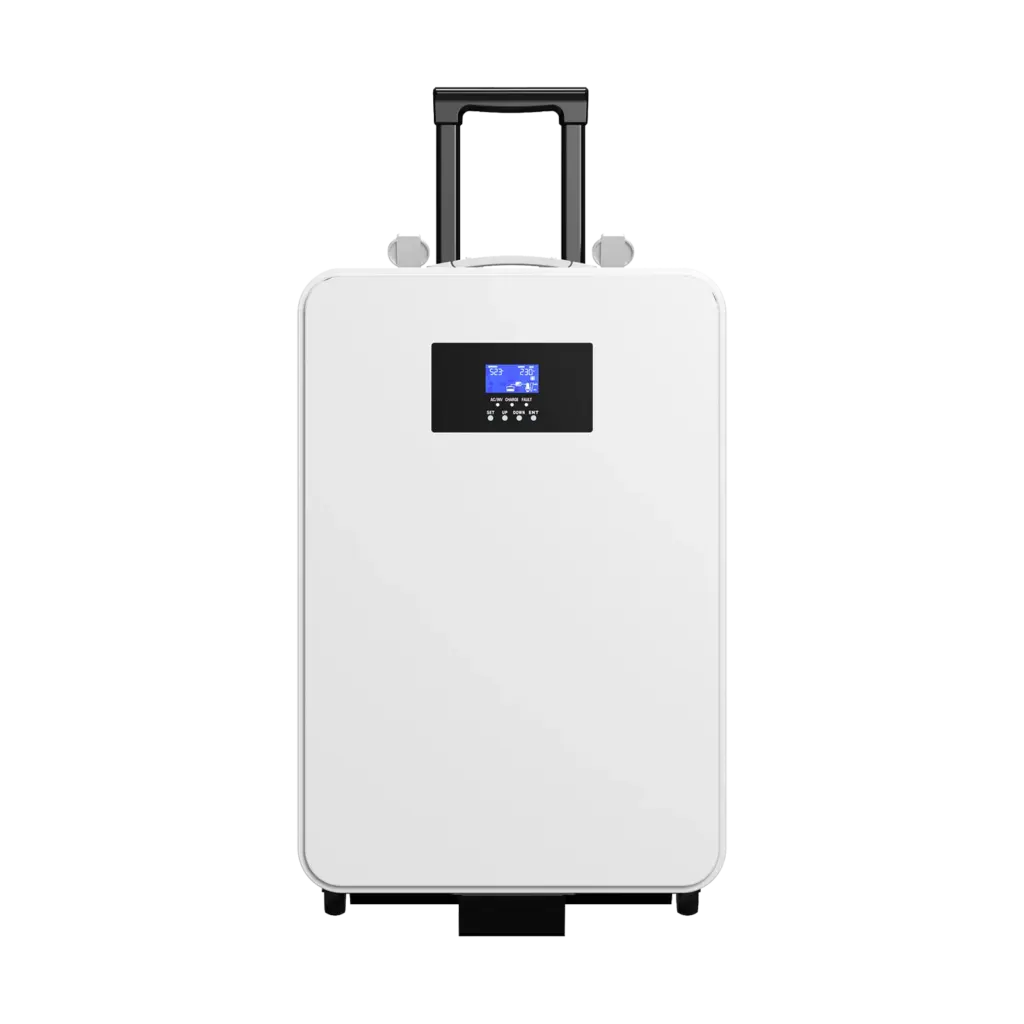
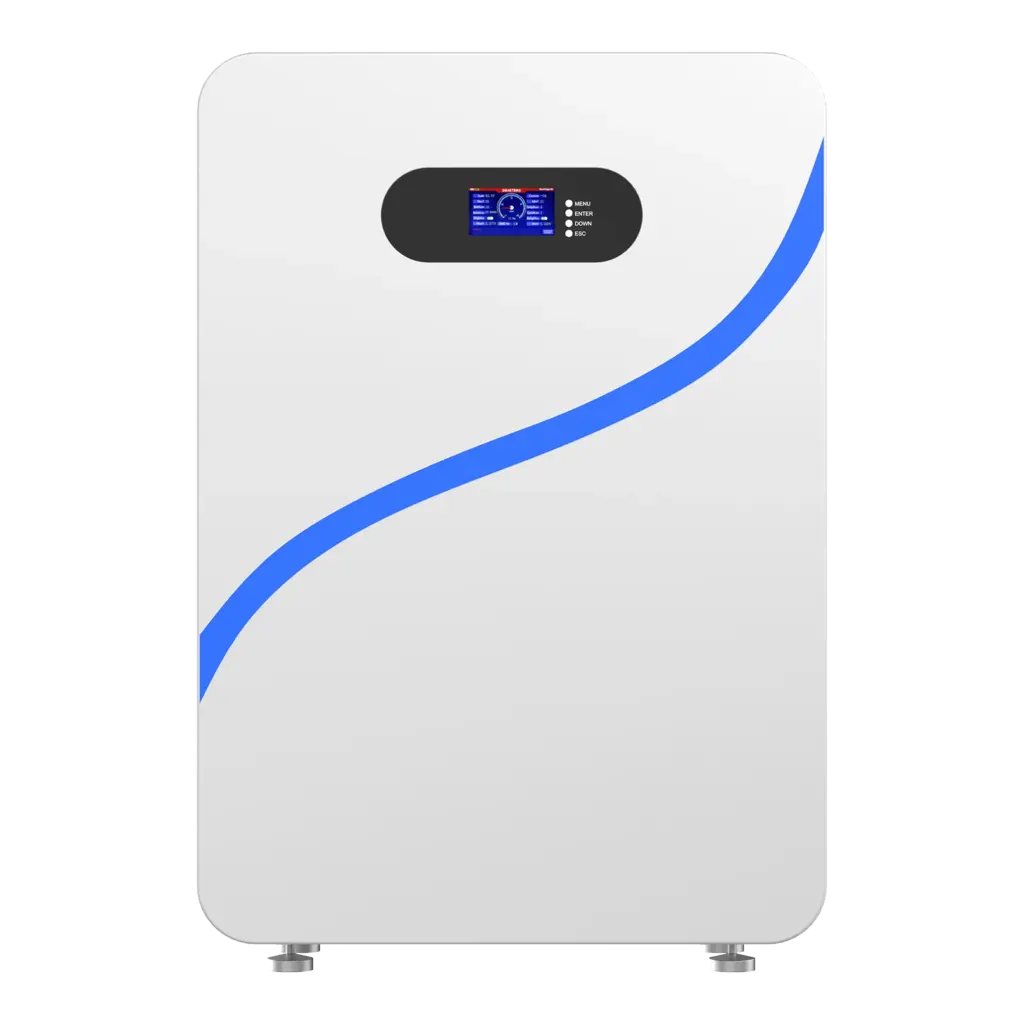
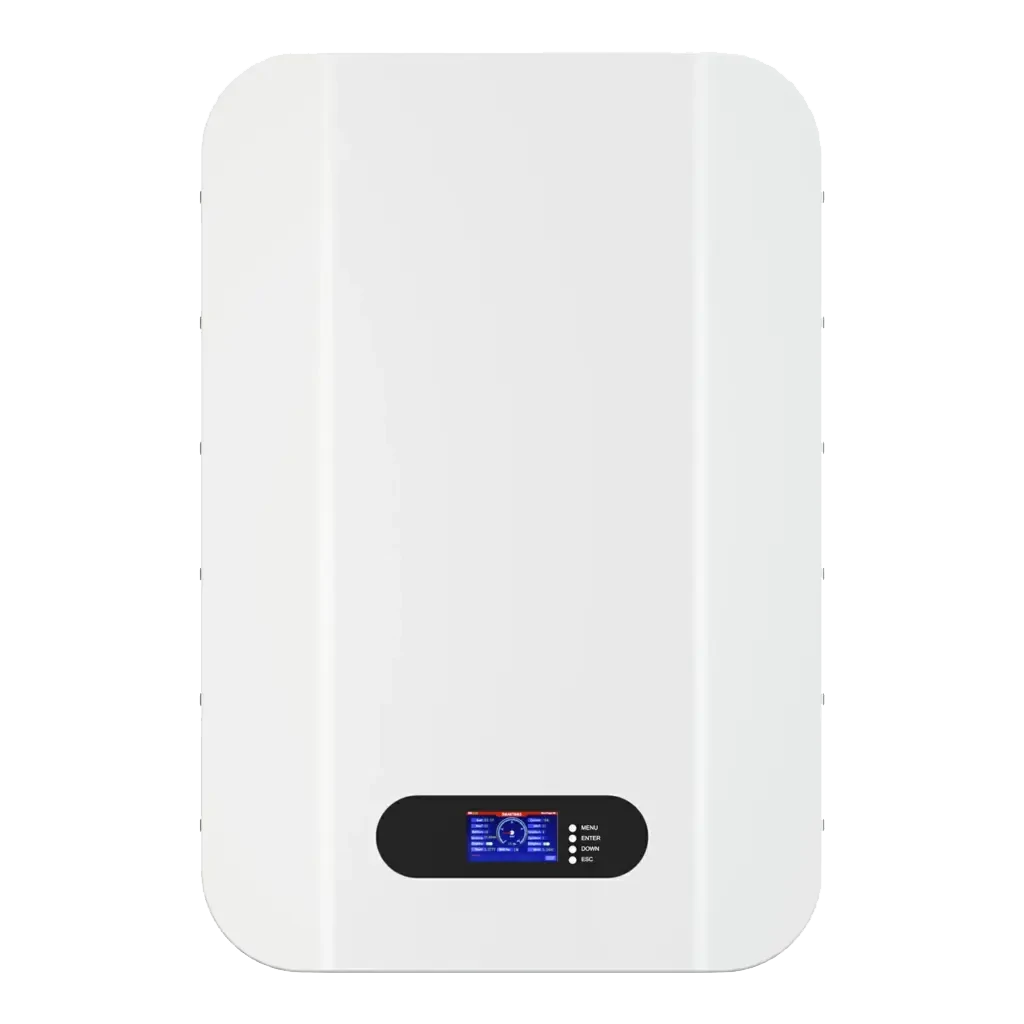
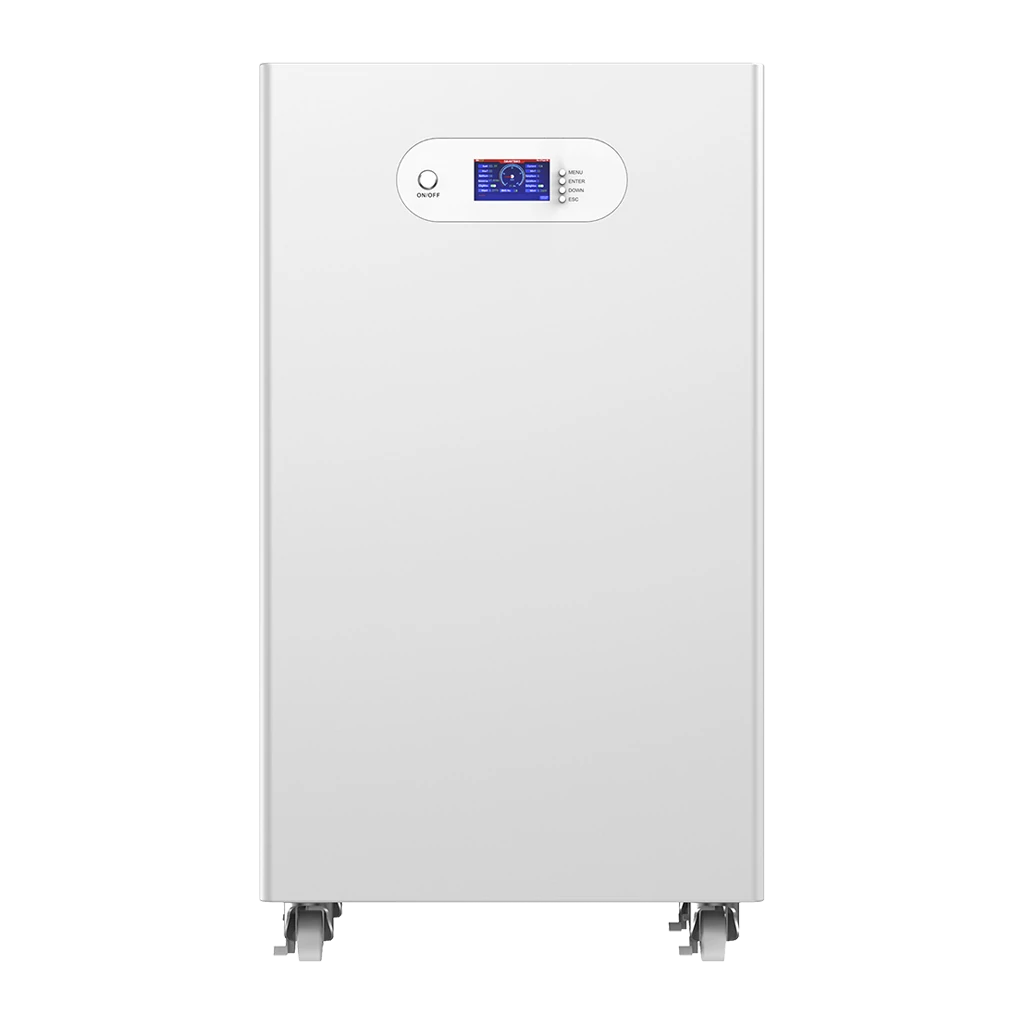
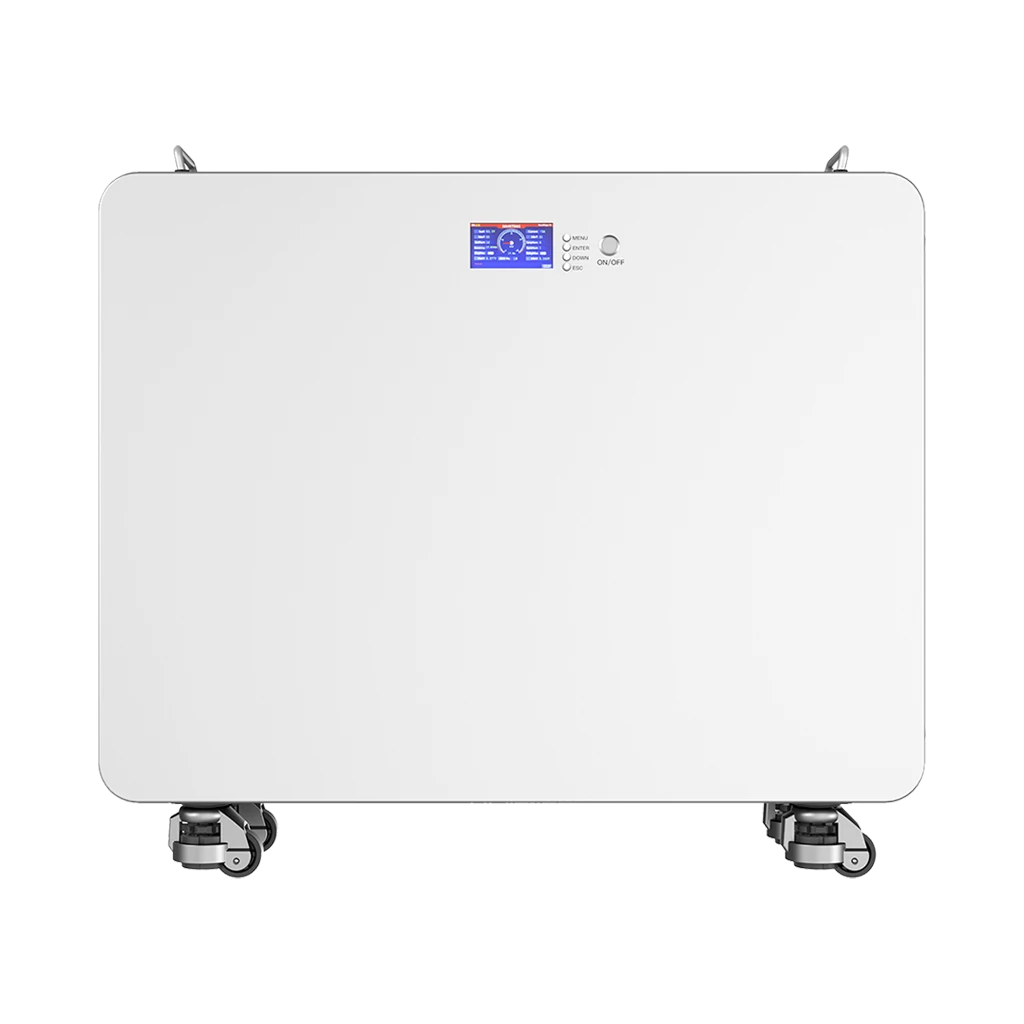
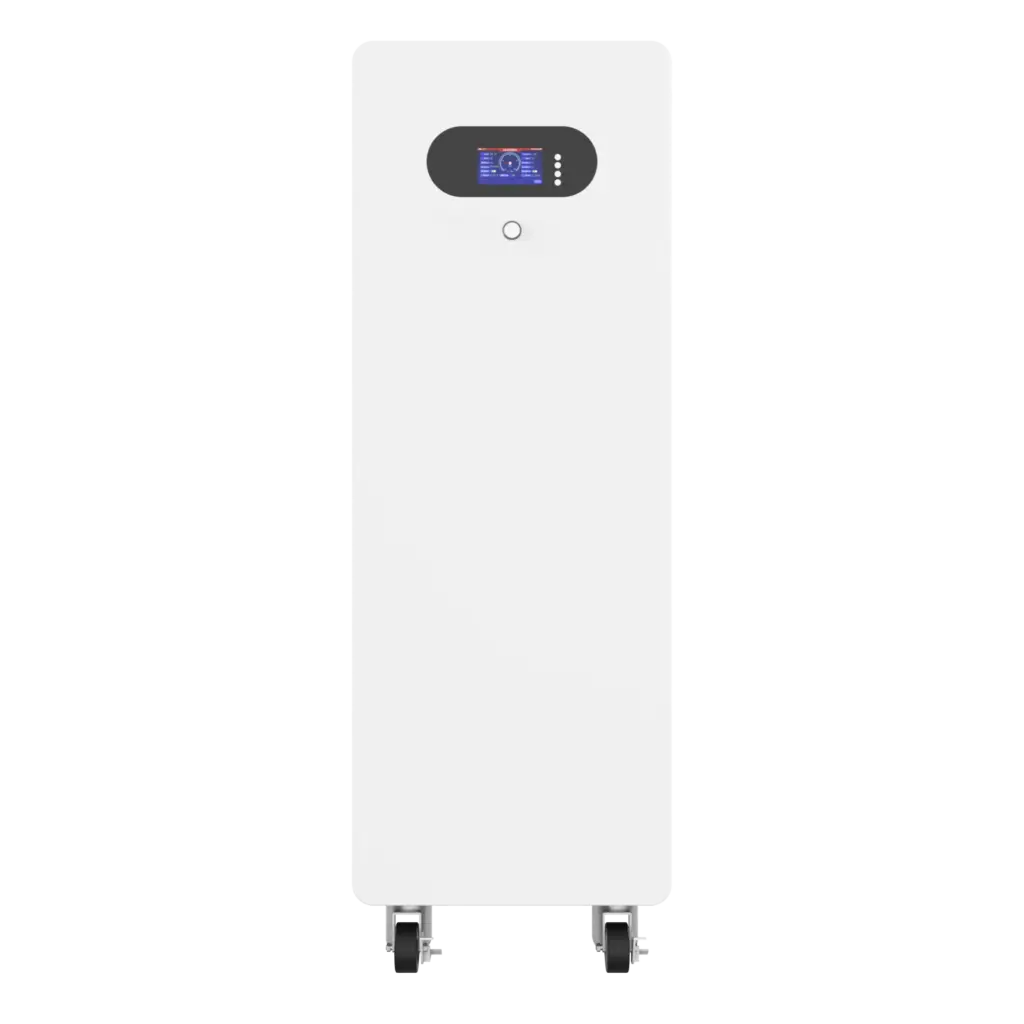
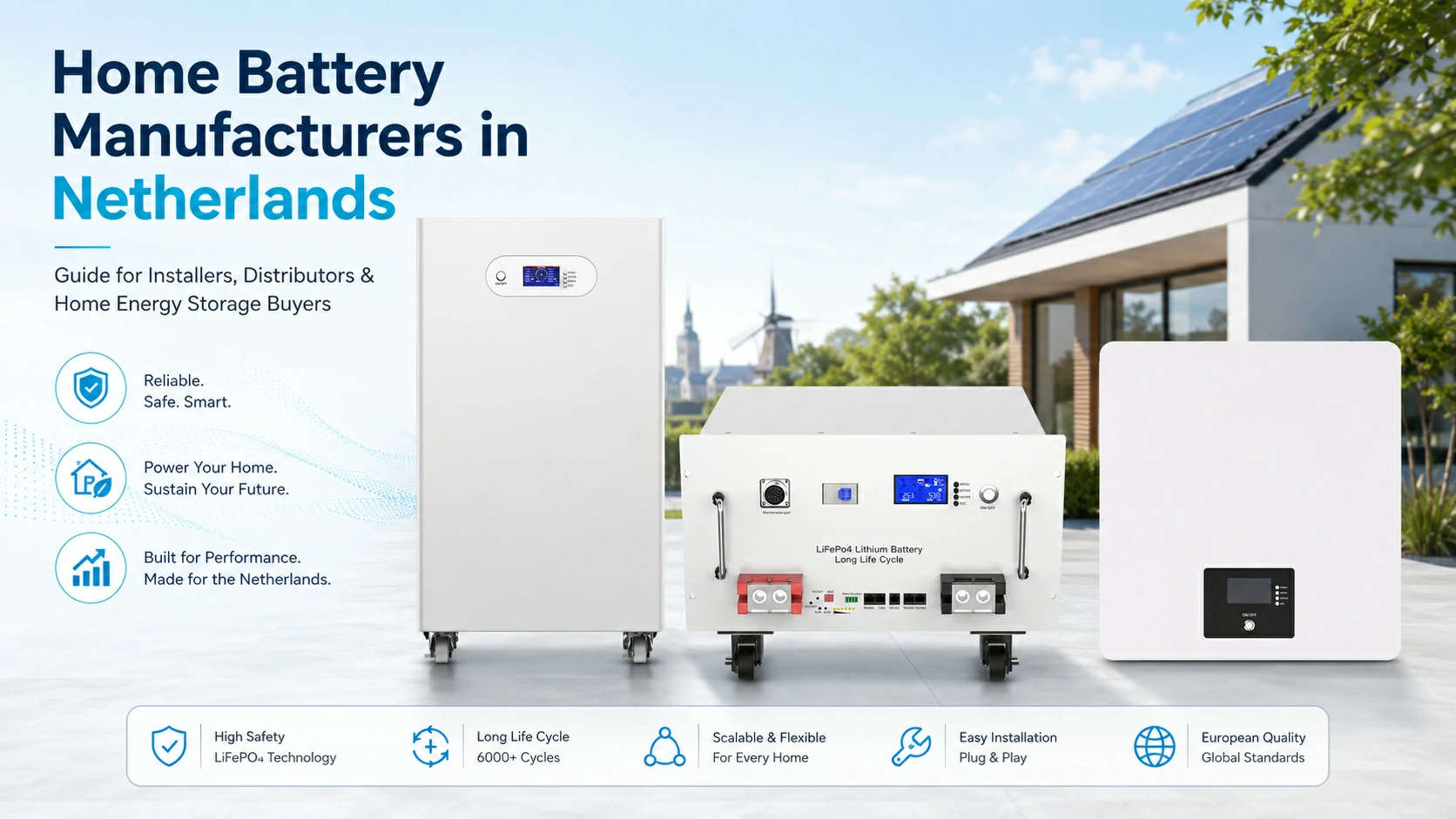
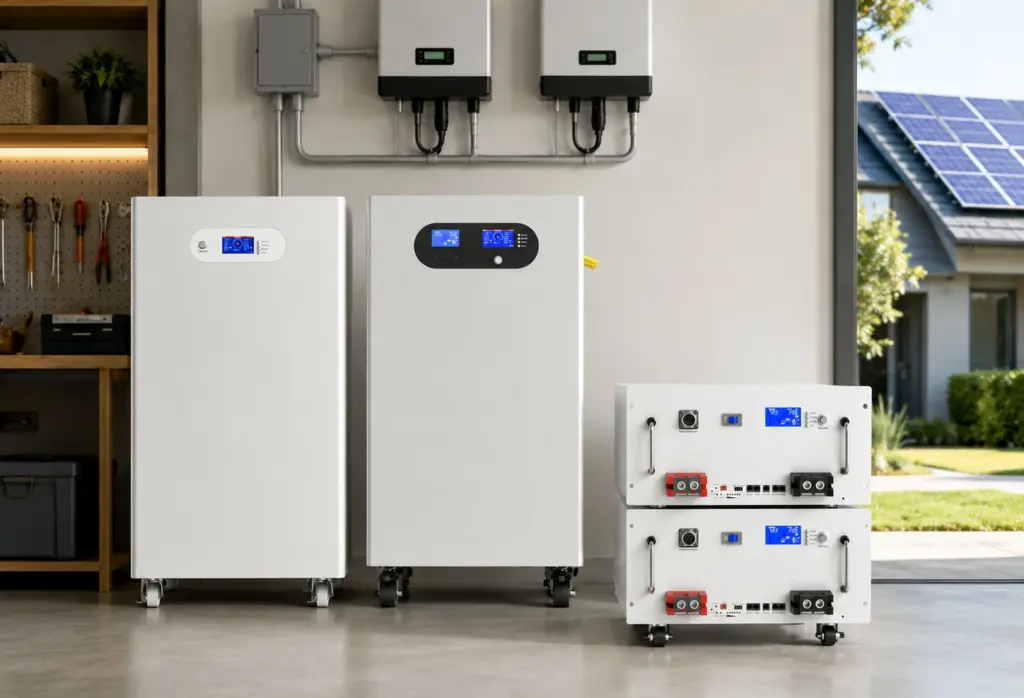
Avepower provides LiFePO4 battery energy storage solutions for installers, distributors, EPCs and energy storage partners. Product options include wall-mounted batteries, rack-mounted batteries, stackable batteries, vertical LiFePO4 batteries, all-in-one battery systems and customized high-voltage energy storage solutions.
For projects that may grow over time, modular battery design can help users increase kWh capacity as household electricity demand rises. For projects with higher power requirements, inverter matching and battery discharge capability should be reviewed before final selection.
Take Control of Your Energy with Avepower!
Reliable home solar battery solutions with OEM/ODM customization and in-house manufacturing, tailored to the needs of distributors, installers, and energy partners.
Simple Rule: Use kW for Power and kWh for Energy
Here is the easiest way to remember the difference:
- Use kW when asking “how much power at one moment?”
- Use kWh when asking “how much energy over time?”
Examples:
| Question | Correct Unit |
|---|---|
| How large is the solar system? | kW |
| How much electricity did my home use today? | kWh |
| How much energy can the battery store? | kWh |
| How much power can the inverter output? | kW |
| How fast can the EV charger charge? | kW |
| How much energy did the EV receive overnight? | kWh |
| How much solar energy was generated today? | kWh |
| Can the battery run several appliances at once? | kW |
| How long can the battery support backup loads? | kWh + load kW |
Conclusion
kW is power. It tells you how fast electricity is being used, produced or delivered at a specific moment.
kWh is energy. It tells you how much electricity is used, produced or stored over time.
For electricity bills, kWh shows how much energy you bought from the grid. For solar systems, kW shows system size while kWh shows actual generation. For batteries, kWh shows storage capacity while kW shows output capability. For EV charging, kW shows charging speed while kWh shows the amount of energy added to the vehicle battery.
If you are choosing a solar battery, do not compare products by kWh alone. A good system design should balance battery capacity, discharge power, inverter compatibility, backup needs and future expansion.
FAQ
kW measures power at a specific moment. kWh measures energy used, produced or stored over time. In simple terms, kW is how fast electricity flows, while kWh is how much electricity is used or stored.
Most residential electricity usage is billed in kWh. Your bill shows how much energy you used during the billing period. Some commercial tariffs and certain demand-based plans may also include charges related to peak kW demand.
A 5 kW solar system can produce up to around 5 kW of power under strong sunlight, but its total energy production is measured in kWh. If it effectively produces 5 kW for 4 hours, it generates about 20 kWh.
kWh on a battery shows how much energy the battery can store. A 10 kWh battery can store around 10 kWh of energy before accounting for usable capacity, efficiency, backup reserve and operating limits.
Use this formula: kWh = kW × hours. For example, a 2 kW appliance running for 3 hours uses 6 kWh.
In EVs, kWh describes battery capacity. A 60 kWh EV battery can store more energy than a 40 kWh battery, which usually means longer driving range under similar conditions.