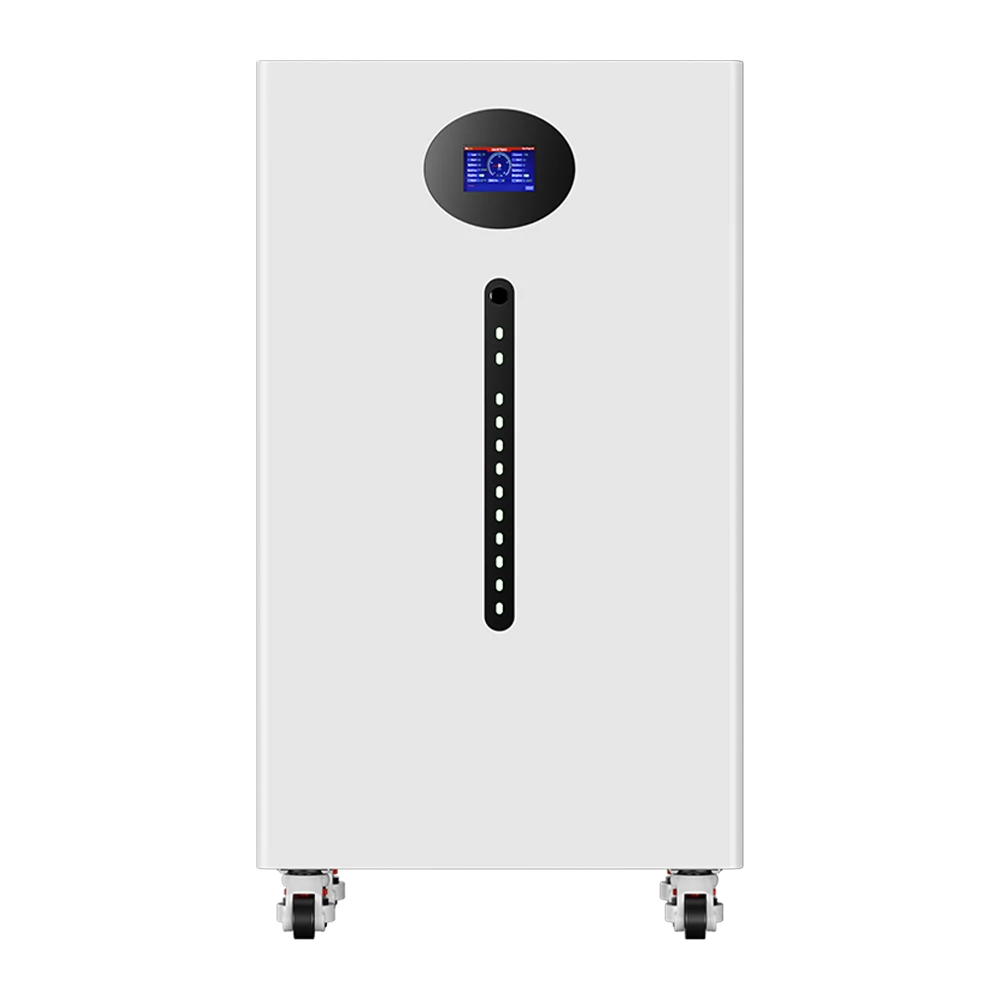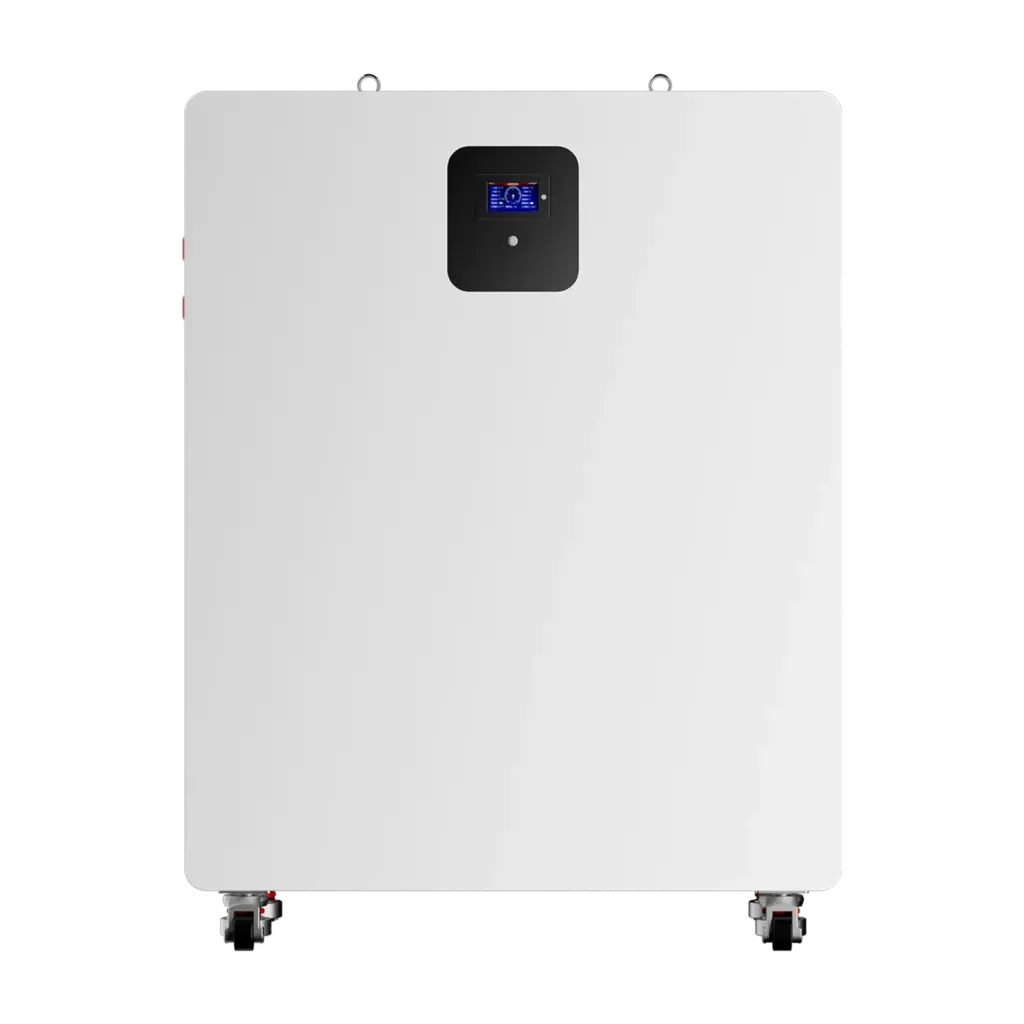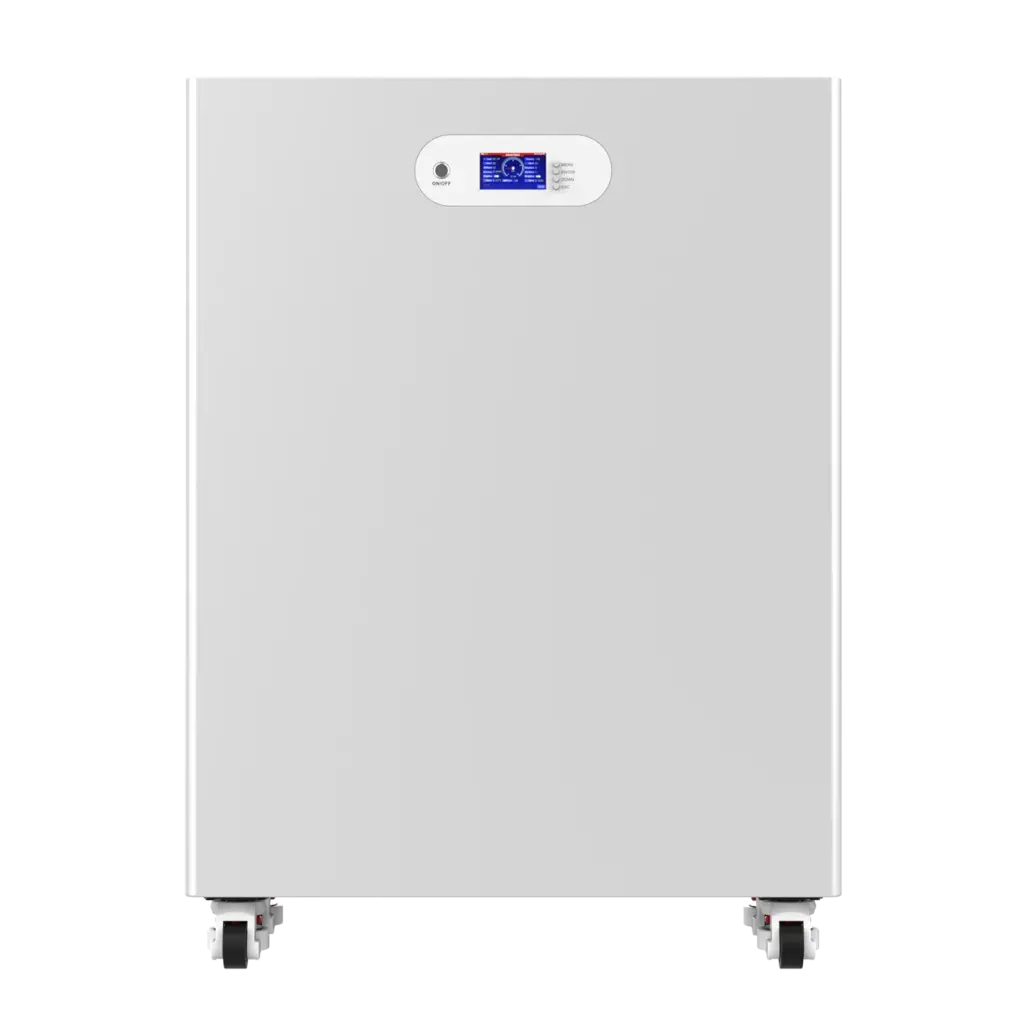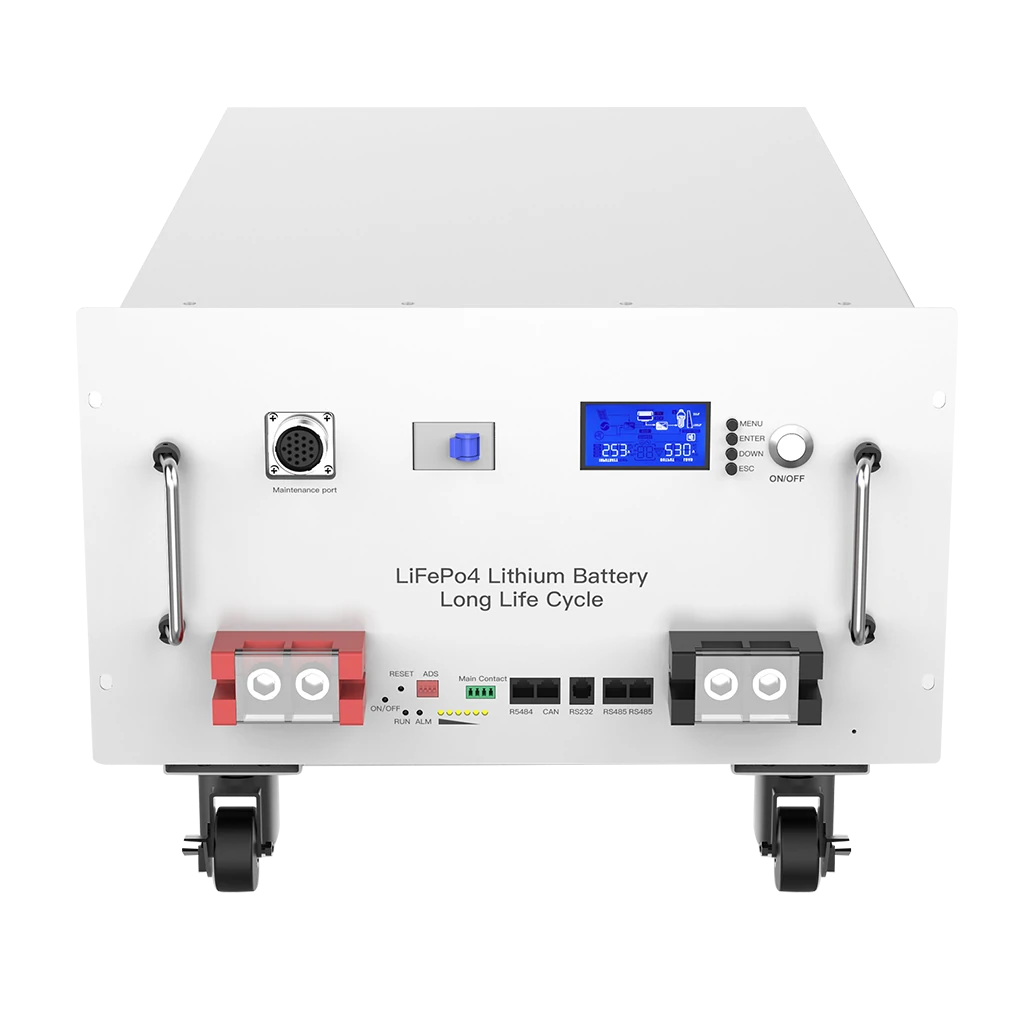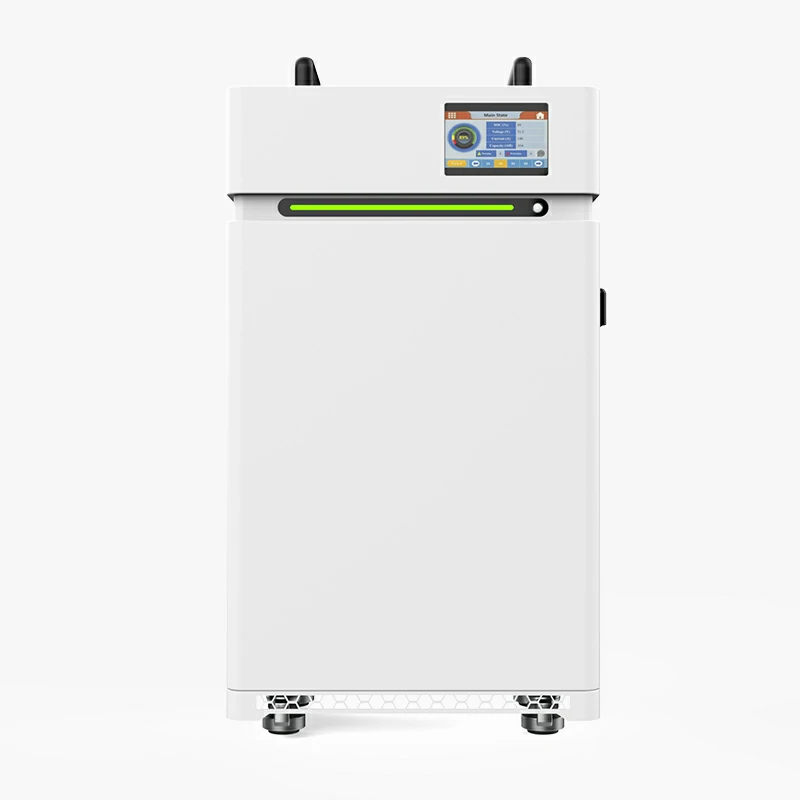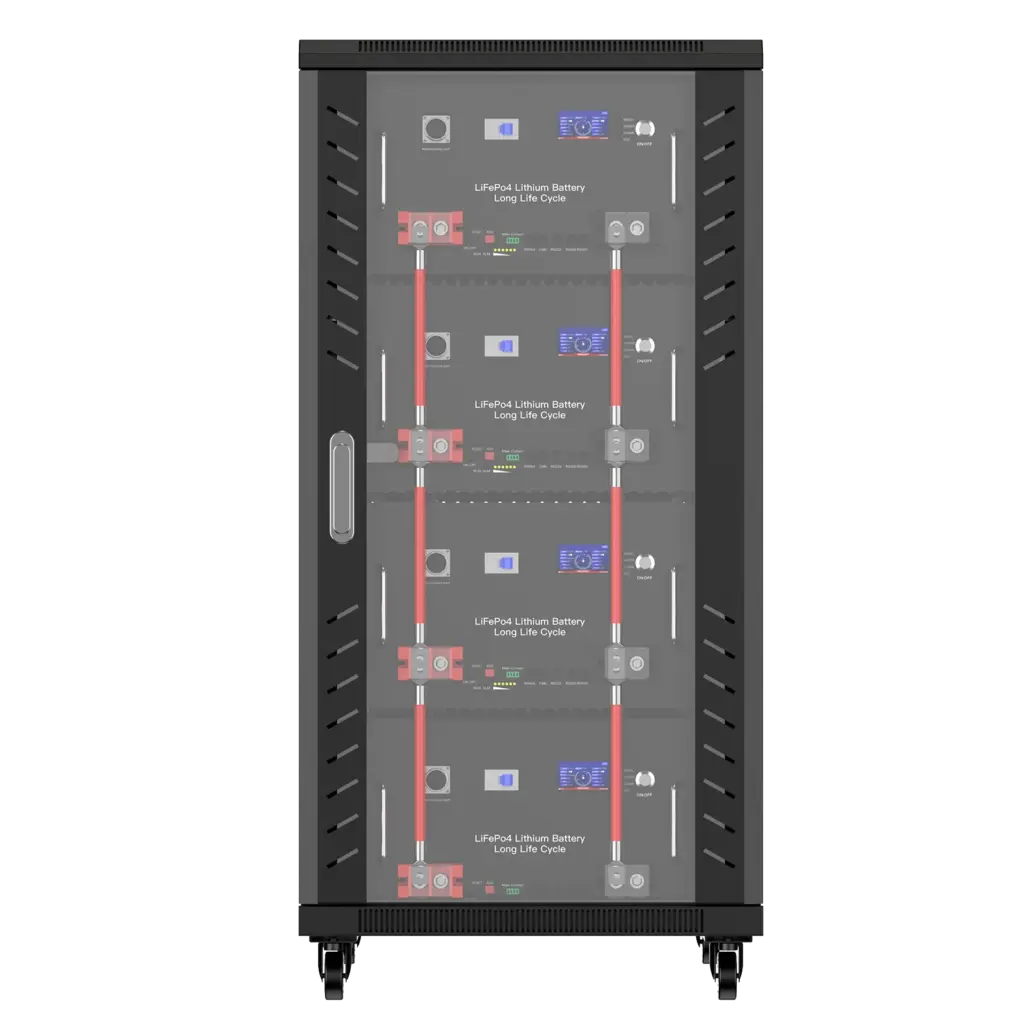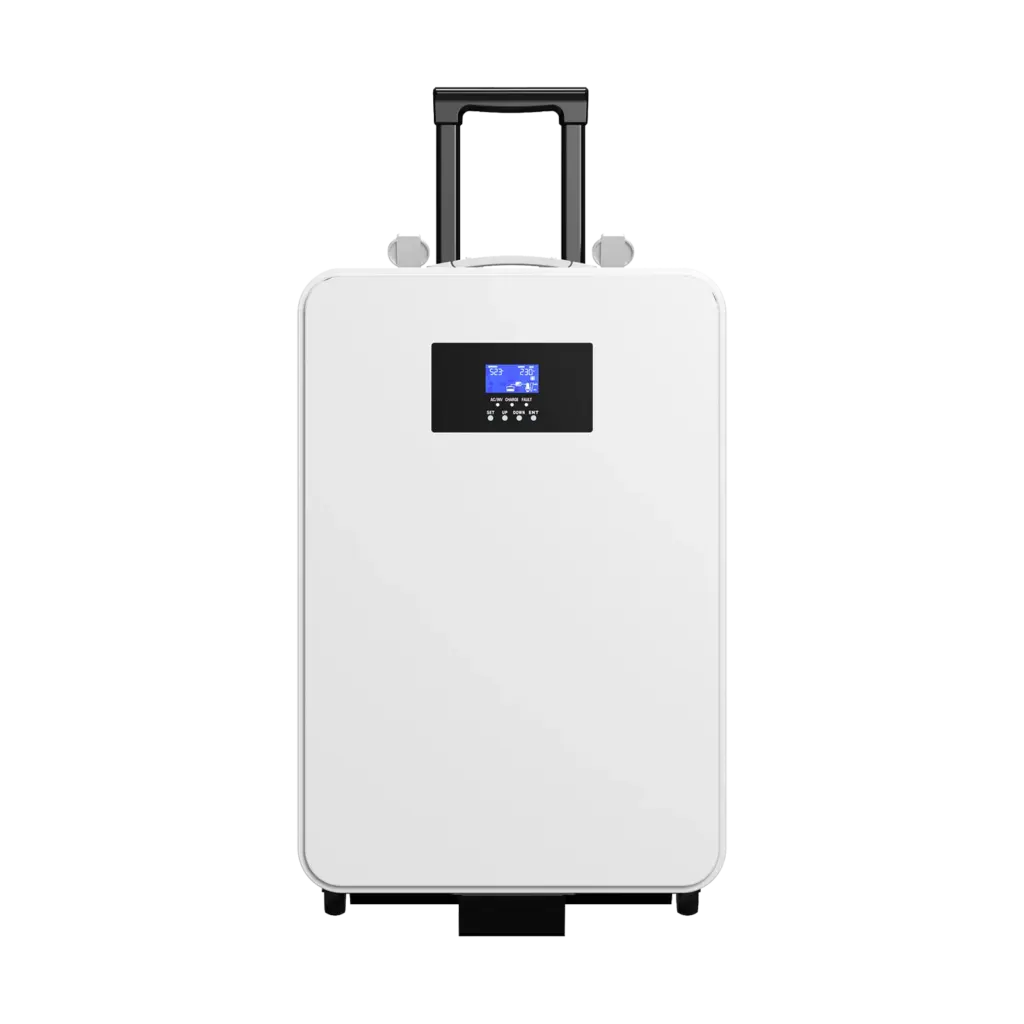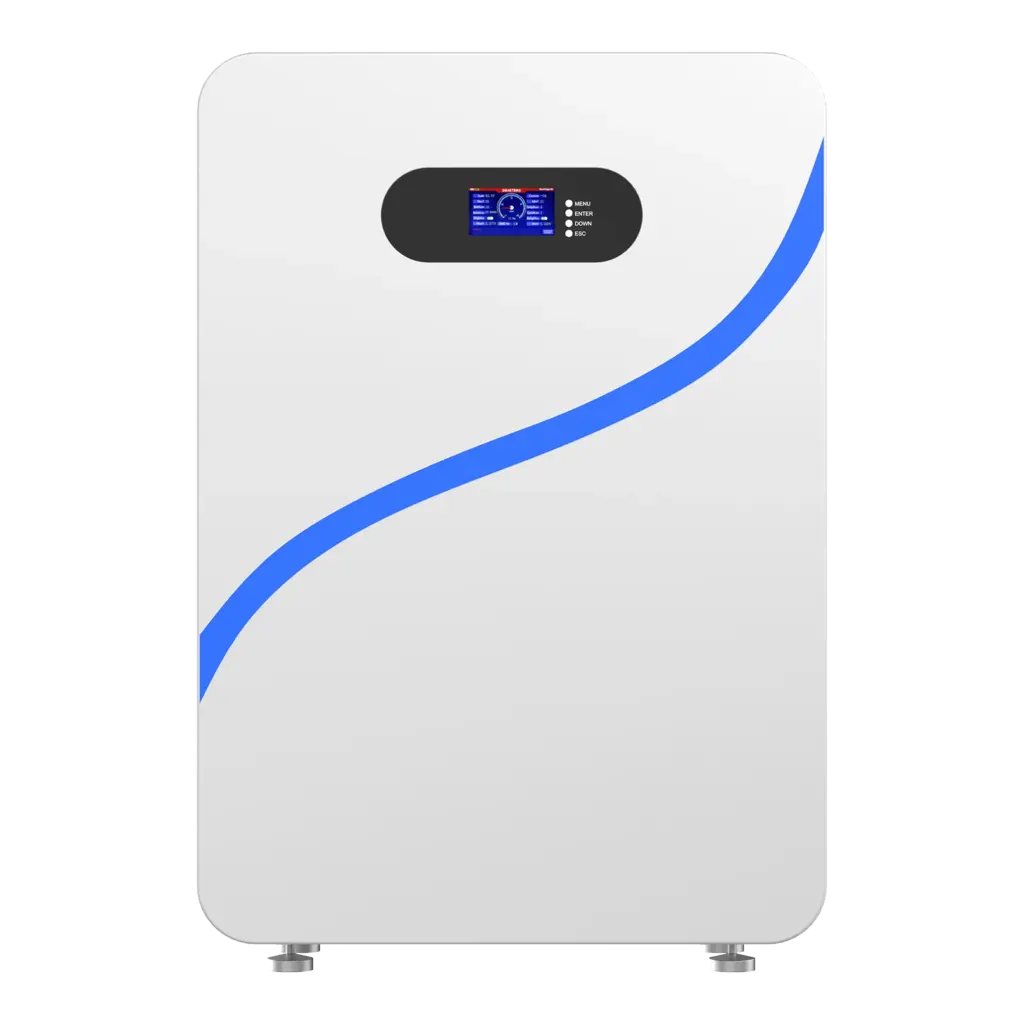

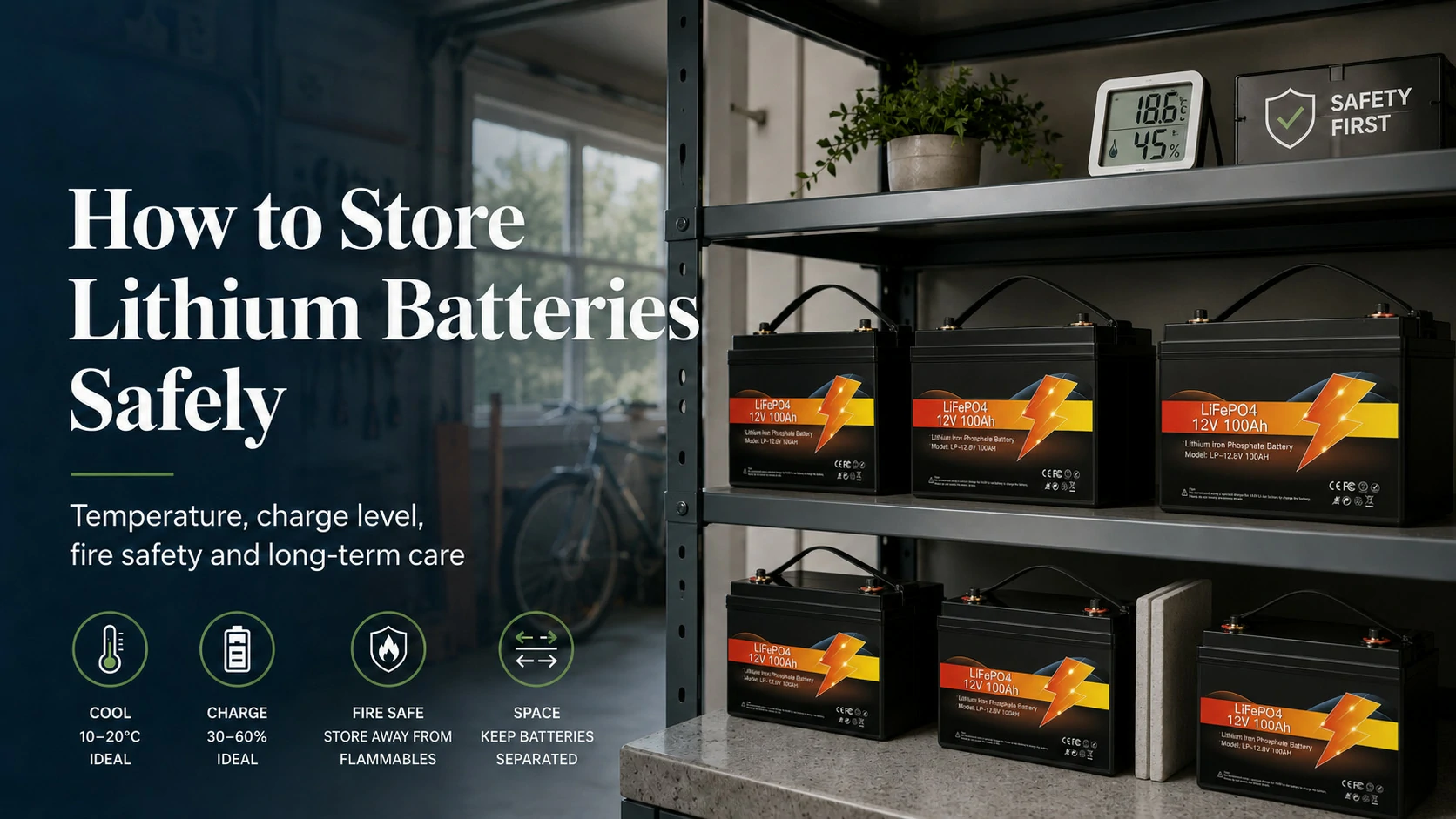
The safest way to store lithium batteries is to keep them in a cool, dry, well-ventilated place, away from direct sunlight, heat sources, moisture, loose metal objects and combustible materials.
For long-term storage, most rechargeable lithium-ion and LiFePO4 batteries should be stored at a partial state of charge, commonly around 40%–60%, unless the battery manufacturer gives a different instruction. Never store lithium batteries fully discharged for long periods, never leave them continuously charging, and inspect them regularly for swelling, leakage, unusual smell, overheating or physical damage.
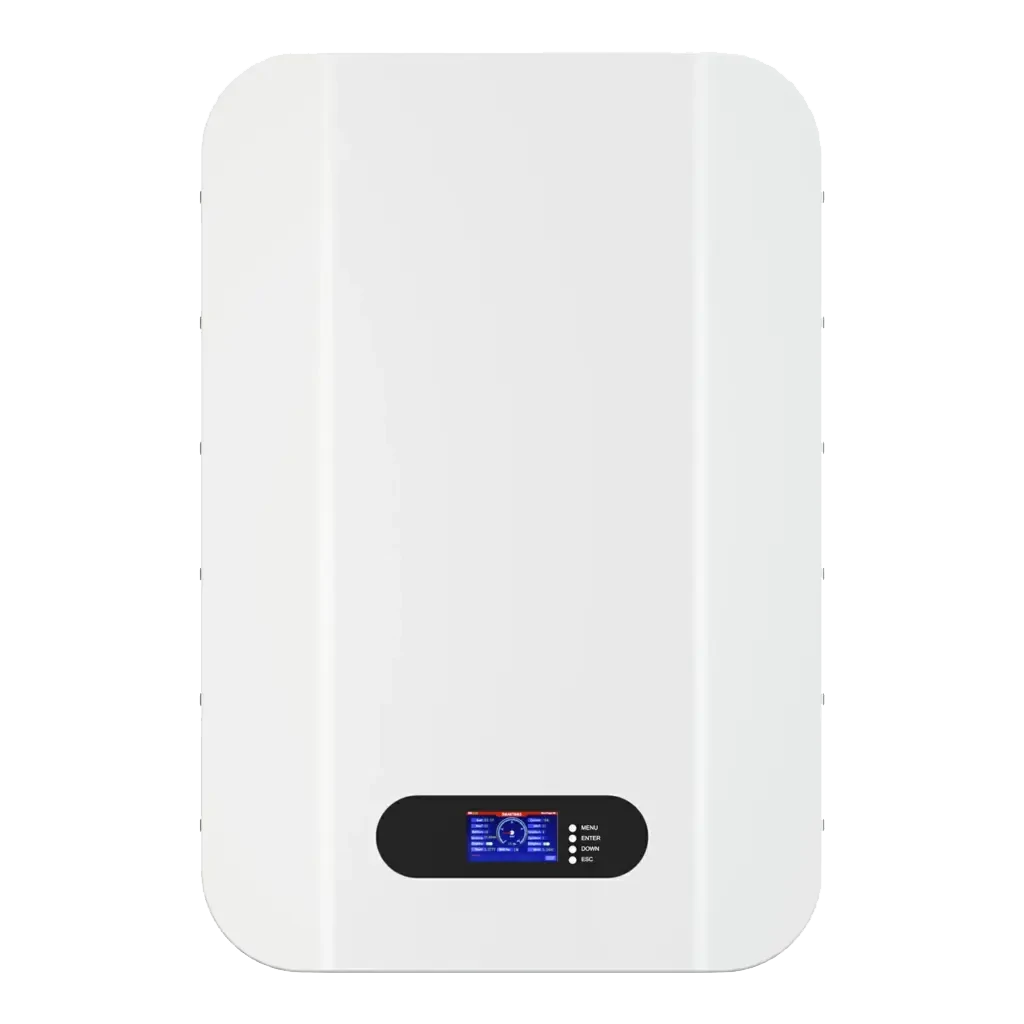
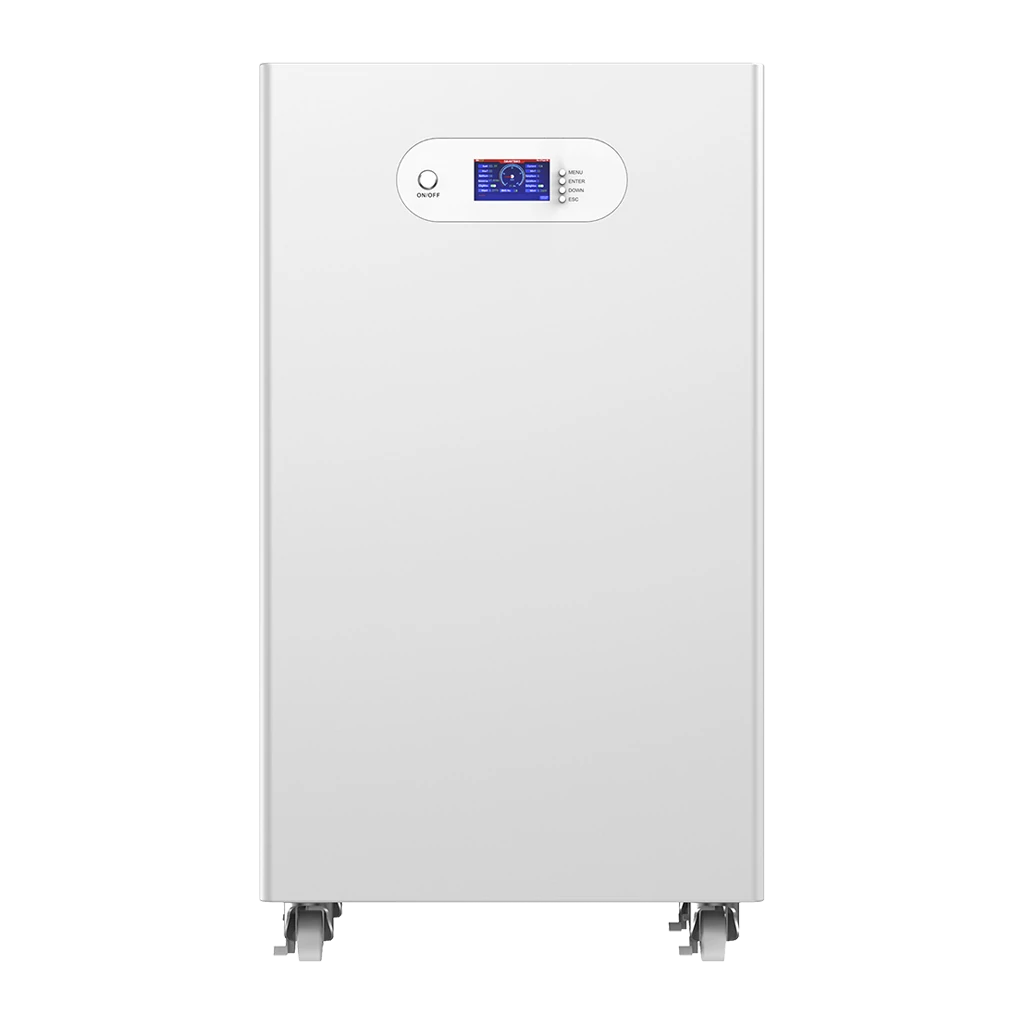
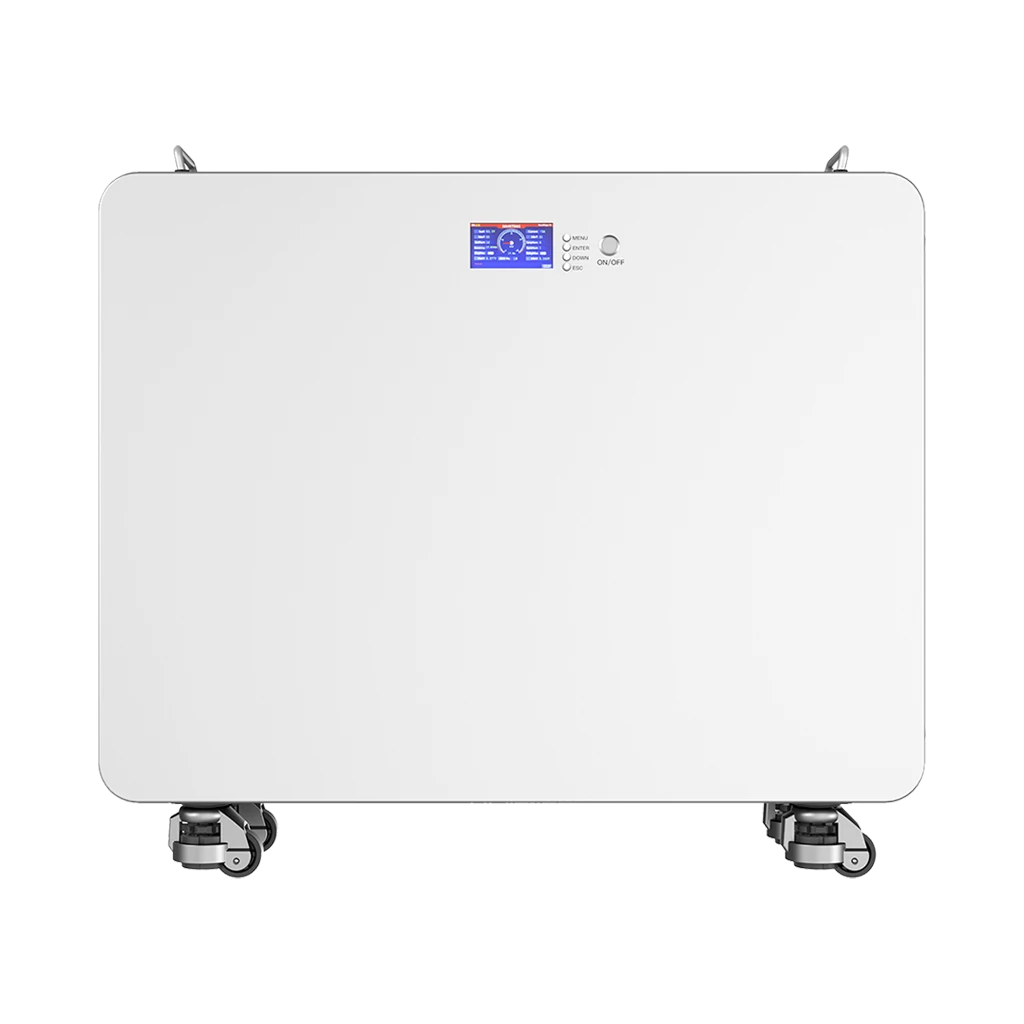
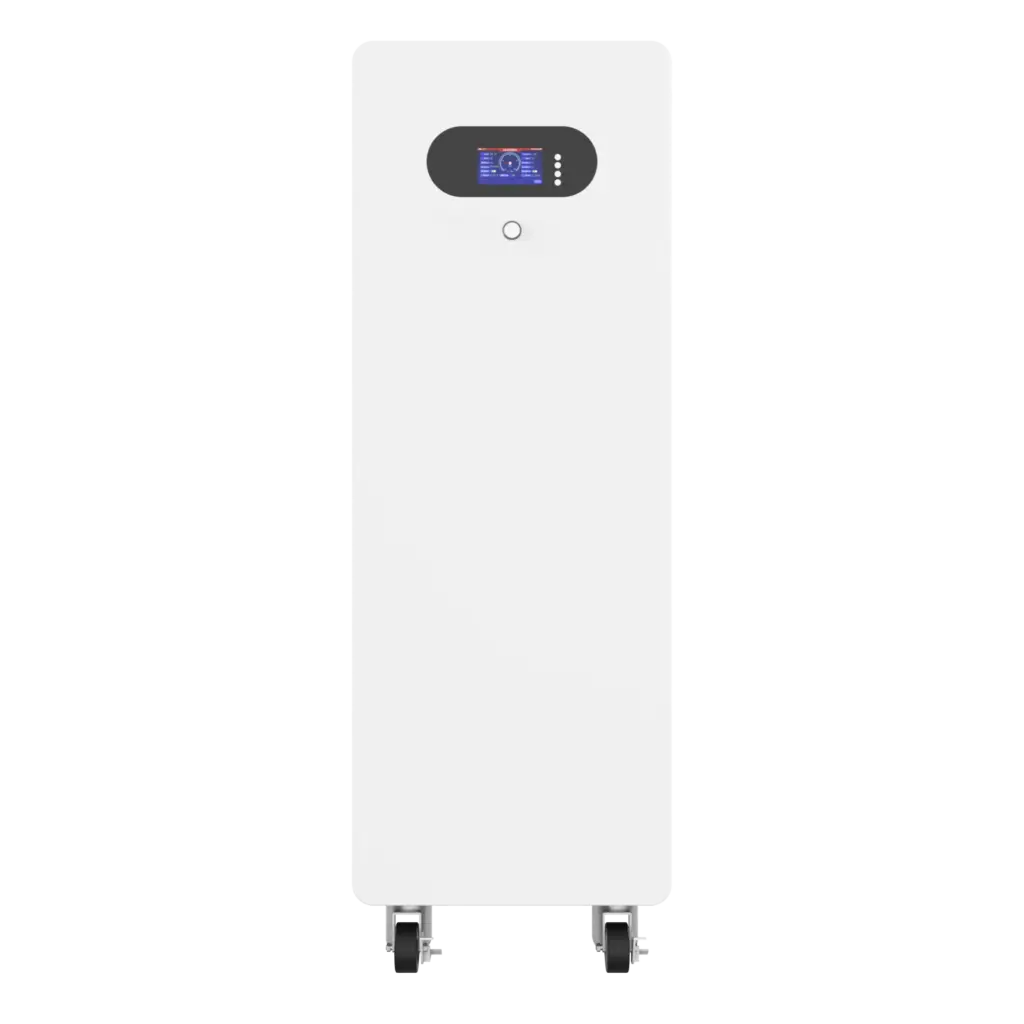
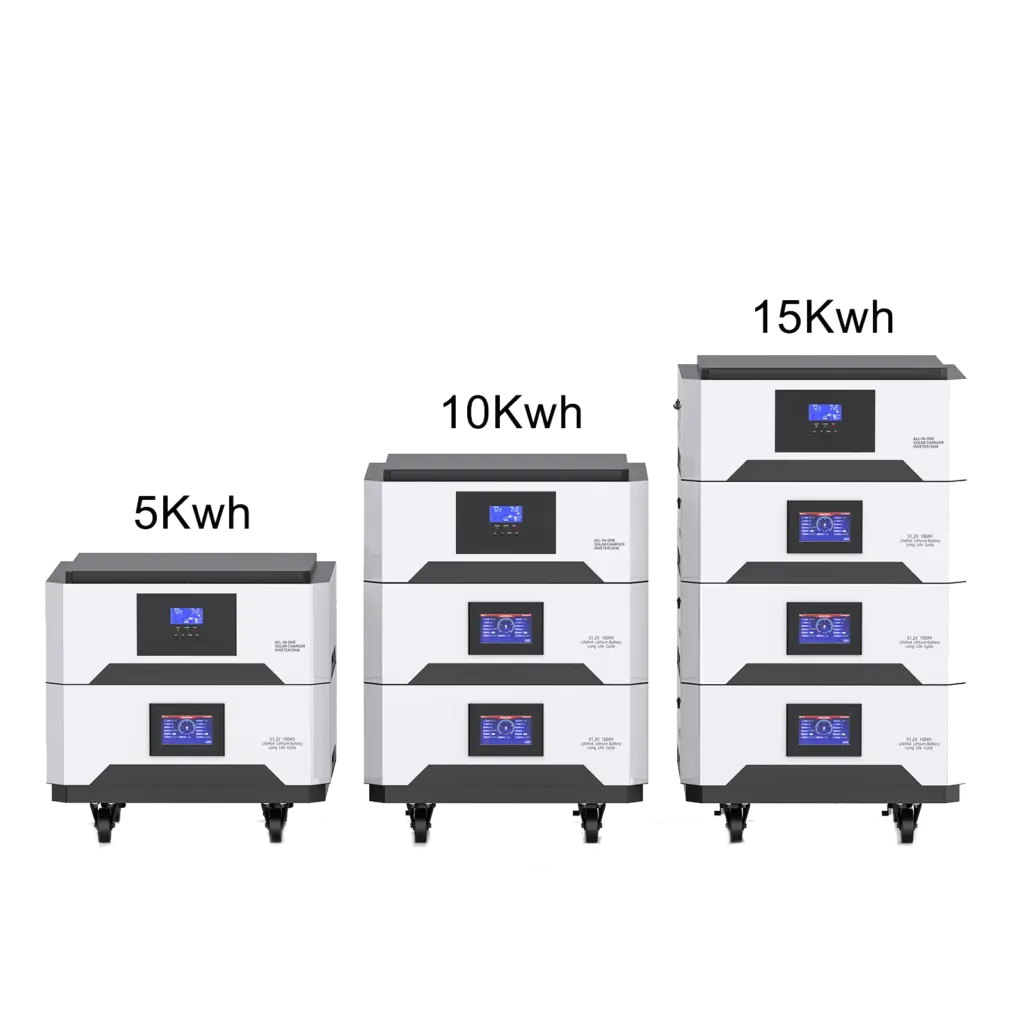
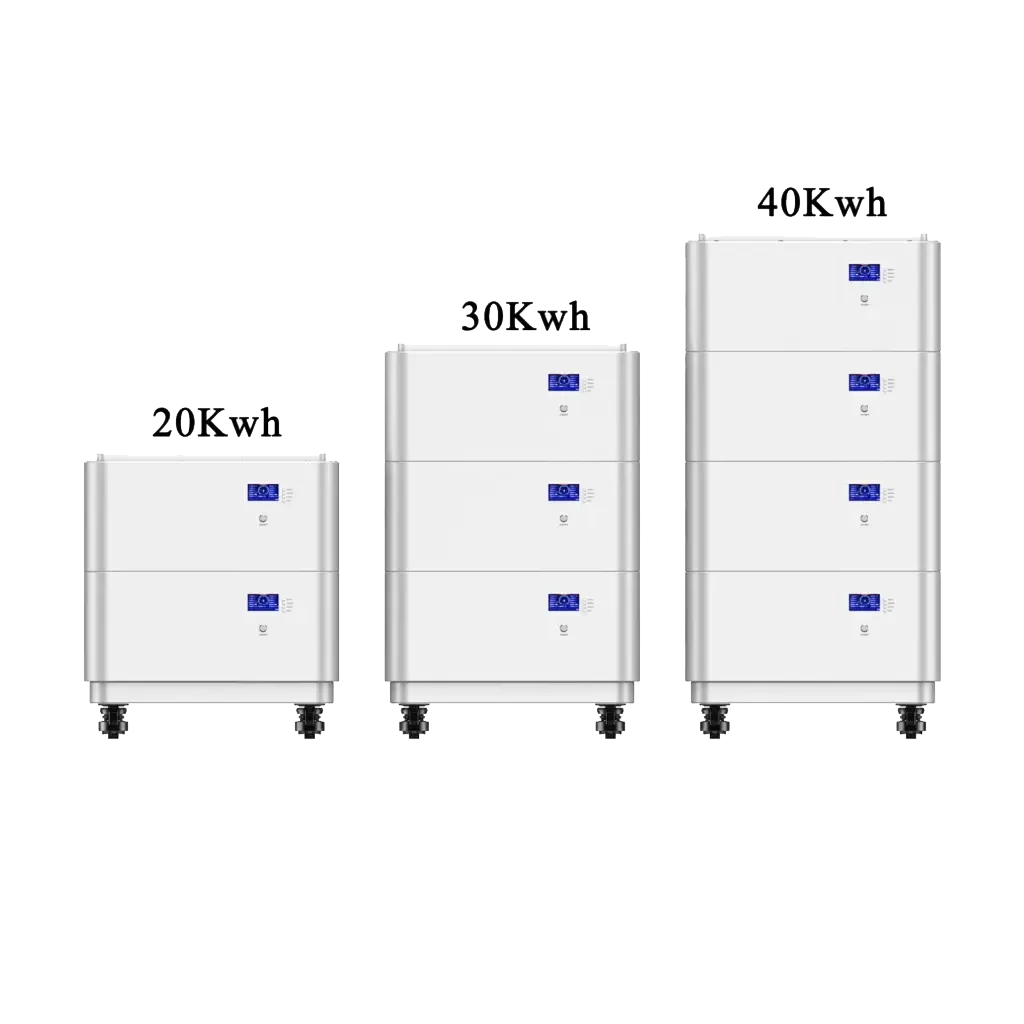
For larger home solar batteries, commercial battery packs or energy storage systems, always follow the manufacturer’s manual, local electrical code and fire safety guidance. If you use lithium batteries for solar energy storage, a system with a smart BMS, temperature monitoring and proper installation support—such as Avepower’s LiFePO4 battery safety technology—can help reduce storage and standby risks during daily operation and seasonal non-use.
Why Proper Lithium Battery Storage Matters
Lithium batteries are widely used because they store a large amount of energy in a compact size. They power phones, laptops, power tools, garden equipment, e-bikes, RVs, boats, forklifts, solar battery systems and commercial energy storage equipment. The same high energy density that makes them useful also means they must be stored with care. environmental risks.
Poor storage can cause three major problems: reduced battery life, loss of capacity and safety hazards. Excessive heat accelerates degradation. Deep discharge can make some lithium batteries unable to recharge. Physical damage can trigger internal short circuits. Incorrect charging or continuous charging can increase the chance of overheating, especially if the charger or battery is damaged.
What Counts as a Lithium Battery?
Before deciding how to store lithium batteries, it helps to understand what type of battery you are dealing with.
Lithium-Ion Batteries
This is the broad category used in laptops, smartphones, cordless tools, e-bikes, scooters, drones, power stations and many rechargeable devices. These batteries have high energy density and must be protected from overcharging, deep discharge, heat, impact and moisture.
Lithium Iron Phosphate Batteries
Lithium iron phosphate, often written as LiFePO4 or LFP, is a lithium battery chemistry widely used in solar storage, RV batteries, marine batteries and backup power systems. It is known for long cycle life, thermal stability and good safety characteristics compared with many cobalt-based lithium-ion chemistries.
For solar and home backup applications, LiFePO4 is commonly preferred because it is durable, stable and suitable for repeated charging and discharging. Avepower’s home energy storage battery systems use LiFePO4 technology for residential and commercial solar battery storage applications.
Lithium Metal Batteries
These are usually non-rechargeable batteries found in cameras, smoke detectors, watches, medical devices and some electronics. They also require safe handling and should not be mixed with household waste when spent.
Large Lithium Battery Systems
These include residential solar batteries, commercial battery cabinets, telecom backup batteries, forklift batteries, RV battery banks and containerized energy storage systems. These require more careful storage planning because they contain much higher energy capacity than a small tool battery.
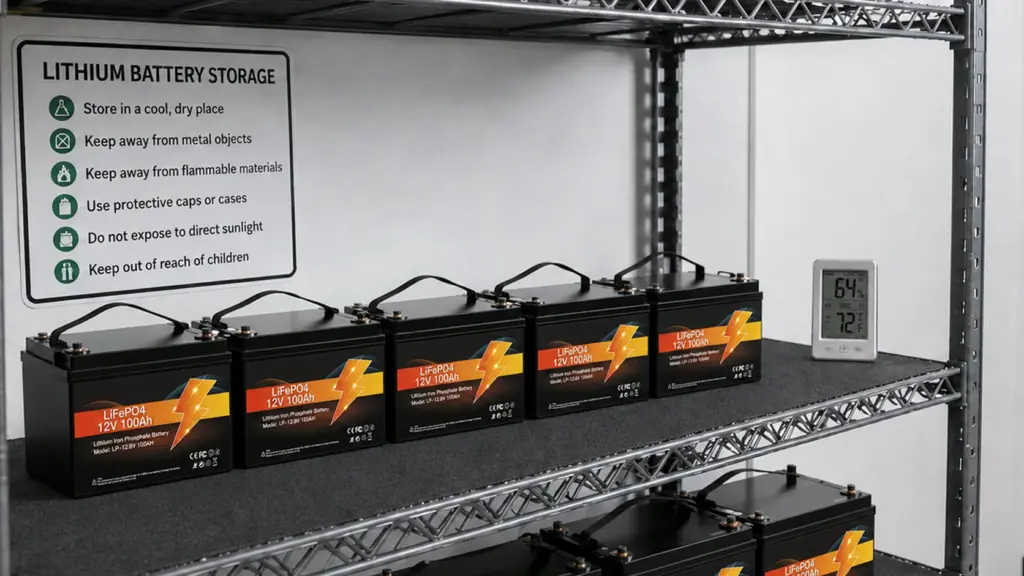
Best Conditions for Storing Lithium Batteries
1. Store at the Right State of Charge
For most rechargeable lithium batteries, avoid storing them completely full or completely empty for long periods. A partial charge is usually best. Many safety and battery-care resources recommend a mid-range state of charge for long-term storage, often around 30%–50%, 40% or 50%, depending on battery type and manufacturer guidance.
| Storage Period | Suggested State of Charge | Notes |
|---|---|---|
| A few days to a few weeks | 40%–80% | Avoid leaving on charger continuously |
| 1–3 months | Around 40%–60% | Check manufacturer instructions |
| More than 3 months | Around 40%–60%, then inspect periodically | Recharge if SOC drops too low |
| Installed solar battery system | Follow BMS and manufacturer standby mode | Do not disconnect randomly without installer guidance |
Some consumer tool brands may recommend fully charging certain removable batteries before winter storage because small packs can self-discharge over time, especially in cold conditions. That is why the manufacturer’s manual should always override general advice.
For solar batteries and larger LiFePO4 systems, the best practice is usually not “charge it to 100% and forget it.” Instead, use the BMS or system standby mode and follow the supplier’s storage voltage/SOC guidance.
2. Keep Batteries in a Cool, Stable Temperature
Temperature is one of the most important factors in lithium battery storage. Store lithium batteries at room temperature when possible. Avoid long exposure to extreme heat, freezing conditions or direct sunlight.
For long-term storage, many manufacturers prefer a cool indoor range. Avepower recommends 32°F to 77°F / 0°C to 25°C for lithium battery storage longer than three months.
Avoid storing lithium batteries in:
- Hot vehicles
- Direct sunlight
- Near heaters, boilers or furnaces
- Damp outdoor sheds
- Freezing garages
- Near open flames or ignition sources
If a lithium battery is hot after use or charging, let it cool before placing it into storage.
3. Store in a Dry Area with Low Humidity
Moisture can corrode terminals, damage electronics and shorten battery life. A storage room should be dry, clean and protected from leaks. Avoid damp sheds, wet basements, outdoor cabinets without weather protection or areas exposed to condensation.
For small batteries, use original packaging, a plastic battery case or a dedicated storage container. For larger battery packs, use a stable rack or cabinet that keeps the battery off wet floors and away from accidental impact.
4. Ensure Ventilation and Heat Dissipation
Lithium batteries should not be packed tightly into sealed boxes where heat can build up. Ventilation is especially important when batteries are stored in workshops, garages, warehouses or charging rooms.
For businesses storing multiple batteries, the storage area should be separated from high-traffic zones, combustible stock, open flames and mechanical equipment.
5. Protect Terminals from Short Circuits
Loose metal objects are a common storage risk. Screws, keys, tools, metal shelves or exposed terminals can create a short circuit if they bridge the battery contacts. Store lithium batteries away from metal objects, or cover the terminals with non-conductive caps or tape where appropriate.
For removable batteries:
- Keep terminal covers on when available.
- Do not throw loose batteries into drawers.
- Do not store different battery types mixed together.
- Do not stack heavy items on top of battery packs.
- Keep batteries upright and stable.
How to Store Lithium Batteries at Home
For household batteries, power tools, garden equipment, e-bikes and portable power stations, use this simple storage process:
- Remove the battery from the device if it will not be used for a long time: Leaving a battery connected to a device can slowly drain it, even when the device is switched off. Avepower recommends disconnecting batteries from devices during seasonal storage to avoid over-discharge.
- Check the state of charge: For most rechargeable lithium batteries, store at a partial charge unless your product manual says otherwise. If the product is a garden-tool battery and the manufacturer tells you to fully charge before winter storage, follow that product-specific instruction.
- Choose a proper location: A bedroom drawer, hot attic, damp shed or vehicle trunk is not ideal. A dry indoor utility area, shelf or temperature-stable storage room is better.
- Keep batteries separated: Use original packaging, battery cases or labeled containers. Do not store batteries beside coins, nails, screws or tools.
- Check them every few months: If the charge level has dropped too low, recharge to the recommended storage level. If you see swelling, cracks, leakage, corrosion, smell or heat, stop using the battery.
The Avepower advises stopping use if a lithium-ion battery shows warning signs such as odor, color change, too much heat, shape change, leaking or odd noises.
How to Store Lithium Batteries Long Term
Long-term storage usually means one month or more, and seasonal storage often means three to six months. For long-term storage, the main objective is to prevent deep discharge, heat damage and physical damage.
A good long-term lithium battery storage process looks like this:
- Read the manufacturer’s storage instructions.
- Charge or discharge the battery to the recommended storage SOC.
- Disconnect it from equipment if the manual allows.
- Clean dust and debris from the case.
- Inspect for cracks, swelling, corrosion or leakage.
- Store in a cool, dry and ventilated area.
- Keep terminals protected.
- Record storage date, SOC and inspection date.
- Recheck every two to three months.
- Recycle or isolate any damaged battery.
Do not leave lithium batteries on a charger for months. Batteries should not be continuously charged during long-term storage because charging is one of the higher-risk periods for battery failure, and continuous charging can stress the battery.
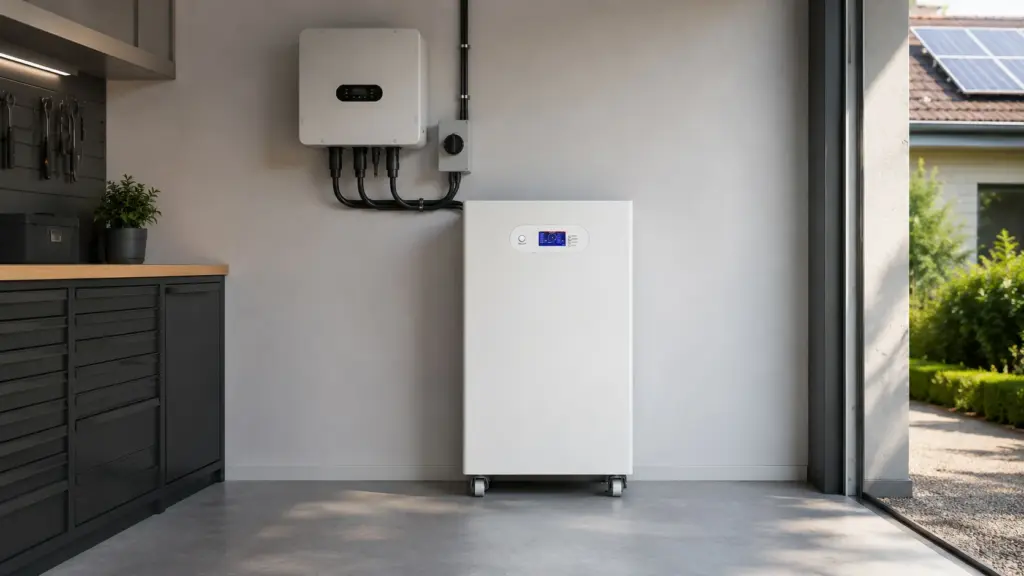
How to Store Solar Lithium Batteries
Solar lithium batteries are different from small consumer batteries because they are usually connected to an inverter, BMS, solar charge controller and sometimes an energy management system. You should not treat a home solar battery like a removable tool battery unless the manufacturer specifically designed it for that use.
For home solar systems, storage may mean one of three things:
- The battery is installed but the house is vacant.
- The system is waiting for installation.
- The battery pack is removed from service or kept as backup stock.
For installed systems, follow the installer’s shutdown and standby procedure. Do not randomly disconnect battery cables, inverter communication lines or breakers without guidance. Many solar batteries depend on BMS communication to manage voltage, temperature, SOC and fault protection.
Avepower’s residential battery energy storage systems are designed for solar storage, backup power and energy savings, while Avepower’s stackable solar batteries include LiFePO4 chemistry, BMS monitoring of voltage/current/temperature/SOC, CAN/RS485/RS232 communication and Bluetooth/WiFi monitoring for easier daily system visibility.
For distributors, installers and project developers storing solar batteries before installation:
- Keep batteries in original packaging until installation.
- Store indoors in a dry and temperature-stable space.
- Avoid pallet damage, forklift impact and compression.
- Do not mix different models, capacities or voltages without labeling.
- Check the storage SOC and recharge interval according to the product manual.
- Keep documentation, test reports and serial numbers accessible.
For inverter-linked systems, it is also important to verify communication compatibility. Avepower provides an inverter compatibility list covering CAN and RS485 communication with multiple inverter brands, which helps installers confirm the correct protocol before commissioning.
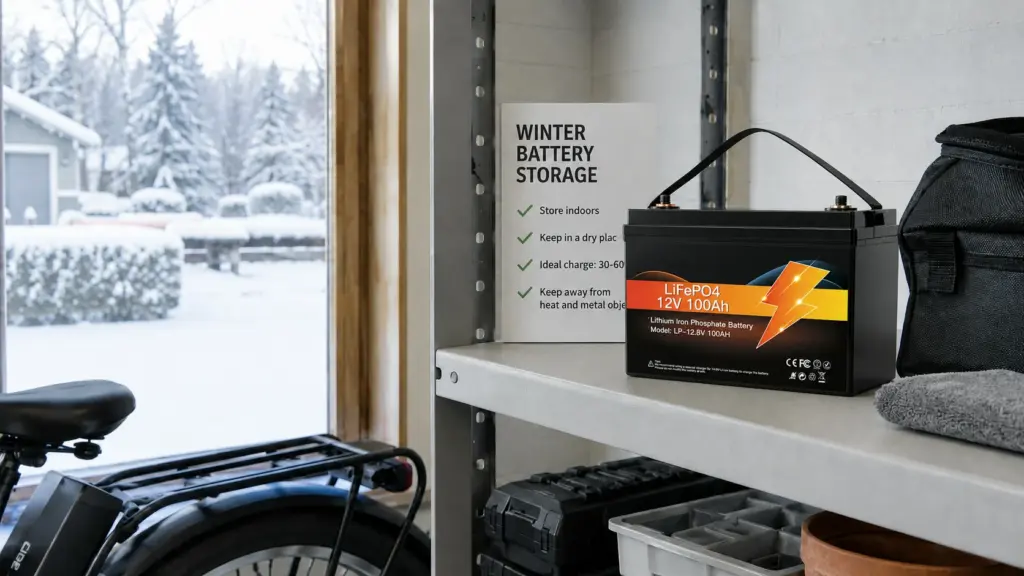
How to Store Lithium Batteries Over Winter
Winter storage is a common concern for garden tools, RVs, marine batteries, e-bikes and portable power stations.
Cold temperatures slow battery chemistry and reduce available power. The biggest risk is not simply storing a lithium battery in a cool environment; the bigger concern is storing it empty, charging it below the safe temperature range, or leaving it in an unheated place where condensation and freezing conditions occur.
For winter storage:
- Remove removable batteries from outdoor equipment.
- Store them indoors in a dry, room-temperature space.
- Avoid freezing garages or sheds if temperatures drop below 0°C.
- Do not charge a lithium battery while it is below its allowed charging temperature.
- Keep the battery partially charged according to the manual.
- Check the charge level during long winter storage.
Avepower recommends removing batteries from machines stored in very cold places and avoiding storage below 0°C because low temperatures can compromise lithium-ion cells.
For LiFePO4 solar batteries, many models include BMS low-temperature protection, but that does not mean installation can ignore the environment. Always check the charging temperature range, heating function if available, IP rating, cabinet design and local installation requirements.
How to Store Lithium Batteries in a Business, Warehouse or Workshop
Businesses need a stricter process than homeowners because they may store many batteries in one place. A warehouse, repair shop, e-bike store, solar installer depot or industrial facility should create a written battery storage procedure.
A safe business lithium battery storage plan should include:
| Area | Best Practice |
|---|---|
| Receiving | Inspect cartons and battery cases for damage |
| Labeling | Record model, voltage, capacity, date received and SOC |
| Segregation | Separate damaged, used, returned and new batteries |
| Temperature | Keep storage room cool and stable |
| Humidity | Avoid damp zones and condensation |
| Ventilation | Maintain airflow, especially near charging areas |
| Charging | Use certified, compatible chargers only |
| Fire safety | Keep batteries away from combustibles and prepare emergency procedures |
| Training | Teach staff to identify swelling, heat, odor, leakage and damage |
| Recycling | Use approved battery recycling or hazardous waste channels |
Avepower recommends that workplaces consider temperature, humidity, ventilation, battery condition, charger quality and charge duration when building lithium battery storage procedures. It also warns against returning dropped, dented, swollen or suspicious batteries to storage or charge areas.
For larger commercial and industrial energy storage projects, the design should also consider fire suppression, site layout, monitoring, emergency access and local code requirements. Avepower’s commercial and industrial energy storage solutions include integrated systems with battery, PCS, ECS, EMS connectivity, IP-rated cabinet protection and fire system design for project-level applications.
What Not to Do When Storing Lithium Batteries
Avoid these common mistakes:
- Do not store lithium batteries in direct sunlight.
- Do not store them beside heaters or hot equipment.
- Do not leave batteries continuously charging.
- Do not store them fully discharged for long periods.
- Do not throw loose batteries into a metal drawer.
- Do not store damaged or swollen batteries with healthy batteries.
- Do not charge on beds, couches, carpets or other soft combustible surfaces.
- Do not use uncertified or mismatched chargers.
- Do not stack heavy objects on top of battery packs.
- Do not put used lithium-ion batteries into household trash or regular recycling bins.
Use compatible charging equipment, stop charging once the battery is fully charged, store the battery in a place away from flammable items, and avoid charging it on soft surfaces such as beds or sofas.
What to Do with Damaged, Swollen or Overheated Lithium Batteries
A damaged lithium battery should not go back into normal storage. Warning signs include:
- Swelling or bulging
- Cracked case
- Leaking fluid
- Burn marks
- Unusual odor
- Hissing or popping sound
- Excessive heat
- Corroded terminals
- Battery no longer charging normally
Swelling indicates battery damage and can be a potential fire hazard; it recommends contacting the manufacturer, retailer, local household hazardous waste program or waste management agency for direction. If there is an imminent fire risk, emergency services may be needed.
For businesses, isolate the battery in a designated safe area away from other batteries and combustibles. Do not ship, repair or reuse damaged batteries unless handled under proper hazardous material procedures.
How to Dispose of or Recycle Lithium Batteries Safely
Do not put lithium-ion batteries into household garbage or normal recycling bins. Lithium-ion batteries and devices containing them should not go in household garbage or regular recycling because they can be damaged or crushed during transport and processing, creating fire hazards.
Before recycling:
- Tape exposed terminals with non-conductive tape.
- Place each battery in a separate plastic bag if needed.
- Do not mix damaged batteries with normal batteries.
- Use certified battery recyclers, retailer take-back programs or local hazardous waste collection points.
- For large energy storage batteries, contact the manufacturer, installer or qualified recycling partner.
For large batteries, such as EV packs, solar batteries or commercial energy storage modules, do not attempt DIY disposal. Contact the manufacturer, installer, dealer or qualified recycling provider. EPA lists Earth911 and Call2Recycle as resources for finding battery recycling locations
Conclusion
Learning how to store lithium batteries is not only about preventing battery damage. It is also about reducing fire risk, extending service life and keeping people, property and equipment safe.
If you are planning a solar battery project, reviewing storage safety, installation environment, inverter compatibility and long-term maintenance should be part of the system design from the beginning.
Need a Safer LiFePO4 Battery Storage Solution?
Avepower supports installers, distributors, project developers and OEM/ODM partners with scalable LiFePO4 battery storage systems for residential and commercial applications.
Contact Avepower to discuss your battery capacity, installation environment and project requirements.
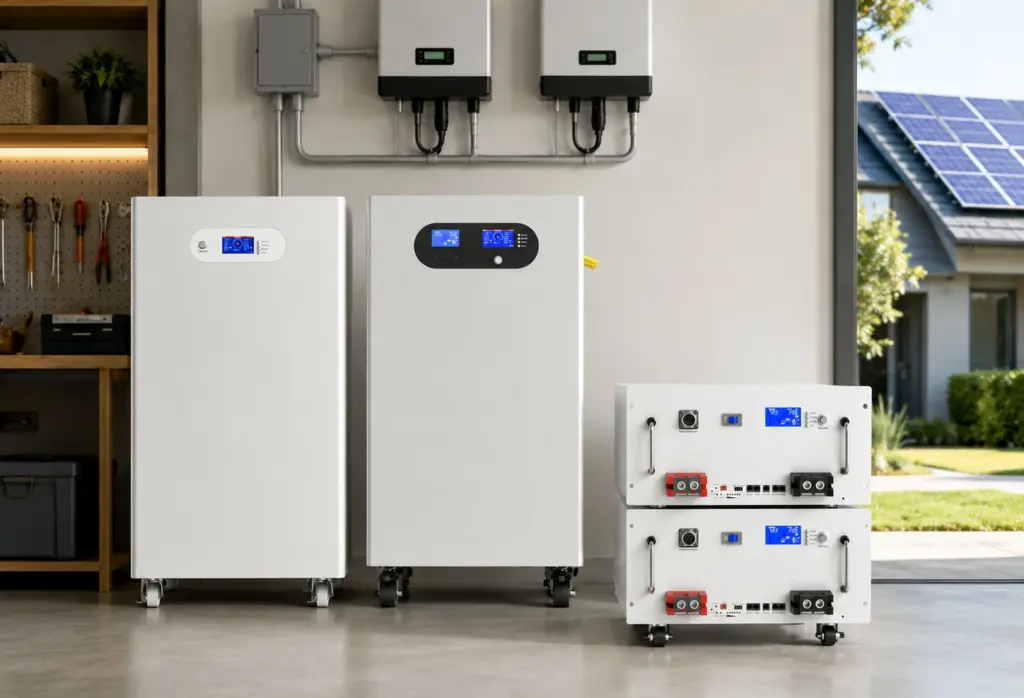
Take Control of Your Energy with Avepower!
Reliable home solar battery solutions with OEM/ODM customization and in-house manufacturing, tailored to the needs of distributors, installers, and energy partners.
FAQ
Store lithium batteries in a cool, dry, ventilated place at a partial charge, away from sunlight, moisture, metal objects and flammable materials. Follow the manufacturer’s manual for the exact storage charge and temperature range.
Not usually for long-term storage. Many rechargeable lithium batteries are best stored at a partial state of charge, often around 40%–60%. However, some tool or garden-equipment brands may recommend full charge before winter storage, so always follow the product manual.
For long-term storage, check every two to three months. Confirm the charge level has not dropped too low and inspect for swelling, leakage, corrosion or damage.
Stop using it immediately. Move it away from flammable materials if safe, do not charge it, and contact the manufacturer, retailer or local hazardous waste program for proper handling instructions.
Businesses should use a dedicated storage area with temperature control, ventilation, labeling, staff training, damaged battery isolation, fire response procedures and approved recycling channels.
Do not put them in household trash or normal recycling bins. Tape the terminals, place batteries separately if needed and take them to a certified battery recycling point, retailer take-back program or household hazardous waste collection site.