
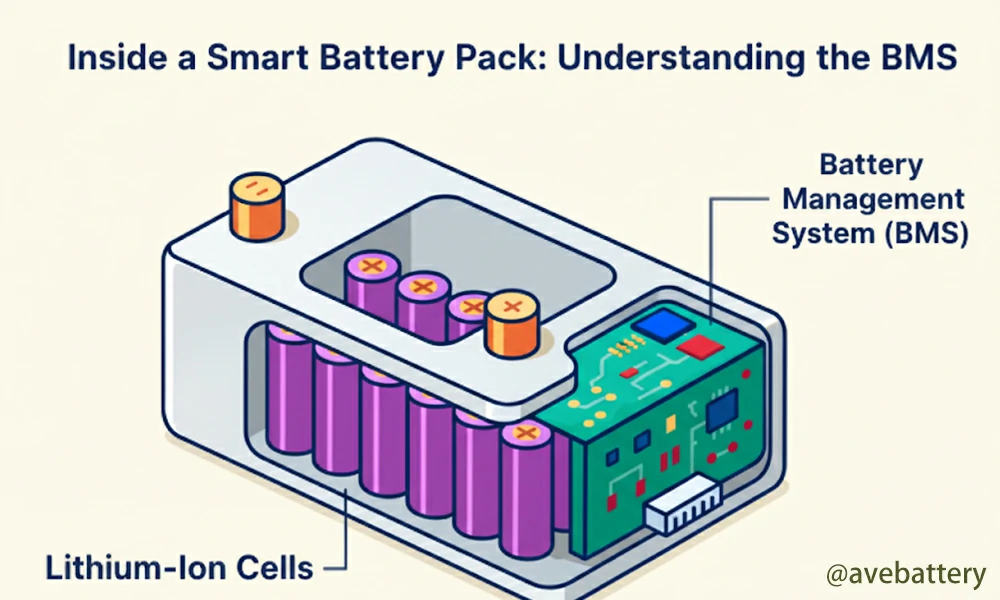
BMS stands for Battery Management System. It is an electronic system that monitors, manages, and protects rechargeable batteries by tracking voltage, current, temperature, State of Charge (SOC), and State of Health (SOH).
A BMS helps prevent overcharging, over-discharging, overheating, overcurrent, and short circuits. It also balances battery cells and is widely used in lithium batteries, electric vehicles, solar energy storage, and commercial battery energy storage systems.
What Does BMS Stand For?
BMS Meaning in One Sentence
BMS = Battery Management System — the electronic control system that monitors, protects and balances rechargeable batteries.
When the BMS detects that any of these unsafe operating conditions are happening, it will quickly shut off the battery pack. This immediate action protects the delicate cells from permanent damage. For example, many companies like Avepower build a BMS right into their battery packs to manage and protect them from these common problems.
What Does a BMS Do?
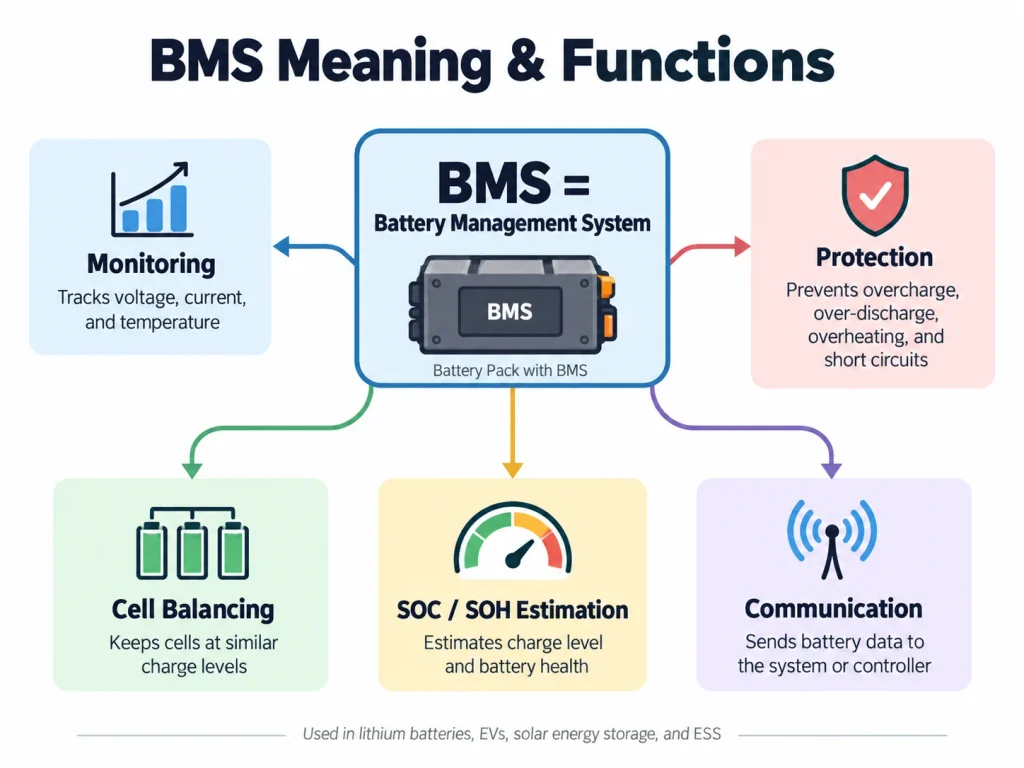
| BMS Function | What It Does |
|---|---|
| Monitoring | Tracks voltage, current and temperature |
| Protection | Prevents overcharge, over-discharge and overheating |
| Cell Balancing | Keeps battery cells at similar charge levels |
| SOC / SOH | Estimates charge level and battery health |
| Communication | Sends battery data to inverter, EMS or controller |
Essential Parts That Make Up a BMS
A BMS is not just one component; it is a complete system made up of several key parts that work together to keep the battery performing at its best.
Battery Monitor
The battery monitor is the data-gathering center of the BMS. It consists of a suite of sensors strategically placed across the battery pack. These sensors continuously track the vital signs and overall health of the batteries. Crucial information gathered includes:
- Cell Voltages: The individual voltage level of each cell in the pack.
- Current Flow: The rate at which charge is entering or leaving the battery.
- Temperature: The thermal condition of the cells and the pack as a whole.
- Charging Status: The current state of charge (SOC) of the battery.
Battery Controller
The battery controller regulates the flow of energy into and out of the battery pack. It makes real-time decisions to ensure that the battery operates within safe voltage and current limits, optimizing performance and extending battery life.
Battery Charger
The battery charger is the component that feeds electrical power into the battery pack. It is managed by the controller to deliver power at the correct voltage and flow rate to achieve an optimal charge without causing stress or damage to the cells. The controller directs the charger to taper off or stop charging when safe limits are approached.
Connectors
Connectors are the physical interfaces that link the battery pack, the BMS, and external devices such as inverters or solar panels. They enable communication between components, allowing the BMS to make informed decisions based on real-time system data.
How a BMS Works
A BMS works by continuously measuring, comparing, and adjusting. The system looks at current, voltage, and temperature data. Based on this data, it applies protection mechanisms.
- Current: Every battery cell has safe current limits. The BMS ensures that charging and discharging currents do not exceed those limits. If the load changes suddenly, such as in the case of rapid acceleration in an electric vehicle, the BMS allows a temporary peak current but intervenes if it lasts too long or becomes unsafe.
- Voltage: Each lithium-ion cell must stay within a narrow voltage range. The BMS stops charging when the upper limit is reached and reduces discharge when the lower limit approaches. This avoids permanent damage and supports longer cell life.
- Temperature: Lithium-ion batteries are sensitive to temperature. Charging below 0°C can permanently damage cells. Continuous exposure to high temperatures can cause aging and performance loss. The BMS manages heating and cooling systems to keep the pack in an optimal range.
How a BMS Manages Capacity and Balances Cells
A BMS maximizes pack capacity by keeping cells balanced as they charge and discharge. The system estimates how much charge each cell holds and takes action to even out the differences.
Why Cells Get Unbalanced
Manufacturers make cells to tight tolerances, but no two cells are exactly the same. Cells age at different rates, and they show slightly different self-discharge rates. Over time, these differences lead to unbalanced state of charge (SOC) across the pack. A single low cell can limit the usable capacity of the whole pack if the system does not balance the cells.
The series arrangement of cells determines the overall voltage of the battery pack. However, when cells are unbalanced, charging becomes tricky. In a perfectly balanced pack, all cells charge at the same rate, and charging can safely stop once the pack reaches the voltage cut-off limit, typically around 4.0 volts per cell. In an unbalanced pack, some cells reach their maximum voltage before others. If the charging current is not adjusted, the top cell can become overcharged while the lower cells remain undercharged, reducing overall capacity and risking damage to the overcharged cells.
Capacity management is the process of maximizing the usable energy from a battery pack. Over time, cells in a battery pack can become unbalanced due to differences in self-discharge rates, usage, or manufacturing tolerances.
Cell Balancing
The BMS balances the state of charge (SOC) across all cells. Passive balancing diverts excess current from fully charged cells to prevent overcharging and allows weaker cells to reach their maximum charge. Active balancing can transfer energy directly between cells to achieve more precise results.
Without proper balancing, some cells may reach their limits early, forcing the battery to stop charging before all cells are fully charged. This reduces the total usable capacity of the pack and can cause premature aging.
State-of-Charge (SOC) Estimation
The SOC represents how much charge is left in the battery. The BMS calculates SOC using voltage, current, and other parameters to give a real-time estimate of available energy. Accurate SOC estimation ensures the battery is neither overcharged nor excessively discharged.
State-of-Health (SOH) Monitoring
The BMS also tracks the battery’s overall health, including its ability to hold charge compared to when it was new. SOH information helps predict battery lifespan and plan maintenance or replacement.
How a BMS Protects the Battery Electrically
Electric protection has two core parts: current protection and voltage protection. The BMS monitors pack current and individual cell voltages and reacts when the readings move outside safe ranges.
Current Protection
The BMS reads the current entering and leaving the pack. The system enforces limits for continuous current and short peaks. The controller watches for sudden spikes that may mean a short circuit or motor stall. The system can cut power nearly instantly if a dangerous spike appears.
Manufacturers usually list continuous and peak current limits for battery cells. The BMS respects those limits. The system may allow short peaks for uses like vehicle acceleration, but the controller will count how long the peak lasts and will reduce or stop current if the peak persists.
Voltage Protection
The BMS measures each cell voltage and the voltage of groups of cells. The system enforces upper and lower voltage limits that depend on the cell chemistry and temperature. The controller will reduce or stop charging as the cells near the upper limit. The controller will ask the load to reduce power or disconnect the pack if the cells approach the lower limit.
The BMS also uses a small margin, or hysteresis, around the voltage thresholds to avoid rapid on-off cycling. The system chooses safe thresholds and margins to avoid frequent interruptions while still protecting the cells.
How a BMS Protects the Battery Thermally
Temperature plays a major role in battery safety and performance. The BMS reads temperatures around the pack and acts to heat or cool the cells when needed.
Why Temperature Matters
Cells produce more heat during fast charging or heavy discharge. The controller watches for high local temperatures that may speed aging or cause thermal runaway. The system also watches for low temperatures. The BMS prevents charging below safe low-temperature limits because charging under freezing conditions can cause metallic lithium to plate onto the anode, which may permanently damage the cell.
Thermal Control Methods
The BMS can use passive or active thermal control. Passive control includes airflow or simply relying on the environment to remove heat. Active control can include fans, liquid cooling plates, pumps, or heaters. The BMS turns these systems on and off based on measured temperatures and on predicted heat generation.
The controller sometimes uses power electronics inside the BMS to create small amounts of heat when the pack needs to warm up. The system uses these tricks when an external heater is not available or when the pack needs only a small temperature boost.
Types of BMS Architectures
Not all battery packs use the same BMS design. Engineers choose the right architecture based on cost, size, and application.
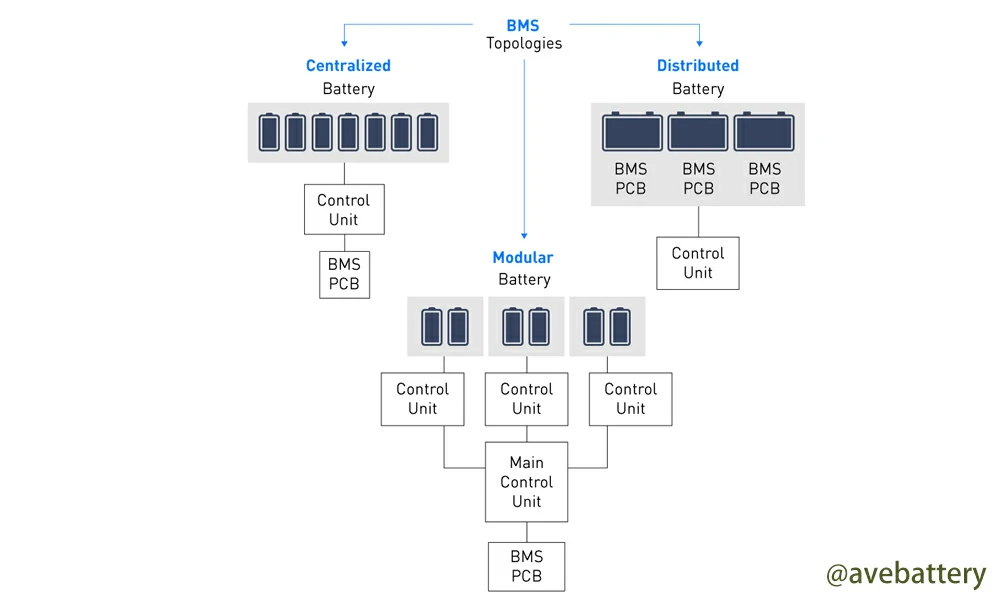
| BMS Type | Description | Advantages | Disadvantages | Applications |
|---|---|---|---|---|
| Centralized | One BMS monitors all cells; all batteries connect directly. | Compact, cost-effective, simple control. | Complex wiring for large packs; harder maintenance. | Small to medium packs, laptops, home energy storage. |
| Modular | Battery divided into modules with individual BMS units; primary BMS oversees all. | Easier maintenance, scalable, replaceable modules. | Slightly higher cost; duplicated features. | Medium to large packs, EV buses, renewable storage. |
| Primary/Subordinate | Slaves relay data; master handles control and communication. | Lower cost for subunits; clear responsibility split. | More complex communication; higher overall cost than centralized. | EVs, industrial energy storage, UPS systems. |
| Distributed | Each cell/module has its own BMS; minimal wiring. | Reduces cabling, modular, fault-tolerant. | Higher cost; embedded electronics complicate maintenance. | Large EV packs, high-capacity storage, aerospace. |
Benefits of a Battery Management System
A BMS is essential for both small and large battery packs. It ensures safe operation, maximizes performance, and extends the battery’s life. The benefits include:
- Safety: Protects users and devices from hazardous conditions, even in high-voltage systems.
- Extended Lifespan: Prevents stress and degradation, ensuring years of reliable service.
- Performance Optimization: Balances cells to deliver maximum capacity and efficiency.
- Data Collection and Communication: Monitors battery health, SOC, and SOH, providing information for system optimization.
- Cost Savings: Reduces maintenance, prevents premature failure, and ensures warranties are upheld.
In large energy storage systems, which may contain hundreds or thousands of cells, a BMS is crucial. Without proper management, such systems can become dangerous, inefficient, or fail prematurely.
Conclusion
A battery management system is an essential component of modern battery technology. It ensures safety, extends battery life, optimizes performance, and enables seamless integration with renewable energy systems. By continuously monitoring voltage, current, temperature, and charge levels, a BMS protects individual cells while maximizing the overall efficiency of the battery pack.
Whether for electric vehicles, home energy storage, or industrial energy storage applications, a BMS is not just a helpful addition—it is a necessity. Without it, battery packs are vulnerable to damage, reduced efficiency, and potential safety hazards. With an advanced BMS in place, users can enjoy safer, longer-lasting, and higher-performing batteries.
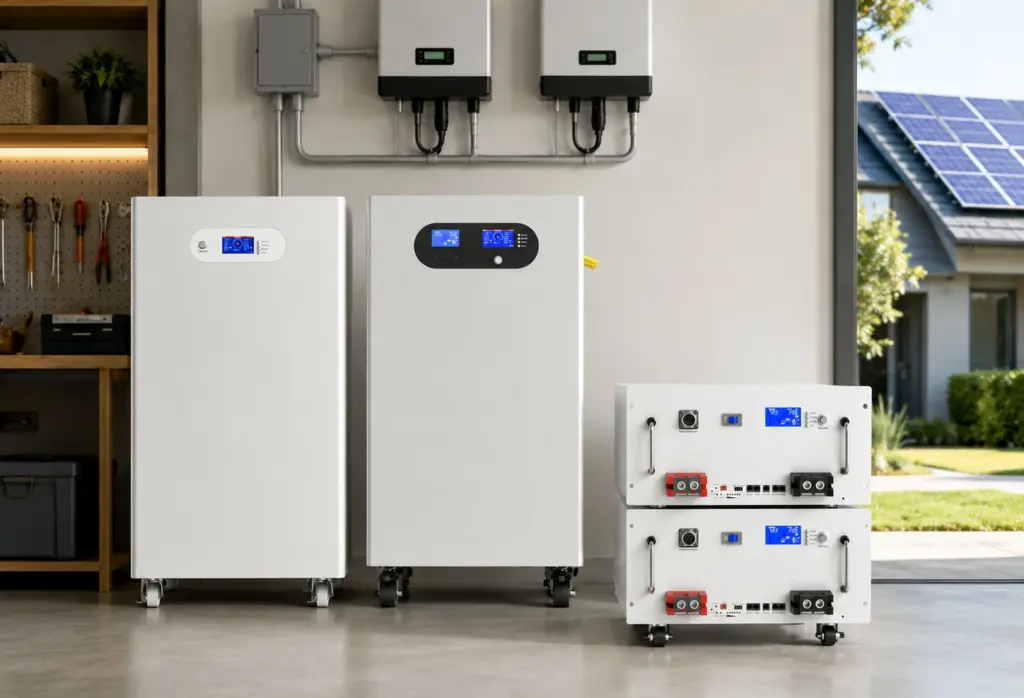
Take Control of Your Energy with Avepower!
Reliable home solar battery solutions with OEM/ODM customization and in-house manufacturing, tailored to the needs of distributors, installers, and energy partners.
FAQ
BMS stands for Battery Management System. It is a technology used to monitor, manage, and protect battery packs, ensuring safe operation, optimal performance, and longer lifespan.
The BMS protects batteries through electrical and thermal management. It monitors voltage and current to prevent overcharging or over-discharging, and it controls temperature using cooling or heating systems to keep the battery within safe operating limits.
Yes. By keeping battery cells within safe voltage, current, and temperature ranges, a BMS reduces stress and degradation, which significantly extends the battery’s lifespan and ensures consistent performance over time.
A BMS is essential for battery safety, efficiency, and longevity. It prevents cell damage, balances cell charges, ensures reliable performance, and reduces maintenance costs. It is particularly critical in applications like electric vehicles, renewable energy storage, and large battery systems.