

Have you ever wondered why some batteries labeled with the same “Ah” (amp-hour) rating last longer than others, while some run out halfway through use? Whether you’re road-tripping in an RV, cruising the waters on a boat, or powering your home solar system, the “Ah” rating directly impacts your energy experience. But many people only understand this number on the surface, missing out on the opportunity to make their devices last longer.
This article is for you. If you’ve ever felt confused by the array of battery specs and wondered how to choose the right one for your needs, keep reading. We’ll break down the meaning of “Ah,” show you how to calculate battery run time, and teach you how to select the best capacity based on your real-world requirements. Turn theory into action, and make sure every battery you choose delivers the best value—whether for outdoor adventures, home energy storage, or commercial use.
What Does Ah Mean on a Battery?
“Ah” stands for amp hours, and the term describes capacity. Essentially, it shows the battery’s capacity to store energy and supply power. A higher Ah rating usually means the battery can last longer between charges.
For example, if a battery has a 50Ah rating, it can theoretically provide 25 amps of current for 2 hours or 5 amps for 10 hours. Similarly, in a solar energy system, a 100Ah lithium battery (like those from Avepower) can power a 100-watt device for roughly 10 hours, demonstrating how Ah translates into practical runtime.
You can read the rating as a measure of stored electrical charge. Energy storage battery manufacturers use Ah to indicate how much current the battery can supply over a set period. The rating does not automatically include efficiency losses and real-life limits.
Why Ah Ratings Can Be Misleading
While a high Ah rating usually suggests longer runtime, not all batteries deliver the same results in real life. Some manufacturers advertise “Ah equivalent” ratings that overstate capacity. For instance, a lead-acid battery may be labeled 100Ah, but under heavy use, it might only provide about half of that, around 50Ah. In contrast, modern lithium batteries, like LiFePO4 battery pack, can deliver nearly their full rated capacity under different loads.
It is essential to look beyond the number and consider the battery type. Understanding how much of the Ah you can actually use will help you select a battery that meets your real-world needs.
Do Higher Ah Ratings Always Mean Better Performance?
A higher Ah rating generally indicates that a battery can run longer before recharging. However, the type of battery and real-world conditions matter more than the number alone. Lead-acid batteries lose capacity under heavy load, and you can only safely use about 50% of their rated Ah. Lithium batteries, in contrast, can use nearly 100% of their Ah rating.
In short, a battery with a lower Ah rating may outperform a larger lead-acid battery if it is lithium-based because it delivers more usable energy efficiently.
How to Size and Runtime Battery Capacity
Understanding amp hours allows you to estimate the size of battery you need and how long it will last. There are two straightforward formulas you can use.
Battery Size Calculator
To Calculate Required Battery Size
The formula is: Ah = Current (Amps) × Time (Hours)
This calculation helps you determine the battery capacity necessary for your devices.
Example: Suppose your RV appliances (lights, fridge, fan, and water pump) together draw 20 amps and you want to run them for 5 hours. The battery required would be: 20A × 5h = 100Ah
So, a 100Ah LiFePO4 battery would meet this need. If you want to run the same devices for 10 hours, you would need: 20A × 10h = 200Ah
A 200Ah LiFePO4 battery would provide this extended runtime.
Battery Runtime Calculator
To Calculate Runtime
The formula is: Time (Hours) = Ah ÷ Current (Amps)
This formula estimates how long a battery will last before it needs recharging.
Example: A 100Ah LiFePO4 battery powering your RV system that draws 20 amps would last approximately: 100Ah ÷ 20A = 5 hours
Keep in mind that these formulas assume ideal conditions. Lead-acid batteries often provide less than their rated capacity when discharged rapidly due to Peukert’s Law, while lithium batteries are much closer to their rated capacity under most conditions.
C-Rates and Maximum Current
Battery makers sometimes use a C-rate to describe how fast you can charge or discharge a battery. The C-rate tells you the fraction of the battery’s capacity that you are drawing per hour. A 1C discharge rate on a 100 Ah battery means you draw 100 amps, which would empty the battery in one hour. A 0.5C rate means you draw 50 amps, which would empty the battery in two hours. The battery manufacturer sets safe C-rates for charge and discharge, and those rates affect how much energy the battery really delivers.
Ah Compared with Other Battery Measurements
Now that we have seen how to use amp hours (Ah) to estimate battery run time, you may wonder: are there other ways to measure battery capacity? How does Ah compare to those methods?
In fact, Ah is not the only metric that describes battery capacity. Two other common measurements are watt-hours (Wh) and milliamp-hours (mAh).
| Measurement | What It Stands For | How It’s Calculated | Typical Use Cases | Example |
|---|---|---|---|---|
| Ah (Amp Hours) | Measures how much current a battery can deliver over time | Rated directly by manufacturer (e.g., 100Ah) | Common in large batteries for solar, RVs, marine, golf carts | A 12V 100Ah battery can deliver 5A for ~20 hours |
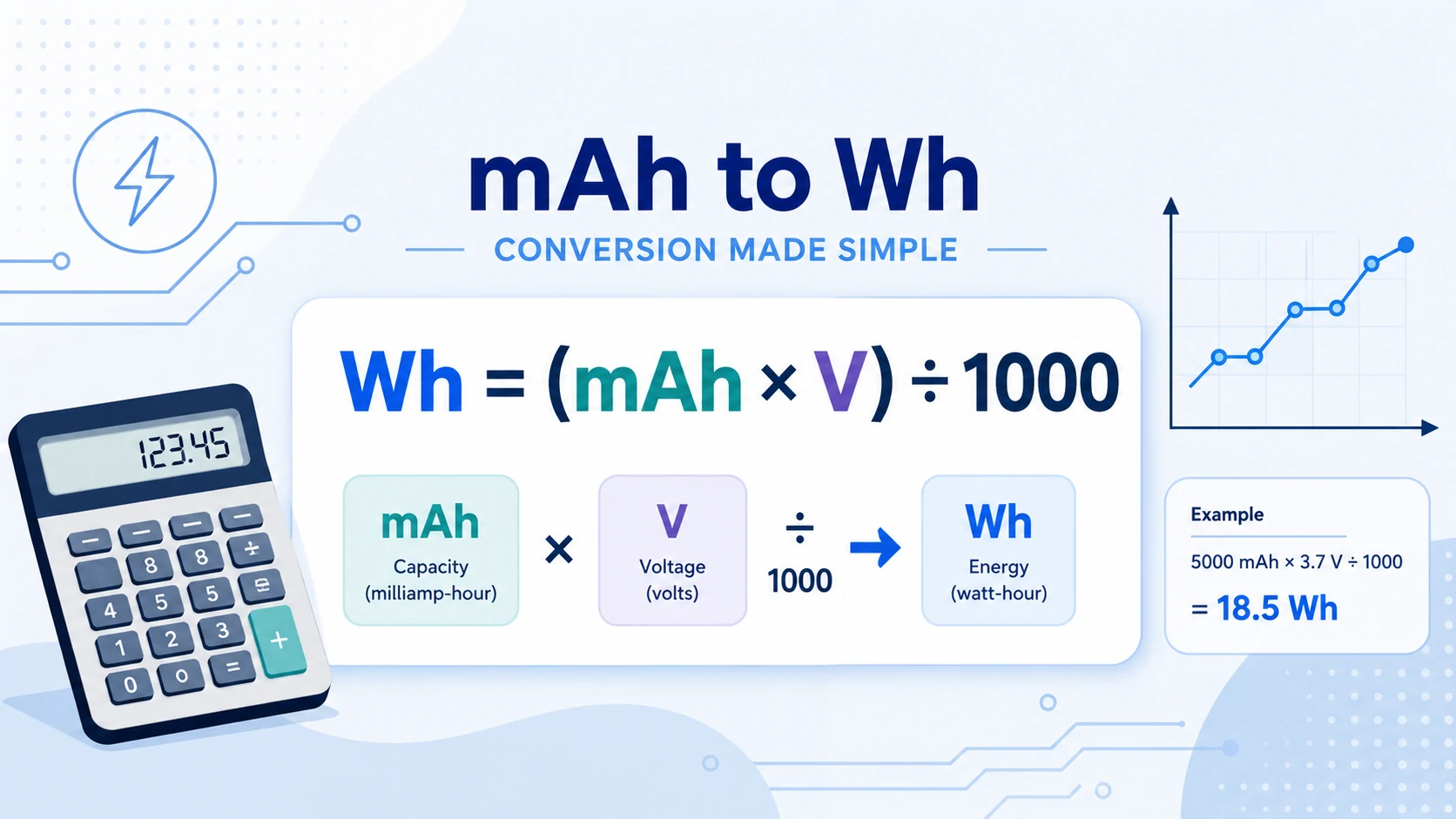
| Wh (Watt Hours) | Measures actual stored energy (capacity) | Wh = Ah × Voltage | Best for comparing batteries with different voltages | A 48V 100Ah battery = 4800Wh (48 × 100) |
| mAh (Milliamp Hours) | A smaller unit of capacity; 1Ah = 1000mAh | Simple conversion from Ah | Used in small devices like phones, tablets, cameras | A 3000mAh phone battery = 3Ah |
You can read this article to learn more about another term, Megawatts (MW): What is Megawatts (MW) and Their Role in Powering Homes
Why Use Different Units?
The choice between Ah, Wh, and mAh depends on context.
- Ah is widely used in deep-cycle and large-format batteries, such as those for solar, RV, or marine applications.
- Wh is the best unit when comparing batteries of different voltages, because it shows the total energy capacity directly.
- mAh is better suited for small batteries, where values in Ah would appear too small to be intuitive.
By looking at these different measurements together, you can better understand how much energy a battery truly provides and make clearer comparisons across different types and sizes of batteries.
Factors That Affect Battery Runtime
Even with the same Ah rating, batteries may not last the same amount of time. Several factors affect real-world performance:
Device Power Consumption
The amount of current your device uses directly affects battery life. Devices that draw high power will drain a battery faster than low-power devices. For example, a trolling motor running at full speed uses more current and will deplete the battery more quickly than a small fish finder drawing only a few amps.
Temperature
Batteries work best at moderate temperatures. Cold weather slows chemical reactions inside the battery, causing it to drain faster. On the other hand, high heat can damage the battery over time, reducing its lifespan. It is important to store and use batteries within the recommended temperature range.
Battery Age and Condition
All batteries gradually lose capacity as they age. A brand-new battery performs better than one that has been in use for years. Proper maintenance, such as keeping batteries charged and stored correctly, can extend their life.
Battery Type
The type of battery strongly affects performance. Lithium batteries have lower internal resistance, so they can deliver nearly their full Ah under different loads. Flooded lead-acid batteries lose more capacity under heavy loads, while AGM batteries perform better but still not as efficiently as lithium. Moreover, lead-acid and AGM batteries should not be drained below 50%, meaning you can only use half of their rated capacity safely.
Different Battery Ah Ratings and Applications
Batteries are available in a wide range of Ah ratings, each suited for specific uses:
| Battery Size | Ah Range | Typical Applications | Typical Runtime |
|---|---|---|---|
| Small | 1Ah – 50Ah | Small electronics, fish finders, mobility scooters | 1–10 hours |
| Medium | 50Ah – 100Ah | Trolling motors, mid-sized marine applications, backup power systems | 5–20 hours |
| Large | 100Ah – 500Ah+ | RVs, boats, solar storage systems, high-demand equipment | 10–100+ hours |
Choosing the right Ah rating depends on how much power your device consumes and how long you need it to operate between charges.
By reading this article, you can learn more about how long batteries can last in golf cart applications: How Long Do Golf Cart Batteries Last
Tips for Choosing the Right Battery Based on Ah
When selecting the right battery, understanding the amp-hour (Ah) rating is essential. But how do you use this knowledge to make the best choice? Here are some practical tips to guide you.
- Assess your power needs: Identify which devices the battery will run, their total wattage, and how many hours you need per charge.
- Factor in depth of discharge (DoD): Remember that a 100Ah lead-acid battery may only provide 50Ah usable, while a 100Ah lithium battery can deliver 80–90Ah.
- Account for efficiency losses: Add about 20% to your calculated Ah requirement to cover real-world inefficiencies.
- Think long-term: Higher-capacity batteries often last longer and can be more cost-effective over time compared to frequent replacements.
- Balance capacity with other factors: Consider weight, size, upfront cost, and your system’s charging capability.
- Match system voltage: Ensure the battery voltage aligns with your devices or inverter to avoid mismatches, such as a 12V battery in a 24V system.
- Consider parallel configurations: Using multiple smaller batteries in parallel can provide flexibility and redundancy in critical systems.
Why Lithium Batteries Outperform Others
Lithium batteries, especially LiFePO4 types, are widely recognized for delivering superior performance and reliability. Their benefits go beyond the amp hour (Ah) rating, making them an excellent choice for RVs, boats, solar systems, and other high-demand applications. Below, we break down each key advantage.
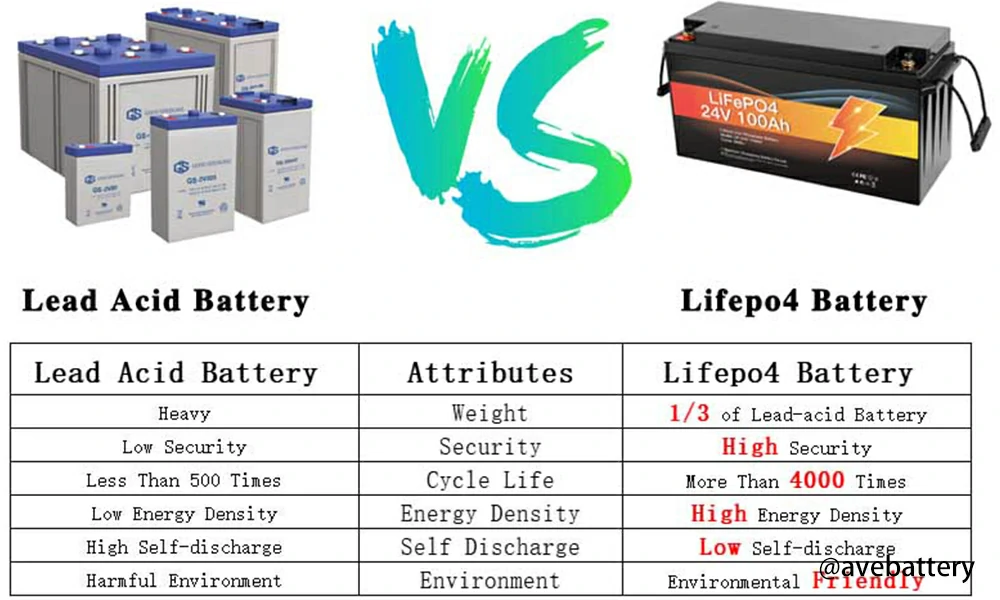
Longer Lifespan
Lithium batteries can handle 4,000+ partial charge cycles, far exceeding the typical lifespan of lead-acid batteries. This means they can last many years, even with frequent use. The long cycle life reduces the need for frequent replacements, which saves money and minimizes environmental impact over time.
Lightweight
One of the standout benefits of lithium batteries is their light weight. They are often up to 70% lighter than comparable lead-acid batteries. This makes them easier to handle, transport, and install, particularly in applications like RVs, boats, and portable solar systems where weight and space are limited.
Fast Charging
Lithium batteries recharge much faster than traditional batteries. They can reach full charge in a fraction of the time, which reduces downtime and keeps devices, vehicles, or systems ready for use. Faster charging also improves efficiency in setups that rely on intermittent energy sources, such as solar power.
High Efficiency
Lithium batteries deliver a higher percentage of usable energy compared to lead-acid or AGM batteries. They have low internal resistance, meaning less energy is lost as heat during use. This high efficiency ensures that almost all the energy stored in the battery can be used, maximizing the value of each charge.
Built-in Safety
Safety is a critical feature of modern lithium batteries. Most include integrated Battery Management Systems (BMS) that monitor voltage, temperature, and charge levels. These systems prevent overcharging, overheating, and deep discharges, which protects the battery and extends its operational lifespan.
Smart Monitoring
Many lithium batteries come with smart features, including Bluetooth connectivity. This allows real-time monitoring of the battery’s charge level, health, and performance via a smartphone or tablet. Users can track usage patterns, detect potential issues early, and optimize energy management, giving them greater control over their power systems.
Connecting Batteries: Series and Parallel
Sometimes, a single battery isn’t enough to power your devices or system. In these cases, you can connect multiple batteries, but how you connect them changes the overall voltage and capacity. Read this article to learn more about Batteries in Series vs. Parallel.
Series Connection: When batteries are connected in series, the positive terminal of one battery is linked to the negative terminal of the next. This arrangement increases the total voltage while keeping the amp-hour (Ah) rating the same. For example:
- Two 12V 100Ah batteries in series = 24V 100Ah
This setup is useful when your system requires a higher voltage to run efficiently.
Parallel Connection: In a parallel setup, all the positive terminals are connected together, and all the negative terminals are connected together. This increases the total capacity (Ah) while keeping the voltage the same. For example:
- Two 12V 100Ah batteries in parallel = 12V 200Ah
Parallel wiring is ideal when you need longer runtime without increasing the voltage.
| Connection Type | How It’s Wired | Voltage Effect | Capacity (Ah) Effect | Best Use |
|---|---|---|---|---|
| Series | Positive → Negative (linked end-to-end) | Increases total voltage | Stays the same | When higher voltage is needed |
| Parallel | Positive → Positive, Negative → Negative | Stays the same | Increases total capacity | When longer runtime is needed |
Choosing the Right Configuration:
- Use series if your devices need higher voltage.
- Use parallel if you want longer battery life at the same voltage.
In some advanced setups, you can combine both series and parallel connections to achieve the voltage and capacity your system needs.
Depth of Discharge (DoD) and Usable Ah
The battery’s depth of discharge (DoD) tells you how much of the rated Ah you can safely use. Lead-acid batteries often recommend keeping DoD low, for example at 50% or less. Lithium batteries often allow much deeper discharge, sometimes 80% to 100% of their rated Ah without serious damage. The usable Ah depends on the recommended DoD and on how you plan to cycle the battery.
Example: A 200 Ah lead-acid battery that you only discharge to 50% gives you 100 usable Ah. A 200 Ah lithium battery that supports 90% DoD gives you 180 usable Ah.
Charging, Maintenance, and How They Affect Ah
The way you charge and maintain a battery affects how much of the rated Ah you can use over the battery’s life. Batteries that sit discharged for long periods will lose capacity. Batteries that get overcharged will degrade faster. The battery’s recommended charge rate and charge profile depend on chemistry. Lithium batteries usually accept higher charge rates and need a BMS for safety. Lead-acid batteries need careful float charging and periodic topping of the electrolyte for flooded types.
Safety and the Battery Management System (BMS)
A battery’s BMS protects against overcharge, over-discharge, and overheating. The BMS helps the battery deliver its Ah safely over time. You should choose batteries with a good BMS, especially for lithium systems. The BMS also balances cells, which keeps the battery close to its rated Ah for longer.
Power Your Devices with Confidence!
Don’t let uncertainty about battery performance slow you down. Upgrade to a reliable lithium battery today and enjoy longer runtime, faster charging, and worry-free power for your RV, boat, or off-grid system. Avepower offers high-quality home energy storage batteries and LiFePO4 lithium batteries that provide reliable, long-lasting power for your family.
Request your custom quote and ensure reliable power for your home or system.

Take Control of Your Energy with Avepower!
Reliable home solar battery solutions with OEM/ODM customization and in-house manufacturing, tailored to the needs of distributors, installers, and energy partners.
Conclusion
In summary, understanding amp hours (Ah) gives you the power to make smarter battery choices—helping you estimate how long your devices will run and to compare different battery technologies more effectively. By applying the core concepts in this guide, you’ll not only avoid common pitfalls but also get the most reliable, long-lasting performance for your RV, boat, solar, or home energy system.
If you’re considering an upgrade or planning a new energy solution, exploring options tailored to your real needs can make all the difference. At Avepower, we’re committed to helping you find the right battery—whether it’s an advanced LiFePO4 pack for long cycles, or a custom system for unique energy tasks. Feel free to reach out for advice or a custom quote. Reliable power is never just about numbers—it’s about peace of mind and possibilities.
FAQ
Use the formula: Time (Hours) = Ah ÷ Device Current (Amps). Example: A 50Ah battery powering a 10A device would last about 5 hours.
Deep cycle batteries, lithium batteries, and many backup power systems use Ah ratings. Starter batteries, designed for short bursts of energy, are usually rated by cranking amps (CCA).
Lithium batteries have lower internal resistance, maintain most of their capacity under load, and allow deeper discharge without damage, giving more usable energy.
Extreme temperatures reduce battery efficiency. Cold weather drains batteries faster, while high heat accelerates wear and shortens lifespan.
A battery with too low Ah will run out of power quickly, leading to frequent recharging or interrupted operation. Always choose a battery with enough capacity for your device and expected runtime.