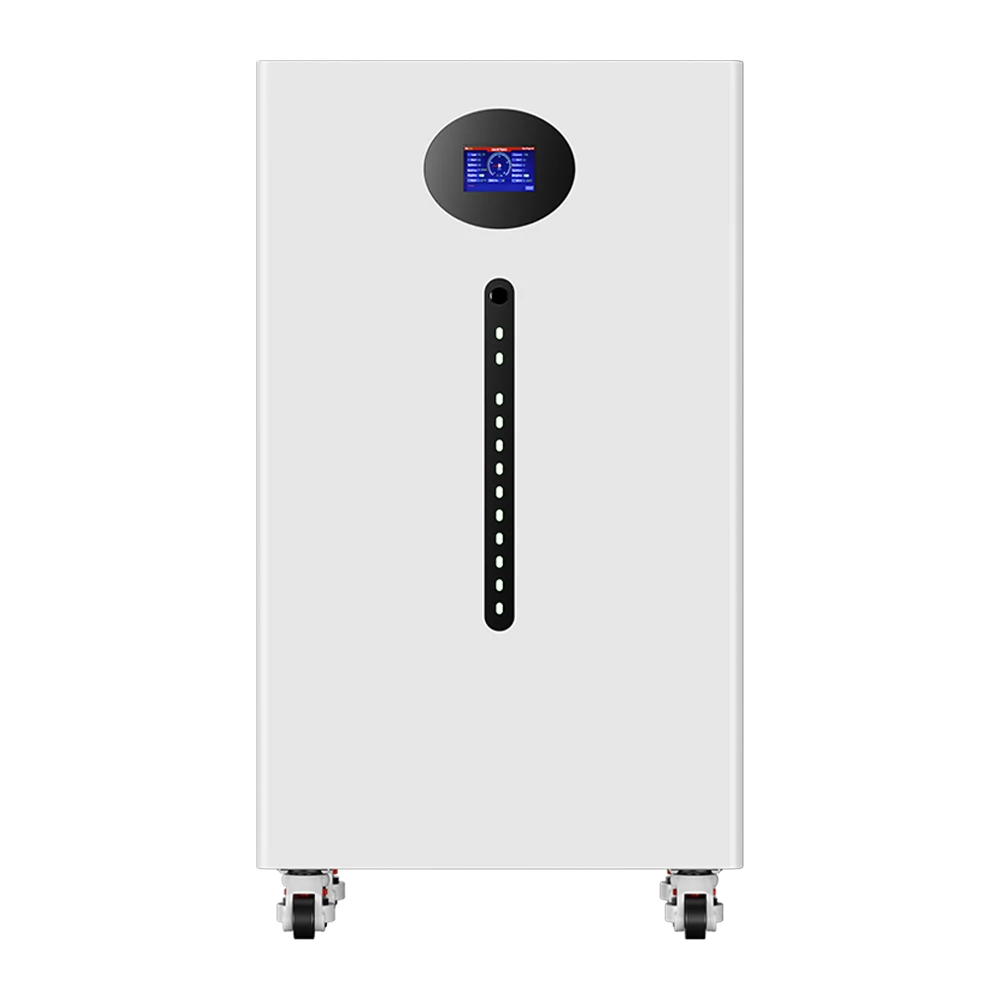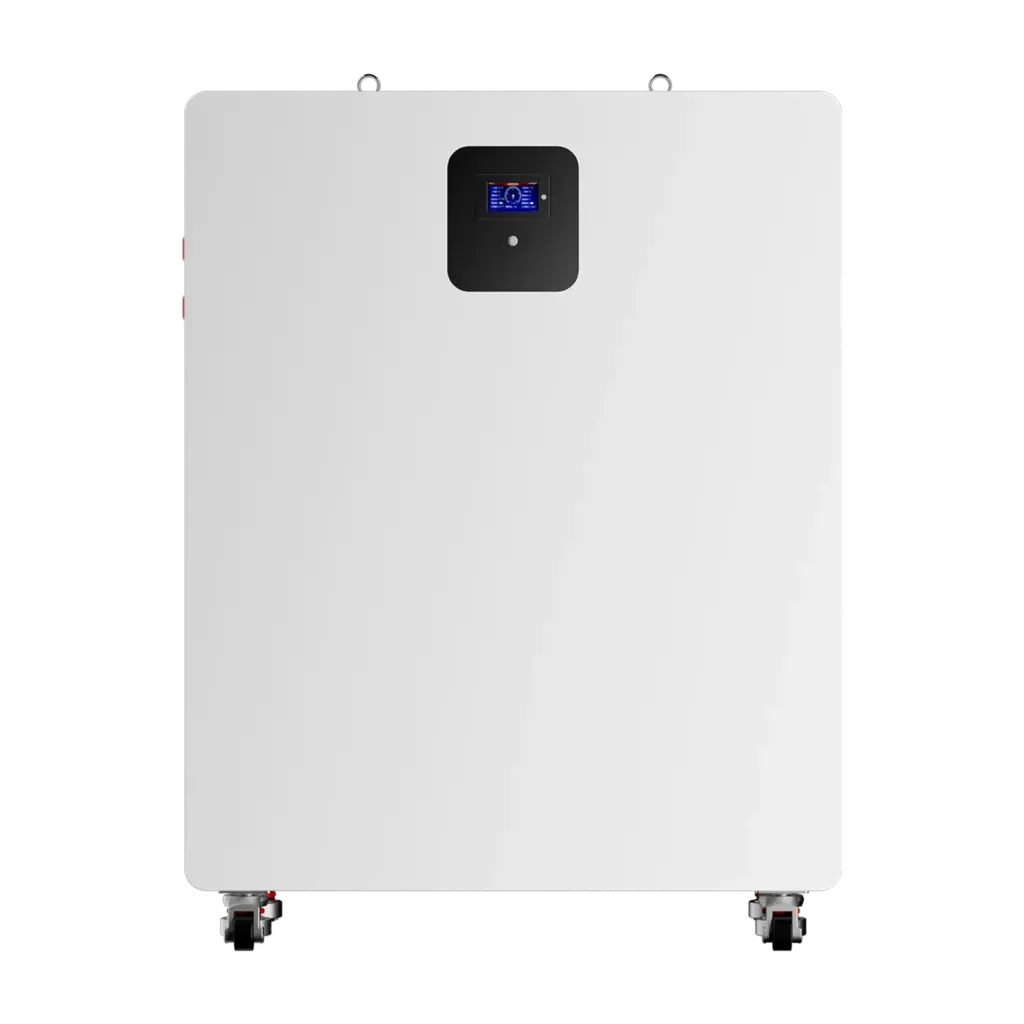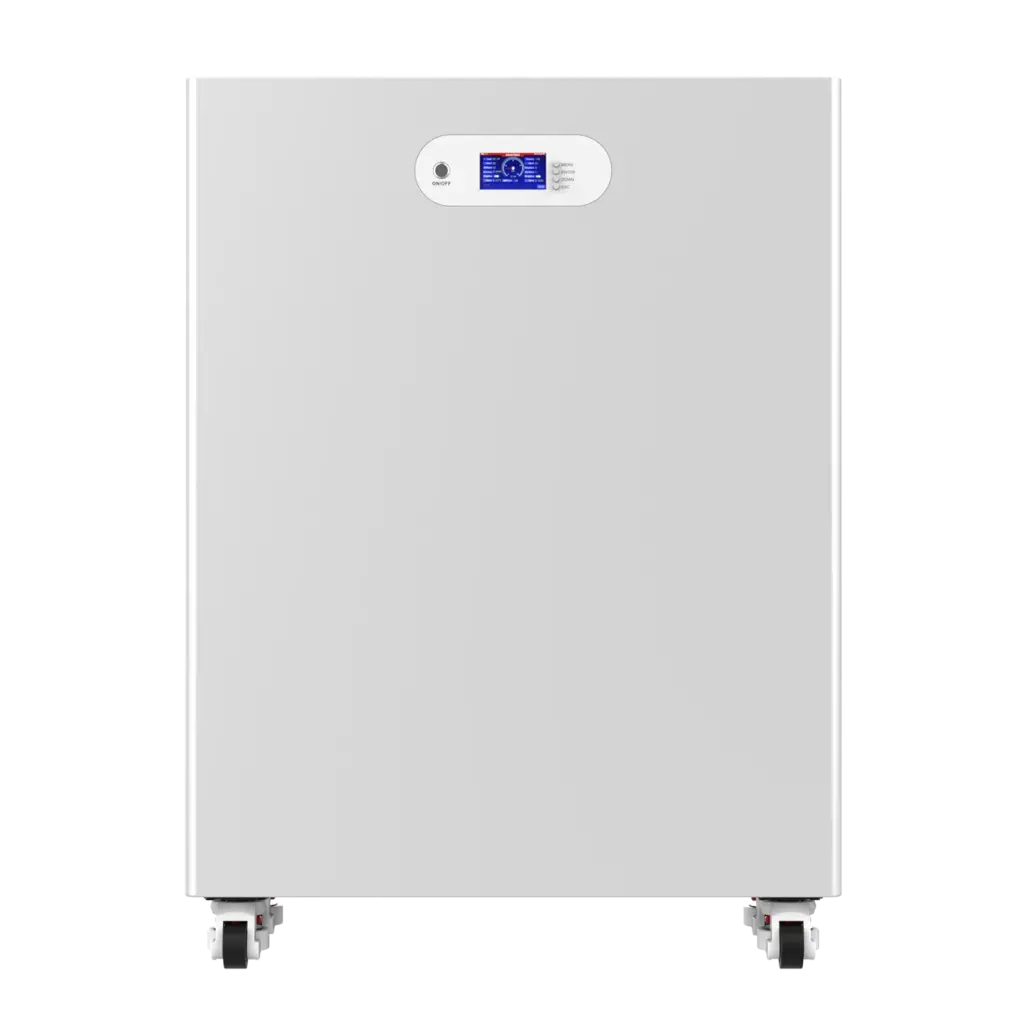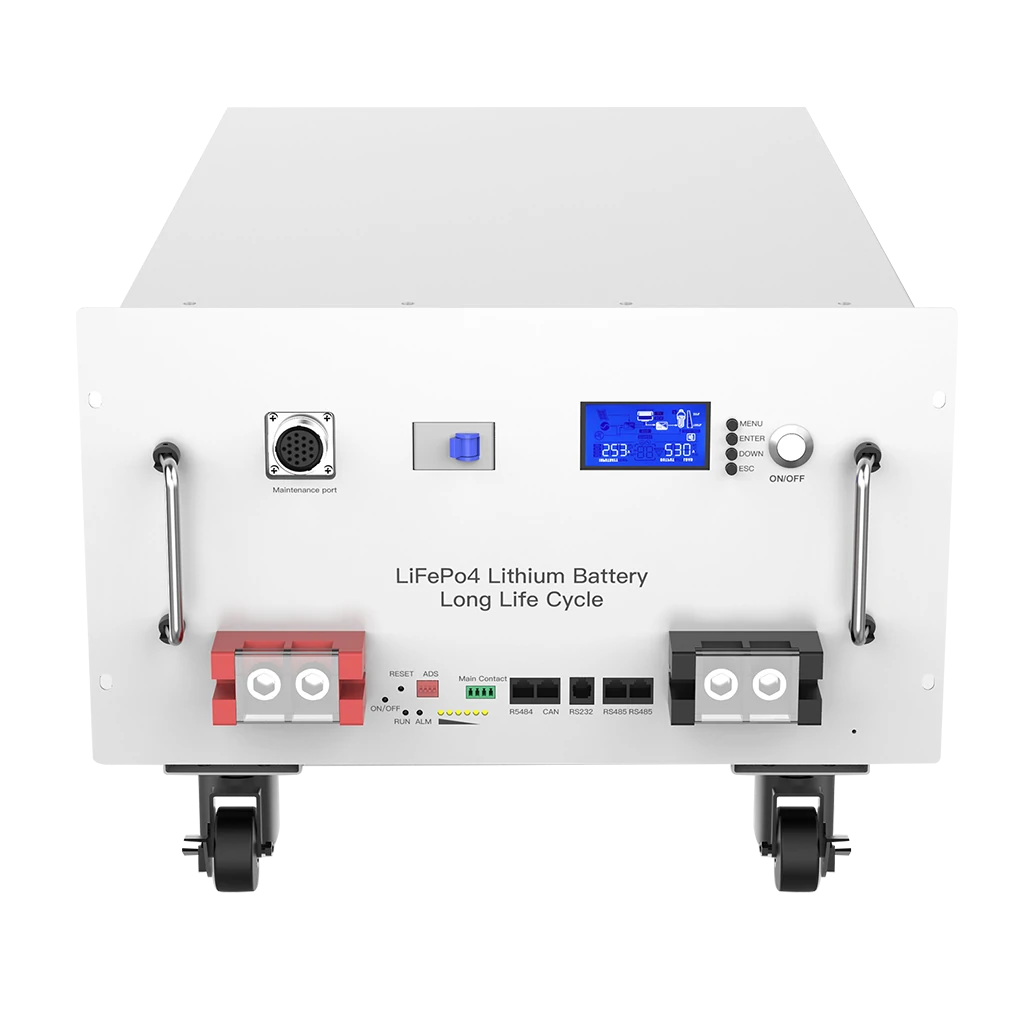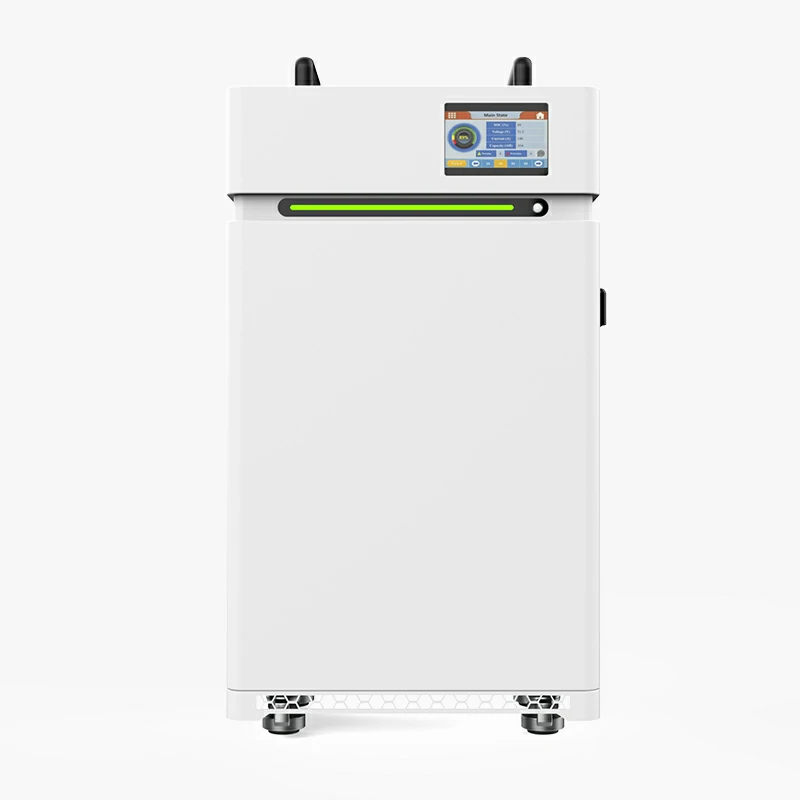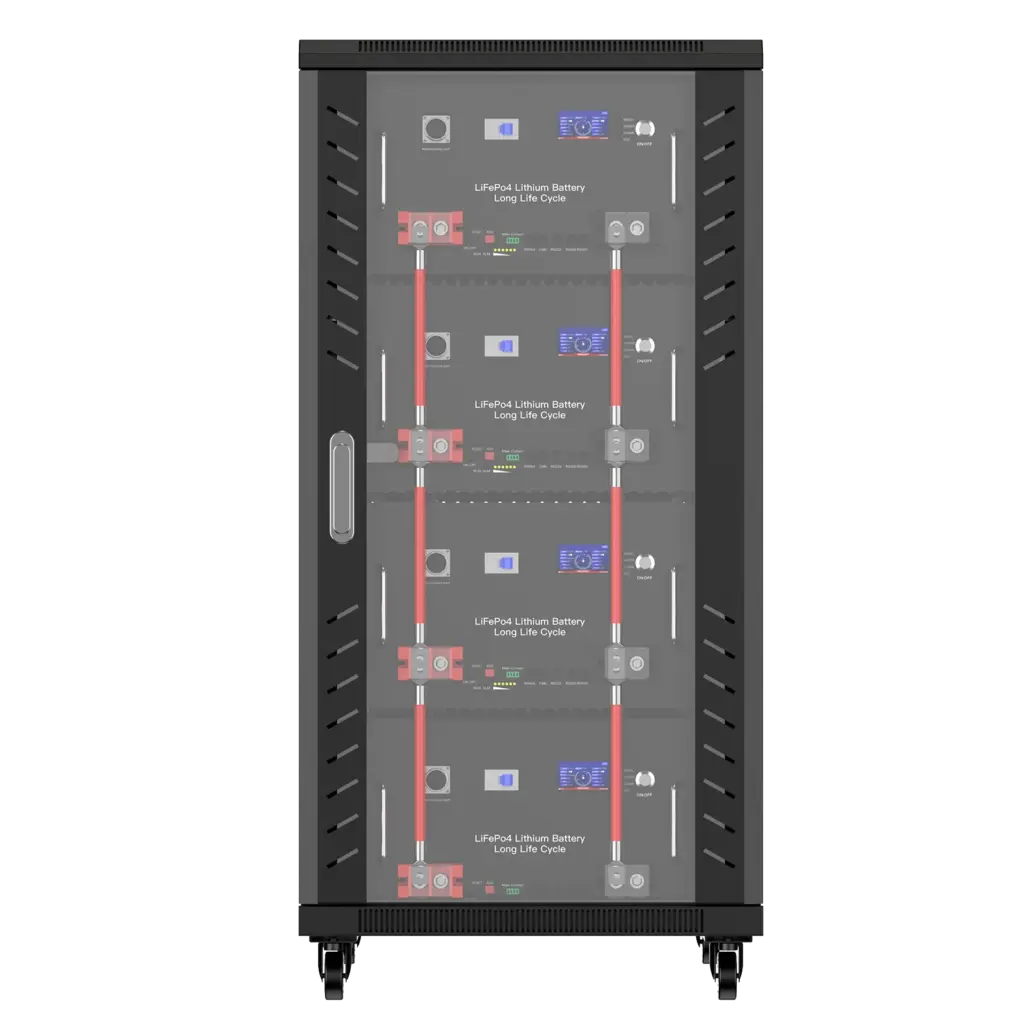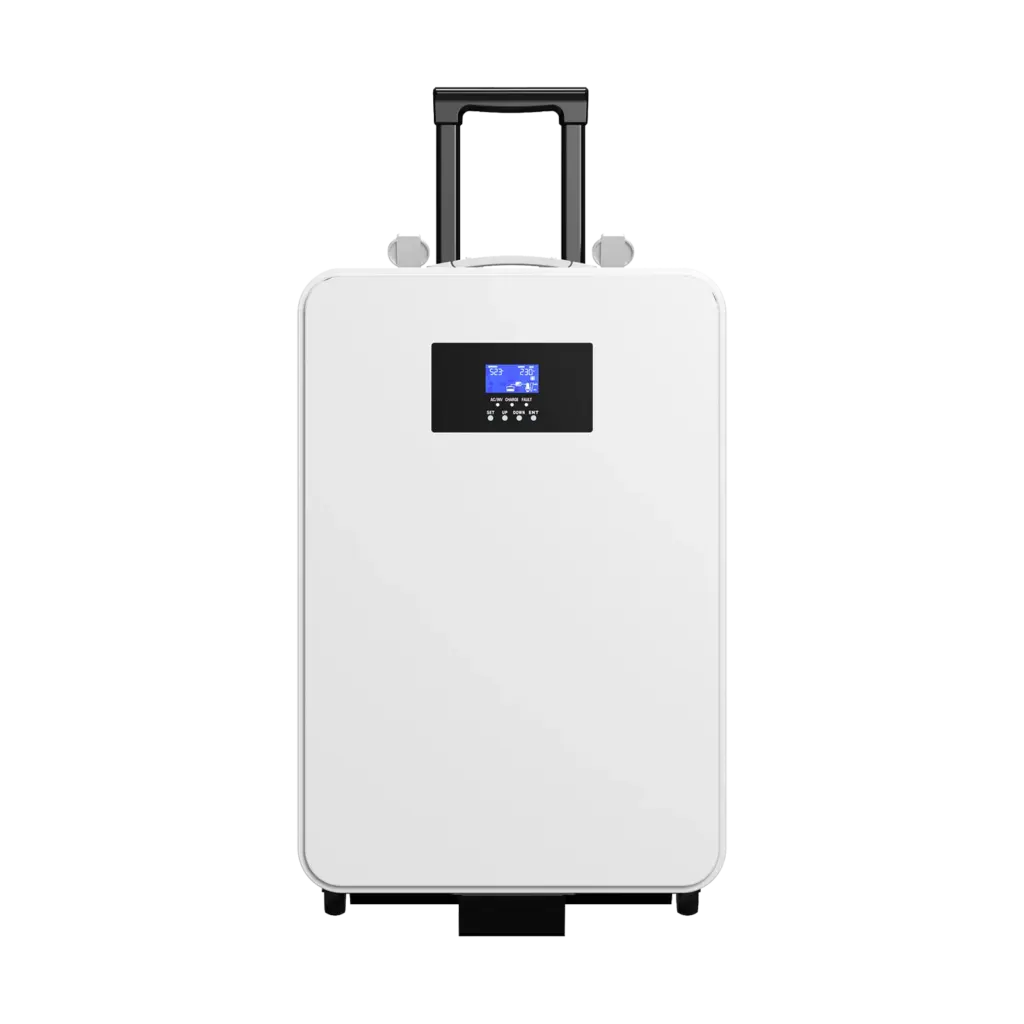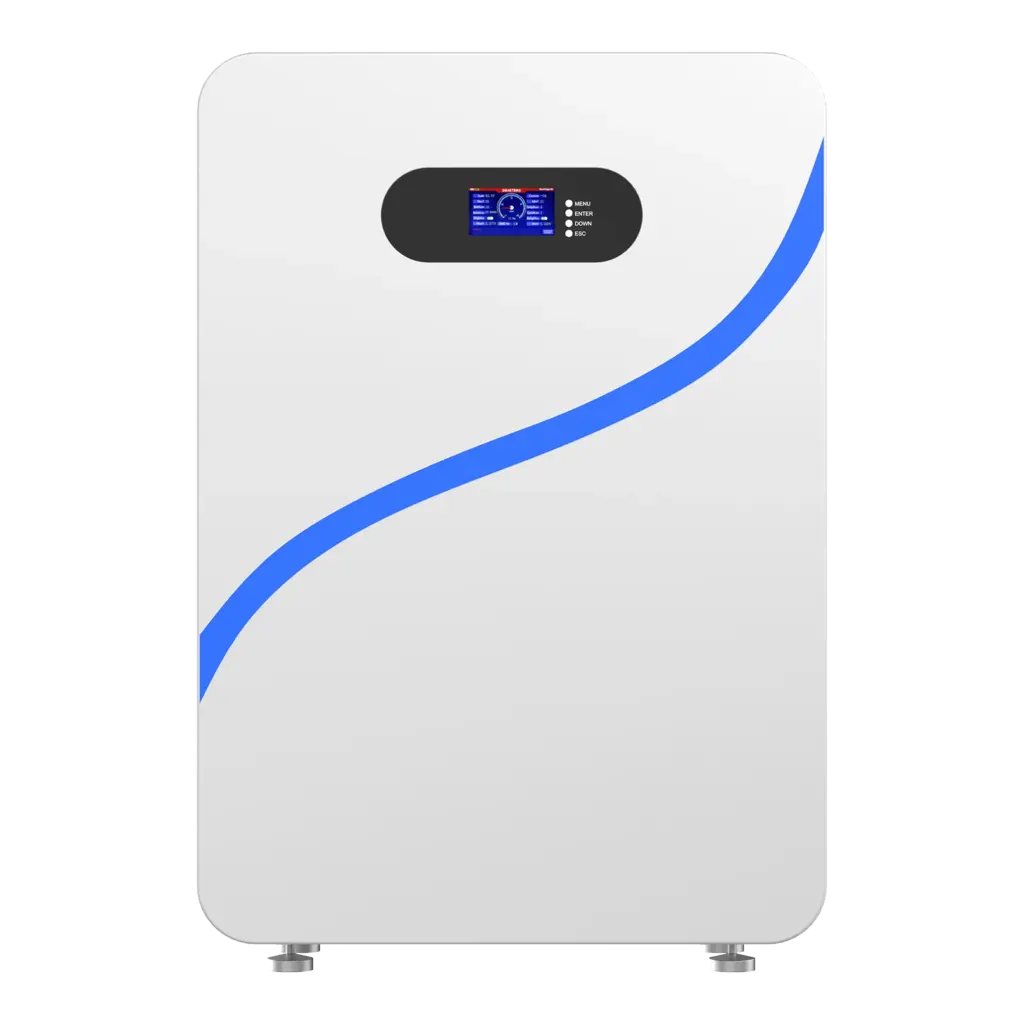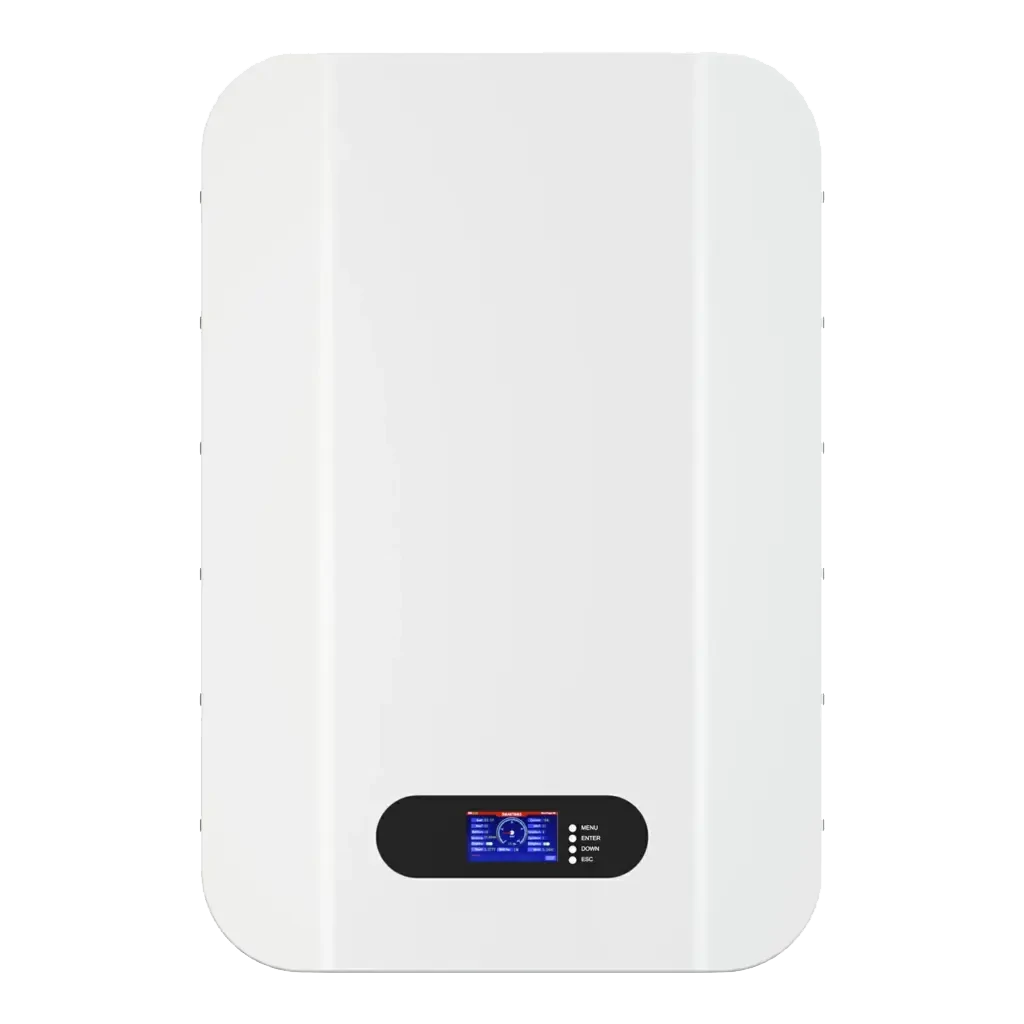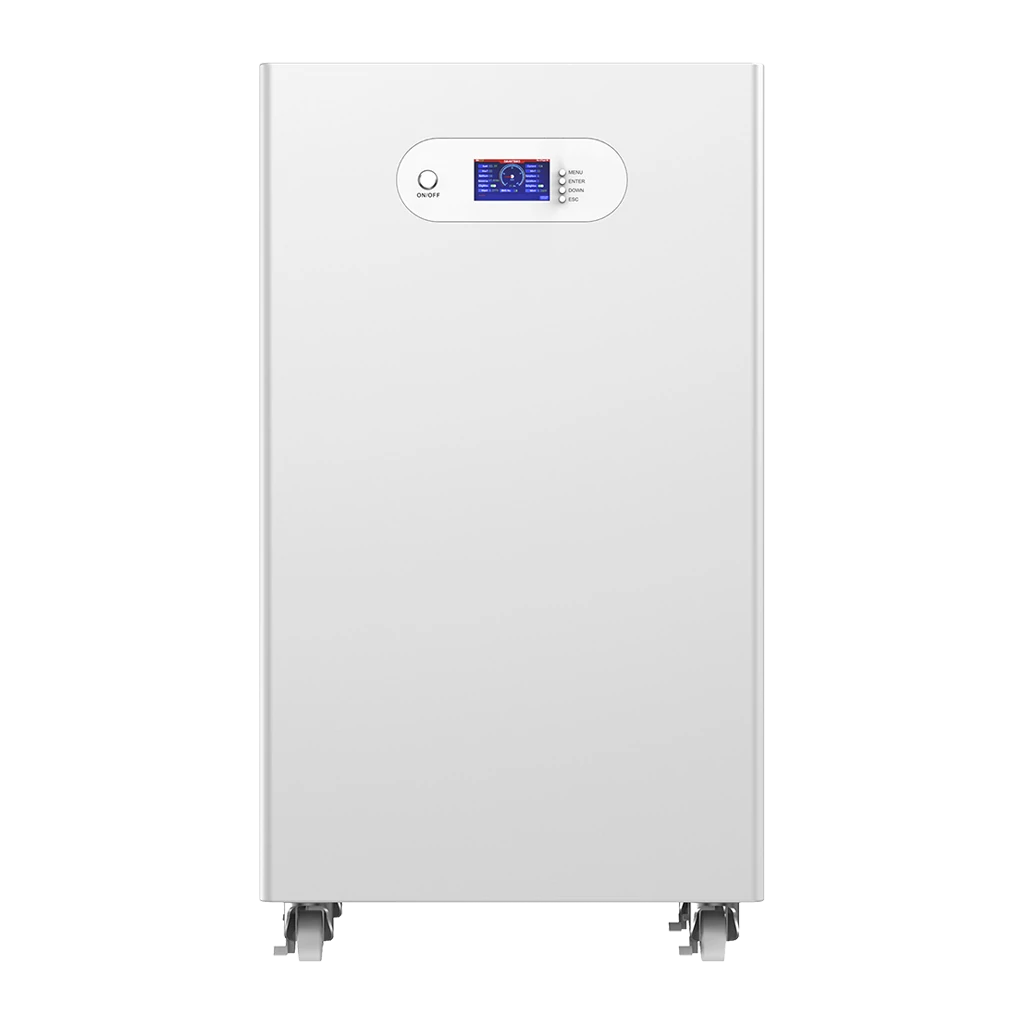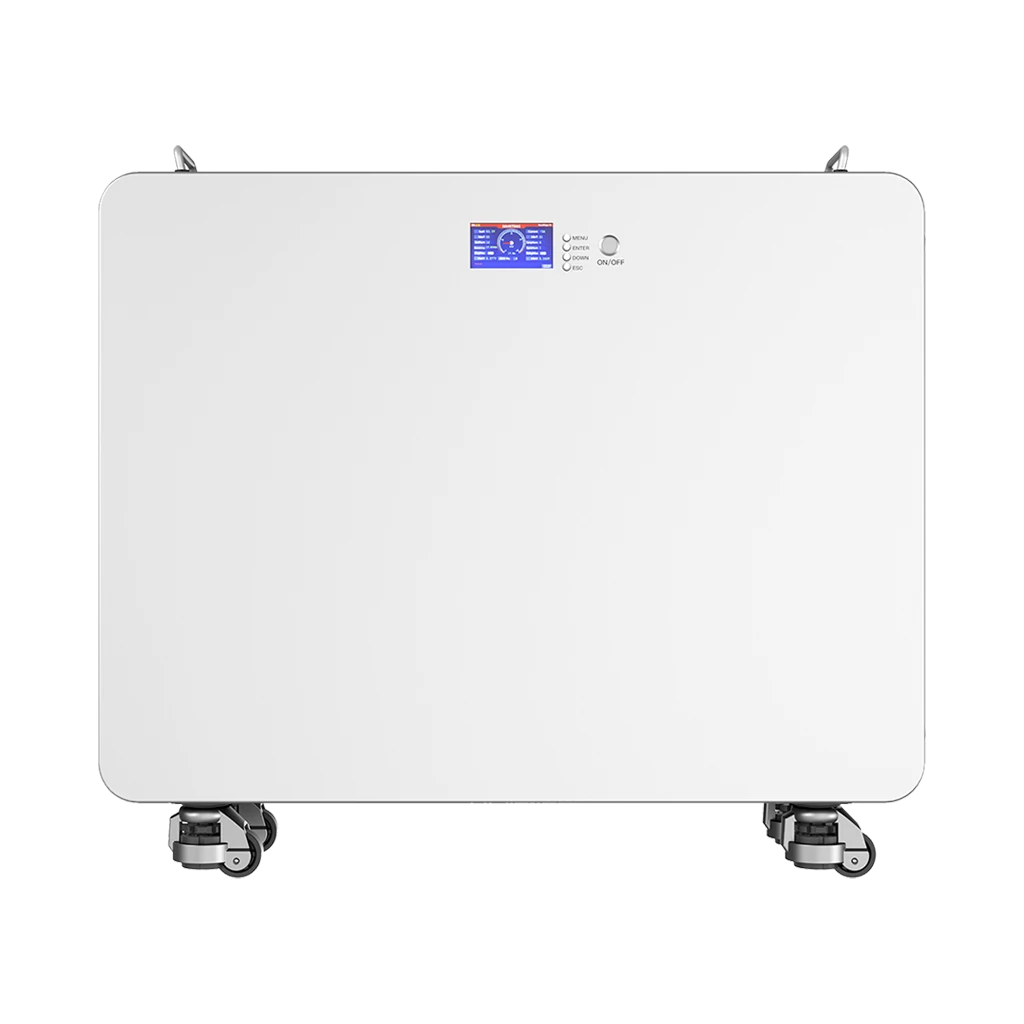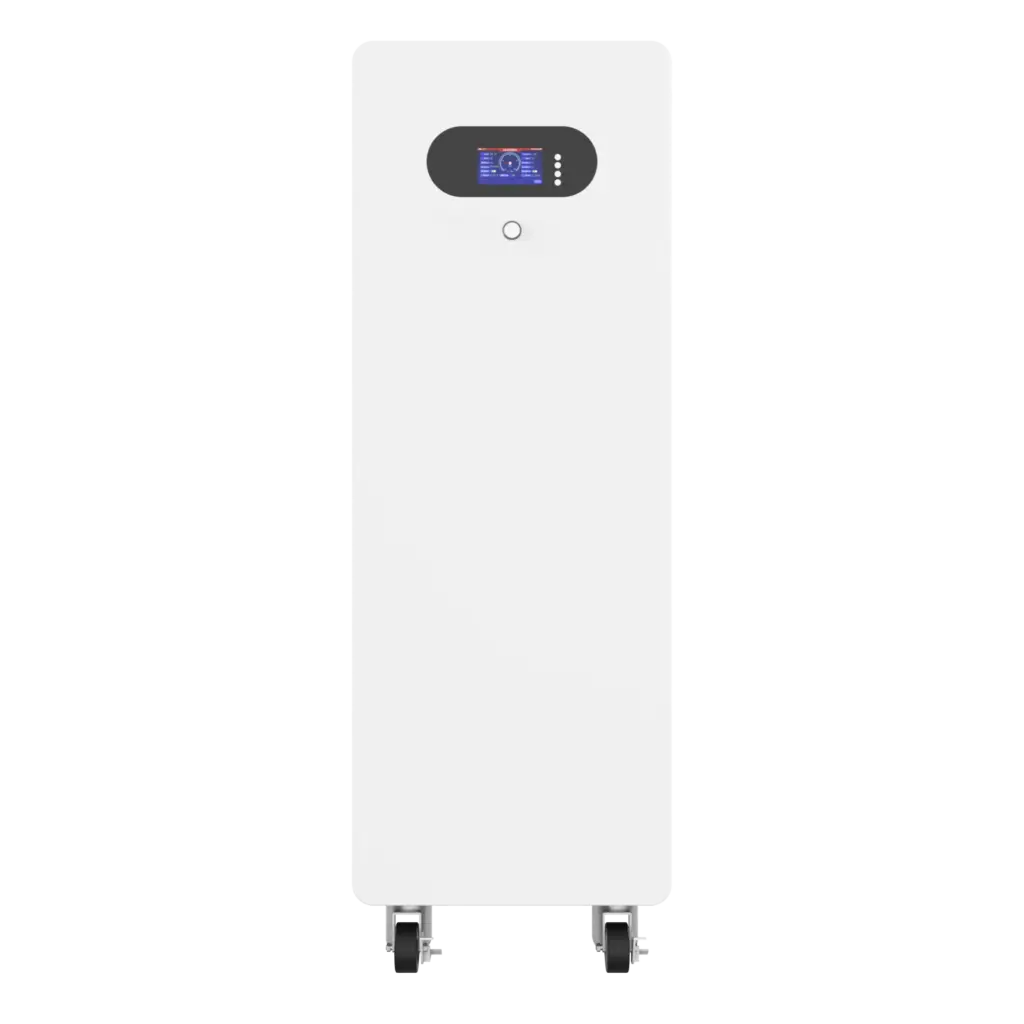

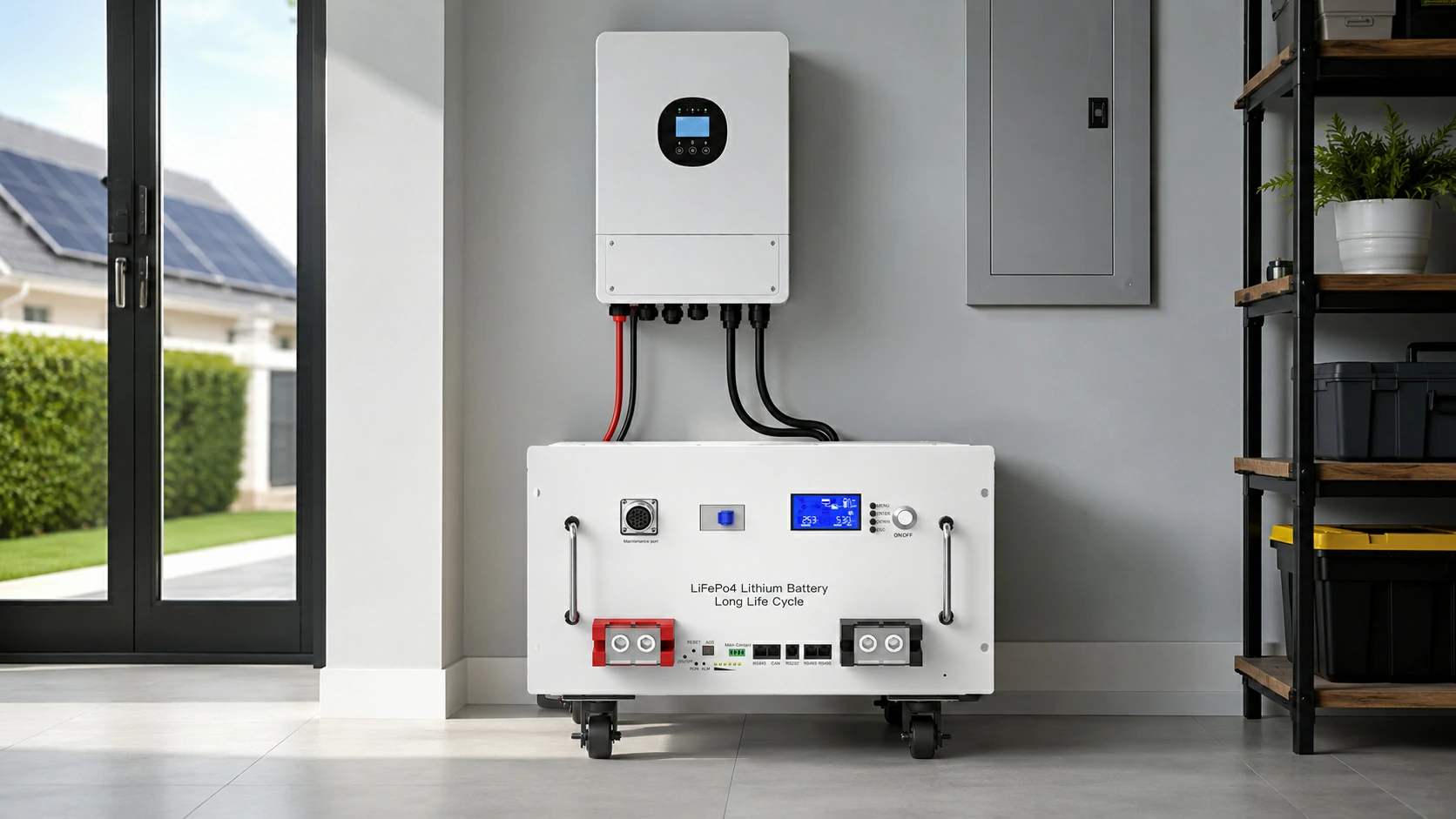
A 48 volt battery is a low-voltage battery system commonly used in home solar storage, off-grid power systems, telecom backup, small commercial energy storage, golf carts, marine systems and light industrial backup applications.
In modern energy storage, most 48V batteries use lithium iron phosphate, also called LiFePO4 or LFP, because it offers long cycle life, stable thermal performance, high usable capacity and lower maintenance compared with traditional lead-acid batteries.
What Is a 48 Volt Battery?
A 48 volt battery is a battery pack designed around a nominal voltage near 48V. In practice, the exact voltage depends on the battery chemistry and cell configuration.
For LiFePO4 batteries, the most common configuration is:
- 16 cells in series
- Each LiFePO4 cell has a nominal voltage of about 3.2V
- 16 × 3.2V = 51.2V nominal
- Full charge is often around 58.4V, depending on manufacturer settings
That is why many products marketed as a 48V battery are listed as 51.2V LiFePO4 batteries. This is normal in solar and energy storage systems. The term “48V” usually refers to the system voltage class, while 51.2V describes the actual nominal voltage of a 16S LiFePO4 battery pack.
A typical 48V battery can be used as a single module, such as a 48V 100Ah battery, or as part of a larger parallel system. For example:
| Battery Model | Nominal Energy | Typical Use |
|---|---|---|
| 48V 100Ah / 51.2V 100Ah | About 5.12 kWh | Small backup, telecom, compact solar storage |
| 48V 200Ah / 51.2V 200Ah | About 10.24 kWh | Home backup, solar self-consumption |
| 48V 280Ah | About 14.3 kWh | Larger home storage, off-grid homes |
| 48V 300Ah / 314Ah | About 15–16 kWh | Whole-home backup, villas, small commercial use |
| Multiple 48V modules in parallel | 20–160+ kWh | Homes, shops, offices, farms, telecom rooms |
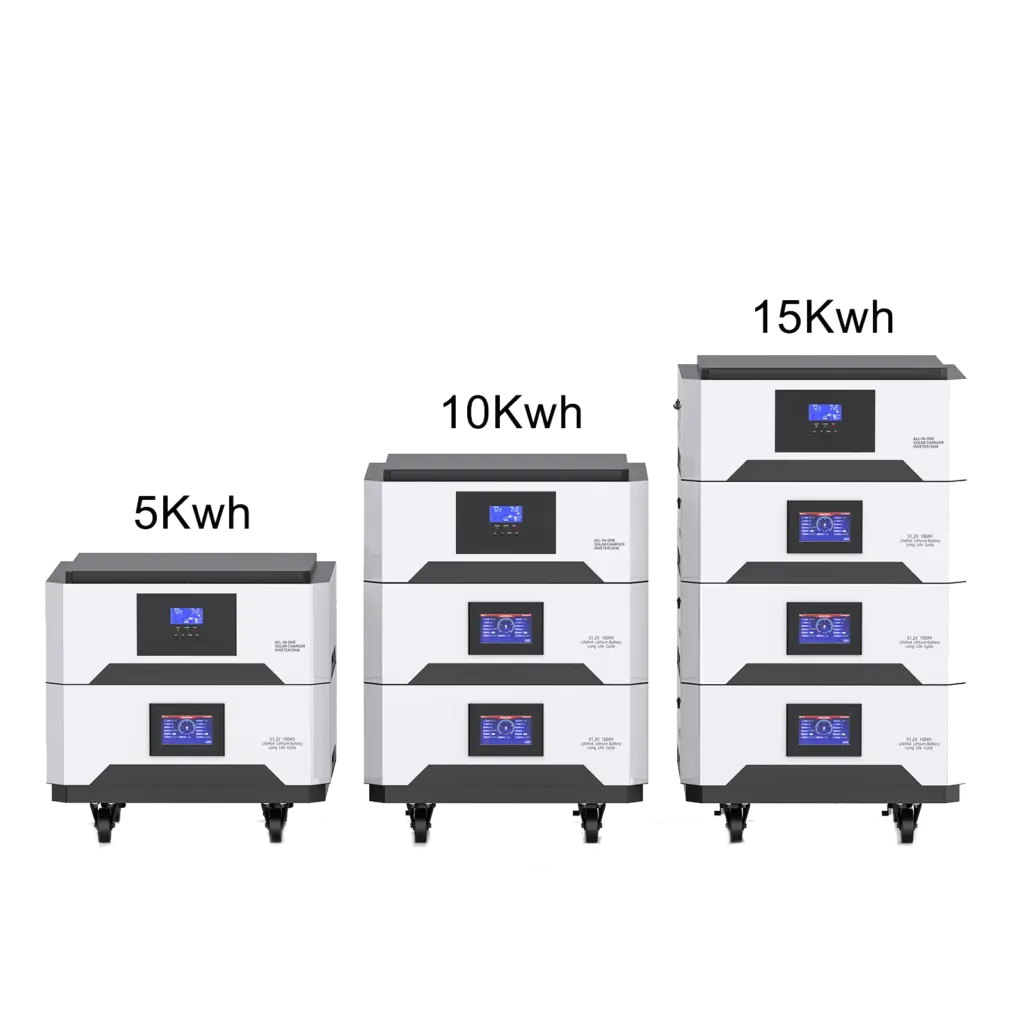
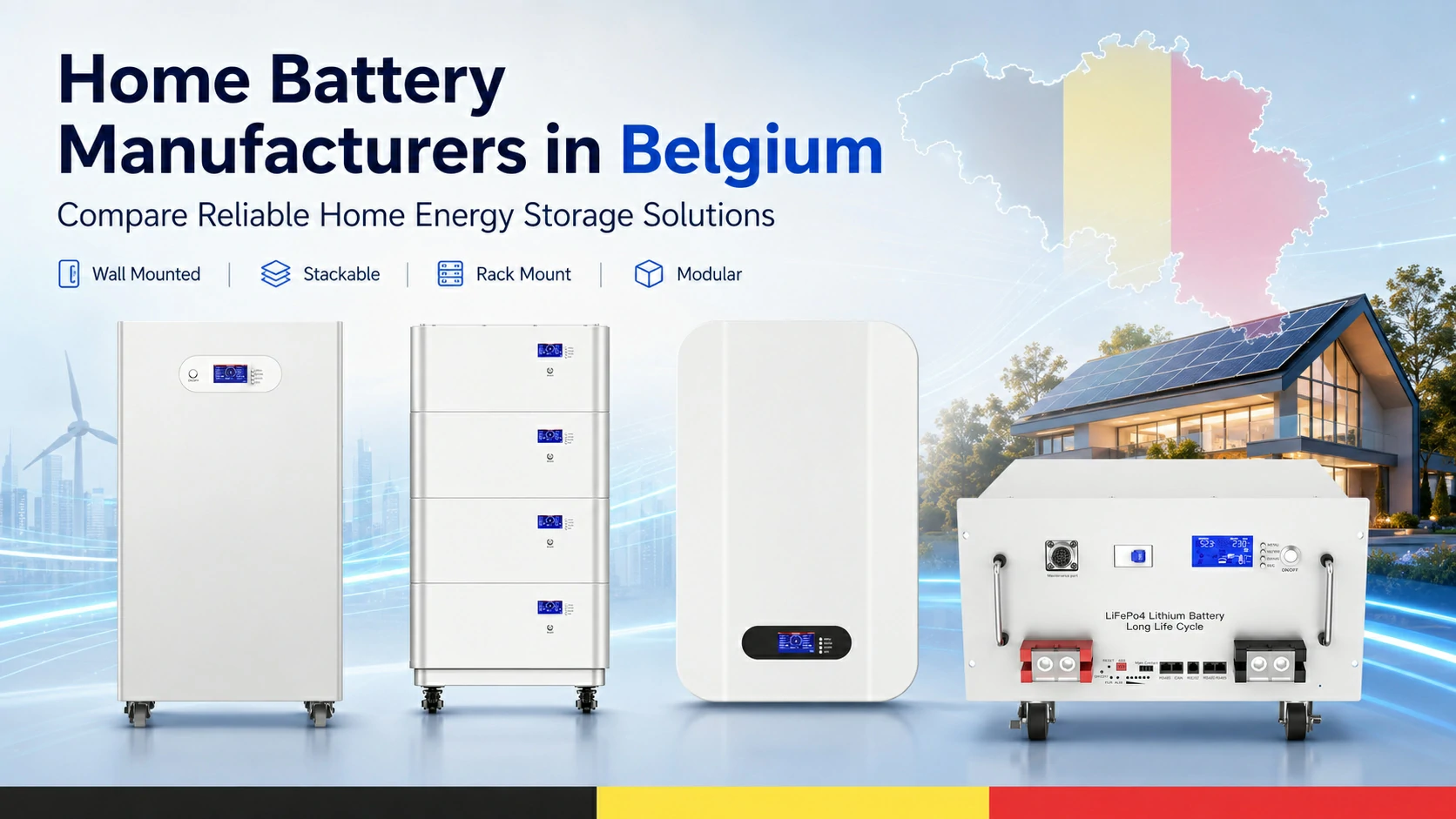
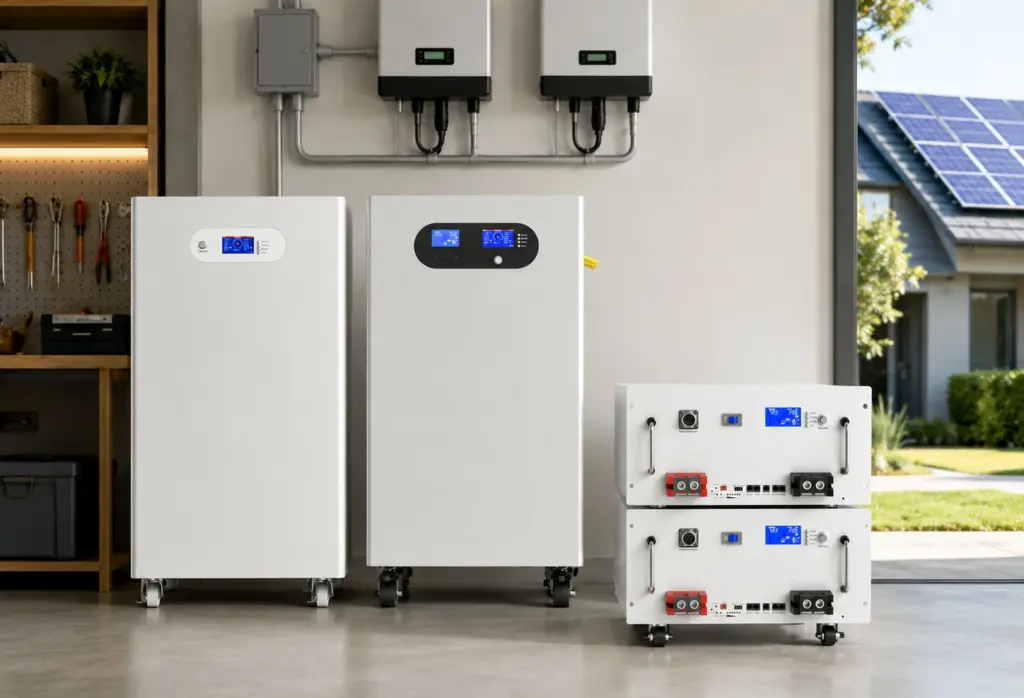
For example, a compact 48V 100Ah wall mounted battery is suitable for smaller home backup systems, while a larger 48V 280Ah 15kWh vertical LiFePO4 battery is better suited for daily solar self-consumption, whole-home backup and installer-led residential projects.
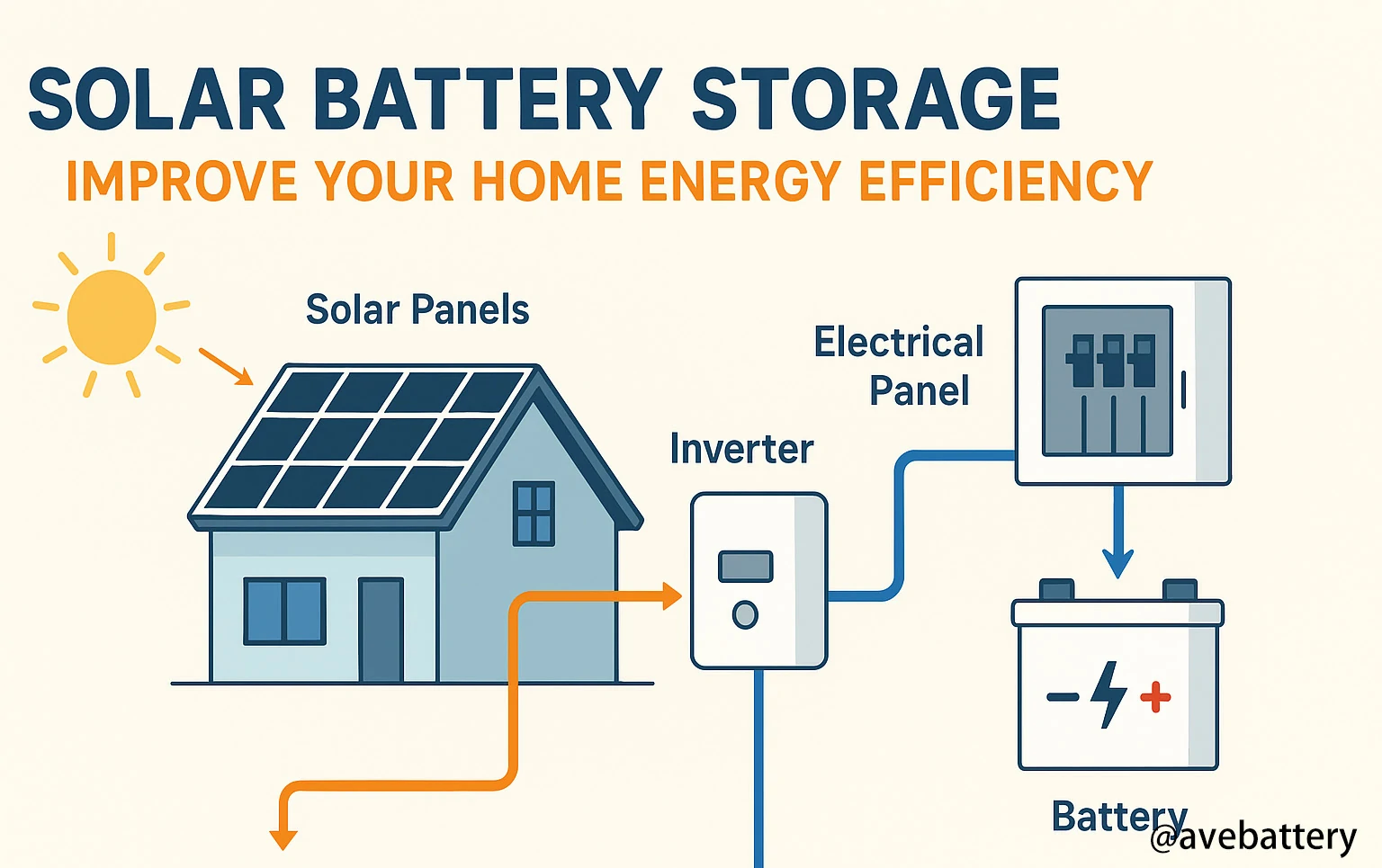
How a 48 Volt Battery Works in a Solar Energy Storage System
A 48 volt battery does not work alone. It is part of a complete energy storage system.
A typical residential 48V solar storage system includes:
- Solar panels
- Hybrid inverter or off grid inverter
- MPPT solar charge controller, if not built into the inverter
- 48V LiFePO4 battery
- BMS communication
- DC breaker, fuse, isolator and cables
- AC distribution panel or backup load panel
- Monitoring app or EMS
During the day, solar panels generate DC electricity. The inverter or charge controller manages charging and sends energy into the 48V battery. In the evening, during peak tariff periods, or during a grid outage, the battery discharges power through the inverter to run home or business loads.
Why 48V Became Popular in Solar and Battery Storage
The main reason is simple: higher voltage means lower current for the same power.
Power is calculated as:
Power = Voltage × Current
For a 5kW load:
- At 12V: 5,000W ÷ 12V ≈ 417A
- At 24V: 5,000W ÷ 24V ≈ 208A
- At 48V: 5,000W ÷ 48V ≈ 104A
Lower current means the system can use more manageable cable sizes, reduce heat generation, improve inverter performance and make protection design easier. This is why 48V is widely used in serious off-grid systems, home solar batteries, telecom backup, server rack power and small commercial battery banks.
48V Battery vs 12V, 24V and High-Voltage Battery Systems
A 48V battery is not always the best choice for every system. It depends on the load size, inverter power, wiring distance, installation budget and expansion plan.
| System Voltage | Best For | Main Advantage | Main Limitation |
|---|---|---|---|
| 12V battery | Small DC loads, RV accessories, lighting, portable setups | Simple and widely available | Very high current for large loads |
| 24V battery | Medium off-grid cabins, small solar systems, light backup | Better efficiency than 12V | Less scalable for larger homes |
| 48V battery | Home solar storage, backup power, telecom, C&I small systems | Lower current, better efficiency, easier expansion | Requires compatible inverter and correct BMS settings |
| High-voltage battery | Large residential, commercial and industrial ESS | Higher efficiency for larger power systems | More complex design and stricter installation requirements |
For most modern home solar storage projects, 48V is often the most practical low-voltage choice. For commercial and industrial systems above a certain scale, however, a high-voltage battery storage system may be more suitable because it can reduce current further and improve system-level efficiency.
Need a 48V Battery System for Your Solar or Backup Project?
Explore Avepower 48V LiFePO4 battery solutions for home storage, off-grid systems, installer projects and light commercial applications.
Common 48V Battery Chemistries
1. 48V LiFePO4 Battery
LiFePO4 is now the preferred chemistry for most 48V solar energy storage systems. It offers good thermal stability, long cycle life, deep discharge capability and low maintenance. For homeowners, installers and distributors, this makes LiFePO4 more attractive than lead-acid for daily cycling.
A 48V LiFePO4 battery is commonly used in:
- Home solar battery storage
- Off-grid cabins
- Residential backup systems
- Server rack energy storage
- Telecom backup power
- Small business backup
- Light commercial ESS
- Golf carts and marine systems
2. 48V Lead-Acid Battery
Lead-acid batteries are still used in some 48V systems, especially where upfront cost is the main concern. However, they usually have lower usable capacity, shorter cycle life, heavier weight and higher maintenance requirements.
For daily solar cycling, lead-acid often needs to be oversized because deeper discharge can shorten its lifespan. That is one reason many installers now recommend LiFePO4 for modern home and commercial storage systems.
3. 48V NMC Lithium Battery
NMC lithium batteries are more common in electric vehicles and some portable power applications. They have high energy density, but for stationary energy storage, LiFePO4 is often preferred because safety, cycle life and thermal stability matter more than maximum energy density.
4. 48V AGM Battery
AGM batteries are sealed lead-acid batteries. They require less maintenance than flooded lead-acid batteries and are often used in backup systems, mobility devices, and older power systems.
However, AGM batteries still have limitations in depth of discharge, weight, usable capacity, and lifespan. For users planning daily solar cycling, an AGM battery bank usually becomes less attractive over time.
How Much Energy Does a 48 Volt Battery Store?
Battery energy is calculated with a simple formula:
Battery energy = Voltage × Amp-hours ÷ 1000
Here are common examples:
| Battery Size | Approximate Energy |
|---|---|
| 48V 50Ah | 2.4kWh |
| 48V 100Ah | 4.8–5.12kWh |
| 48V 200Ah | 9.6–10.24kWh |
| 48V 280Ah | 14.3–15kWh |
| 48V 300Ah | 14.4–15.36kWh |
| 48V 600Ah | 28.8–30.7kWh |
The reason for the range is that some manufacturers calculate based on 48V nominal, while many LiFePO4 systems use 51.2V nominal.
For example:
51.2V × 280Ah ÷ 1000 = 14.336kWh
This is why a 48V 280Ah LiFePO4 battery is often marketed as a 14kWh or 15kWh battery depending on usable capacity, rounding and product positioning.
How to Size a 48 Volt Battery for Home Use
Sizing a home battery should start with loads, not with the battery model.
Step 1: List Your Essential Loads
Typical backup loads may include:
- Refrigerator
- Wi-Fi router
- LED lights
- Phone and laptop charging
- Security system
- Garage door
- Water pump
- Selected sockets
- Small kitchen appliances
For whole-home backup, the load list may also include air conditioning, heating equipment, induction cooking or laundry appliances. These larger loads require more inverter power and more battery capacity.
Step 2: Estimate Daily Energy Use
Example backup load calculation:
| Load | Power | Runtime | Daily Energy |
|---|---|---|---|
| Refrigerator | 120W average | 10h | 1.2kWh |
| Wi-Fi router | 15W | 24h | 0.36kWh |
| LED lights | 80W | 5h | 0.4kWh |
| Laptop + phones | 150W | 4h | 0.6kWh |
| TV | 120W | 4h | 0.48kWh |
| Small appliances | 500W | 1h | 0.5kWh |
Total daily backup energy: about 3.54kWh
If you want one day of backup with 90% inverter efficiency and 80% usable battery depth:
Required battery = 3.54kWh ÷ 0.9 ÷ 0.8 = 4.92kWh
A 48V 100Ah LiFePO4 battery, usually around 5kWh, would be a practical starting point.
Step 3: Add Solar and Expansion Margin
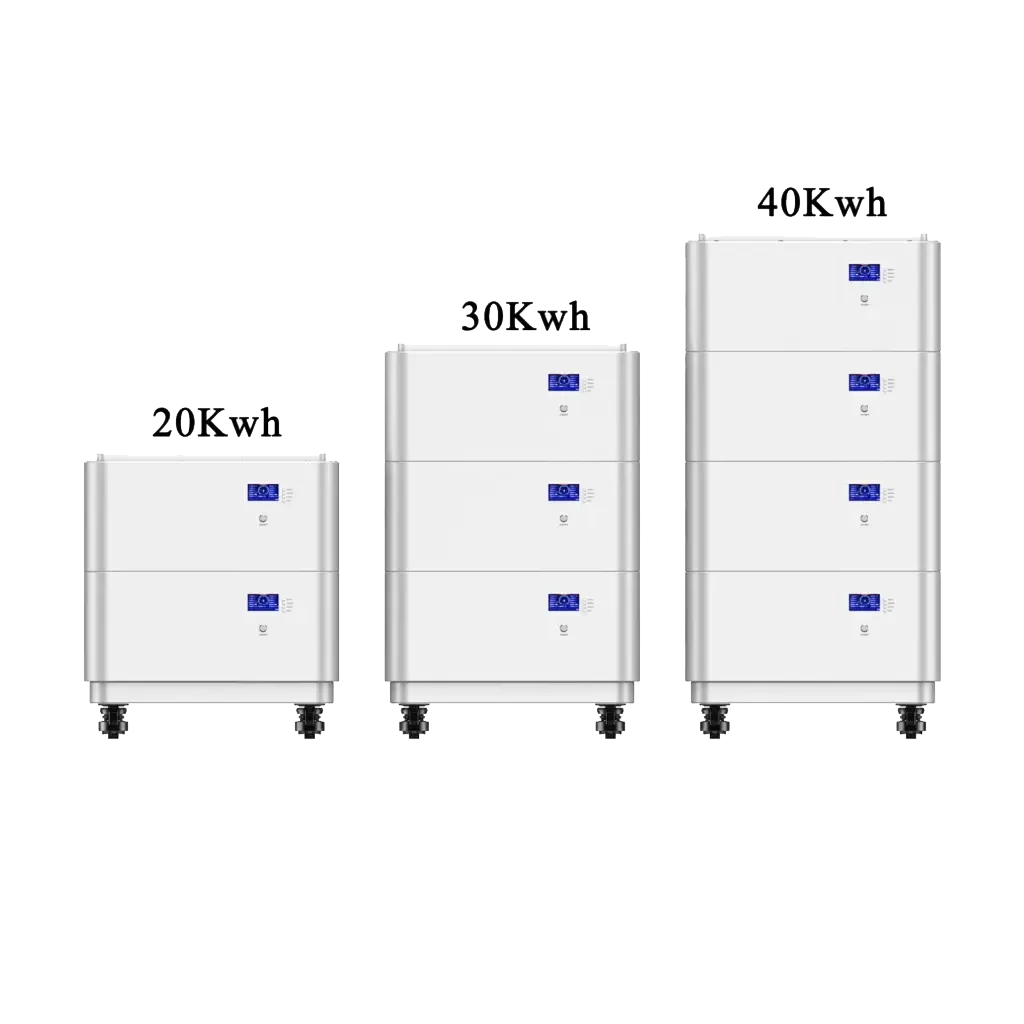
If the battery will be charged by solar panels, consider cloudy days, seasonal production changes and future load growth. Many homes start with 5–15kWh and later expand to 20–40kWh.
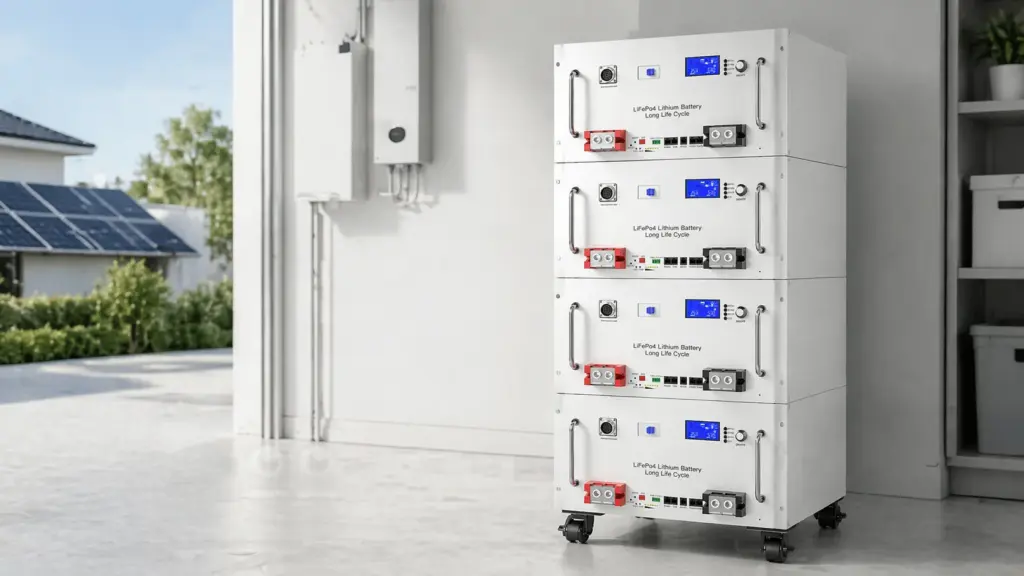
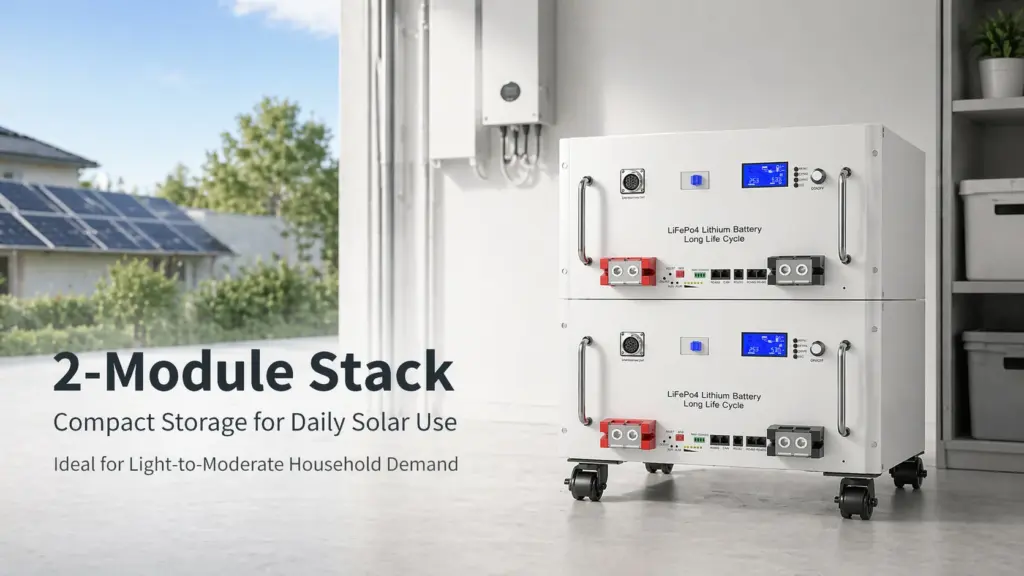
For installers and EPC teams, modular products such as rack mount LiFePO4 batteries or stackable battery systems can simplify expansion because additional modules can be added as the customer’s energy demand increases.
Need help choosing the right 48V battery for a home solar, backup power or commercial energy storage project? Avepower provides LiFePO4 battery systems with flexible capacity options, inverter compatibility support, BMS protection and OEM/ODM customization for installers, distributors and project partners.
Need OEM or Project Based 48V Battery Support
Avepower supports OEM and ODM customization for 48V battery systems, including capacity design, appearance, BMS communication, inverter matching and certification documents for global projects.
Should You Build a 48V Battery Bank from Four 12V Batteries?
Some users build a 48V battery bank by connecting four 12V batteries in series. This can work, but it is not always the best choice for solar energy storage.
The advantage is flexibility. 12V batteries are easy to source, and connecting four in series can create a basic 48V battery bank. Avepower’s guide on connecting four 12V batteries explains that many inverters, charge controllers, telecom devices and storage systems are designed around 48V architecture because lower current can reduce cable size and energy loss.
However, a purpose-built 48V LiFePO4 battery is usually better for serious solar and backup systems because it normally includes:
- Integrated BMS
- Better cell matching
- Cleaner wiring
- Fewer connection points
- Easier inverter communication
- More professional enclosure design
- Better monitoring
- More predictable warranty support
For temporary, mobile, or budget-sensitive use, four 12V batteries may be acceptable. For long-term home storage or commercial backup, a dedicated 48V battery module is usually the more reliable solution.
48V Battery for Home vs C&I: Key Differences
| Factor | Home 48V Battery | C&I 48V Battery System |
|---|---|---|
| Main goal | Solar self-consumption and backup | Backup, peak shaving, load shifting |
| Typical capacity | 5–40kWh | 30–260kWh or more |
| Installation area | Garage, utility room, energy room | Electrical room, cabinet area, containerized site |
| Inverter size | 3–12kW common | 10–50kW+ depending on design |
| Design priority | Safety, quiet operation, ease of use | Scalability, monitoring, serviceability |
| Best format | Wall-mounted, vertical, stackable | Rack mount, cabinet, engineered ESS |
| When to consider HV | Large villa or high-power loads | Medium to large C&I projects |
How Long Will a 48 Volt Battery Last?
Battery lifespan depends on chemistry, depth of discharge, operating temperature, charge/discharge current and installation quality.
A quality 48V LiFePO4 battery can often support thousands of cycles under normal use. In practical home solar storage, that may mean more than 10 years of operation if the system is correctly sized and not regularly pushed beyond its recommended limits.
Factors that shorten lifespan include:
- Frequent over-discharge
- Charging below the allowed temperature
- High current beyond BMS limits
- Poor inverter settings
- Excessive heat
- Weak cable connections
- Unbalanced parallel wiring
- Lack of ventilation
- No maintenance checks
Avepower’s LiFePO4 home energy storage products are designed around long-cycle cells, smart BMS protection and inverter communication support. This makes them suitable for installers, distributors and OEM/ODM partners who need repeatable system performance rather than one-off DIY configurations.
When 48V Is Not Enough for C&I Projects
A 48 volt battery is flexible, but it is not the best fit for every commercial or industrial project.
As system power increases, current becomes the limiting factor. For example, a 50 kW inverter running from a 48V battery bank may require more than 1,000A on the DC side before losses are considered. That creates serious design challenges:
- very large cables or busbars
- higher heat management requirements
- larger DC protection components
- more complex parallel battery balancing
- higher installation risk if not professionally engineered
For this reason, larger C&I systems often move to high-voltage battery architecture. A high-voltage system reduces DC current, improves conversion efficiency, and is easier to match with larger PCS units.
Avepower generally recommends 48V systems for residential storage, telecom, small commercial backup, and modular low-voltage projects. For larger factories, hotels, EV charging sites, solar farms, and industrial energy management, a commercial and industrial energy storage system or customized high-voltage platform may be more suitable.
How to Charge a 48 Volt LiFePO4 Battery Safely
Charging settings should always follow the battery manufacturer’s datasheet. However, for a typical 16S LiFePO4 battery:
- Nominal voltage: about 51.2V
- Full-charge voltage: often around 58.4V
- Recommended charging method: CC-CV
- Charging current: based on cell, BMS, and system design
- Low-temperature charging: only allowed if the battery supports heating or the BMS permits it
Important charging rules:
- Use a charger or inverter designed for LiFePO4 chemistry.
- Do not use lead-acid charging settings unless the manufacturer confirms compatibility.
- Confirm maximum charge current.
- Avoid charging below 0°C unless the battery has low-temperature charging protection or heating.
- Keep terminals tight and clean.
- Use correct cable size and DC protection.
- Do not mix old and new batteries unless the manufacturer allows it.
- Do not mix different brands, capacities, or BMS types in parallel without engineering review.
For professional projects, installers should confirm the battery protocol, inverter firmware, charge voltage, discharge cutoff, current limit, and alarm behavior before commissioning.
48V Battery Maintenance Tips
LiFePO4 batteries require much less maintenance than lead-acid batteries, but they are not maintenance-free in a professional sense. For long service life:
- keep the battery in a dry, ventilated location
- avoid direct sunlight and high heat
- keep terminals tight
- check system alarms regularly
- update inverter or BMS firmware only under guidance
- avoid frequent deep discharge when not necessary
- do not overload the inverter
- inspect cables and breakers during maintenance
- keep battery modules at similar SOC before parallel connection
- follow storage SOC recommendations if the system will be unused for months
For homes, an annual system check is usually enough. For commercial sites, monitoring data should be reviewed more frequently, especially where batteries support critical loads.
Where 48V Batteries Fit Best
From an energy storage manufacturer’s perspective, the value of a 48V battery is not only the voltage. The real value is whether the system is safe, compatible, scalable and easy to install.
Avepower uses 48V LiFePO4 battery platforms across several residential and light commercial formats, including wall-mounted, rack-mounted, vertical and customized battery systems. For installers, distributors, and OEM/ODM partners, the key advantage is flexibility: the same 48V architecture can be adapted for compact home storage, larger backup systems, inverter-matched solar projects, and small commercial power applications.
For standard residential projects, a 48V battery can be a simple and reliable choice. For larger commercial and industrial projects, Avepower can also recommend high-voltage battery storage systems when the project requires higher power, larger capacity, or advanced EMS integration.
Take Control of Your Energy with Avepower!
Reliable home solar battery solutions with OEM/ODM customization and in-house manufacturing, tailored to the needs of distributors, installers, and energy partners.
Conclusion
A 48 volt battery is one of the most practical voltage platforms for modern solar storage, home backup, telecom power and small commercial energy storage. It offers a strong balance between efficiency, scalability, safety and installation flexibility.
The best 48V battery is not simply the cheapest or highest-capacity model. It should match the inverter, load profile, installation environment, safety requirements, communication protocol and future expansion plan.
FAQ
In many LiFePO4 systems, yes. A battery sold as a 48V lithium battery is often 51.2V nominal because it uses 16 LiFePO4 cells in series. The actual voltage changes during charging and discharging.
Yes, a 48V battery can run selected home loads when paired with a compatible inverter. Whether it can run the whole house depends on battery capacity, inverter power, surge demand and load selection.
It depends on battery capacity, load size, depth of discharge and battery chemistry. For example, a 51.2V 100Ah battery stores about 5.12kWh. If the connected load averages 500W, the theoretical runtime is about 10 hours before efficiency losses and battery reserve are considered.
For medium and large solar systems, 48V is usually better than 12V because it reduces current, cable size, heat and voltage drop. For very small systems, 12V may still be simpler.
Common 48V inverters range from 3kW to 12kW for residential and off-grid systems. The battery’s continuous discharge current must support the inverter’s power demand.