
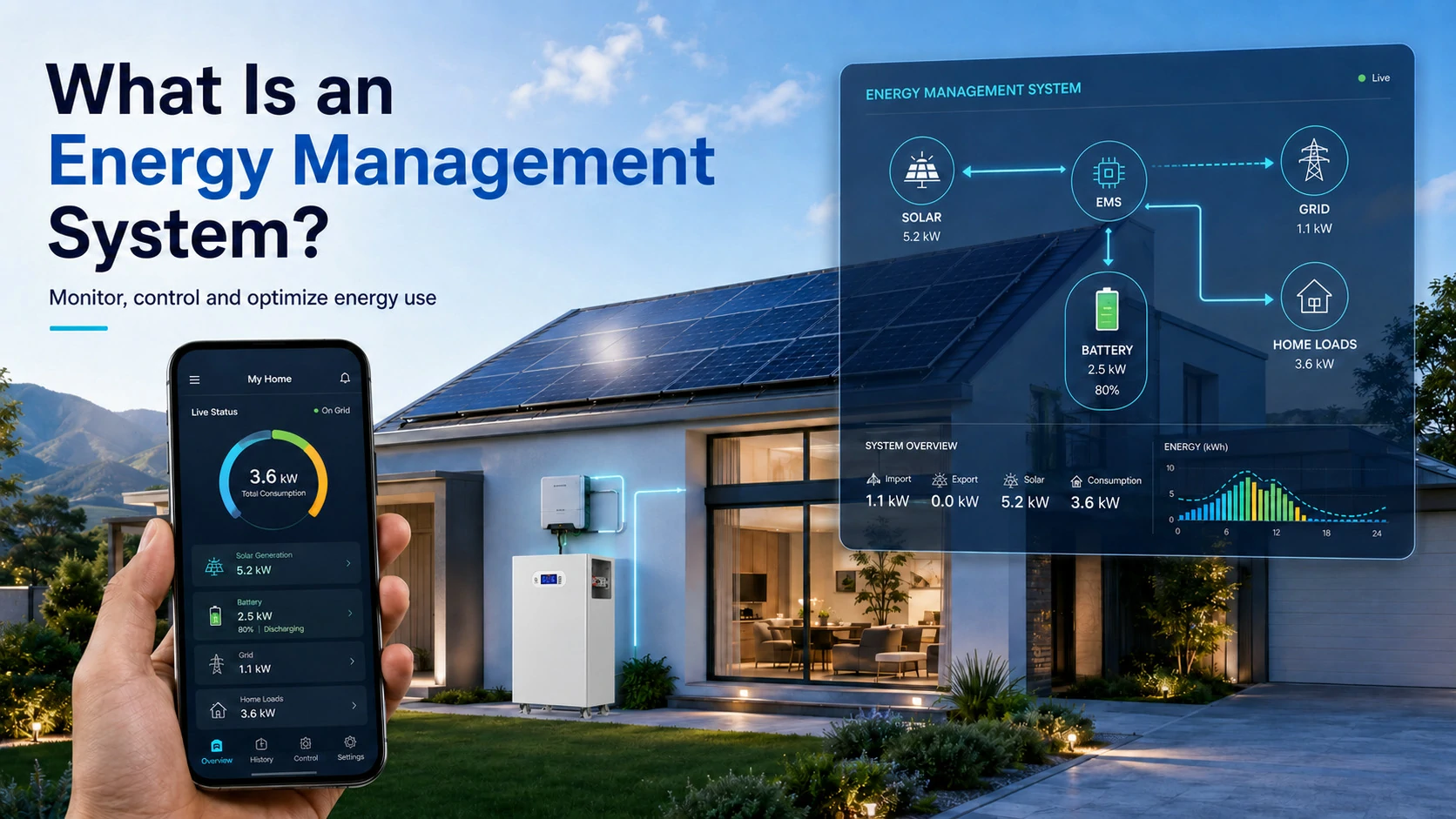
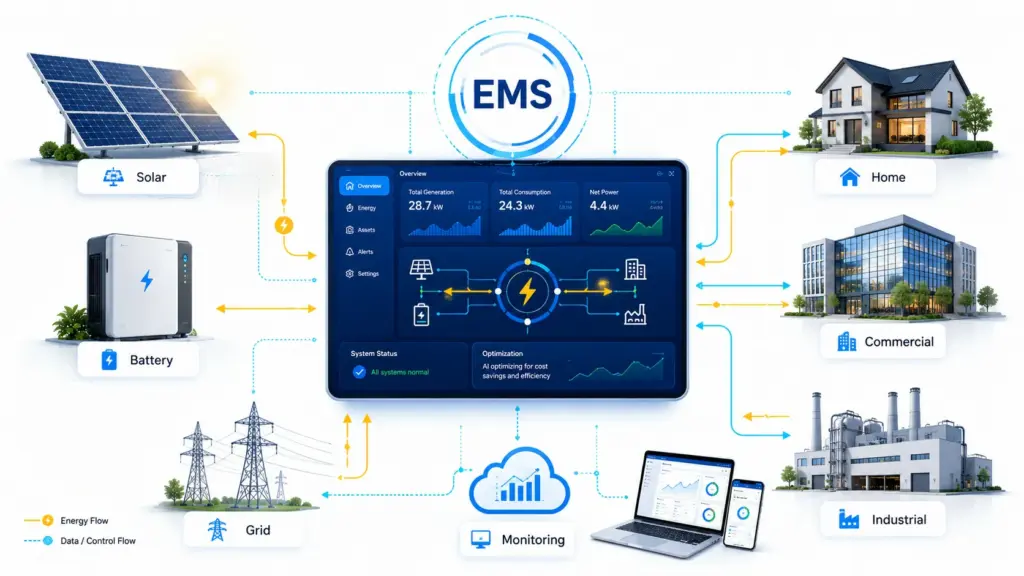
An energy management system is a system that monitors, analyzes and controls how energy is generated, stored and used. It helps homes, buildings, factories and solar battery projects reduce energy waste, lower electricity costs, improve energy efficiency and make smarter use of renewable energy.
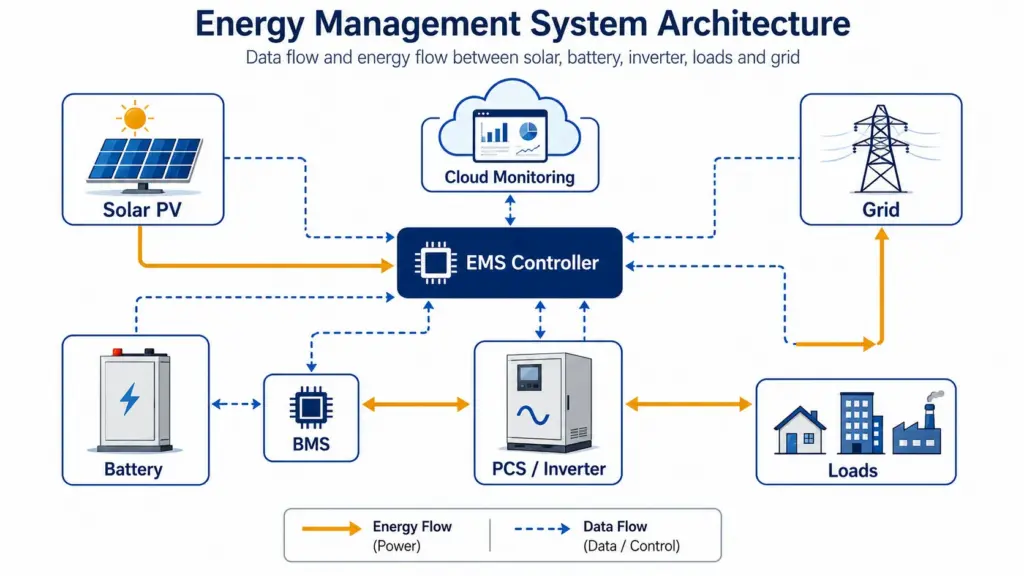
In practical use, an EMS connects meters, sensors, software, batteries, inverters, PCS equipment and loads so the whole energy system can operate more intelligently.
What Is an Energy Management System?
An energy management system, often shortened to EMS or EnMS, is a structured system used to monitor, analyze, control and improve how energy is produced, stored and consumed.
In simple terms, an EMS helps a home, building, factory, commercial site or energy storage project answer three important questions:
- Where is energy being used?
- Where is energy being wasted?
- How can the system reduce cost, improve efficiency and use more clean energy without affecting comfort, safety or production?
A modern energy management system usually combines hardware, software, sensors, meters, communication devices, data analytics and control logic. It may monitor electricity consumption, solar generation, battery state of charge, inverter output, HVAC loads, EV charging, utility tariffs, grid signals and carbon-related data.
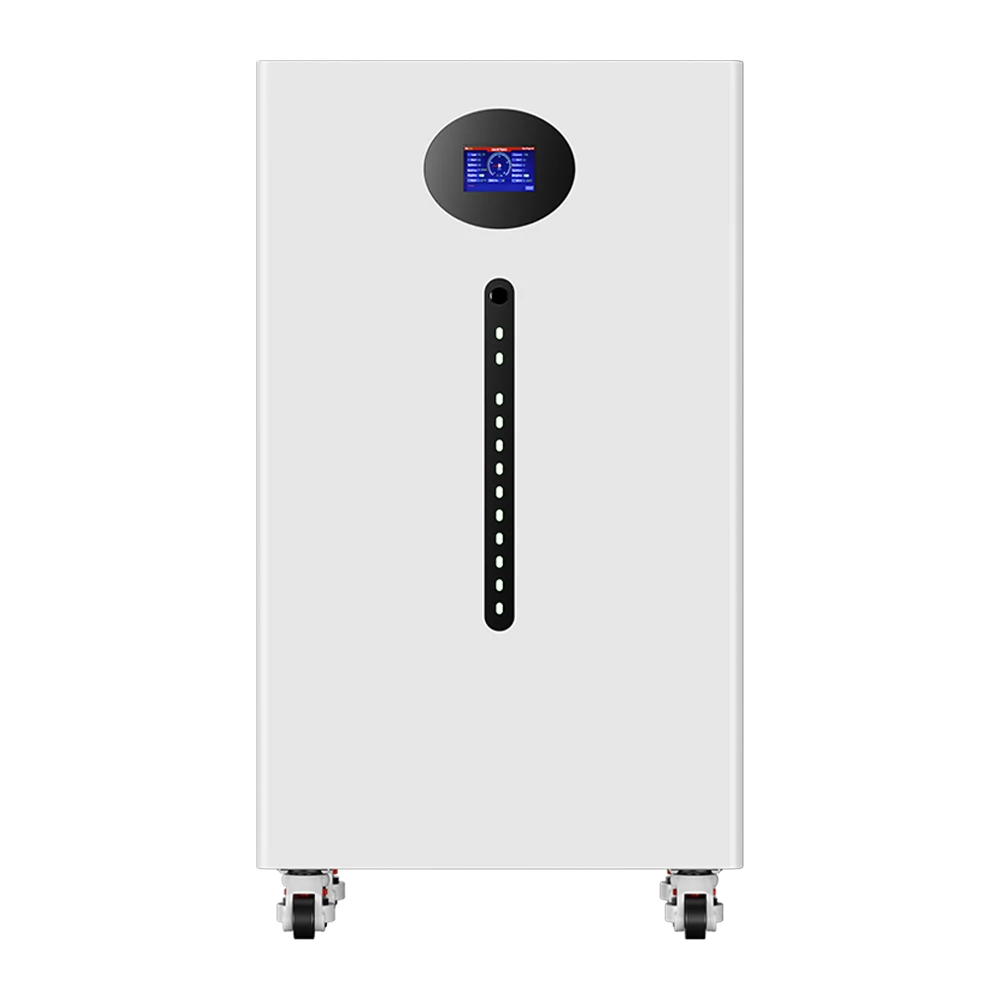
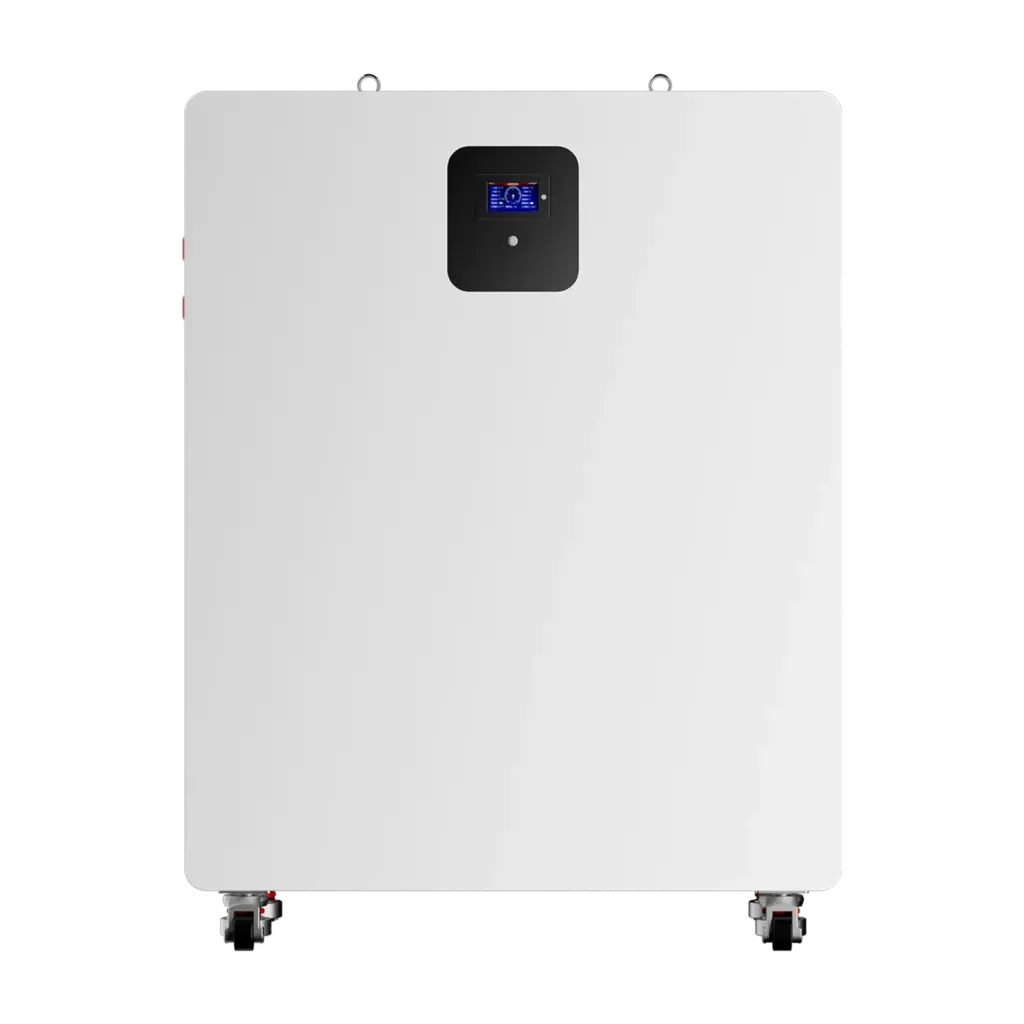
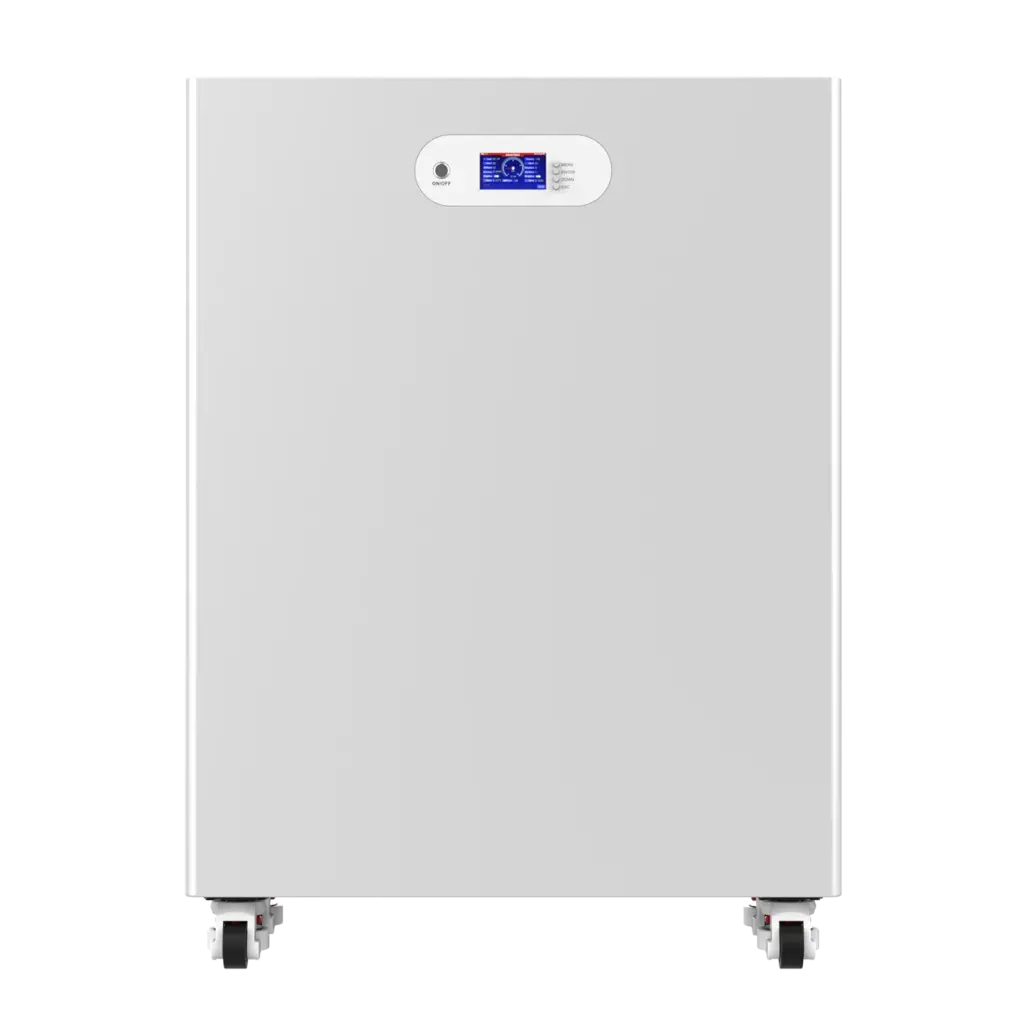
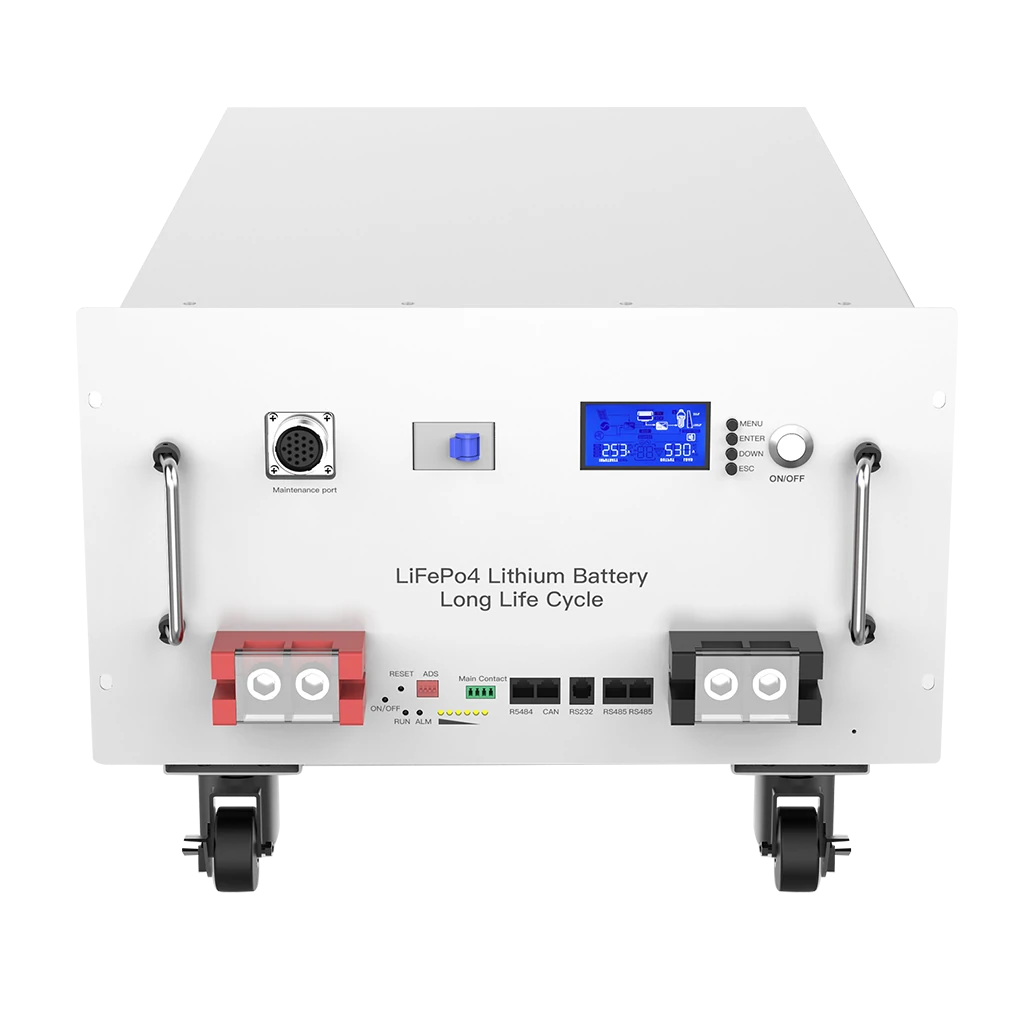
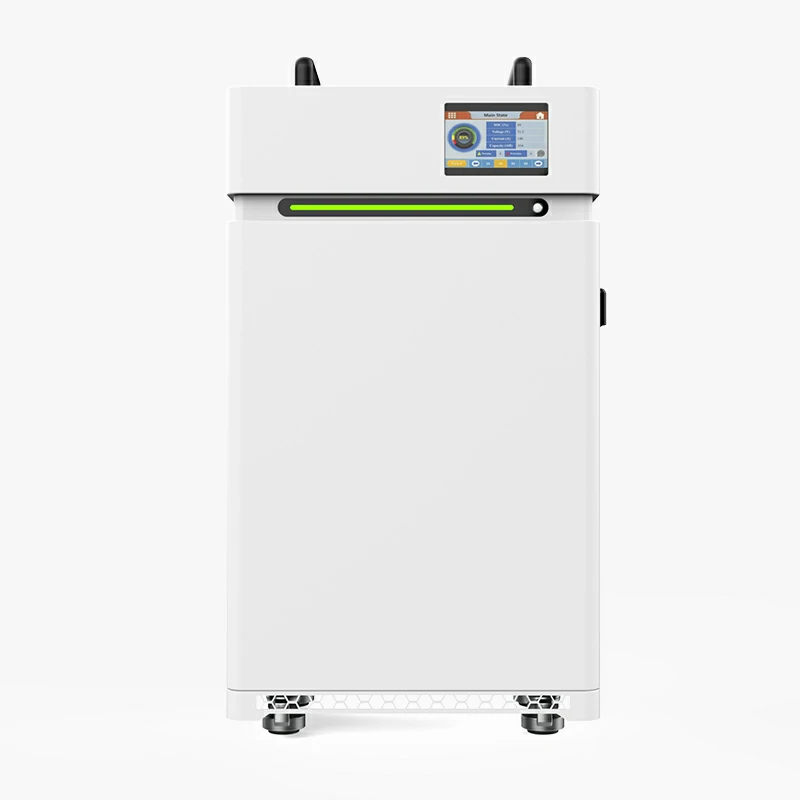
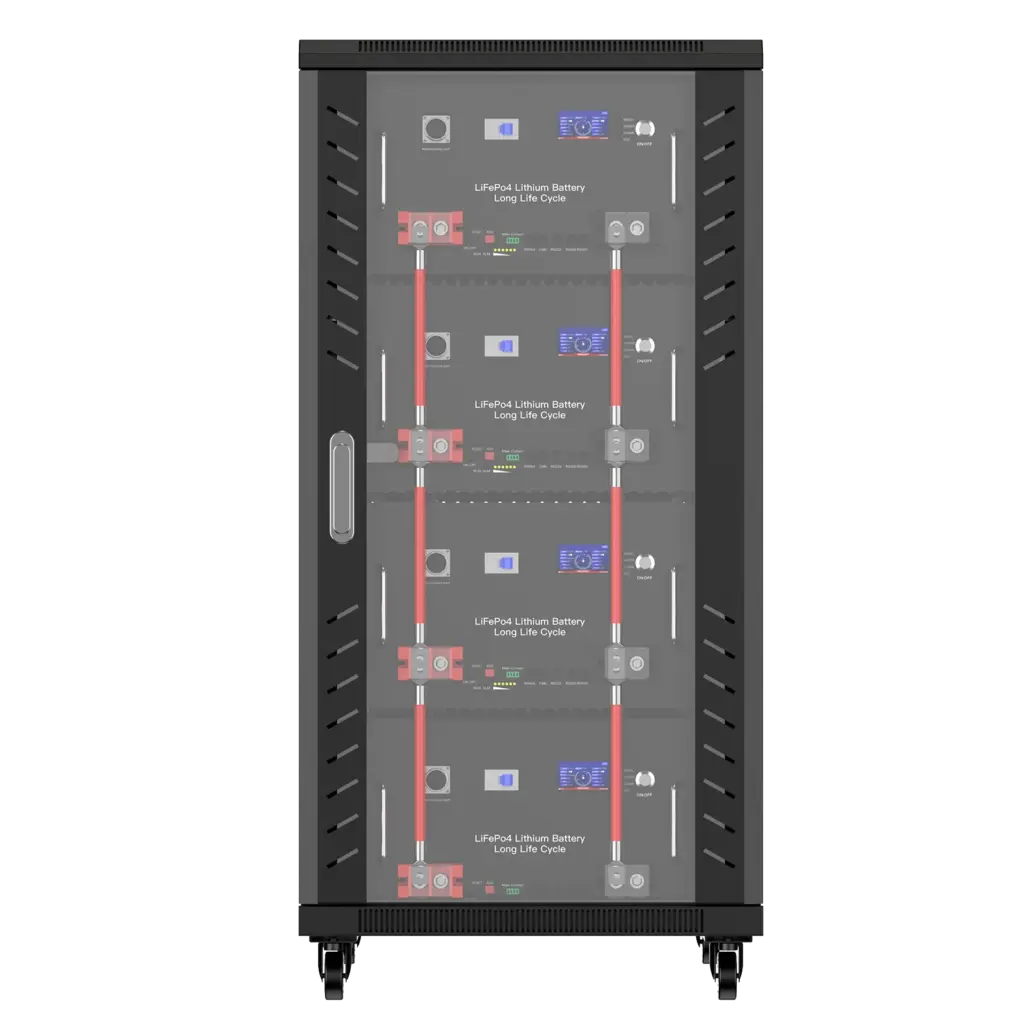
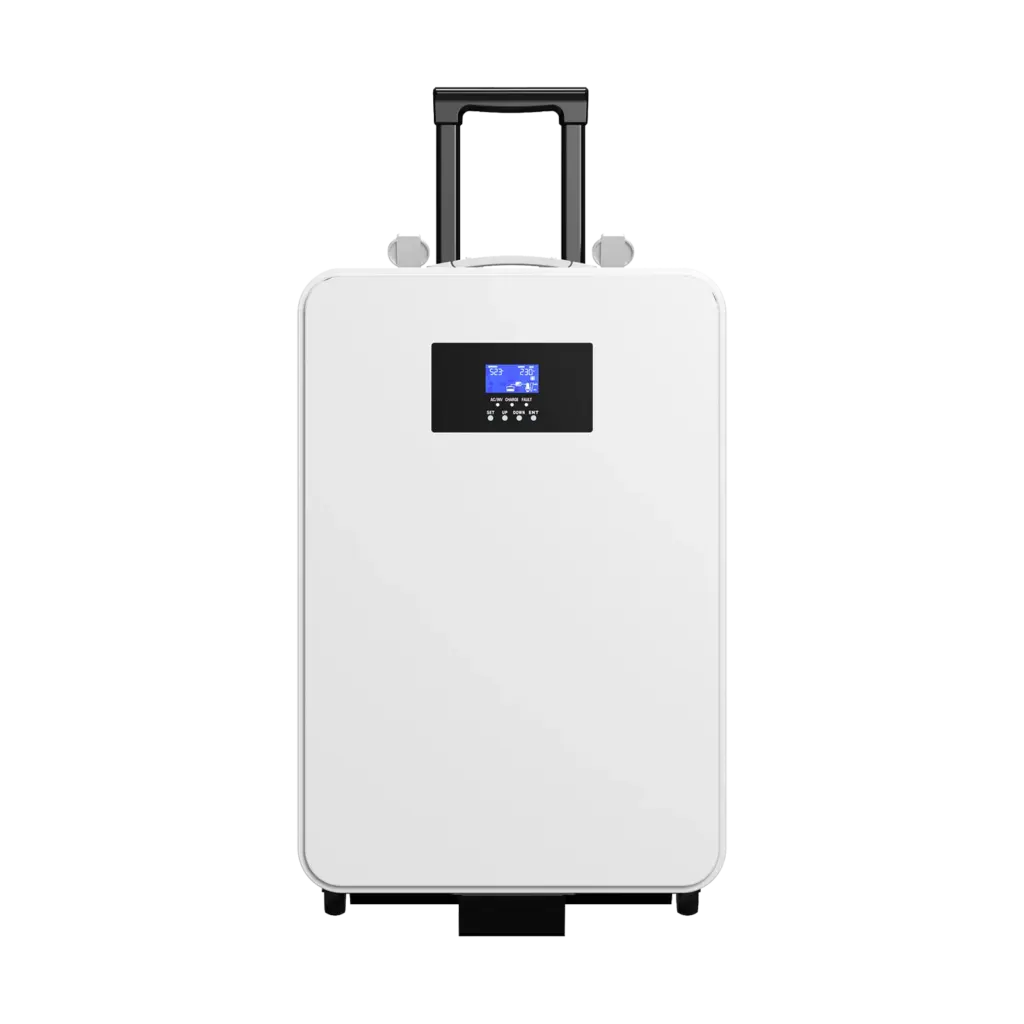
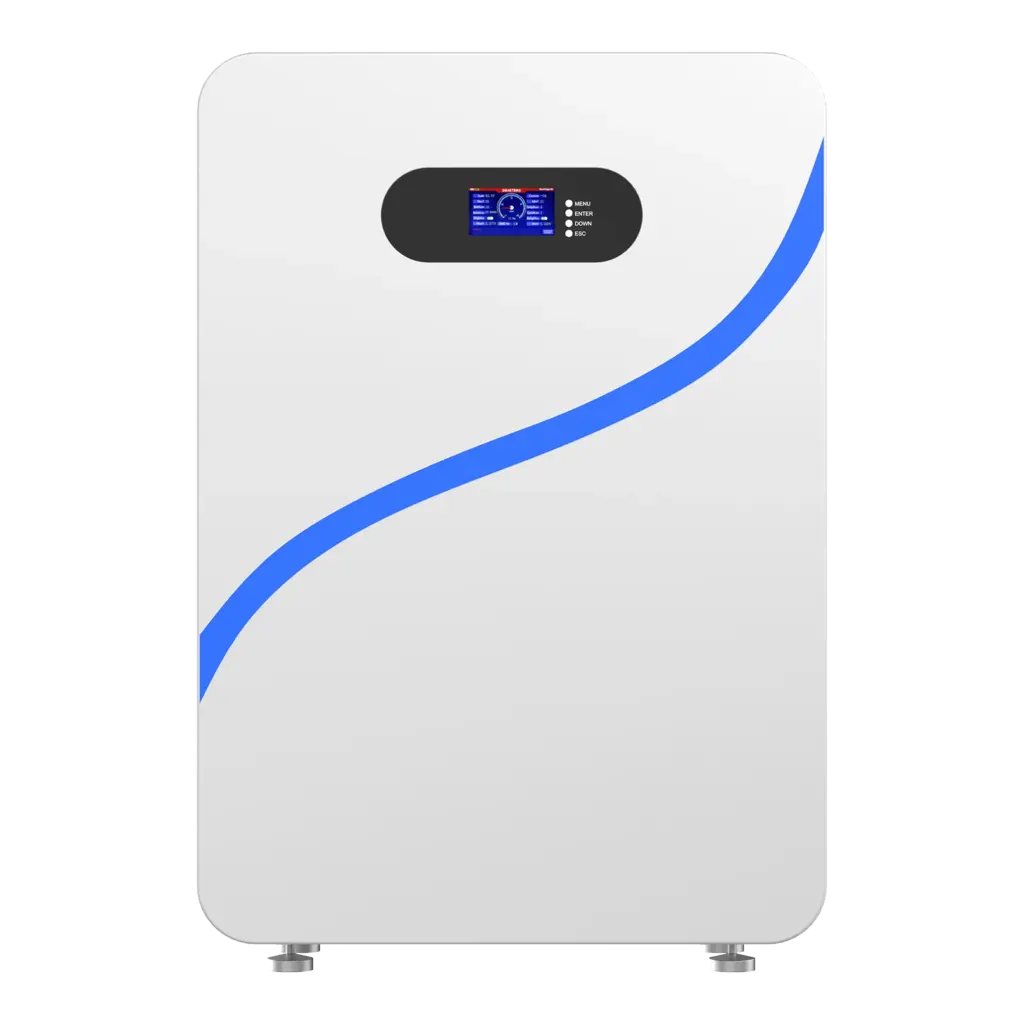
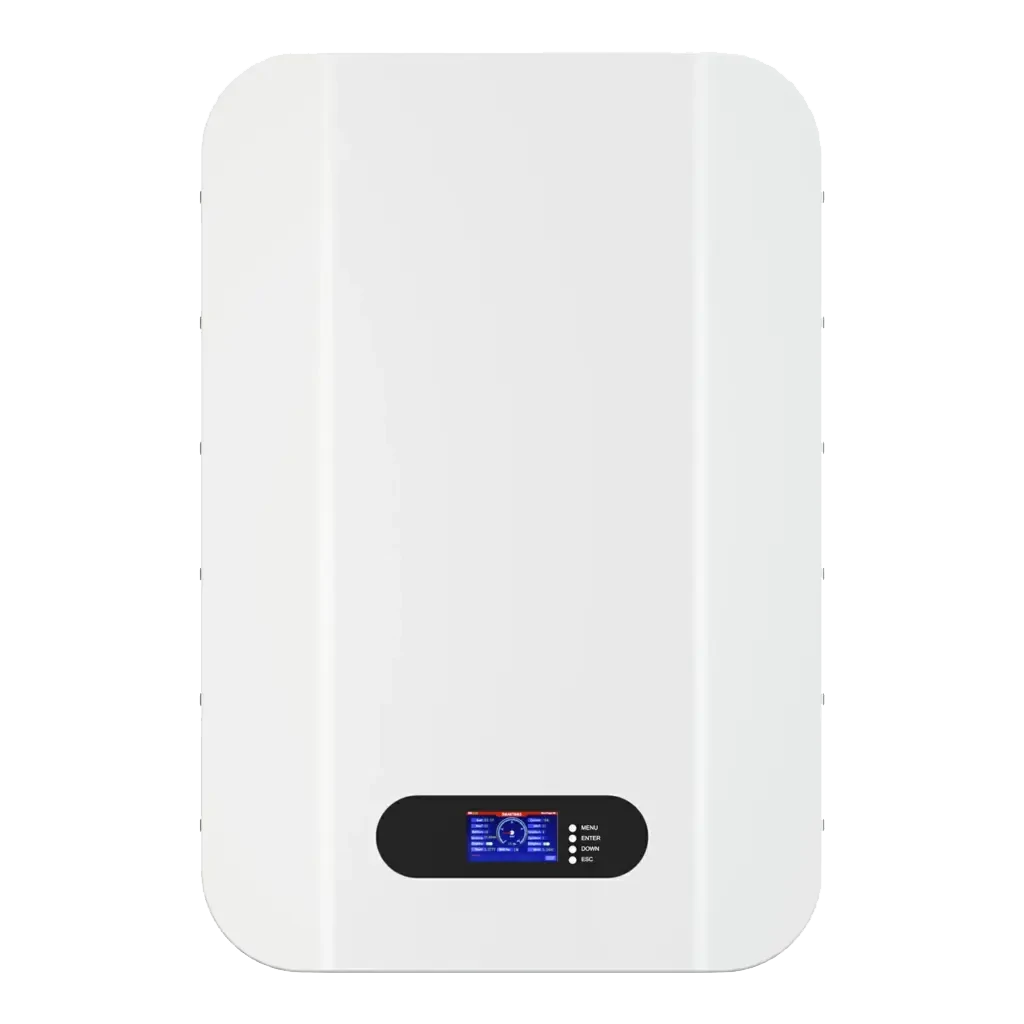
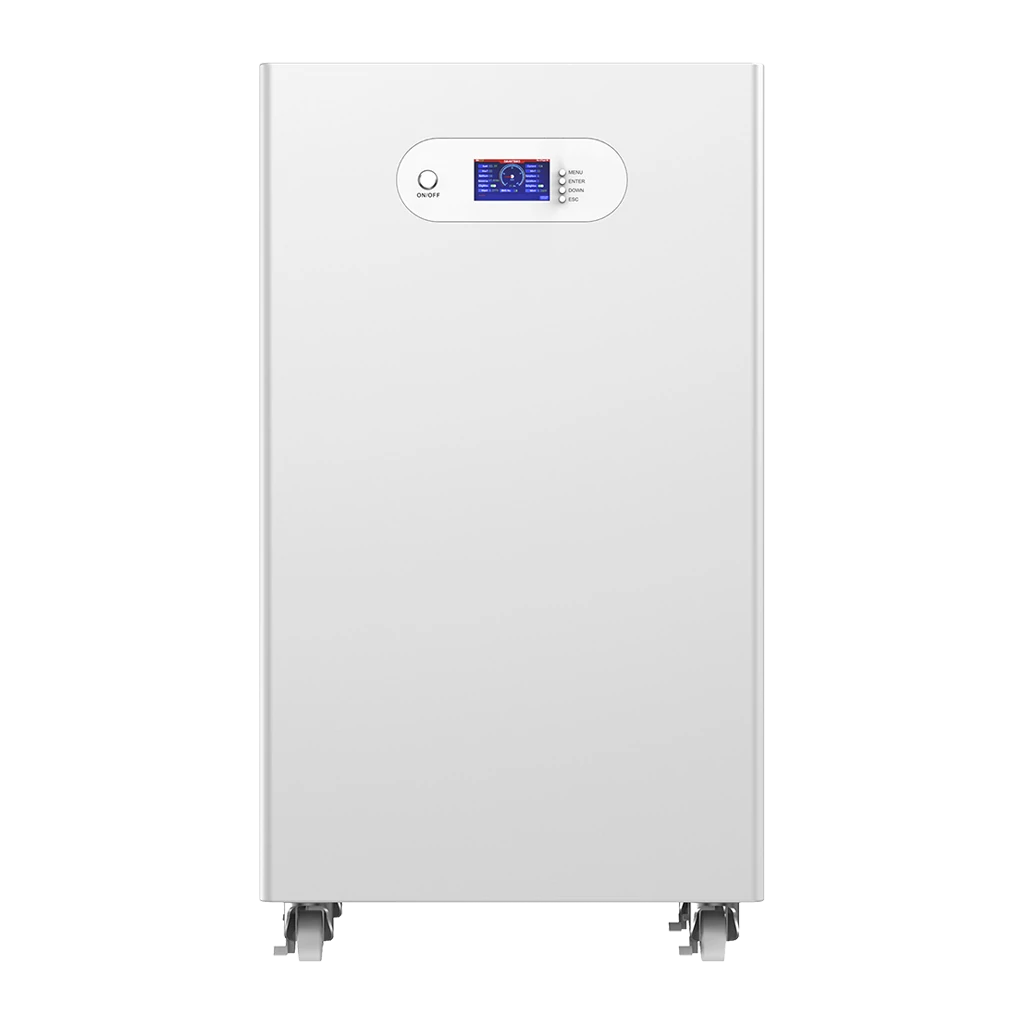
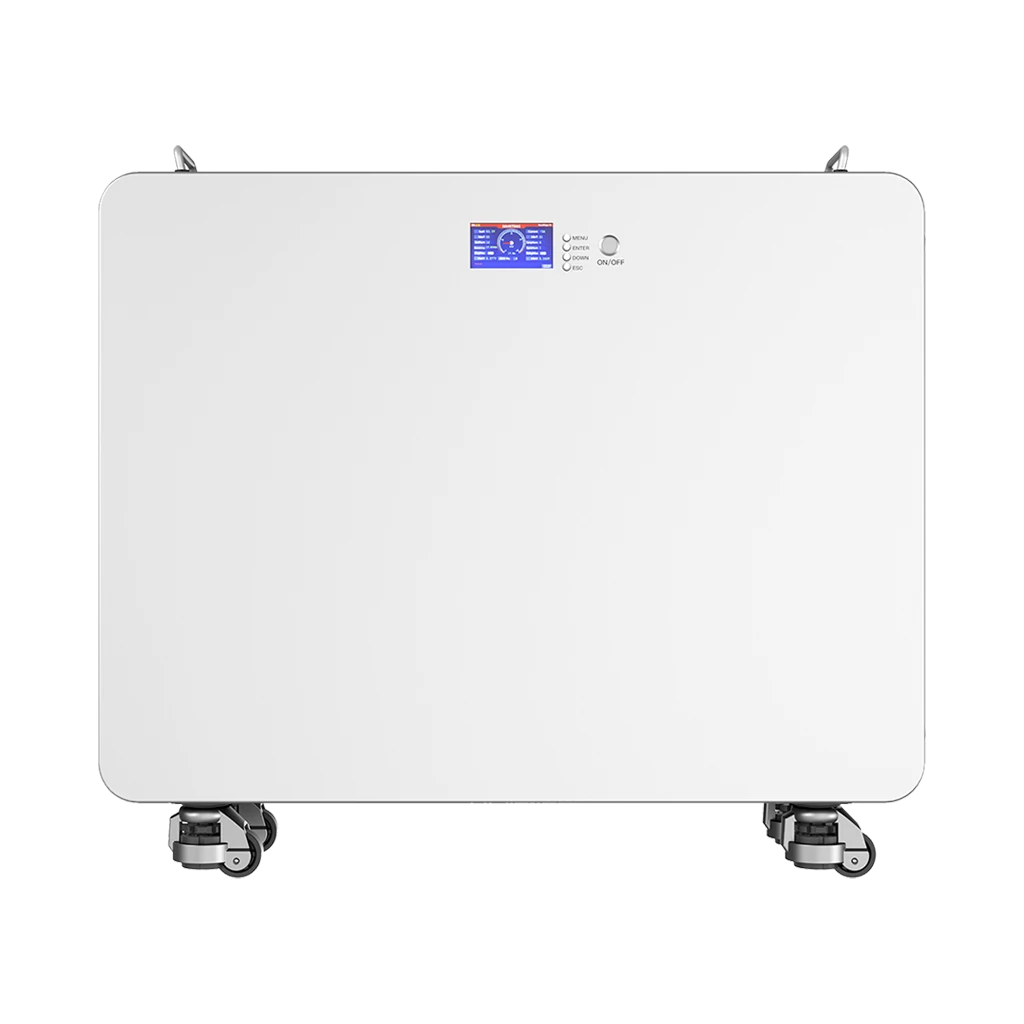
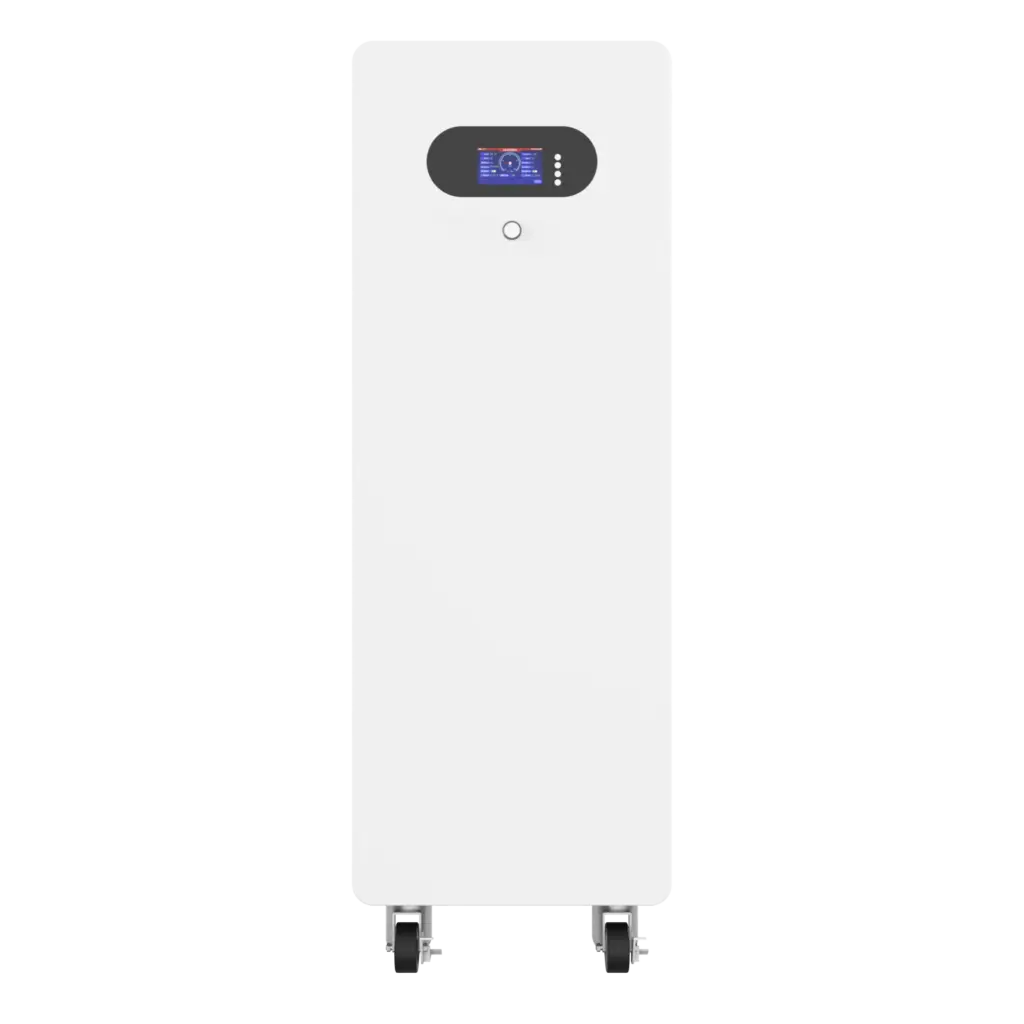
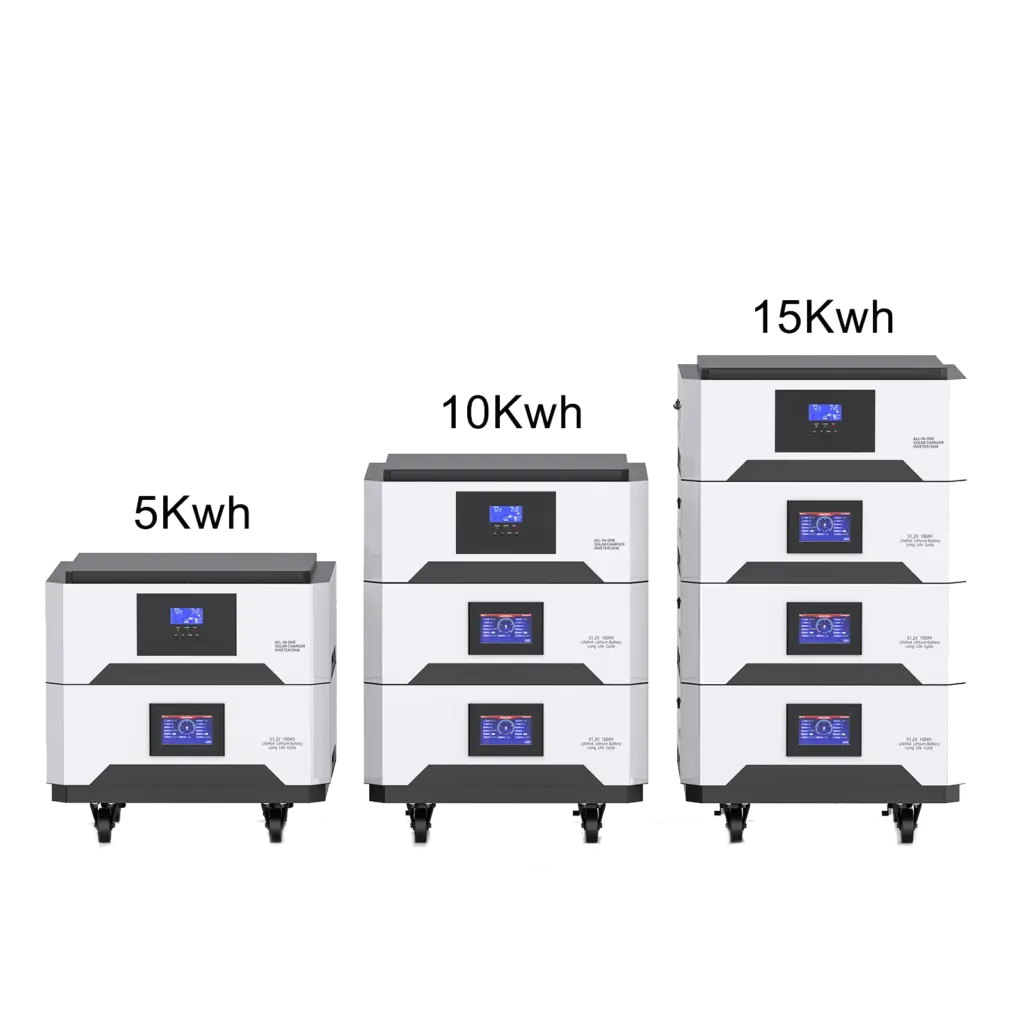
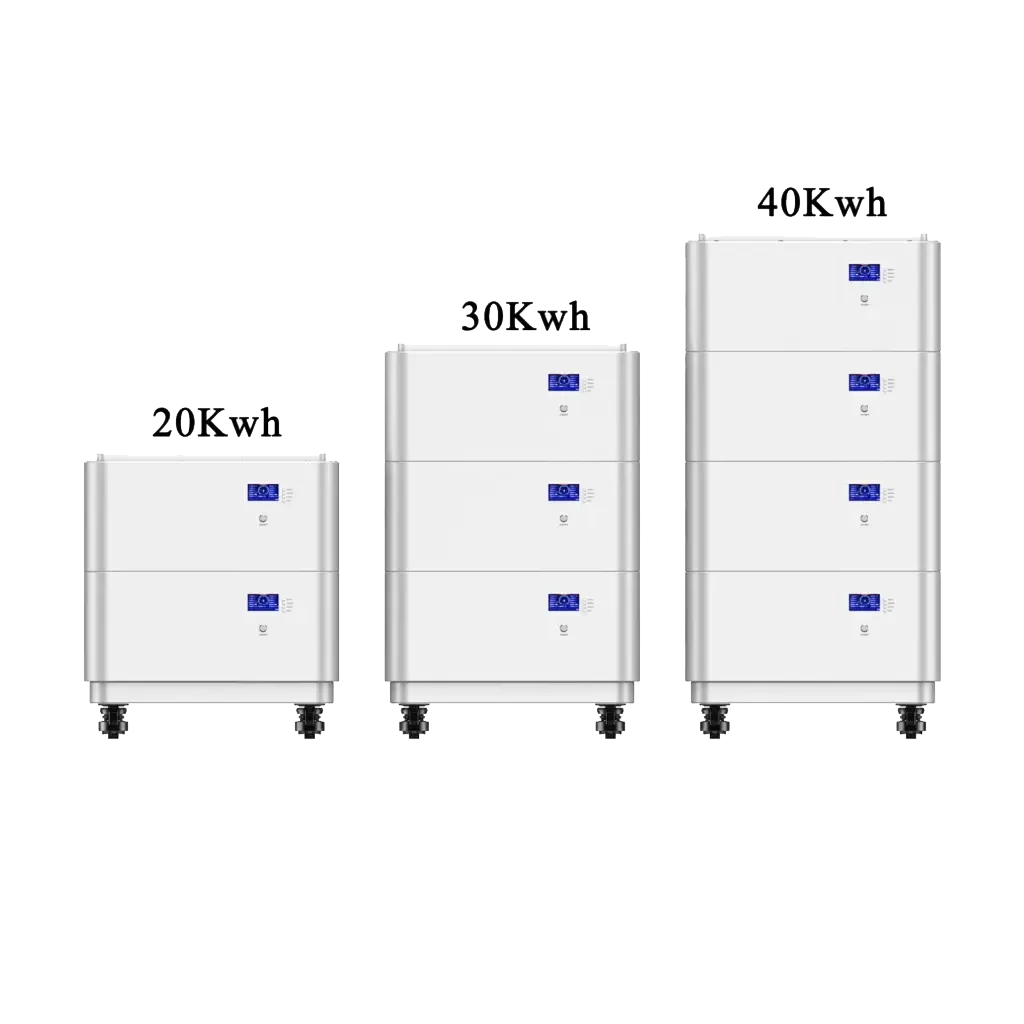
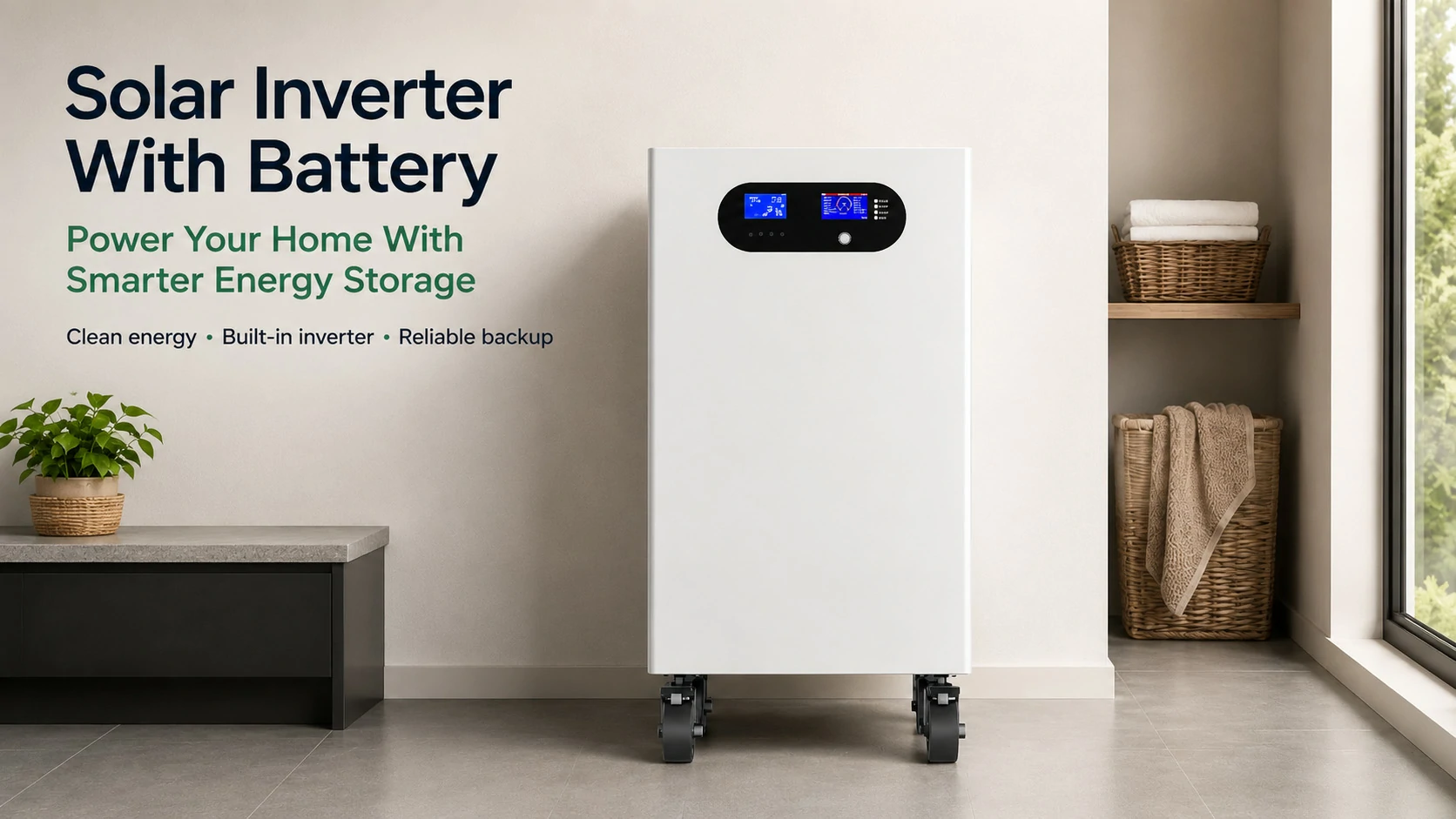
For example, in a solar storage project, an EMS may decide when to use solar power directly, when to charge the battery, when to discharge stored energy during peak-price periods, and when to keep backup reserve for grid outages. In this type of system, products such as a home energy storage battery system, rack mount LiFePO4 battery or stackable solar battery become important physical assets that the EMS can monitor and coordinate.
Energy Management System Meaning: EMS vs EnMS
The term “energy management system” can be used in two slightly different ways.
The first meaning is a management framework. This is often called EnMS and is closely related to ISO 50001 energy management. It focuses on energy policy, energy review, targets, action plans, monitoring, measurement and continuous improvement.
The second meaning is a technical control system. This is usually called EMS. It refers to software and hardware that collect energy data, monitor performance, automate control and optimize how different energy assets operate.
In practice, the two ideas often work together. A company may use an ISO-style energy management framework to set goals and responsibilities, while also using EMS software to collect real-time data and automate daily energy decisions.
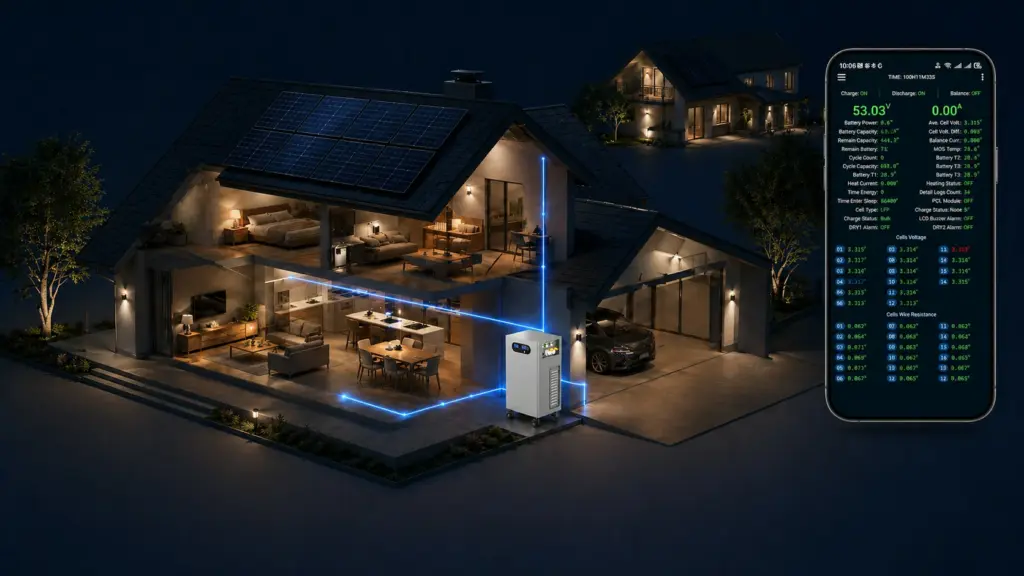
Need a Battery System That Can Work with Smarter Energy Management?
If you are planning a solar storage, backup power or small commercial energy project, Avepower can help you choose a suitable LiFePO4 battery system for your application. Explore Avepower home energy storage solutions and build a more flexible foundation for future EMS integration.
Key Components of an Energy Management System
A complete EMS is not just one software dashboard. It usually includes several layers that work together.
1. Metering and Sensors
Meters and sensors provide the basic data needed for energy management. They can measure grid import and export, solar generation, battery power, load consumption, temperature, humidity and equipment operating status.
Without reliable data, an EMS cannot make reliable decisions. Poor metering design is one of the most common reasons energy management projects fail to deliver expected results.
2. Communication Gateway
A gateway collects data from different devices and sends it to the EMS platform. In energy storage projects, communication may use protocols such as CAN, RS485, RS232, Modbus, Ethernet or cloud APIs.
For installers and project developers, communication compatibility is critical. A battery system may have strong hardware, but if it cannot communicate correctly with the inverter, PCS or EMS, the system may not operate as expected.
3. EMS Software Platform
The EMS software is the brain of the system. It collects data, visualizes performance, applies control logic, manages alarms and provides reports.
Basic EMS software may focus on monitoring and manual control. More advanced systems can support automation, forecasting, optimization, dynamic tariffs, demand response, remote diagnostics and multi-site management.
4. Control Devices
Control devices allow the EMS to act on decisions. These may include smart relays, inverter control interfaces, PCS controllers, HVAC controls, lighting controls, load controllers, EV charging controllers and battery system controls.
5. Battery Management System
In battery storage projects, the BMS protects and manages the battery cells. It monitors voltage, current, temperature, state of charge, state of health and protection conditions.
A BMS is not the same as an EMS. The BMS focuses on battery safety and battery-level control, while the EMS focuses on system-level energy optimization. In a well-designed project, the BMS and EMS work together.
Avepower supplies LiFePO4 battery packs and energy storage systems designed with BMS protection and communication features for solar storage, backup power and project-based applications.
6. PCS or Inverter
The power conversion system, or PCS, controls AC/DC conversion between the battery and the electrical system. In smaller residential projects, this function may be handled by a hybrid inverter. In larger commercial and industrial systems, the PCS is often a separate device.
The EMS may send operating instructions to the PCS or inverter, while the PCS performs the actual power conversion. For a deeper explanation, see Avepower’s guide: Power Conversion System PCS for Energy Storage Explained.
7. User Interface and Reporting
The user interface may be a web dashboard, mobile app, local screen or cloud platform. It allows users and operators to view energy flows, battery status, alarms, savings, historical data and system performance.
For B2B battery projects, reporting is important because installers, distributors, EPCs and project owners often need to provide performance records, maintenance data and customer support documentation.
How Does an Energy Management System Work?
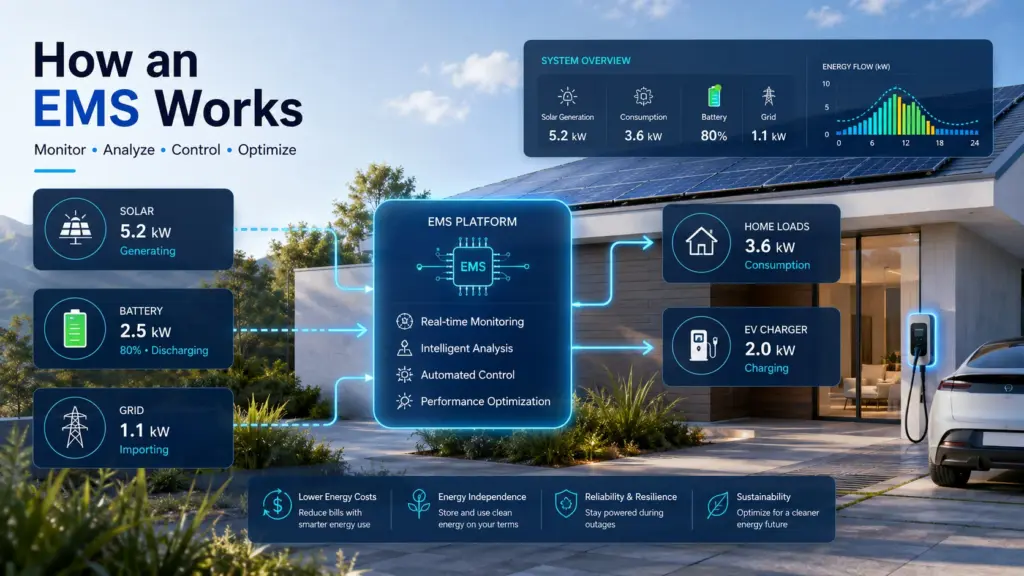
An EMS works by collecting data, analyzing energy behavior, making control decisions and continuously improving performance.
The process usually follows five steps.
Steps 1. Data Collection
The EMS collects data from meters, sensors, inverters, batteries, HVAC systems, lighting systems, EV chargers, building automation systems and utility meters.
In a solar battery system, this may include solar production, load demand, battery SOC, inverter status, grid import, grid export, voltage, current, temperature and alarm data. Battery-related data may come from the BMS, inverter or monitoring gateway. For users who want to understand battery SOC more clearly, the concept is explained in Avepower’s guide to SOC battery meaning.
Steps 2. Data Analysis
After collecting data, the EMS analyzes patterns. It can show when energy demand is highest, when solar output is strongest, when equipment is inefficient, or when a building is using energy outside normal operating hours.
This analysis helps users identify hidden waste. For example, a commercial site may discover that HVAC equipment runs at full power after working hours. A solar storage system may show that too much solar power is exported during the day while expensive grid power is still purchased in the evening.
Steps 3. Optimization Logic
The EMS then applies rules, algorithms or forecasting models. Some systems are simple and rule-based. For example, they may charge the battery when solar production is high and discharge the battery when electricity prices are high.
More advanced systems use forecasts. They may consider weather, expected solar generation, electricity tariffs, occupancy schedules, production plans, EV charging demand and grid limits.
The goal is not only to react to real-time conditions but also to plan energy use over time.
Steps 4. Control and Automation
Once the EMS makes a decision, it can send commands to connected devices. This may include adjusting HVAC schedules, limiting EV charging power, changing inverter operation modes, controlling battery charge and discharge, or reducing non-critical loads during peak periods.
In a battery energy storage system, this control layer often works together with the inverter, PCS and BMS. The power conversion system PCS converts electricity between DC battery power and AC power, while the BMS protects the battery cells and provides safety-related data. The EMS uses this information to coordinate energy flows at the system level.
Steps 5. Reporting and Continuous Improvement
An EMS also provides dashboards, alerts and reports. These reports can show energy consumption, demand peaks, cost savings, equipment status, renewable energy use and carbon-related data.
For organizations following an energy management program, reports help compare actual results against targets. This supports continuous improvement, budgeting, maintenance planning and compliance reporting.
What Does an Energy Management System Do?
An EMS can perform many functions, but the most common ones include monitoring, control, optimization, protection support and reporting.
Energy Monitoring
The EMS tracks how much energy is being used and where it is being used. This helps users understand consumption patterns and identify waste.
Peak Demand Management
Many commercial electricity bills include demand charges based on the highest power draw during a billing period. An EMS can reduce peak demand by adjusting loads, using battery discharge or scheduling equipment operation more intelligently.
Solar Self-Consumption Optimization
For homes and businesses with solar PV, an EMS can help use more solar energy on-site instead of exporting it at a low price and buying power back later at a higher price.
A typical strategy is to power daytime loads first, charge the battery with excess solar, and discharge the battery during evening peak hours.
Battery Charge and Discharge Control
For energy storage systems, EMS control is essential. It can decide when to charge, when to discharge, how much reserve to keep, and how to avoid unnecessary cycling.
This is different from a battery management system. The BMS protects the battery at the cell and pack level, while the EMS optimizes how the battery is used within the whole energy system.
Load Shifting
Load shifting means moving energy use from expensive or high-demand periods to lower-cost periods. For example, an EMS may schedule water heating, EV charging or battery charging during off-peak periods.
Carbon and Sustainability Reporting
Companies increasingly need to report energy consumption and emissions. EMS data can support sustainability reports, ESG documentation and internal carbon reduction targets.
Fault Detection and Alerts
An EMS can detect abnormal energy behavior. For example, if equipment suddenly consumes more energy than usual, the EMS can send an alert. This helps maintenance teams respond earlier and reduce downtime.
Building a Solar Plus Storage Project?
A good EMS needs reliable energy storage hardware behind it. Avepower battery systems can support residential, installer-led and commercial storage projects that require stable battery capacity, inverter communication and long-term expandability.
EMS in Battery Energy Storage Systems
In a solar battery energy storage system, EMS plays a central role in coordinating the battery with other energy assets.
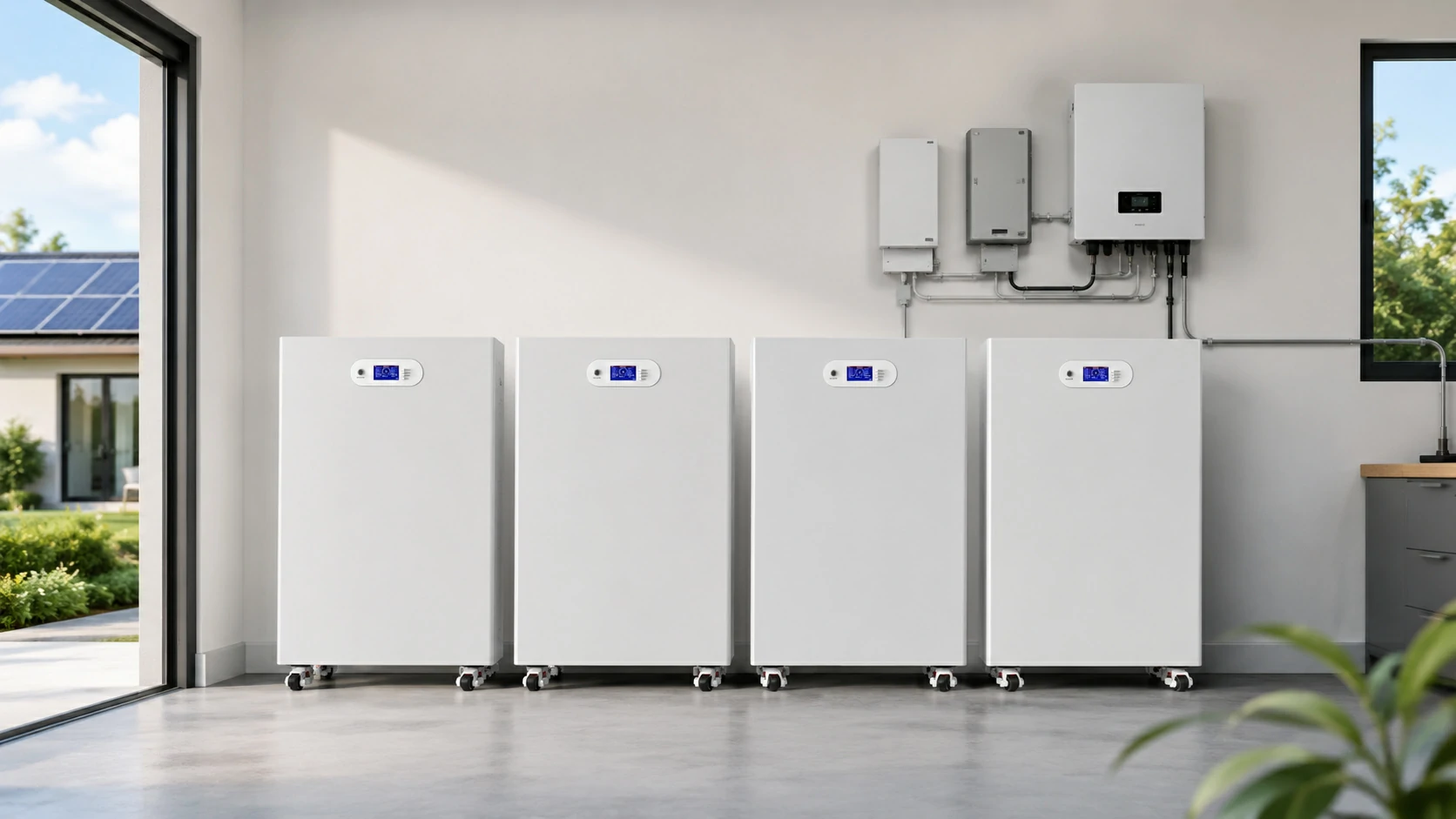
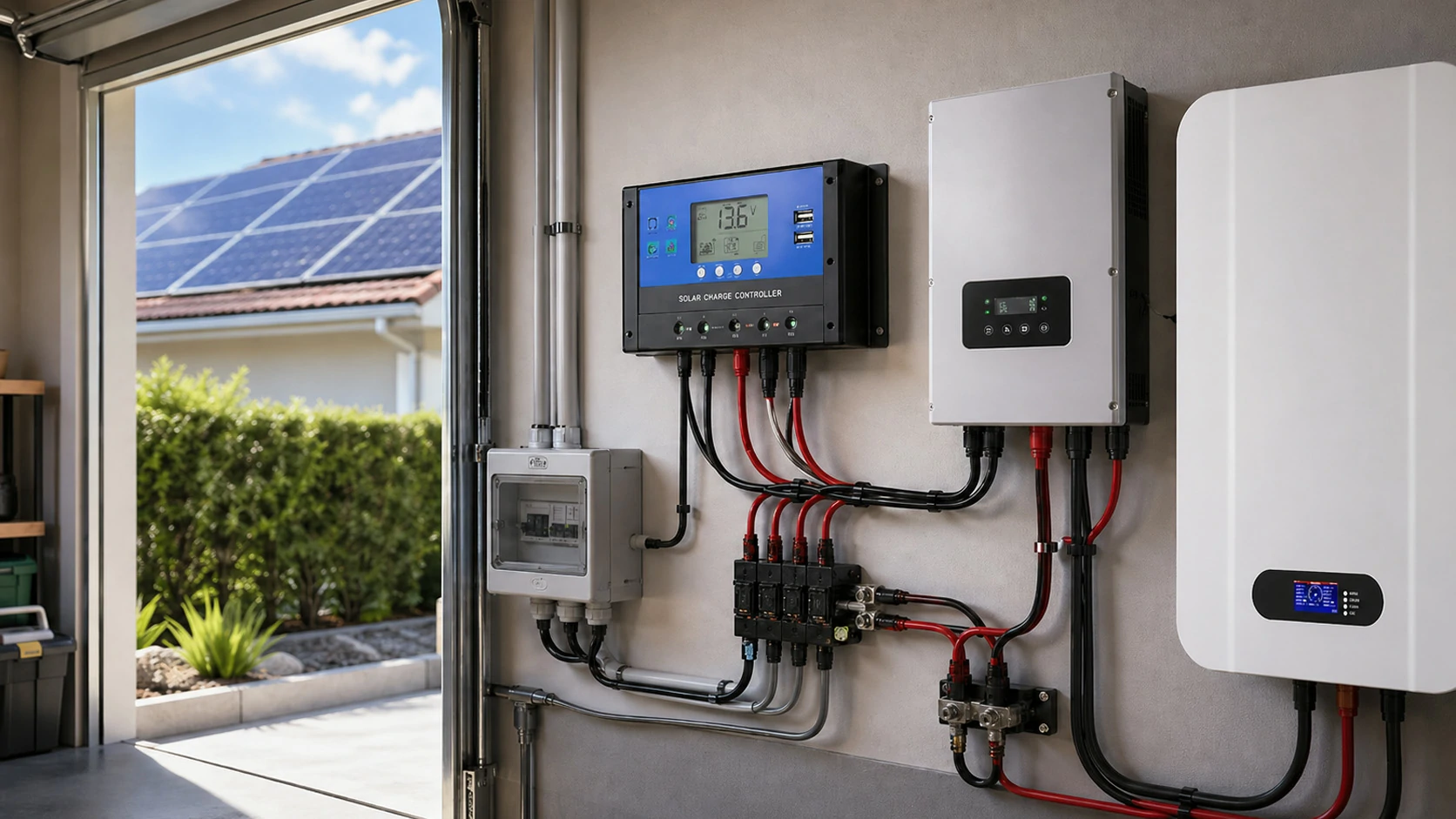
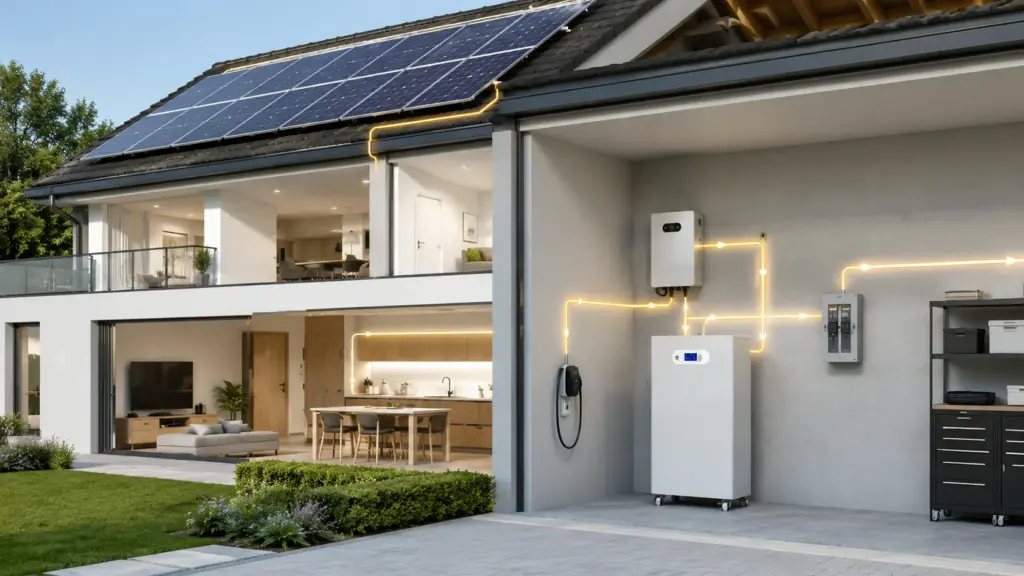
A typical solar battery system may include PV panels, a hybrid inverter or PCS, battery modules, BMS, smart meter, loads, backup circuits and grid connection. The EMS helps decide how these components should work together.
During the day, when solar production is high, the EMS may prioritize supplying local loads first and then charging the battery with excess solar energy. In the evening, when solar production drops, it may discharge the battery to reduce grid import. During peak tariff periods, it may discharge the battery to lower electricity cost. During grid outages, it may reserve part of the battery capacity for backup power.
In commercial projects, the EMS may also support peak shaving. If site demand rises close to a contractual demand limit, the EMS can discharge the battery to reduce grid demand. This can help lower demand charges and reduce stress on the electrical infrastructure.
For scalable home and light commercial storage, Avepower’s 48V stackable battery storage provides a modular battery format that can be used in solar storage, backup power and staged expansion projects.
EMS Applications: Where Is an Energy Management System Used?
Energy management systems are used across many sectors.
Home Energy Management System
A home energy management system connects household loads, solar panels, battery storage, EV charging and sometimes smart appliances.
Its goal is usually to reduce electricity bills, improve solar self-consumption, maintain backup power and give the homeowner better visibility. In a home solar setup, a system using a modular solar battery can be expanded over time as energy needs grow.
Building Energy Management System
In commercial buildings, an EMS may monitor HVAC, lighting, lifts, pumps, ventilation, water heating and tenant-level energy use. It helps building owners reduce waste while maintaining comfort.
For offices, hotels, schools, hospitals and shopping centers, HVAC is often one of the largest energy loads. EMS control can adjust schedules, temperature setpoints and operating modes based on occupancy and energy goals.
Industrial Energy Management System
Factories and industrial sites often have large energy loads, such as motors, compressors, pumps, furnaces, refrigeration equipment and production lines.
An industrial EMS helps identify high-consumption processes, reduce idle operation, improve maintenance planning and support ISO 50001-style energy improvement programs.
Solar and Battery Energy Storage EMS
For solar-plus-storage projects, EMS is the coordination layer between solar generation, battery storage, inverter or PCS, loads and the grid.
In this context, EMS can help with:
- Solar self-consumption
- Peak shaving
- Backup reserve management
- Battery scheduling
- Grid import and export control
- Multi-battery coordination
- Energy cost optimization
Commercial and industrial battery projects may also require EMS functions for safety logic, dispatch strategy, revenue optimization and remote monitoring.
EV Charging Energy Management
EV charging can create large peak loads, especially in commercial buildings, logistics fleets, workplaces and multi-family properties. EMS software can schedule charging, limit total charging power, prioritize vehicles and coordinate charging with solar and battery storage.
Microgrid Energy Management
In a microgrid, the EMS may coordinate solar, batteries, diesel generators, wind power, grid connection and critical loads. The goal is to maintain stability while minimizing fuel use and energy cost.
EMS vs BMS vs PCS vs SCADA
These systems are related, but they are not the same.
| System | Main Role | Typical Use |
|---|---|---|
| EMS | Optimizes system-level energy flow | Solar storage, buildings, factories, microgrids |
| BMS | Protects and manages battery cells | Battery modules and battery packs |
| PCS | Converts power between DC and AC | Battery energy storage systems |
| SCADA | Supervises and controls industrial processes | Utilities, plants, industrial systems |
| Building Management System | Controls building comfort systems | HVAC, lighting, ventilation, access systems |
The EMS focuses on energy decisions. The BMS focuses on battery safety. The PCS handles power conversion. SCADA focuses on industrial supervision and control. A building management system focuses on building operation and comfort.
In a well-designed energy storage project, these systems should not compete with each other. They should exchange the right data and commands within a clear control architecture.
Types of Energy Management Systems
Rule-Based EMS
A rule-based EMS uses predefined logic. For example, it may charge the battery when solar production exceeds load demand or discharge the battery when grid import exceeds a certain threshold.
This type is simple, stable and suitable for many residential and small commercial projects.
Forecast-Based EMS
A forecast-based EMS uses predictions such as solar generation forecasts, weather data, electricity prices and load demand forecasts. It can plan ahead instead of only reacting to current conditions.
This is useful for dynamic tariffs, demand response, EV charging and commercial energy optimization.
Cloud-Based EMS
A cloud-based EMS allows remote monitoring, data storage, multi-site management and software updates. It is useful for installers, distributors, energy service companies and project operators managing many systems.
Edge EMS
An edge EMS runs locally at the site. This can improve response speed and allow the system to continue operating even when internet connection is unstable.
Many practical systems use both edge and cloud functions.
AI-Optimized EMS
AI-based EMS uses advanced analytics and learning models to improve predictions, detect anomalies and optimize control strategies. It is most useful where the system has complex loads, variable tariffs, multiple energy assets or many sites.
Benefits of an Energy Management System
A well-designed EMS can bring practical benefits for homes, businesses and energy projects.
- Better Visibility: Many users do not know exactly where energy is being used. EMS dashboards make energy performance visible, which is the first step toward improvement.
- Higher Solar Utilization: Solar panels alone cannot guarantee high self-consumption. Without storage and control, excess solar may be exported. EMS control helps match solar generation with loads and battery charging.
- Lower Energy Costs: By reducing waste, avoiding peak demand, improving solar self-consumption and shifting loads to better times, an EMS can help reduce electricity bills.
- Improved Battery Value: Battery storage is more valuable when it is scheduled intelligently. EMS control can help avoid unnecessary cycling, maintain backup reserve and use stored energy when it has the highest value.
- Carbon Reduction: Using energy more efficiently and increasing renewable energy consumption can reduce carbon emissions. EMS reporting also helps organizations document progress.
- Better Maintenance and Reliability: Energy data can reveal abnormal equipment behavior before failure occurs. This supports preventive maintenance and reduces unexpected downtime.
- Easier Multi-Site Management: For companies with several buildings or project sites, EMS software can centralize data and compare performance across locations.
How to Choose the Right Energy Management System
Choosing the right EMS depends on the application.
- For a home system, the EMS should be easy to use, compatible with the inverter and battery, and able to support solar self-consumption, backup power and basic monitoring.
- For a commercial building, the EMS should connect to meters, HVAC, lighting and major equipment. It should provide dashboards, reports, alerts and control options.
- For an industrial site, the EMS should support more detailed metering, production-related energy analysis, peak demand control and integration with existing systems.
- For a battery energy storage project, the EMS should be compatible with the BMS, PCS, inverter, meter and cloud platform. It should support the required operating modes, such as peak shaving, time-of-use optimization, backup power, PV self-consumption or microgrid control.
Before selecting an EMS, ask these questions:
- What equipment needs to be monitored and controlled?
- Does the system need local control, cloud control or both?
- Which communication protocols are required?
- Does the project need battery storage integration?
- Will the EMS support future expansion?
- What reports are needed for operation, compliance or customers?
- Who will operate and maintain the system after installation?
A good EMS should match the project goal rather than simply offer the most complex software.
Start Your Energy Storage Project with Avepower
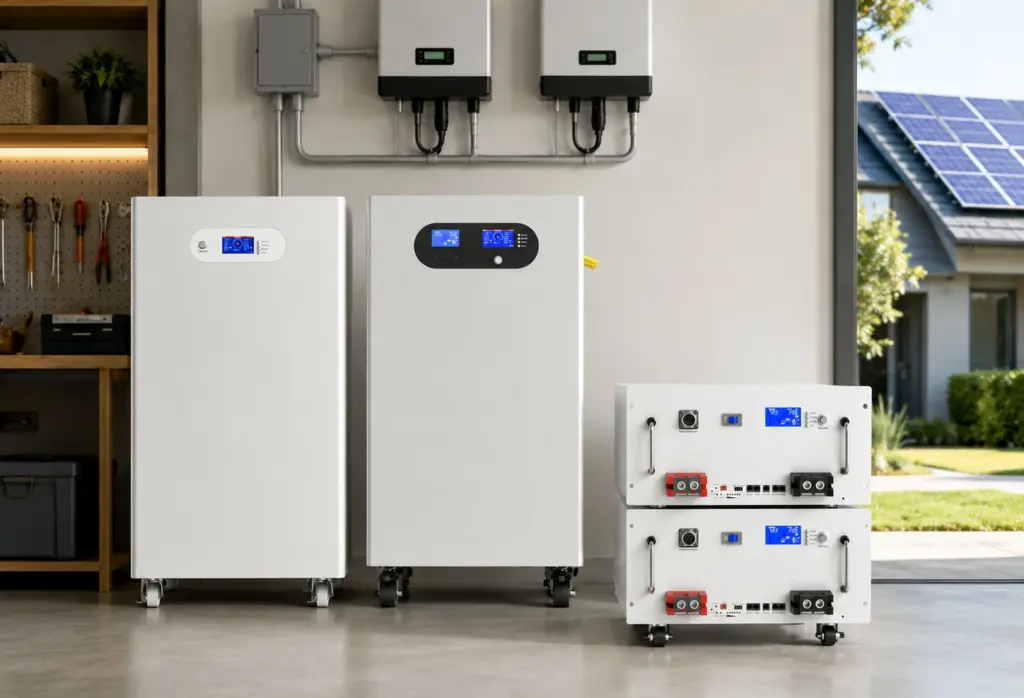
Whether you need a home solar battery, rack cabinet battery, modular battery system or OEM/ODM energy storage solution, Avepower can support your project with LiFePO4 battery products, technical communication support and flexible system configuration options.
ISO 50001 and Energy Management
ISO 50001 is one of the most recognized international standards for energy management. It provides a structured way for organizations to improve energy performance through a continuous improvement process.
The ISO 50001 approach usually includes setting an energy policy, identifying significant energy uses, setting targets, collecting data, implementing improvement plans, measuring results and reviewing performance.
For businesses, ISO 50001 is useful because it turns energy management into an ongoing business process rather than a one-time equipment upgrade. A company may install efficient equipment, solar panels or battery storage, but without a management process, savings may not be maintained over time.
EMS and the Future of Energy
The role of EMS will continue to grow as energy systems become more decentralized and digital. More homes and businesses are adding solar panels, batteries, EV chargers, heat pumps and smart loads. At the same time, electricity tariffs are becoming more dynamic, and grid operators need more flexible demand.
In this environment, EMS becomes the intelligence layer between energy assets and real-world operation. It helps decide whether to use solar power now, store it for later, export it, charge an EV, reduce load or support the grid.
Advanced EMS platforms may also use weather forecasts, electricity price signals, AI-based predictions and digital twins to improve performance. However, the goal remains the same: use energy more efficiently, reduce waste and make energy systems easier to manage.
Conclusion
An energy management system is more than a monitoring tool. It is a combination of data, software, control logic, hardware and management processes that helps users understand and optimize energy use.
For homes, it can improve solar self-consumption and backup power performance. For businesses, it can reduce costs, improve efficiency and support sustainability goals. For energy storage projects, it can coordinate batteries, inverters, loads and the grid to deliver better real-world value.
If you are planning a solar battery storage project, the battery itself is only one part of the system. The way energy is monitored, controlled and optimized is just as important. Avepower provides LiFePO4 battery energy storage solutions for residential, commercial and OEM/ODM projects, including modular, vertical and all-in-one battery systems that can support practical solar storage and backup power applications.
A well-designed EMS helps turn stored energy into smarter energy use.
FAQ
An energy management system is a combination of processes, software, hardware and control logic used to monitor, analyze and optimize energy use. It helps homes, buildings and businesses reduce energy waste, lower costs and improve energy performance.
EMS stands for Energy Management System. In some contexts, EnMS is also used to describe an energy management system framework, especially when discussing ISO 50001.
No. In battery storage, a BMS protects the battery cells and battery pack. An EMS optimizes the whole energy system, including solar, batteries, inverters, loads and grid interaction. In buildings, BMS may also mean building management system, which controls building equipment such as HVAC and lighting.
EMS is important because solar and batteries need coordination. It can decide when to use solar directly, when to charge the battery, when to discharge, when to export power and when to keep backup reserve.
Yes. An EMS can reduce energy costs by identifying waste, shifting loads, reducing peak demand, improving solar self-consumption and optimizing battery use.
SCADA focuses on monitoring and controlling industrial equipment or processes. EMS focuses on energy performance, cost optimization, renewable integration and energy decision-making. Some systems may overlap, but their main purposes are different.
Not every home needs an advanced EMS. However, homes with solar panels, battery storage, EV charging or time-of-use electricity tariffs can benefit from home energy management because the system can optimize when energy is used, stored or purchased from the grid.
EMS software can provide energy data, dashboards, reports and performance tracking. These functions support ISO 50001 energy management by helping organizations measure energy performance and monitor improvement actions.
You should check project goals, device compatibility, communication protocols, monitoring and control functions, scalability, cybersecurity, reporting needs and technical support.
Avepower supplies LiFePO4 battery energy storage systems that can work as the storage layer in solar-plus-storage and backup power projects. In a complete energy system, Avepower batteries can provide storage capacity while the inverter, PCS, BMS and EMS coordinate how energy is stored, converted, protected and used.