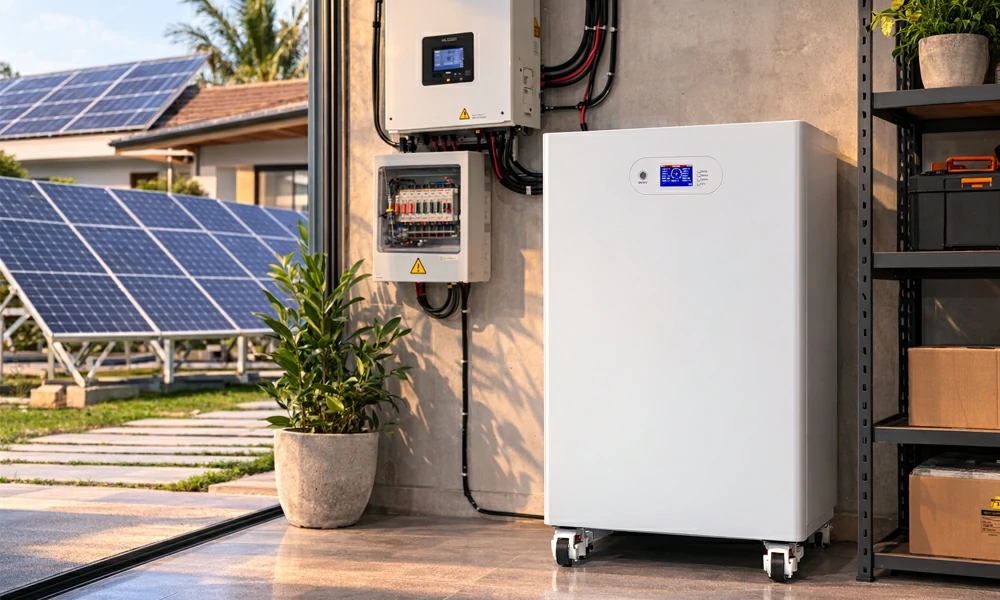
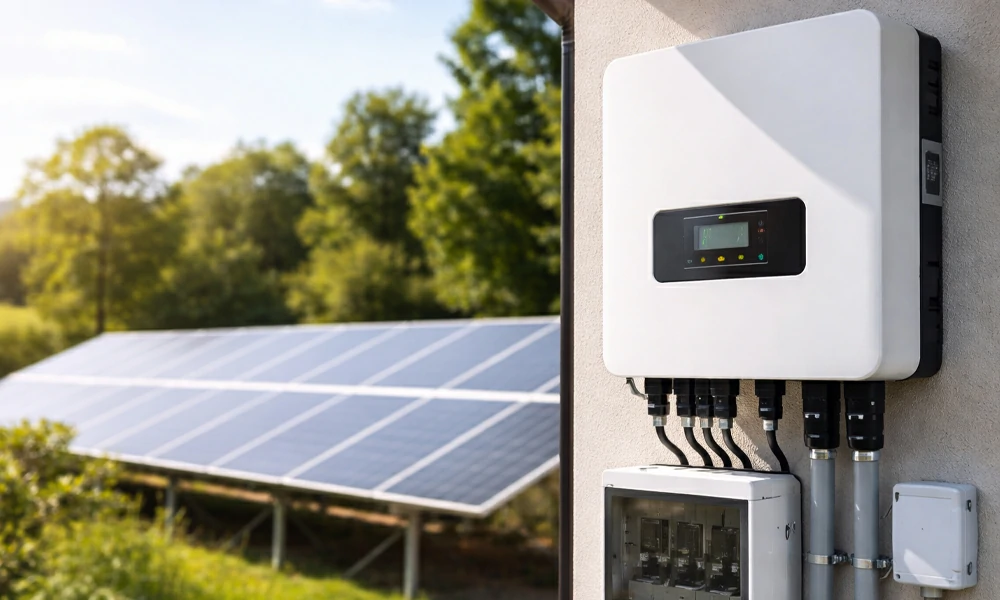
An inverter is a device that changes electricity from direct current (DC) into alternating current (AC). Most power sources that store or produce electricity, such as solar panels and batteries, create DC power. Most household and business appliances, such as computers, refrigerators, televisions, and air conditioners, need AC power to work.
An inverter acts as the bridge between these two types of electricity. Without an inverter, energy from solar panels or batteries would not be usable for most modern equipment.
Why Do We Need an Inverter?
Most people never think about the type of electricity flowing through their walls. Homes and businesses use AC power because AC electricity travels efficiently over long distances and works well with common appliances. Power grids around the world deliver AC electricity for this reason.
Solar panels and batteries naturally produce DC power. A solar panel creates DC electricity when sunlight hits its cells. A battery stores energy in DC form. An inverter is necessary because it allows this DC energy to power AC devices safely and reliably.
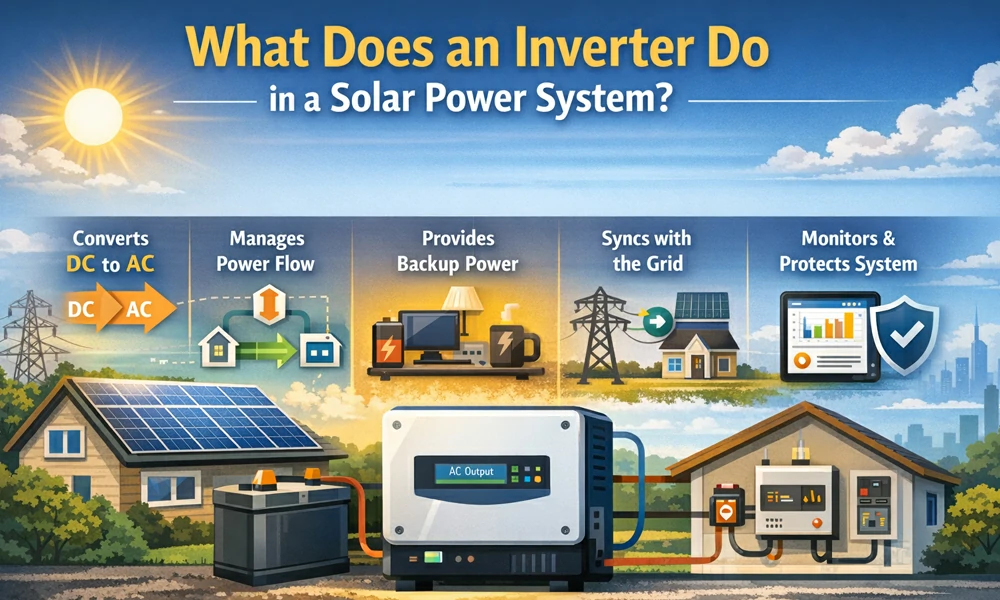
What Does an Inverter Do in a Solar Power System?
In a solar power system, the inverter plays a central role. Every solar system relies on an inverter to make solar energy usable.
Step 1: Solar Panels Produce DC Power
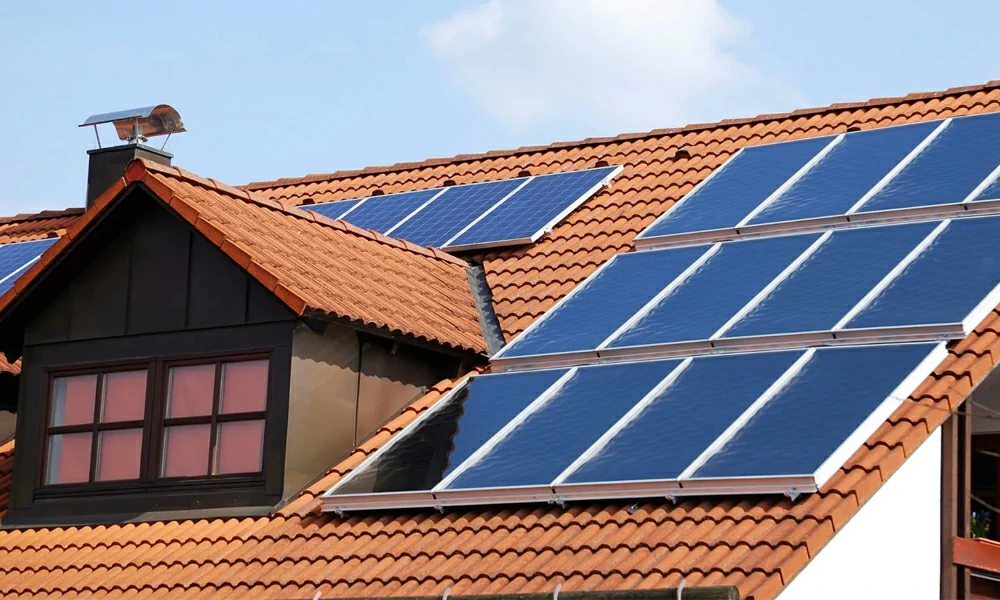
Solar panels absorb sunlight and convert it into direct current (DC) electricity. Each solar cell inside the panel generates DC power when sunlight hits it. The panels then send this DC electricity through cables to the inverter.
DC electricity flows in one direction, which makes it suitable for storage in batteries but not suitable for most household appliances. This is why the inverter is necessary.
Step 2: The Inverter Converts DC Power into AC Power
The inverter receives DC electricity from the solar panels and converts it into alternating current (AC) electricity. AC power changes direction many times per second and matches the standard electricity used by homes, offices, and industrial buildings.
During this process, the inverter also adjusts voltage and frequency to ensure the electricity is stable and safe. High-quality inverters perform this conversion with very high efficiency, usually above 95%, which means very little energy is lost.
Step 3: AC Power Runs Household and Business Loads
After conversion, the AC power flows from the inverter to the main electrical panel. The panel distributes the electricity to lights, outlets, air conditioners, refrigerators, and other appliances.
When solar production matches or exceeds the building’s energy demand, the inverter allows solar power to run loads directly. This reduces the amount of electricity that must be purchased from the utility company.
Step 4: Extra Power Can Be Sent to the Grid or Stored
In grid-connected systems, the solar inverter can send excess electricity back to the utility grid. This process is known as grid export. Many regions offer net metering or similar programs that credit homeowners for the extra energy they supply.
In hybrid or battery-based systems, the inverter can also direct surplus solar energy into a battery. The stored energy can then be used at night, during cloudy weather, or during power outages.
What Does an Inverter Do in a Battery Storage System?
A battery storage system always includes an inverter. The inverter allows stored energy to power AC loads.
When a battery charges, it stores DC electricity. When the home needs power, the inverter converts the battery’s DC electricity into AC electricity. This process allows lights, appliances, and electronics to work normally during power outages or high electricity price periods.
Some systems use a bidirectional inverter, which allows electricity to flow in both directions. This type of inverter can charge the battery using AC power and then convert stored DC power back into AC when needed.
What Does an Inverter Do in a Backup Power or UPS System?
In an uninterruptible power supply (UPS) or backup power system, the inverter protects critical equipment.
When grid power is available, the system keeps batteries charged. When a power outage occurs, the inverter switches on almost instantly. The inverter converts battery power into AC power and supplies electricity to connected devices.
This fast response helps protect computers, medical equipment, servers, and communication systems from sudden shutdowns.
What Does an Inverter Do in Electric Vehicles?
Electric vehicles also rely on inverters. An electric vehicle uses a battery to store DC electricity. The vehicle’s motor usually needs AC power to operate.
The inverter in an electric vehicle converts DC battery power into AC power for the motor. The inverter also controls speed, torque, and efficiency by adjusting how electricity flows to the motor.
This function makes smooth acceleration and efficient driving possible.
Inverter Types You Will See in Solar Systems
Different applications require different types of inverters. Each type serves a specific role.
| Inverter Type | Description | Typical Use Case | Advantages | Disadvantages |
|---|---|---|---|---|
| String Inverter | Connects to one or more “strings” (groups) of panels and converts DC from the whole string to AC. | Residential and small commercial | Lower cost, simpler maintenance, centralized conversion | Output can drop if one panel is shaded |
| Microinverter | Installed under each panel; converts DC to AC at the panel level. | Shaded roofs or complex roof angles | Panel-level monitoring, reduces shading losses | Higher cost |
| Power Optimizer + String Inverter | Power optimizer on each panel optimizes DC output; string inverter converts DC to AC centrally. | Systems needing shading mitigation | Reduces shading losses, centralized inverter management | Additional hardware increases complexity |
| Off-grid Inverter | Used for systems not connected to the utility grid, usually paired with a battery bank. | Off-grid homes or remote locations | Independent from grid, handles surge loads | Requires batteries, higher cost and maintenance |
| Hybrid Inverter | Connects to solar panels, batteries, and the grid; manages charging/discharging and backup power. | Solar + battery + grid systems | Multi-functional, supports backup power | Higher cost, more complex system |
| Battery Inverter (AC-coupled) | Adds battery storage capabilities to an existing solar setup by converting AC to DC and vice versa. | Adding storage to existing solar systems | Easy to expand, compatible with existing setup | Adds complexity and additional equipment |
How Long Can a 12V Battery Power Devices Through an Inverter?
The runtime depends on several factors:
- Battery Capacity (Amp-hours or Ah): A larger capacity battery stores more energy.
- Power Draw (Watts) of Devices: Higher consumption reduces runtime.
- Inverter Efficiency: Some energy is lost during conversion.
- Battery Condition and Depth of Discharge: Fully charged batteries last longer; deep discharging can reduce battery life.
Quick runtime examples for a 12V 100Ah battery
| Load (W) | Estimated Runtime (hours) | What That Load Might Look Like |
|---|---|---|
| 50 W | 19.2 h | A few LED lights and a router |
| 100 W | 9.6 h | A laptop + lights |
| 200 W | 4.8 h | A TV + router + lights |
| 300 W | 3.2 h | A small fridge average draw (varies a lot) |
| 600 W | 1.6 h | A microwave at low setting (short use only) |
Which Appliances Should Not Be Used with an Inverter?
Avoid connecting these types of devices directly to an inverter without proper capacity or inverter type:
- High surge current devices like refrigerators, air conditioners, and pumps (unless the inverter is rated to handle the surge)
- Devices sensitive to power quality if using modified sine wave inverters
- Equipment with built-in transformers or inductive loads that may cause issues without a pure sine wave inverter
Always check the inverter specifications and appliance requirements before connecting.
How Inverters Enhance Solar Power System Performance and Reliability
The inverter is a key component that not only converts power but also helps to maximize your solar system’s efficiency and reliability. It manages how electricity flows, protects your system from faults, and ensures compatibility with the power grid.
Smart inverter features can include:
- Remote diagnostics and alerts
- Load management to prioritize critical appliances
- Energy export controls to comply with grid rules
- Integration with home energy management systems
These capabilities empower users to make the most of their solar investment and maintain steady power availability.
Can Using an Inverter Save Electricity?
An inverter itself does not save electricity because it converts power rather than reducing consumption. However, a well-designed solar inverter system can reduce your electricity bill by allowing you to use solar energy directly, store excess energy, and feed surplus back to the grid. It helps optimize the overall energy use but does not inherently reduce the power your devices consume.
Build a Complete Solar + Battery Solution
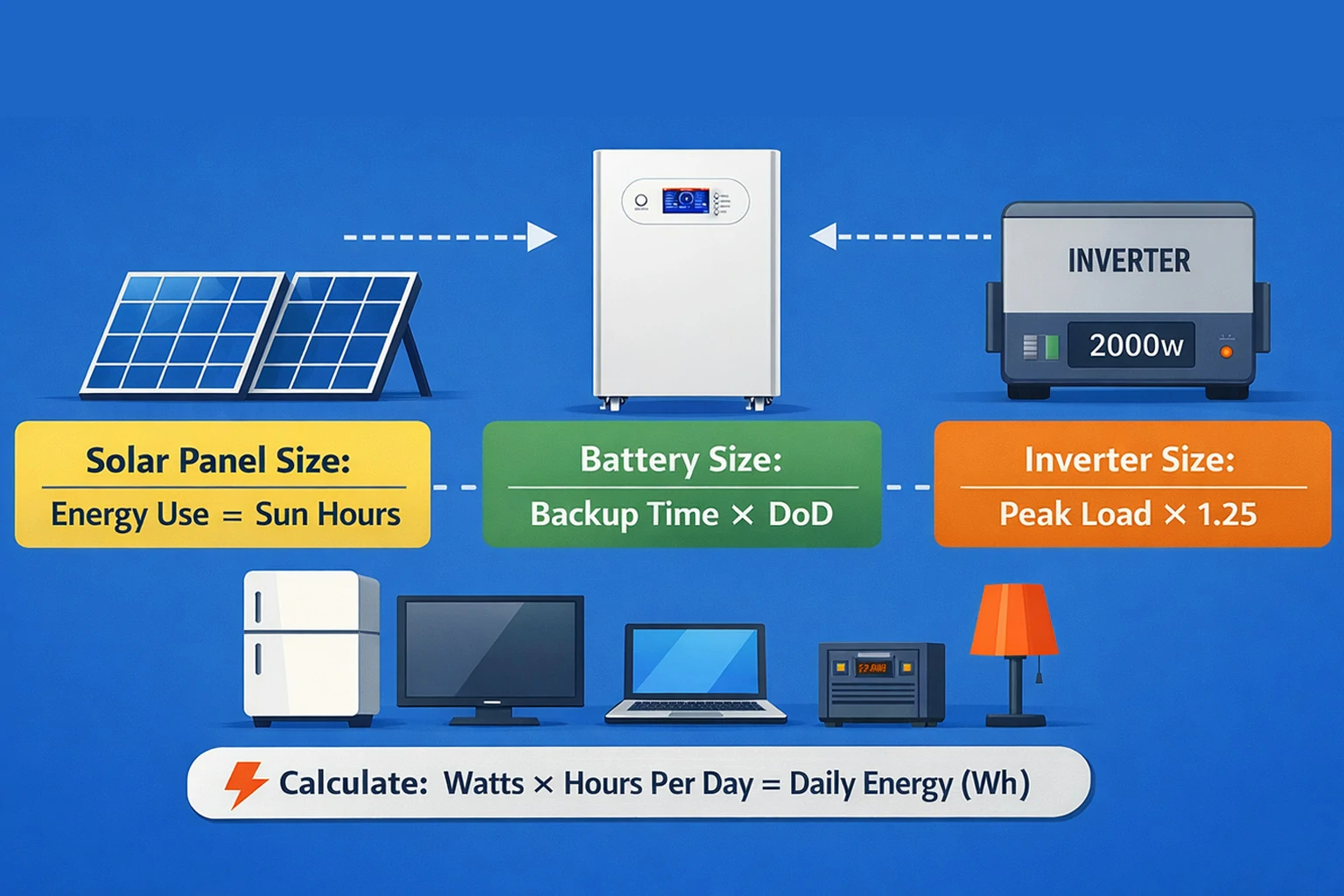
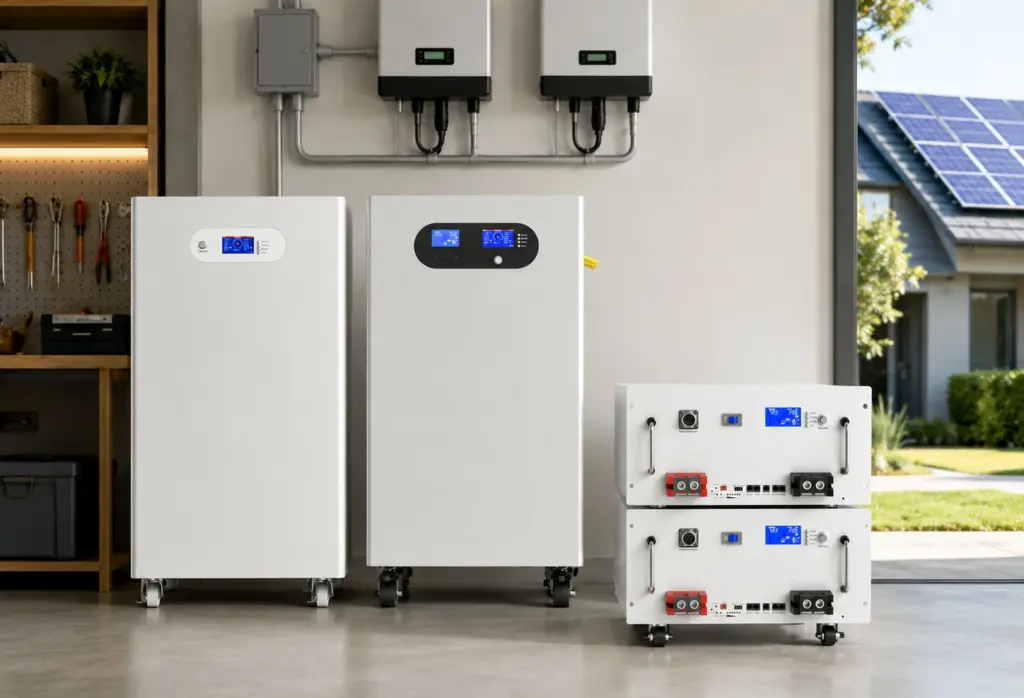
A complete solar system usually performs best when the inverter, battery, and control logic work together as one designed system. A well-matched system can deliver smoother backup power, cleaner monitoring, and better daily savings.
If you want to explore customized solar plus storage solutions or have questions about inverters tailored to your specific energy needs, companies like Avepower offer integrated products and expert support to help you maximize the benefits of your renewable energy system.
Take Control of Your Energy with Avepower!
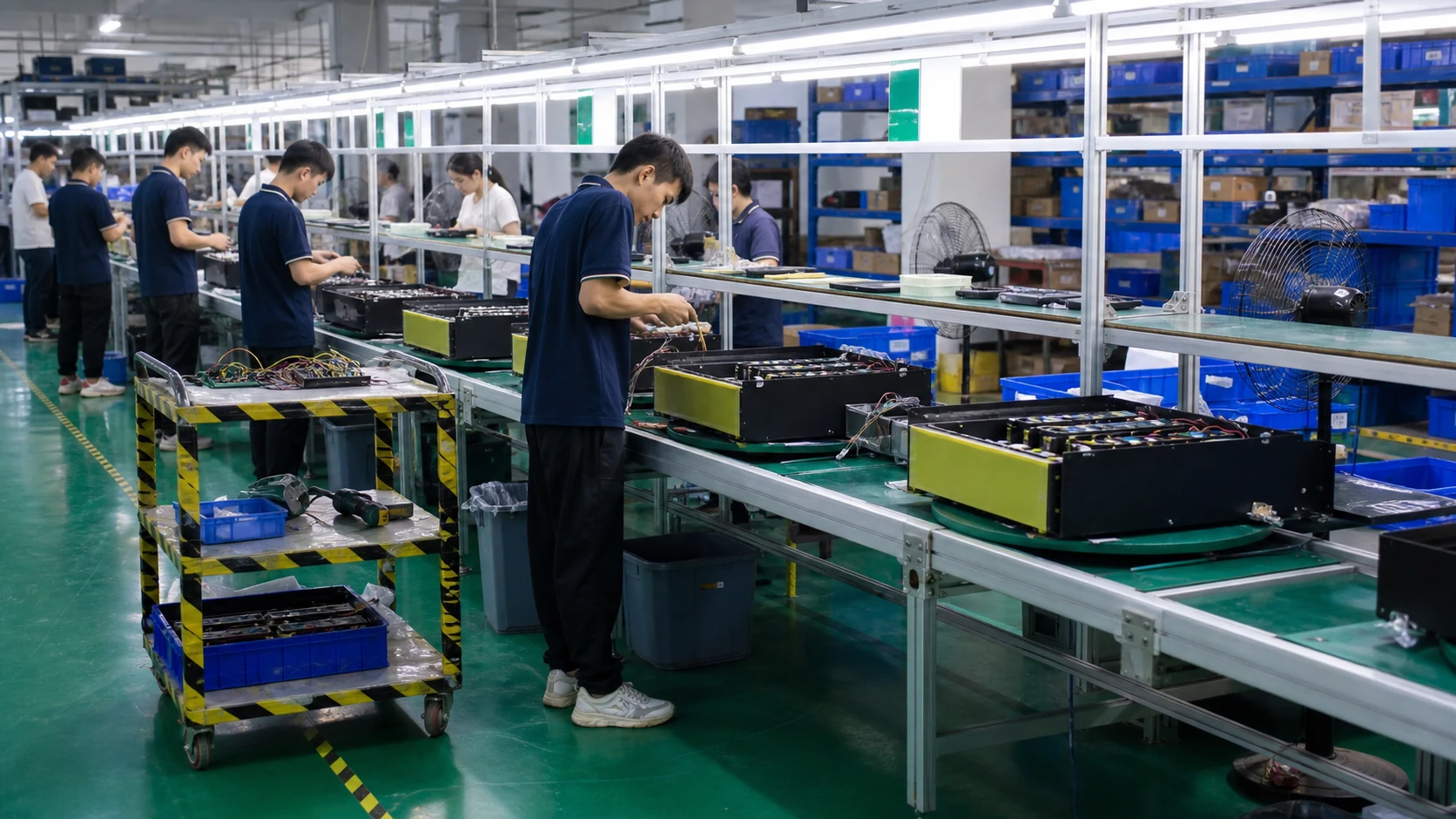
Reliable home solar battery solutions with OEM/ODM customization and in-house manufacturing, tailored to the needs of distributors, installers, and energy partners.
Conclusion
Inverters play a central role in making solar power practical and accessible. They convert the DC electricity generated by solar panels or stored in batteries into usable AC electricity for homes, businesses, and the grid. Beyond simple conversion, modern inverters provide synchronization, power quality control, and smart management capabilities that improve energy reliability and efficiency.
Whether you are installing a solar power system, setting up backup power, or exploring electric vehicles, understanding what an inverter does helps you make better decisions and optimize your energy use.
FAQ
Heaters, kettles, hair dryers, and other high-watt heat devices can drain a battery fast. Fridges, pumps, and air conditioners can fail to start if surge is not supported. Some sensitive electronics can misbehave on modified sine wave output.
A solar inverter is designed for solar input and grid rules. A basic power inverter is often designed for batteries and simple AC output.
A string inverter can work well for a simple roof with little shade. Microinverters can work well when panels face different directions or when shade affects some panels.
A 12V battery runtime depends on battery size and load size. A 12V 100Ah battery might run a 100W load for roughly 8–10 hours.