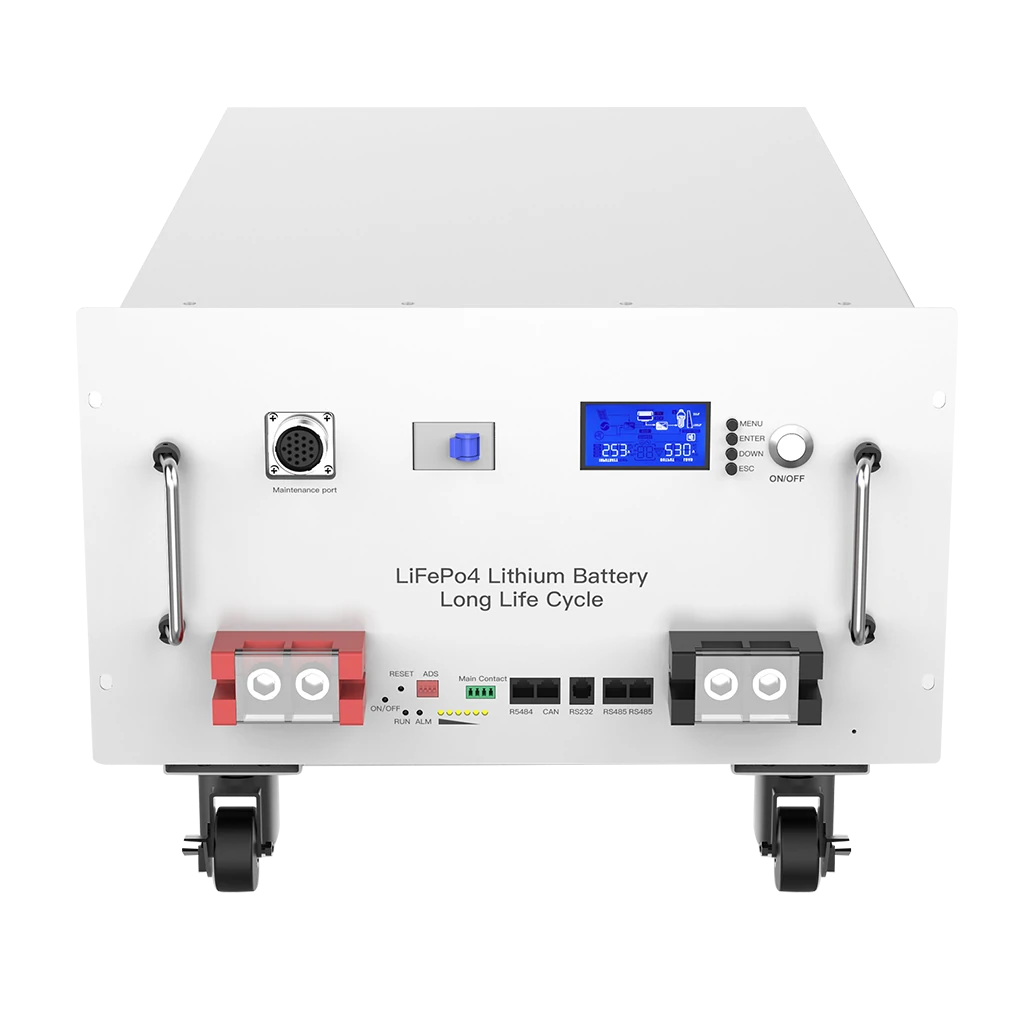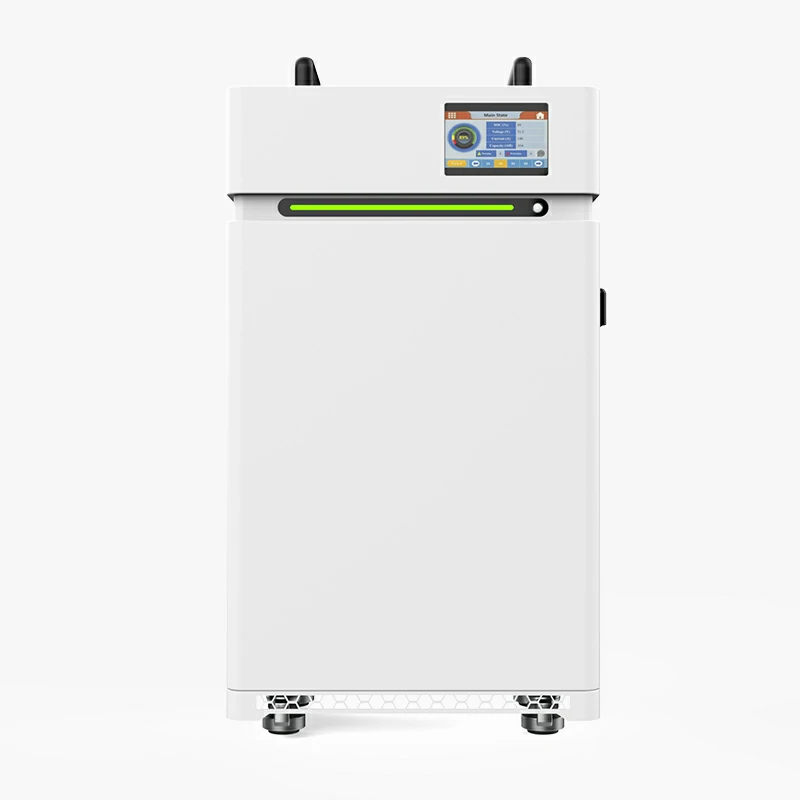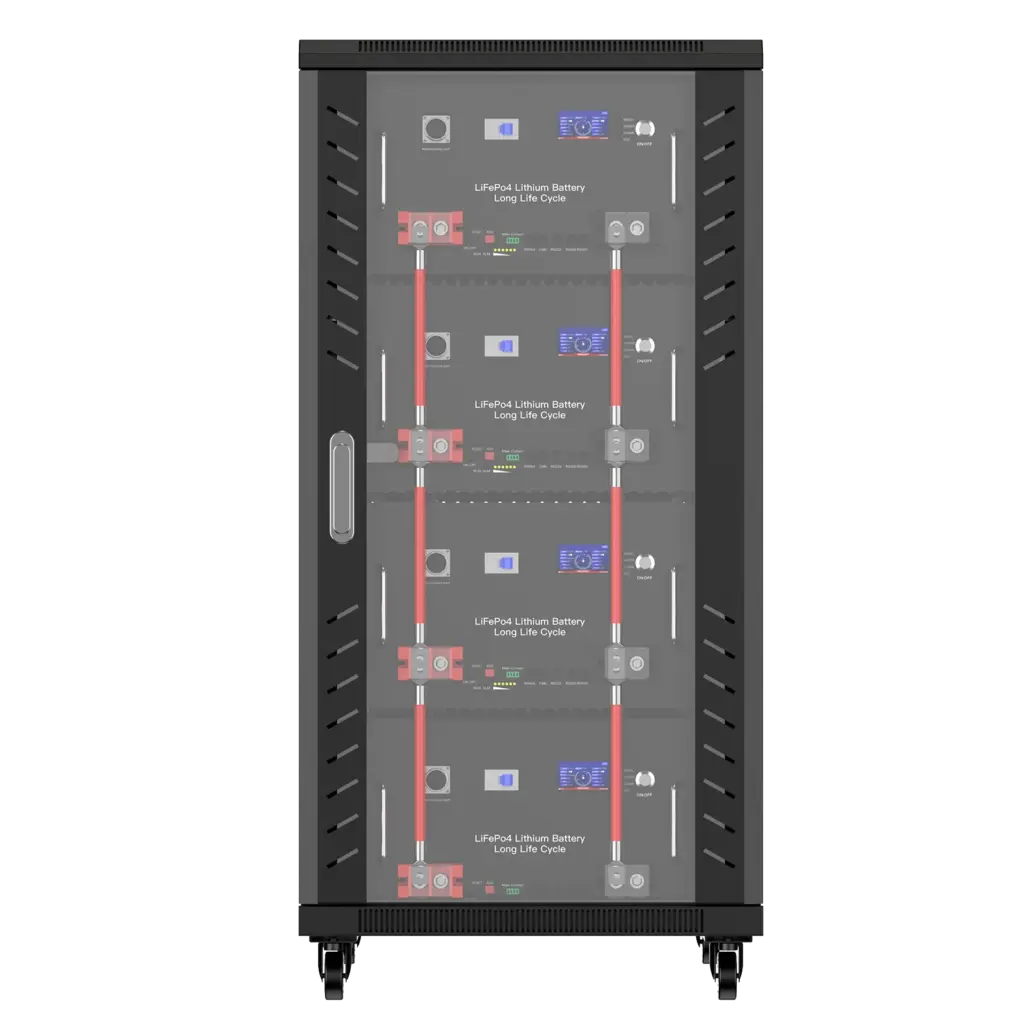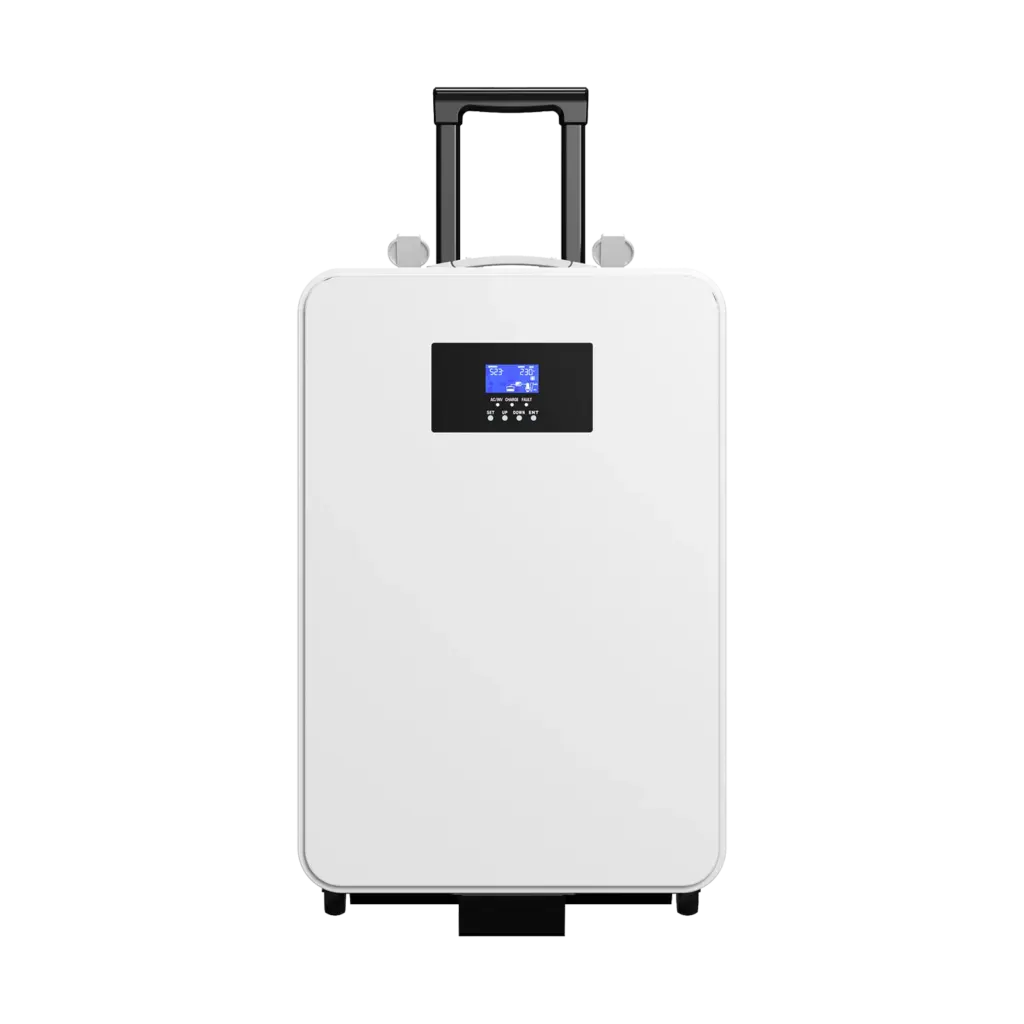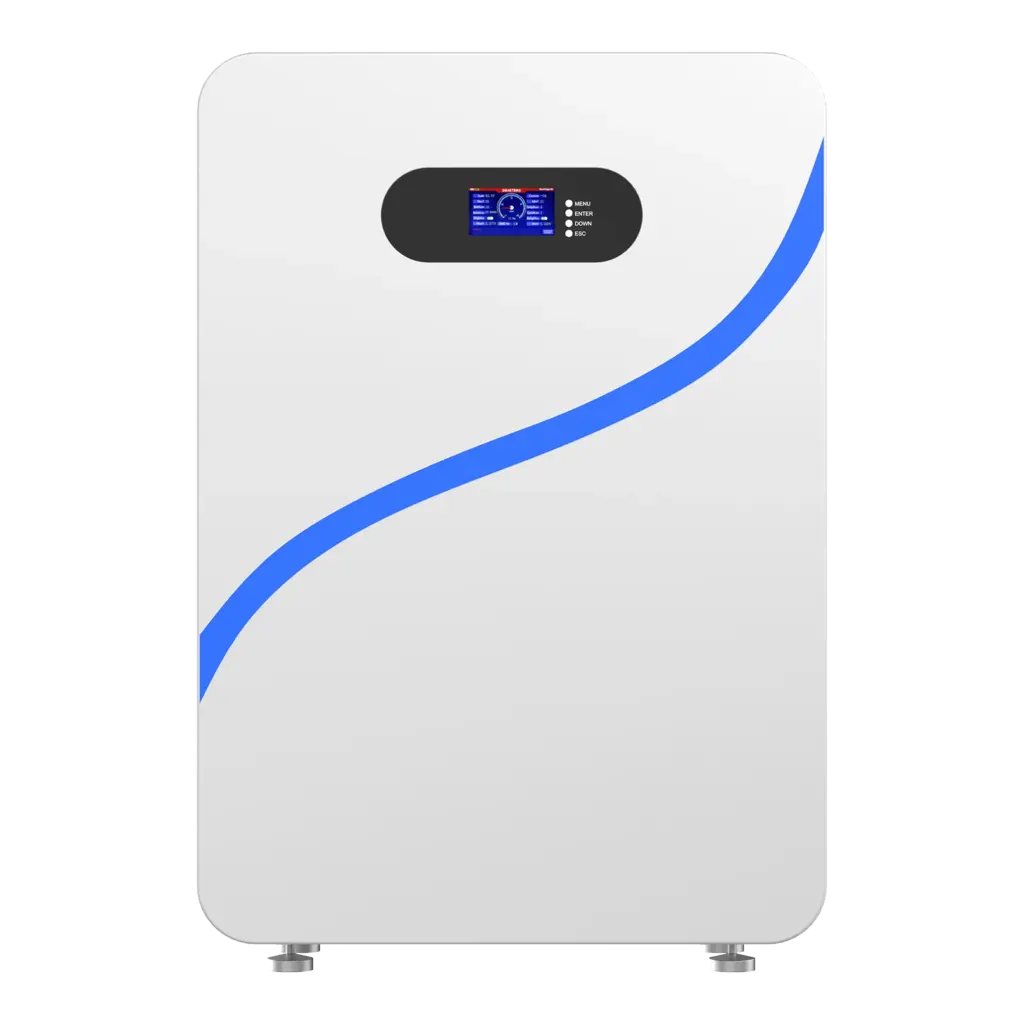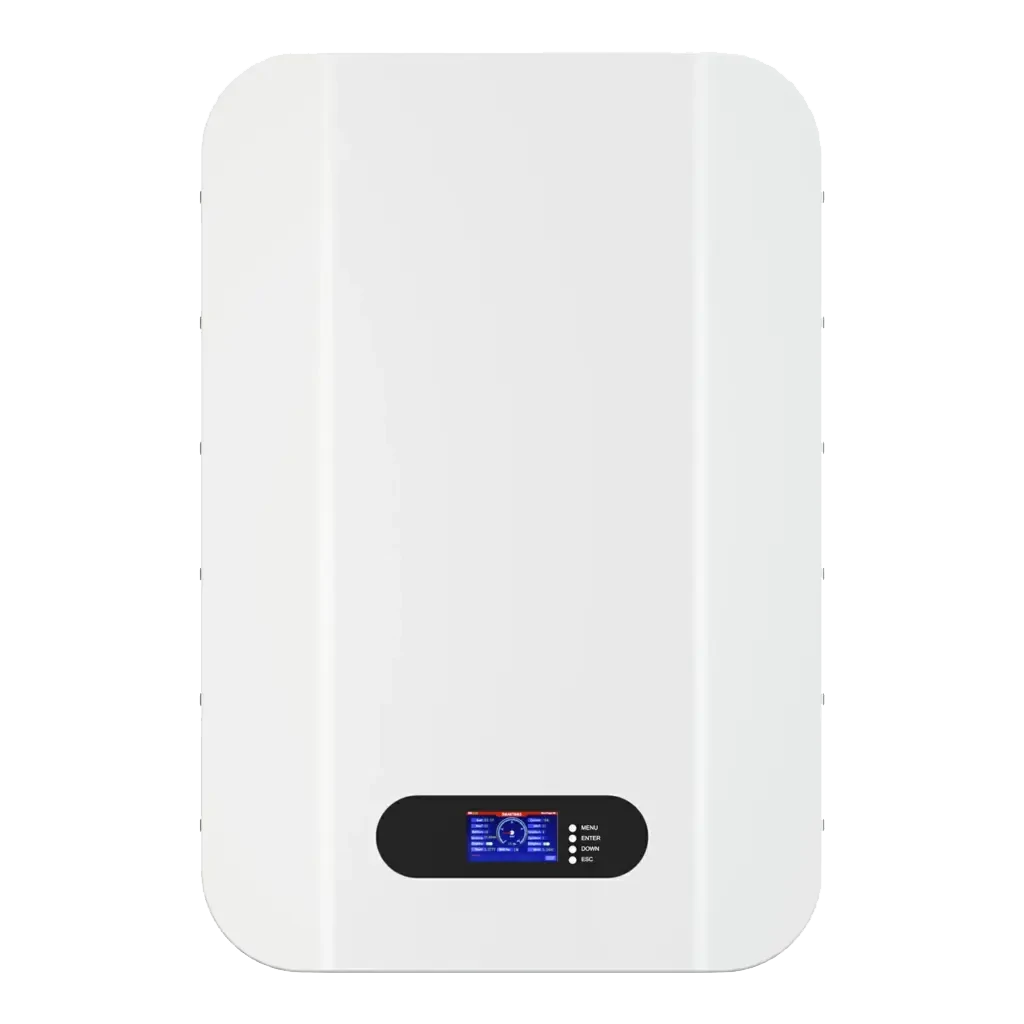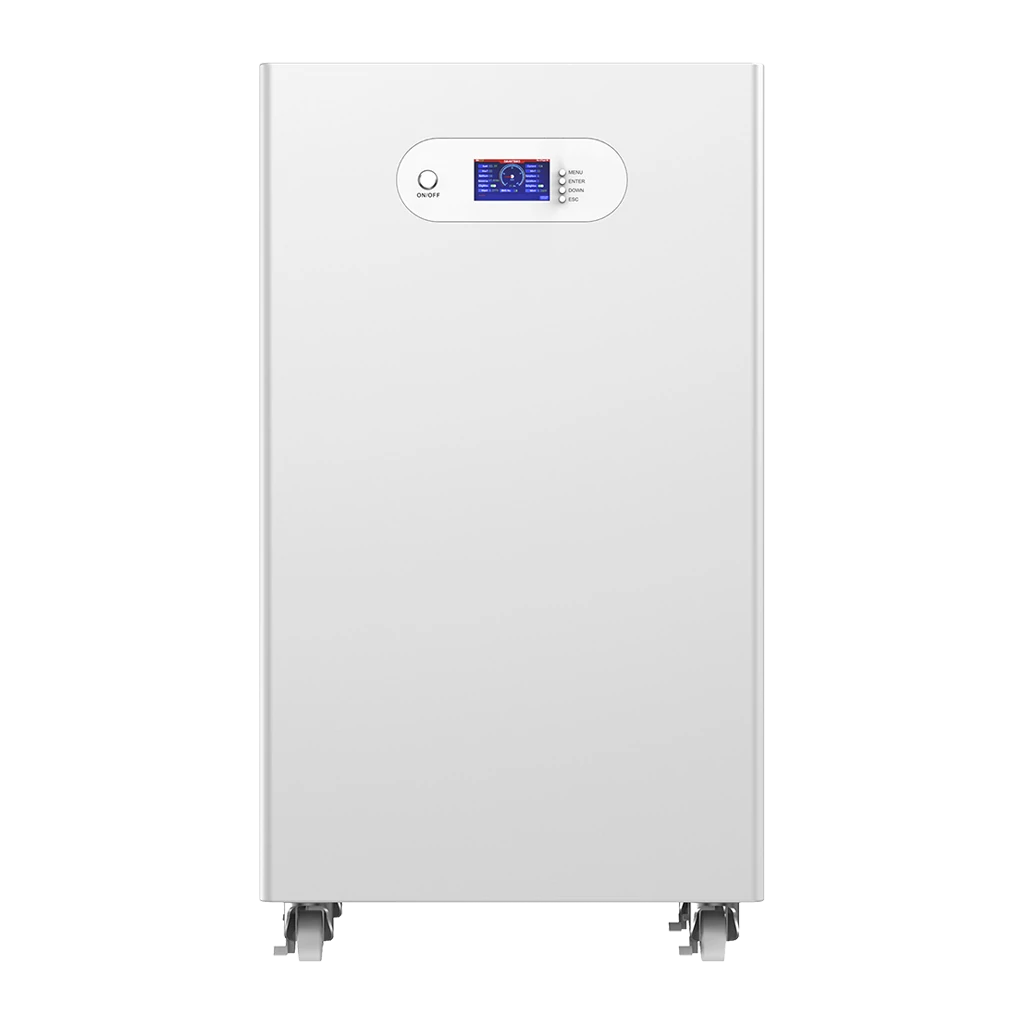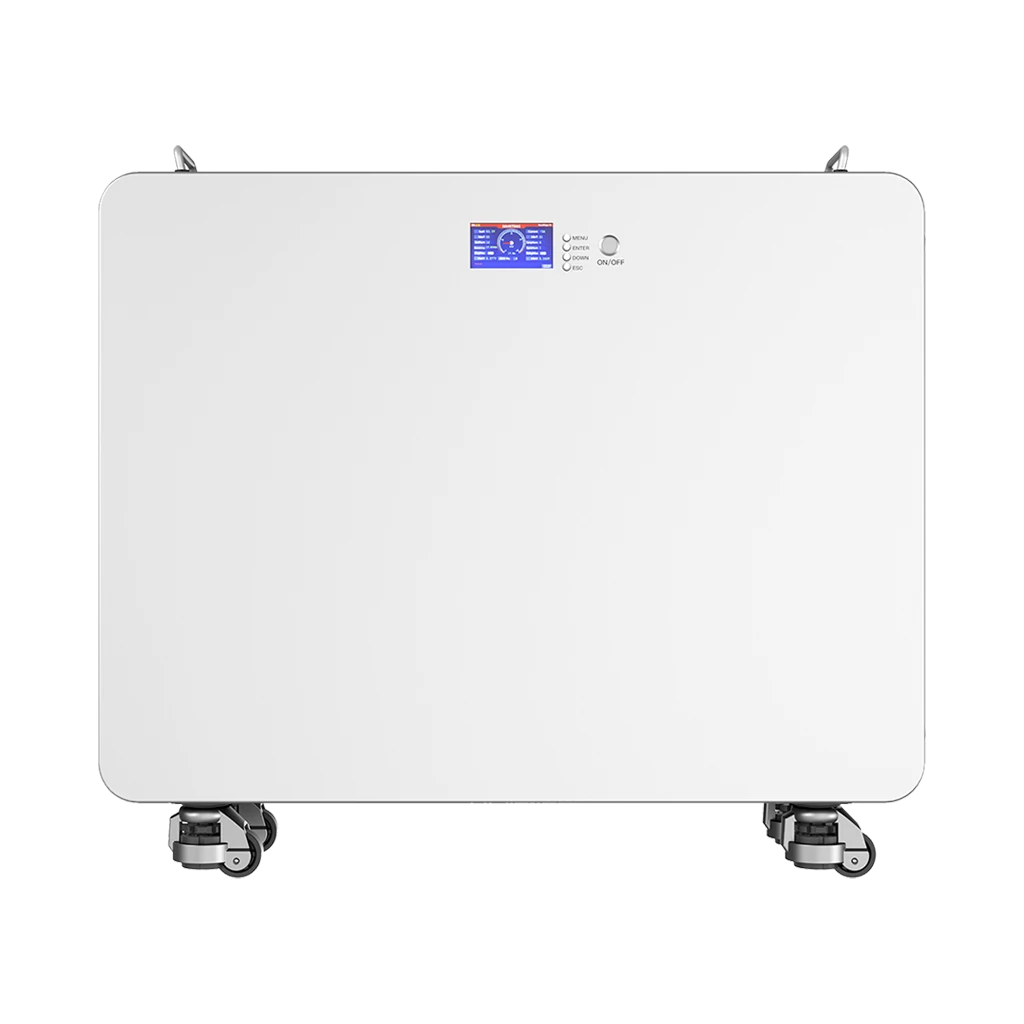

For people who use battery power for their home, vehicle, or business, the world of battery technology can seem complicated. We hear a lot about lithium-ion batteries, but one special type, the Lithium Iron Phosphate battery—often called LFP or LiFePO4—has become the best choice for major power needs like home backup and electric cars.
LFP batteries are actually a family member of the larger lithium-ion group, but their unique chemistry gives them big advantages over other lithium-ion types that use materials like cobalt or nickel. They offer greater peace of mind with better safety, last much longer, and work well in many different environments.
This guide explains what makes LFP different, why many people use it for home backup and solar systems, how it compares with other batteries, and how you can choose the right pack for your setup.
What Is a Lithium Iron Phosphate Batteries?
An lithium iron phosphate battery is a type of rechargeable lithium-ion battery. The main difference sits in the positive electrode (the “cathode”). An LFP cell uses lithium iron phosphate for the cathode instead of compounds that include cobalt or nickel. The negative electrode (the “anode”) is typically graphite. An electrolyte carries lithium ions between the two sides.
- When you discharge the battery, lithium ions move from the anode to the cathode and your device receives power.
- When you charge the battery, a charger pushes those ions back to the anode and the battery stores energy again.
A typical LFP cell has a nominal voltage of ~3.2 V. Manufacturers connect cells in series and parallel to reach common pack voltages:
- 12.8 V packs: 4 cells in series (4S)
- 25.6 V packs: 8S
- 51.2 V packs: 16S (popular for home energy storage)
A battery management system (BMS) watches cell voltages, current, and temperature. The BMS acts like a seatbelt and a traffic light at the same time. The BMS protects the pack from over-charge, over-discharge, short circuits, and unsafe temperatures, and it balances cell voltages so the pack ages evenly.
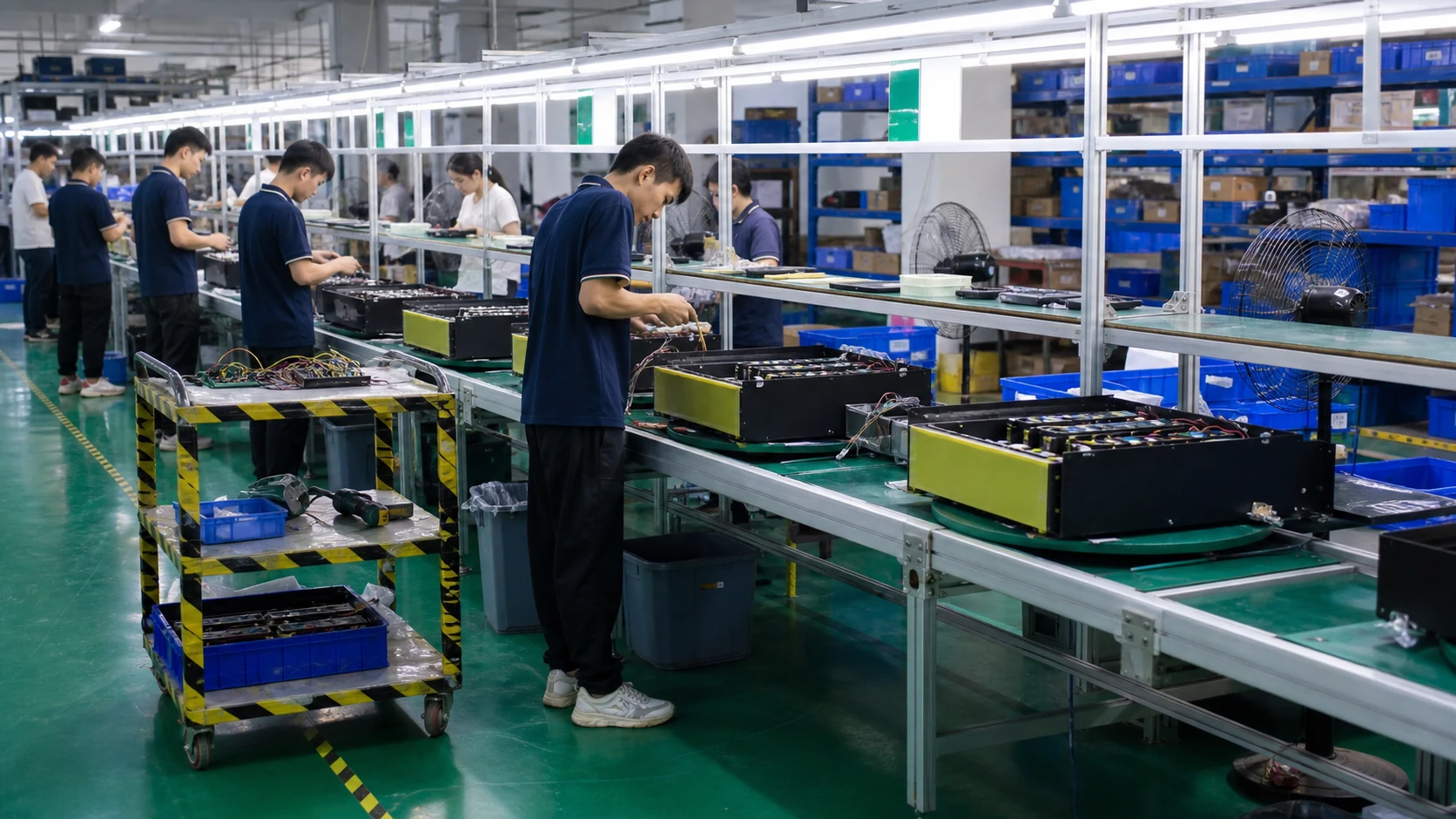
Engineers and researchers started using lithium iron phosphate at scale in the late 1990s and early 2000s. Prices kept falling as factories got larger and production improved. Today, you can find LFP in everything from home backup systems to certain electric vehicles and warehouse equipment.
How LFP Fits Inside the Lithium-Ion Family
The term “lithium-ion” describes many chemistries, not just one. Common types include:
- LFP (LiFePO4): Focus on safety and cycle life.
- NMC or NCA: Focus on high energy per kg, often used in EVs where space and weight matter most.
- LMO or LCO: Older or niche uses, often in small electronics.
Each type uses a different positive electrode material. That one choice shifts the balance between energy density, safety, cost, power output, and lifespan. lithium iron phosphate lands on the side of “stable and long-lasting” rather than “maximum energy per kilogram.”
Key Advantages of Lithium Iron Phosphate Batteries
People generally choose lithium iron phosphate batteries over competitors because they offer a combination of features that deliver exceptional long-term value and peace of mind.
Exceptional Longevity and Cycle Life
The most compelling economic advantage of LFP technology is its impressive lifespan. A battery’s life is measured in cycles, where one cycle equals a full charge and a full discharge.
They are typically rated for 4,000 to over 6,000 cycles before their capacity degrades to 80% of the original. In contrast, many NMC batteries are rated for 500 to 2,000 cycles, and traditional lead-acid batteries often only manage 300 to 500 cycles.
While the initial price of an LFP battery may be higher than a lead-acid one, its ability to last for 10 or more years in optimal conditions means the user avoids frequent, costly replacements.
Related articles: LFP vs NMC Batteries
Deeper Discharge Capability
Lithium iron phosphate batteries provide users with nearly all of their stored energy, which is a major benefit for many applications.
They can safely reach a 100% Depth of Discharge (DOD). This means you can use the battery until it is fully depleted without causing permanent damage.
Older chemistries, like lead-acid, should never be discharged below 50% capacity, or they will suffer irreversible damage and a drastically reduced lifespan. This makes LFP far more practical, as a 100-amp-hour LFP battery gives you 100 Ah of usable energy, while a 100 Ah lead-acid battery only gives you about 50 Ah.
Wide Operating Temperature Range
For users in environments that experience temperature extremes, LFP offers a noticeable performance edge in heat.
They handle heat well. lithium iron phosphate batteries can function efficiently in temperatures ranging from -4°F (-20°C) to 140°F (60°C). This wide range makes them suitable for unconditioned spaces like outdoor solar sheds, garages, or vehicle compartments.
Heat accelerates the degradation of other lithium-ion types. The inherent stability of LFP makes it much more resistant to the damaging effects of high temperatures compared to NMC batteries.
Reduced Weight and Size
Compared to the traditional technology they often replace, lithium iron phosphate batteries are a lightweight powerhouse.
They are significantly lighter and smaller than lead-acid batteries of the same capacity, sometimes by up to 70% in weight. This makes them ideal for vehicles, boats, and portable power systems where weight and space are critical concerns. A lighter battery in an RV or boat means better fuel economy and maneuverability for the owner.
Low Self-Discharge Rate
Lithium iron phosphate batteries maintain their charge very well over time when not in use.
The self-discharge rate is minimal, typically around 1%-3% per month.
This low rate allows the user to store a battery for extended periods, such as over a long winter, without it losing a significant amount of its charge. Lead-acid batteries, by comparison, can lose up to 30% of their charge per month and require frequent maintenance charging to prevent permanent damage.
Disadvantages of Lithium Iron Phosphate Batteries
While LFP is an outstanding technology, it does involve some trade-offs when compared to the highest-performing lithium-ion variants. These factors are important to consider when selecting a battery for a specific application.
Lower Energy Density
The main disadvantage of LFP, when compared to NMC batteries, is its lower energy density.
Energy density refers to the amount of energy the battery can store relative to its volume and mass. NMC batteries typically store more energy per kilogram.
The consequence is that an LFP battery must be physically larger and heavier than an NMC battery to provide the exact same amount of energy.
For a high-performance electric car where every pound and cubic inch matters for maximum driving range, NMC batteries have historically been the preferred choice. However, for stationary storage (like a home power wall) or lower-range, commercial EVs where space is less restricted and safety is paramount, the lower density is an acceptable trade-off for the increased longevity and safety.
Lower Nominal Voltage
LFP cells have a lower nominal voltage (typically 3.2V per cell) compared to NMC cells (typically 3.7V or higher).
The system design becomes more complex. To achieve the common 12V or 48V system voltage, manufacturers must use a greater number of LFP cells in series than they would with higher-voltage NMC cells.
The result is slightly greater complexity in manufacturing. Despite this, the numerous benefits of LFP generally outweigh the marginally increased design complexity.
Cold Weather Performance Limitations
In temperatures near or below freezing, the electrochemical reactions within the LFP battery slow down. The user may notice reduced power output and a significantly slower charging rate.
Charging below freezing can be risky. Trying to charge an LFP battery below 32°F (0°C) without a temperature-controlled Battery Management System (BMS) or a built-in heating element can cause lithium plating, which permanently damages the cells and shortens the battery’s life.
Common Applications of Lithium Iron Phosphate Batteries
The unique strengths of lithium iron phosphate batteries—safety, long life, and wide temperature range—make them the best possible choice for many modern power solutions.
Home and Commercial Energy Storage
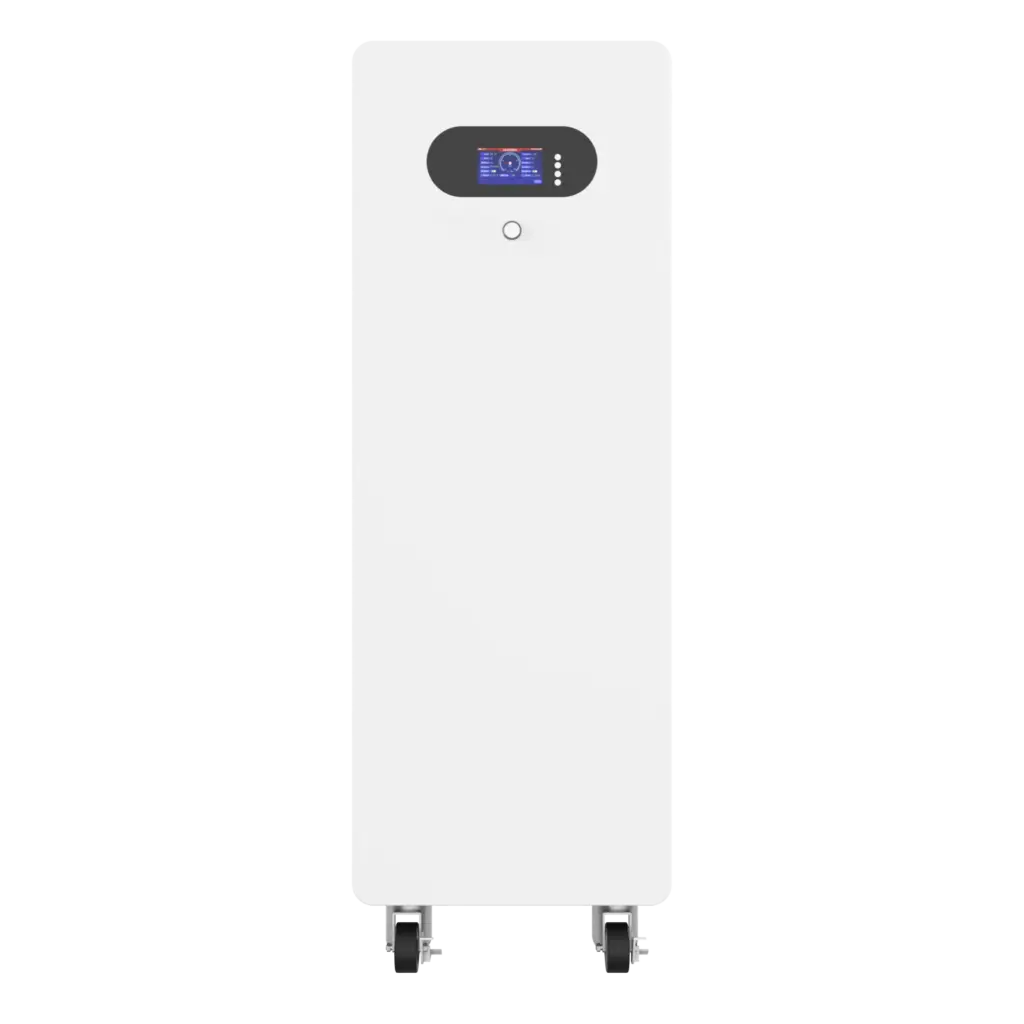
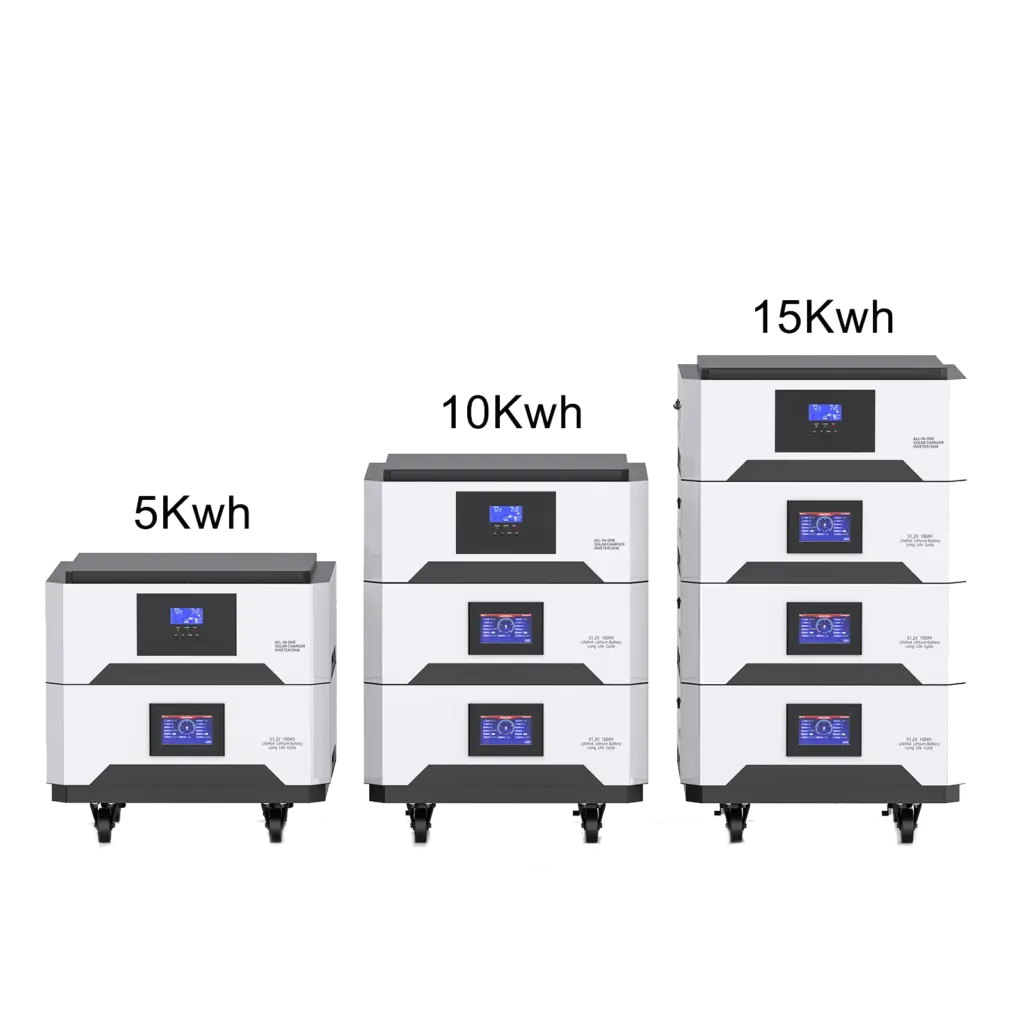
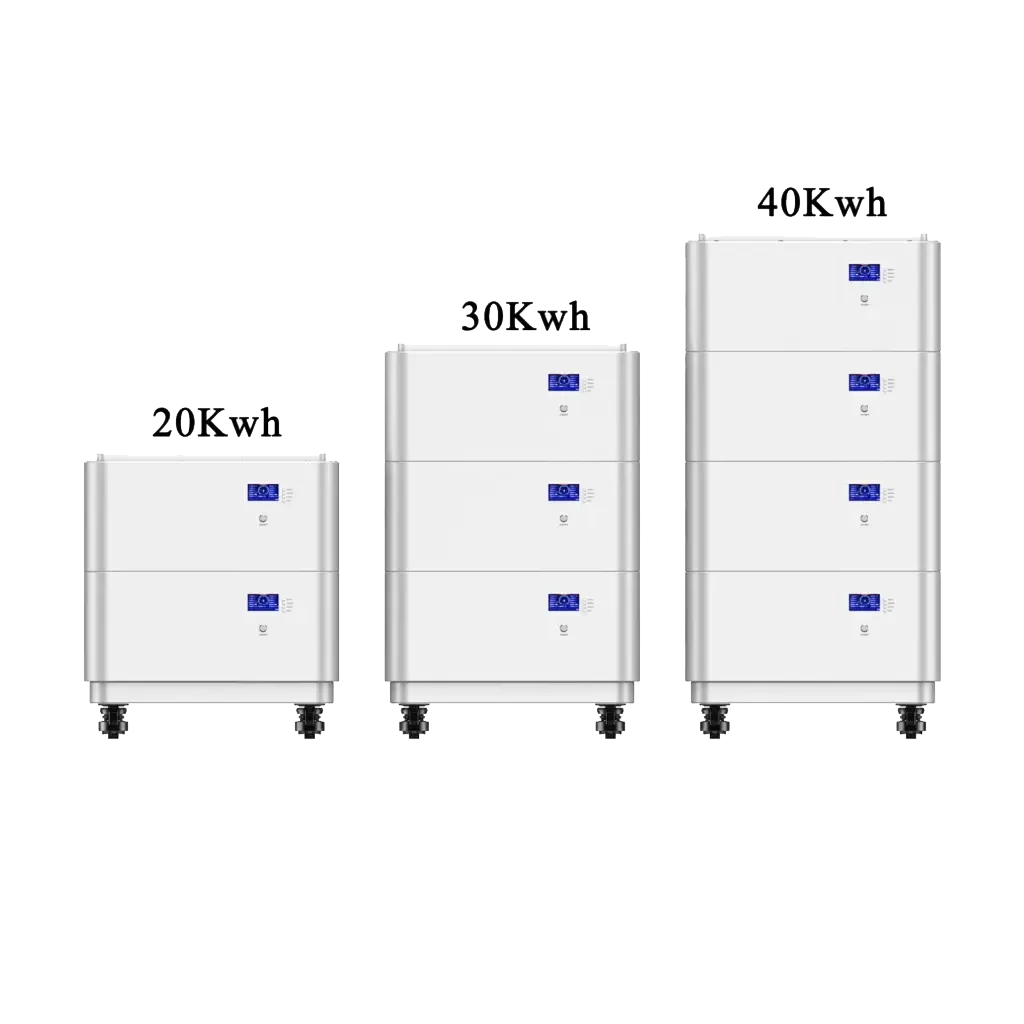
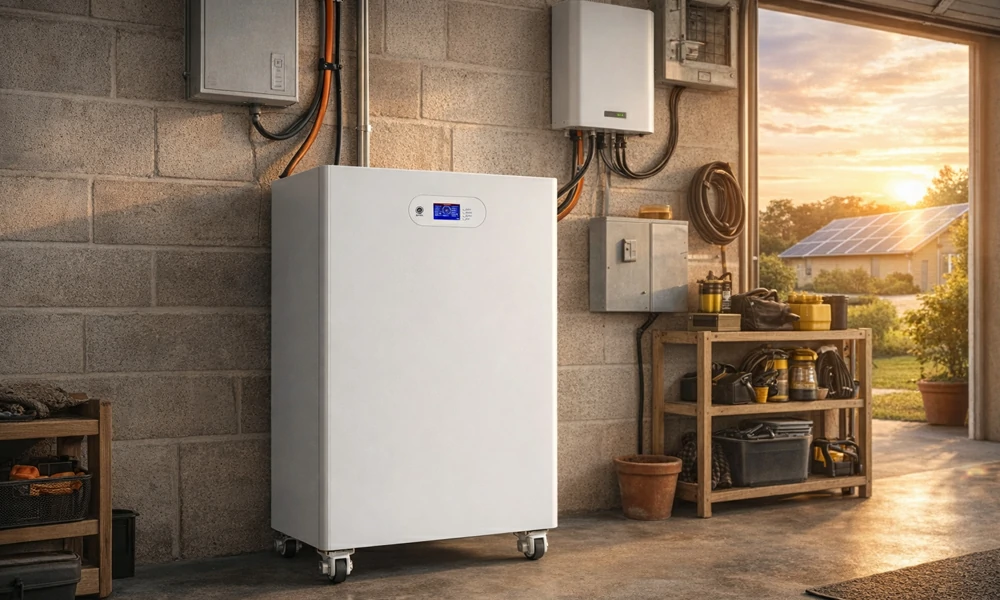
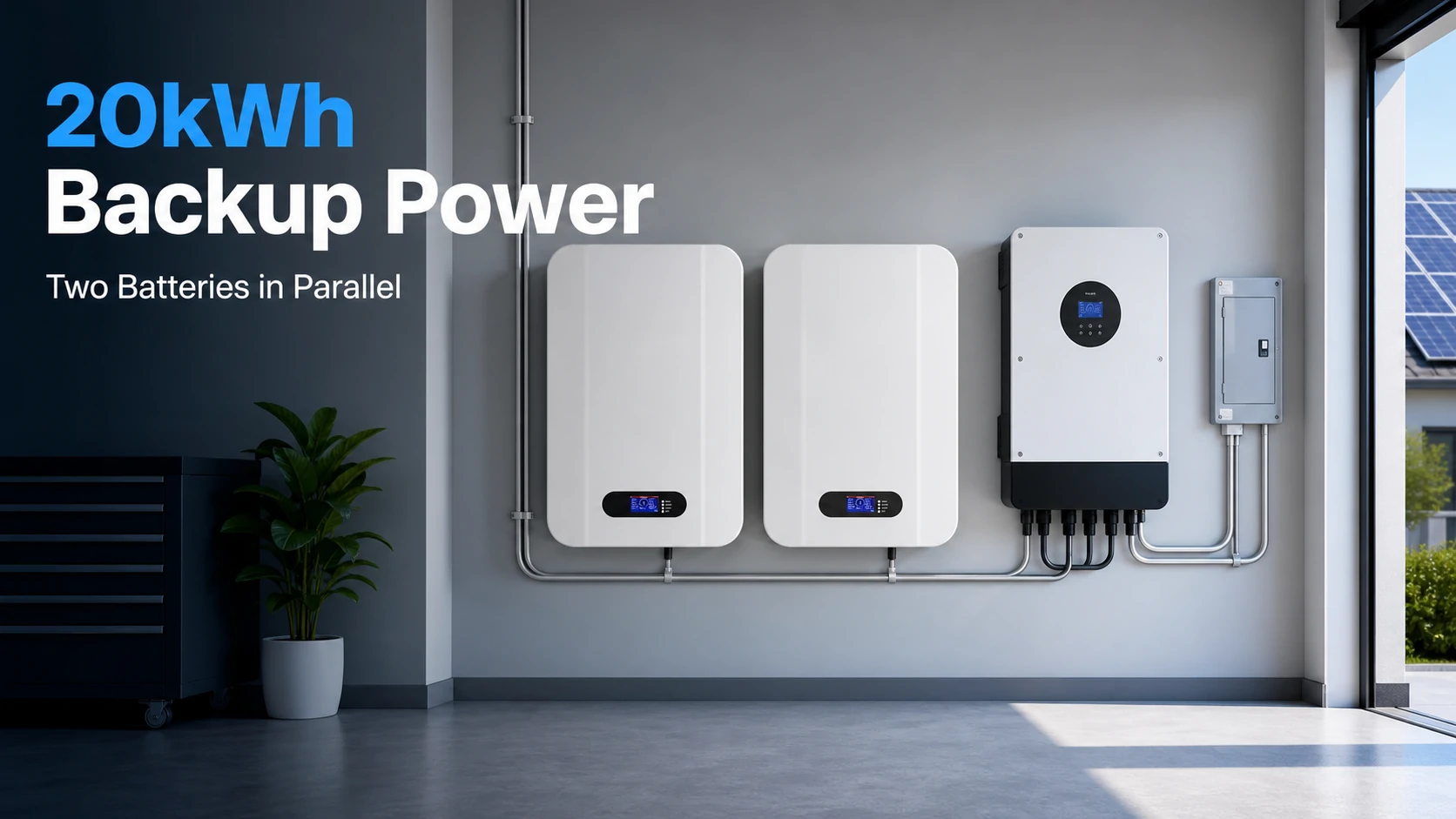
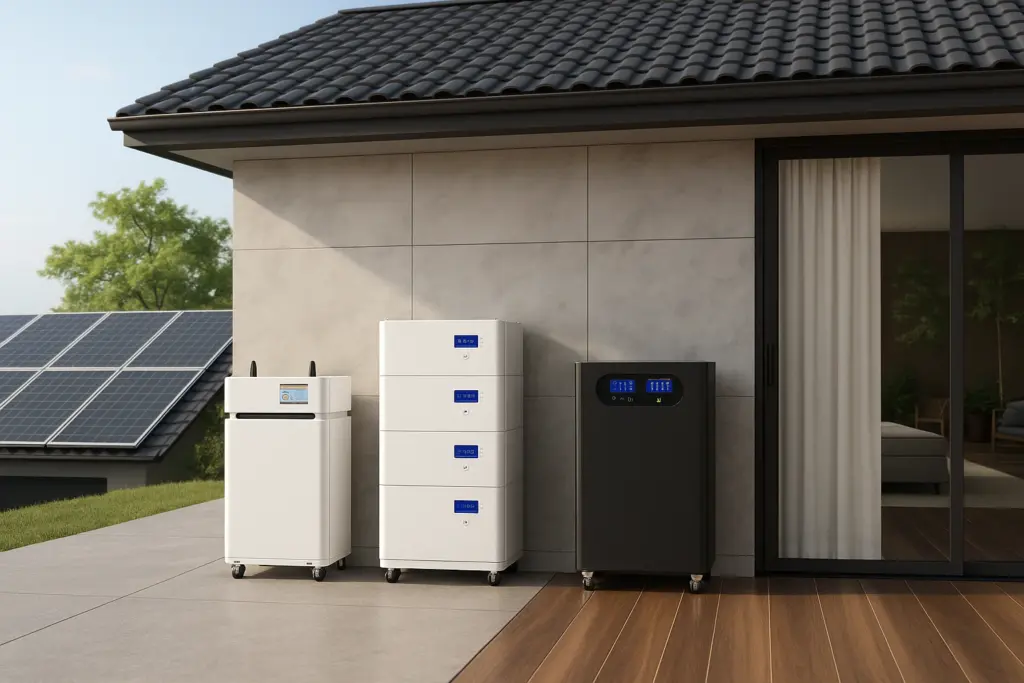
Home backup demands both energy (kWh) and power (kW). LFP packs can deliver strong continuous power and short bursts for motor starts when paired with the right inverter. A 10 kWh LFP powerwall battery can back up lights, outlets, a fridge, and network gear for many hours. You may need more capacity for HVAC or well pumps, and you can add modules because most modern packs are designed for easy expansion.
Related articles: Why LFP (LiFePO4) Batteries Are the Safest for Home Energy Storage
Off-Grid Solar, RV, Vans, and Marine
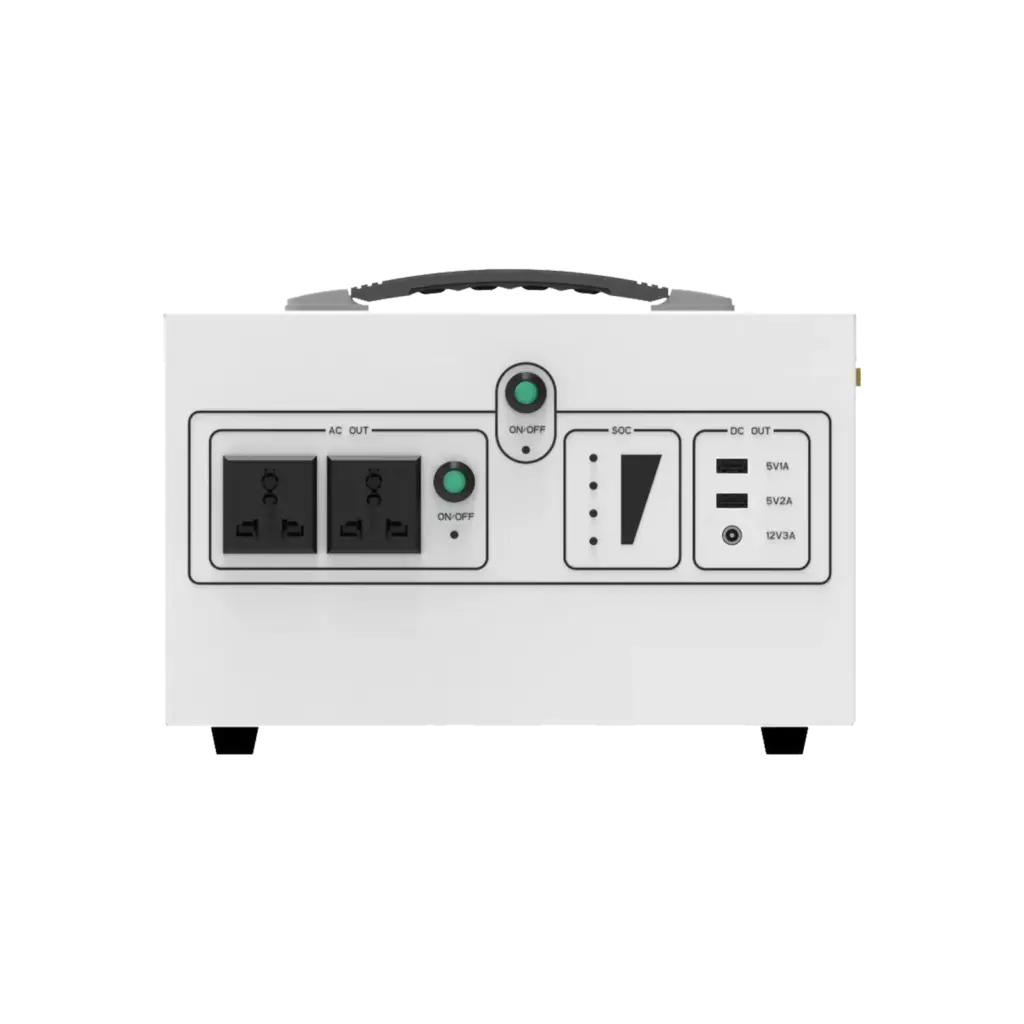
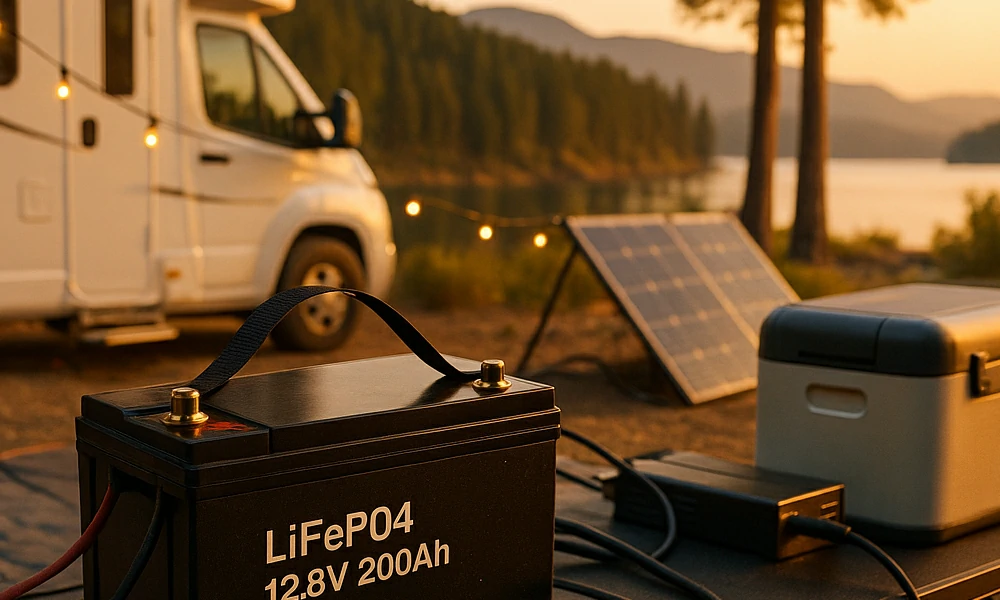
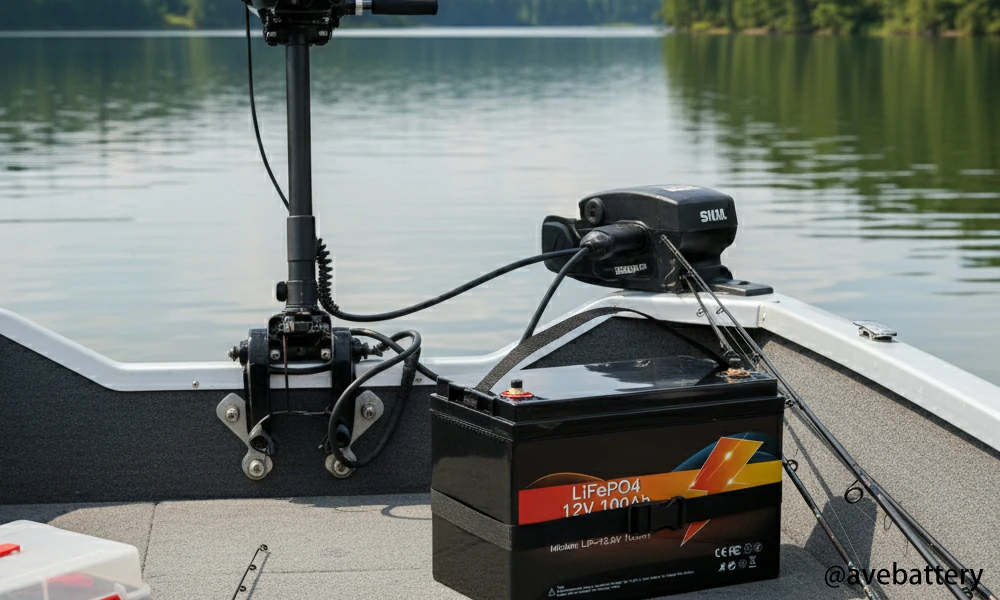
Travelers pick 12.8 V or 25.6 V packs for compact off-grid setups. LFP gives more usable energy and faster charging from solar than lead-acid. You should mount the pack securely, fuse all positive conductors, and use cable sizes that match the inverter and DC loads.
Related articles: Best RV Camper Battery Options for Off Grid Trips
UPS and Backup Power
IT teams and facility managers use LFP in Uninterruptible Power Supplies to get long life and stable performance. The low maintenance and fast recharge help restore protection after an outage.
Motive Power and EVs
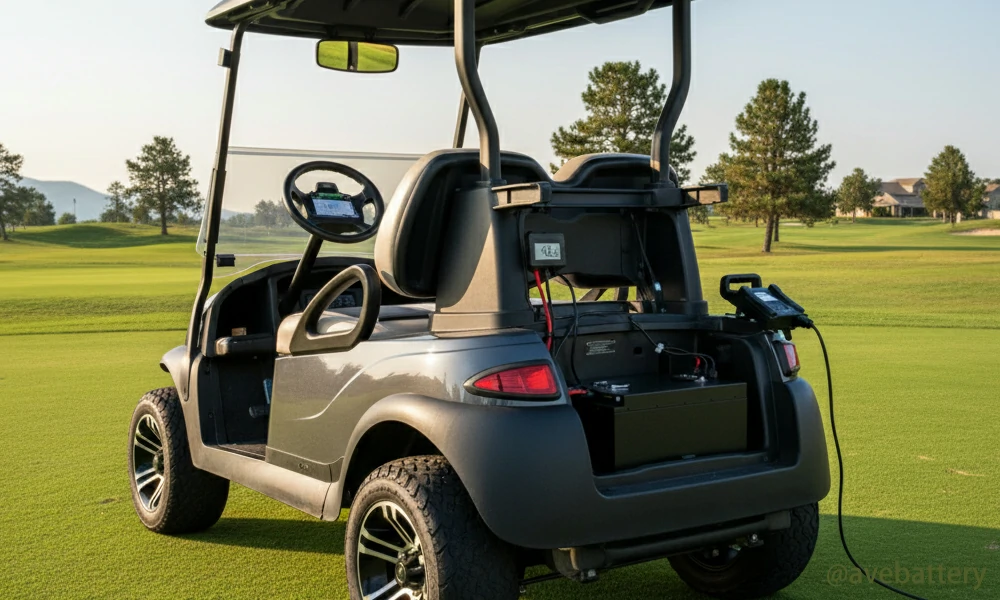
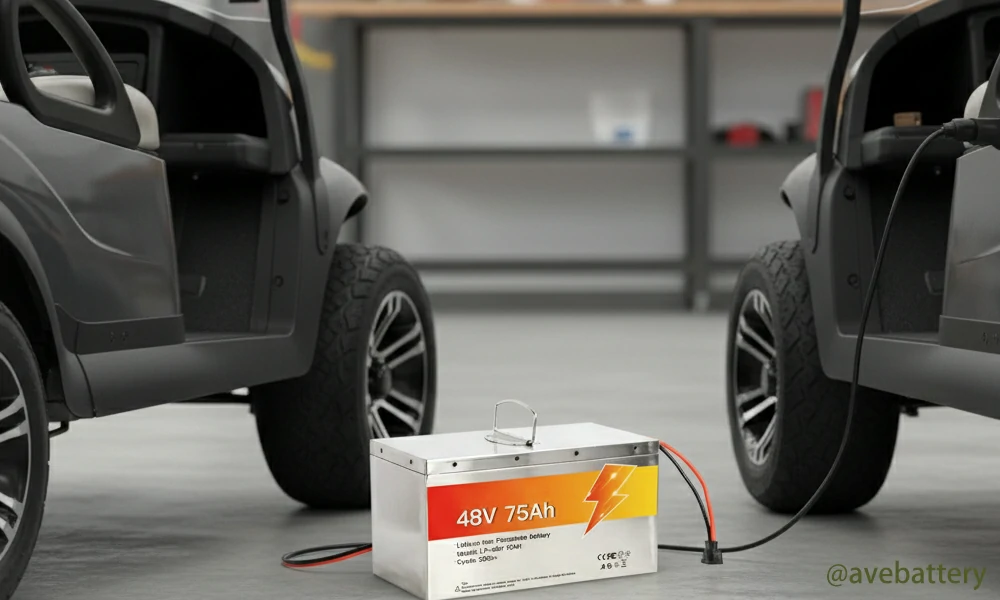
Forklifts, golf carts, small EVs, and many passenger EV models use LFP for long cycle life and high power with stable thermal behavior. The pack design and thermal controls vary by vehicle, so you should follow the OEM specs.
Why LiFePO4 Is Not “Just Another Lithium-Ion”
People often say “lithium-ion” as if it were one thing. In reality, lithium-ion is a family of chemistries, and each chemistry trades off energy density, cost, safety, and cycle life.
The most common families besides LiFePO₄ are NMC (nickel manganese cobalt), NCA (nickel cobalt aluminum), and LCO (lithium cobalt oxide).
| Category | LiFePO4 (LFP) | NMC (Nickel Manganese Cobalt) | NCA (Nickel Cobalt Aluminum) | LCO (Lithium Cobalt Oxide) |
|---|---|---|---|---|
| Cathode Materials | Lithium Iron Phosphate (LiFePO4) | Nickel, Manganese, Cobalt Oxides | Nickel, Cobalt, Aluminum Oxides | Lithium Cobalt Oxide |
| Typical Energy Density (Wh/kg) | 90–160 | 150–220 | 180–260 | 150–200 |
| Cycle Life (to ~80% capacity) | 4,000–6,000+ | 1,000–2,500 | 1,000–2,000 | 500–1,000 |
| Thermal Stability / Safety | Excellent – very stable, low fire risk | Moderate – can overheat if abused | Moderate – can overheat if abused | Poor – most flammable chemistry |
| Operating Temperature Range (°C) | –20 to 60 | –10 to 55 | –10 to 55 | 0 to 50 |
| Voltage per Cell (Nominal) | 3.2 V | 3.6–3.7 V | 3.6–3.7 V | 3.7 V |
| Material Abundance / Cobalt Use | No cobalt or nickel; iron and phosphate are abundant | Requires cobalt and nickel | Requires cobalt and nickel | High cobalt content |
| Environmental Impact | Low – non-toxic, recyclable | Moderate – mining of nickel/cobalt | Moderate to high | High – cobalt-heavy |
| Cost per kWh | ~$80–120 | ~$100–150 | ~$110–160 | ~$130–180 |
| Best Suited For | Home storage, solar, RV, marine, EV buses | EVs, e-bikes, power tools | High-performance EVs (Tesla, etc.) | Small electronics, phones |
| Key Advantage | Long life, safety, low maintenance | Good balance of energy & cost | High energy density | Compact for size |
| Main Drawback | Lower energy density | Shorter cycle life | Expensive materials | Safety & lifespan issues |
Which Battery Is Easier to Recycle?
Both LiFePO₄ and other lithium-ion batteries can be recycled, but LiFePO₄ batteries are generally easier to recycle. Their cathode uses stable, non-toxic iron phosphate, making the process safer and simpler. Other lithium-ion batteries contain heavy metals, making recycling more complex and costly.
Why LFP Is Safer by Design
LFP’s crystal structure holds oxygen more tightly than cobalt-rich chemistries. This structure reduces the chance of oxygen release at high temperature, which lowers the risk of thermal runaway. A well-designed pack adds layers of protection:
- BMS protections: Over-voltage, under-voltage, over-current, short circuit, and temperature limits.
- Cell screening and matching: Tighter cell matching supports balanced charging and even aging.
- Mechanical design: Proper spacing, compression, and heat paths help the pack handle stress.
Safety does not mean immunity. Any battery can be dangerous if it is punctured, shorted, overcharged, or improperly installed. A responsible installer follows the datasheet and uses fuses, correct wire sizes, and proper mounting.
LiFePO4 vs. Lead-Acid, AGM, and Gel
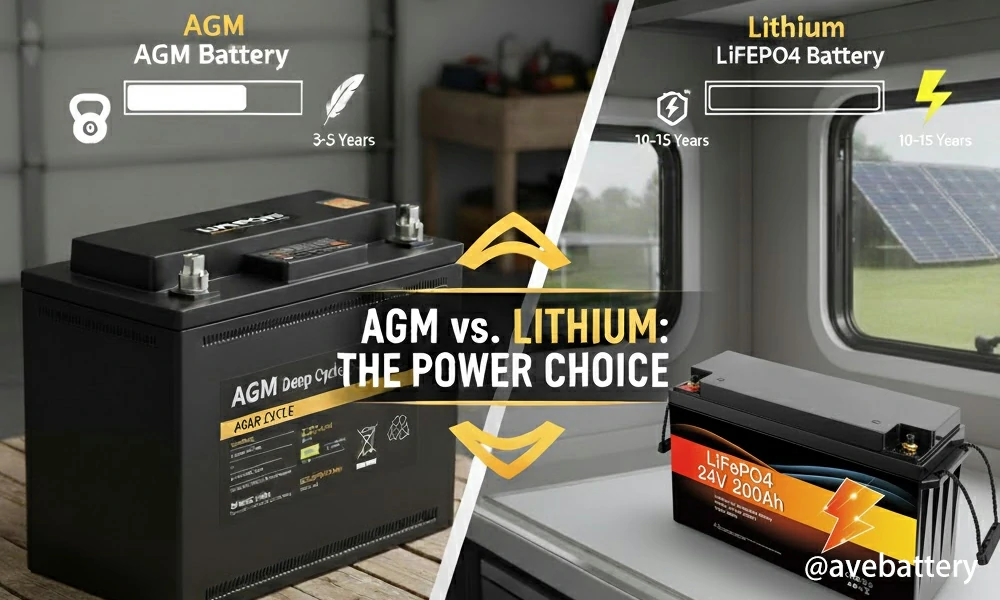
You may still see lead-acid, AGM, or gel packs in backup power and boats. These old chemistries can do the job, but they require more care and give you fewer cycles.
| Category | LiFePO4 (LFP) | Flooded Lead-Acid | AGM (Absorbed Glass Mat) | Gel Battery |
|---|---|---|---|---|
| Usable Depth of Discharge (DoD) | 80–100% | 30–50% | 50–70% | 50–70% |
| Cycle Life (to ~80% capacity) | 4,000–6,000+ | 300–500 | 400–800 | 500–1,000 |
| Energy Density (Wh/kg) | 90–160 | 30–50 | 35–55 | 35–55 |
| Weight (for same usable energy) | ~1/3 of lead-acid | Heavy | Slightly lighter than flooded | Similar to AGM |
| Charge Efficiency | 95–98% | 70–85% | 80–90% | 80–90% |
| Charge Time (0–100%) | 2–4 hours | 8–12 hours | 6–10 hours | 6–10 hours |
| Maintenance | None required | Regular watering, venting | Low | None |
| Self-Discharge (per month) | <3% | 5–15% | 3–5% | 2–5% |
| Operating Temperature (°C) | –20 to 60 | 0 to 50 | –10 to 50 | –10 to 45 |
| Safety | Very high, no acid or fumes | Acid spills, hydrogen gas | Low spill risk | Sensitive to overcharge |
| Voltage Stability Under Load | Excellent – flat discharge curve | Drops quickly | Moderate | Moderate |
| Cost per kWh | ~$80–120 | ~$60–100 | ~$80–120 | ~$90–130 |
| Total Lifetime Cost | Lowest (cost per cycle) | High | Moderate | Moderate |
| Ideal Applications | Solar, RV, marine, home backup | Low-cost backup, starter | UPS, RV, boats | Medical, telecom |
lithium iron phosphate delivers up to 10× the cycle life, higher usable energy, and faster charging with no maintenance. While lead-acid, AGM, and gel still work for budget or legacy systems, lithium iron phosphate wins hands down for long-term reliability, performance, and total cost of ownership.
Related articles: AGM Battery vs Lithium
Life Span, Cycles, and What They Really Mean
A cycle is one full discharge and one full charge. Most LFP warranties define end-of-life as 80% of original capacity. You will see ratings like 3,000–6,000 cycles at 80% Depth of Discharge (DoD). Some premium systems, including models from manufacturers such as Avepower, advertise 6,000–8,000+ cycles under standard test conditions. Real-world life depends on temperature, DoD, charge voltage, and current.
Two rules will help you extend life:
- Keep the pack cool and dry. Heat ages cells faster.
- Avoid chronic 100% stress. You can charge to 100% when you need full energy, but you should avoid storing at 100% for long periods.
Usable Energy and a Simple Formula
You can estimate usable energy with a simple formula:
Usable kWh = (Nominal Voltage × Amp-hours) ÷ 1000 × DoD × System efficiency
Example: A 51.2 V, 200 Ah wall-mounted LFP battery at 80% DoD and 95% system efficiency gives: 51.2 × 200 ÷ 1000 × 0.80 × 0.95 ≈ 7.8 kWh usable
How Avepower Uses LFP in Home Energy Storage
Avepower focuses on home energy storage where safety, long life, and flexible capacity matter most.
Avepower designs LFP energy-storage systems for home and small business use, with options that support BMS protection, cell balancing, and multi-level safety cutoffs. Avepower provides models with international certifications such as CE, UL, RoHS, and ISO9001 (availability depends on model and region). Avepower supports customization for appearance, capacity, and features, which helps integrators and distributors match local codes and customer needs. If you need modular growth, Avepower offers wall-mounted, rack-mount, stackable, and all-in-one options that can expand as your use grows.
If you plan a solar-plus-storage project or a home backup system, you can speak with Avepower about pack sizing, inverter matching, and communication settings so the system works as one unit.
Conclusion
LiFePO₄ gives you a safe, reliable, and low-maintenance way to store energy. The chemistry handles daily cycling, fast charges, and deep discharges with grace. If you match the pack to your loads, follow the temperature rules, and install the system to the datasheet, an LFP battery can support you for many years.
If you are comparing brands, you should focus on BMS quality, cycle-life data with clear test conditions, certifications, and support. If you need tailored capacity or enclosures for B2B projects, you should ask about customization—many manufacturers, including Avepower, offer options for appearance, capacity, and functions along with international certifications that buyers expect.
FAQ
Yes. lithium iron phosphate batteries handle deep discharge and frequent cycling well. Many systems use 80–100% depth of discharge daily within the manufacturer’s limits.
LFP stands for lithium iron phosphate, also known as lithium ferrous phosphate. It is a type of lithium-ion battery technology widely used in solar power systems, off-grid applications, and various energy storage solutions due to its safety, long lifespan, and stable performance.
Each LFP cell has a nominal voltage of about 3.2 V due to its stable chemistry and iron phosphate cathode. This makes it ideal for forming 12 V, 24 V, and 48 V battery systems by connecting cells in series.
Depth of Discharge (DoD) tells you how much of the battery’s energy you use before recharging. A higher DoD—like 80–100%—means you can use more of the capacity each cycle without damaging the battery.
Most high-quality LFP batteries last 3,000–6,000+ cycles before dropping to 80% capacity, translating to roughly 10 years or more of typical use.
Yes, they can discharge in temperatures down to about -20 °C, but charging below 0 °C should be avoided unless the pack has a built-in heater or low-temperature protection.
A 12 V 100 Ah pack stores 12 V × 100 Ah = 1,200 Wh. If you use 90% of that, you get 1,080 Wh usable. A 200 W load will run for 1,080 Wh ÷ 200 W ≈ 5.4 hours. Your actual time will vary with inverter losses and temperature.
You need 20 kWh ÷ 0.9 ≈ 22.2 kWh nameplate. You can choose five 5 kWh modules for 25 kWh and keep a margin, or you can choose four 5 kWh modules if your real-world use allows it.
A 0.5C rate equals 0.5 × 200 Ah = 100 A. At 48 V, that is a 4.8 kW charge input. You should confirm the charge limit in the spec, since some packs set lower limits to improve life.