
Inverter output power tells you how much AC power an inverter can deliver to a load or grid under specified operating conditions. However, the number printed on an inverter label is not automatically the power you will receive continuously in every real installation.
This guide explains how inverter output power works, how to calculate it, how to read a datasheet correctly, and how to determine whether the battery and inverter can actually support the same load.
What Is Inverter Output Power?
Inverter output power is the usable AC power delivered by an inverter after converting energy from its DC source. For system design, the most important figure is usually documented continuous or rated AC output under specified voltage, temperature and operating conditions—not the product name, PV input capacity or short-duration surge number.
If you need a broader introduction before examining power ratings, see Avepower’s What Is an Inverter? guide.
Which Inverter Power Number on the Datasheet Actually Matters?
Continuous or rated AC output is normally the first figure to use for sustained loads, while peak or surge power should only be used for loads whose startup event fits within the manufacturer’s specified overload duration.
Inverter Output Power Terms Compared
| Datasheet Term | What It Means | Use It For | Do Not Assume |
|---|---|---|---|
| Rated output power | Normal specified output | Regular load sizing | That it applies at every temperature |
| Continuous output power | Power supported continuously under stated conditions | Sustained loads | That surge loads are covered |
| Peak / surge power | Short-duration overload capability | Motor/compressor startup | That it can run continuously |
| Apparent power | Voltage-current capacity in VA/kVA | PF and reactive-load calculations | That kVA always equals kW |
| Maximum output current | Maximum documented AC current | Circuit/inverter coordination | That P = V × I at every PF |
| Maximum feed-in power | Export capability to grid | Grid-connected systems | That backup output is identical |
| EPS / backup output | Output available during outage | Backup circuits | That grid-mode power is identical |
| Maximum PV input power | Permitted/recommended PV-side input | Solar-array design | That this equals AC output |
How Do You Calculate Inverter Output Power?
For AC systems, calculate real inverter output using voltage, current and power factor—not voltage and current alone unless power factor is effectively one. Single-phase and three-phase systems use different equations, while DC-side calculations must additionally account for inverter efficiency and the battery’s actual operating voltage.
Single-Phase Inverter Output Power
For a single-phase AC system:
P = V × I × PF
Where:
P= real output power in wattsV= AC RMS voltageI= AC RMS currentPF= power factor
Example: 230 V Single-Phase Inverter
Assume:
- Output voltage = 230 V
- Output current = 26 A
- Power factor = 1.0
Then:
230 × 26 × 1.0 = 5,980 W
So the real output is approximately:
5.98 kW
If the same current serves a load at PF 0.8:
230 × 26 × 0.8 = 4,784 W
Real power falls to approximately:
4.78 kW
This is why kVA and kW cannot always be treated as the same number.
Three-Phase Inverter Output Power
For a balanced three-phase system using line-to-line voltage:
P = √3 × VLL × I × PF
For example, a 10 kW three-phase inverter operating at:
- 400 V line-to-line
- PF = 1
requires approximately:
10,000 ÷ (√3 × 400) ≈ 14.4 A
per line.
At PF 0.95, more current is required for the same real power.
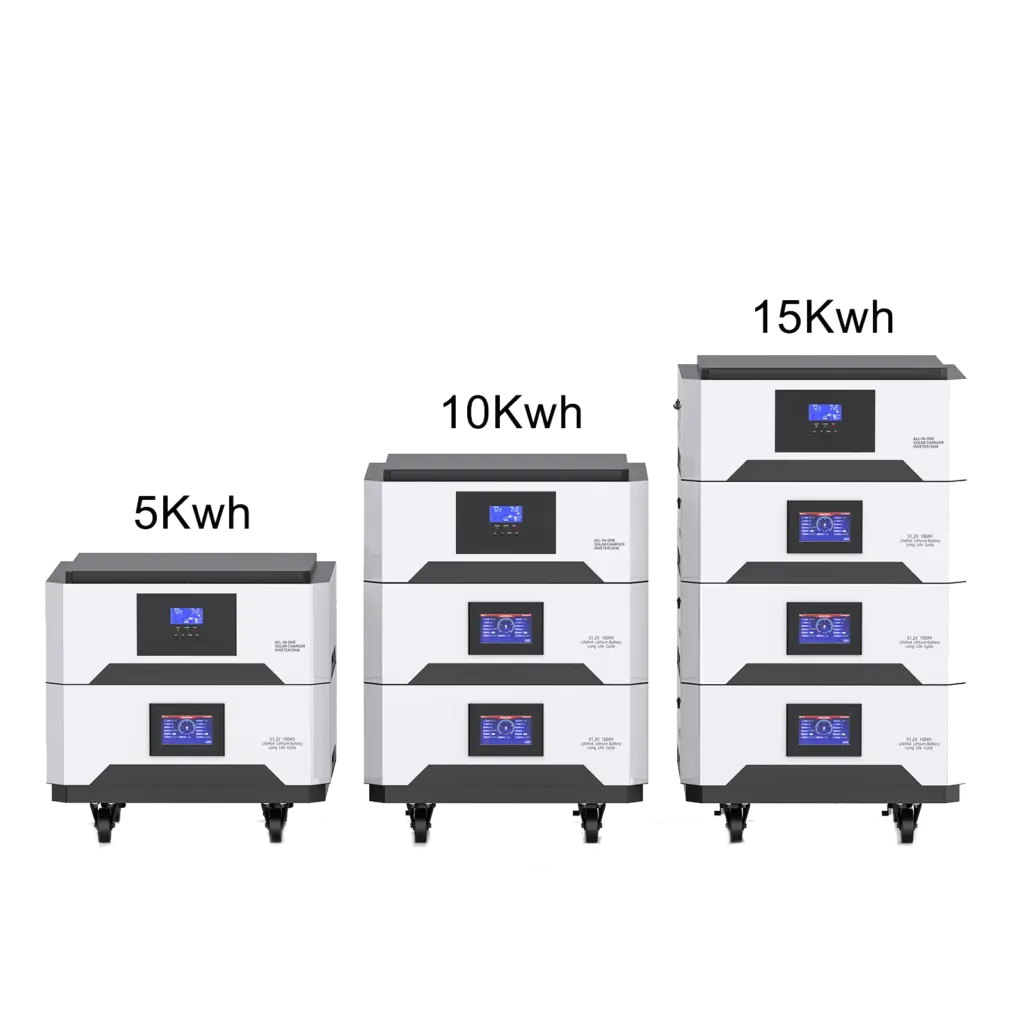
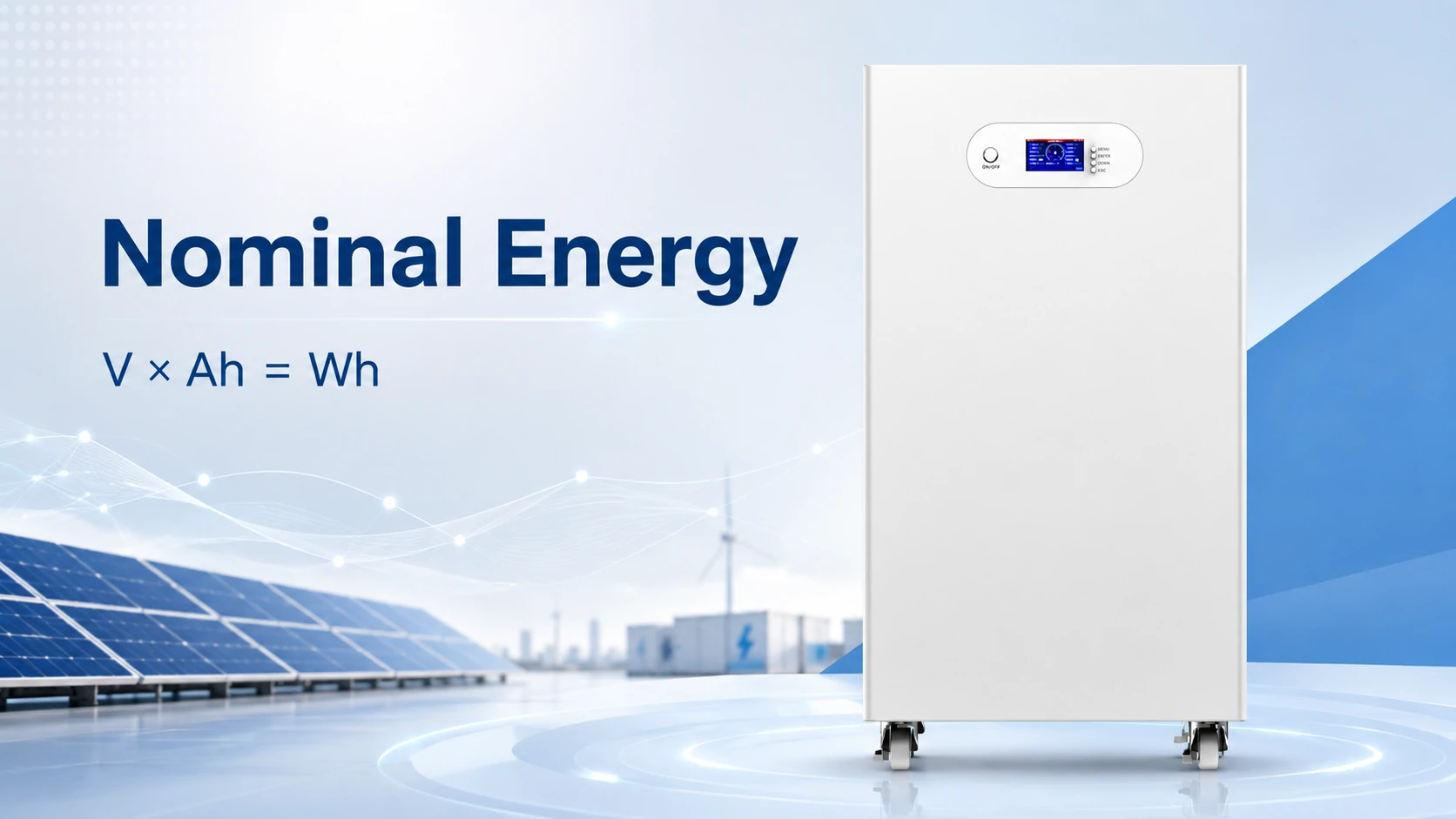
Avepower Example: Can a 15 kWh Battery Support a 6 kW Inverter?
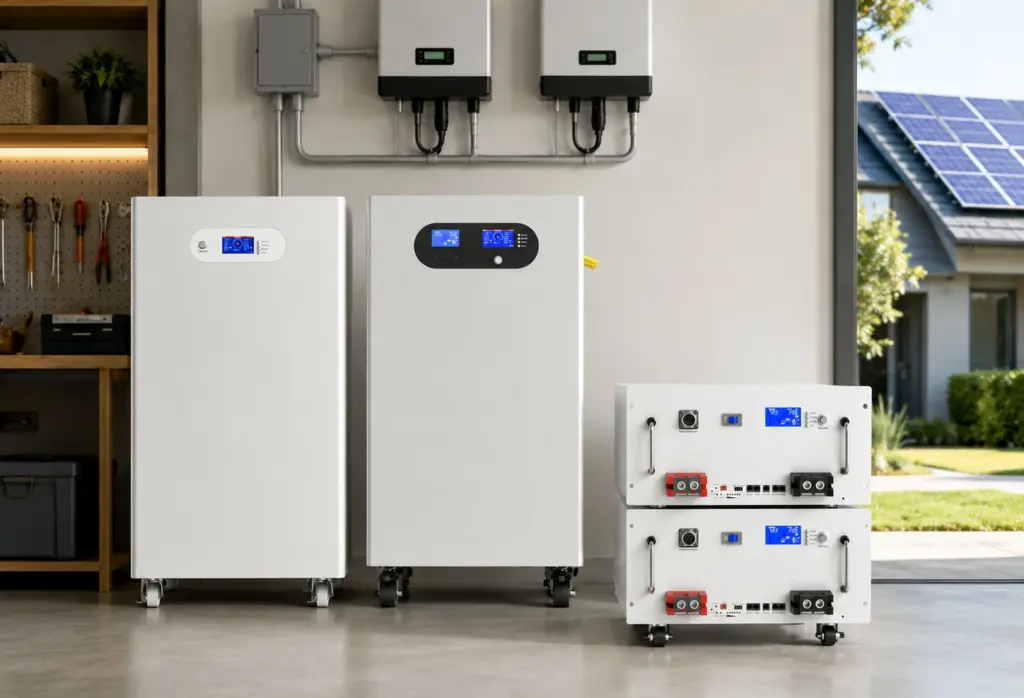
Avepower’s published 15 kWh all-in-one configuration provides a useful system-matching example because it combines a 51.2 V-class LiFePO4 battery with a 6 kW-class inverter. Comparing AC demand with the battery-side current requirement demonstrates why energy capacity, inverter kW and battery discharge current should always be verified together.
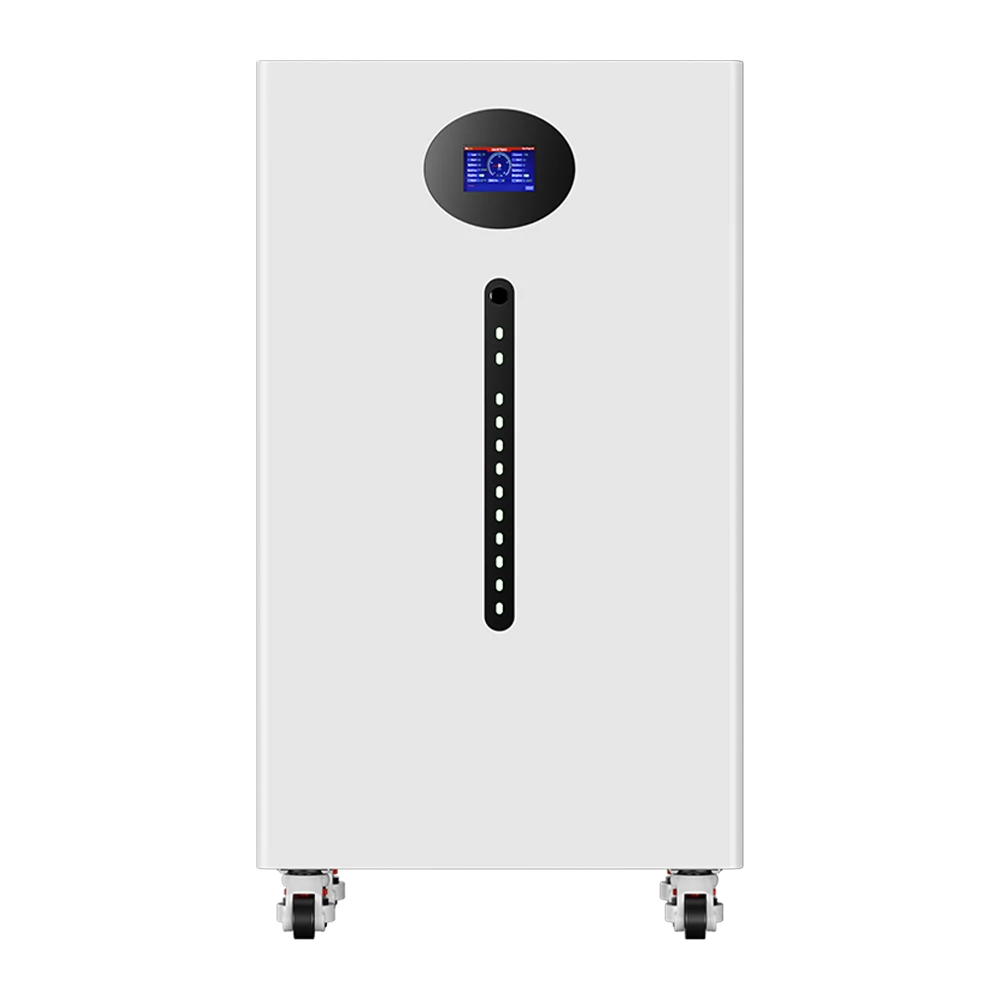
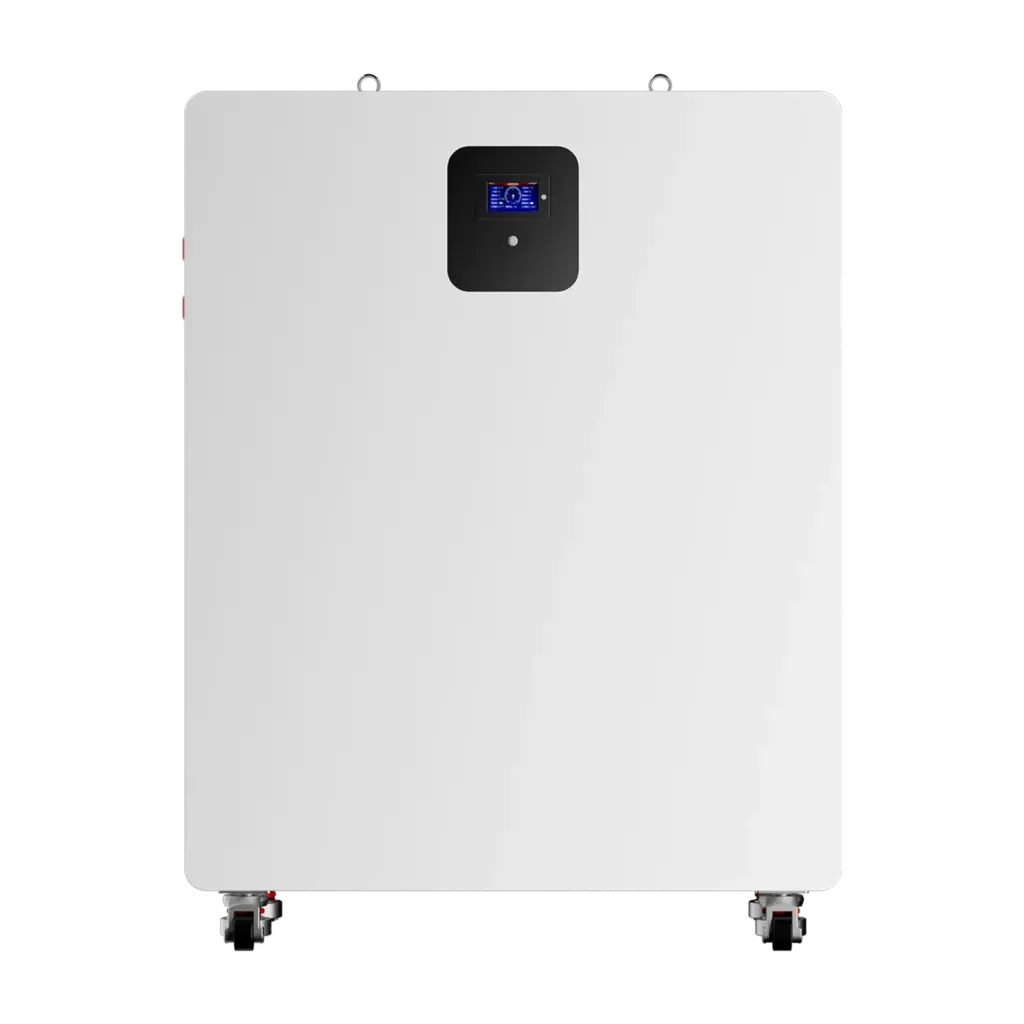
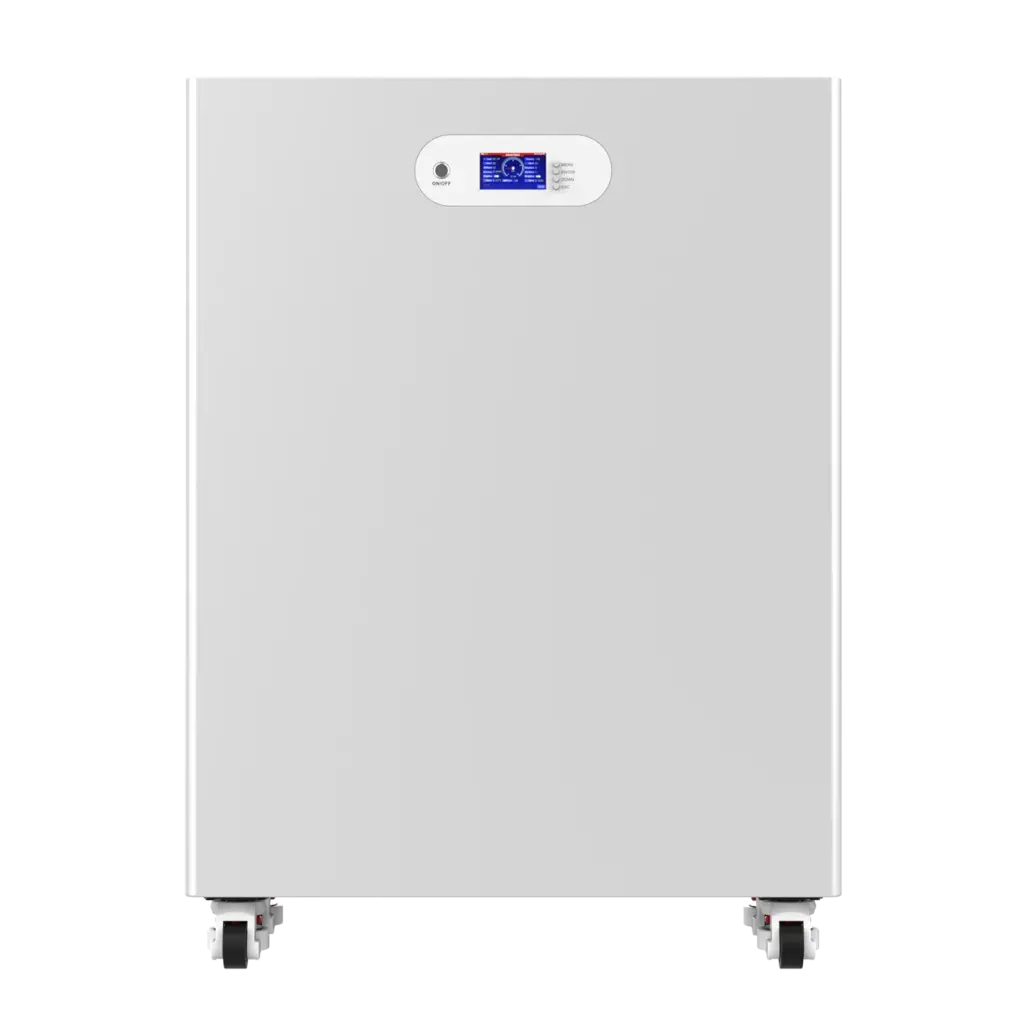
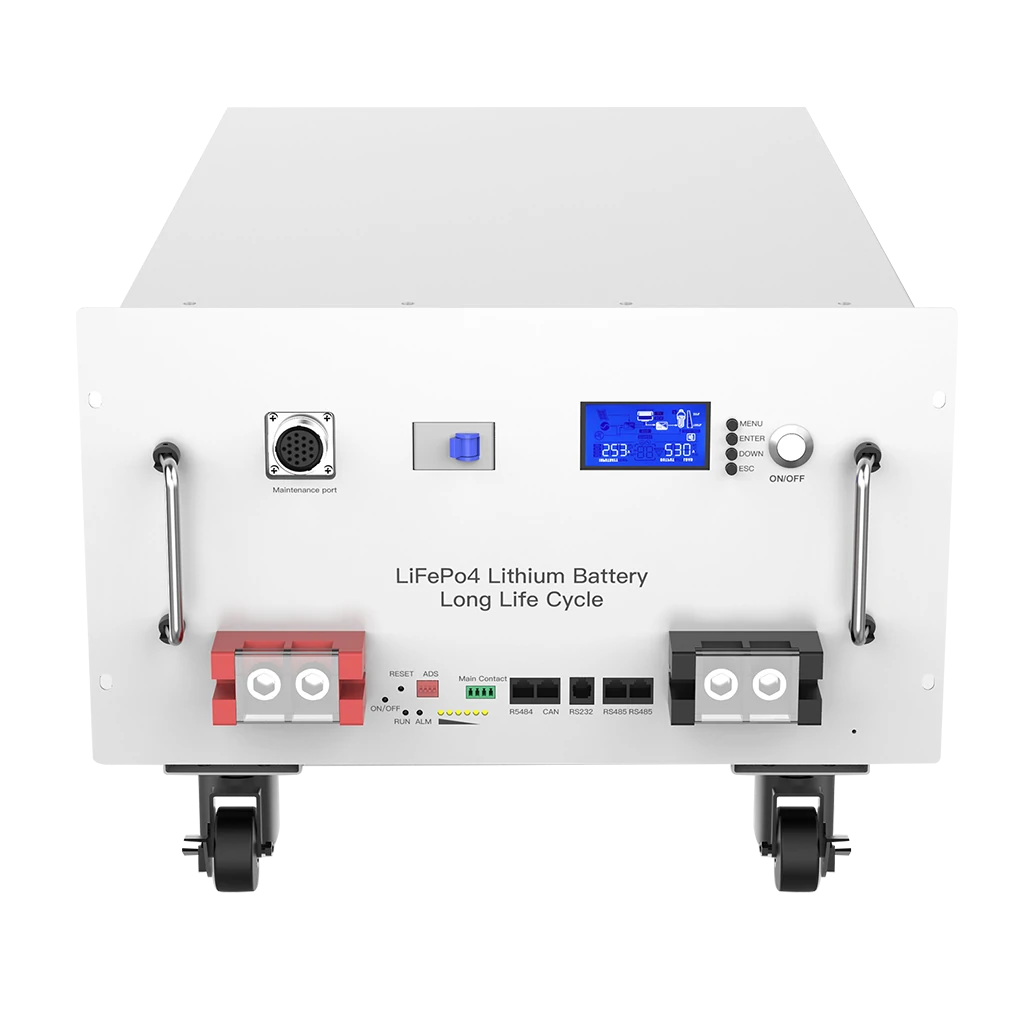
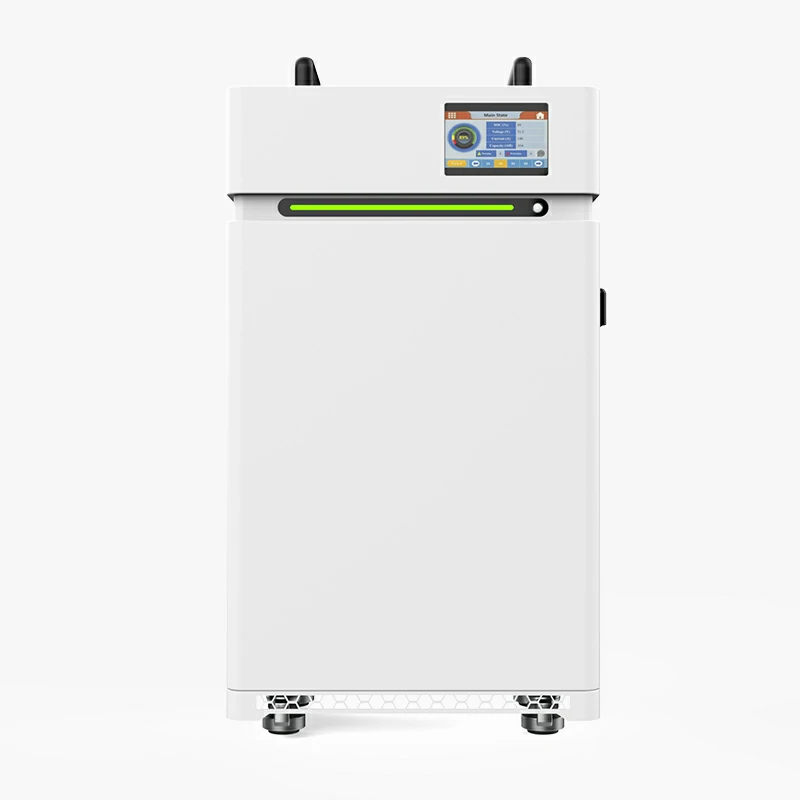
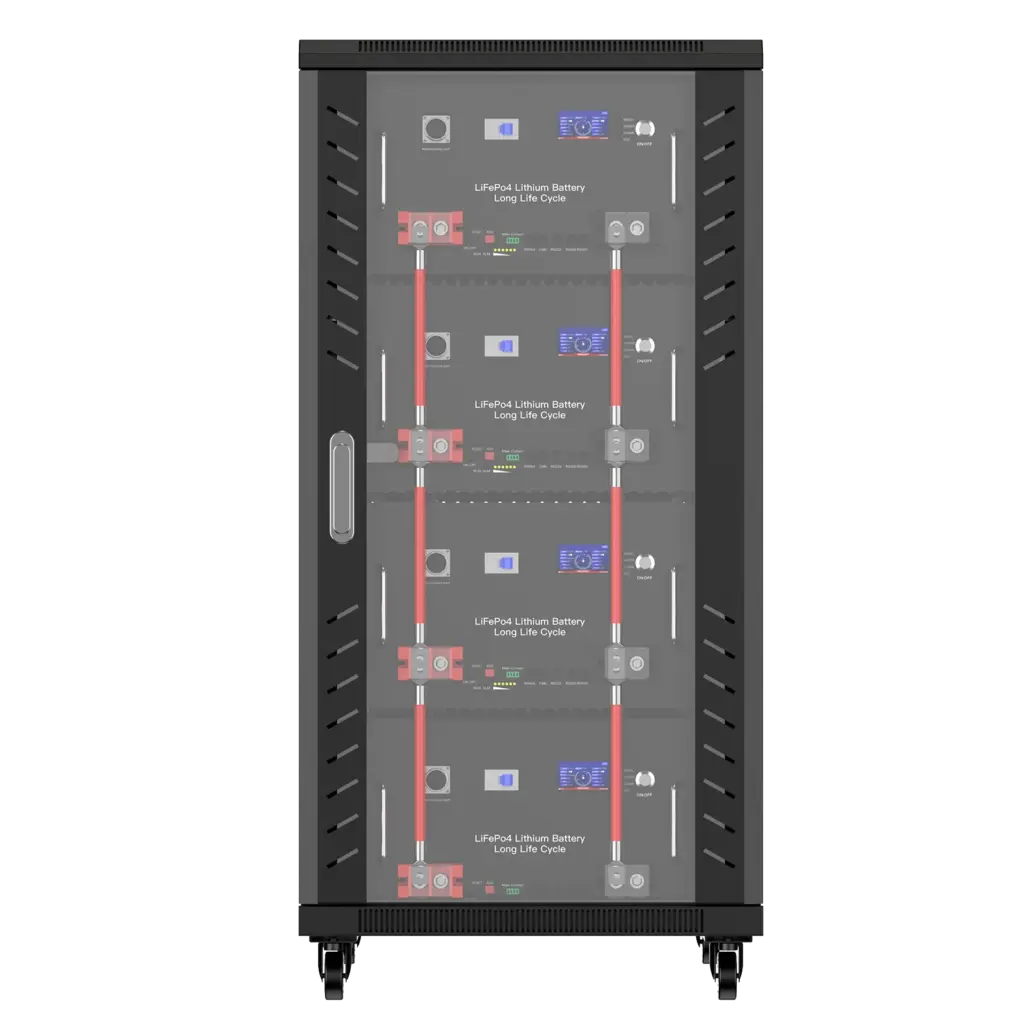
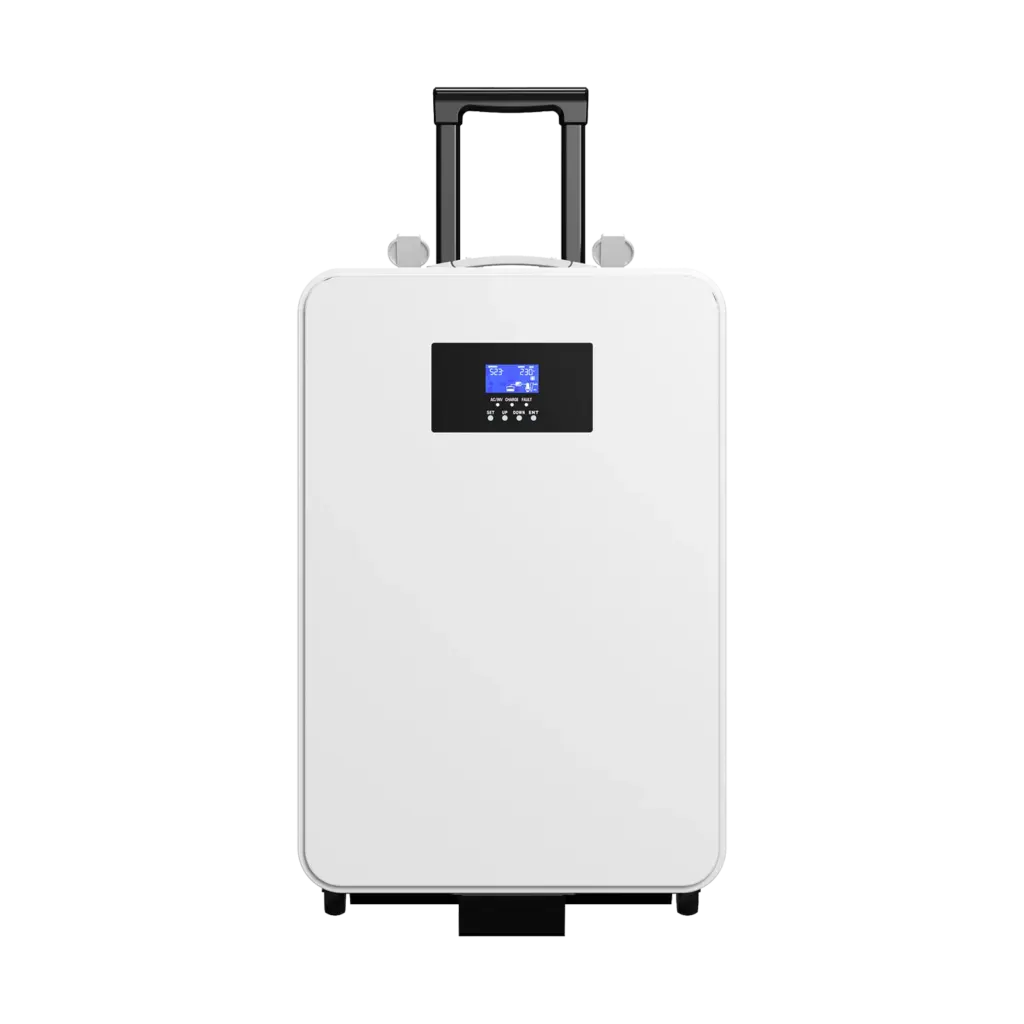
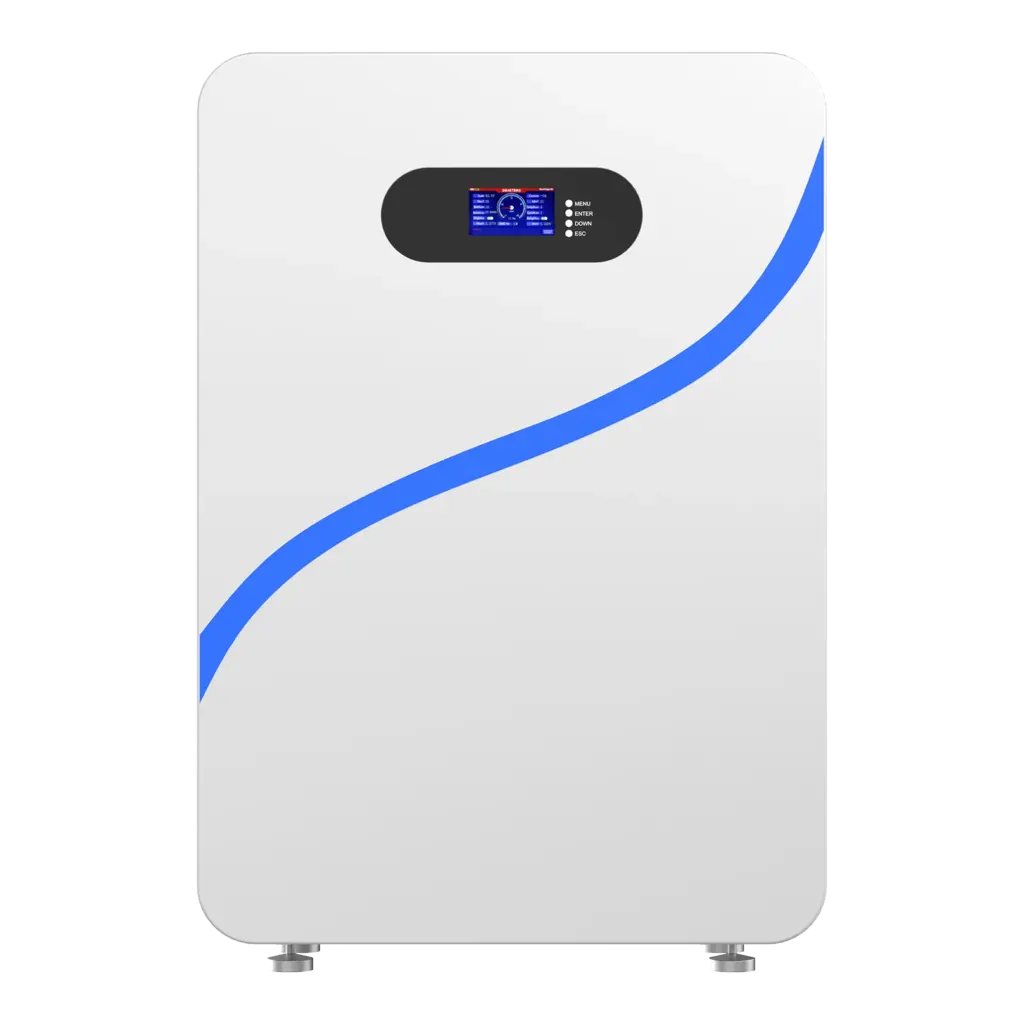
Avepower’s product range includes a 15 kWh all-in-one battery with 6 kW inverter.
Avepower’s published technical examples for this configuration cite approximately:
| Parameter | Published / Design Value |
|---|---|
| Battery nominal voltage | 51.2 V |
| Nominal stored energy | 15 kWh |
| Inverter class | 6 kW |
| Battery discharge-current reference | 140 A |
| Communication | CAN / RS485 / RS232 |
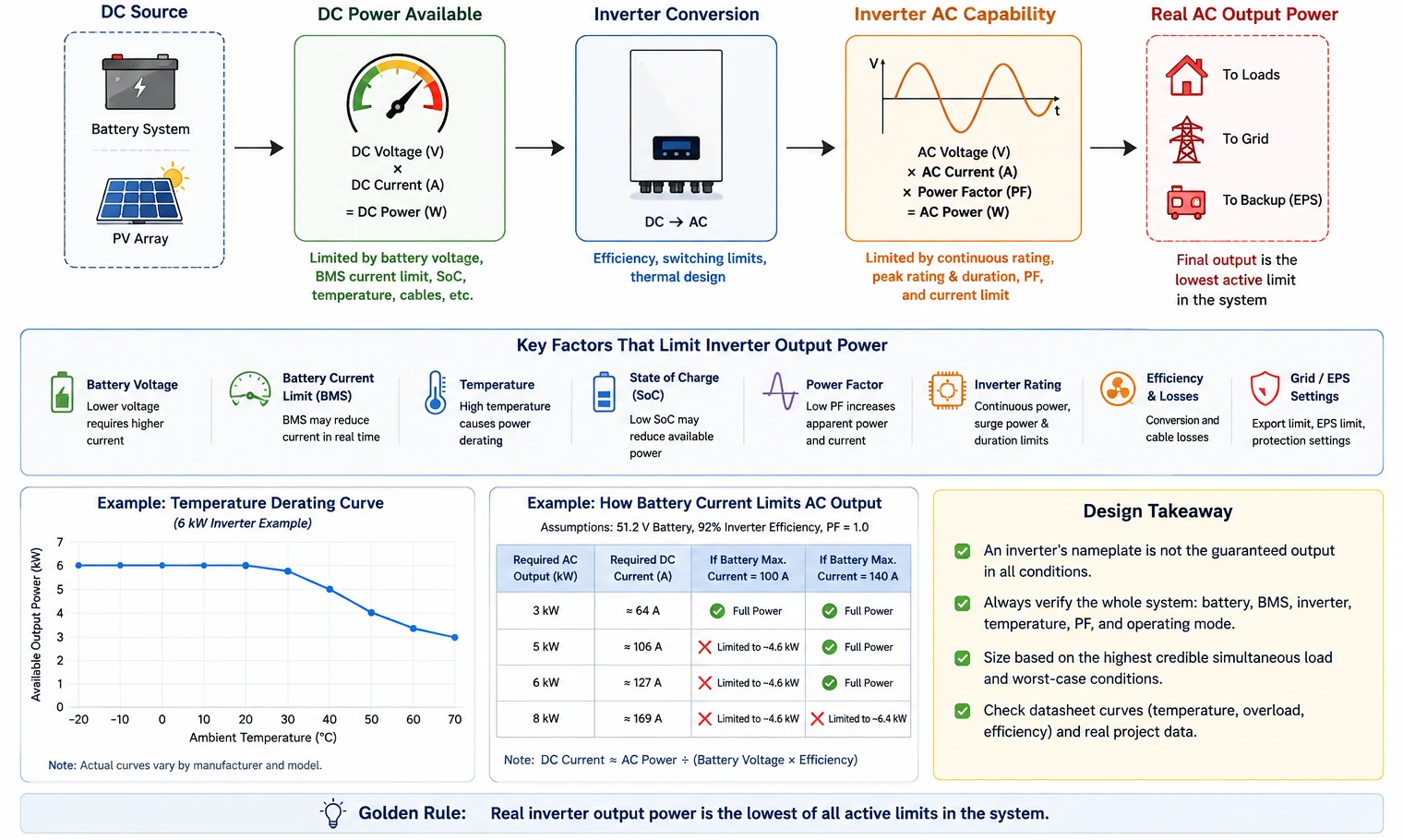
For a preliminary calculation, assume 92% conversion efficiency:
6,000 ÷ (51.2 × 0.92) ≈ 127 A
The approximate 127 A requirement is below a 140 A discharge-current reference at nominal voltage.
How Much AC Current Does an Inverter Produce?
Inverter output current depends on real power, voltage, power factor and phase configuration. At unity power factor, a 5 kW 230 V single-phase inverter produces about 21.7 A at full real output, while a 10 kW 400 V balanced three-phase inverter produces about 14.4 A per line.
Quick Reference
| Inverter Output | AC System | PF | Approx. Current |
|---|---|---|---|
| 3 kW | 230 V single-phase | 1.0 | 13.0 A |
| 5 kW | 230 V single-phase | 1.0 | 21.7 A |
| 6 kW | 230 V single-phase | 1.0 | 26.1 A |
| 10 kW | 230 V single-phase | 1.0 | 43.5 A |
| 10 kW | 400 V three-phase | 1.0 | 14.4 A/phase |
| 100 kW | 400 V three-phase | 0.95 | ≈152 A/phase |
Need to Match Inverter Output Power With a Battery System?
If you are selecting a battery for a hybrid inverter, backup system or commercial energy-storage project, start with the inverter’s exact model, continuous AC power, DC voltage range, maximum battery current, peak-load requirement and communication protocol.
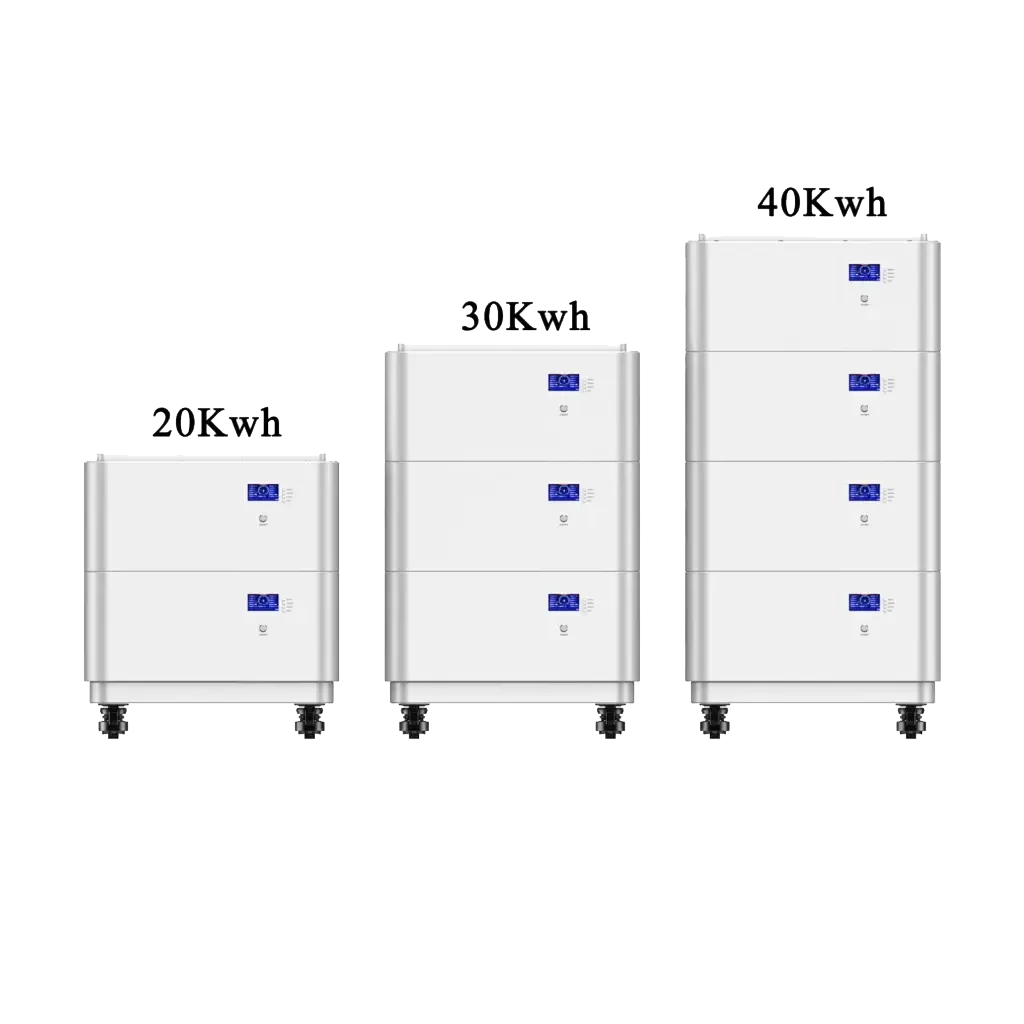
Avepower supplies LiFePO4 battery systems for residential, high-voltage and commercial energy-storage applications, including integrated inverter-battery configurations and OEM/ODM projects. Its existing technical resources cover battery discharge current, inverter sizing, and battery–inverter communication, while its energy-storage case studies show residential, high-voltage and C&I installations across multiple markets.
For a project-level evaluation, provide the inverter model + required AC kW + battery voltage + required kWh + load profile + country/market so the battery’s voltage, current, BMS communication and system architecture can be verified before ordering.
Take Control of Your Energy with Avepower!
Reliable home solar battery solutions with OEM/ODM customization and in-house manufacturing, tailored to the needs of distributors, installers, and energy partners.
FAQ
Inverter output power is the amount of AC electrical power an inverter can supply to a load or grid. For sustained operation, use the manufacturer’s continuous or rated AC output rather than peak/surge power.
For a standard DC-to-AC inverter, “output power” usually refers to AC-side power. The battery or PV side is DC input power.
No. A 5 kW inverter produces only the power demanded and available, up to its applicable operating limit. A 500 W load normally requires approximately 500 W of useful output rather than forcing the inverter to produce 5 kW.
Only when power factor equals 1. At PF 0.8, 10 kVA corresponds to 8 kW of real power.
Power electronics generate heat. When thermal conditions approach design limits, an inverter may derate its maximum continuous output to protect semiconductor components and other internal hardware.
Potential constraints include EPS rating, battery discharge current, BMS limits, inverter thermal limits, SoC, phase configuration, surge requirements and the design of the backed-up load panel.