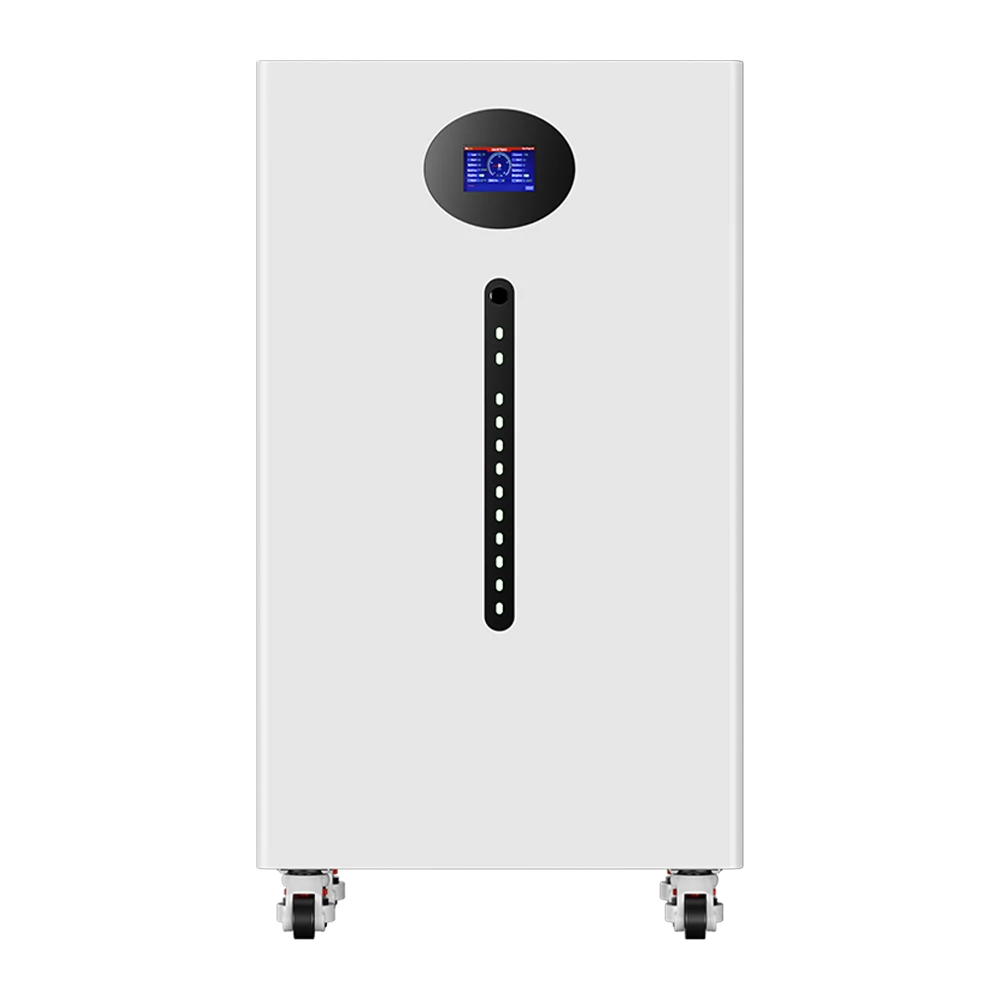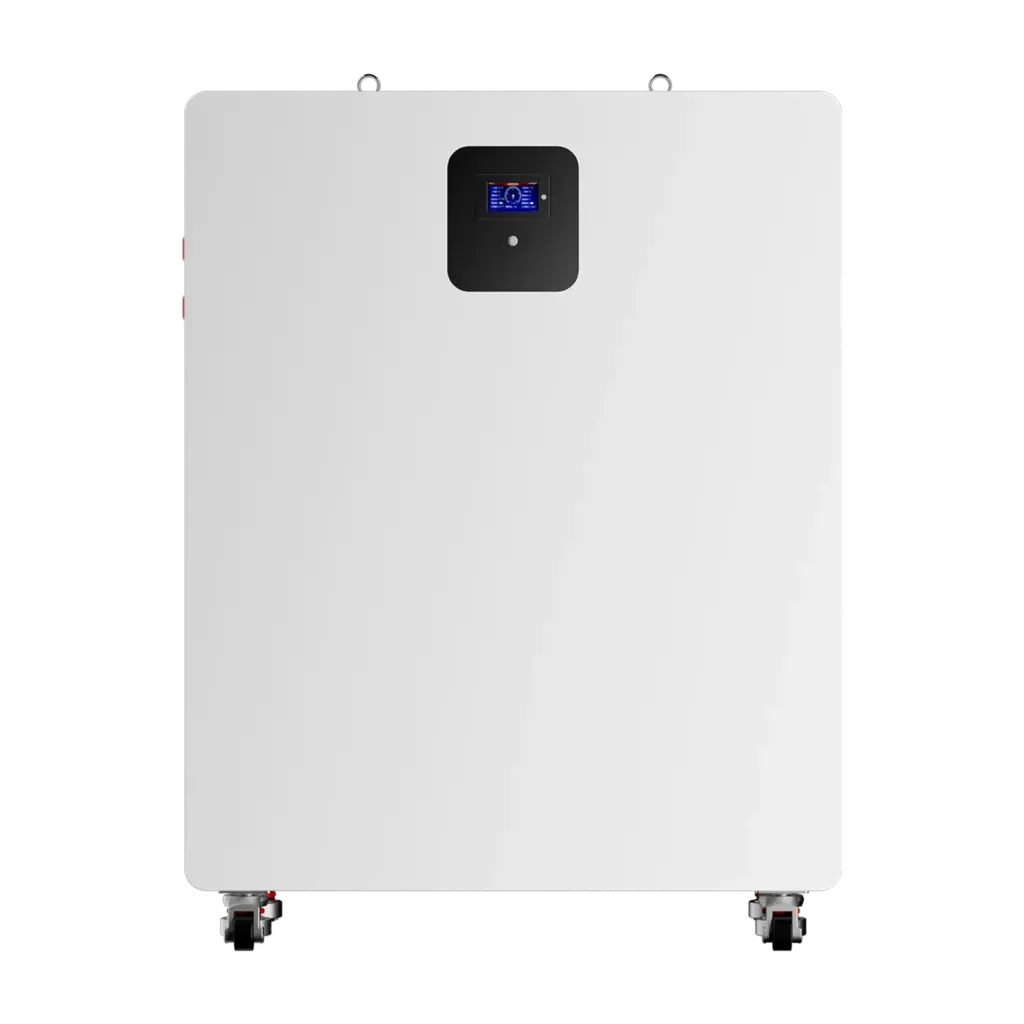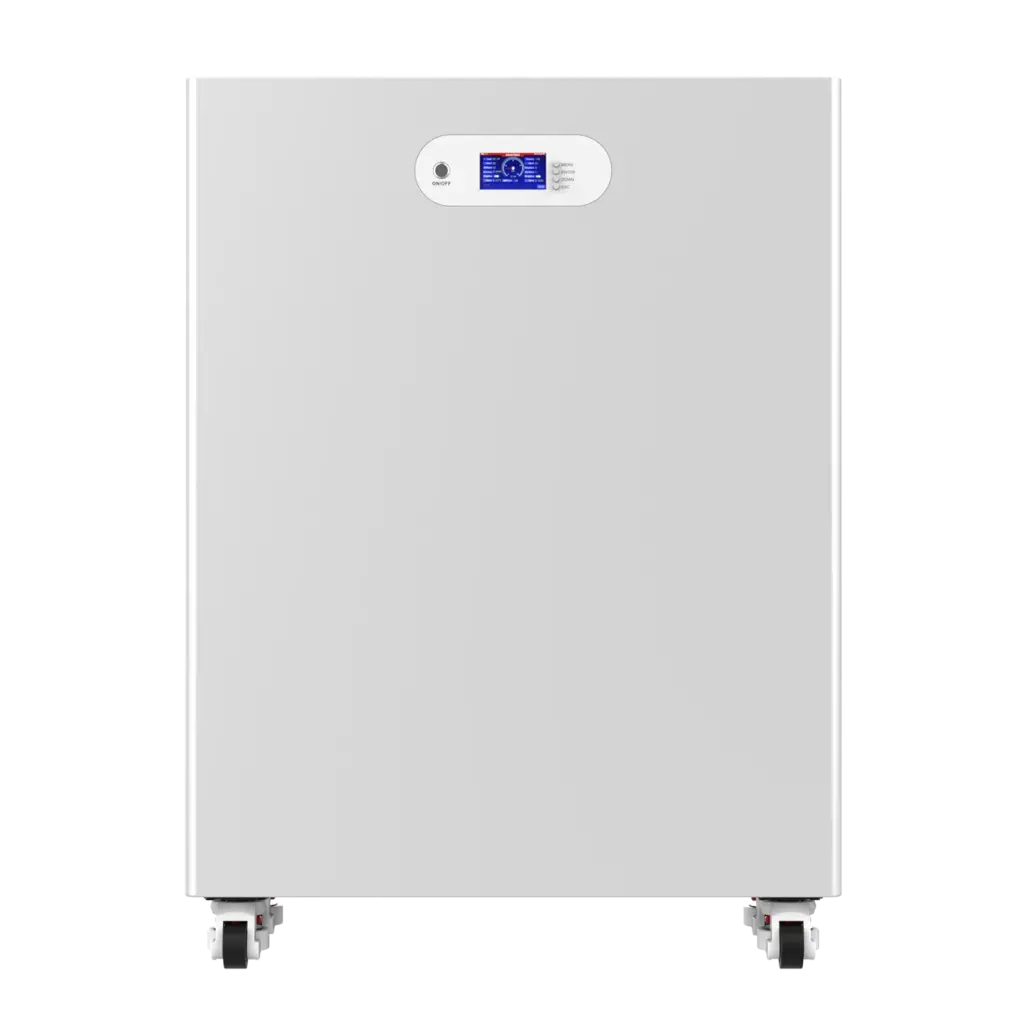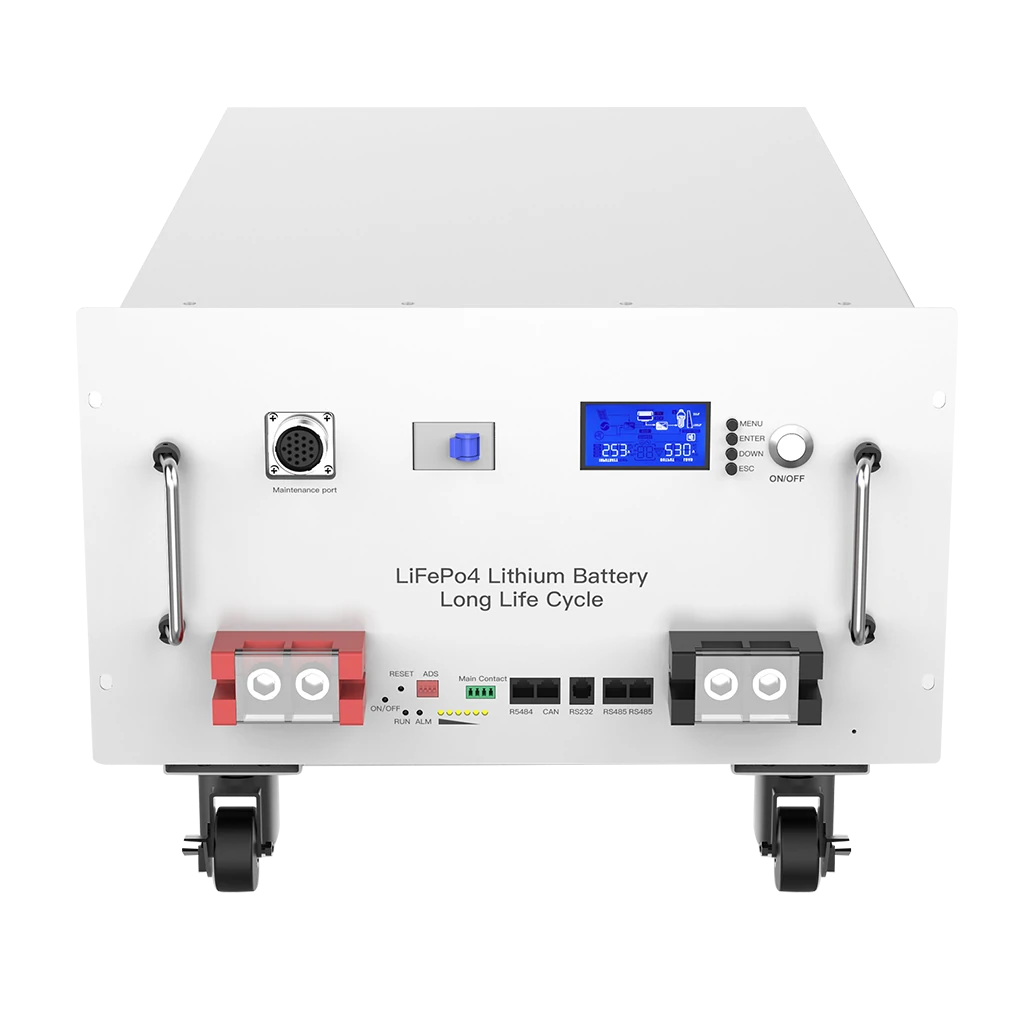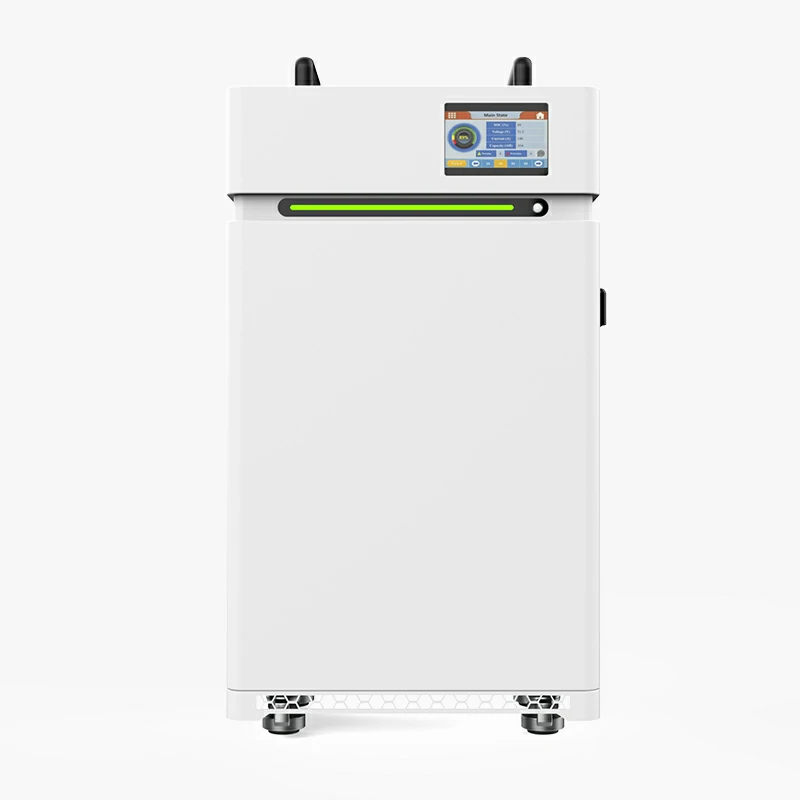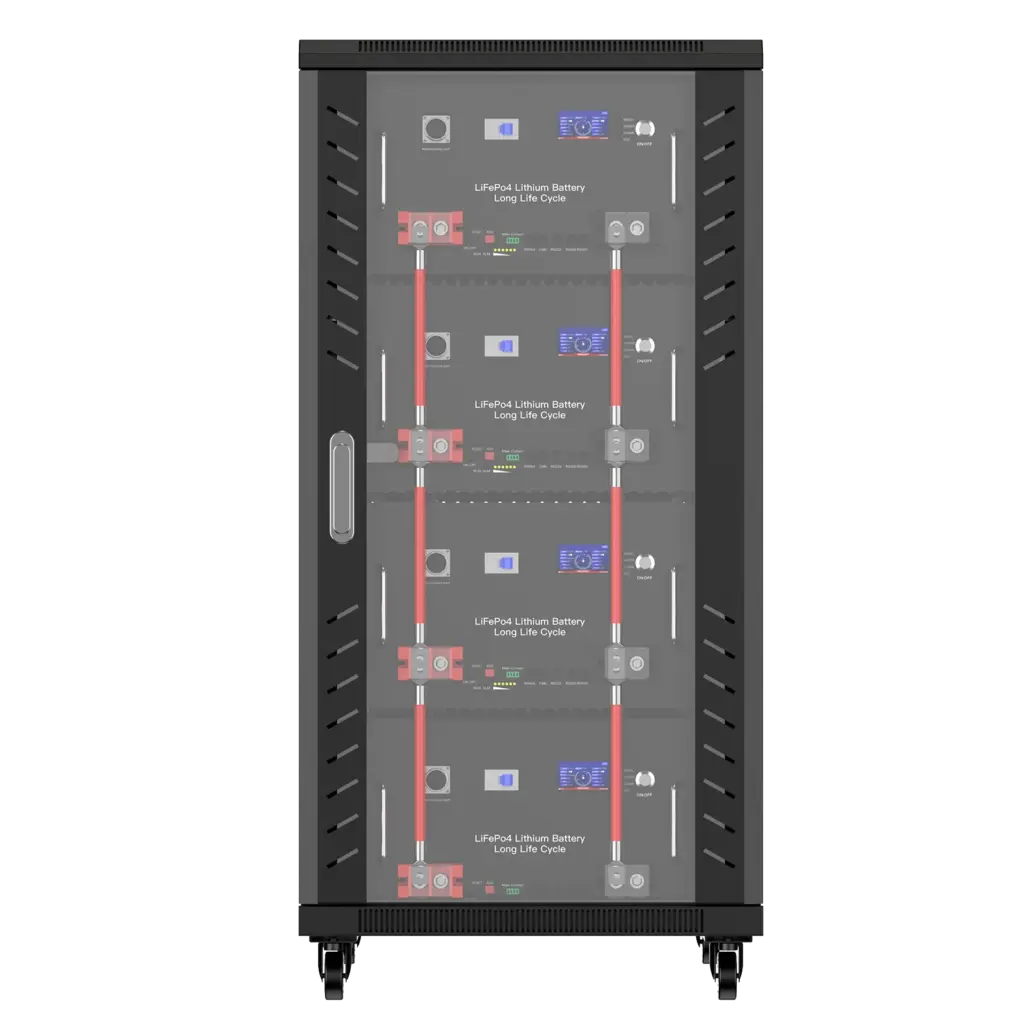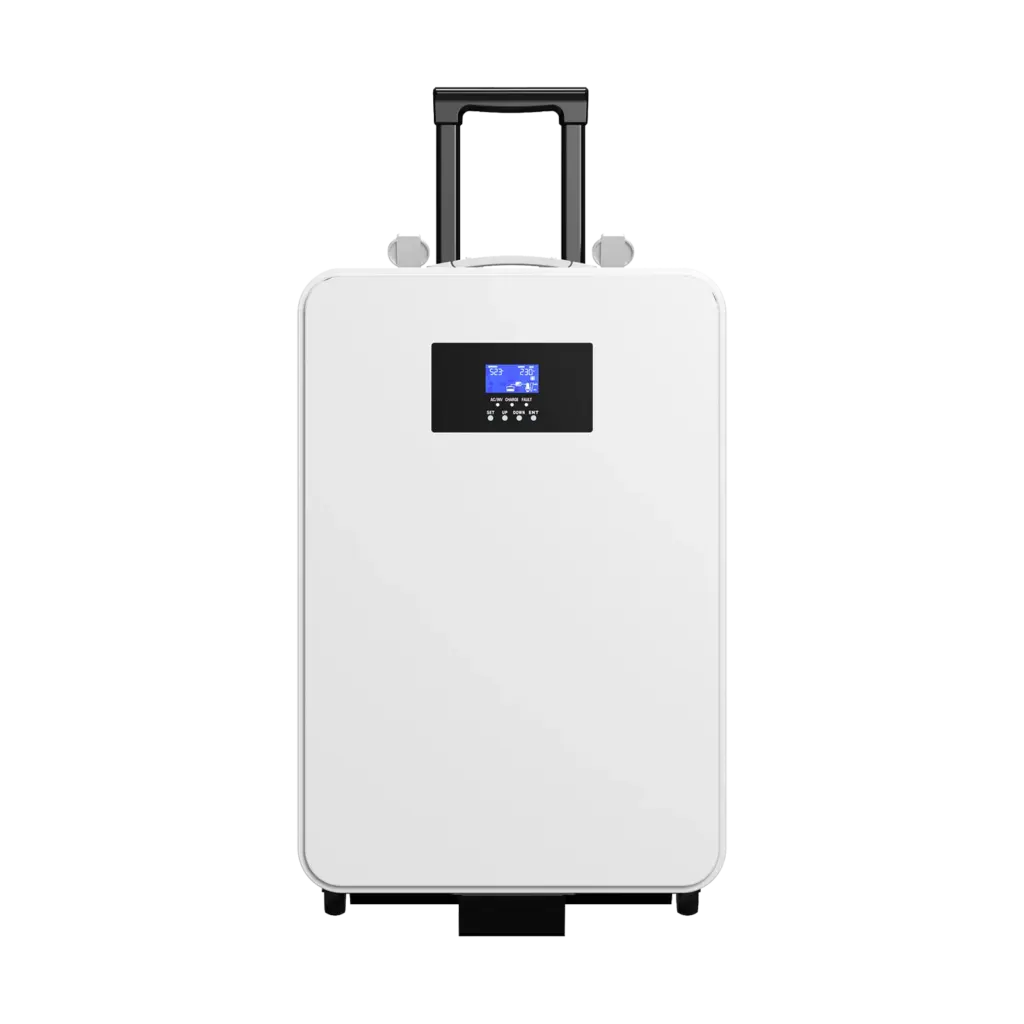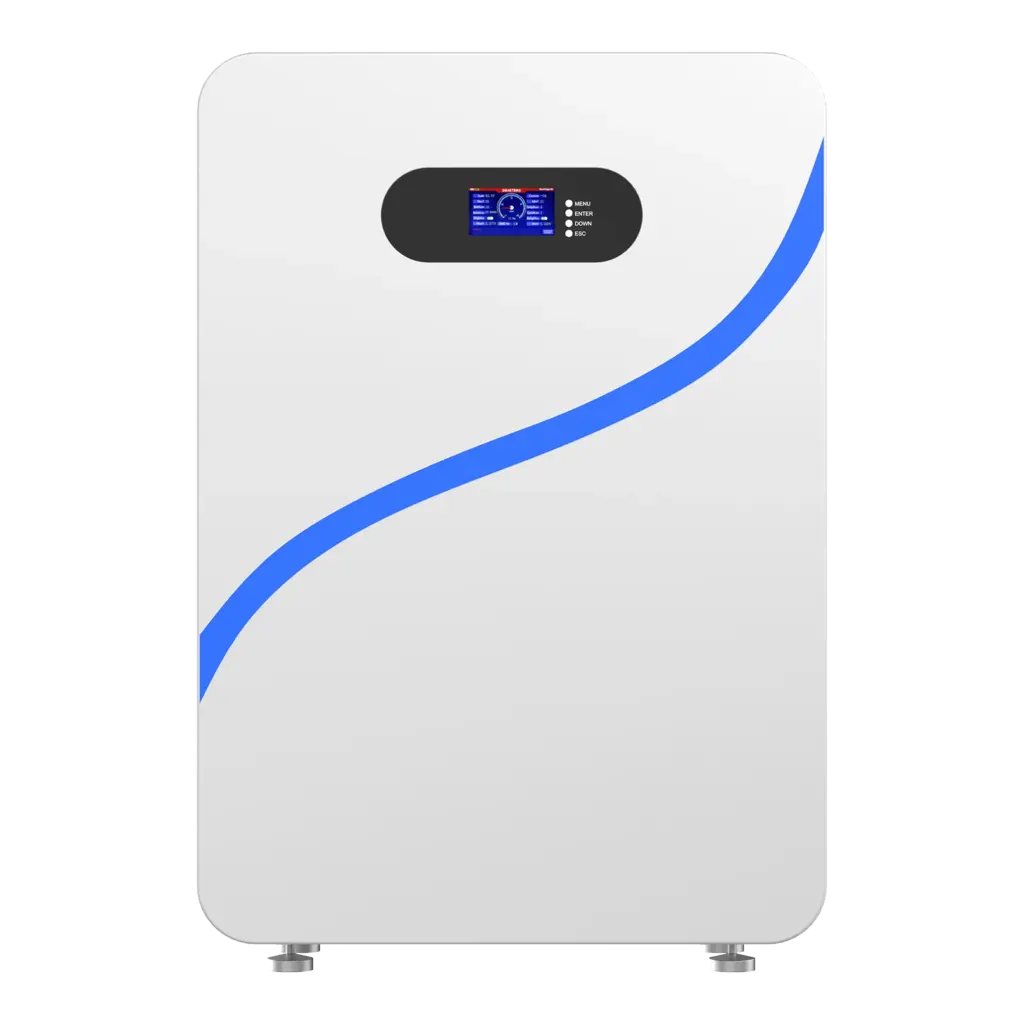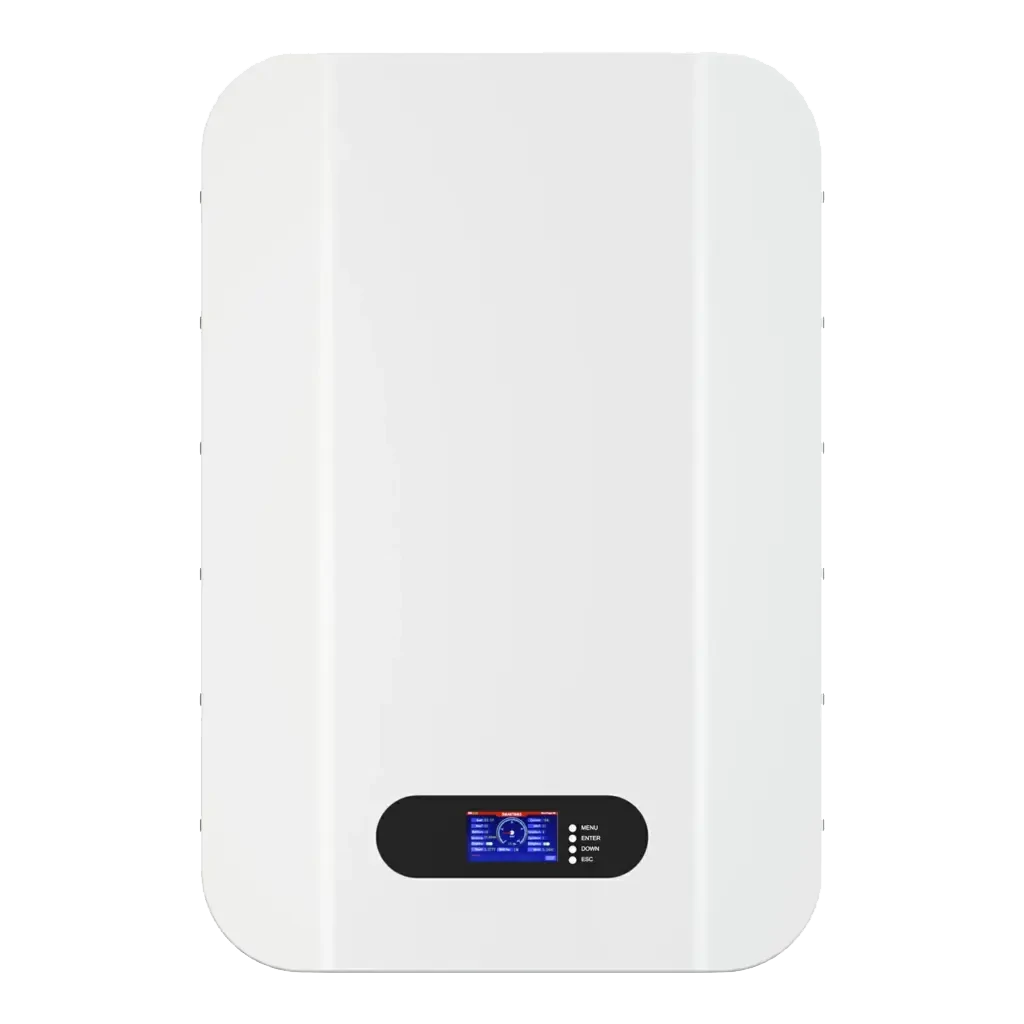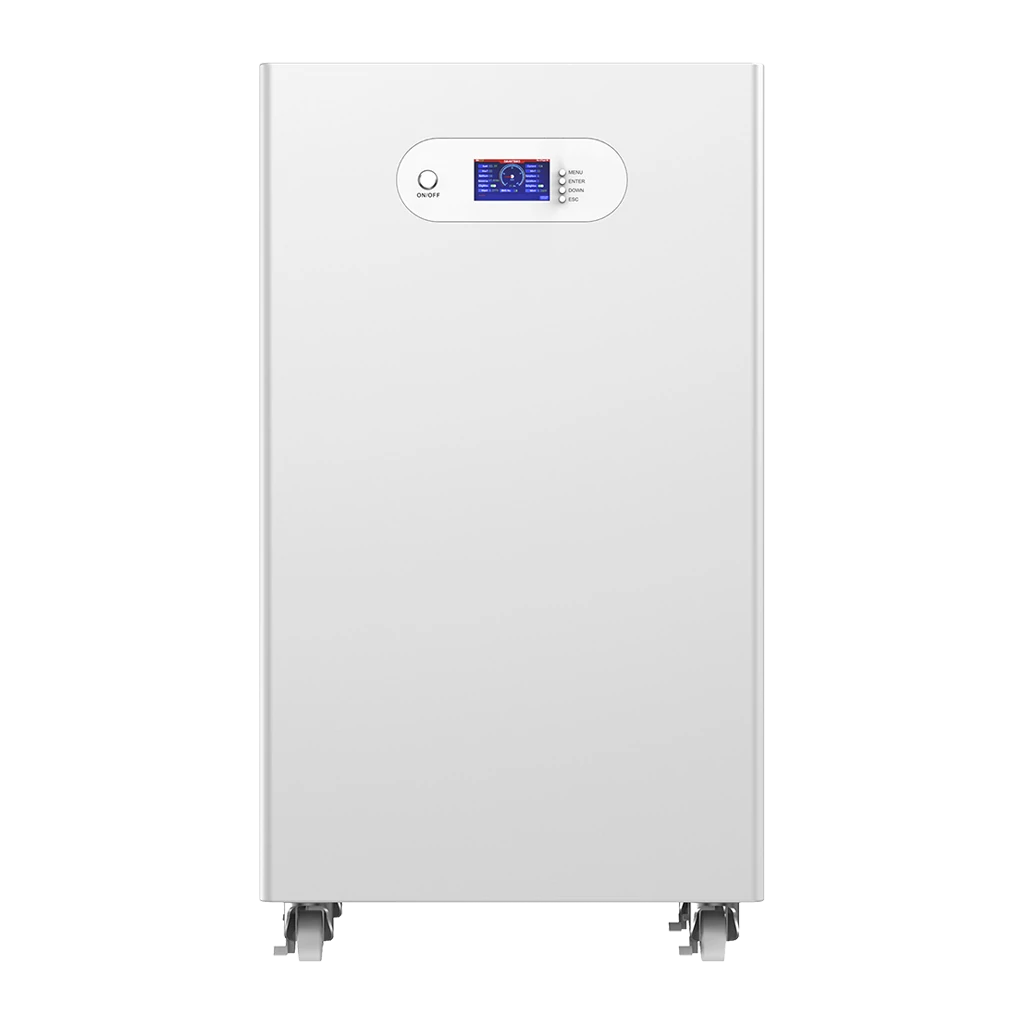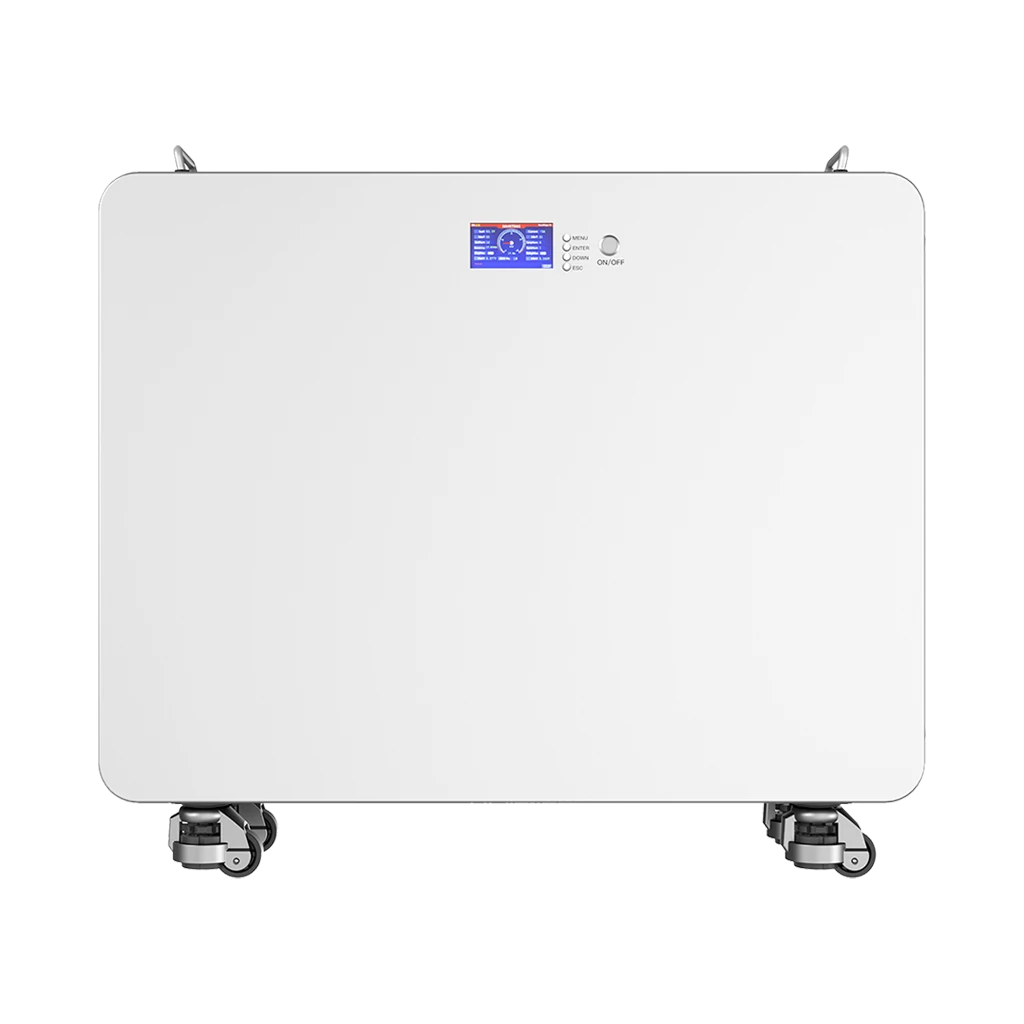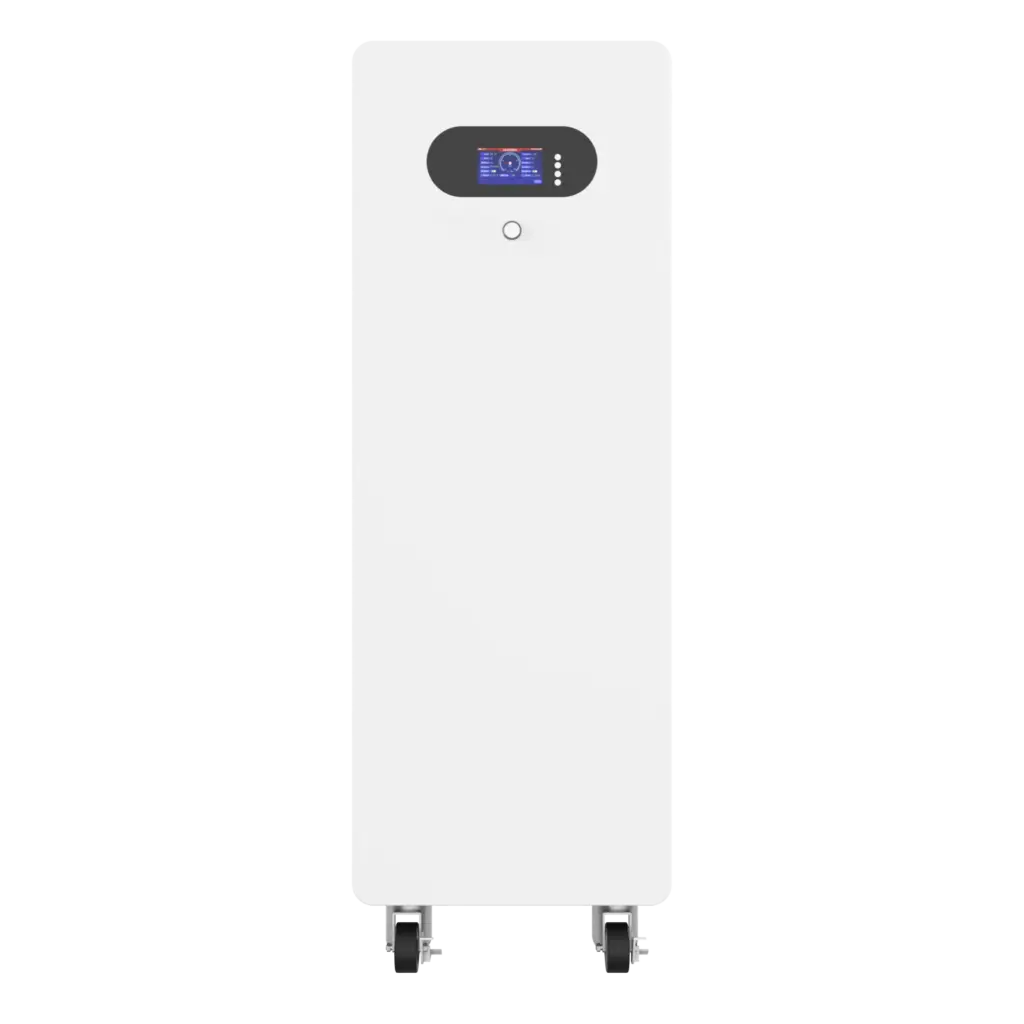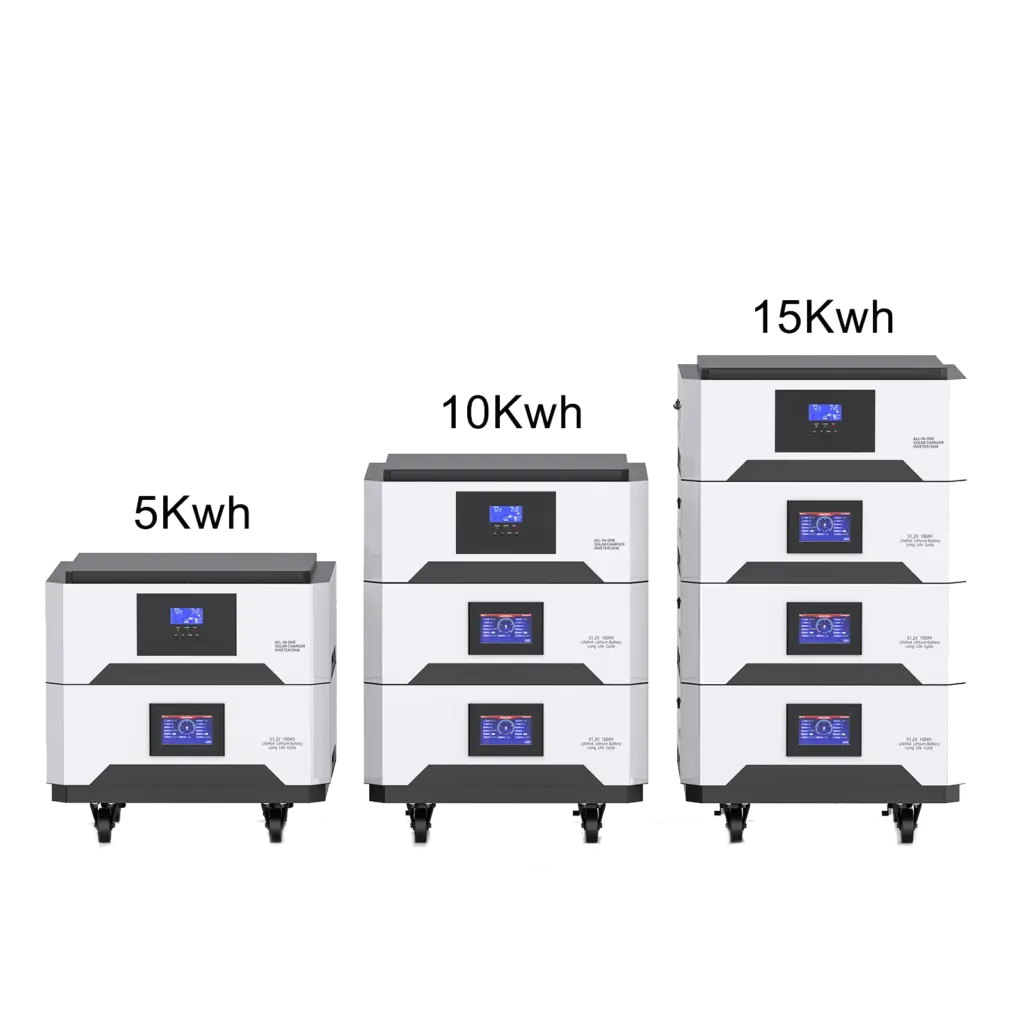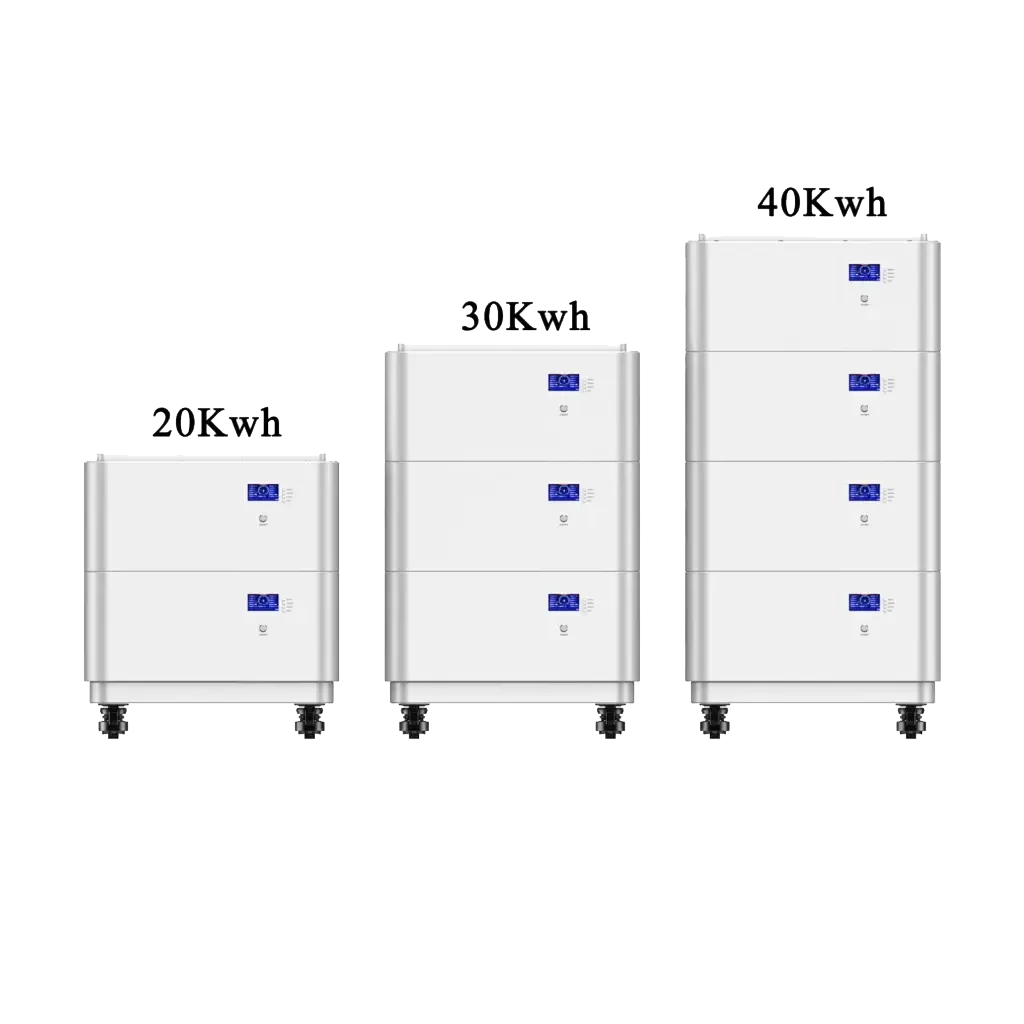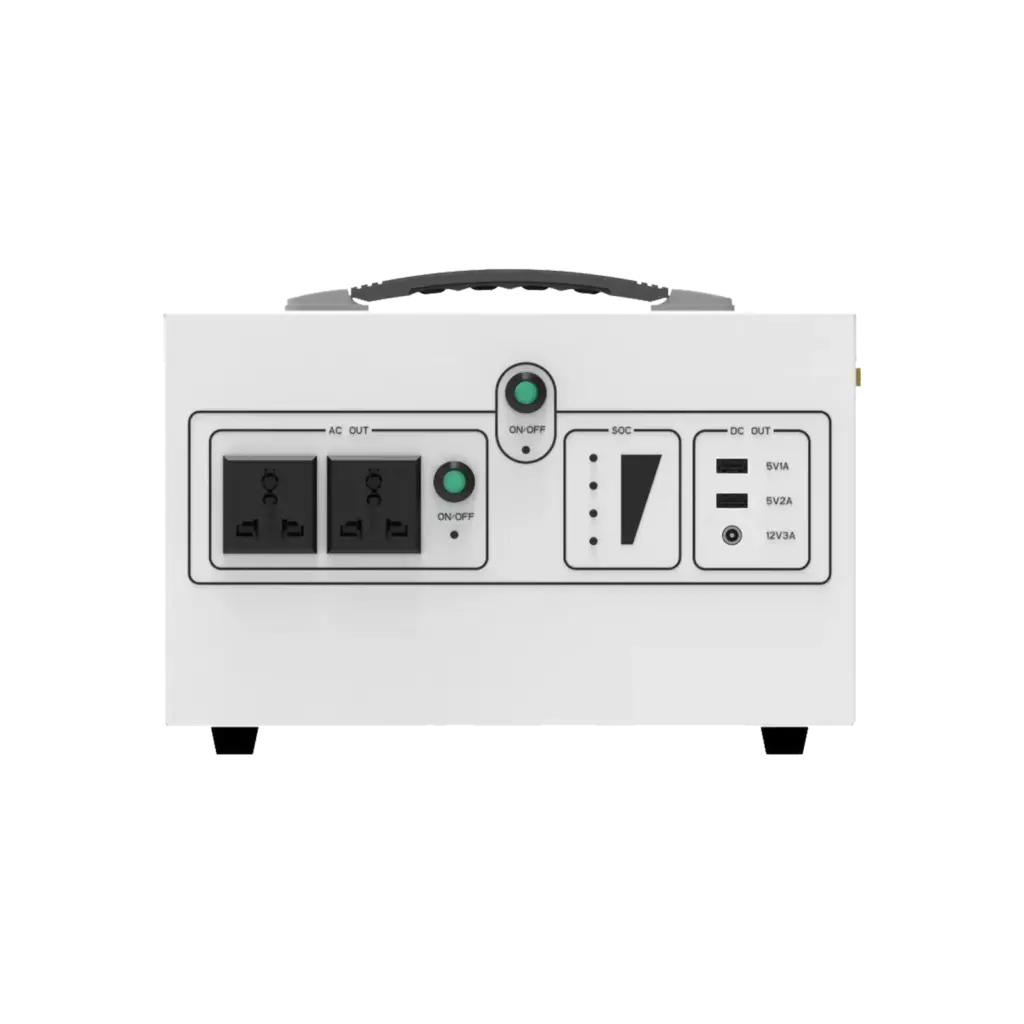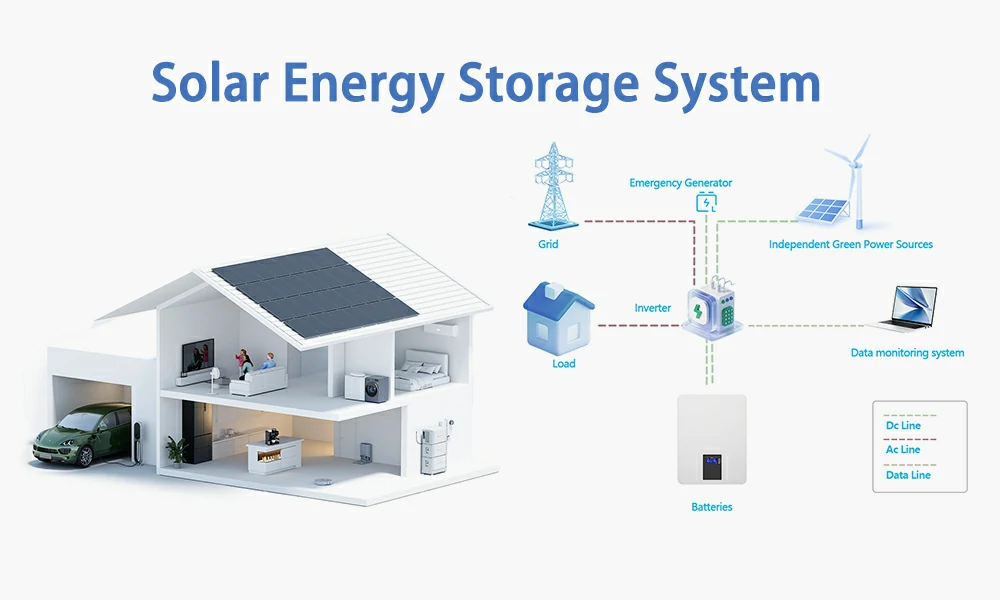

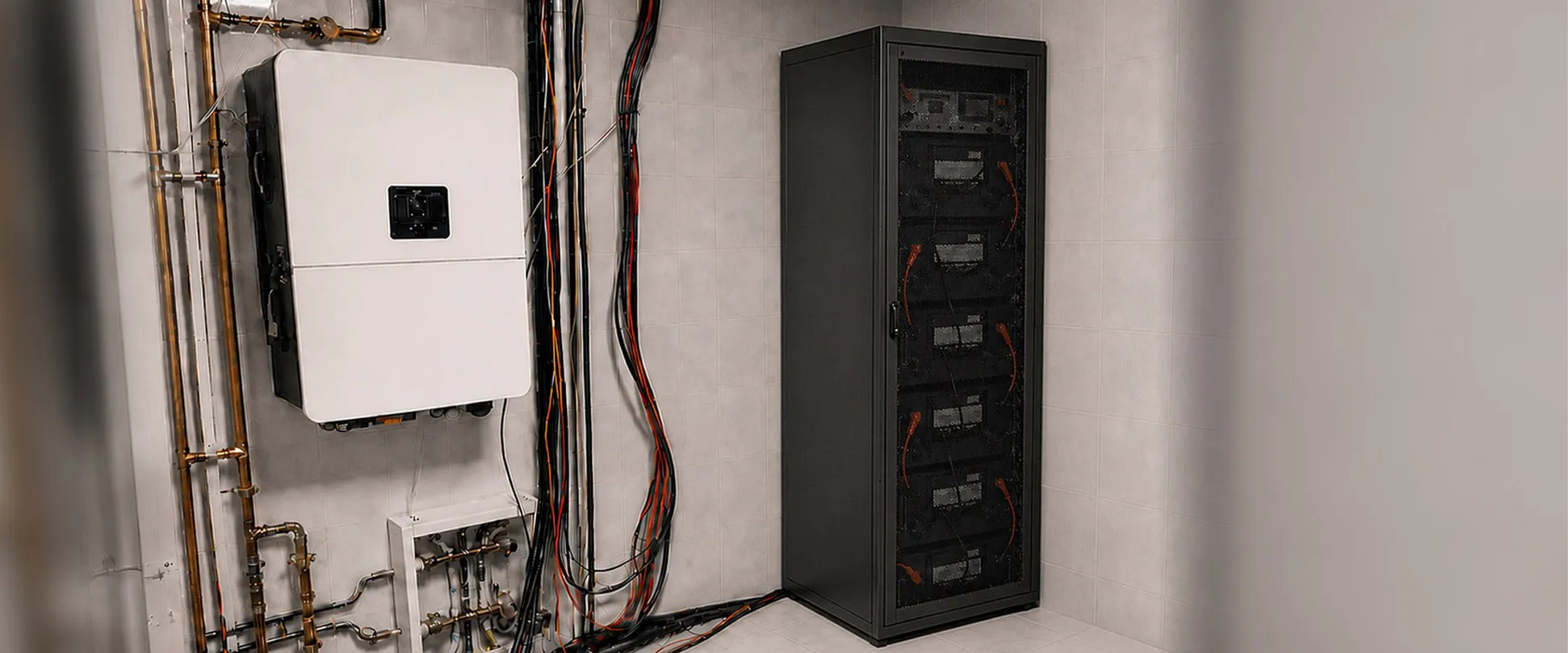
A high voltage lithium battery is a rechargeable battery system that operates at a higher DC voltage than conventional 48V-class storage batteries, commonly around 100V to several hundred volts in residential and commercial energy storage. It can deliver the same power at a lower current, making it attractive for high-power solar 0and commercial energy storage applications.
A high-voltage lithium battery is often a good choice for larger solar energy storage systems, commercial facilities and compatible high-power hybrid inverters.
What Is a High Voltage Lithium Battery?
A high voltage lithium battery is a rechargeable lithium-ion battery pack or system in which multiple cells or modules are typically connected in series to increase DC operating voltage.
| Battery architecture | Typical nominal voltage | Common applications |
|---|---|---|
| Low-voltage lithium battery | 12V–51.2V | Small off-grid systems, home backup, telecom |
| High-voltage residential battery | Approximately 100V–600V | Hybrid solar storage, larger residential ESS |
| High-voltage commercial battery | Several hundred volts to 1,000V or higher | Commercial BESS, industrial storage, microgrids |
Most stationary lithium battery systems use lithium-ion technology, with lithium iron phosphate (LiFePO4 or LFP) being a widely used chemistry.
How Does a High Voltage Lithium Battery Work?
A high voltage lithium battery stores energy through electrochemical reactions and supplies direct current to a compatible inverter or power conversion system. Connecting cells or battery modules in series increases total voltage, while an integrated battery management system monitors cell conditions, controls operating limits and coordinates protection during charging and discharging.
Series and Parallel Battery Connections
In a series connection, voltages add together while the ampere-hour capacity remains the same for a string of identical cells.
In a parallel connection, the ampere-hour capacities add together while the nominal voltage remains unchanged for identical strings.
For example, consider 108 LFP cells with:
- Nominal cell voltage: 3.2V
- Cell capacity: 314Ah
- Configuration: 1P108S
The nominal battery voltage is:
108 × 3.2V = 345.6V
The calculated nominal energy is:
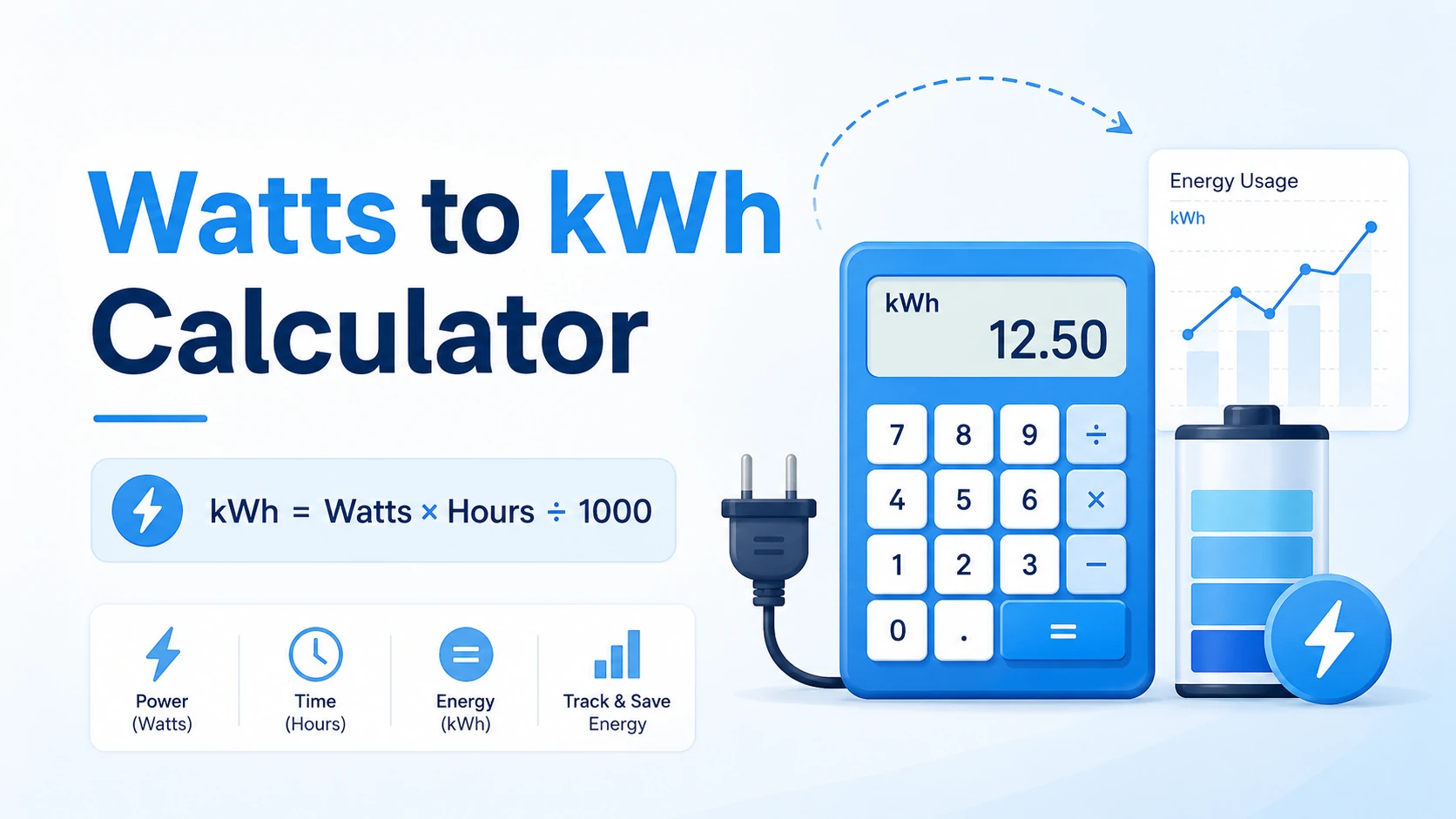
345.6V × 314Ah ÷ 1,000 = 108.5184kWh
This is a theoretical nominal-energy calculation using rated cell values, not a measurement of usable AC energy.
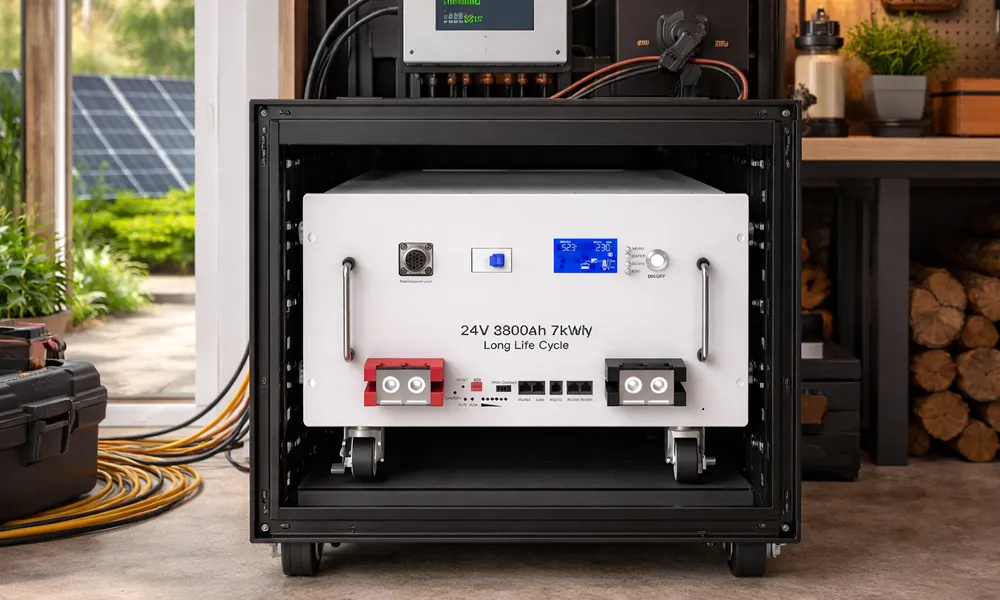
The same electrical principle helps explain the architecture of the Avepower 345.6V 108kWh stacked battery system, which lists six battery modules, a high-voltage control unit and a 345.6V nominal platform.
What Components are Inside a High-Voltage Battery System?
A complete high-voltage energy storage system generally requires more than lithium battery cells.
| Component | Main function |
|---|---|
| Lithium battery cells and modules | Store electrical energy |
| Battery Management System (BMS) | Monitor cell voltages, temperatures, current and operating limits |
| Battery Control Unit (BCU) | Coordinate high-voltage system management and protection |
| Contactors, fuses and disconnects | Provide controlled switching and fault protection |
| Pre-charge and insulation monitoring | Support safe connection and electrical fault detection where required |
| Inverter or Power Conversion System (PCS) | Convert power between DC storage and AC loads or grid |
| Energy Management System (EMS) | Schedule charging, discharging and operating priorities |
| Thermal management and enclosure | Maintain specified environmental and installation conditions |
What Are the Advantages and Disadvantages of High Voltage Lithium Batteries?
The main advantage of a high voltage lithium battery is lower current when delivering the same DC power. This can reduce conductor losses, simplify high-power connections and support certain inverter architectures. The main disadvantages are greater electrical shock and arc hazards, more demanding protection requirements, specialized installation procedures and restrictions on compatibility and expansion.
| Factor | Main advantage or limitation | Practical significance |
|---|---|---|
| Current | Lower at the same power | May reduce conductor heating and cable requirements |
| Power conversion | Can suit higher-voltage PCS designs | Efficiency depends on the complete inverter architecture |
| Scalability | Supports modular high-voltage stacks | Expansion must remain within approved configurations |
| Installation | Requires HV-rated components and procedures | Higher engineering and commissioning demands |
| Compatibility | Specific DC voltage and communication requirements | Not suitable for every existing inverter |
| Safety | Higher DC shock and arcing hazards | Requires appropriate isolation, protection and trained personnel |
| Cost | Potential system-level benefits at higher power | Not necessarily cheaper for small installations |
Can a 108kWh High Voltage Battery Supply 50kW Continuously?
A 108kWh high voltage battery may support a 50kW-class PCS, but its energy rating alone does not establish continuous output capability across the full operating range. Engineers must calculate DC current at the battery’s minimum operating voltage, verify the applicable BMS current limits and account for conversion losses and thermal derating.
A practical example comes from the published specifications of the Avepower 108kWh high-voltage stacked battery.
| Manufacturer-listed parameter | Value |
|---|---|
| Nominal battery energy | 108kWh |
| Nominal DC voltage | 345.6V |
| Operating voltage range | 270–394.2V |
| Recommended charge/discharge current | 50A |
| Maximum continuous charge/discharge current | Up to 150A |
| Communication | CAN / RS485 |
At the nominal voltage, using the listed maximum continuous current:
345.6V × 150A ÷ 1,000 = 51.84kW DC
At the minimum listed voltage:
270V × 150A ÷ 1,000 = 40.5kW DC
To transfer 50kW of DC power at 270V, the required current would instead be:
50,000W ÷ 270V = 185.2A
That exceeds the listed 150A maximum continuous-current value.
Engineering conclusion: The nominal-voltage calculation suggests approximately 51.8kW of DC power at 150A, but the same current limit implies only 40.5kW at the minimum specified voltage. Therefore, uninterrupted 50kW DC operation across the entire voltage range cannot be established from these published parameters.
Where Are High Voltage Lithium Batteries Used?
High voltage lithium batteries are commonly used in larger solar-plus-storage installations, compatible residential hybrid systems, commercial buildings, industrial facilities and microgrids. They are especially relevant where high DC power, structured battery cabinets or integration with higher-voltage power conversion equipment is required. Their suitability depends on the existing electrical architecture rather than application size alone.
Residential Solar Energy Storage
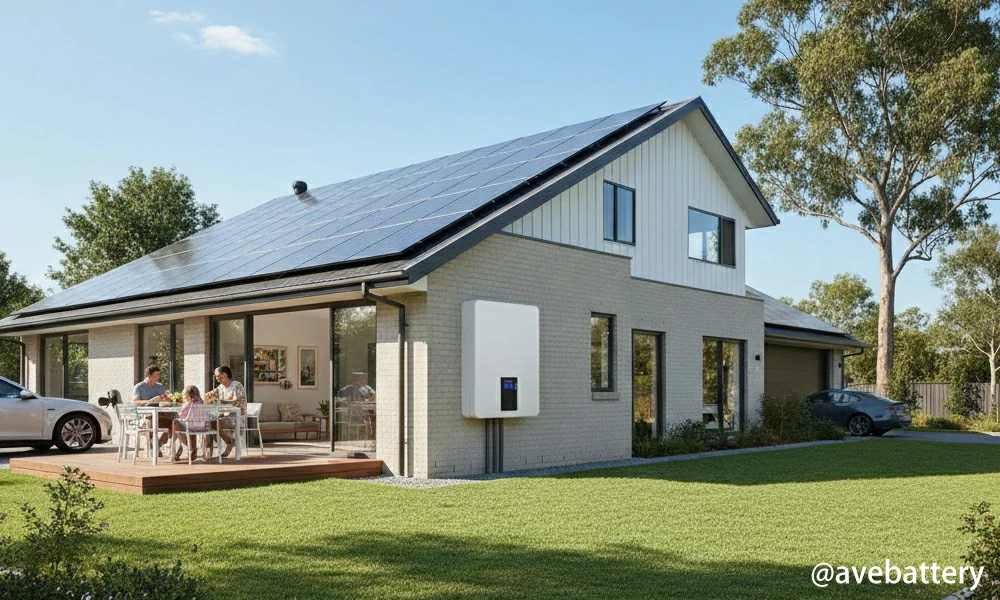
A high-voltage battery can be suitable for a home equipped with a compatible high-voltage hybrid inverter, particularly where backup power requirements or simultaneous loads are substantial.
Potential applications include solar self-consumption, time-of-use load shifting and backup power.
However, homeowners with existing 48V off-grid or hybrid inverters should not assume that replacing the battery with a high-voltage model will provide a straightforward upgrade. The inverter’s battery input and system configuration must support the change.
Commercial and Industrial Energy Storage
High-voltage battery systems are often relevant for businesses that need larger energy capacities and higher discharge power.
Applications include:
- Solar self-consumption and energy shifting
- Peak demand management
- Backup power for selected critical loads
- Renewable-energy integration
- Microgrid operation and energy management
- Commercial EV charging infrastructure support, where properly engineered
For peak shaving, the important inputs include measured demand intervals, peak kW, discharge duration, tariff structure and the site’s control strategy.
For backup power, the system must also have an appropriate inverter or PCS capable of supplying the required loads during an outage.
High Voltage Lithium Battery Projects
Example 1: 522.5kWh high-voltage ESS in Lithuania
Avepower publishes a Lithuania high-voltage energy storage project with the following specifications:
| Parameter | Published specification |
|---|---|
| Nominal energy | 522.496kWh |
| Nominal voltage | 832V DC |
| Nominal capacity | 628Ah |
| Configuration | Two parallel battery clusters |
| Battery cabinets | Four 42U cabinets |
| Communication | CAN / RS485 |
The capacity relationship can be independently checked from the published electrical values:
832V × 628Ah ÷ 1,000 = 522.496kWh
The result matches the manufacturer’s published nominal energy figure.
This arithmetic supports internal consistency of the published energy specification. It does not independently verify actual delivered energy, cycle life or on-site system efficiency.
The project is relevant to commercial and industrial applications where a larger battery system is integrated through a controlled high-voltage architecture.
Example 2: 108.5kWh high-voltage ESS in the Netherlands
A separate Netherlands project published by Avepower describes a compact commercial energy storage configuration.
Its published details include:
- Nominal energy: 108.5184kWh
- Nominal voltage: 345.6V DC
- Battery architecture: 1P108S
- Installation structure: One 42U battery cabinet
- Application: Commercial and industrial energy storage
This example illustrates how a smaller high-voltage cabinet can address a different space and system integration requirement.
The Lithuania and Netherlands examples are manufacturer-published project references. Their specifications should not be interpreted as independently audited field test results.
Buyers comparing similar solutions can review Avepower’s high-voltage battery storage solutions and request the detailed electrical configuration appropriate to their own projects.
Get a High-Voltage Battery Solution for Your Project
Avepower provides project-based high-voltage LiFePO4 energy storage solutions, including battery configuration, cabinet design, BMS and communication integration, and OEM/ODM options.
To request a project-specific recommendation, provide your country, application, required kWh, peak and continuous kW, desired backup duration, inverter or PCS model, installation environment and expected project quantity.
Explore Avepower High-Voltage Battery Solutions
The proposed configuration should then be checked against its full operating limits, applicable safety requirements and available model-specific technical documentation before procurement.
FAQ
A 48V or 51.2V lithium battery is generally classified as a low-voltage battery in the stationary solar storage market. Formal electrical safety classifications use different definitions and must be assessed separately.
Not automatically. Charging power depends on permitted voltage, current, cell acceptance rate, temperature and charger or PCS capability. Higher voltage can enable substantial charging power at lower current, but the system’s approved charging limits determine actual performance.
Voltage alone does not determine battery life. Chemistry, temperature, depth of discharge, charge/discharge rate, cell quality and operating conditions have a greater influence. Compare the manufacturer’s warranted energy retention and throughput under specified test conditions.
Only when the particular product is rated and approved for the intended outdoor conditions. Check ingress protection, operating temperature, cooling, ventilation, installation clearances, environmental exposure and local requirements. An IP20 indoor battery cabinet should not be assumed suitable for unprotected outdoor installation.