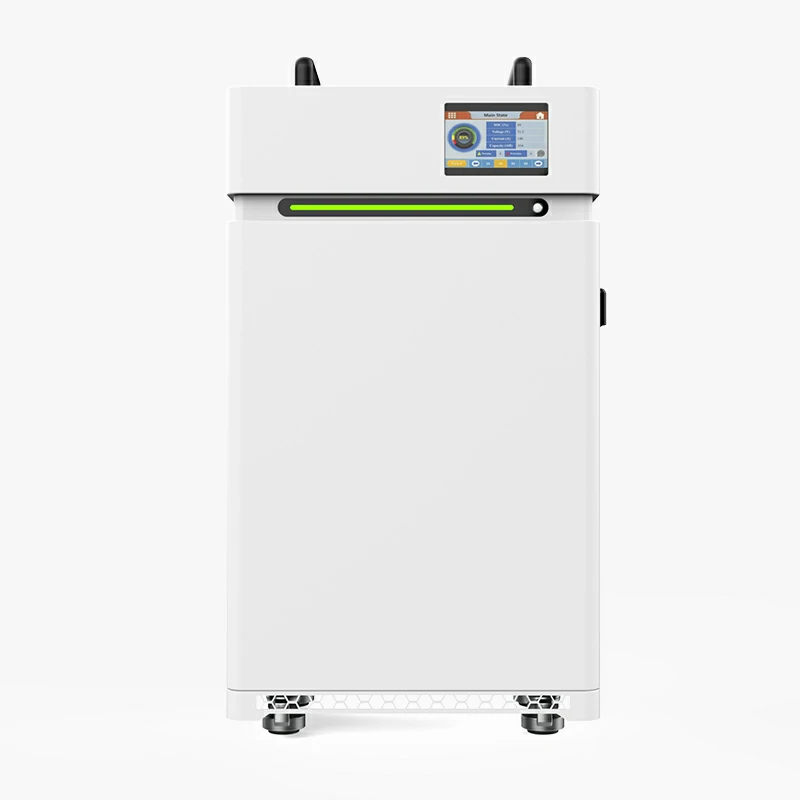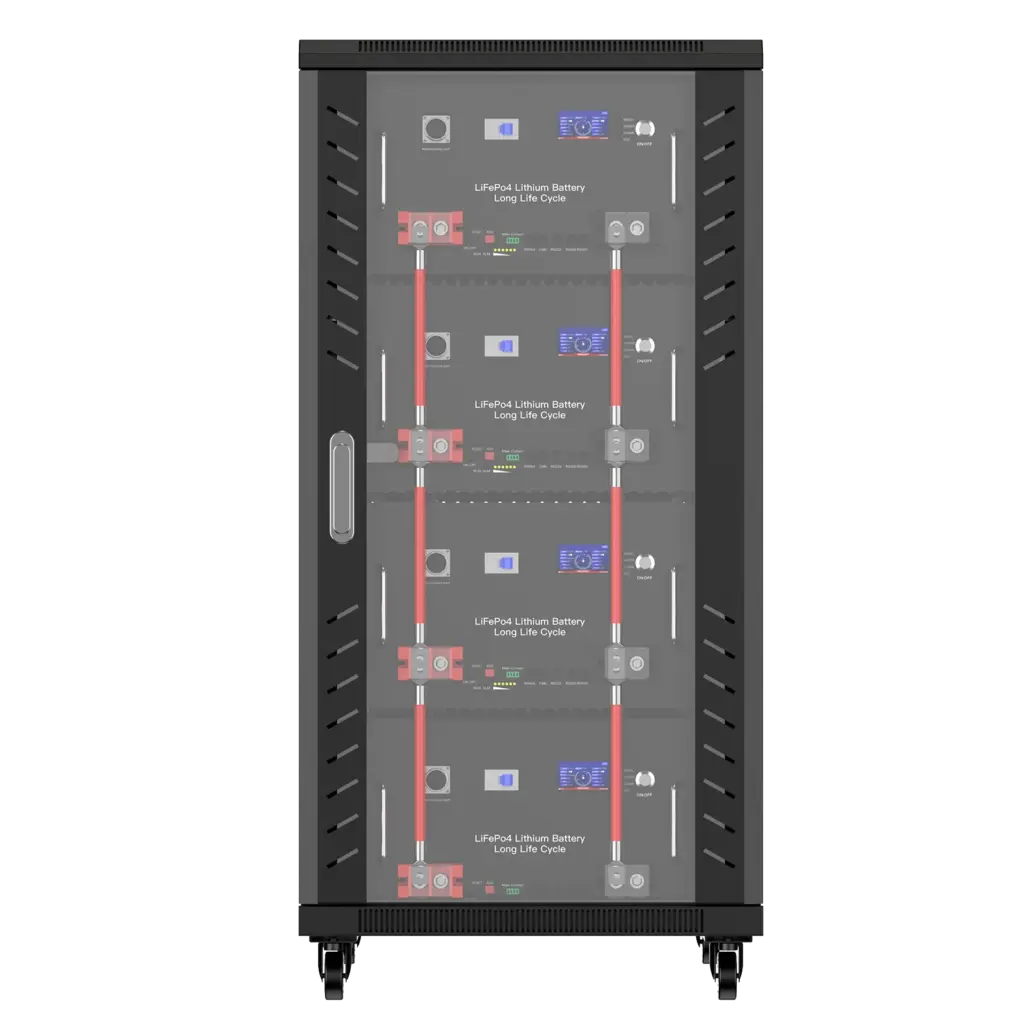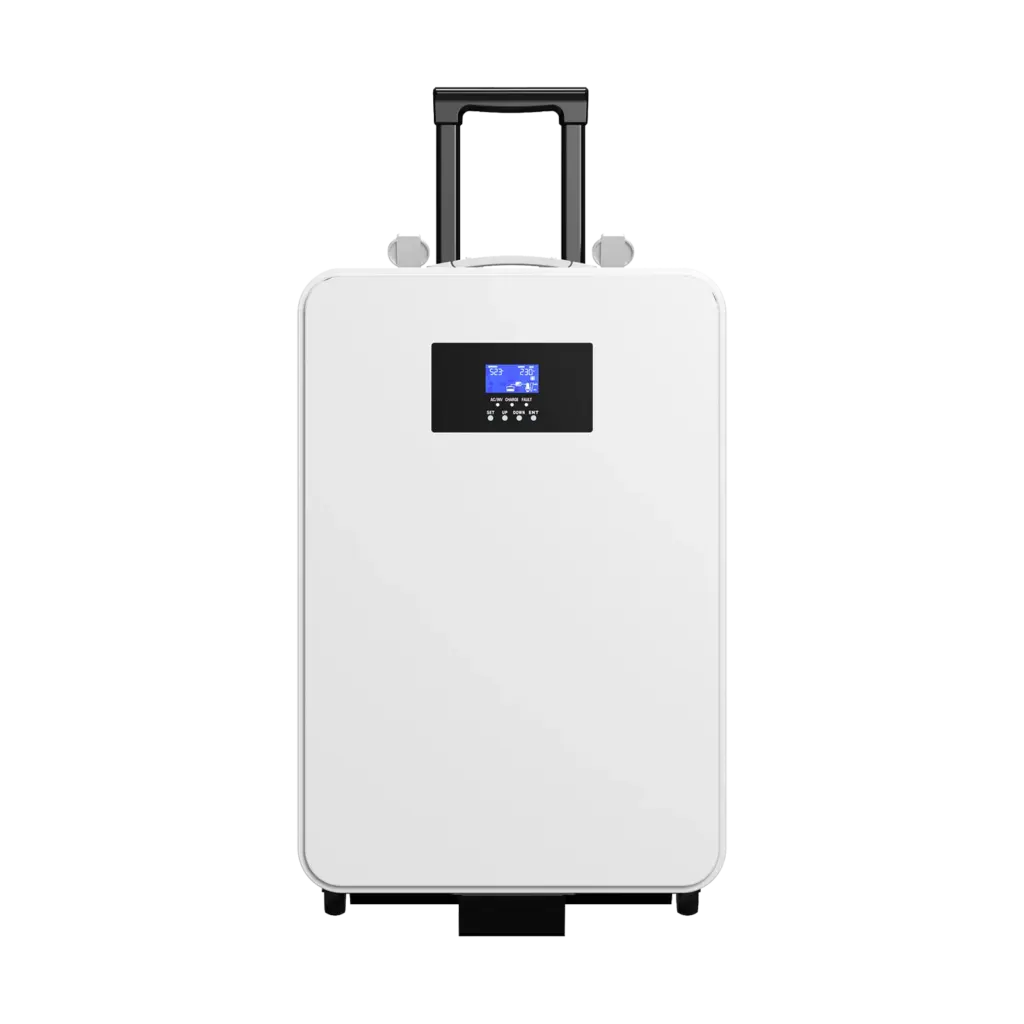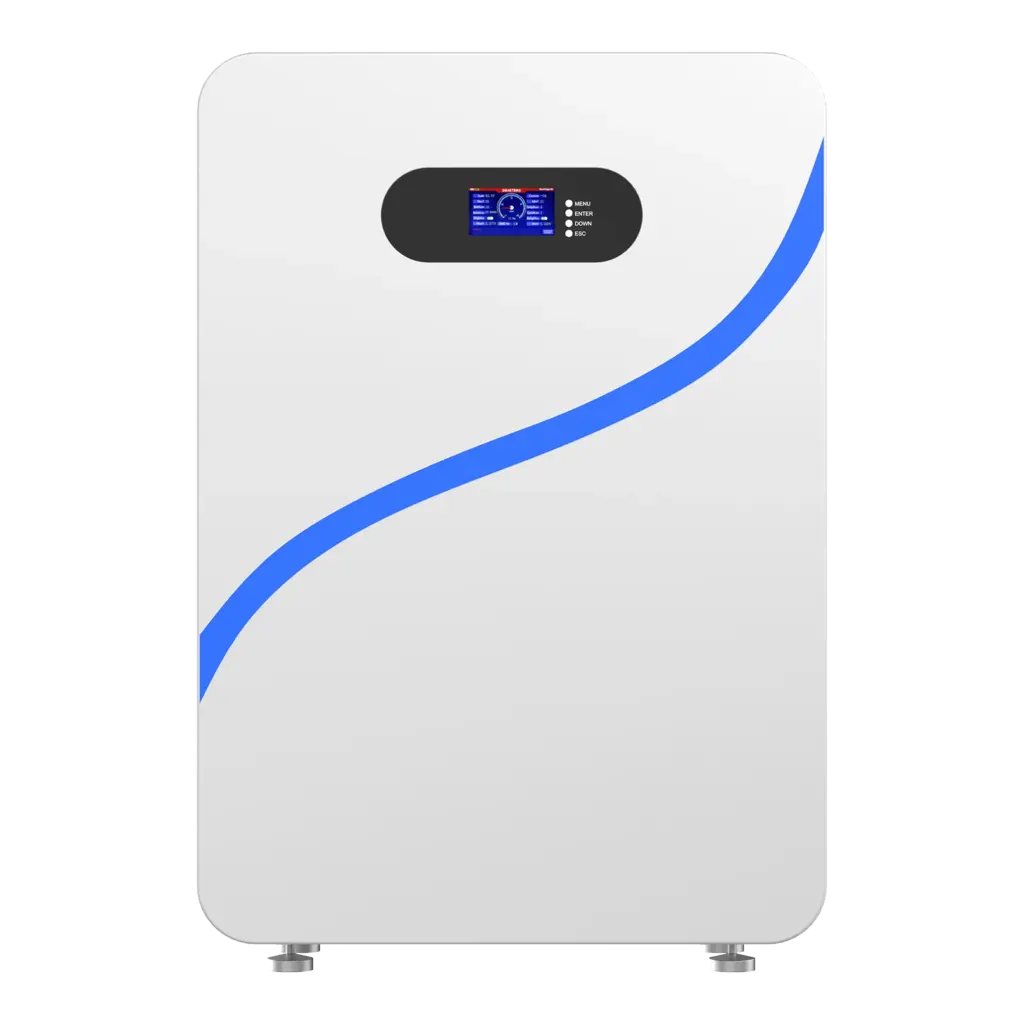

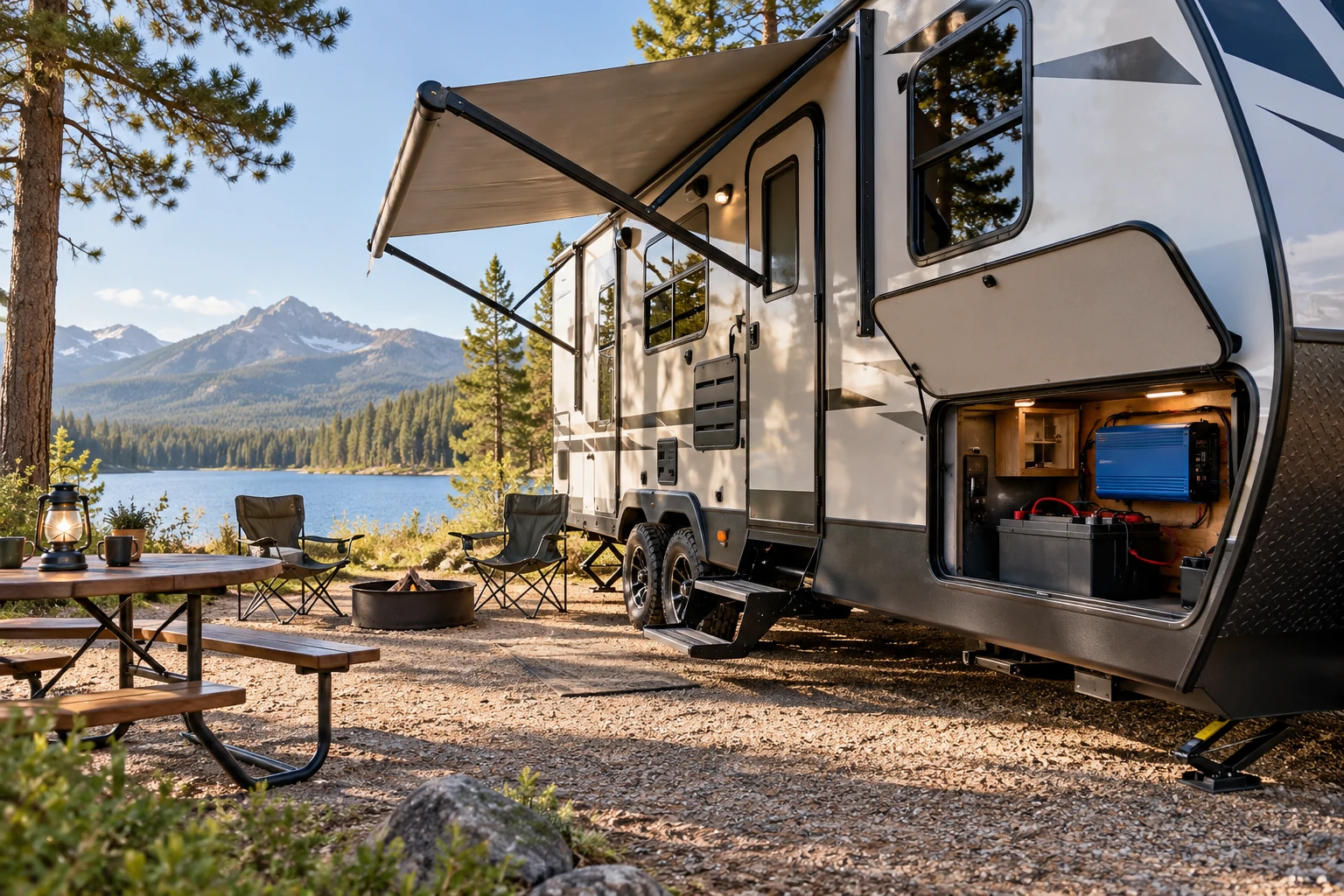
An inverter in an RV converts DC electricity from the house battery into AC electricity, allowing compatible household appliances and selected wall outlets to work without shore power or a generator. In a typical North American RV, it converts 12V DC battery power into 120V AC. However, an inverter does not create electricity or increase battery capacity. Its usefulness depends on appliance wattage, battery storage, inverter efficiency, and the way your RV is wired.
For example, an inverter can power a laptop charger, television, or microwave while camping off-grid—but a 2,000W inverter does not guarantee that your battery can supply 2,000W or that every RV outlet will work.
This guide explains what an RV inverter does, what size to choose, how to calculate battery runtime, and when an upgrade makes financial and practical sense.
What Does an Inverter Actually Do in an RV?
An RV inverter converts low-voltage direct current (DC) from the house battery into alternating current (AC) required by household-style devices. It makes AC electricity available without a campground hookup, provided the battery and inverter can support the load. It does not recharge the battery unless it is part of a combined inverter-charger system.
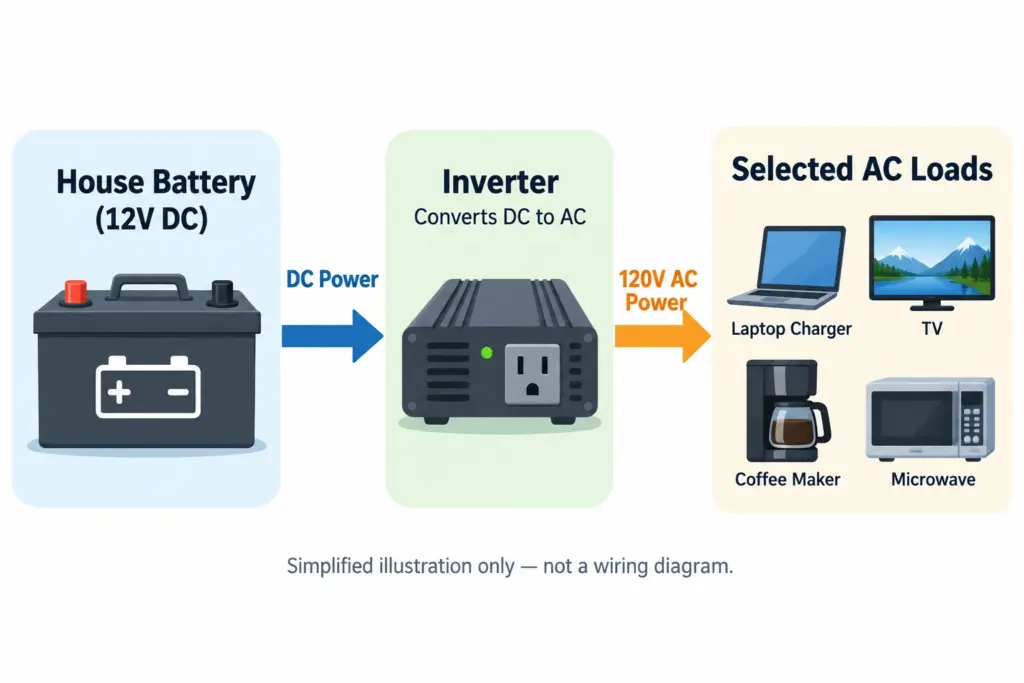
A simplified RV power path looks like this:
House Battery (12V DC) → Inverter → 120V AC Appliances or Selected Outlets
A typical RV has two electrical systems:
- 12V DC system: Powers equipment such as interior LED lights, water pumps, ventilation fans, and compatible 12V refrigerators.
- 120V AC system: Powers household-style outlets and equipment such as microwaves, coffee makers, and residential refrigerators.
The inverter connects these two systems by making battery energy usable for AC appliances.
What Is the Difference Between an RV Inverter and a Converter?
An RV inverter and converter perform different electrical functions. The inverter changes battery DC into AC for appliances, while the converter changes shore-power AC into DC for the RV’s low-voltage equipment and battery charging. A combined inverter-charger can perform both functions, but a standard standalone inverter cannot charge the battery from an AC supply.
| Equipment | Electrical conversion | Main function | When it is useful |
|---|---|---|---|
| RV inverter | DC → AC | Powers compatible AC appliances from batteries | Off-grid camping |
| RV converter | AC → DC | Powers DC equipment and charges batteries | Connected to shore power or a generator |
| Inverter-charger | DC ↔ AC, using separate operating modes | Combines inverter and AC battery-charging functions | Integrated RV power systems |
| Solar charge controller | Solar DC → regulated battery-charging DC | Charges batteries from solar panels | RV solar installations |
Example: When your RV is connected to campground electricity, a converter or compatible charger can recharge its house batteries. When disconnected, the inverter uses stored battery energy to operate AC appliances.
What Appliances Can an RV Inverter Power?
| AC appliance | Example running load | Main consideration |
|---|---|---|
| Laptop charger | 65W | Low energy demand |
| Television | 80W | Suitable for smaller inverters |
| Wi-Fi router | 20W | Long operating hours can increase daily energy use |
| Coffee maker | 1,000W | High DC current while heating |
| Microwave | 1,500W AC input | Cooking-output wattage may be lower than actual electrical input |
| RV air conditioner | 1,600W running | Compressor startup surge and substantial battery demand |
Can an RV inverter run an air conditioner?
Yes, if the inverter, battery bank, BMS, wiring, and startup-surge capacity are designed for the air conditioner’s electrical requirements. However, air conditioning can consume several kilowatt-hours over an extended period, making it impractical for many small battery systems.
If your main goal is to operate LED lights, USB chargers, or a 12V compressor refrigerator, you may not need an inverter for those devices at all.
RV Inverter Size Comparison
| Inverter rating | Example intended load | Advantages | Main limitation | Best suited for |
|---|---|---|---|---|
| 300–500W | 100–250W of electronics | Compact and potentially lower overhead | Cannot support most high-power kitchen appliances | Basic camping and work devices |
| 1,000W | 400–700W combined AC load | More appliance flexibility | Some heating and motor loads exceed its capacity | Moderate off-grid use |
| 2,000W | 800–1,500W combined AC load | Can support selected kitchen appliances | High DC current, larger battery requirements | Cooking and more demanding RV use |
| 3,000W | 1,500–2,300W combined AC load | Supports larger loads with suitable design | Heavy wiring, surge and battery requirements | Advanced RV electrical systems |
How Long Will an RV Inverter Run on a Battery?
Battery Runtime Formula
Nominal battery energy (Wh) = Battery voltage (V) × Capacity (Ah)
Usable battery energy (Wh) = Nominal energy × Usable discharge fraction
For an illustrative model that treats inverter idle overhead separately from conversion losses:
Runtime (hours) ≈ Usable battery energy (Wh) ÷ [(AC load in W ÷ inverter efficiency) + additional inverter overhead in W]
If a measured efficiency value already includes the inverter’s operating overhead at that load, do not add the same consumption again.
Example: 12.8V 100Ah LiFePO4 Battery
Assume:
| Parameter | Assumption |
|---|---|
| Battery voltage | 12.8V nominal |
| Battery capacity | 100Ah |
| Nominal energy | 1,280Wh |
| Planned usable discharge | 80% |
| Usable battery energy | 1,024Wh |
| Inverter conversion efficiency | 90% |
| Additional inverter overhead | 10W |
| Solar or other charging | None |
| Other RV electrical loads | Excluded |
The 80% usable-discharge limit is a planning assumption, not a universal LiFePO4 requirement. The 90% conversion efficiency and 10W overhead are also illustrative.
At a continuous 100W AC load:
1,024 ÷ [(100 ÷ 0.90) + 10] ≈ 8.5 hours
At a continuous 600W AC load:
1,024 ÷ [(600 ÷ 0.90) + 10] ≈ 1.5 hours
| Continuous AC load | Estimated runtime, 100Ah battery | Estimated runtime, 200Ah battery |
|---|---|---|
| 100W | 8.5 hours | 16.9 hours |
| 600W | 1.5 hours | 3.0 hours |
For additional calculations, use Avepower’s Battery Amp-Hour Calculator.
Don’t Forget Inverter Standby Consumption
An inverter may draw electricity even when no AC appliance is operating.
For example, a hypothetical 10W continuous idle draw consumes:
- 10W × 24 hours = 240Wh per day
- 240Wh × 365 days = 87.6kWh per year
That daily idle energy represents almost 19% of the nominal capacity of a 1,280Wh battery.
Actual idle power varies by inverter and operating mode. Some models provide a low-power search or sleep mode, but its compatibility with very small intermittent loads must be checked.
For long-duration off-grid use, standby consumption can matter as much as peak efficiency.
Is a Pure Sine Wave Inverter Better for an RV?
A pure sine wave inverter is generally the better choice for an RV that powers different types of household electronics, motor-driven equipment, and modern appliances.
| Feature | Pure sine wave | Modified sine wave |
|---|---|---|
| AC waveform | Smooth sinusoidal output | Stepped approximation |
| Modern electronics | Broad compatibility when correctly rated | Compatibility requires checking |
| Motor-driven appliances | Generally preferred | May cause noise, heating, or poor performance |
| Purchase price | Often higher | Often lower |
| Best application | Mixed RV appliances | Limited, confirmed-compatible loads |
Is an RV Inverter Worth Buying?
An RV inverter is worth considering if you frequently camp without electrical hookups and need to operate 120V AC appliances from your house batteries. It may not be worth the purchase and installation cost if you normally use shore power, already have appropriate DC-powered devices, or lack sufficient battery capacity.
| RV usage | Is an inverter worthwhile? | Reason |
|---|---|---|
| Campgrounds with shore power almost every night | Often unnecessary | AC electricity is already available |
| Charging phones and powering 12V appliances | May be unnecessary | Appropriate DC chargers avoid an extra conversion |
| Laptop, TV, and office use while boondocking | Often worthwhile | Modest AC power demand |
| Occasional microwave or coffee maker use | Conditional | Requires suitable battery current and inverter sizing |
| Regular off-grid air conditioning | Requires a full system assessment | High running energy and startup surge |
| Full-time off-grid RV living | Potentially valuable | Often benefits from integrated charging, switching, and monitoring |
How Much Does an RV Inverter Cost in the United States?
| Example product | Listed price (USD) | Included in quoted price |
|---|---|---|
| 1,000W 12V Pure Sine Wave Inverter | $175.99 | Inverter-only product variant |
| 2,000W 12V Pure Sine Wave Inverter | $285.99 | Inverter-only product variant |
| 1,000W Inverter with Transfer Switch | $269.99 | Integrated transfer-switch feature |
| 2,000W Inverter with Transfer Switch | $364.99 | Integrated transfer-switch feature |
Budget recommendation: If your goal is only to power a laptop and a television, calculate the real combined load before purchasing a 2,000W or 3,000W inverter. You may achieve the same function with a smaller, less complicated system.
What Is the Best RV Inverter Setup for Your Needs?
The best RV inverter system matches actual appliance demand with sufficient battery energy, safe discharge current, suitable AC output, and available charging sources. A larger inverter alone cannot extend off-grid operation. Start with the devices you need to power, then size the inverter, battery bank, and charging equipment as one system.
A practical purchase checklist is:
- Record the simultaneous AC load in watts.
- Identify any compressor or motor startup surges.
- Calculate daily energy demand in Wh or kWh.
- Select an inverter with suitable continuous and surge ratings.
- Confirm battery voltage, usable capacity, and BMS discharge ratings.
- Check solar, alternator, shore-power, and generator charging compatibility.
- Obtain an installation review and a complete cost quotation.
Get Help Matching an RV Inverter With a Battery System
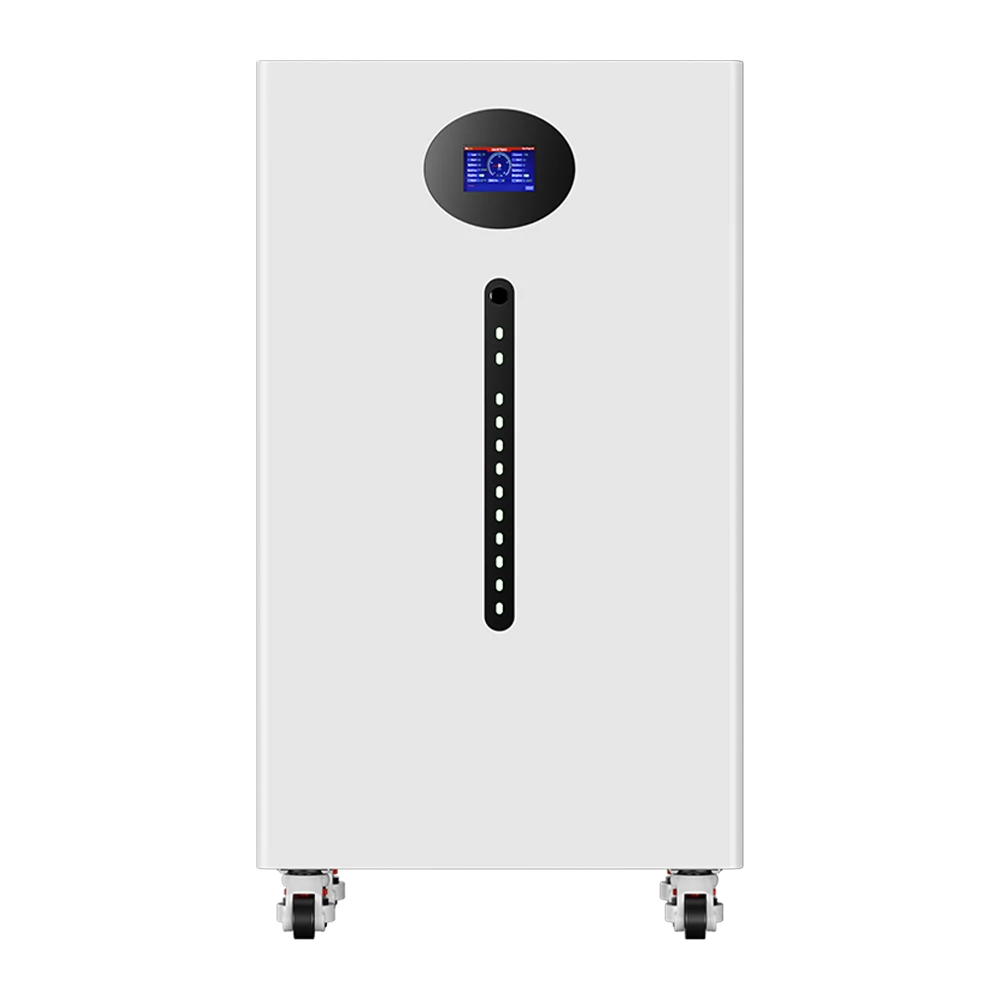
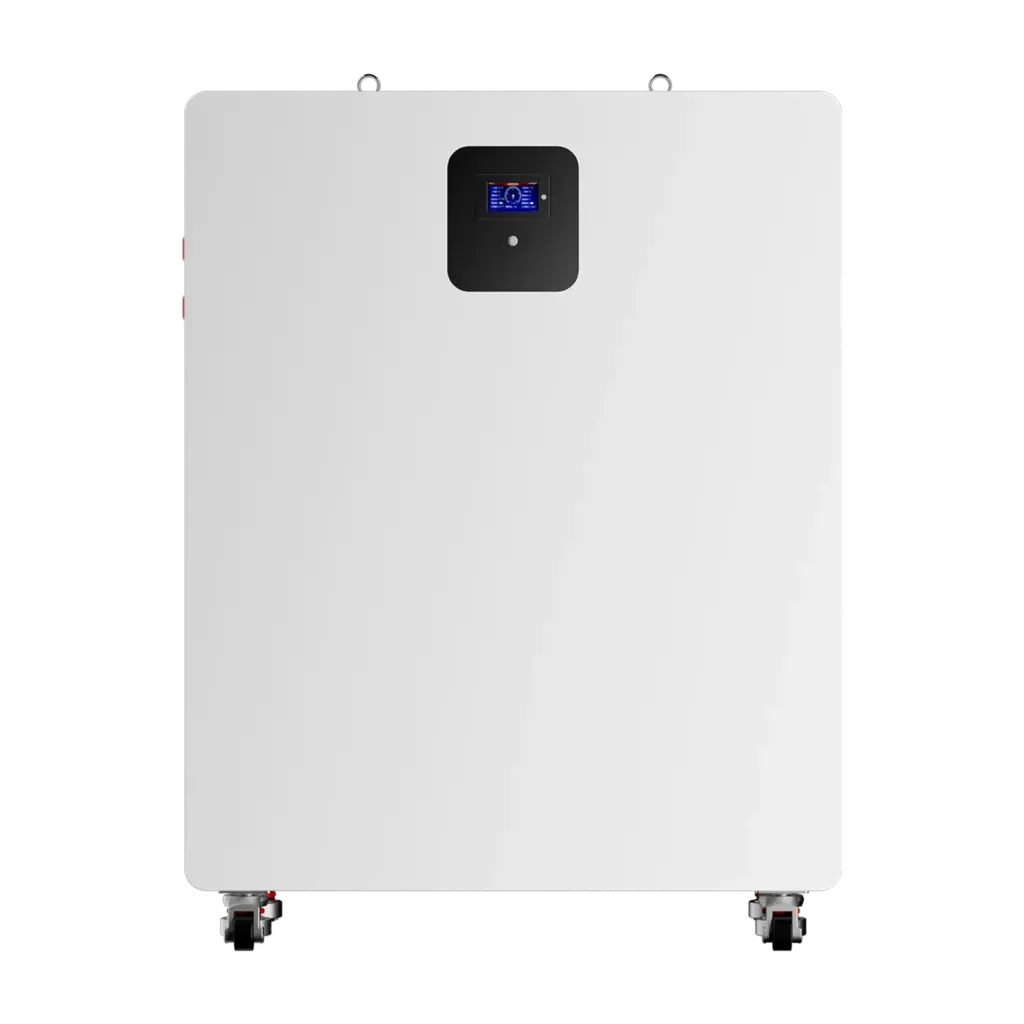
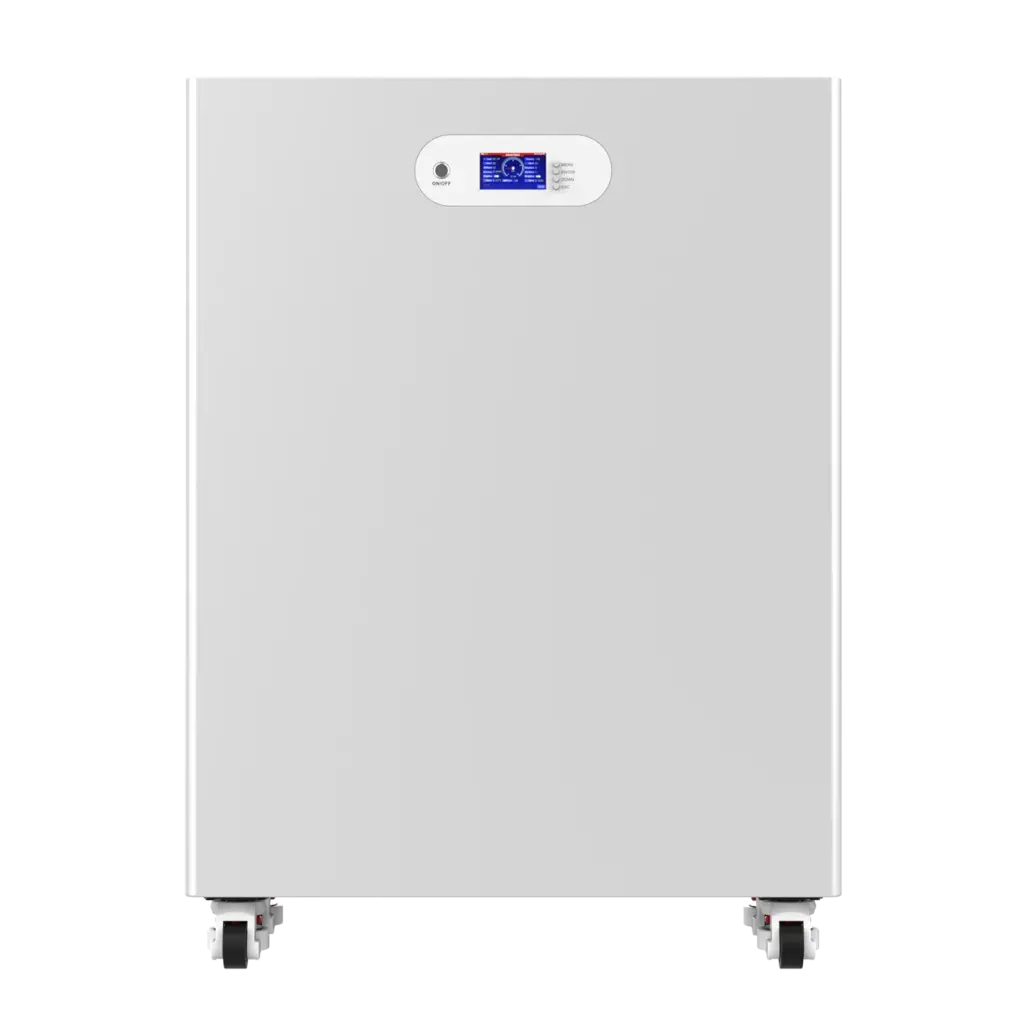
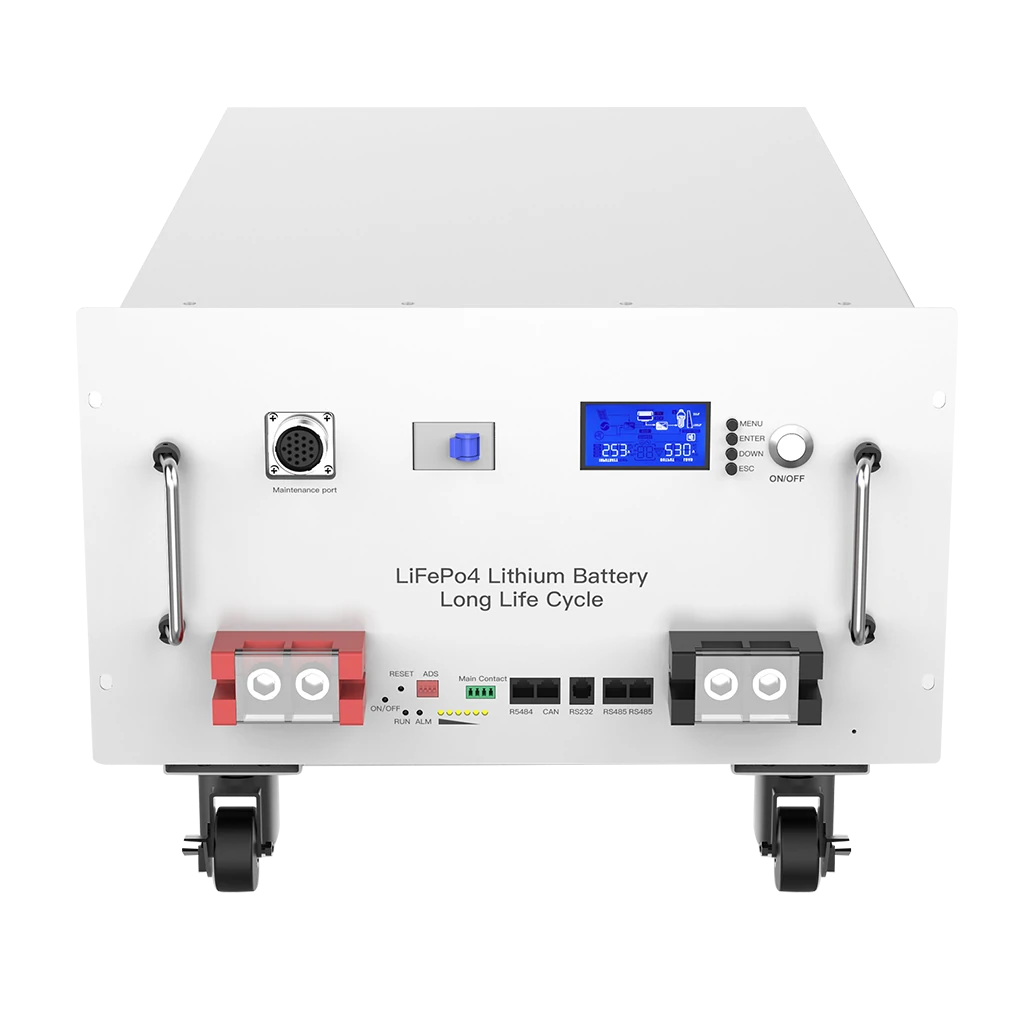
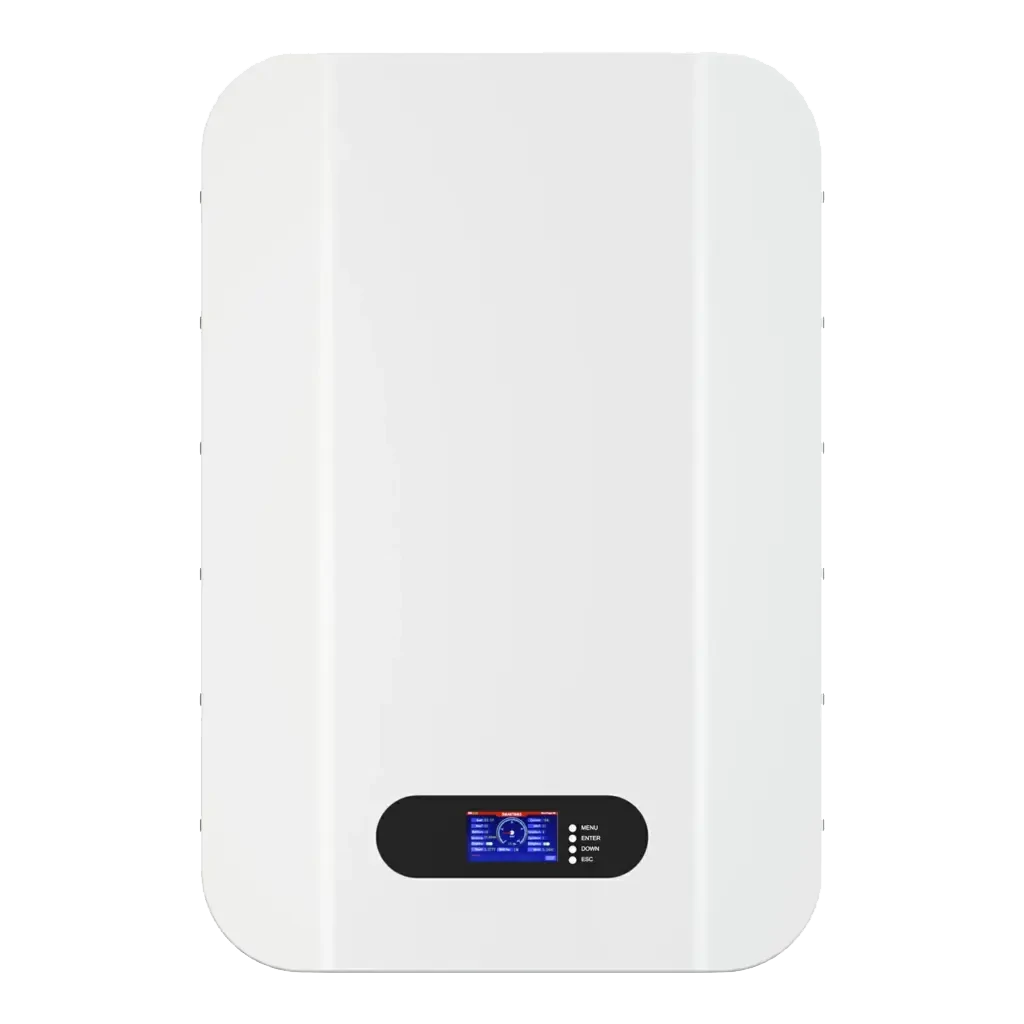
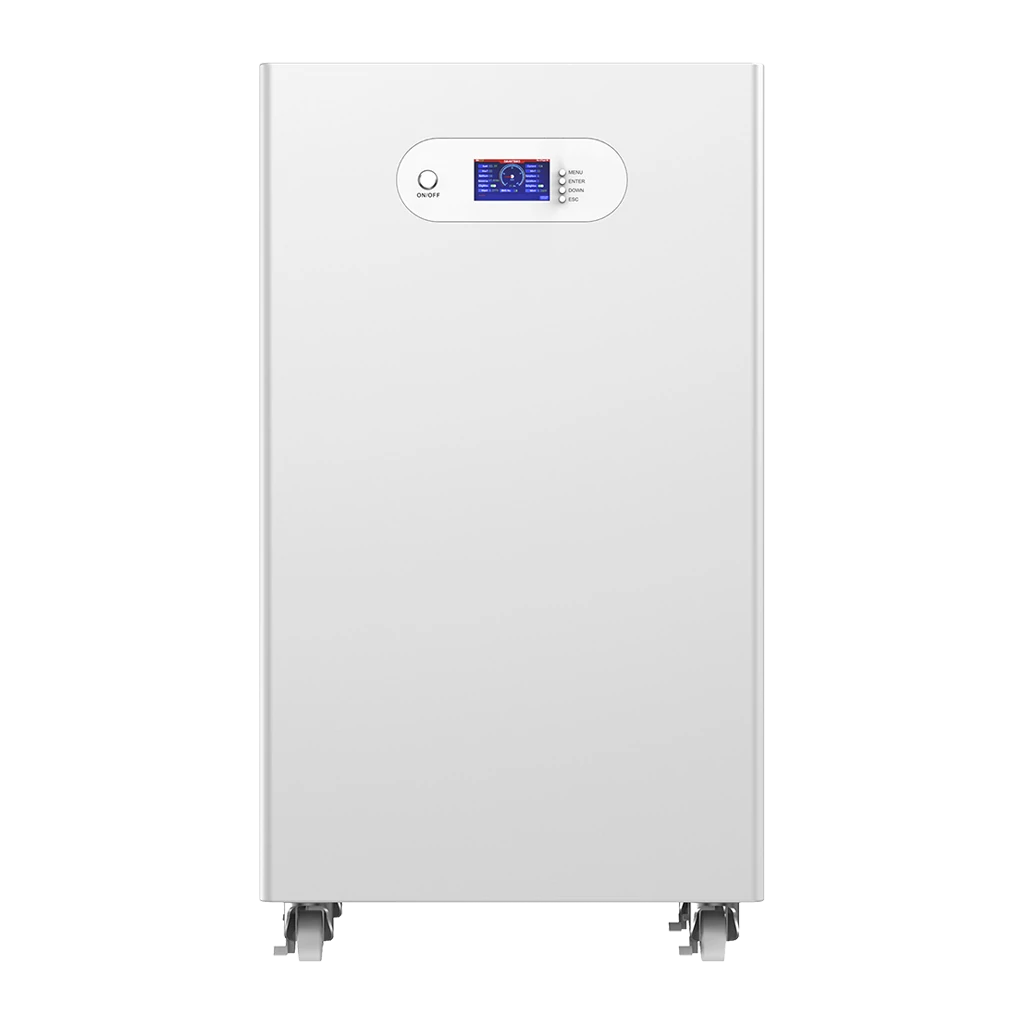
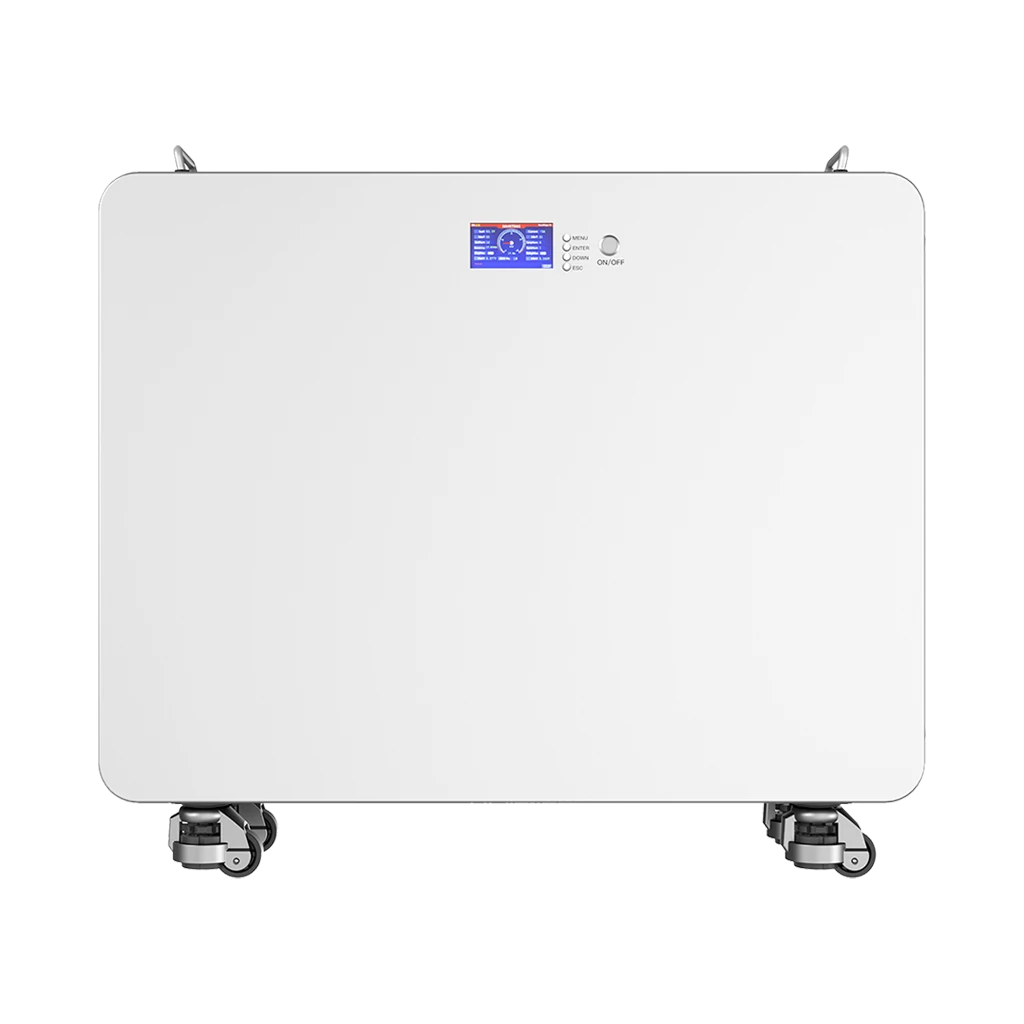
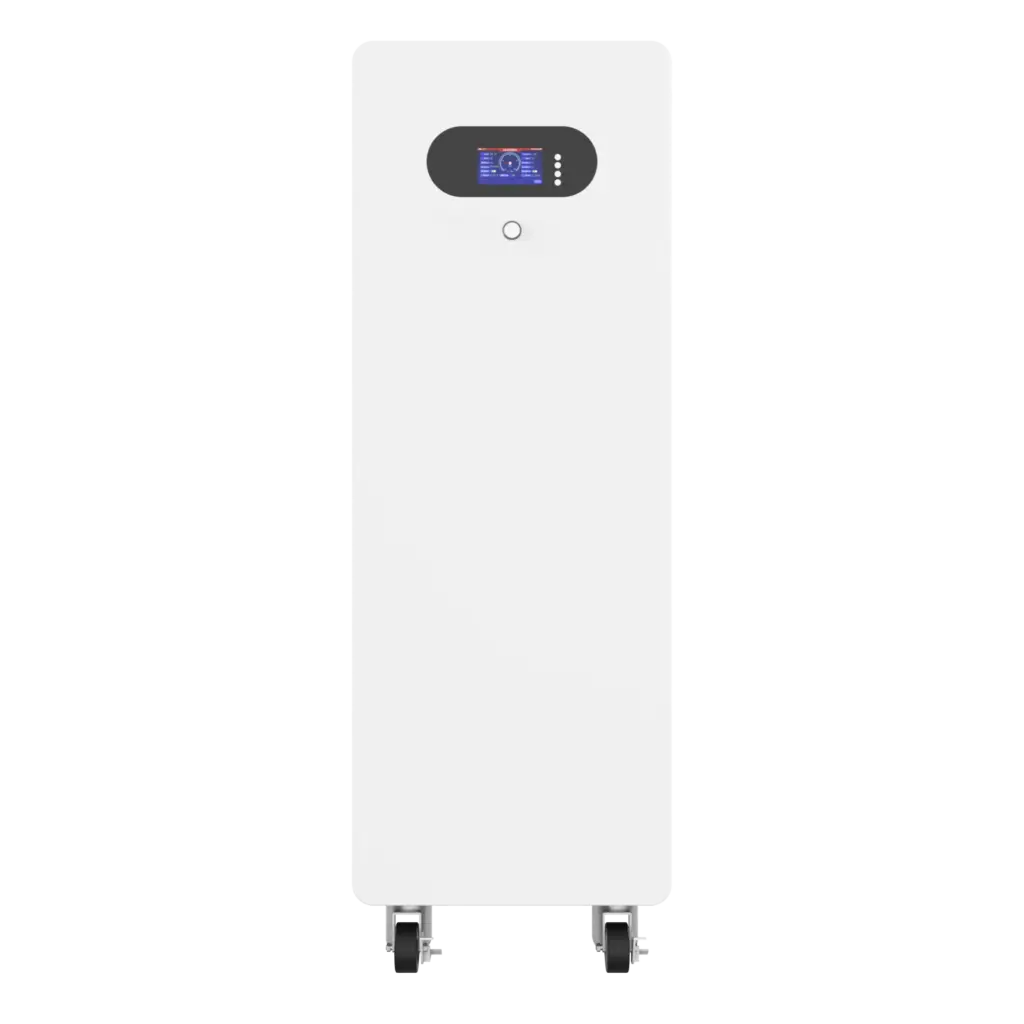
Avepower supplies LiFePO4 battery solutions, including 12V configurations intended for RV and off-grid applications, and offers battery configuration and OEM/ODM support.
For a technical assessment or battery quotation, provide your RV location and electrical standard, existing battery voltage and capacity, inverter brand and model, maximum AC load, expected daily energy consumption, charging sources, and required battery dimensions.
You can review Avepower’s battery compatibility resources or contact Avepower with your application requirements. Final inverter-to-battery compatibility and installation suitability require model-specific confirmation.
FAQ
Only if the RV has an inverter or other appropriate AC power source connected to those circuits, with sufficient electrical capacity. Driving does not automatically energize all AC outlets. Whether the alternator charges the house battery while driving also depends on the vehicle’s charging system.
Only a small inverter within the socket’s electrical rating may be appropriate. Many 12V accessory outlets are limited by relatively low-current fuses and wiring. Larger inverters must use a properly engineered battery connection rather than a standard accessory socket.
No. A refrigerator designed to operate directly from the RV’s 12V DC system normally does not need a DC-to-AC inverter. A residential AC refrigerator requires an appropriate AC supply, which may come from shore power, a generator, or a correctly sized inverter.
For direct-DC refrigerator energy calculations, see How Long Will a 12V 100Ah Battery Run an RV Fridge?.
It may run a microwave whose actual AC input and startup requirements are within the inverter’s ratings. The battery must also supply enough DC current.