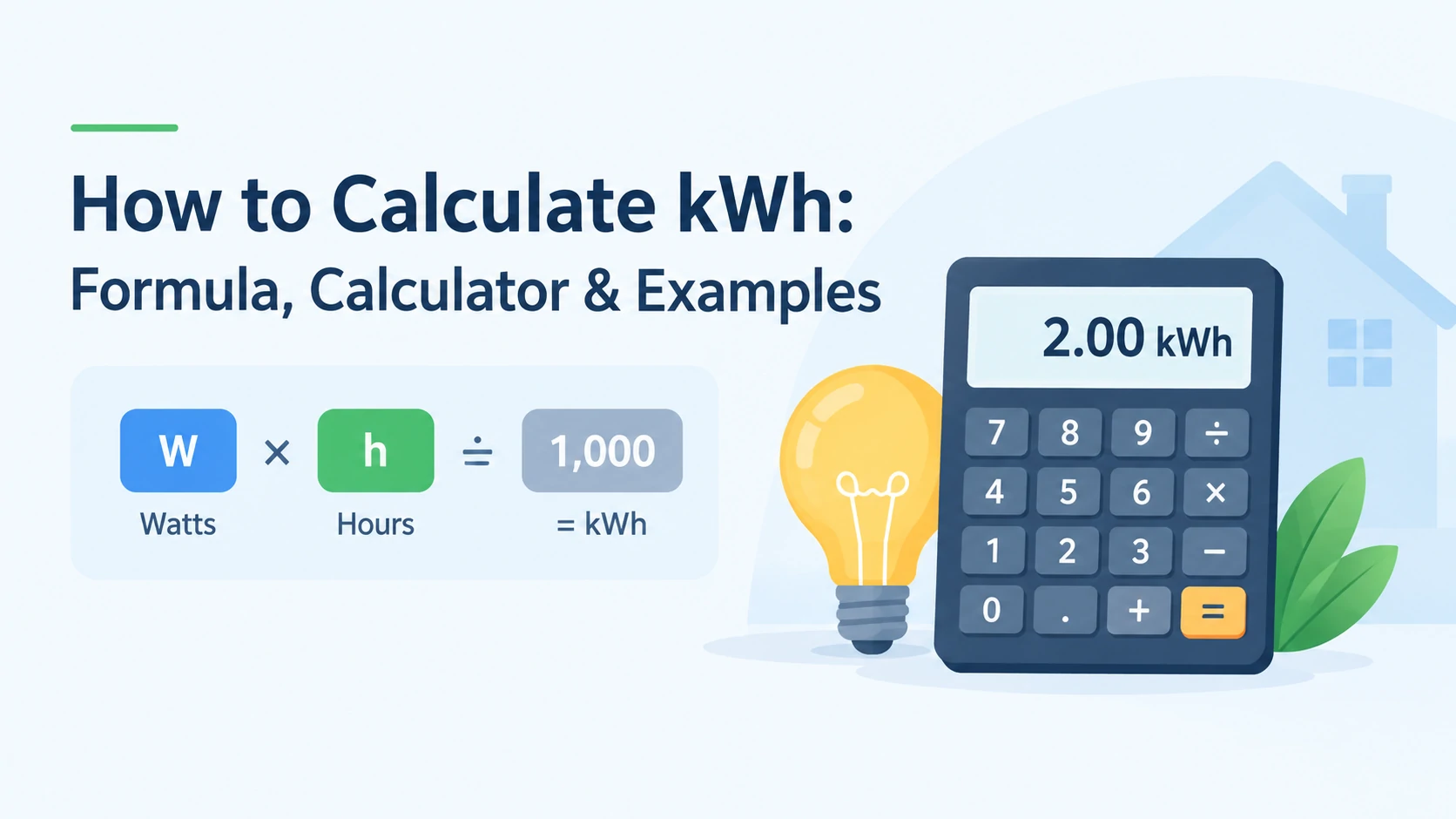

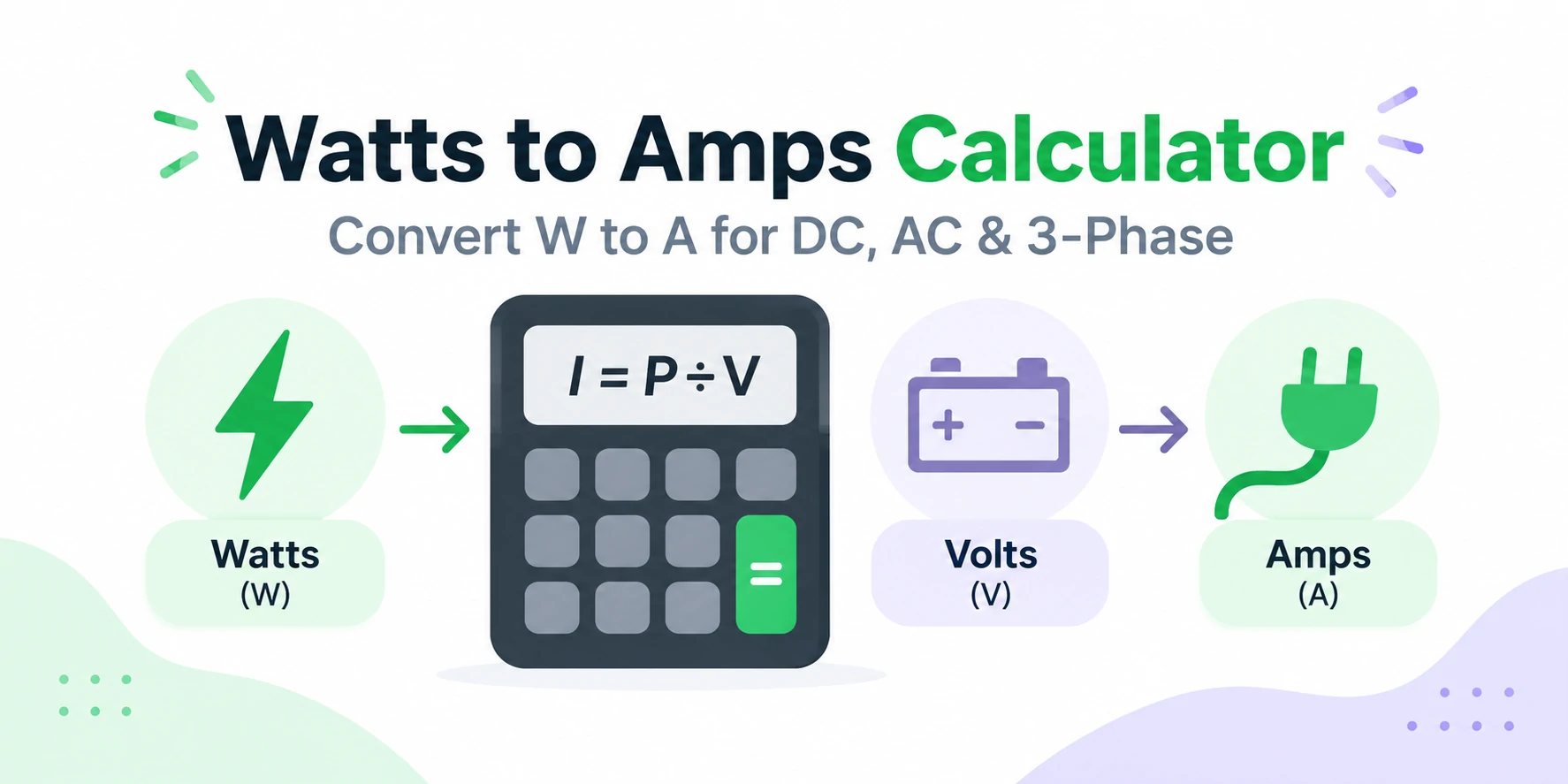
Quick answer: To convert watts to amps, divide power (W) by voltage (V) in a DC circuit: Amps = Watts ÷ Volts. For AC systems, you also need the power factor; balanced three-phase calculations additionally depend on whether you use line-to-line or line-to-neutral voltage. For example, 1,500 W at 120 V with a power factor of 1 draws 12.5 A.
Use the free watts to amps calculator below for DC batteries, household single-phase appliances, and balanced three-phase electrical systems. If you are sizing a battery or inverter, also check conversion efficiency, continuous current limits, and equipment ratings before selecting hardware.
Calculated steady-state current based on your inputs, not a direct measurement. For AC, enter the actual total power factor. Three-phase calculations assume a balanced load and line-to-line RMS voltage.
What Is the Formula to Convert Watts to Amps?
The correct watts-to-amps formula depends on the circuit type and the power quantity you know. In DC circuits, divide real electrical power by DC voltage. For AC, include the total power factor because watts and volt-amperes are not interchangeable. Balanced three-phase systems require a separate voltage and phase relationship.
| Circuit | Current formula | Voltage input | Main assumption |
|---|---|---|---|
| DC | I = P / V | DC voltage | Power and voltage refer to the same side of the circuit |
| Single-phase AC | I = P / (V × PF) | RMS voltage | Real input power and total PF are known |
| Balanced three-phase AC | I = P / (√3 × V_LL × PF) | RMS line-to-line | Total three-phase real power; balanced load |
| Balanced three-phase AC | I = P / (3 × V_LN × PF) | RMS line-to-neutral | Total three-phase real power; balanced load |
Where I is current (A), P is real electrical power (W), V is voltage (V), PF is the ratio of real to apparent power, and √3 ≈ 1.732. Three-phase formulas return line current for a balanced system.
How Many Amps Are 100, 500, 1,000, 1,500, and 3,000 Watts?
The same wattage corresponds to different currents at different voltages: higher voltage means lower current when power is held constant. The reference charts below assume steady electrical power, fixed voltage, and unity power factor where AC is shown.
DC watts to amps chart
| Power | 12 V DC | 24 V DC | 48 V DC | 51.2 V DC |
|---|---|---|---|---|
| 100 W | 8.33 A | 4.17 A | 2.08 A | 1.95 A |
| 500 W | 41.67 A | 20.83 A | 10.42 A | 9.77 A |
| 1,000 W | 83.33 A | 41.67 A | 20.83 A | 19.53 A |
| 1,500 W | 125.00 A | 62.50 A | 31.25 A | 29.30 A |
| 3,000 W | 250.00 A | 125.00 A | 62.50 A | 58.59 A |
| 5,000 W | 416.67 A | 208.33 A | 104.17 A | 97.66 A |
Single-phase AC watts to amps chart (PF = 1)
| Power | 120 V AC | 230 V AC | 240 V AC |
|---|---|---|---|
| 100 W | 0.83 A | 0.43 A | 0.42 A |
| 500 W | 4.17 A | 2.17 A | 2.08 A |
| 1,000 W | 8.33 A | 4.35 A | 4.17 A |
| 1,500 W | 12.50 A | 6.52 A | 6.25 A |
| 3,000 W | 25.00 A | 13.04 A | 12.50 A |
| 5,000 W | 41.67 A | 21.74 A | 20.83 A |
These charts use electrical watts on the circuit being evaluated. For a quick explanation of the related quantities, see Avepower’s guide to voltage vs current. To calculate power from current instead, use the volts-to-watts calculator.
How Do You Calculate Amps for DC Batteries and Solar Systems?
For a DC battery, dividing electrical load power by actual battery voltage gives a first estimate of discharge current. This is useful for comparing 12 V, 24 V, and 48 V-class systems, but battery voltage changes with state of charge and operating conditions. AC appliances powered through an inverter also require an efficiency adjustment.
Example: a 1,200 W DC load
- At 12 V: 1,200 / 12 = 100 A.
- At 24 V: 1,200 / 24 = 50 A.
- At 48 V: 1,200 / 48 = 25 A.
At a fixed load, higher system voltage reduces current. That can reduce resistive losses in otherwise comparable conductors, although real design must also consider equipment voltage ratings, cable lengths, protection, and installation standards.
When an inverter supplies an AC load, use a separate battery-side calculation:
Battery current (A) ≈ AC real output power (W) / [battery voltage (V) × inverter efficiency]
For example, a 3,000 W AC load, a 51.2 V battery, and an illustrative 92% inverter efficiency gives:
I_DC ≈ 3,000 / (51.2 × 0.92) = 63.69 A.
The 92% value is a worked-example assumption, not a verified efficiency specification for an Avepower inverter. Actual current varies with operating voltage, conversion losses, auxiliary loads, and the inverter’s efficiency curve. For total storage sizing, use the separate solar battery size calculator rather than treating amps as a measure of stored energy.
How Do You Calculate Amps for Single-Phase AC Appliances?
For a single-phase AC device, divide its real electrical input power by RMS voltage multiplied by the total power factor. This matters for appliances with motors or electronic power supplies, where a simple watts-divided-by-volts calculation can understate current. Use the actual rated or measured power factor whenever available.
Example 1: 1,500 W resistive heater at 120 V
Assuming PF = 1, current = 1,500 / (120 × 1) = 12.50 A.
Example 2: 1,500 W electrical input at 230 V, PF = 0.85
Current = 1,500 / (230 × 0.85) = 7.67 A.
If a motor is instead rated at 1,500 W mechanical output, its electrical input is higher than 1,500 W because motor efficiency is below 100%. Do not enter mechanical output watts as electrical input watts without correcting for efficiency. Consult the manufacturer’s data for starting current, which can exceed steady-state current.
How Do You Calculate Amps for Three-Phase AC Power?
For a balanced three-phase system, divide total real power by √3 times RMS line-to-line voltage times power factor to find line current. If the supplied voltage is line-to-neutral, use three times that voltage instead. The calculation assumes balanced phases and does not determine the highest-loaded phase in an unbalanced installation.
Example: 5,000 W balanced three-phase load, 400 V line-to-line, PF = 0.90
I = 5,000 / (1.732 × 400 × 0.90) = 8.02 A per line.
Case Study: What Does a 3 kW or 5 kW Load Mean for a 51.2 V Battery?
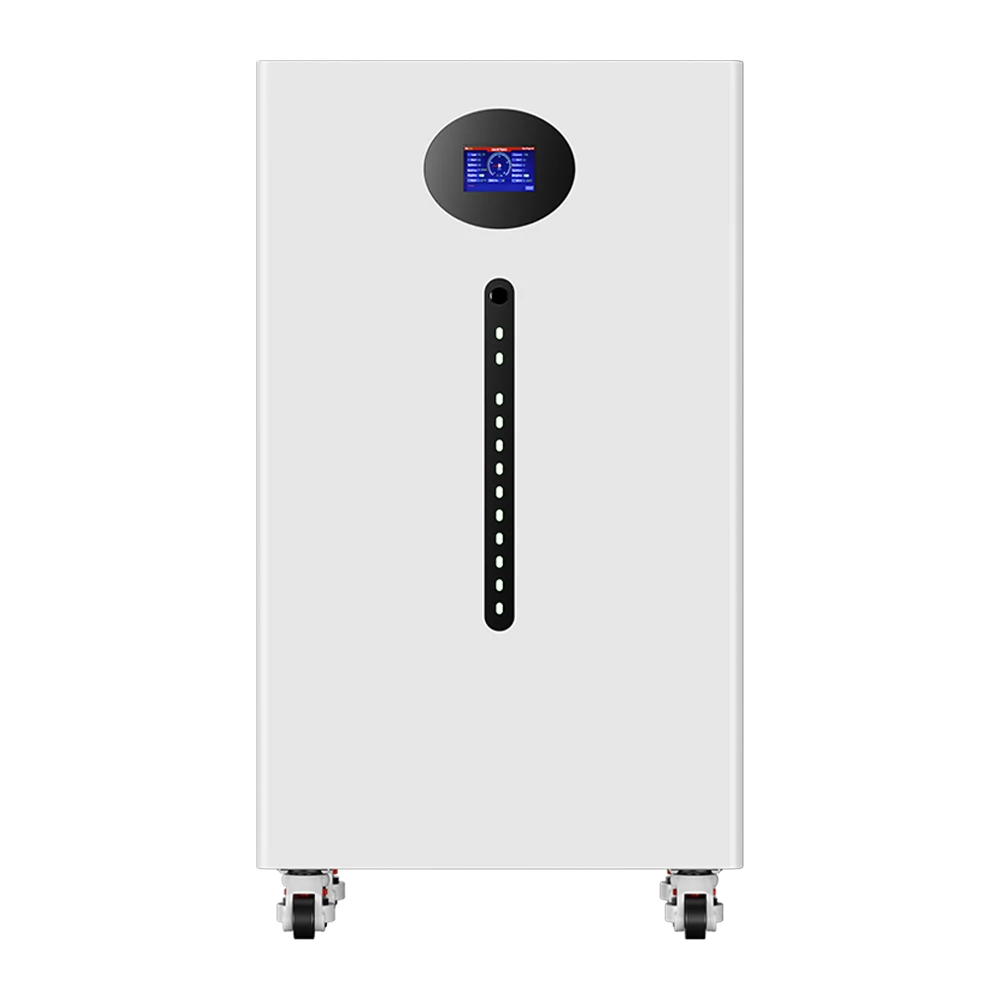
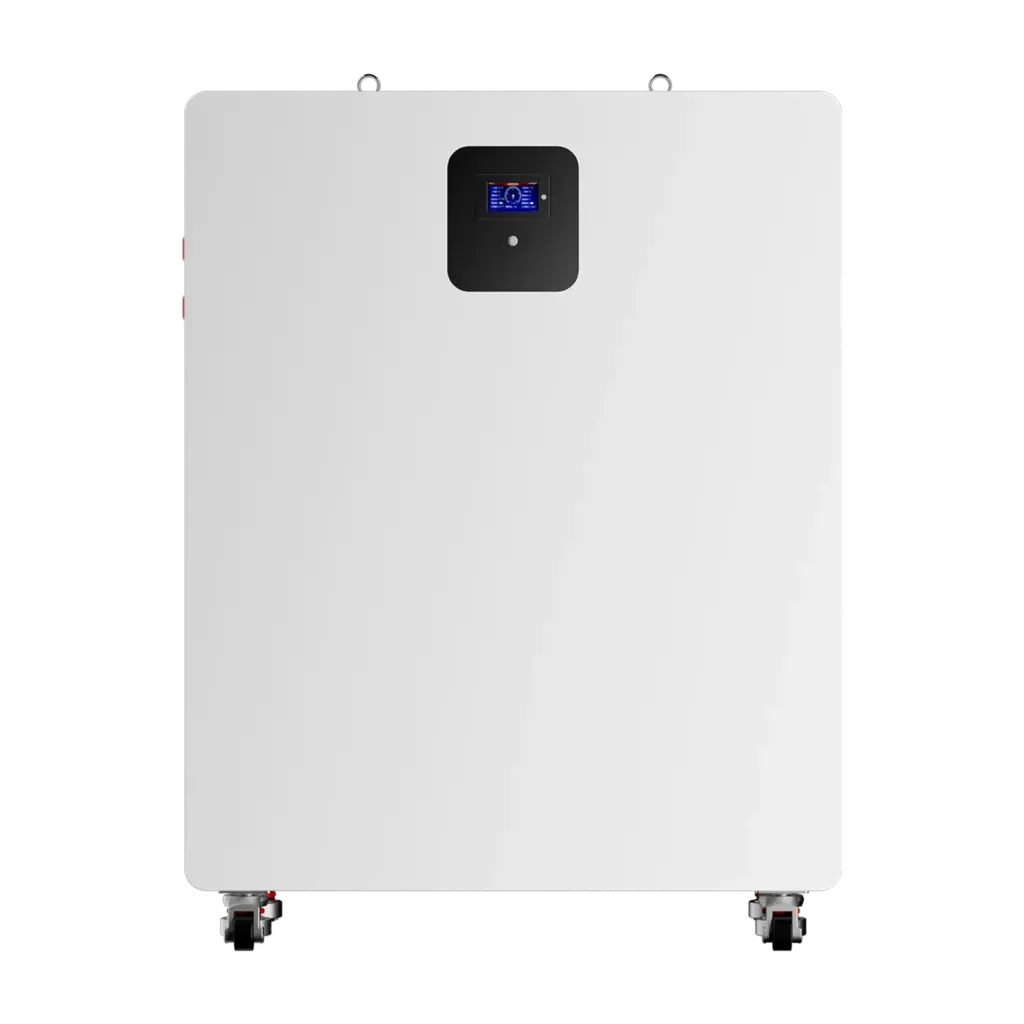
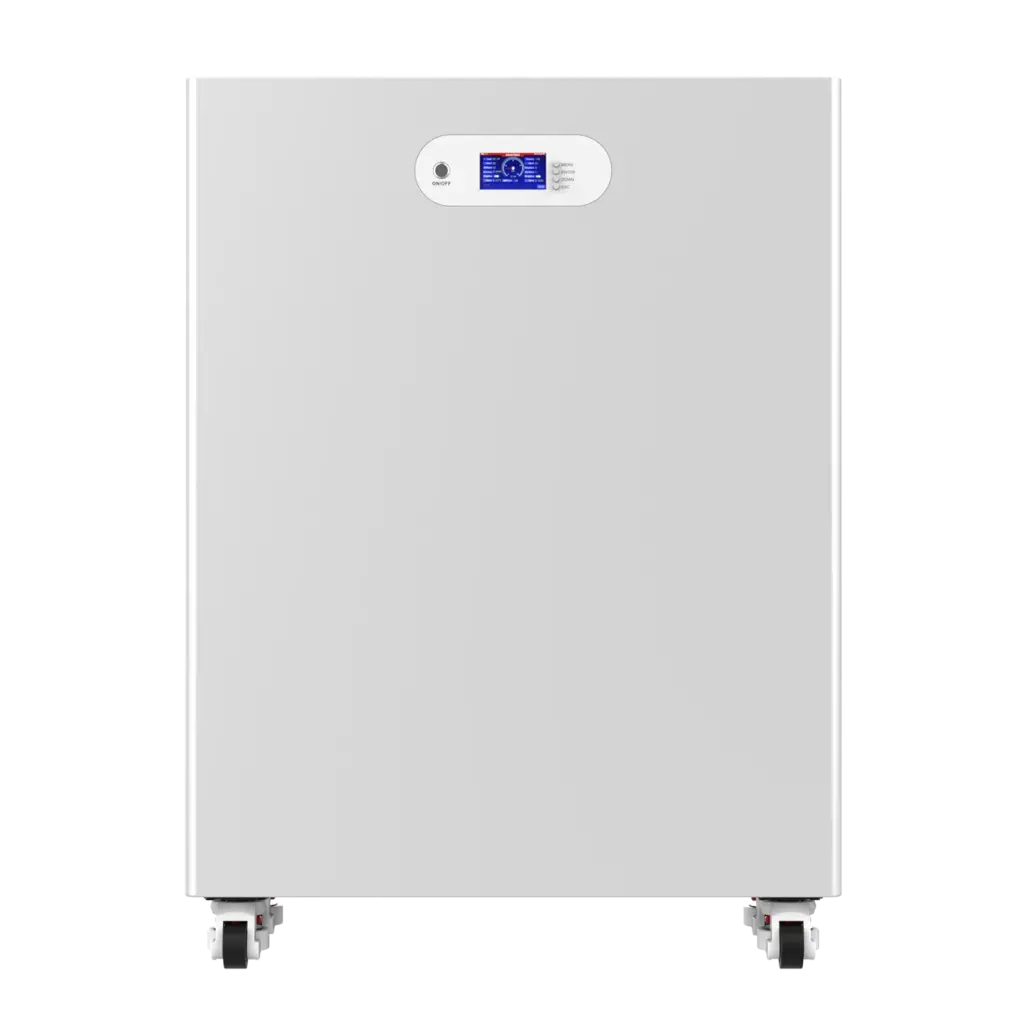
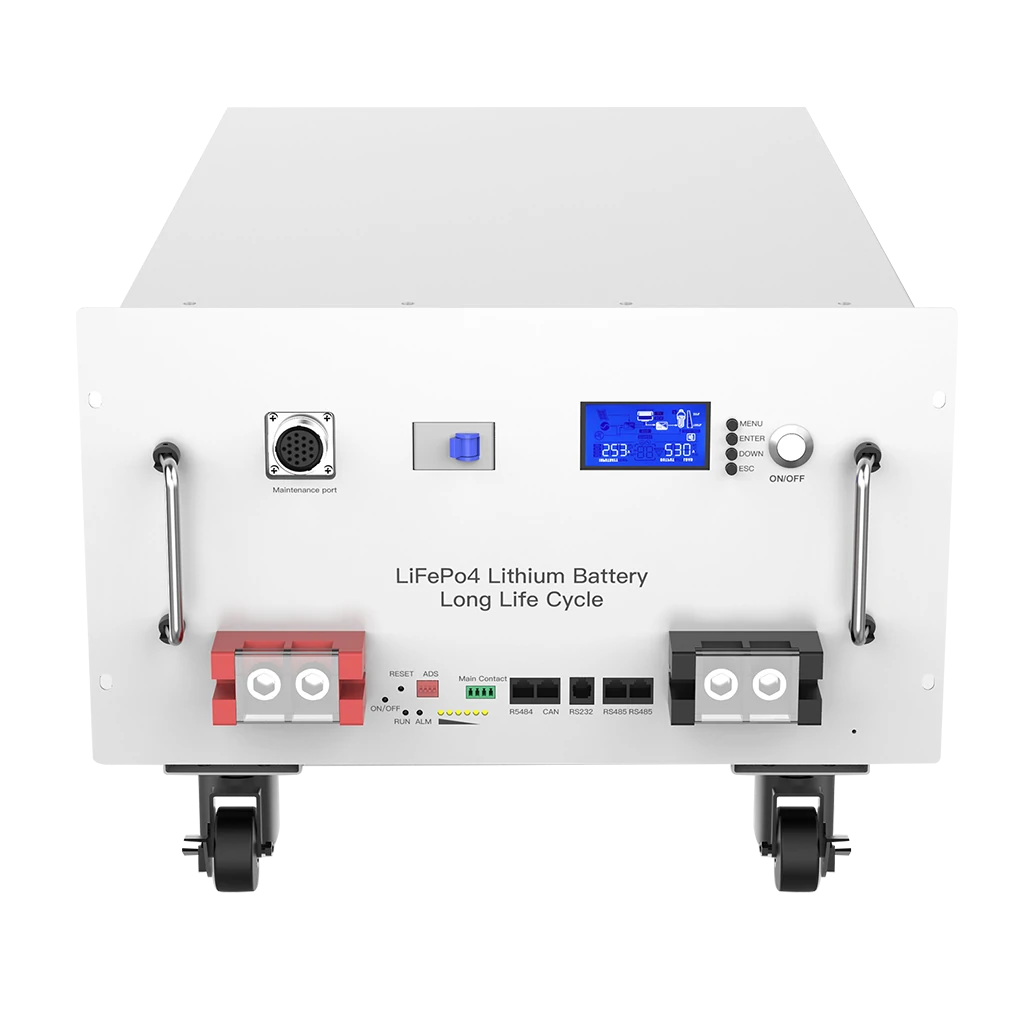
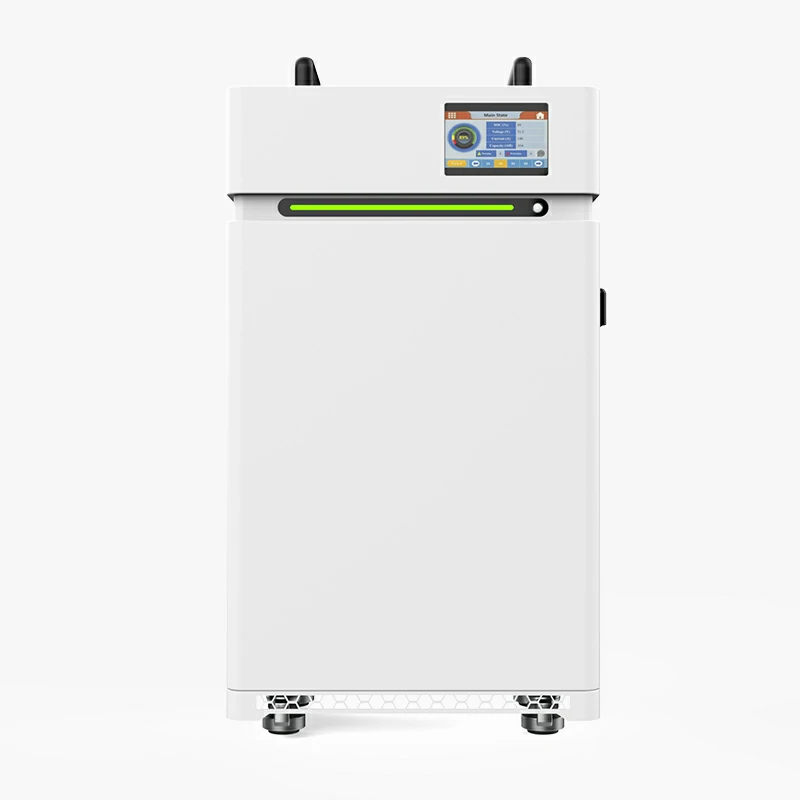
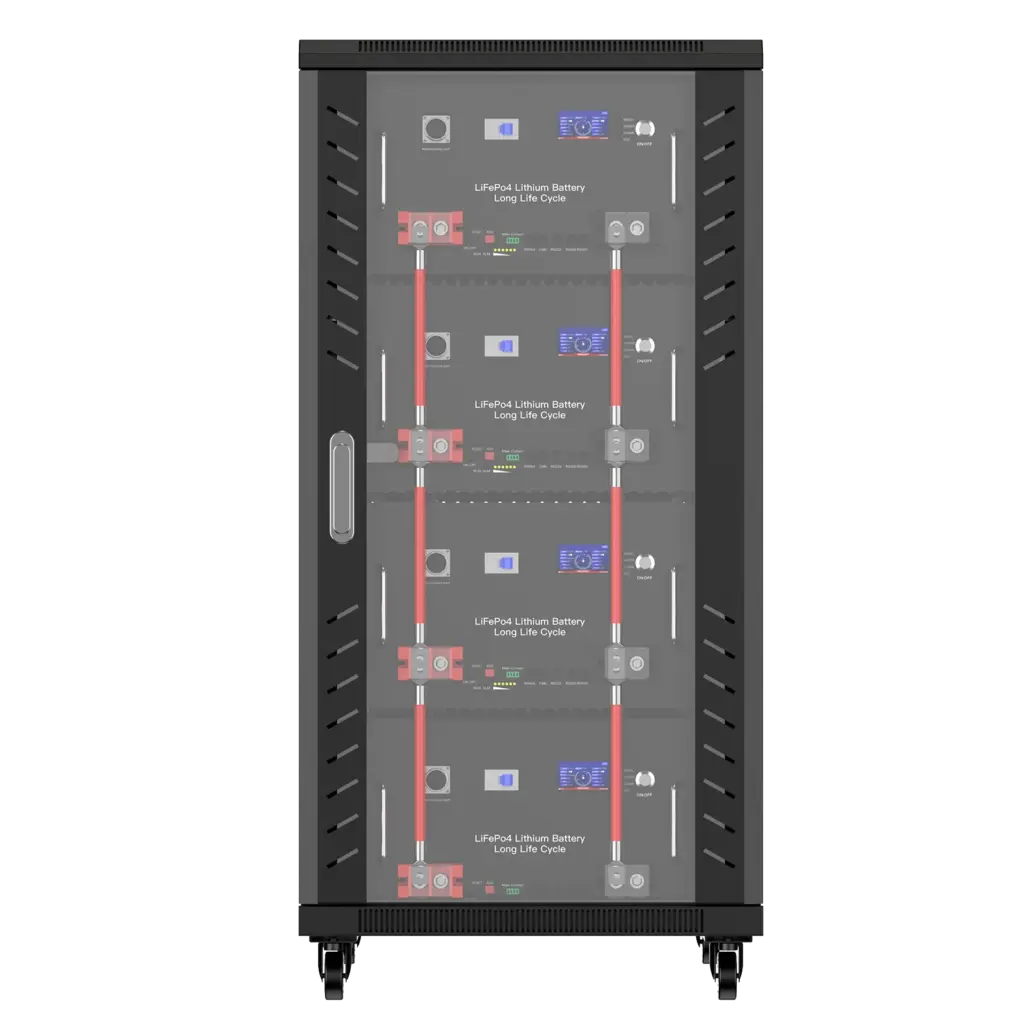
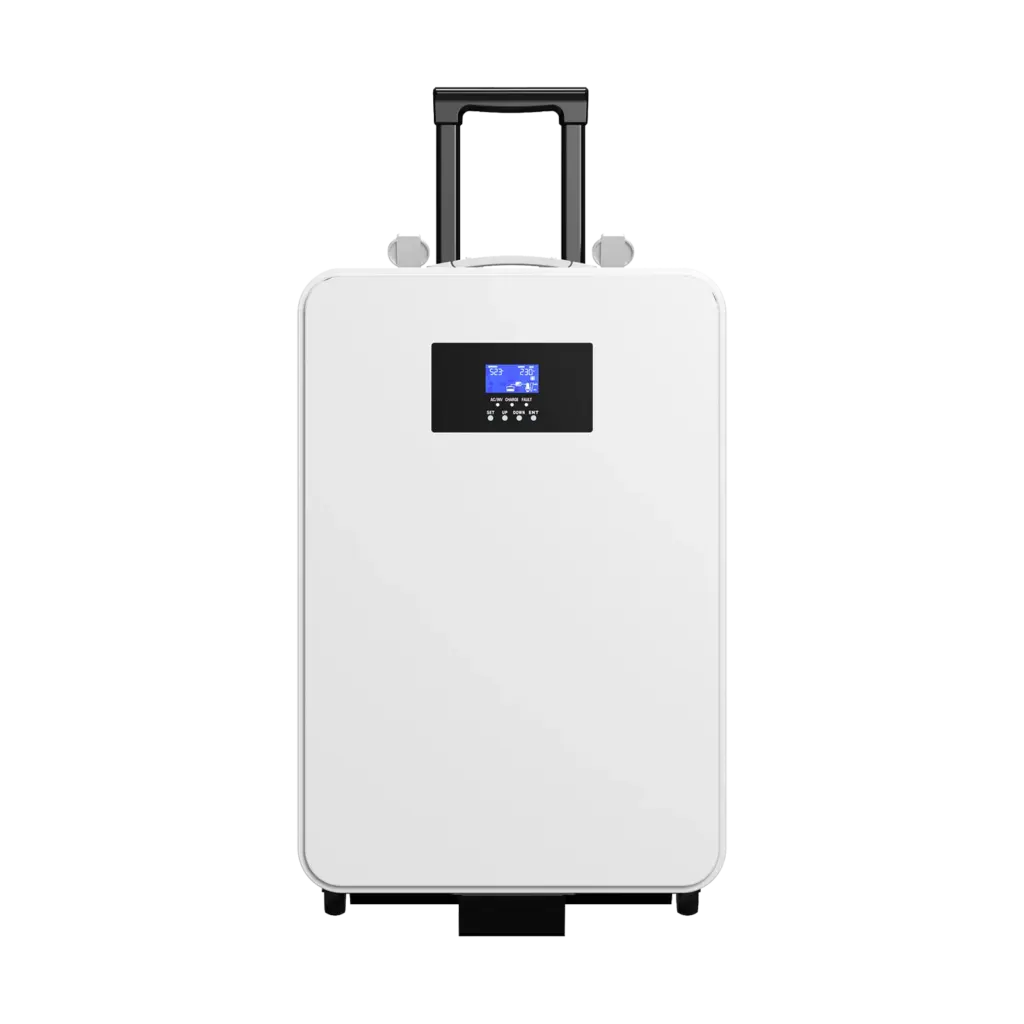
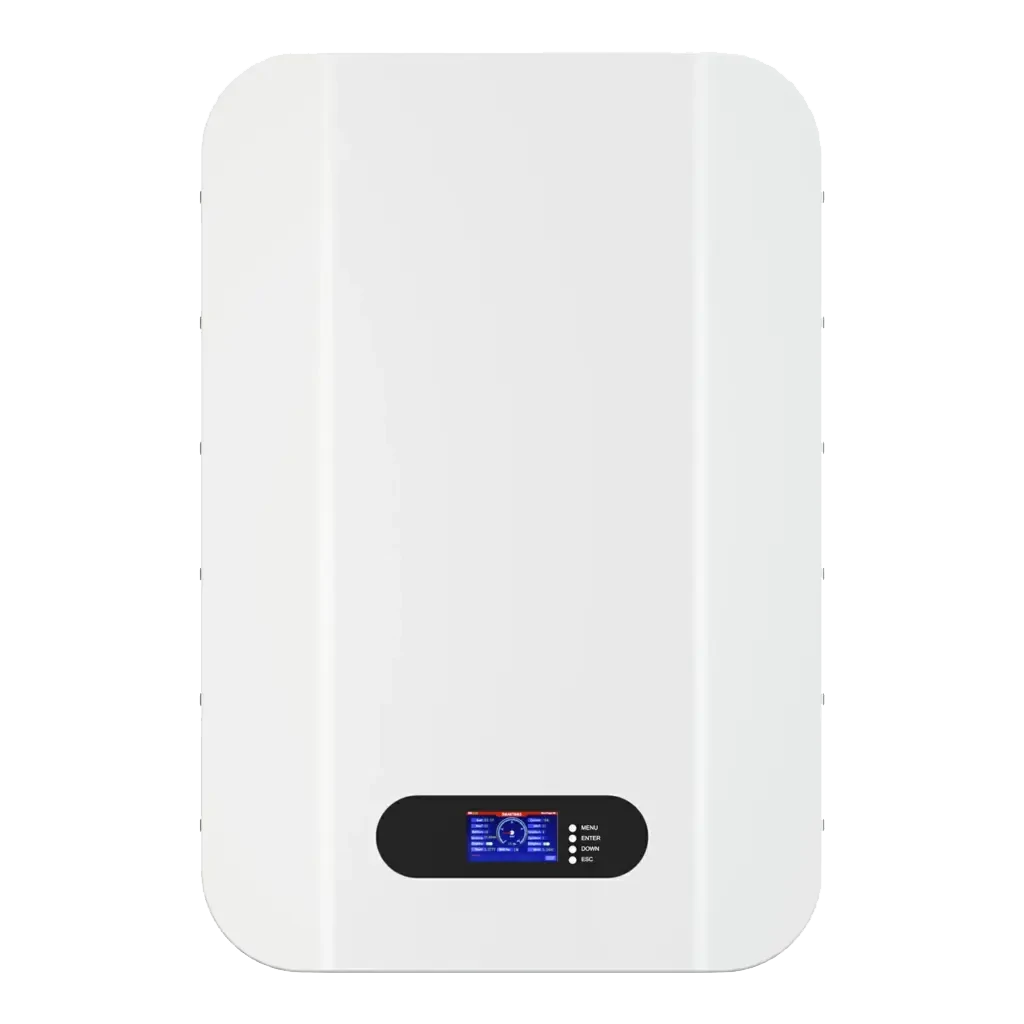
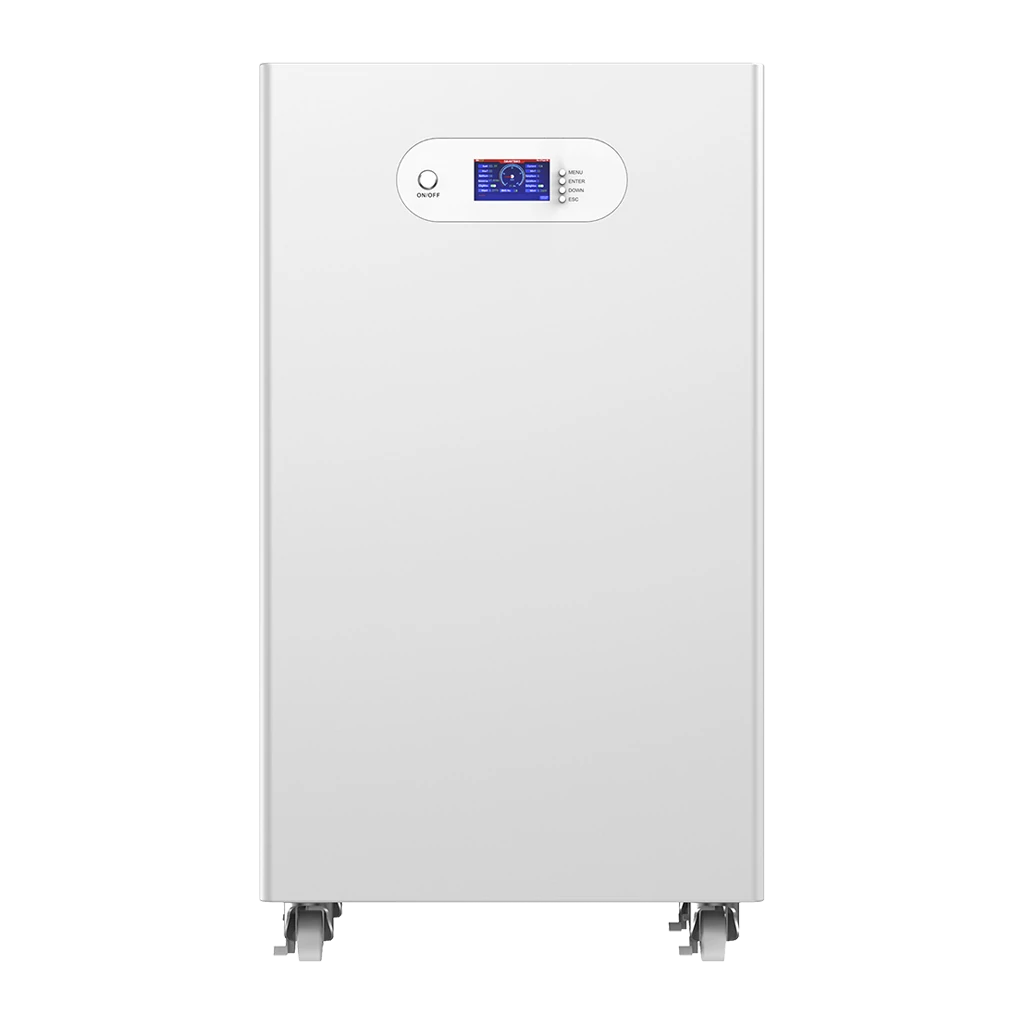
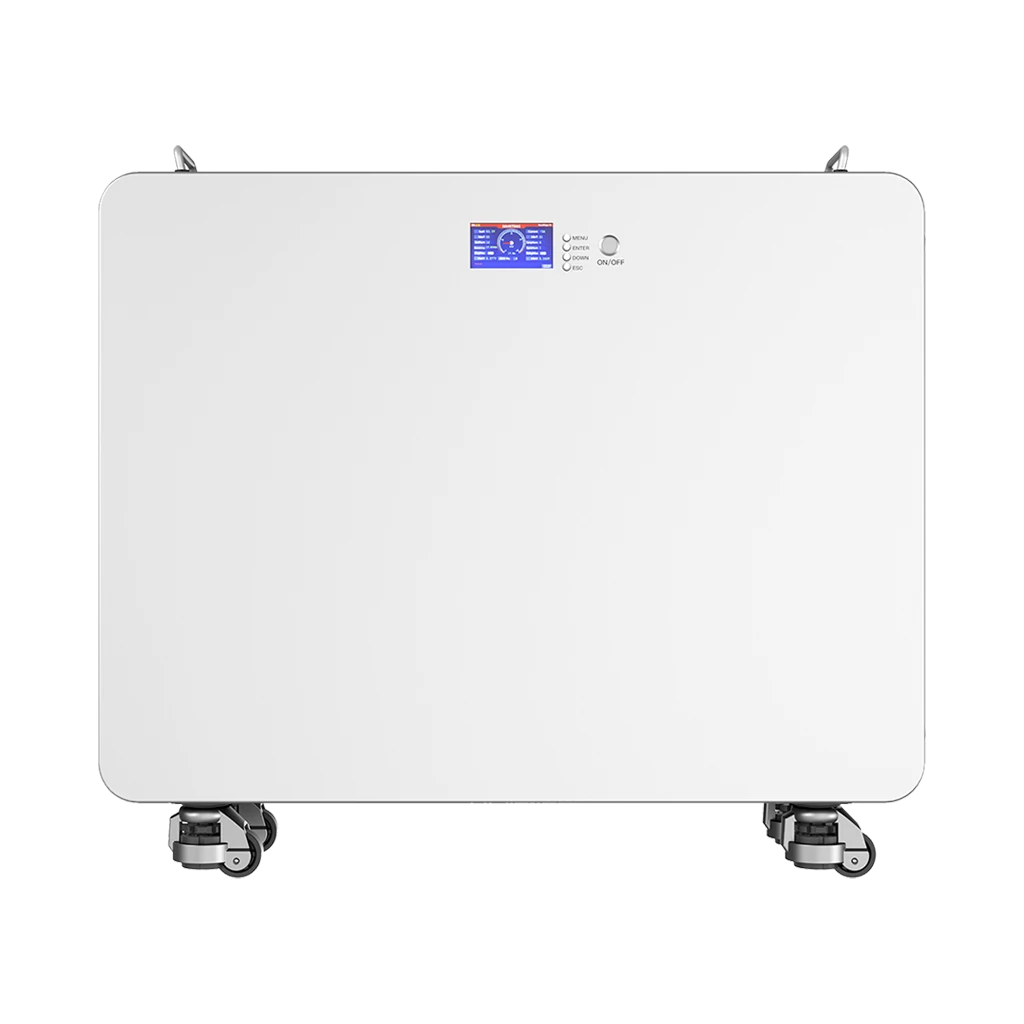
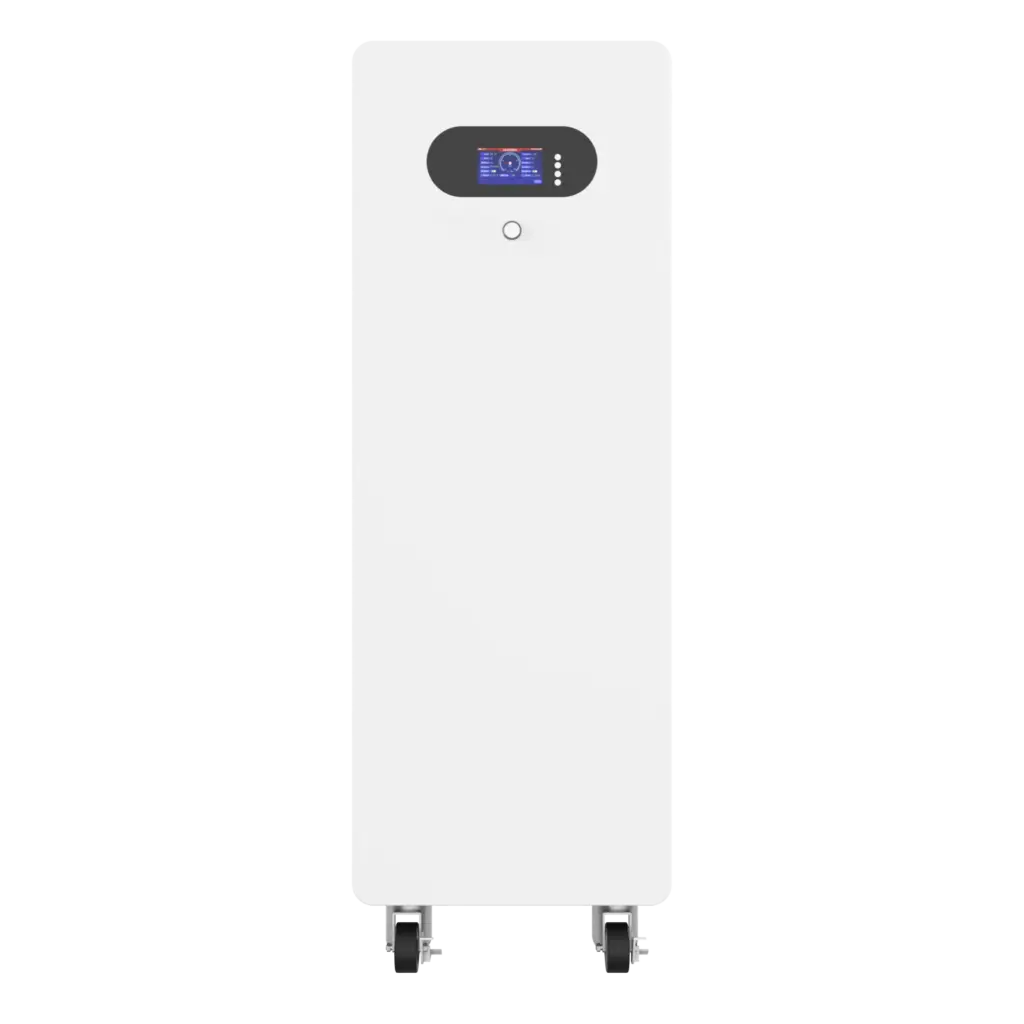
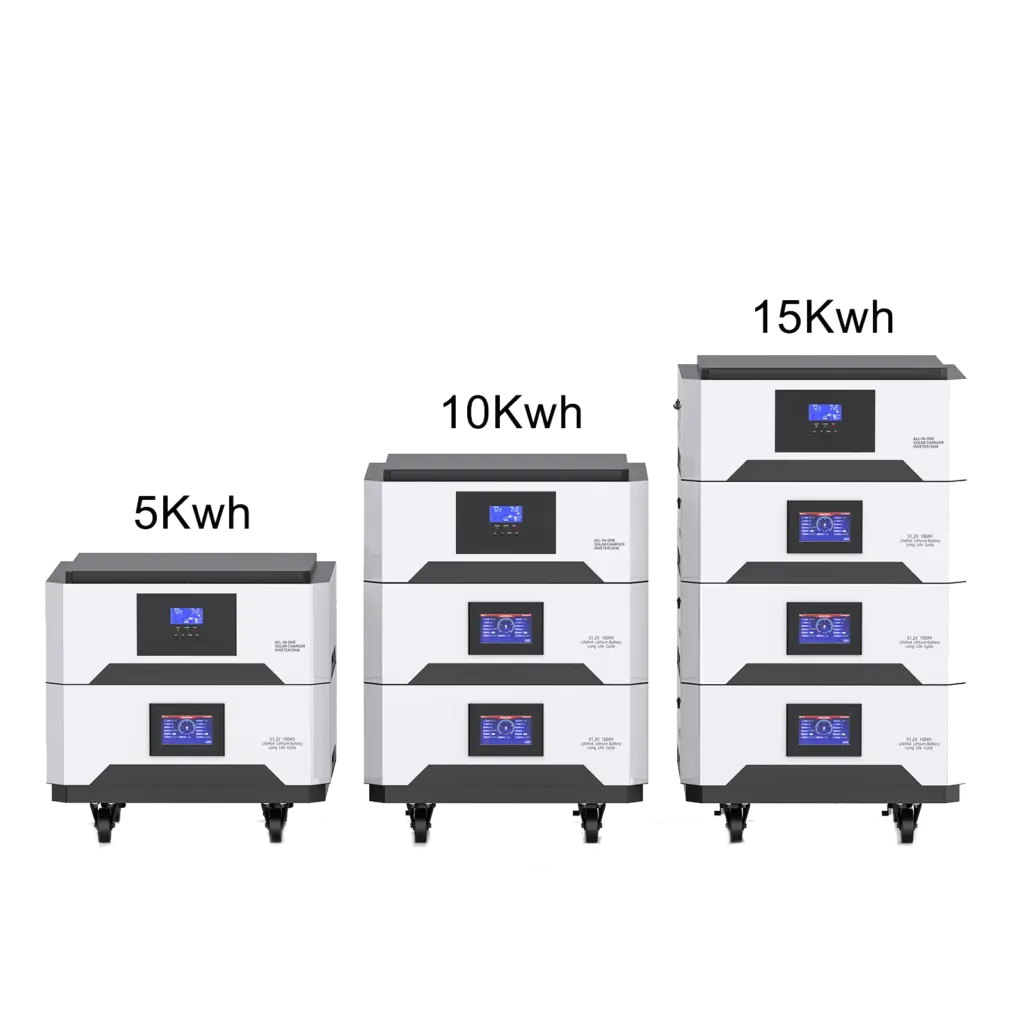
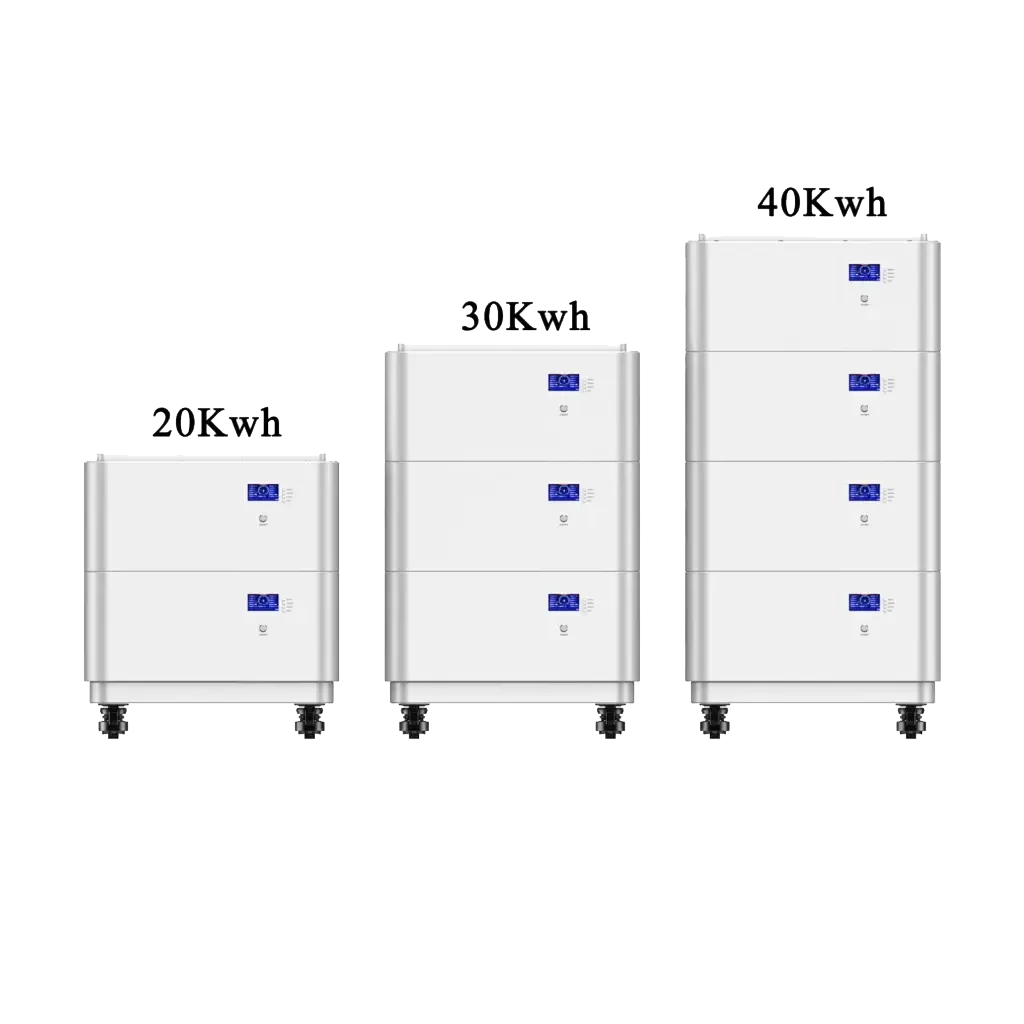
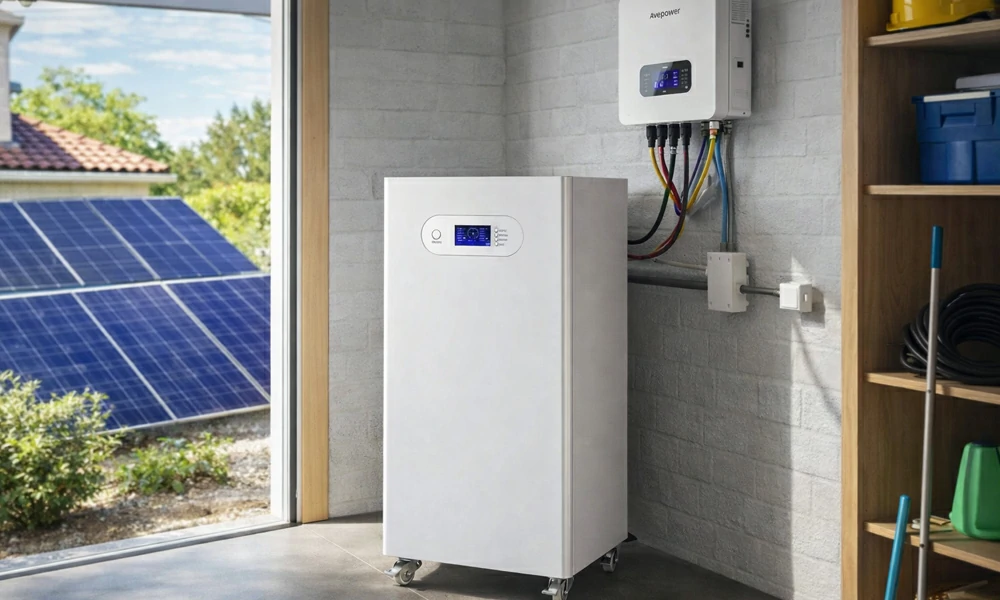
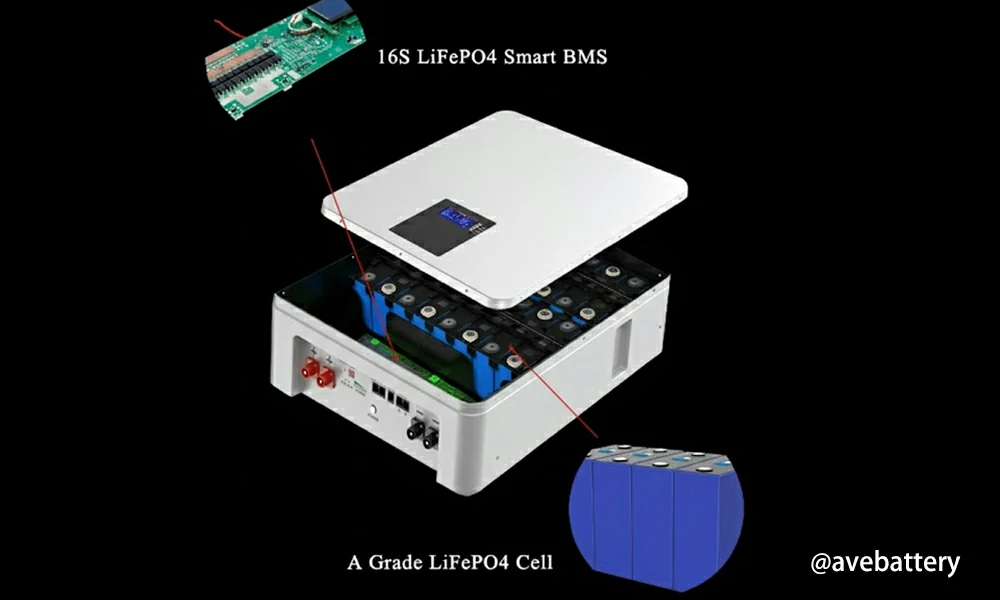
Battery selection requires comparing calculated current with the product’s documented continuous discharge limit—not just matching energy capacity in kWh. Avepower publishes a 51.2 V/100 Ah wall-mounted LiFePO4 model with 5.12 kWh nominal energy and up to 100 A continuous discharge. The following is a specification-based illustration, not a field measurement.
Avepower 51.2 V/100 Ah wall-mounted LiFePO4 battery — product specifications
| Input or check | 3 kW AC load | 5 kW AC load |
|---|---|---|
| AC real output power | 3,000 W | 5,000 W |
| Assumed battery voltage | 51.2 V | 51.2 V |
| Assumed inverter efficiency | 92% | 92% |
| Estimated battery-side DC current | 63.69 A | 106.15 A |
| Product page’s stated continuous discharge limit | 100 A | 100 A |
| Preliminary interpretation | Below listed limit | Above listed limit |
Calculation: I = AC output W / (51.2 × 0.92).
The 5 kW example exceeds the stated 100 A continuous-discharge limit under these assumptions, so one such battery should not be presumed suitable for that continuous load. At lower battery voltage, even the 3 kW case may draw more current than the nominal-voltage estimate. Actual compatibility also depends on permitted operating voltage, the exact BMS specification, inverter limits, permitted parallel configurations, and environmental conditions.
What the example does not prove: It does not verify field runtime, confirm measured conversion efficiency, certify wiring, or guarantee which inverter will work with the battery. For documentation and model-level verification, consult the Avepower inverter compatibility information, or request the relevant datasheet directly. For the distinction between battery current and stored energy, see what battery capacity means.
What Are the Most Common Watts-to-Amps Calculation Mistakes?
The most serious mistakes come from mixing DC and AC quantities, using the wrong voltage, or treating a theoretical calculation as a hardware safety rating. A calculator is accurate only for its inputs and assumptions. Review the following points before using the result to compare batteries, chargers, motors, inverters, or electrical infrastructure.
- Using power without voltage: 1 W does not equal a fixed number of amps. The voltage must be specified.
- Ignoring power factor: For real-power AC calculations, unity PF is not always valid.
- Using the wrong three-phase voltage: 400 V line-to-line cannot be entered as 400 V line-to-neutral.
- Confusing watts with watt-hours: W describes instantaneous power; Wh and kWh describe energy over time.
- Confusing amps with amp-hours: A measures current; Ah describes accumulated charge, not an instantaneous current rating.
- Ignoring inverter and motor losses: Specify whether the wattage is electrical input, AC output, DC input, or mechanical shaft output.
- Treating nominal voltage as constant: Battery voltage changes with state of charge, temperature, and load.
- Using steady-state current to size protection automatically: Starting current, continuous-duty requirements, conductor conditions, and local rules matter.
For a related distinction between current and capacity, read Avepower’s explanation of amperes and milliamperes and its guide to ampere-hours.
Need a Battery or Inverter Configuration That Matches Your Load?
The calculated amperage is a starting point, not a complete storage-system specification. For a solar or backup project, verify peak and continuous power, operating battery voltage, allowable charge/discharge current, inverter efficiency, BMS limits, and required usable energy before choosing equipment.
Avepower supplies LiFePO4 energy-storage solutions for residential and commercial projects, including customizable battery voltage, capacity, and system integration. Explore its published battery specifications, certification information, and project case studies when evaluating a supplier. Contact Avepower for project-specific battery and inverter sizing and provide your load profile, operating voltage, inverter model, and installation country for a more useful recommendation.

Take Control of Your Energy with Avepower!
Reliable home solar battery solutions with OEM/ODM customization and in-house manufacturing, tailored to the needs of distributors, installers, and energy partners.
FAQ
At 12 V DC, 100 W draws 8.33 A; at 120 V AC with PF = 1, it draws 0.83 A. There is no single answer without voltage and the AC conditions.
At 12 V DC, 41.67 A; at 24 V DC, 20.83 A; at 120 V AC with PF = 1, 4.17 A.
A 1,000 W single-phase resistive load at 120 V and PF = 1 draws 8.33 A. At PF = 0.80, a 1,000 W real-power load draws about 10.42 A.
A 1,500 W resistive load at 120 V draws 12.50 A, assuming power factor is 1. Startup and non-resistive loads may behave differently.
At 240 V single-phase AC and PF = 1, 3,000 / 240 = 12.50 A. For PF = 0.80, the current is 15.63 A.