
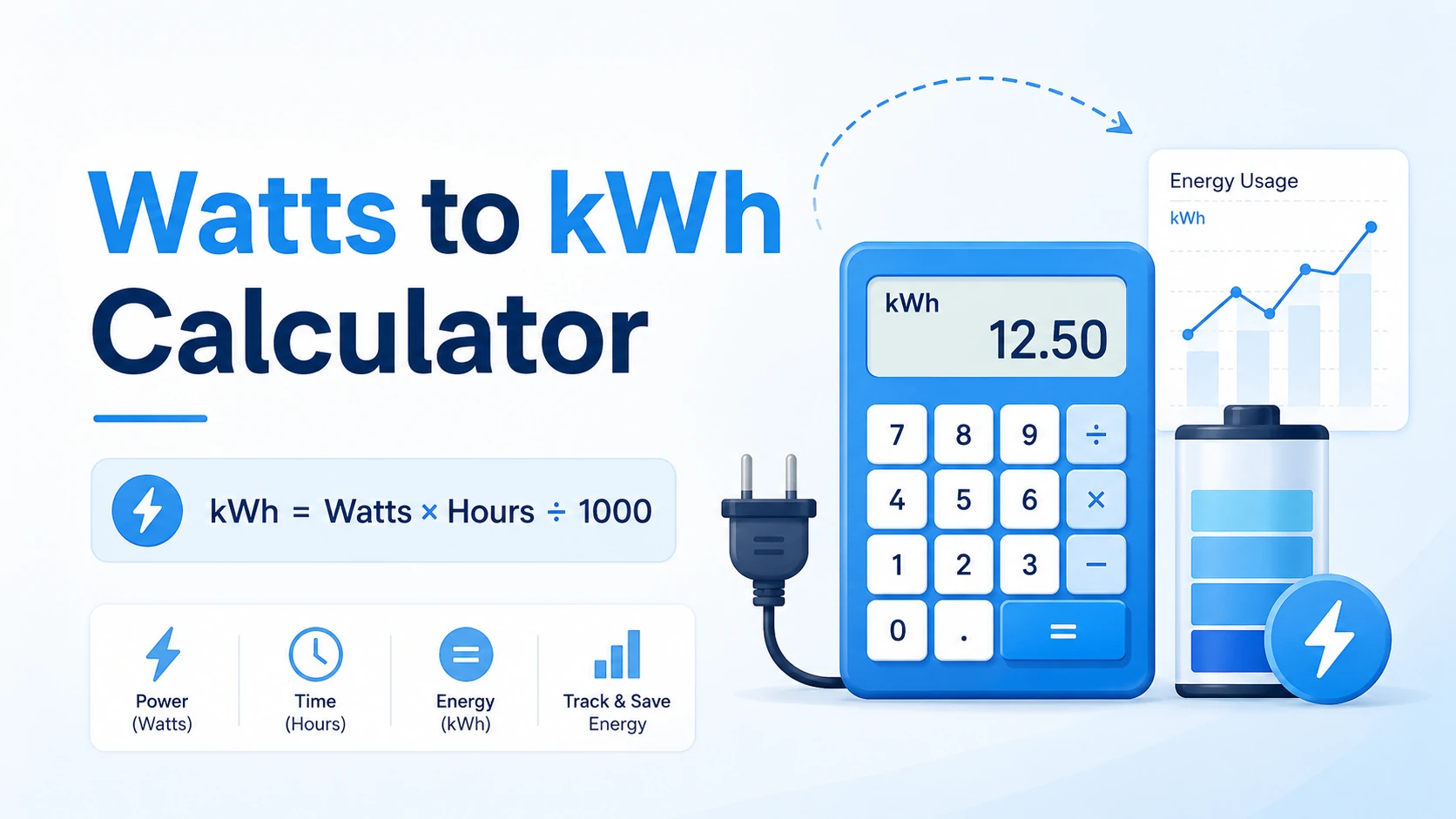
To convert watts to kWh, multiply the appliance or load power in watts by the number of hours it operates, then divide by 1,000. For example, a 1,000W appliance running for 3 hours consumes 3kWh of energy.
Watts to kWh formula:
kWh = Watts × Hours ÷ 1,000
Quick examples:
| Power | Running Time | Energy Used |
|---|---|---|
| 100W | 1 hour | 0.1kWh |
| 100W | 10 hours | 1kWh |
| 500W | 4 hours | 2kWh |
| 1,000W | 1 hour | 1kWh |
| 1,500W | 2 hours | 3kWh |
| 2,000W | 30 minutes | 1kWh |
Watts to kWh Calculator
Enter the power in watts and the operating time to calculate energy consumption in kilowatt-hours (kWh).
How Do You Convert Watts to kWh?
To convert watts to kilowatt-hours, multiply the power in watts by the actual operating time in hours and divide the result by 1,000.
The basic watts to kWh formula is:
Energy (kWh) = Power (W) × Time (h) ÷ 1,000
For example, suppose a heater draws 1,500 watts and operates continuously for 4 hours.
1,500 × 4 ÷ 1,000 = 6kWh
So:
1,500 watts running for 4 hours uses 6kWh.
If you need to understand what the watt number on an appliance or inverter actually represents, Avepower’s Power Rating guide explains rated power, continuous power and peak power in more detail.
How Do You Convert Watts to kWh When Time Is in Minutes?
When the operating time is given in minutes, divide the minutes by 60 to convert them into hours before applying the watts-to-kWh formula.
The formula becomes:
kWh = Watts × (Minutes ÷ 60) ÷ 1,000
Example: 2,000W for 30 Minutes
First convert the time:
30 ÷ 60 = 0.5 hours
Then calculate:
2,000 × 0.5 ÷ 1,000 = 1kWh
So:
A 2,000W appliance running for 30 minutes consumes 1kWh.
Example: 1,500W for 20 Minutes
20 ÷ 60 = 0.333 hours
Then:
1,500 × 0.333 ÷ 1,000 ≈ 0.5kWh
How Much kWh Do Common Wattages Use?
| Power | 1 Hour | 8 Hours | 24 Hours |
|---|---|---|---|
| 10W | 0.01kWh | 0.08kWh | 0.24kWh |
| 50W | 0.05kWh | 0.40kWh | 1.20kWh |
| 100W | 0.10kWh | 0.80kWh | 2.40kWh |
| 200W | 0.20kWh | 1.60kWh | 4.80kWh |
| 500W | 0.50kWh | 4.00kWh | 12.00kWh |
| 750W | 0.75kWh | 6.00kWh | 18.00kWh |
| 1,000W | 1.00kWh | 8.00kWh | 24.00kWh |
| 1,500W | 1.50kWh | 12.00kWh | 36.00kWh |
| 2,000W | 2.00kWh | 16.00kWh | 48.00kWh |
| 5,000W | 5.00kWh | 40.00kWh | 120.00kWh |
How Many kWh Does 100 Watts Use?
100W for one hour uses:
100 × 1 ÷ 1,000 = 0.1 kWh
For 10 hours:
100 × 10 ÷ 1,000 = 1 kWh
How Many kWh Does 500 Watts Use?
500W for one hour uses:
0.5 kWh
500W for eight hours uses:
4 kWh
How Many kWh Does 1,000 Watts Use?
1,000 watts equals 1kW.
Therefore:
- 1 hour = 1 kWh
- 5 hours = 5 kWh
- 10 hours = 10 kWh
- 24 hours = 24 kWh
How Many kWh Does 2,000 Watts Use?
2,000W for one hour uses:
2 kWh
For four hours:
8 kWh
For 10 hours:
20 kWh
How Do You Calculate Watts to kWh Per Day, Month or Year?
To estimate daily, monthly or annual electricity consumption, first calculate the kWh used during one day and then multiply by the actual number of operating days.
Daily kWh
Use:
Daily kWh = Watts × Hours per Day ÷ 1,000
Example:
A 500W load runs 4 hours per day.
500 × 4 ÷ 1,000 = 2kWh/day
Monthly kWh
For a 30-day month:
2 × 30 = 60kWh/month
Annual kWh
If the same schedule applies every day:
2 × 365 = 730kWh/year
Therefore:
| Period | Energy |
|---|---|
| Per hour | 0.5kWh |
| Per day at 4h/day | 2kWh |
| 30 days | 60kWh |
| 365 days | 730kWh |
How Do You Calculate Electricity Cost From Watts and kWh?
To estimate electricity cost, first convert the appliance's watts and operating time into kWh, then multiply that energy figure by the electricity rate shown on your utility tariff or bill.
Formula:
Electricity Cost = kWh × Electricity Rate
Suppose:
- Appliance = 1,500W
- Runtime = 3 hours/day
- Electricity rate = $0.20/kWh
Daily energy:
1,500 × 3 ÷ 1,000 = 4.5 kWh
Daily cost:
4.5 × $0.20 = $0.90
30-day estimate:
$0.90 × 30 = $27
So:
A 1,500W load running three hours every day would use about 135kWh per 30-day month and cost approximately $27 at $0.20/kWh.
Real-World Example: How Many kWh Does a Home Use During an 8-Hour Outage?
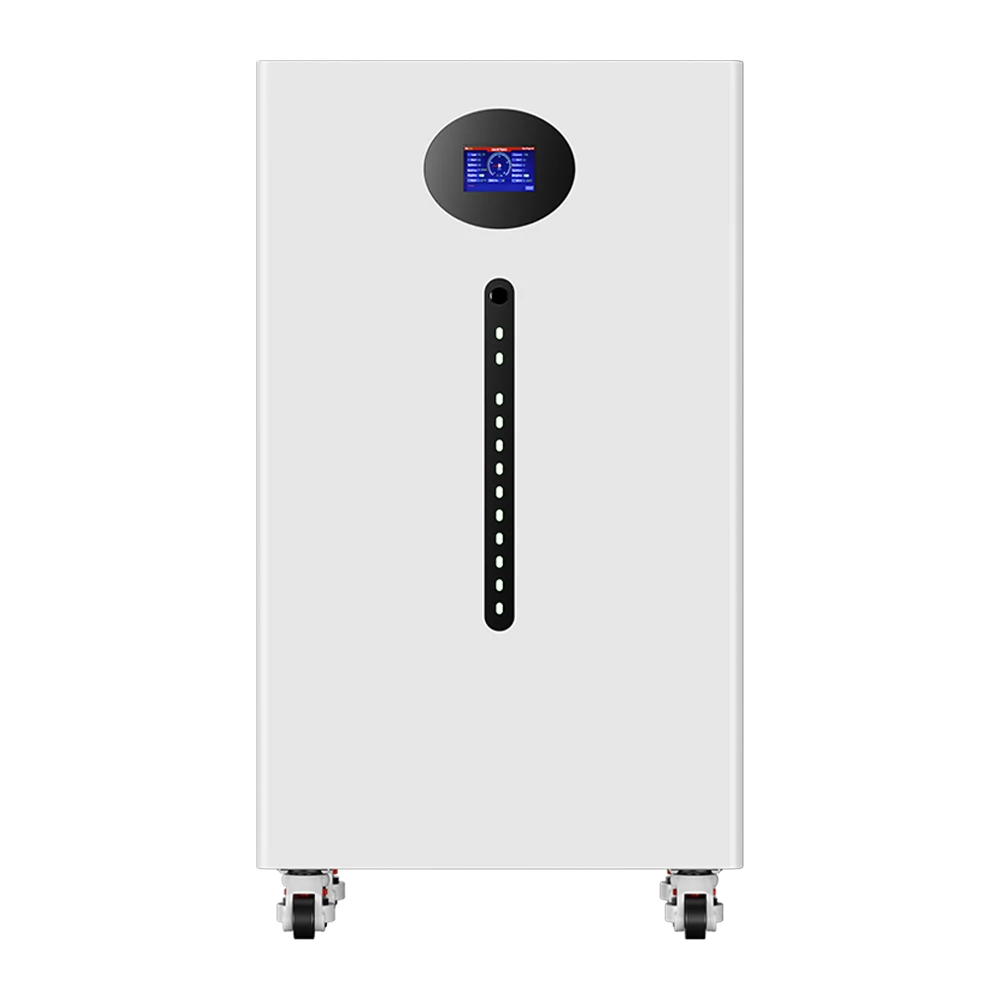
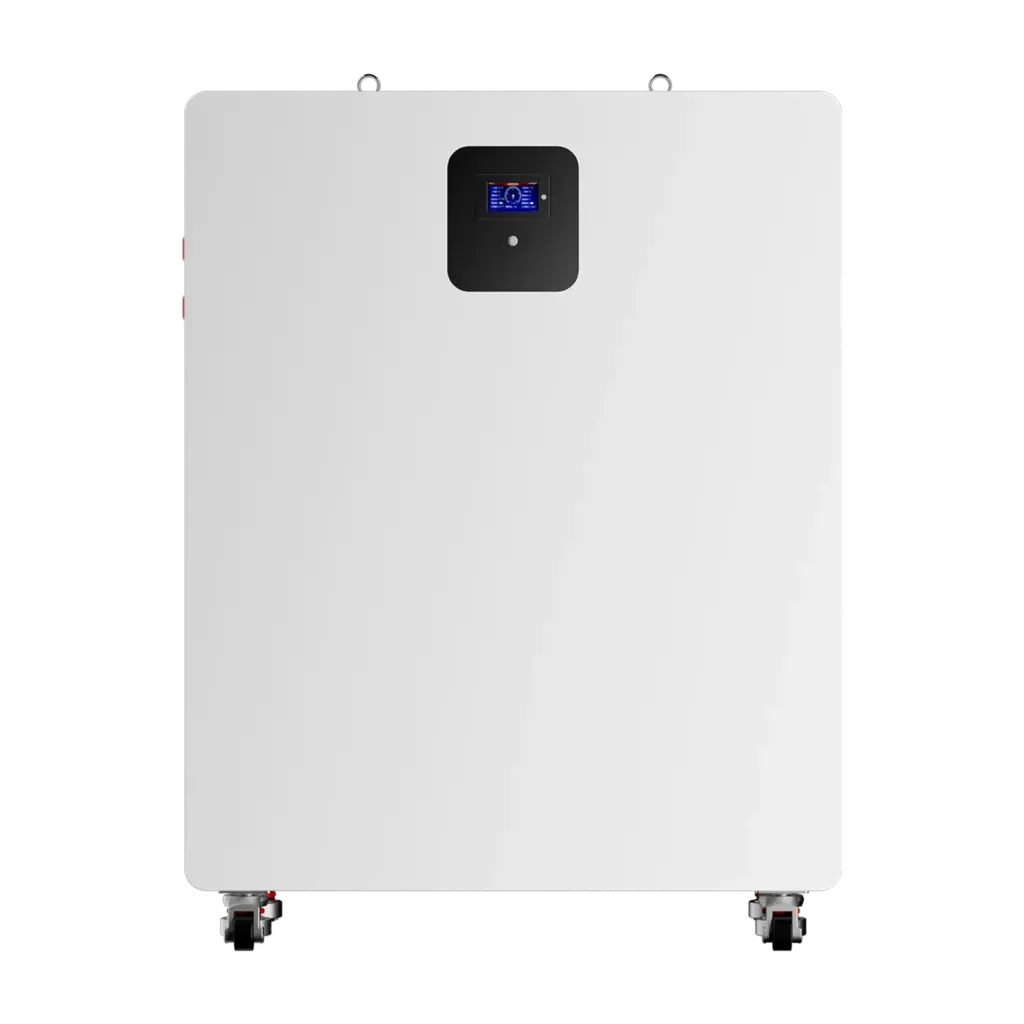
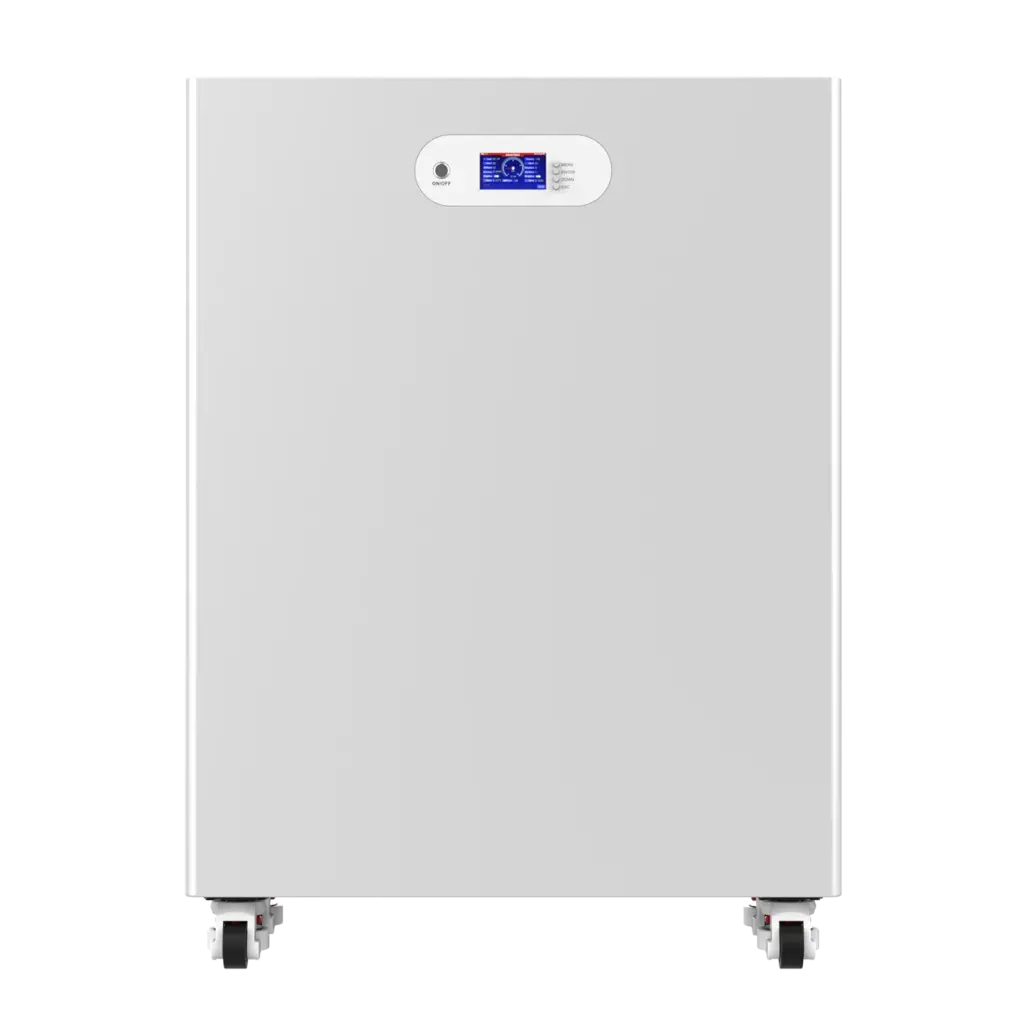
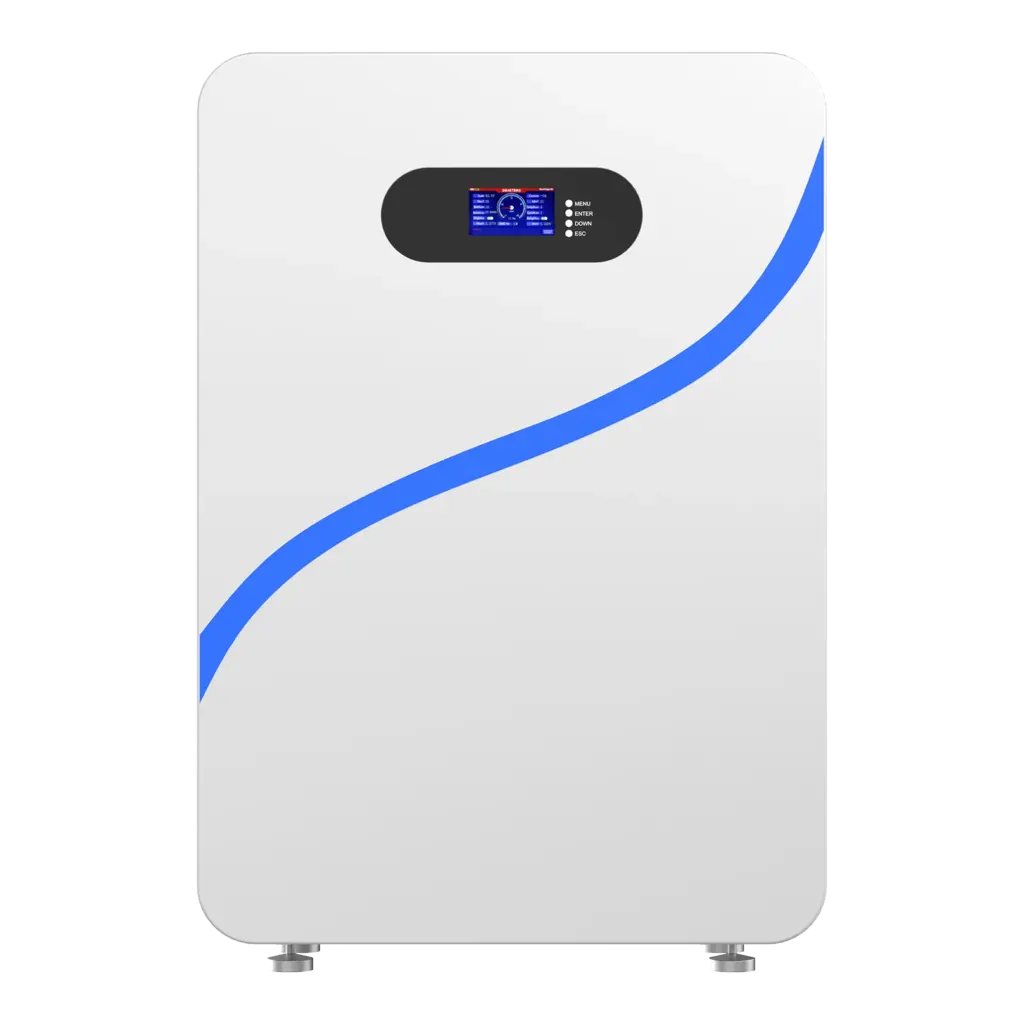
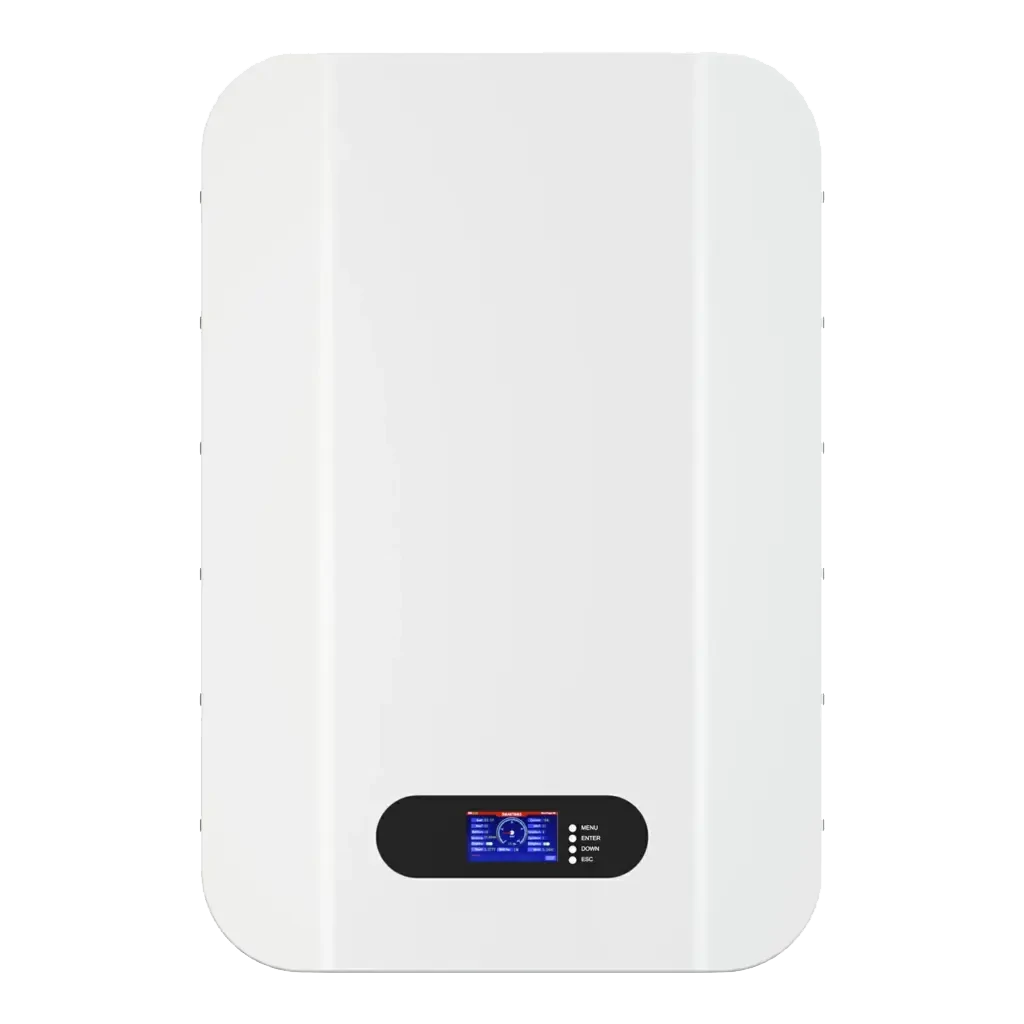
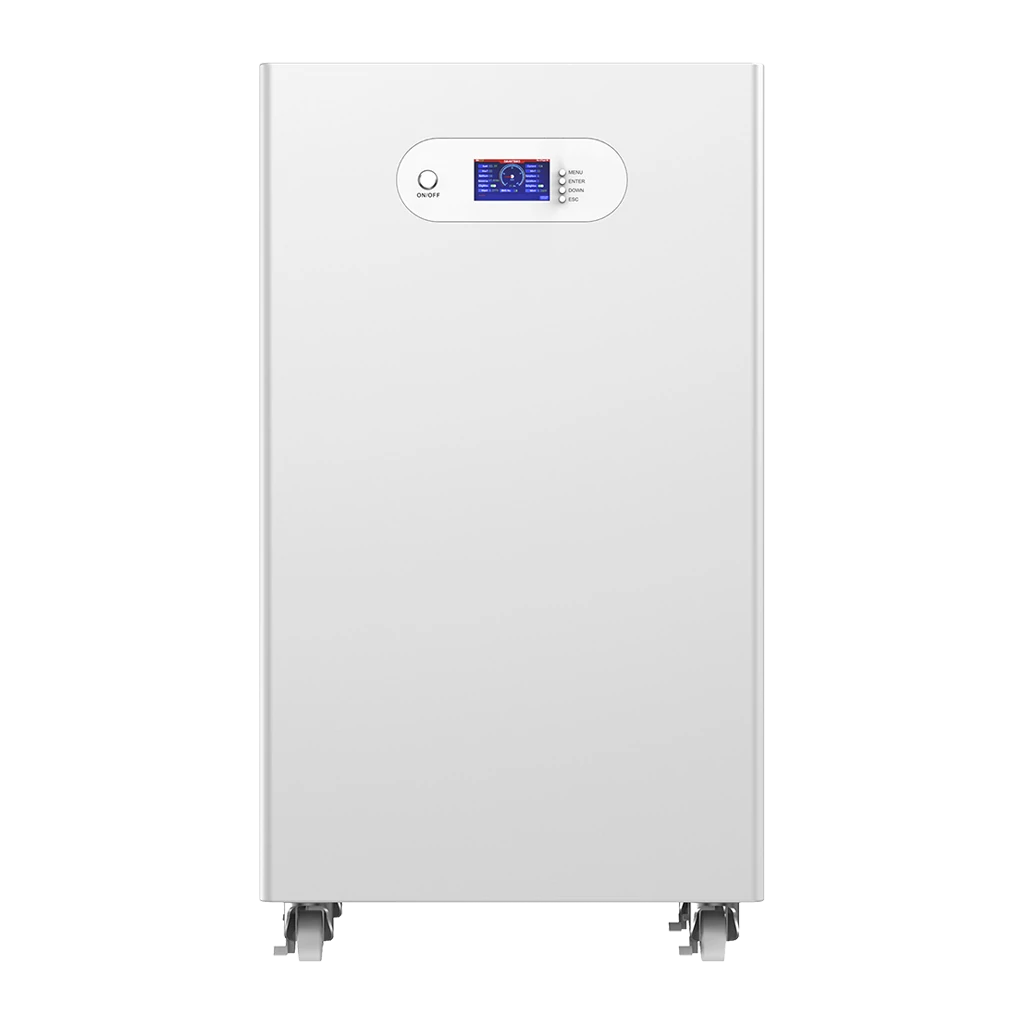
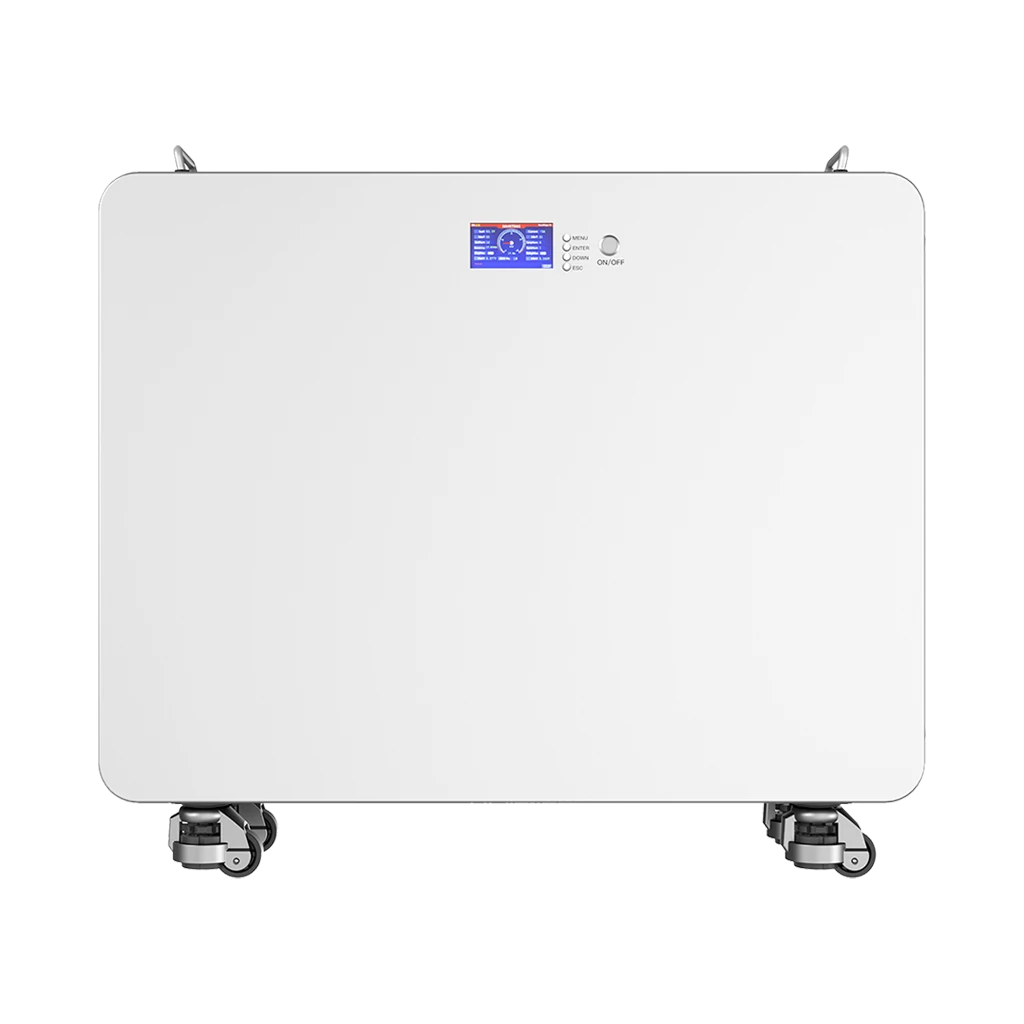
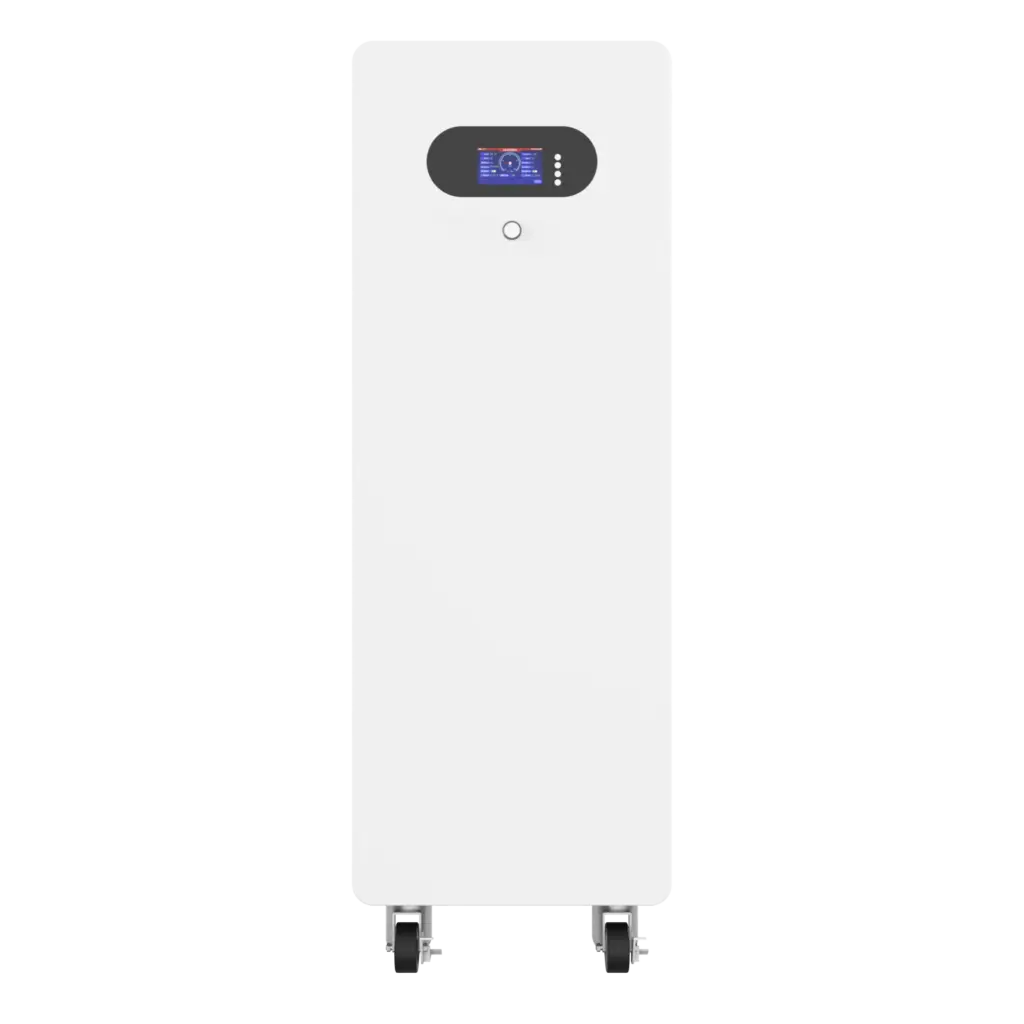
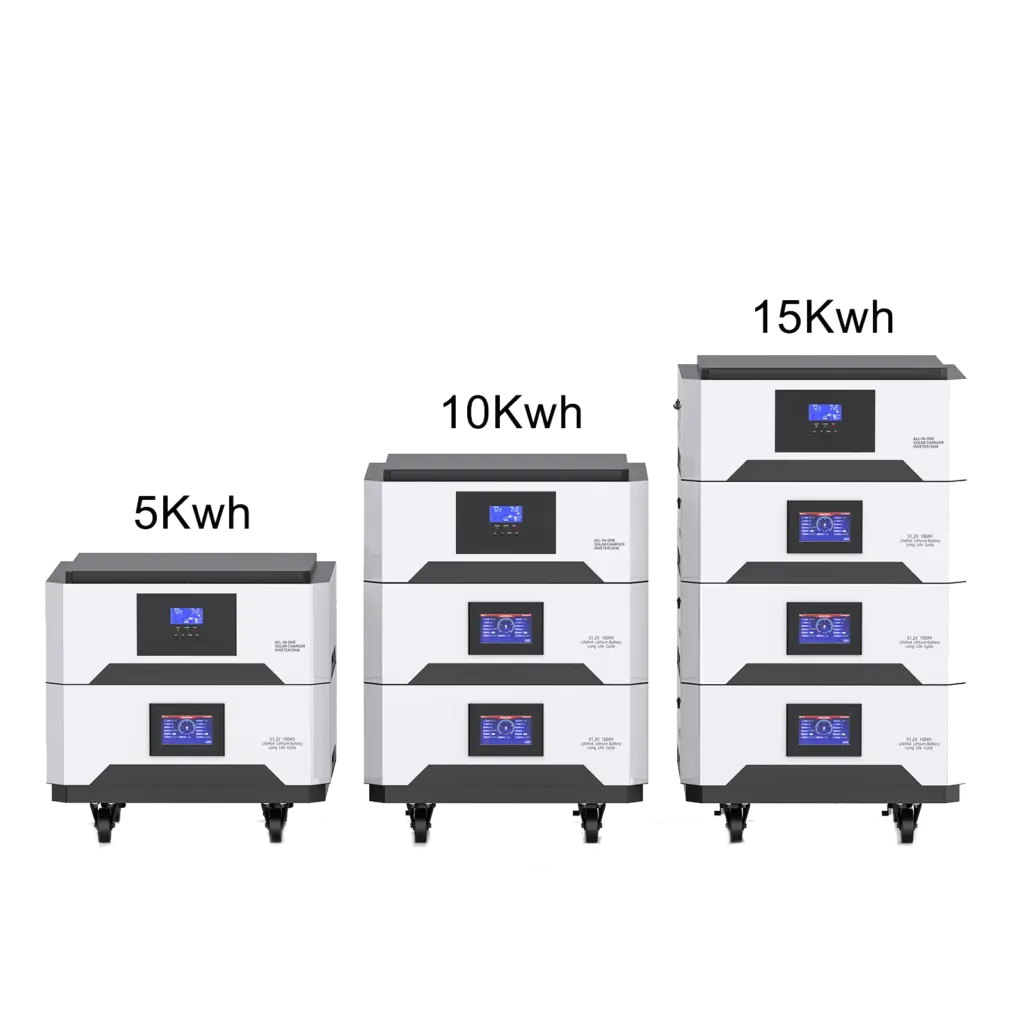
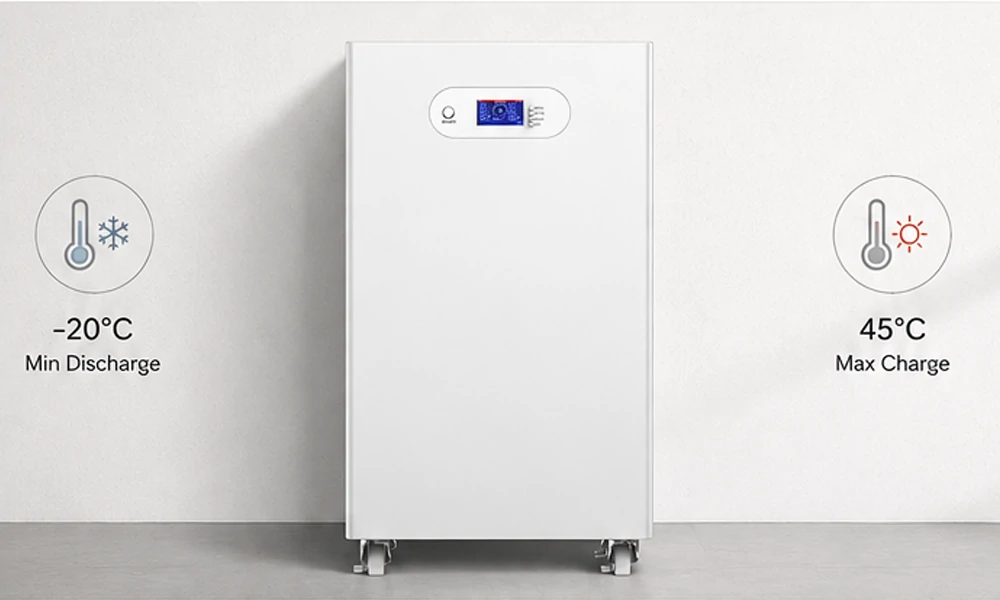
Consider a home using the Avepower 15kWh All-in-One Solar Battery, which combines a 15kWh LiFePO4 battery with a 6.2kW pure sine wave inverter.
Suppose the homeowner wants to keep these essential loads running during a 10-hour overnight grid outage:
| Appliance | Average Power | Runtime | Energy Use |
|---|---|---|---|
| Refrigerator | 120W | 10 hours | 1.20 kWh |
| LED lighting | 80W | 5 hours | 0.40 kWh |
| Wi-Fi router | 15W | 10 hours | 0.15 kWh |
| Television | 100W | 4 hours | 0.40 kWh |
| 2 laptops | 120W | 5 hours | 0.60 kWh |
| 2 fans | 100W | 8 hours | 0.80 kWh |
| Water pump | 750W | 0.5 hour | 0.38 kWh |
| Total | — | — | 3.93 kWh |
The calculation is simply the watts-to-kWh formula applied to each appliance.
For example, the refrigerator uses:
120W × 10h ÷ 1,000 = 1.2 kWh
The two fans use:
100W × 8h ÷ 1,000 = 0.8 kWh
Adding all seven loads gives:
1.20 + 0.40 + 0.15 + 0.40 + 0.60 + 0.80 + 0.38 = 3.93 kWh
So this household would require approximately 3.93kWh of AC energy for the specified overnight usage pattern.
Does a 15kWh Battery Have Enough Capacity?
Yes. A 3.93kWh calculated load is well below the battery's 15kWh nominal energy rating, leaving substantial capacity for conversion losses, battery reserve and additional loads.
The Avepower system also includes a 6.2kW rated inverter, so installers must check instantaneous power as well as total kWh consumption.
Conclusion
The correct formula is kWh = Watts × Hours ÷ 1,000. The calculation is simple, but accurate real-world results depend on using representative average power and actual operating time rather than blindly multiplying maximum nameplate wattage by the number of hours on the clock.
For quick reference:
- Watts to kWh:
W × h ÷ 1000 - Watts to kWh per day:
W × hours/day ÷ 1000 - Monthly kWh:
daily kWh × operating days - Electricity cost:
kWh × electricity rate - kWh to watts:
kWh × 1000 ÷ hours
Use the calculator for quick appliance and load estimates.
For battery and energy-storage sizing, continue from calculated load kWh to usable battery capacity, inverter output, system losses and the real operating load profile before selecting a system.
FAQ
A 100W device uses 0.1kWh in one hour. If it operates for 8 hours, it uses 0.8kWh; if it operates continuously for 24 hours at exactly 100W, it uses 2.4kWh.
A constant 500W load uses 0.5kWh per hour. Over four hours it uses 2kWh, while continuous operation for 24 hours would consume 12kWh.
1,000 watts running for one hour uses exactly 1kWh. The same 1,000W load running for five hours uses 5kWh, while 30 minutes of operation uses 0.5kWh.
A 1,500W load uses 1.5kWh per hour when it continuously draws the full 1,500W. Running for four hours therefore produces a theoretical energy consumption of 6kWh.
Multiply watts by the number of operating hours per day and divide by 1,000. A 200W appliance operating for five hours per day uses 200 × 5 ÷ 1000 = 1kWh/day.
Not exactly. Watts measure power and kWh measures energy. One kWh is the amount of energy associated with 1,000 watts operating for one hour, but many other combinations also equal 1kWh—for example, 500W for two hours.