
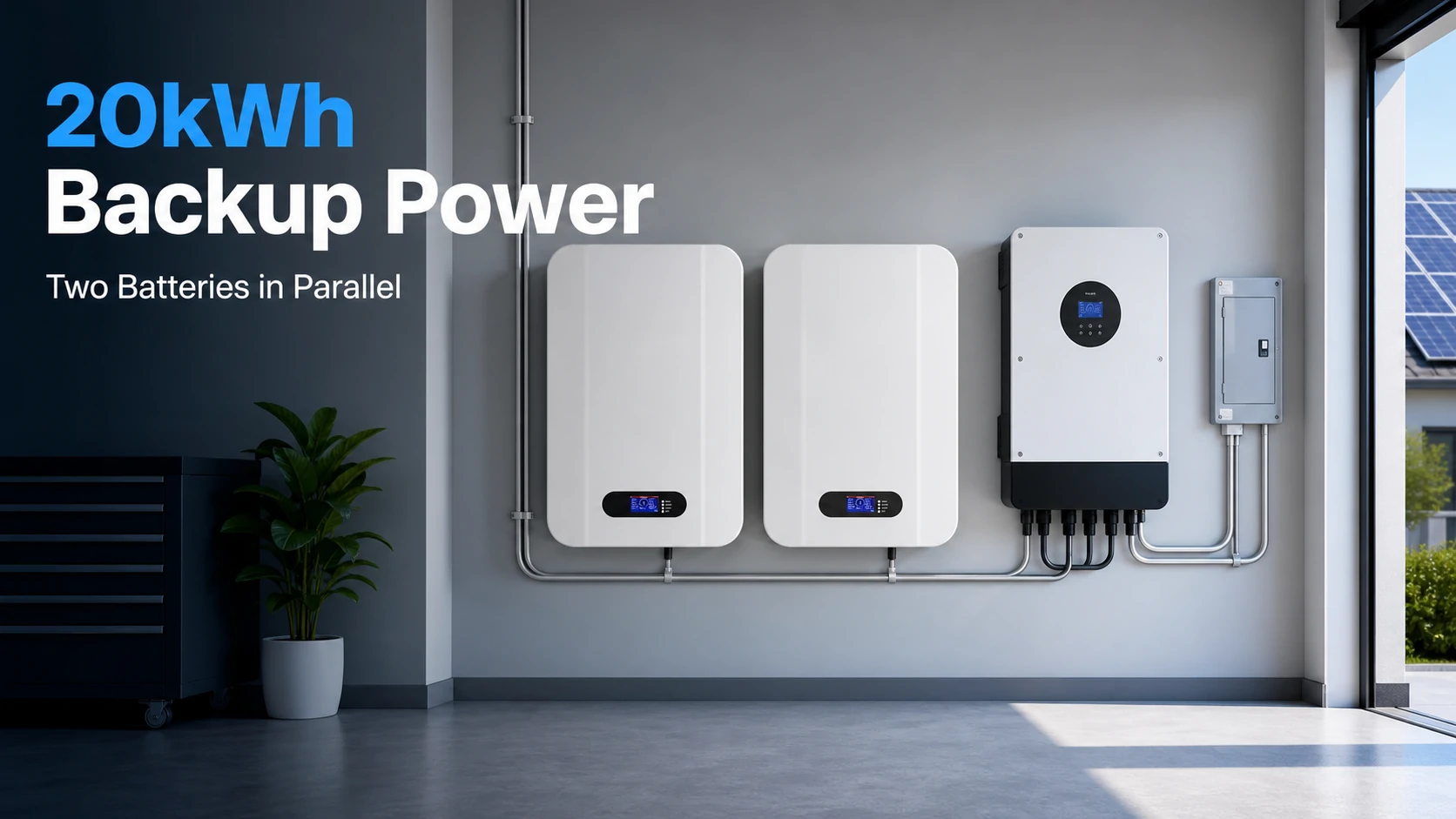
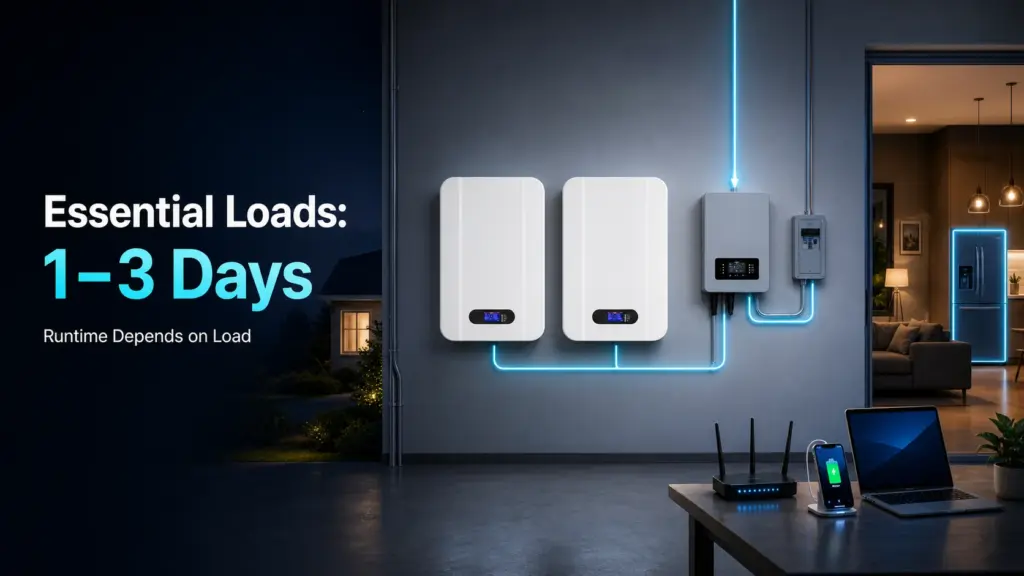
20kWh battery can usually power essential household loads for 1 to 3 days, an average whole-home load for about 10 to 18 hours, or heavy loads such as central air conditioning, electric heating, water heaters, ovens, and pumps for only 3 to 8 hours.
The basic formula is simple:
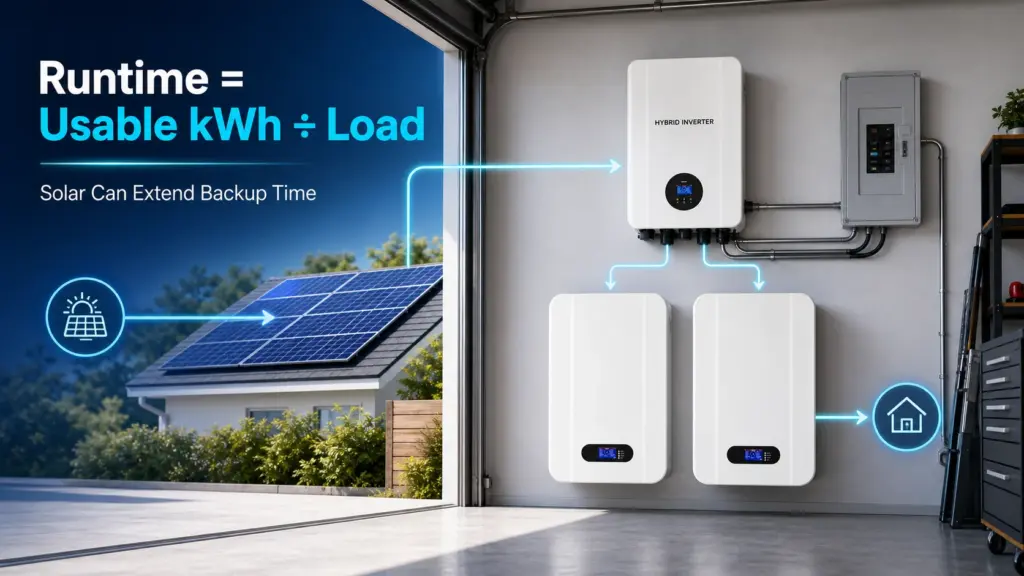
Battery runtime = usable battery capacity ÷ average household load
For example, if a 20kWh battery provides about 16–18kWh of usable AC energy after battery reserve and inverter losses, and your home is using 1kW on average, the battery may last around 16–18 hours. If your home is using 5kW, the same battery may last only 3–4 hours.
Quick Answer: How Long Can a 20kWh Battery Run a House?
A 20kWh battery can run a house for different lengths of time depending on the load profile.
| Home Usage Scenario | Average Load | Estimated Runtime from 20kWh Battery |
|---|---|---|
| Essential loads only: fridge, lights, Wi-Fi, phone charging | 0.5kW | 30–36 hours |
| Critical home backup: fridge, lights, router, fan, small appliances | 0.8kW | 20–24 hours |
| Efficient home, no major heating/cooling | 1.2kW | 14–16 hours |
| Average whole-home load | 1.5kW | 10–13 hours |
| Whole home with some HVAC use | 3kW | 5–6 hours |
| Heavy loads: AC, oven, water heater, pump, laundry | 5kW | 3–4 hours |
These estimates assume about 18kWh of usable energy after depth of discharge and conversion losses. Actual runtime can be higher or lower depending on your battery settings, inverter efficiency, temperature, battery age, and appliance use.
Not Sure If 20kWh Is Enough for Your Home?
Share your backup load requirements with Avepower. Our team can help you estimate the right battery capacity, inverter matching, and installation format for your home solar or backup power project.
Why a 20kWh Battery Does Not Always Give 20kWh of Usable Power
A battery labeled 20kWh does not always deliver the full 20kWh to household appliances.
Several factors reduce usable energy:
- Depth of discharge: Many batteries reserve part of their capacity to protect battery life.
- Inverter efficiency: DC battery power must be converted into AC power for household use.
- Temperature: Very cold or hot environments may affect usable performance.
- Battery age: Capacity slowly reduces over years of cycling.
- System settings: Backup reserve, discharge limits, and BMS protection may restrict output.
For planning, many installers use this conservative estimate:
20kWh nominal capacity × 90% usable DoD × 90% inverter efficiency = about 16.2kWh usable AC energy
Some high-quality LiFePO4 systems may offer better usable capacity, but it is safer to calculate with a margin.
What Can a 20kWh Battery Power During an Outage?
A 20kWh battery is often enough for essential backup, but not always enough for unlimited whole-home use.
Essential Loads
Typical essential loads include:
- Refrigerator
- LED lights
- Wi-Fi router
- Phone and laptop charging
- Security system
- Garage door opener
- Small fan
- Gas furnace blower
- Medical device, if required
If you only power essential circuits, a 20kWh battery can often support a home for one to three days, especially if the home is energy efficient.
Whole-Home Loads
Whole-home backup may include:
- Central air conditioning
- Electric water heater
- Electric oven
- Microwave
- Well pump
- Washer and dryer
- Pool pump
- EV charger
These appliances can drain a 20kWh battery quickly. For example, central AC and electric heating can use several kilowatt-hours in a short period. If you want true whole-home backup, you may need a larger battery bank, load control, or solar charging during the day.
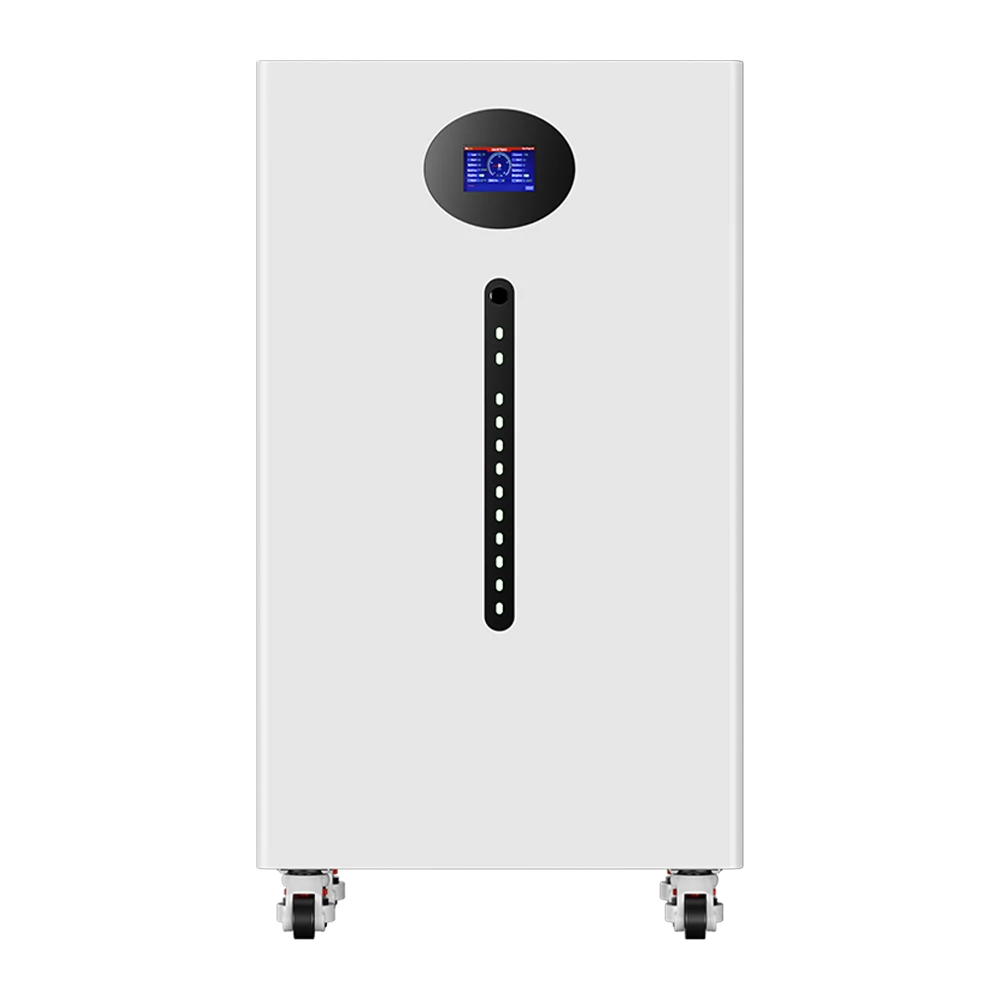
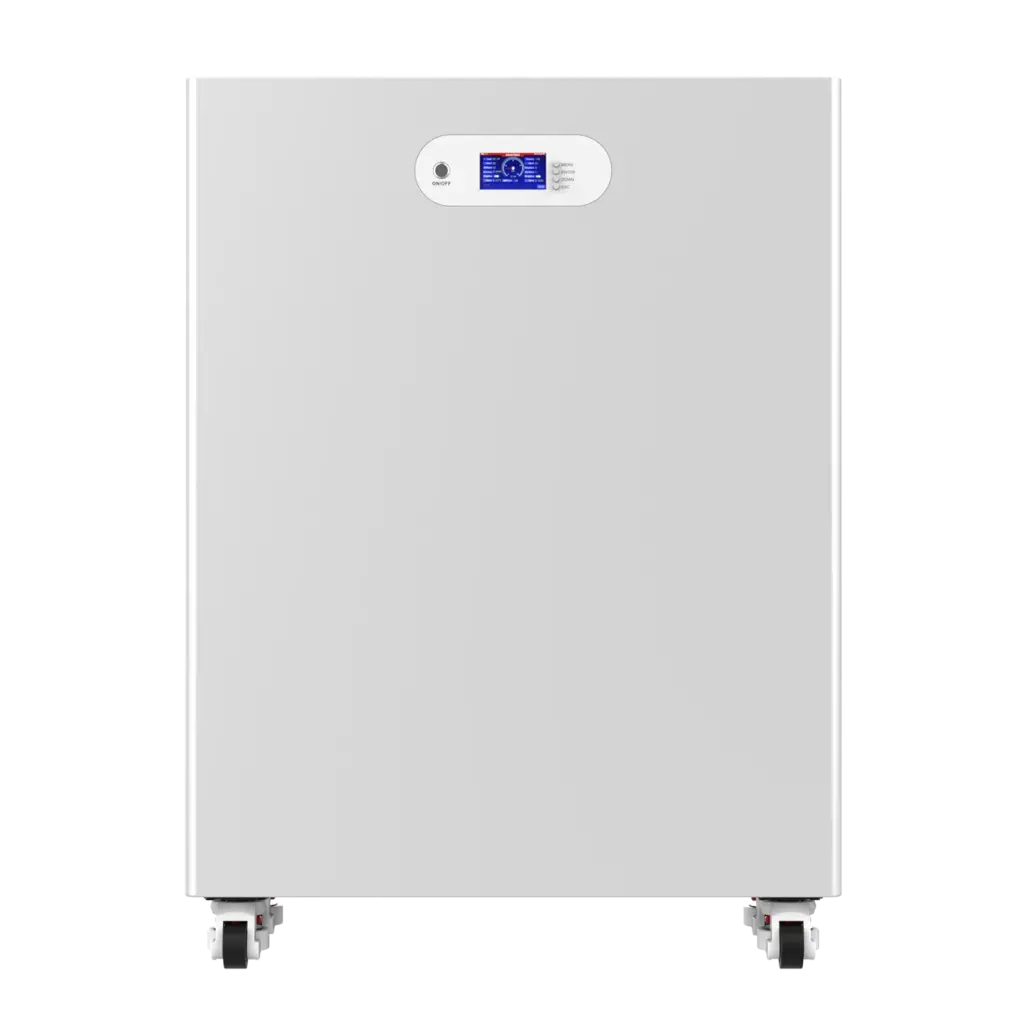
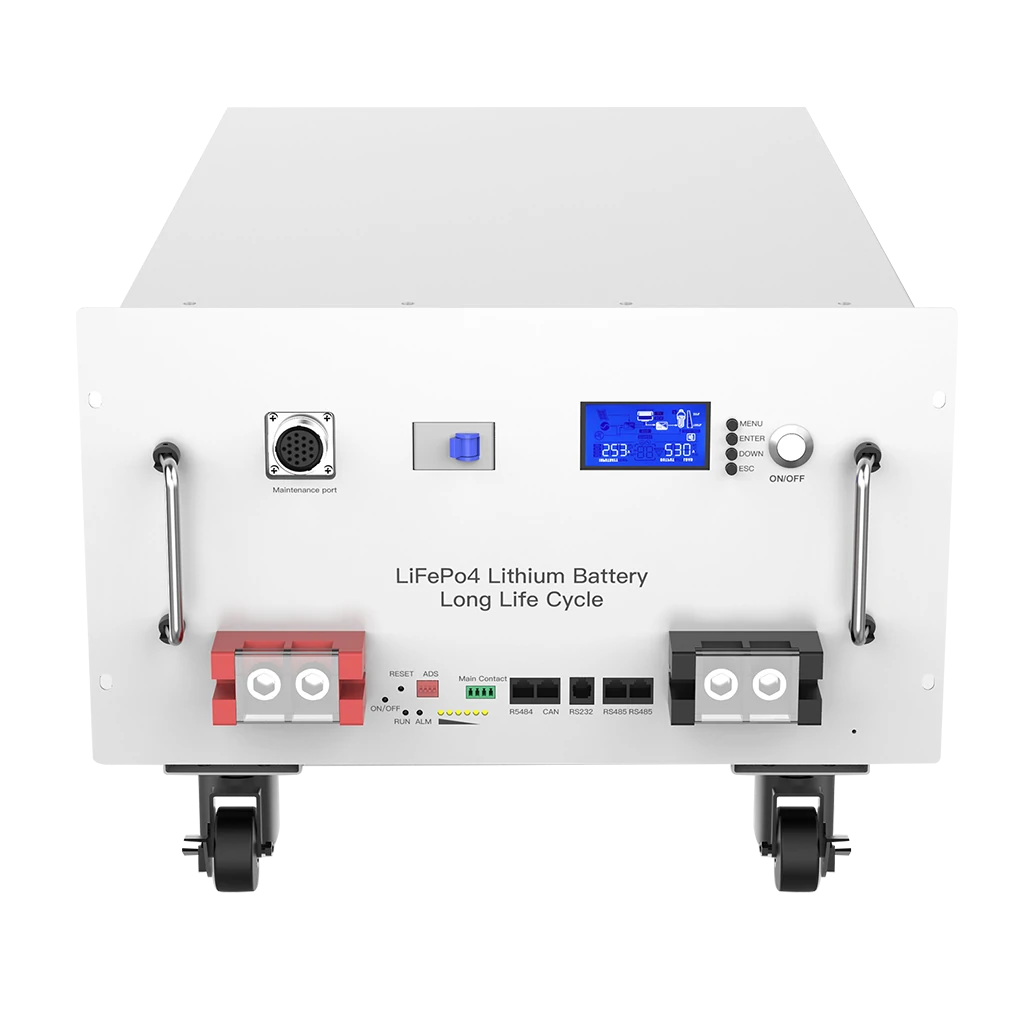
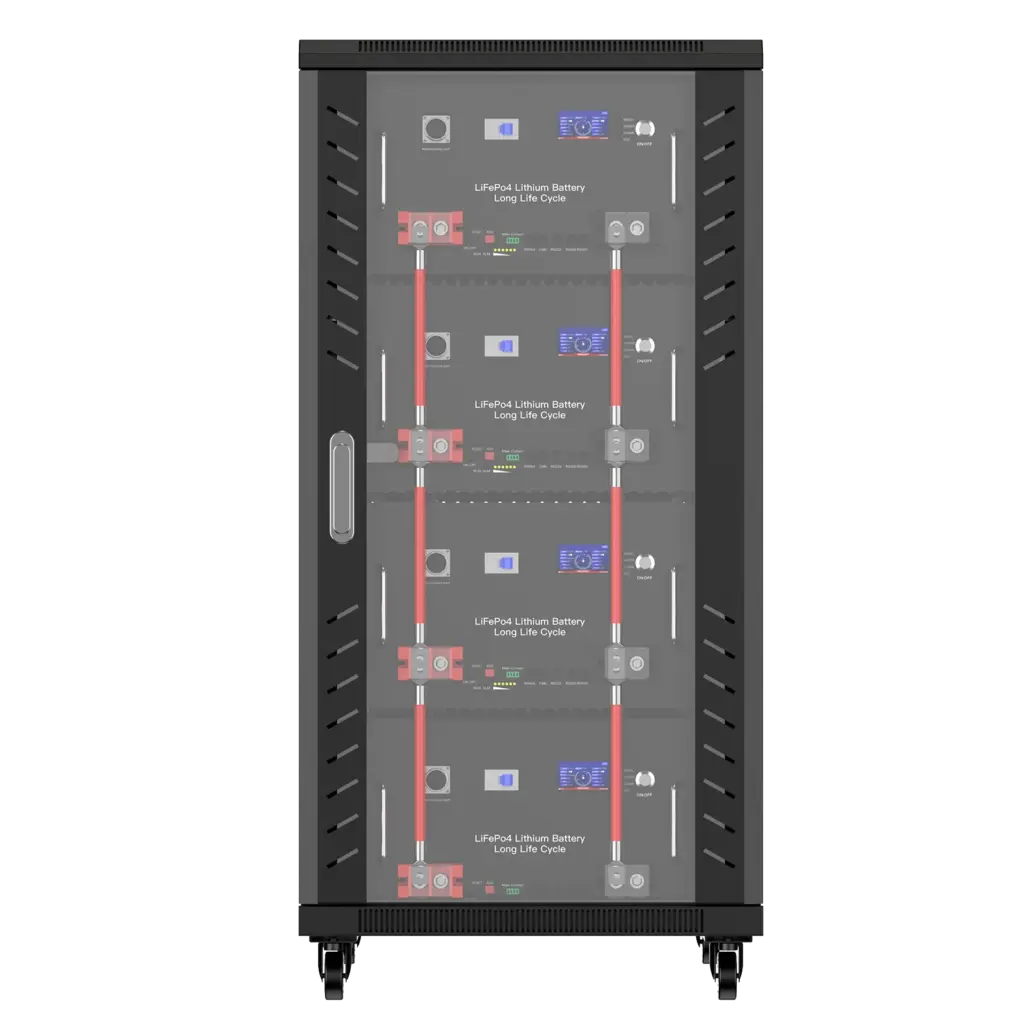
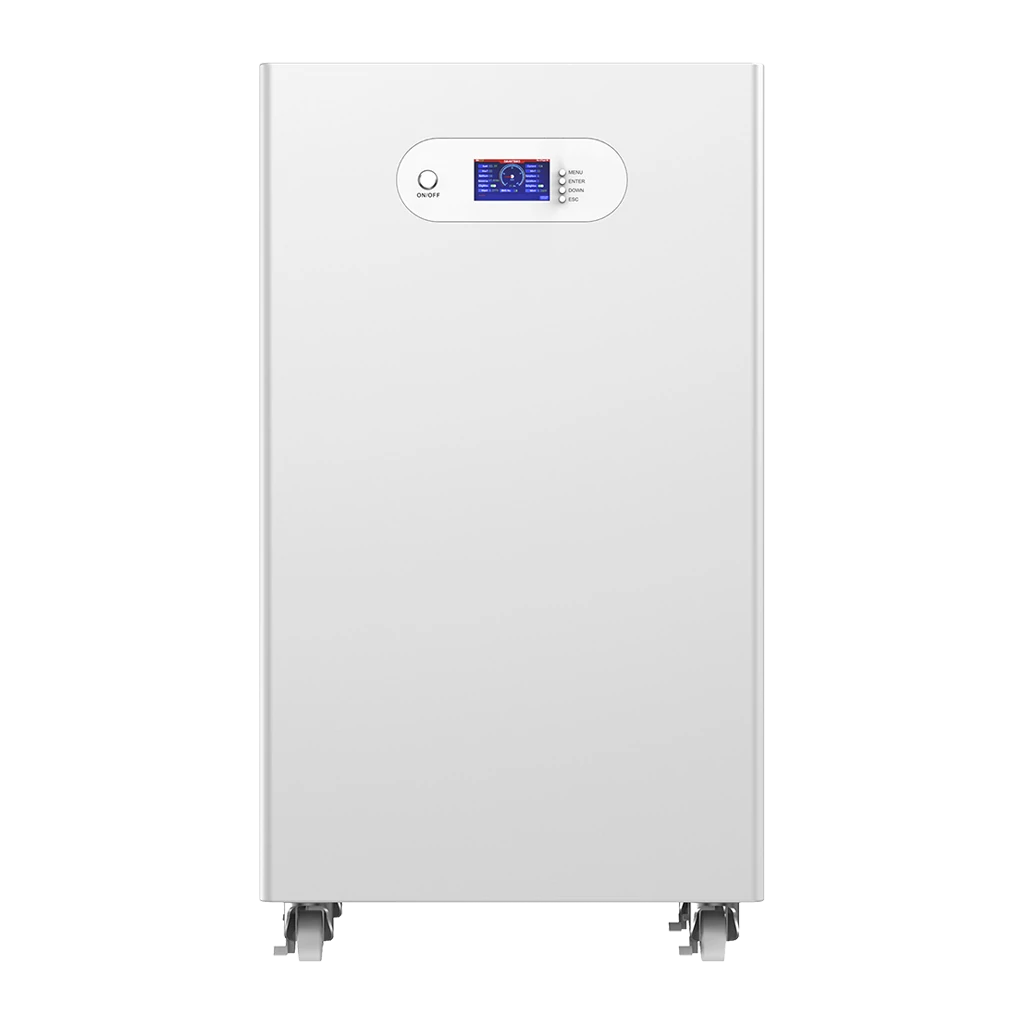
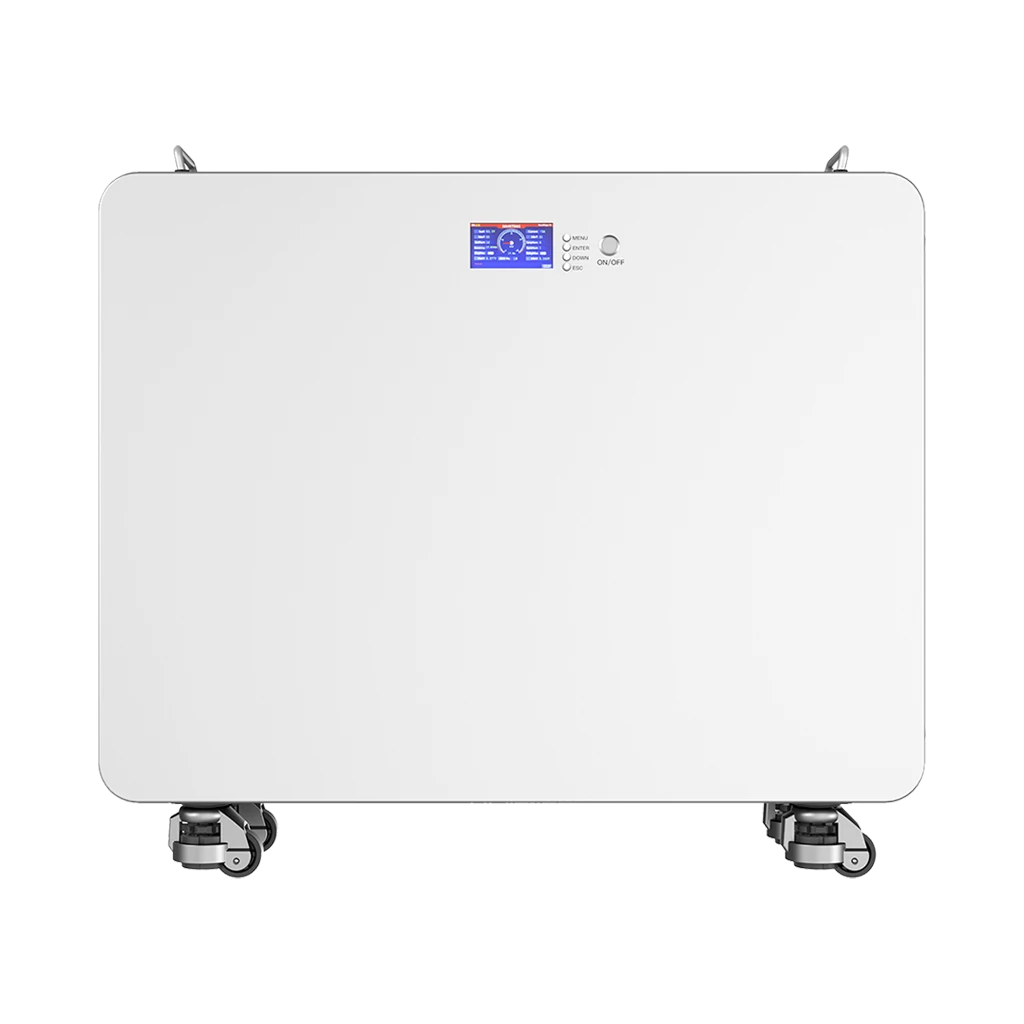
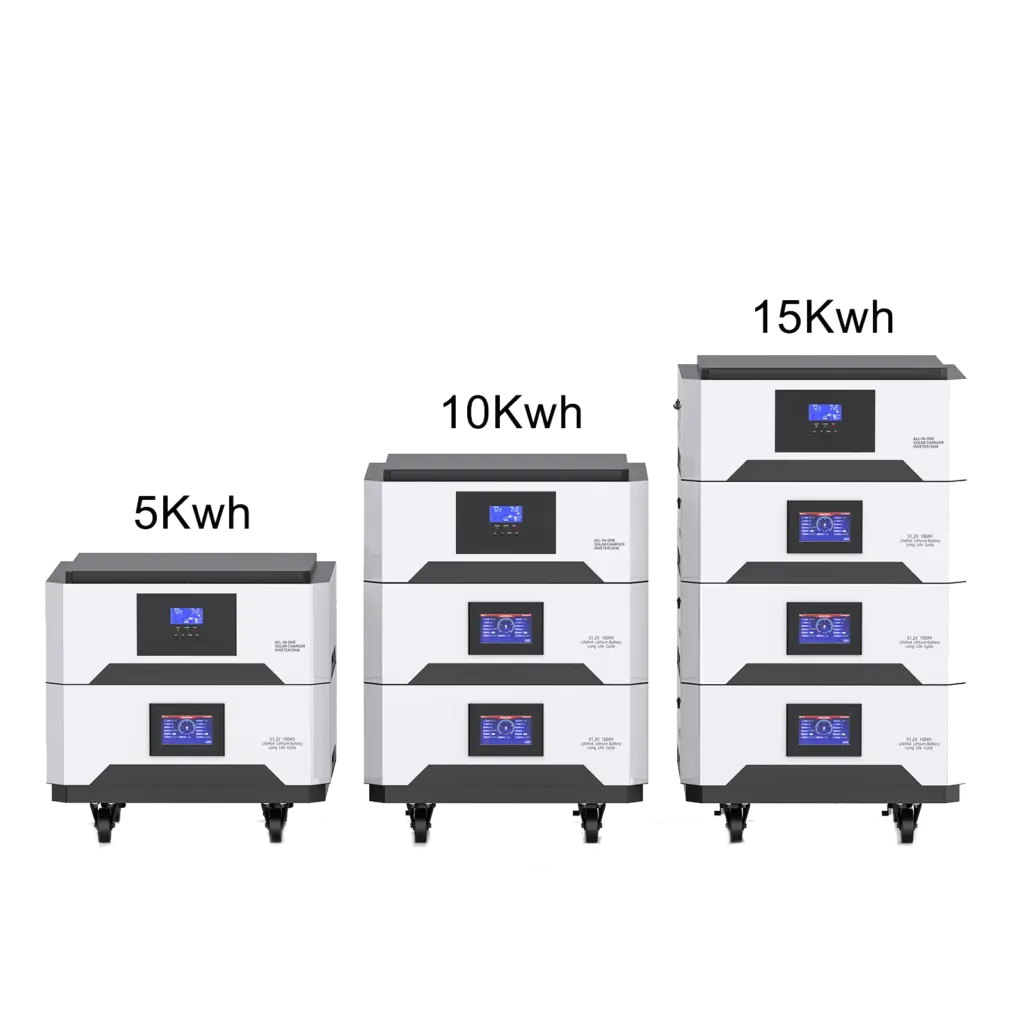
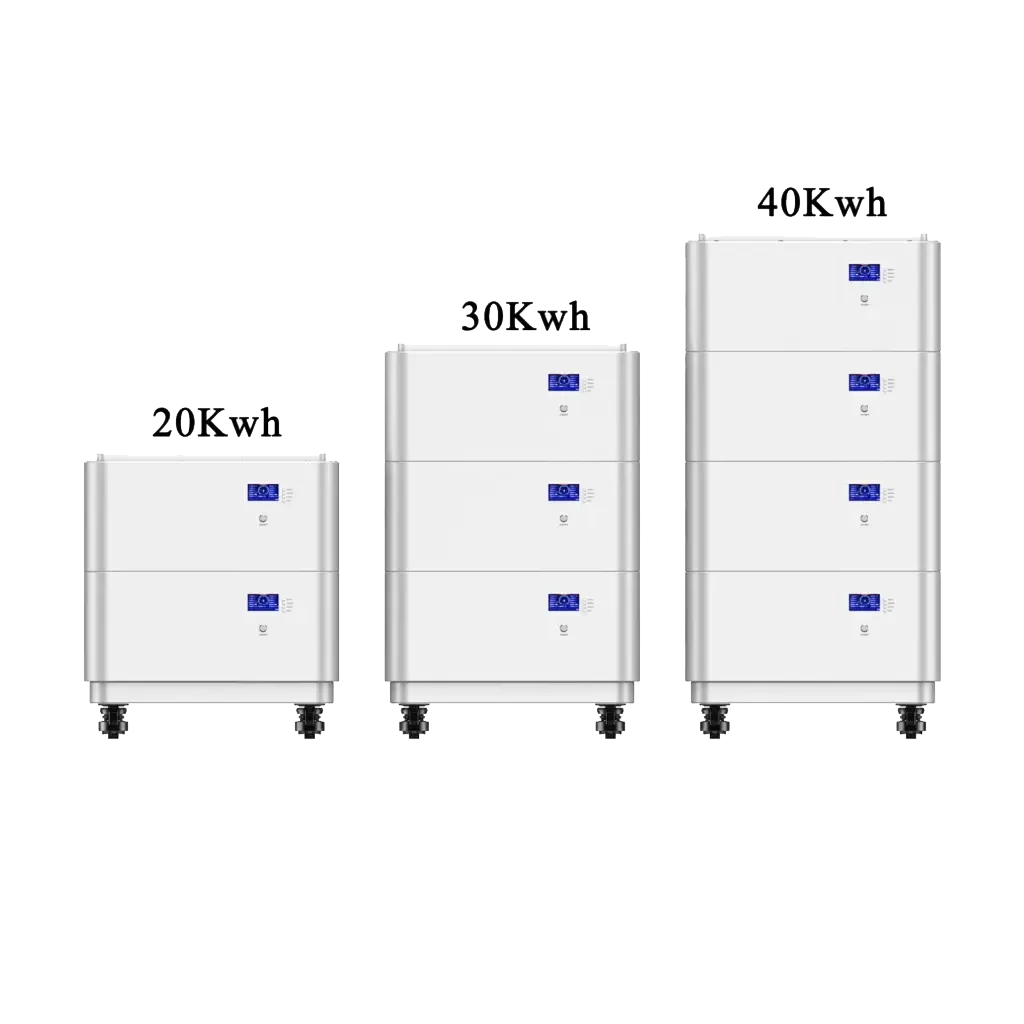
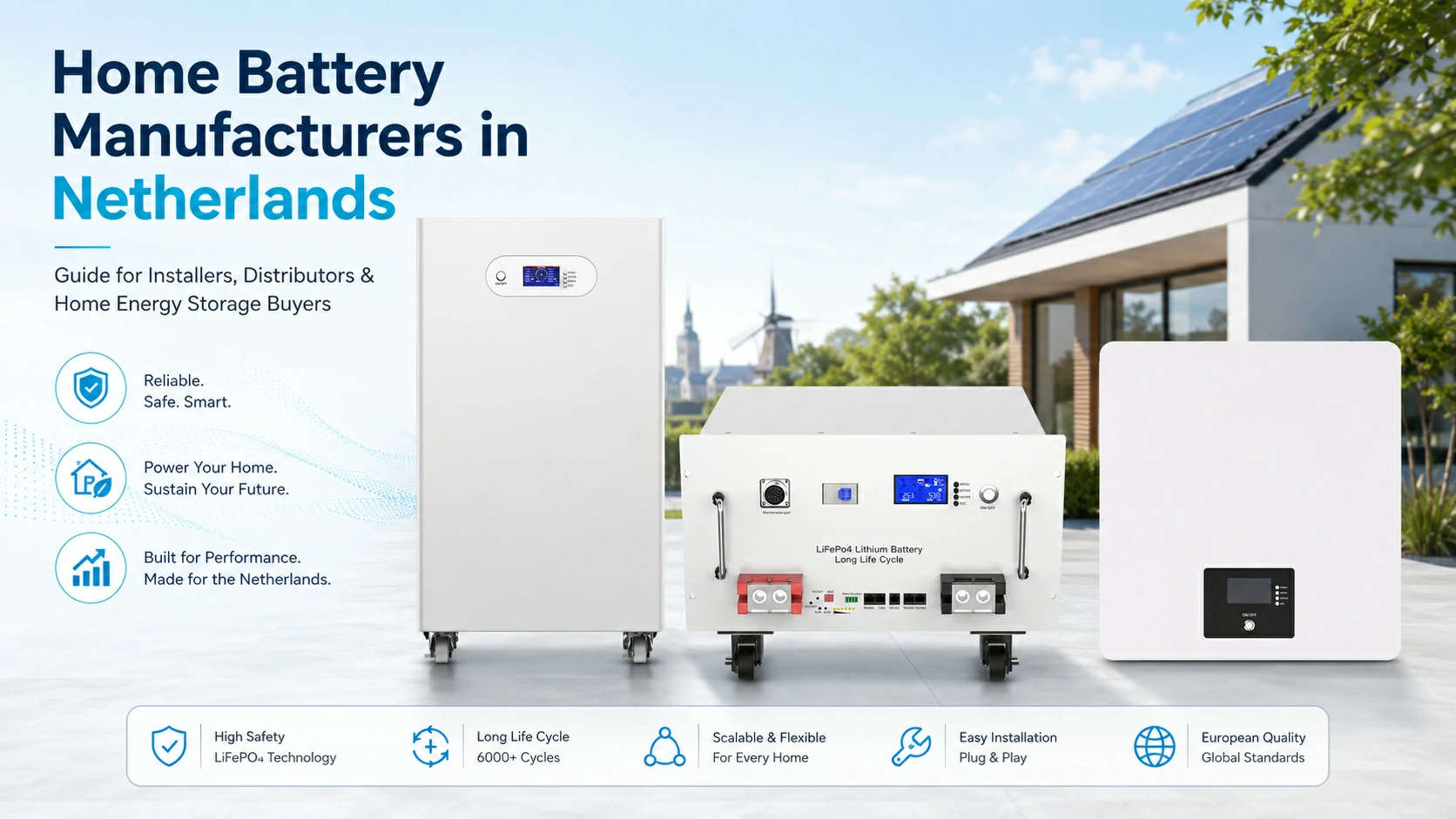
For a scalable residential setup, Avepower offers a 20kWh rack battery system designed for organized cabinet installation, solar storage, backup power, and small energy storage projects. For projects that may need more than 20kWh, the 20kWh, 30kWh and 40kWh stackable energy storage platform can be configured around backup time, load demand, and available installation space.
Example 20kWh Runtime Calculations
Let’s use a practical 20kWh battery example.
Assume:
- Nominal battery capacity: 20kWh
- Usable depth of discharge: 90%
- Inverter efficiency: 90%
- Estimated usable AC energy: 16.2kWh
Example 1: Essential Backup
Assume the battery has about 16.2kWh usable AC energy.
| Appliance | Estimated Power | Runtime Use |
|---|---|---|
| Refrigerator | 150W average | Continuous cycling |
| LED lights | 100W | Evening |
| Wi-Fi router | 15W | Continuous |
| Laptop and phone charging | 100W | Several hours |
| Small fan | 60W | Several hours |
Average load: about 0.5kW
16.2kWh ÷ 0.5kW = 32.4 hours
In this case, a 20kWh battery can last more than a day.
Example 2: Average Whole-Home Use
Now assume the home uses lights, fridge, Wi-Fi, electronics, kitchen outlets, and limited HVAC.
Estimated average load: 1.5kW
16.2kWh ÷ 1.5kW = 10.8 hours
This is a realistic runtime if the homeowner uses the battery more freely but avoids the largest appliances.
Example 3: Heavy HVAC or Electric Heating
If the home runs central AC, an electric oven, water heater, well pump, or laundry equipment, the average load may rise to 4–5kW.
At 4kW:
16.2kWh ÷ 4kW = 4.05 hours
At 5kW:
16.2kWh ÷ 5kW = 3.24 hours
This is why load control is essential. A 20kWh battery can support a house, but it cannot run every high-power appliance for a long period without solar charging or a larger battery bank.
How Solar Panels Change Battery Runtime
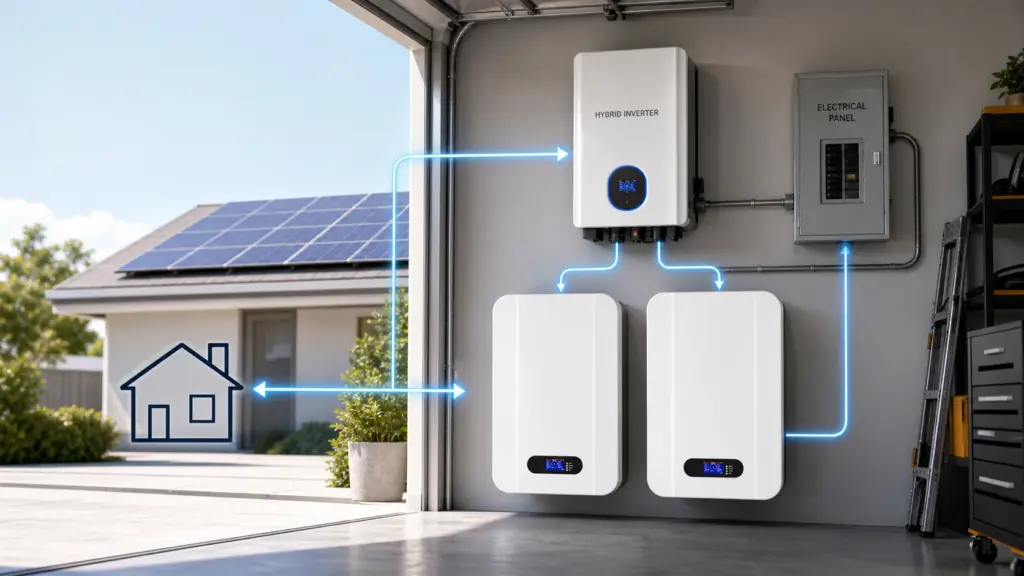
Solar charging can extend backup time significantly. If your solar panels recharge the battery during the day, a 20kWh system may support essential loads through a multi-day outage.
However, solar output changes with:
- Location
- Season
- Weather
- Roof orientation
- Shading
- Panel size
- Inverter configuration
- Whether the system supports backup operation during outages
For solar production estimates, homeowners and installers can use tools such as the NREL PVWatts Calculator to estimate local solar output. For general solar-plus-storage guidance.
A typical strategy is:
- Use solar during the day
- Charge the battery from excess solar
- Run essential loads overnight
- Avoid large loads until solar production returns
This approach can make a 20kWh battery feel much larger than it is.
Build a Scalable 20kWh Home Battery System
Avepower offers LiFePO4 battery systems for residential storage, installer projects, and distributor programs. Choose 20kWh today and expand as your backup needs grow.
20kWh Battery vs Two 10kWh Batteries
A 20kWh system can be built as one larger battery cabinet or as two 10kWh modules connected in parallel.
Two 10kWh batteries may offer advantages:
- Easier transport
- Flexible installation
- Modular expansion
- Cleaner service access
- Better space planning
- Future capacity growth
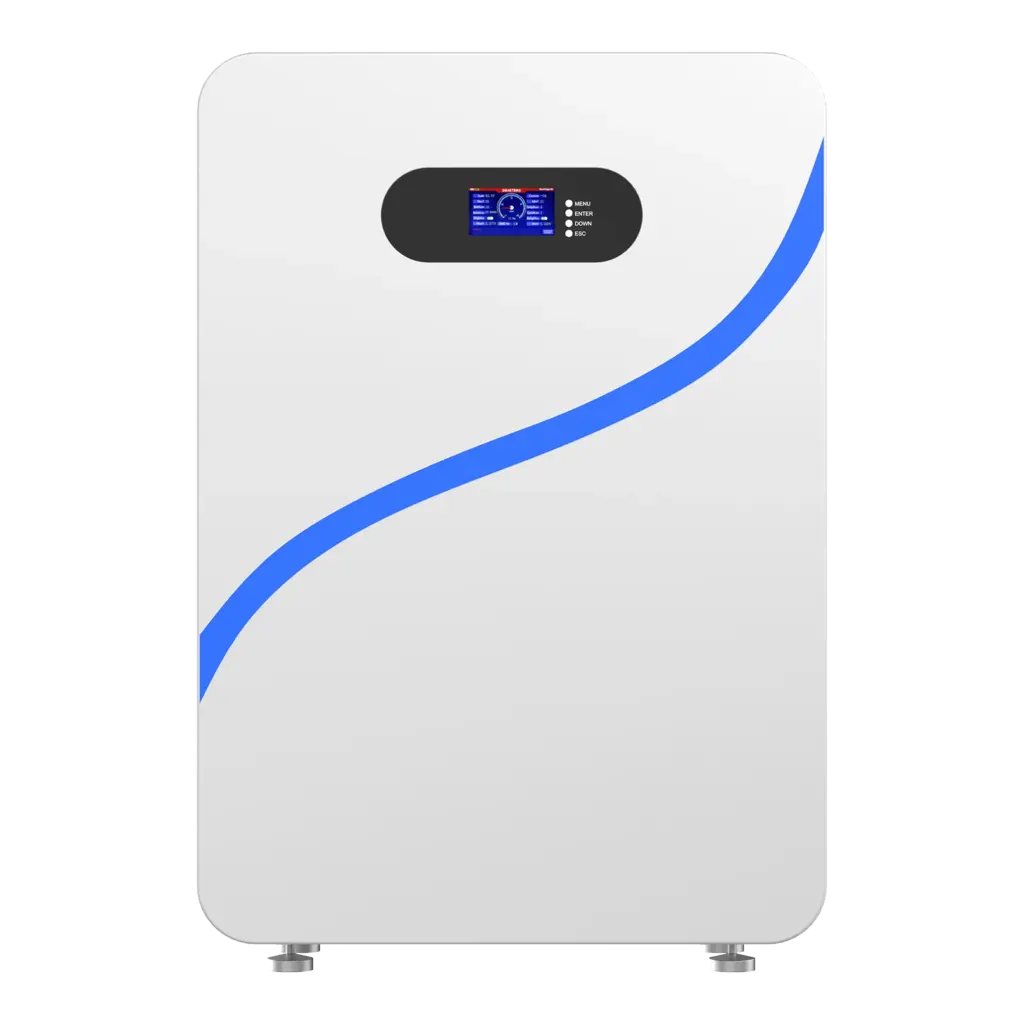
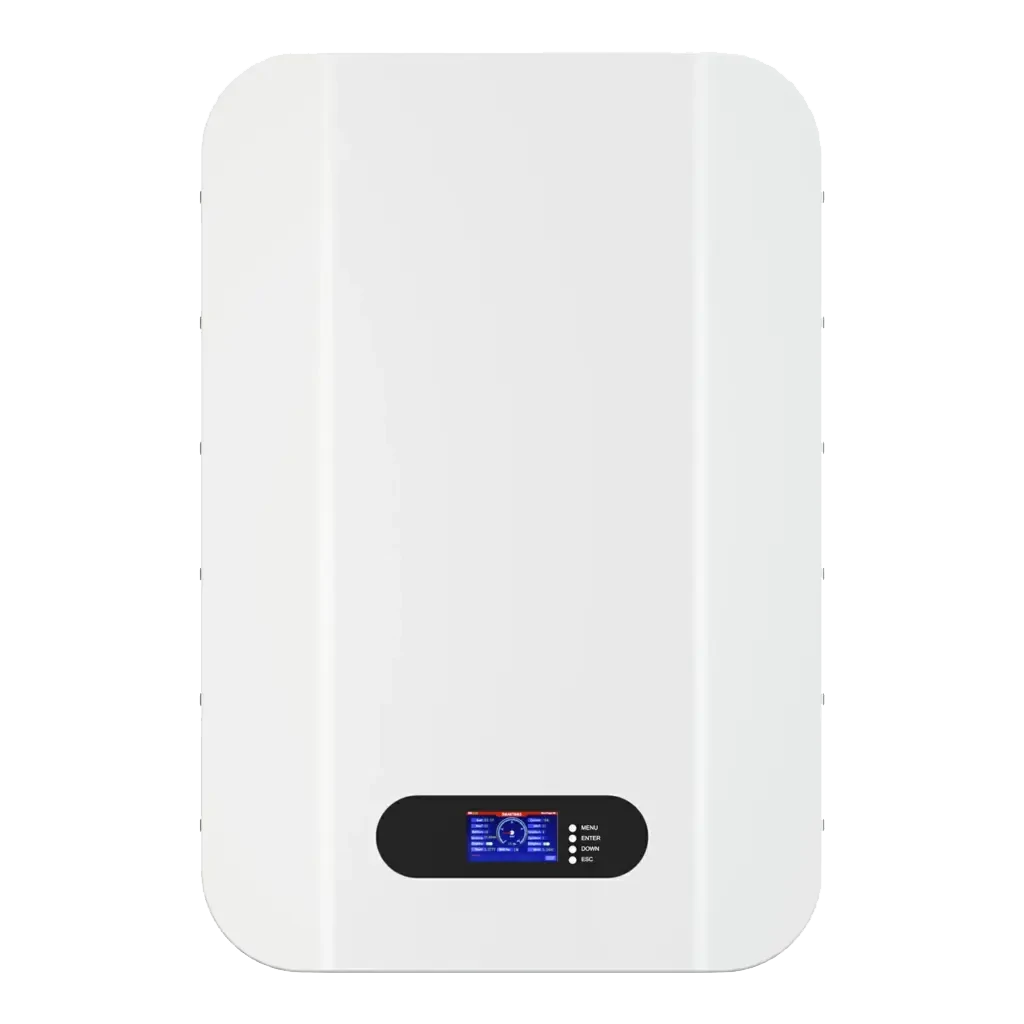
For example, one 10kWh wall-mounted battery may be enough for basic backup. Adding a second unit can create a 20kWh system for longer runtime. This approach is useful for installers who want to start with a standard product and expand capacity according to customer needs.
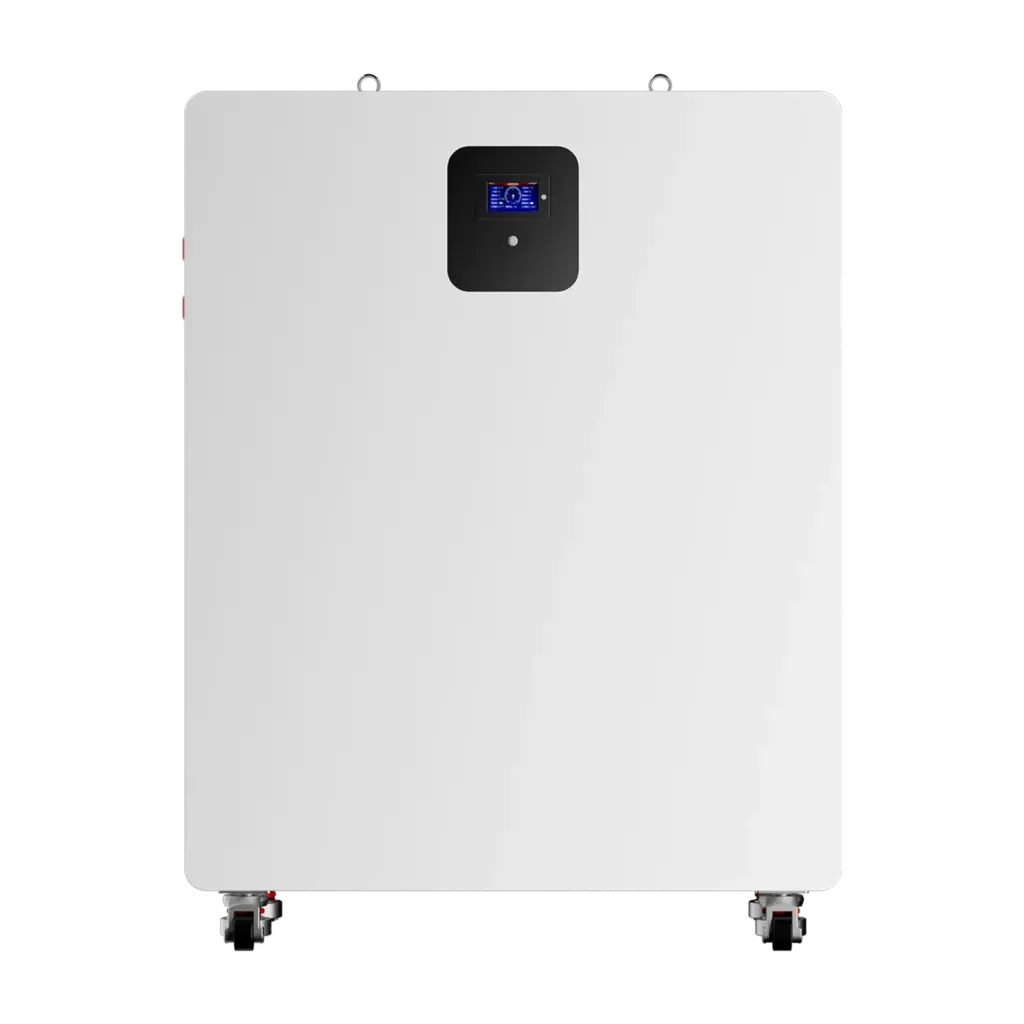
Avepower’s 10kWh wall mounted battery supports parallel expansion, making it suitable for homes that may need more backup time later.
How to Size a Battery for Your House
Use this step-by-step method:
- List the appliances you want to back up.
- Write down each appliance’s running watts.
- Estimate how many hours each appliance will run per day.
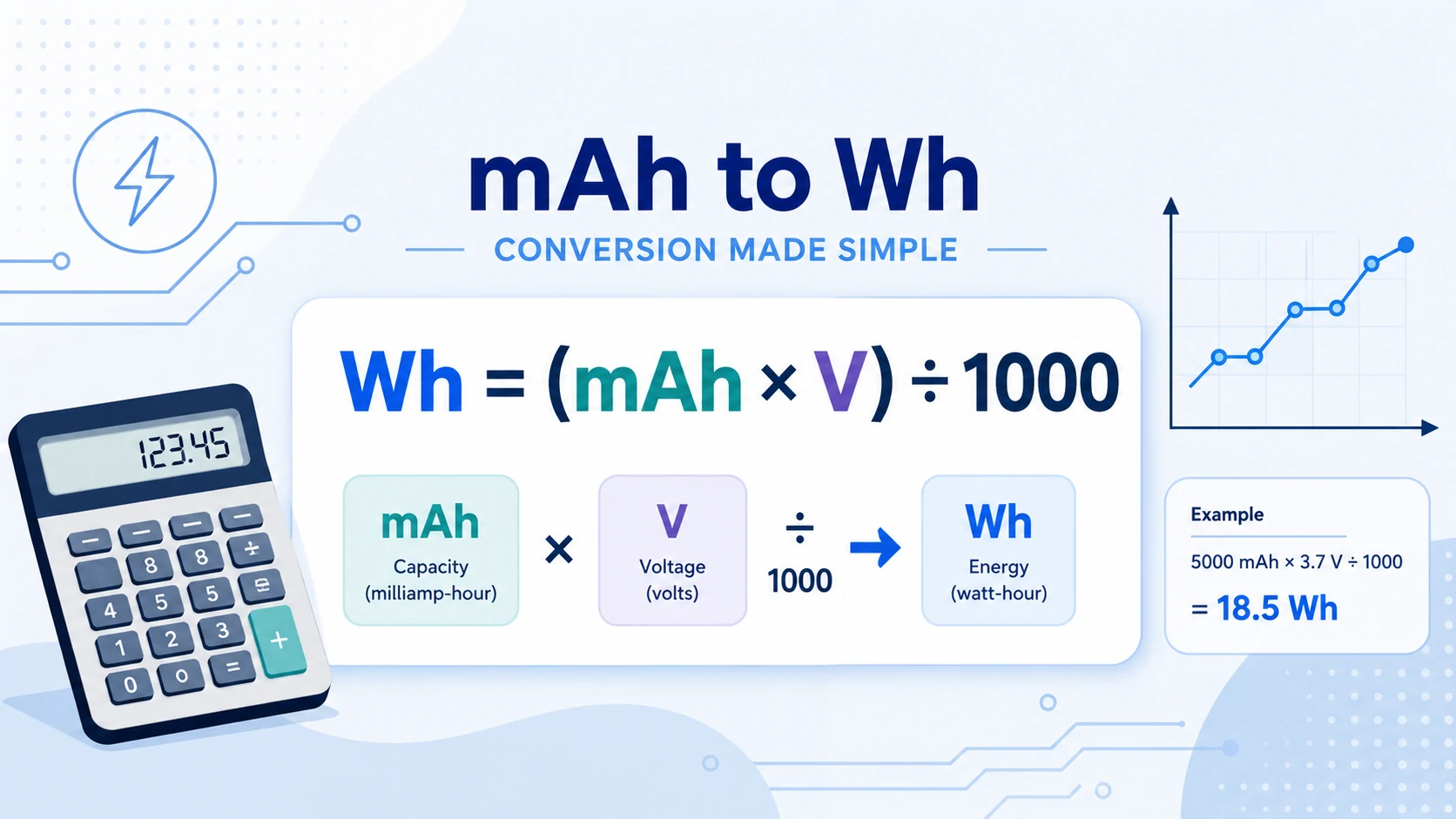
- Convert watts to kWh.
- Add a safety margin for inverter loss and battery reserve.
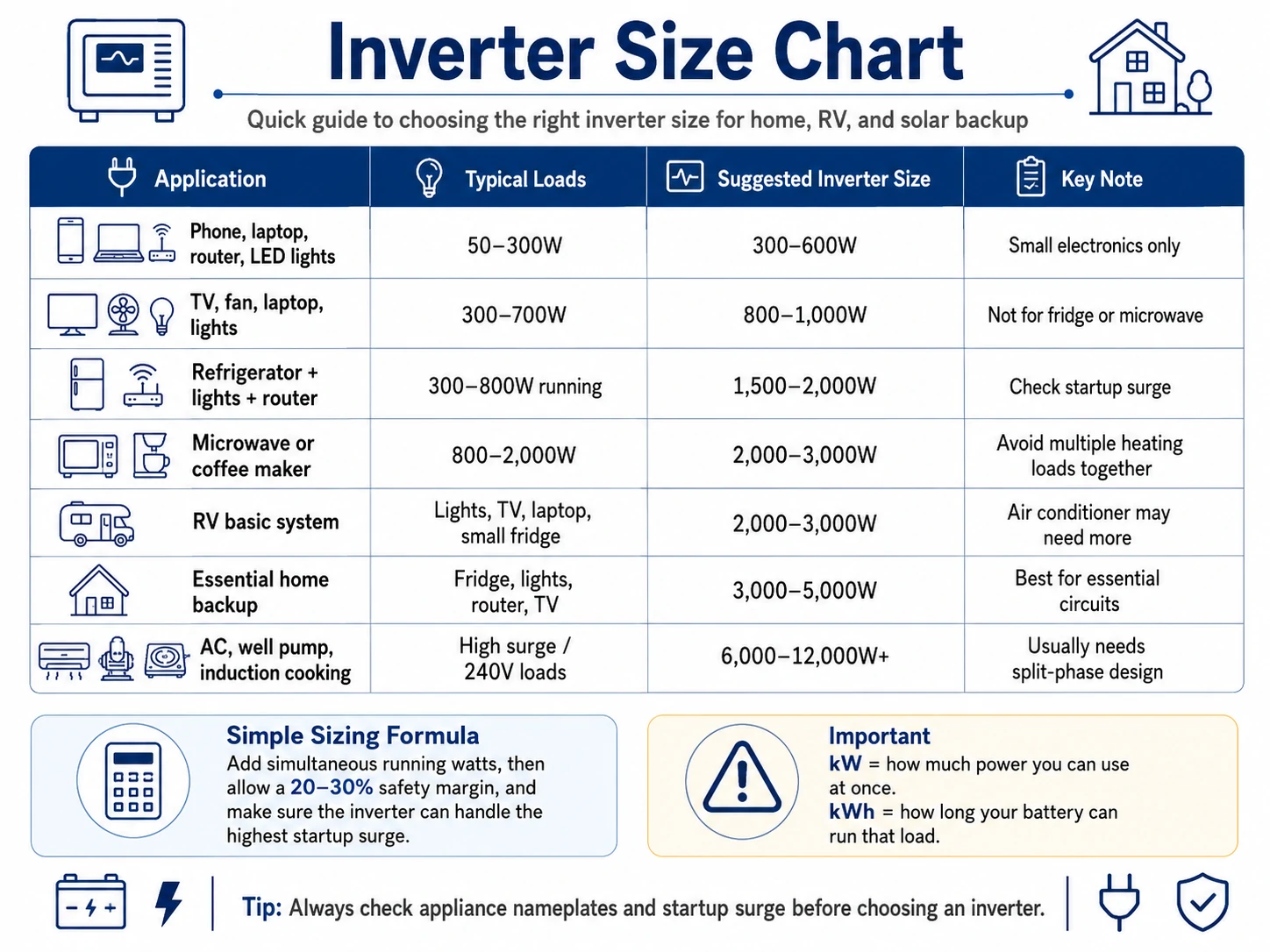
- Check inverter output and surge requirements.
- Decide whether solar will recharge the battery during outages.
Basic formula:
Required battery capacity = daily backup energy ÷ usable DoD ÷ inverter efficiency
Example:
If your essential loads need 10kWh per day:
10kWh ÷ 0.9 ÷ 0.9 = 12.35kWh nominal battery capacity
If you want two days of backup:
20kWh ÷ 0.9 ÷ 0.9 = 24.7kWh nominal battery capacity
This means a 20kWh battery may be excellent for one day of essential backup, but a 25kWh to 30kWh system may be better for two days without solar charging.
Why LiFePO4 Is Common for 20kWh Home Batteries
Most modern residential battery systems use lithium iron phosphate, or LiFePO4, because it offers strong safety, stable chemistry, long cycle life, and good suitability for daily solar charging and discharging.
For long-term use, battery chemistry matters as much as capacity. A battery that cycles daily for solar self-consumption must be designed for repeated charge and discharge. Avepower focuses on LiFePO4 battery systems for residential and light commercial storage, including wall-mounted, rack-mounted, stackable, vertical, and all-in-one formats. You can learn more about long-term battery performance in Avepower’s guide to LiFePO4 battery life.
Best Use Cases for a 20kWh Home Battery
A 20kWh battery is well suited for:
- Home outage backup
- Solar self-consumption
- Time-of-use electricity savings
- Nighttime solar energy use
- Backup for villas and residential buildings
- Small energy storage rooms
- Installer-led solar projects
- Distributor and OEM battery programs
- Light commercial backup systems
For broader system planning, Avepower’s residential battery energy storage systems solution explains how home batteries support solar energy storage, outage protection, and energy bill savings.
Practical Tips to Make a 20kWh Battery Last Longer
To extend runtime during an outage:
- Use a critical loads panel
- Avoid electric ovens, dryers, and EV charging
- Raise or lower thermostat settings to reduce HVAC demand
- Use fans instead of central AC when possible
- Run high-power appliances during solar production hours
- Keep refrigerator and freezer doors closed
- Monitor battery state of charge
- Choose efficient LED lighting
- Add more battery capacity if multi-day backup is required
For battery backup planning, Avepower’s guide on battery backup for home power outages provides more information about outage protection and home battery use cases.
Avepower Product Fit for 20kWh Home Backup
For a 20kWh residential battery project, Avepower can support different installation styles:
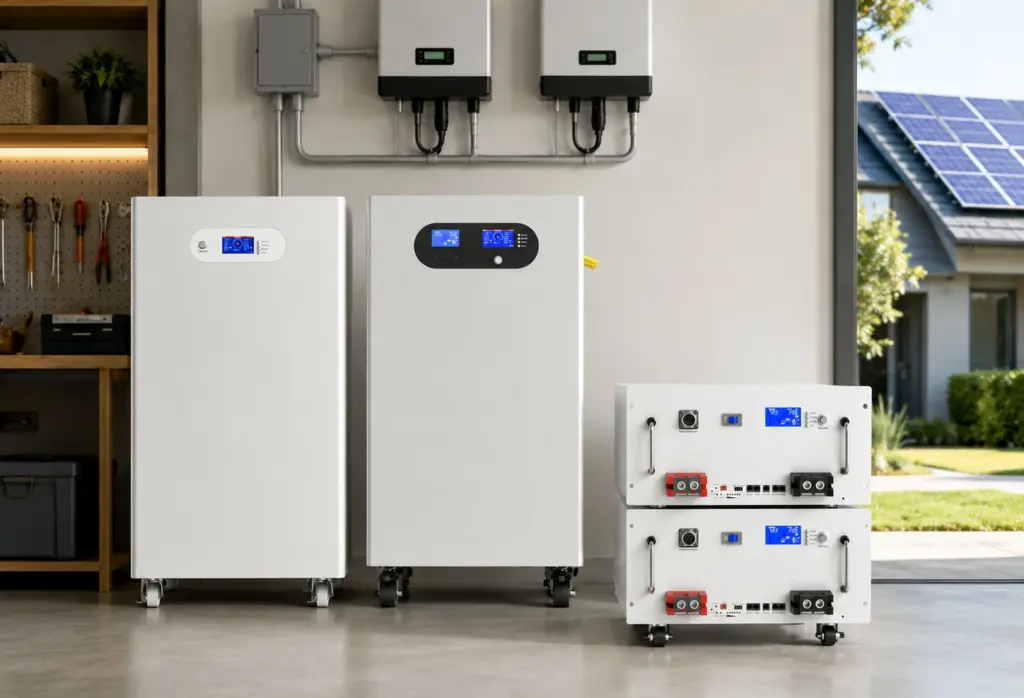
- Rack cabinet battery system for organized equipment rooms
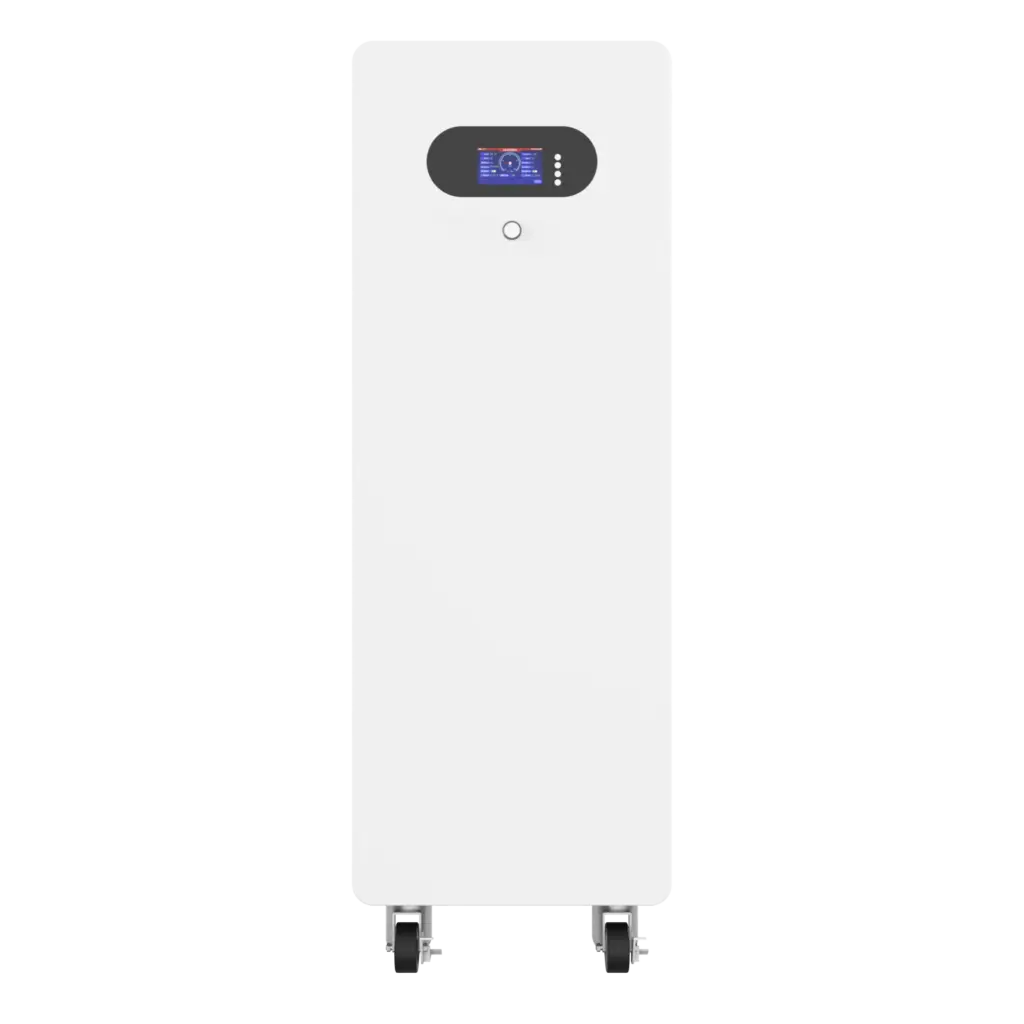
- Stackable battery system for modular expansion
- Wall-mounted battery system for compact residential spaces
- Customized OEM/ODM battery configurations for distributors and project buyers
- Inverter communication support through CAN, RS485, and RS232 options
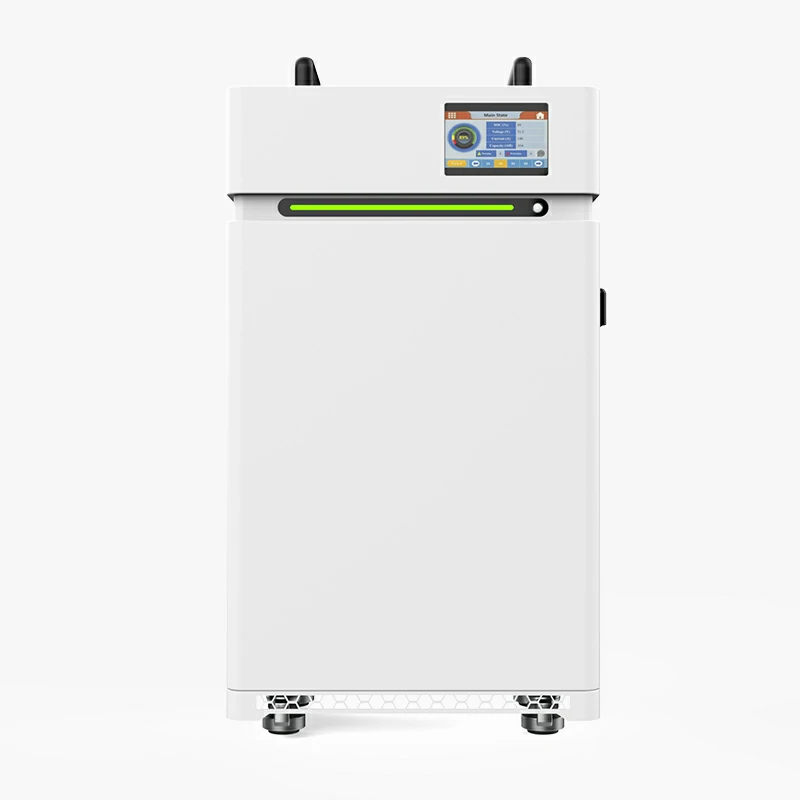
Avepower’s 20kWh rack system uses LiFePO4 battery modules in a cabinet-style structure, making it suitable for solar storage, backup power, and small commercial energy storage projects. For installers, distributors, and EPC teams, Avepower also provides home battery systems for installers with compatibility support and tailored project solutions.
Take Control of Your Energy with Avepower!
Reliable home solar battery solutions with OEM/ODM customization and in-house manufacturing, tailored to the needs of distributors, installers, and energy partners.
Final Answer: How Long Will a 20kW Battery Power a House?
If you mean a 20kW battery output, runtime cannot be calculated unless you know the battery’s kWh capacity.
If you mean a 20kWh battery, it may power:
- Essential loads for 1 to 3 days
- An efficient home for 14 to 24 hours
- An average whole-home load for 10 to 18 hours
- Heavy HVAC or electric loads for 3 to 8 hours
For the best result, do not size a battery by capacity alone. Match the battery to your load profile, inverter power, surge requirements, backup circuits, solar charging capacity, and expected outage duration.
A 20kWh battery is a strong starting point for residential backup. But for true whole-home backup, all-electric homes, or multi-day outages, a larger modular system may be the better choice.
FAQ
Yes, for essential loads and short outages. It may not be enough for long whole-home backup if you use central AC, electric heating, an electric water heater, or an EV charger.
A 20kWh battery may power essential loads for 1–3 days, an efficient home for about 14–24 hours, or heavy whole-home loads for only 3–8 hours.
Yes. For most homes using controlled essential loads, a 20kWh battery can usually power the house overnight.
Yes, but runtime depends on AC size and cycling behavior. A small mini-split may run for many hours, while a large central AC system can drain the battery quickly.
Not always. A battery can be charged from the grid in some systems, but solar panels help recharge the battery during the day and extend backup runtime during outages.
No. A 20kW inverter describes power output. A 20kWh battery describes stored energy. You need both numbers to understand system performance.
Two 10kWh batteries can create a 20kWh battery bank if they are designed for parallel connection and matched with a compatible inverter and BMS communication setup.