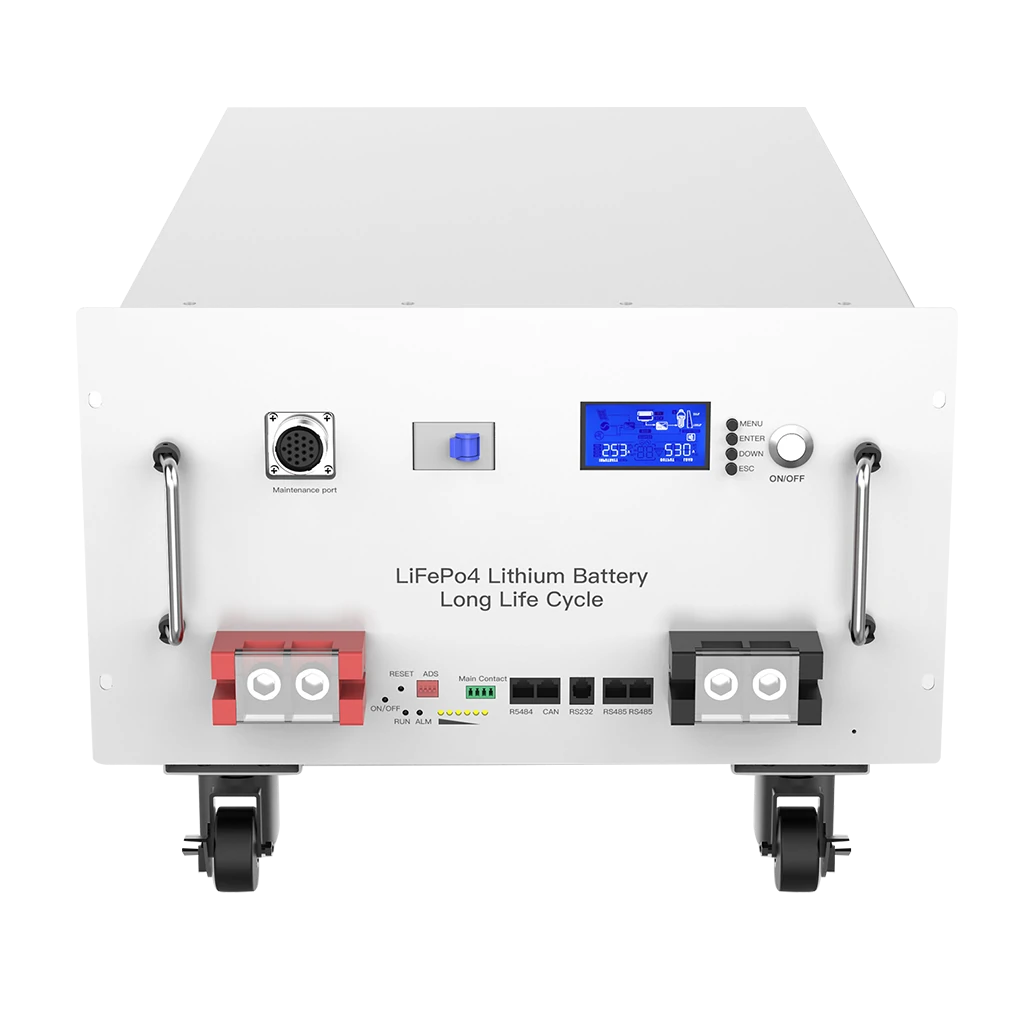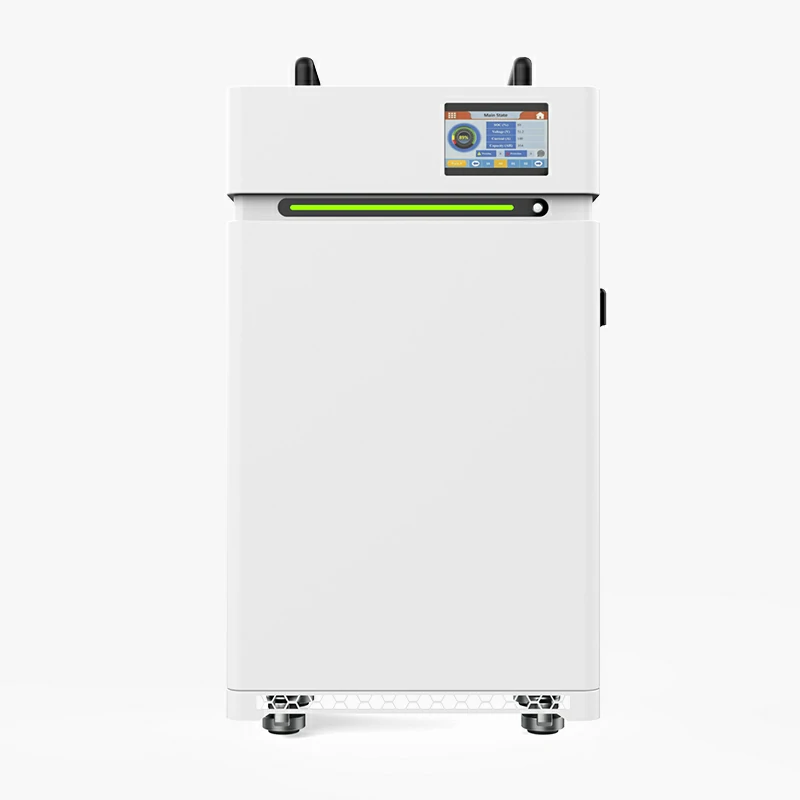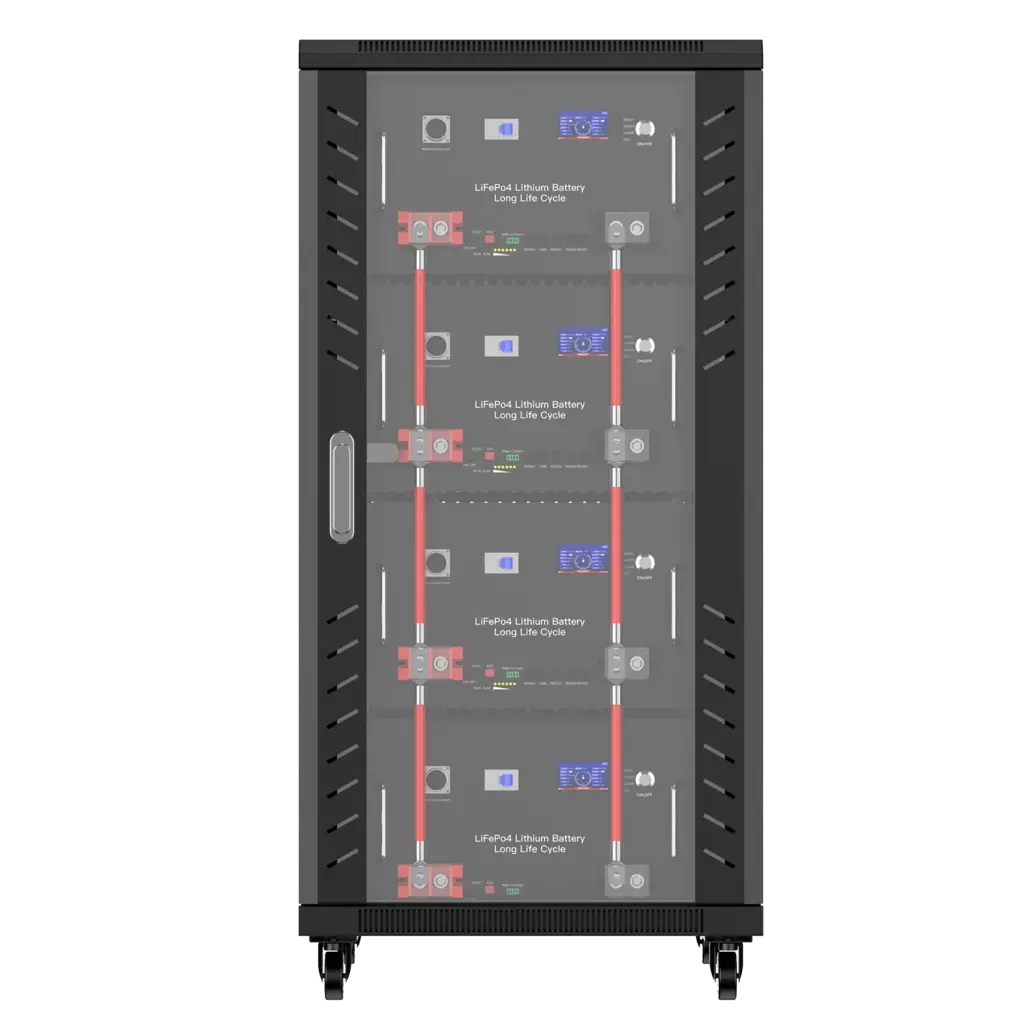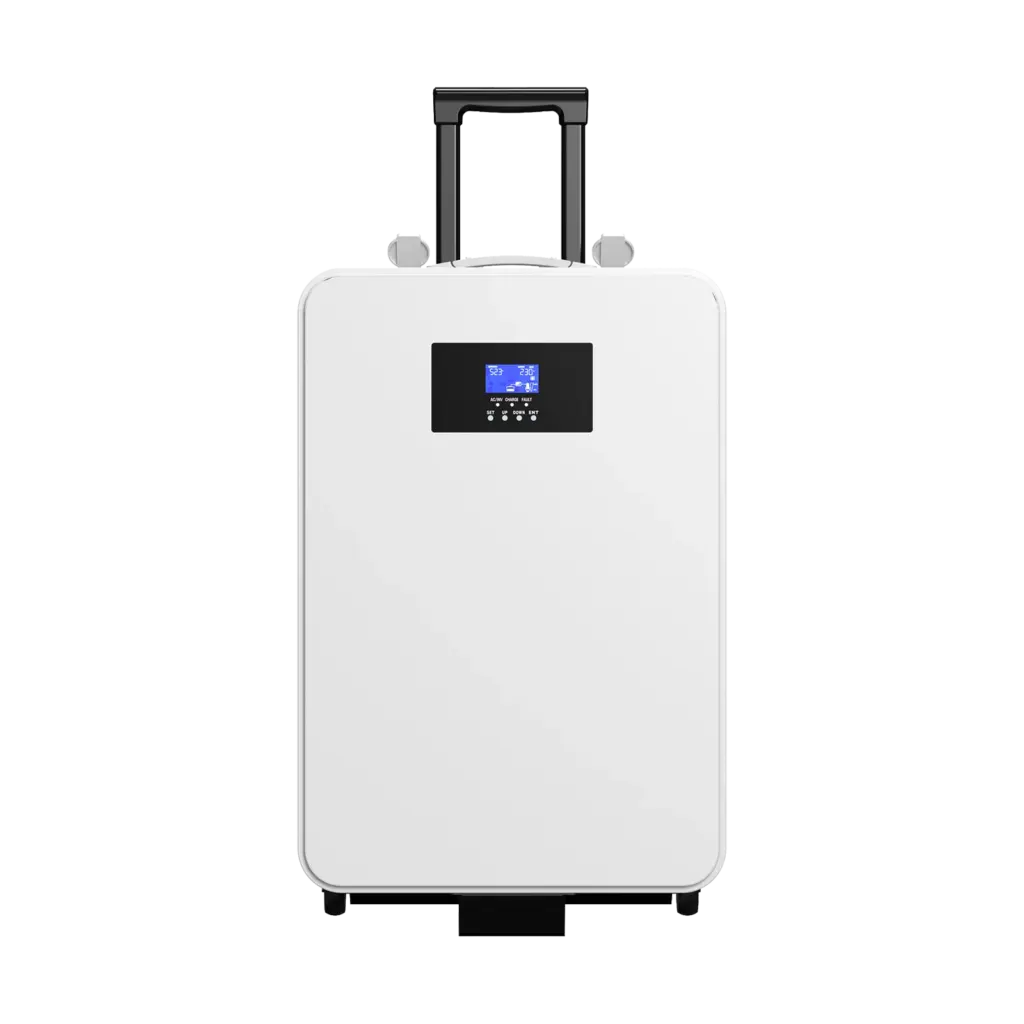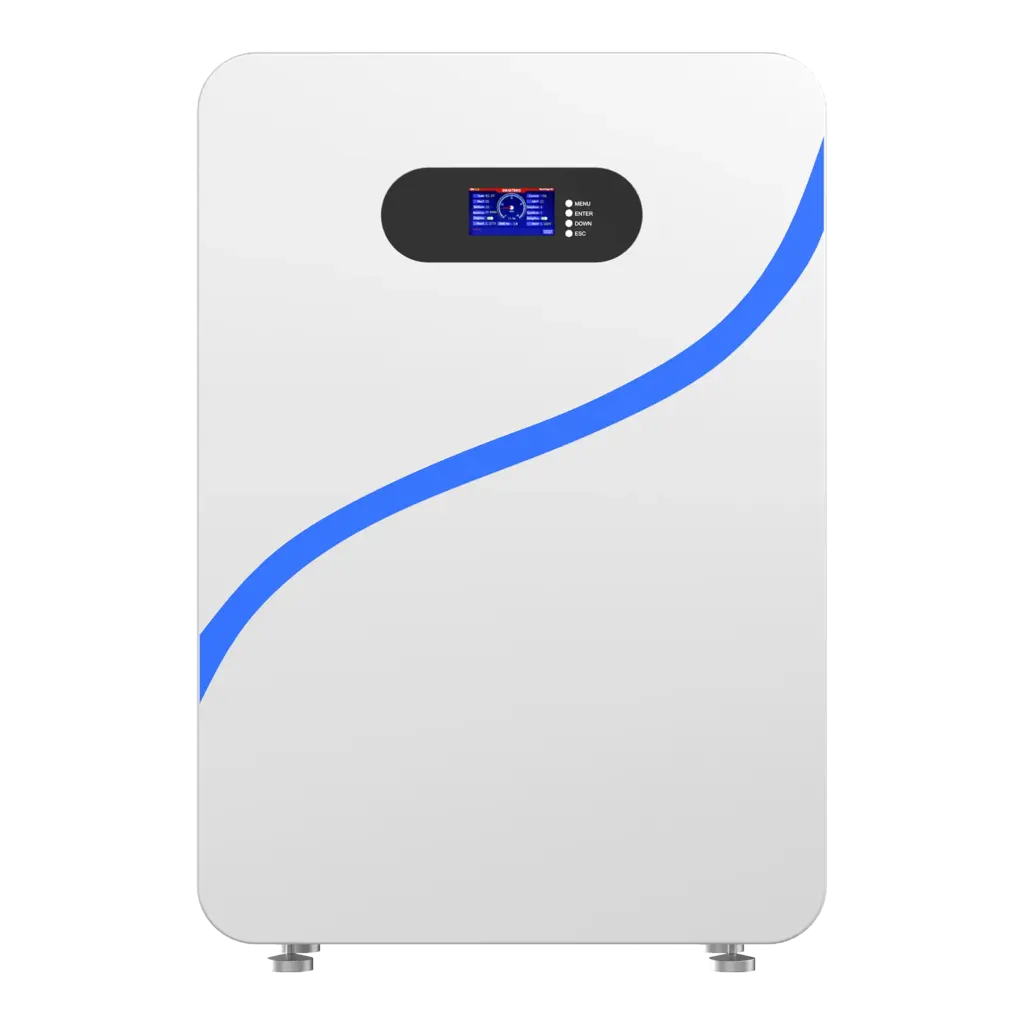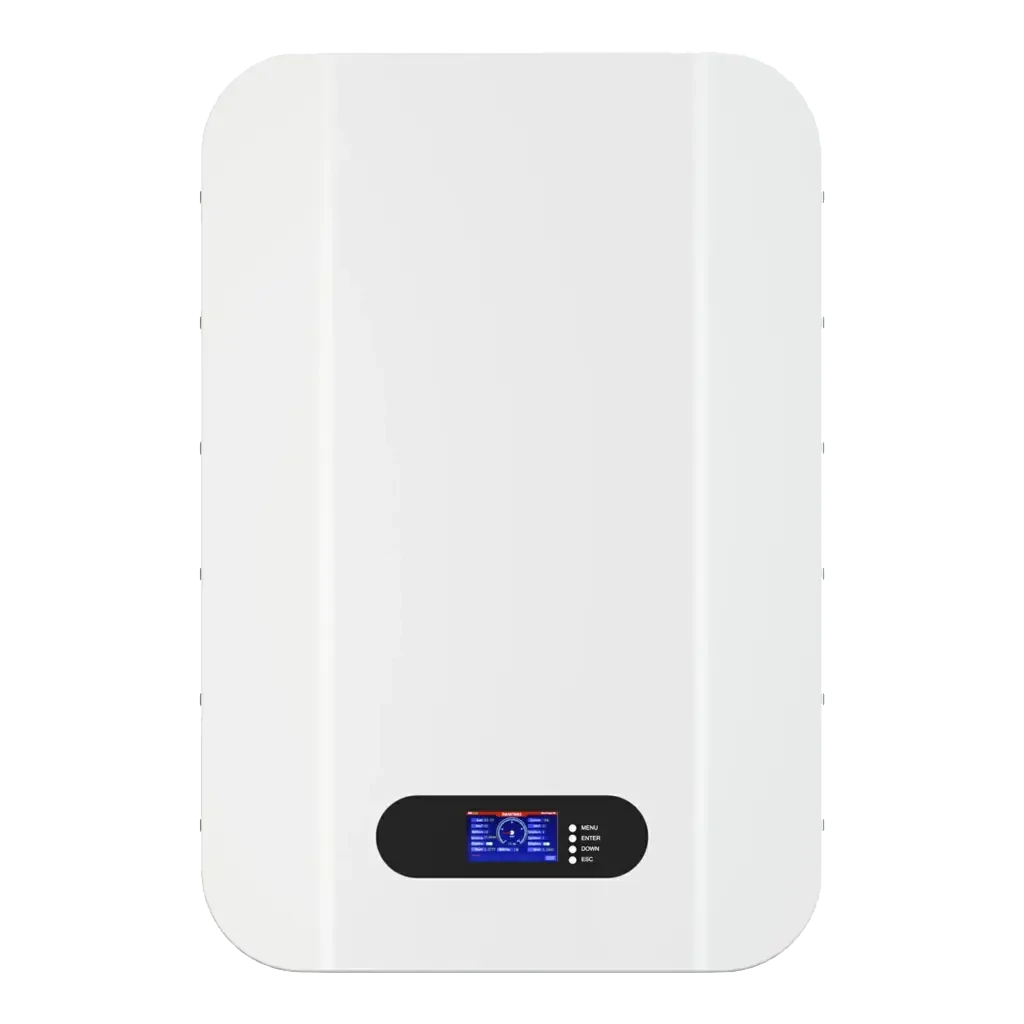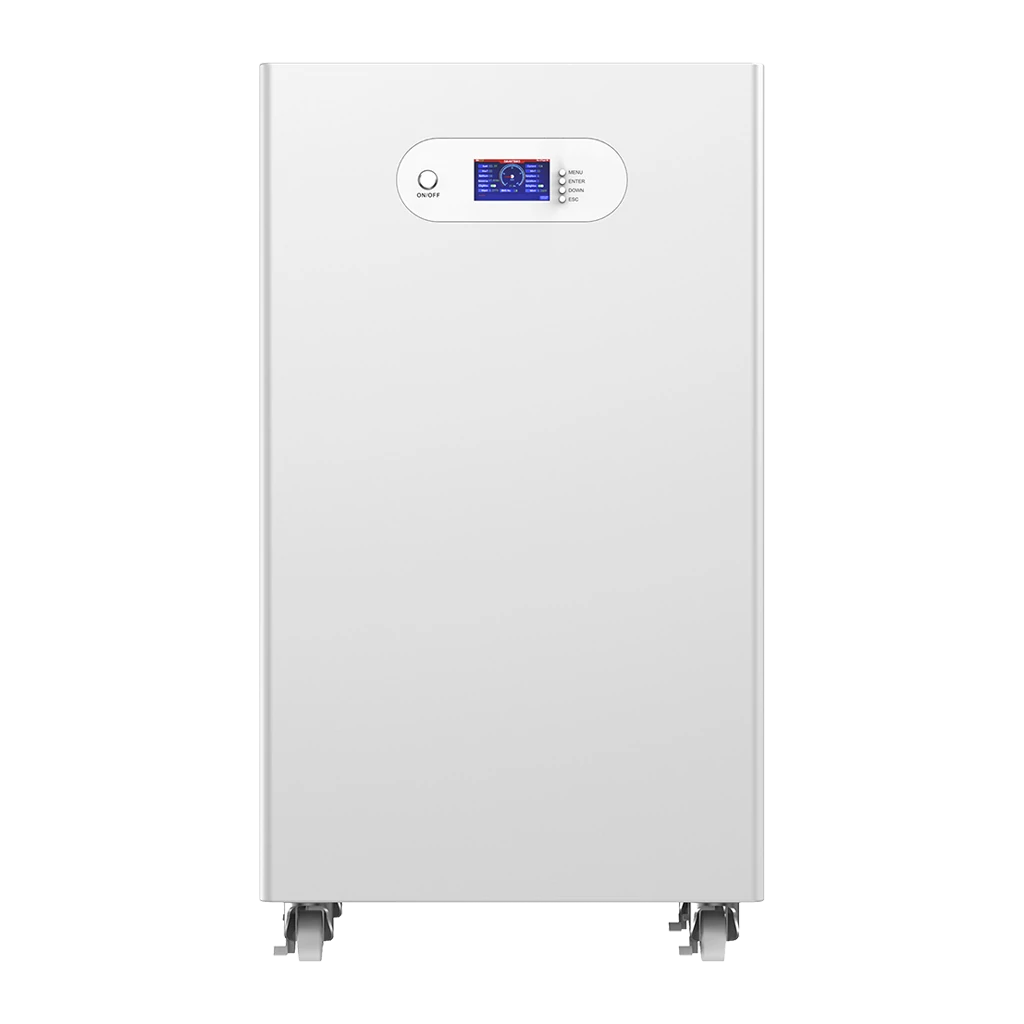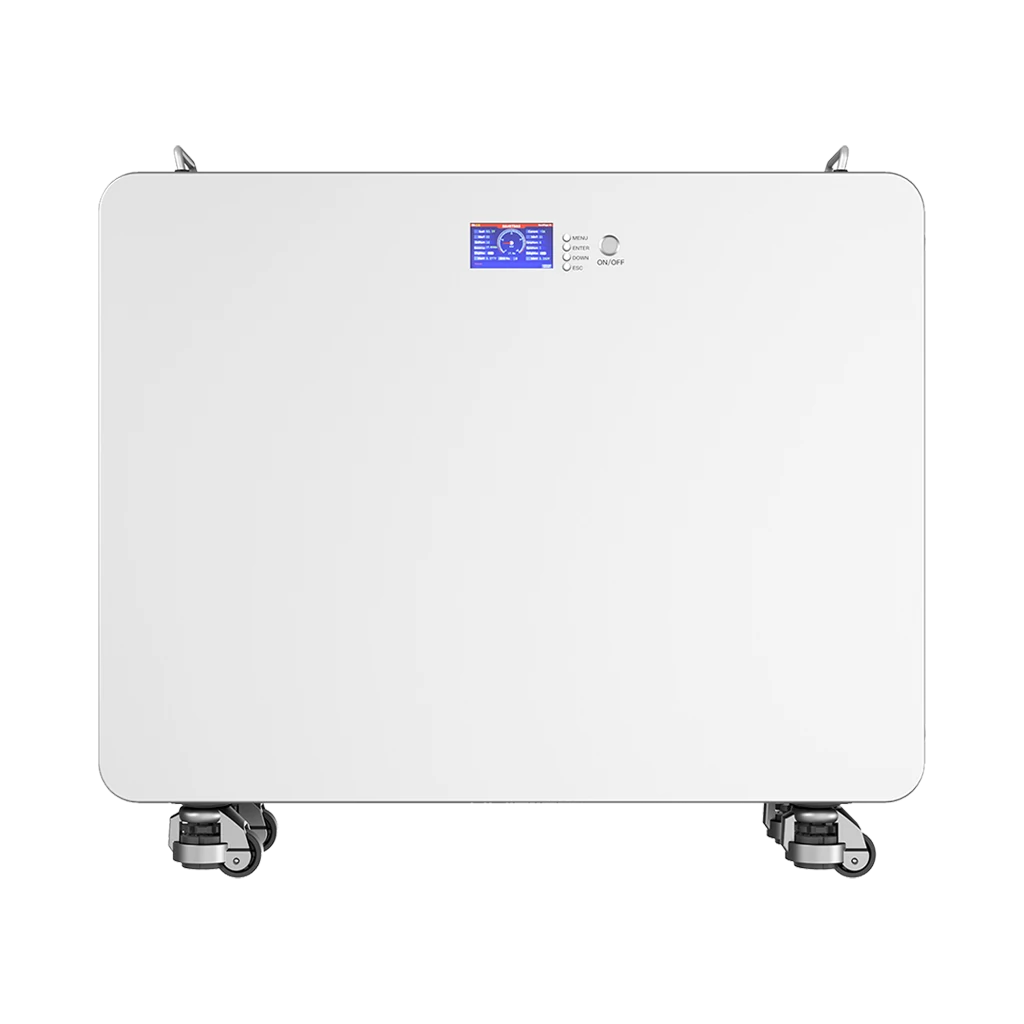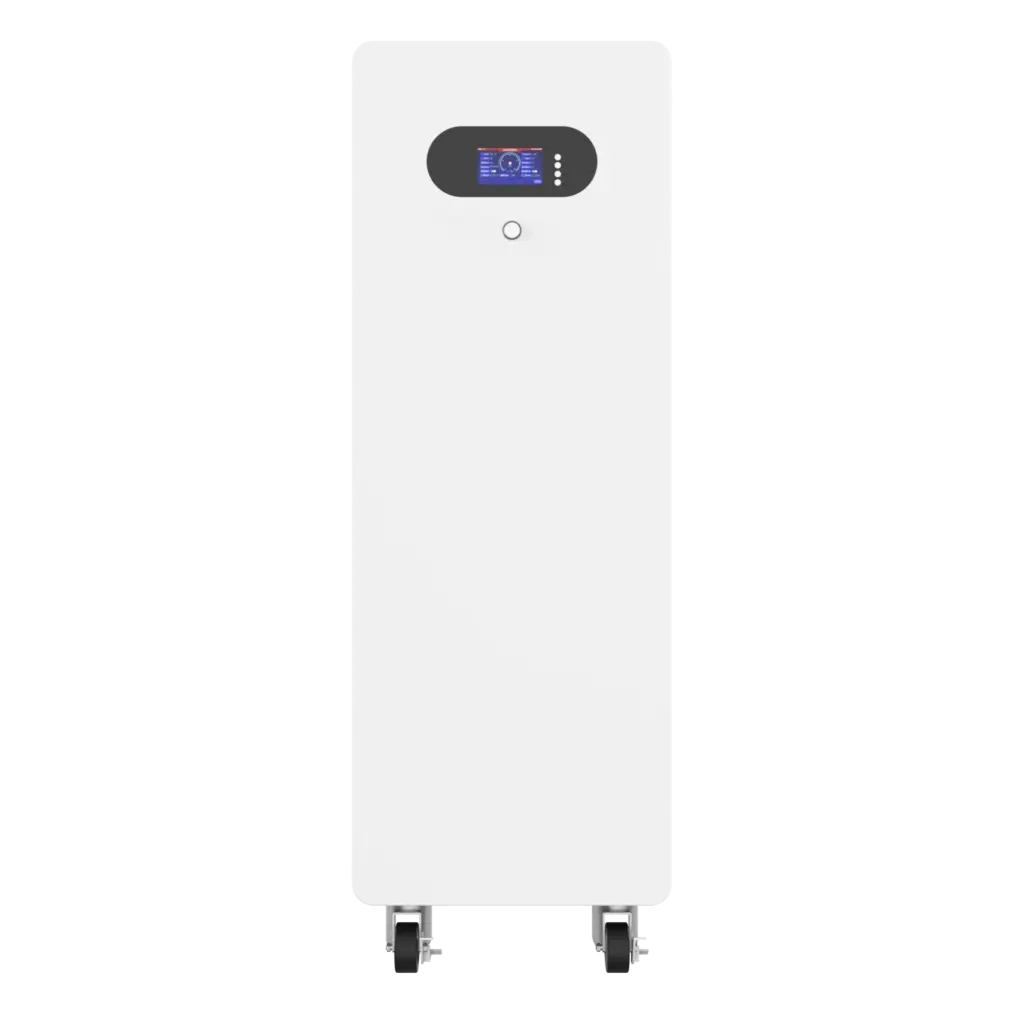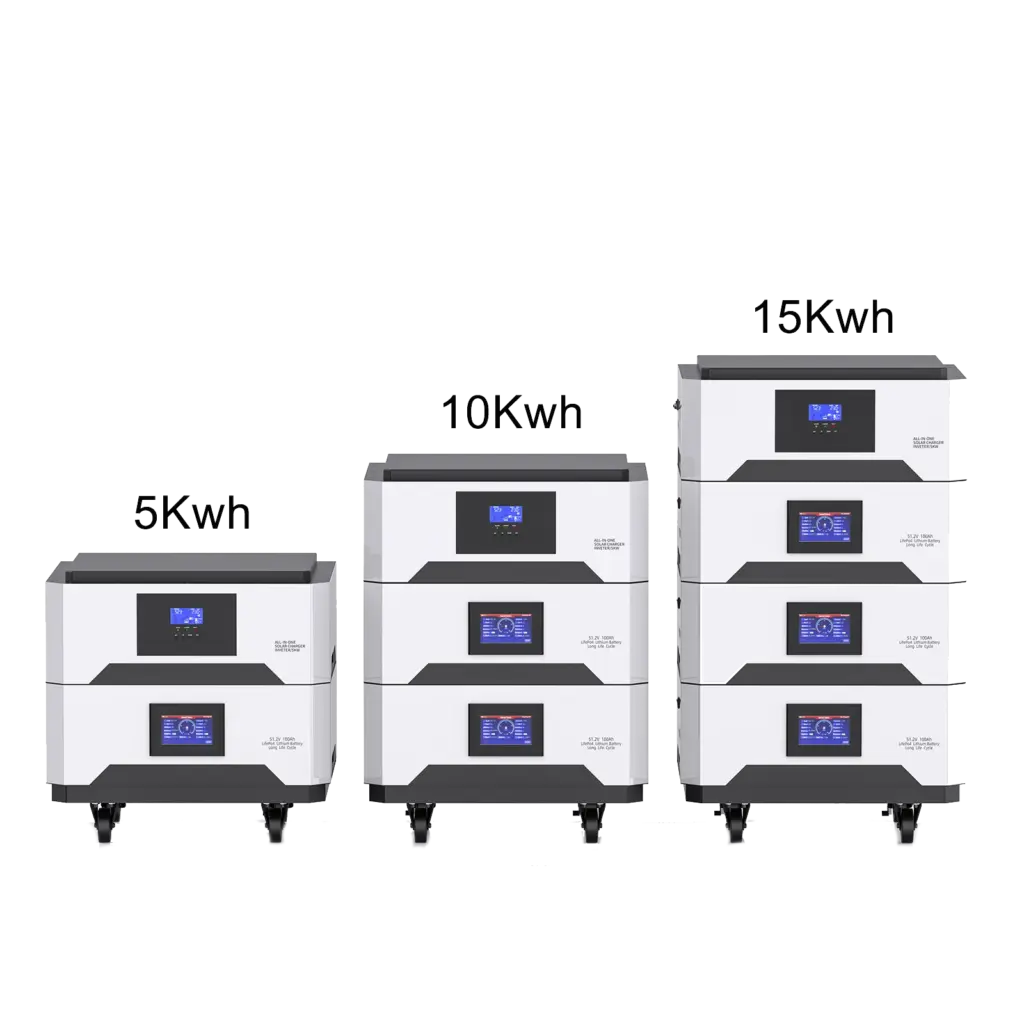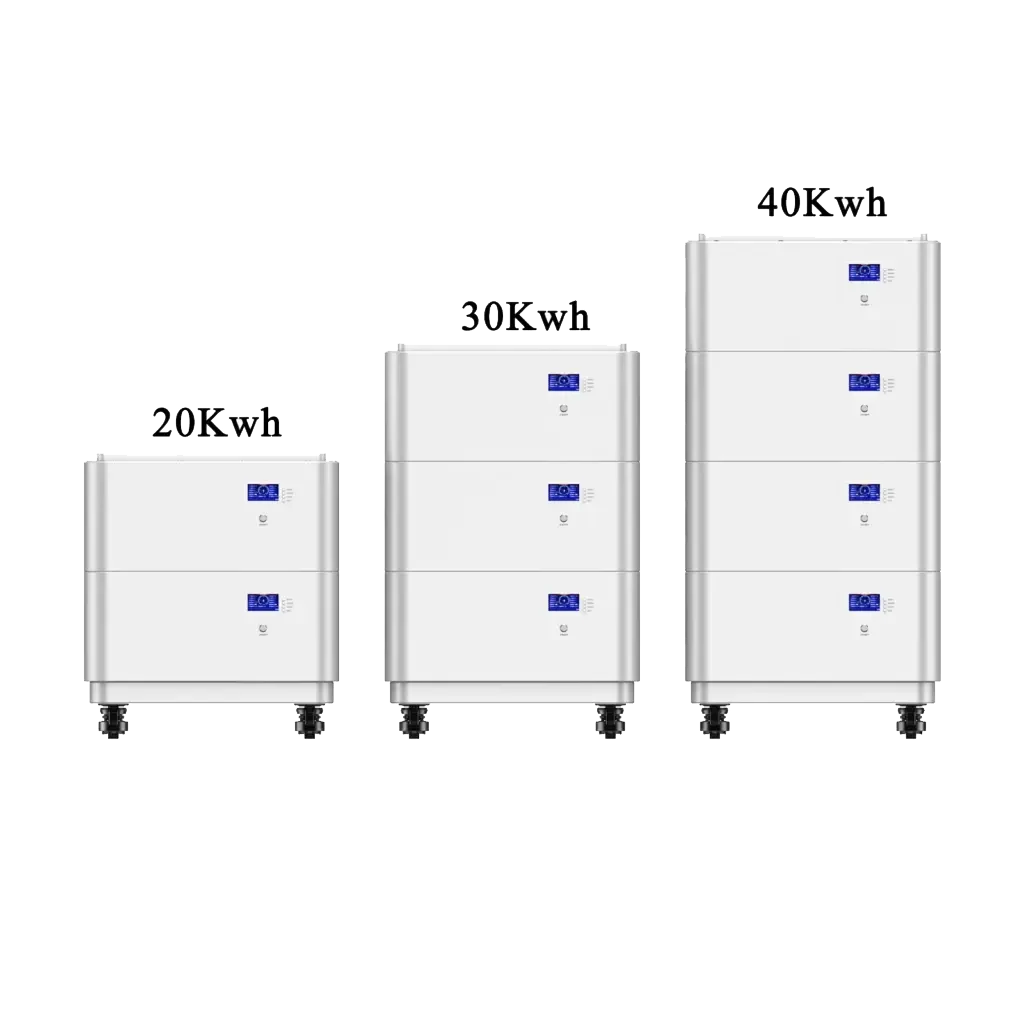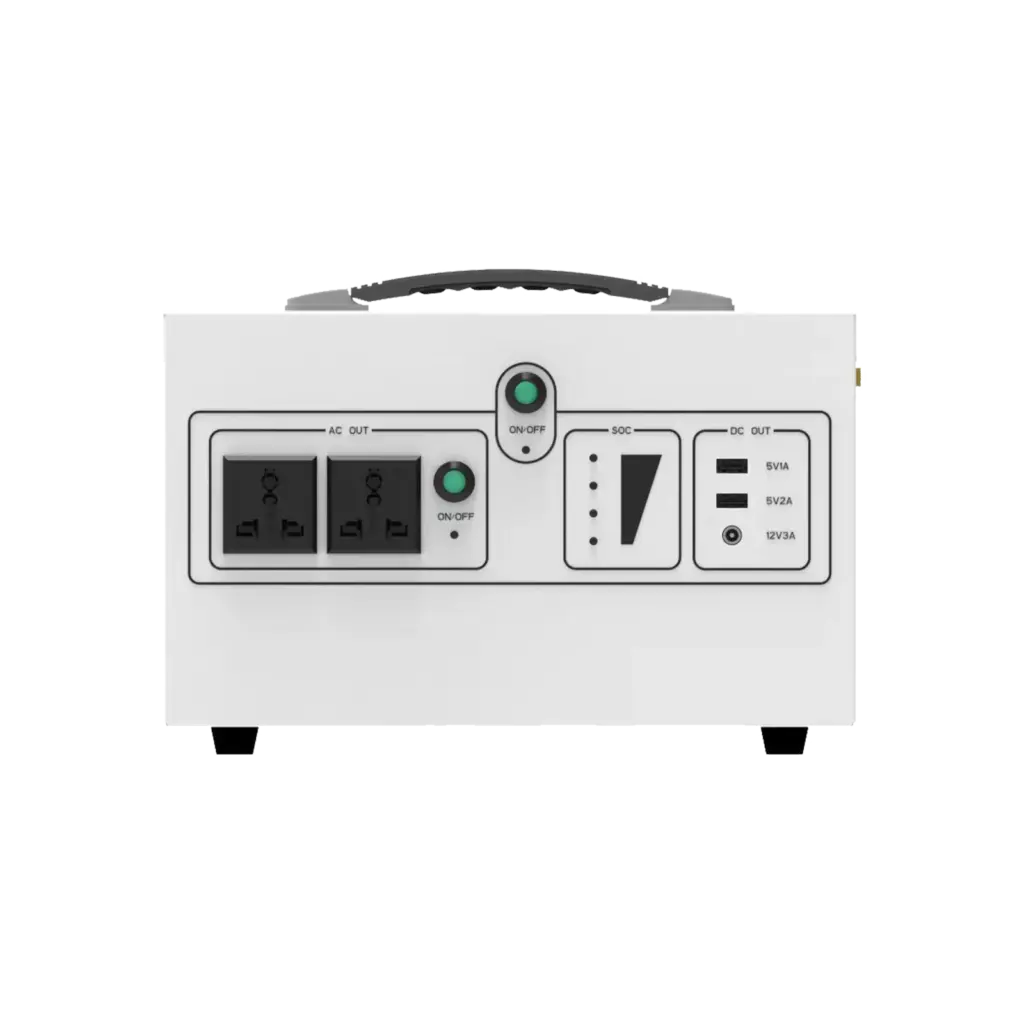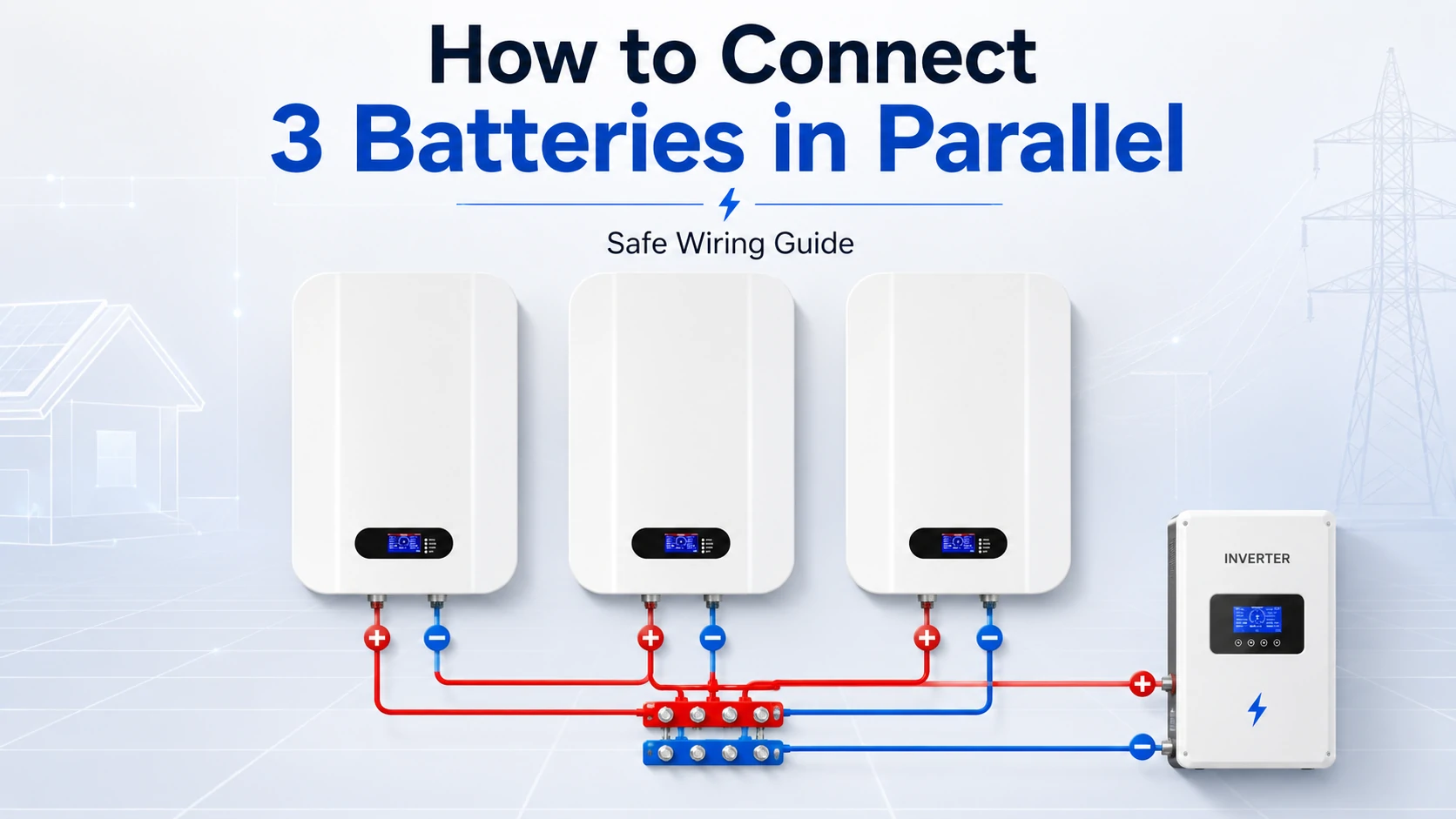

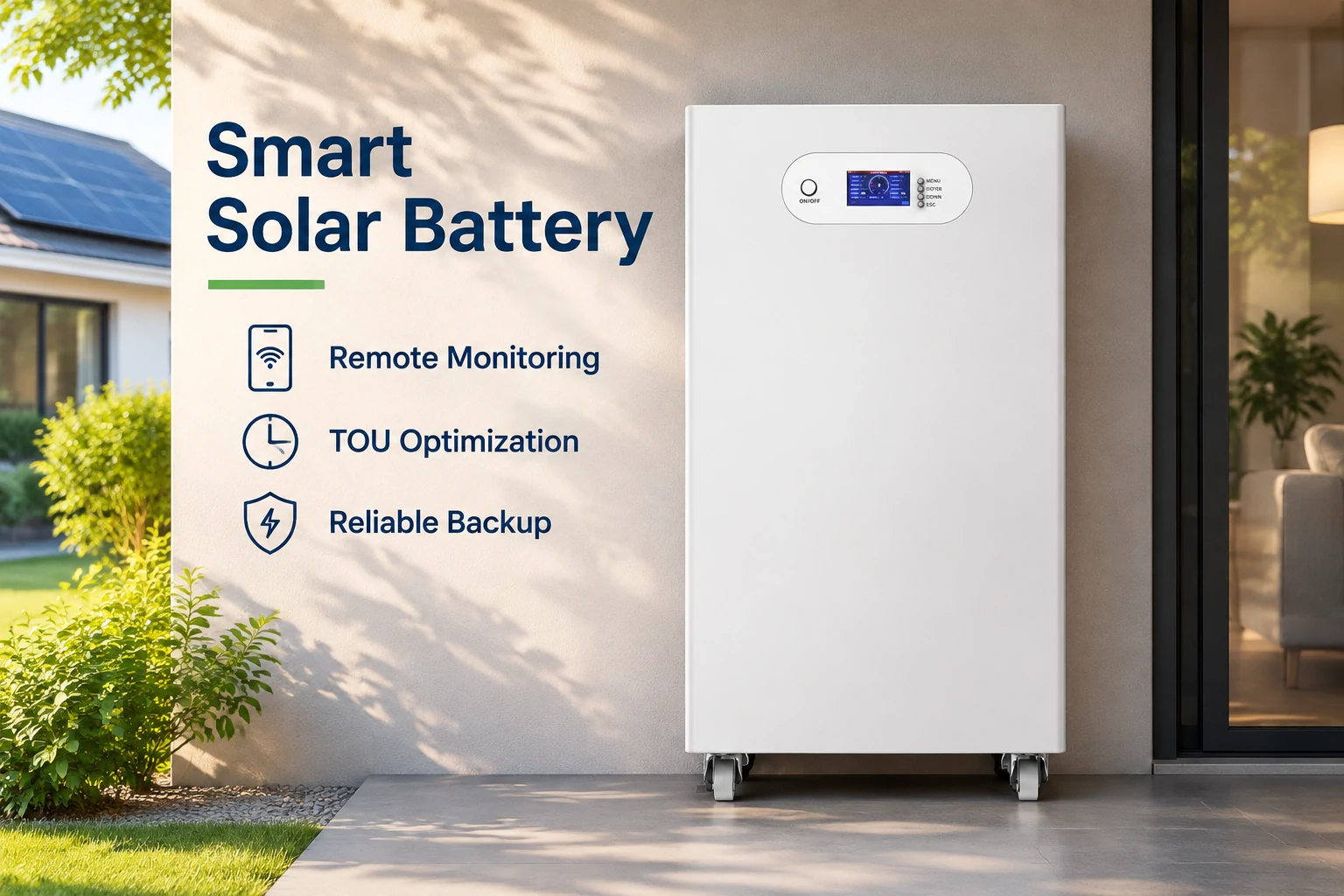
Smart solar batteries combine energy storage with monitoring, communication and automated energy management. A genuinely useful smart battery should do more than show its state of charge in an app: it should protect the battery, communicate with the inverter, track energy flows and, where supported, automatically decide when to charge, discharge or preserve backup energy based on solar production, household demand and electricity prices.
What Is a Smart Solar Battery?
A smart solar battery is a rechargeable energy-storage system that can monitor its operating condition, communicate with other energy equipment and use software-controlled rules to manage how stored energy is charged and discharged.
At a basic level, this intelligence comes from the battery management system (BMS). More advanced systems connect the BMS to an inverter, energy management system, smart meter, mobile app or cloud platform.
A smart solar battery may therefore be able to monitor:
- state of charge (SOC);
- battery voltage and current;
- cell or pack temperatures;
- charging and discharging power;
- operating alarms;
- state of health;
- solar generation;
- household consumption;
- grid import and export.
More advanced systems can then act on that information automatically.
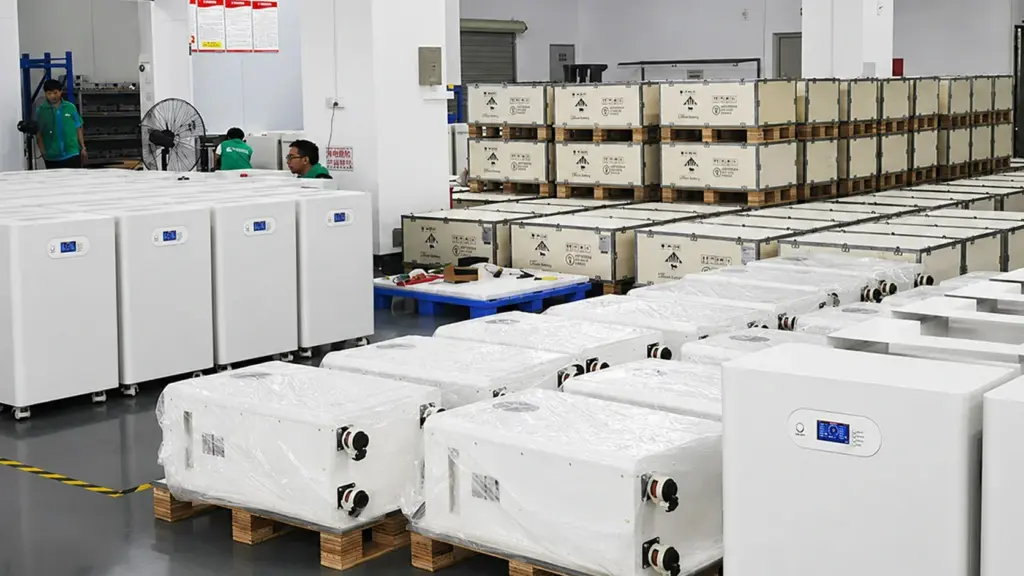
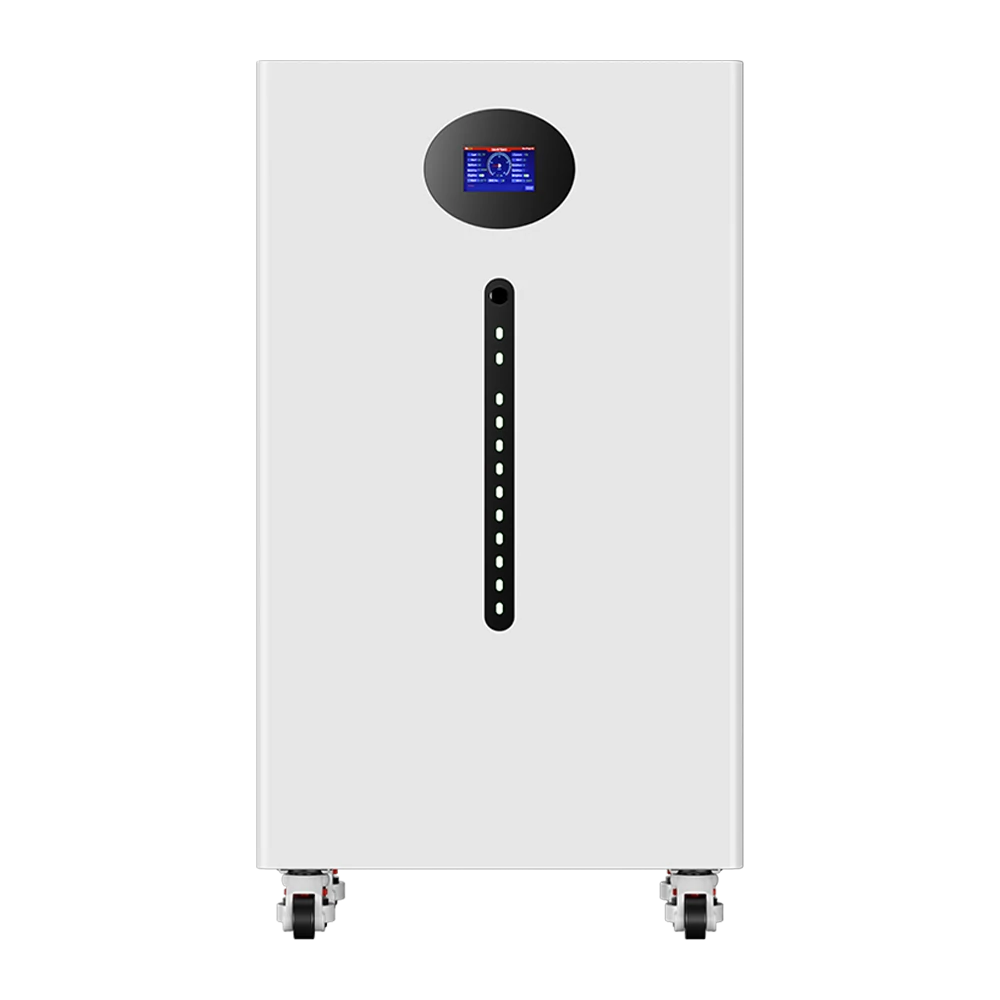
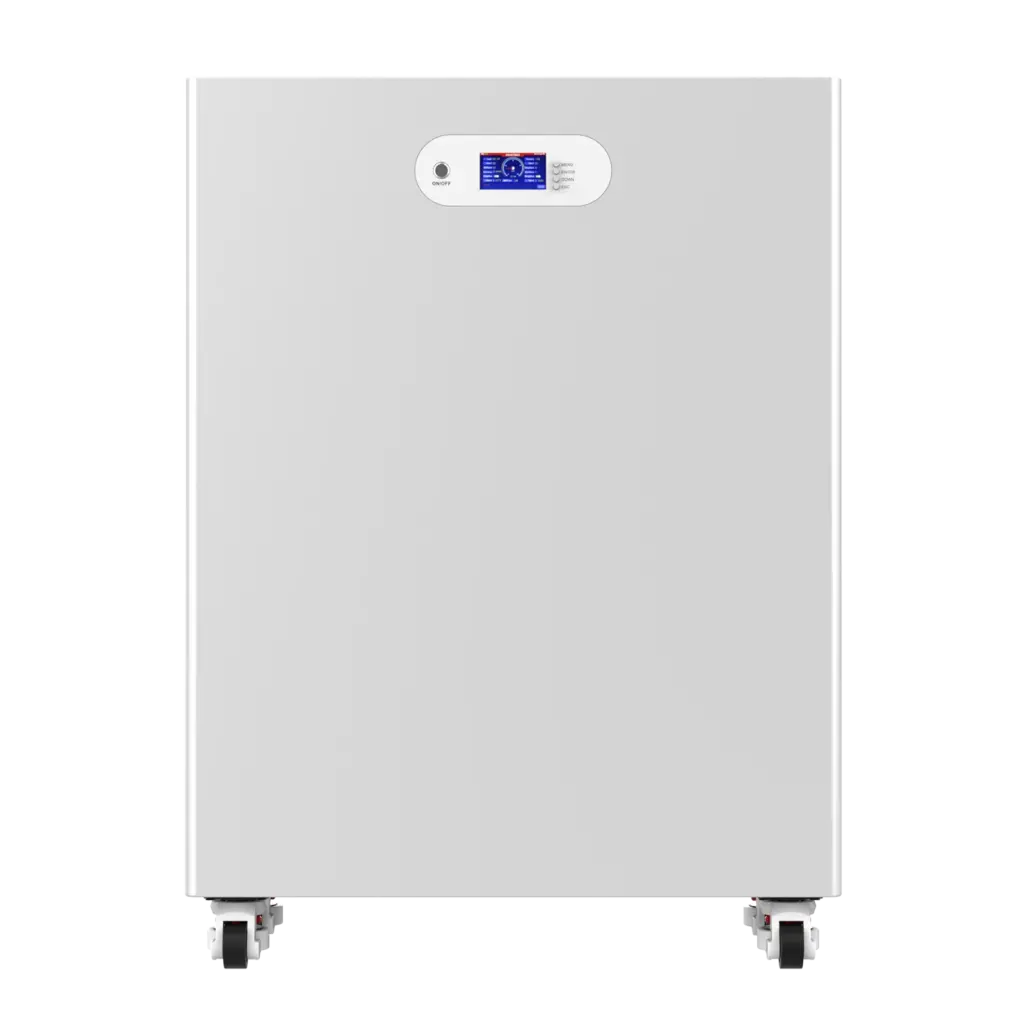
For example, Avepower smart solar batteries combine an intelligent BMS, Bluetooth and Wi-Fi monitoring, and flexible inverter communication to help homeowners monitor battery performance, manage stored solar energy more efficiently, and build a smarter, more reliable home energy storage system.
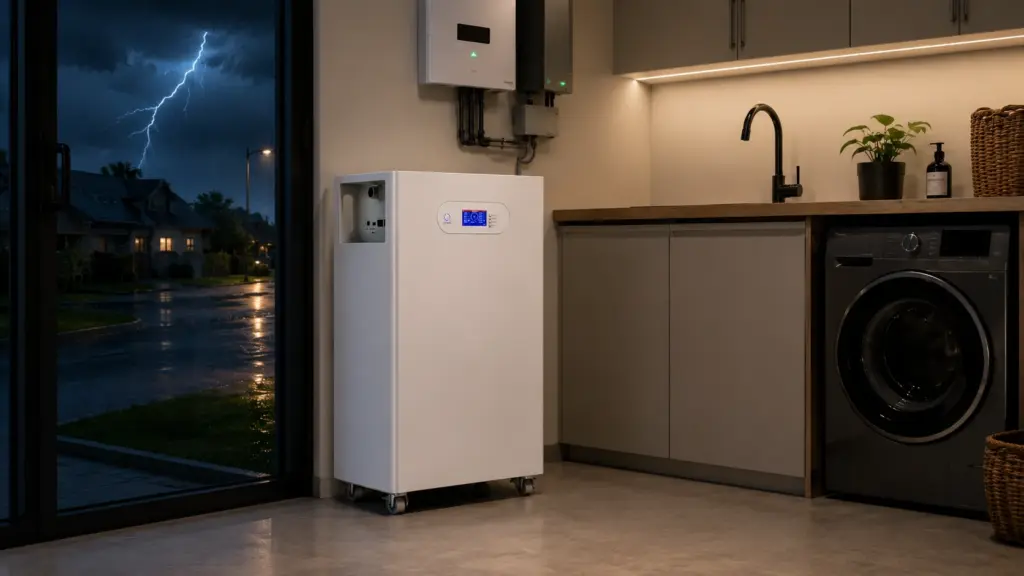
Looking for a Smarter Solar Battery?
Choose the Avepower 15kWh Smart Solar Battery with smart BMS, Bluetooth/Wi-Fi monitoring, and flexible inverter communication.
What Actually Makes a Solar Battery “Smart”?
A useful smart solar battery needs three things: reliable battery intelligence, communication with the surrounding energy system, and software capable of making or executing energy-management decisions.
A Bluetooth connection alone is not enough.
A screen alone is not enough.
Even a sophisticated BMS does not automatically mean the system can optimize electricity prices or participate in a virtual power plant.
For purchasing purposes, smart solar batteries can be separated into five practical capability levels.
| Smart Level | Main Capability | Typical Functions | Decision Value |
|---|---|---|---|
| Level 1 | Battery intelligence | BMS protection, SOC, temperature, cell balancing | Essential |
| Level 2 | Monitoring | App, Bluetooth, Wi-Fi, alerts, historical data | Useful |
| Level 3 | System integration | CAN/RS485, inverter and EMS communication | Very important |
| Level 4 | Energy optimization | TOU schedules, dynamic tariffs, solar/load forecasting | High value where rates vary |
| Level 5 | Grid interaction | VPP, utility dispatch, demand response | Valuable only where supported |
Smart BMS vs Smart Energy Management: What Is the Difference?
A smart BMS manages the battery itself, while an EMS manages how the battery interacts with the home, solar system and grid. Both are important, but they solve different problems and should not be treated as interchangeable terms.
The distinction is:
| Function | BMS | EMS / HEMS |
|---|---|---|
| Cell voltage monitoring | ✓ | — |
| Temperature monitoring | ✓ | — |
| Overcharge protection | ✓ | — |
| Cell balancing | ✓ | — |
| SOC / SOH calculation | ✓ | Uses data |
| Solar production monitoring | Sometimes | ✓ |
| Household load monitoring | — | ✓ |
| TOU optimization | — | ✓ |
| Weather forecasting | — | Possible |
| Dynamic tariff optimization | — | Possible |
| Backup reserve strategy | Communicates limits | ✓ |
| VPP participation | — | Possible |
The BMS keeps the battery inside safe operating limits.
What is the best thing to do with the stored electricity right now?
Avepower’s battery monitoring guidance explains the same distinction between battery-level protection and monitoring/control functions. For homeowners or installers building a more integrated system, Avepower also covers the control layer in its Smart Home Energy Management guide.
Which Smart Solar Battery Features Actually Matter?
| Feature | Decision Value |
|---|---|
| Real-time energy monitoring | High |
| Historical data | Medium–High |
| Backup reserve control | High |
| TOU scheduling | High where TOU tariffs exist |
| Dynamic tariff optimization | High in variable-rate markets |
| Solar forecasting | Medium–High |
| Weather-aware backup | High in outage-prone areas |
| Smart load control | High for limited backup capacity |
| Remote diagnostics | High for installers |
| VPP support | Potentially high |
| AI optimization | Variable |
| Local/offline operation | Very high |
When Is Smart Battery Optimization Most Valuable?
Smart optimization provides the greatest value when electricity prices, solar export value or grid conditions change throughout the day.
| Situation | Smart Optimization Value |
|---|---|
| Large peak/off-peak electricity price difference | High |
| Dynamic electricity pricing | High |
| Low solar export payment | High |
| High evening electricity use | High |
| Frequent grid outages | High for backup automation |
| VPP incentives available | Potentially high |
| Flat electricity tariff | Moderate to low |
| Strong 1:1 net metering | Often lower |
| Very low household consumption | Lower |
What Data Should a Smart Solar Battery Show?
A useful smart battery interface should show enough information to confirm battery health, diagnose problems and understand where household electricity is coming from.
At minimum, look for:
| Data | Why It Matters |
|---|---|
| State of charge | Shows available stored energy |
| Charge/discharge power | Shows what the battery is doing now |
| Battery voltage/current | Useful for diagnostics |
| Battery temperature | Important for safe operation |
| Solar production | Shows energy available for charging |
| Home consumption | Helps identify load patterns |
| Grid import/export | Shows grid dependence |
| Historical energy data | Helps evaluate savings and system behavior |
| Alarms/fault codes | Speeds up troubleshooting |
Installers and commercial project operators may also need cell-level data, event logs and remote diagnostics.
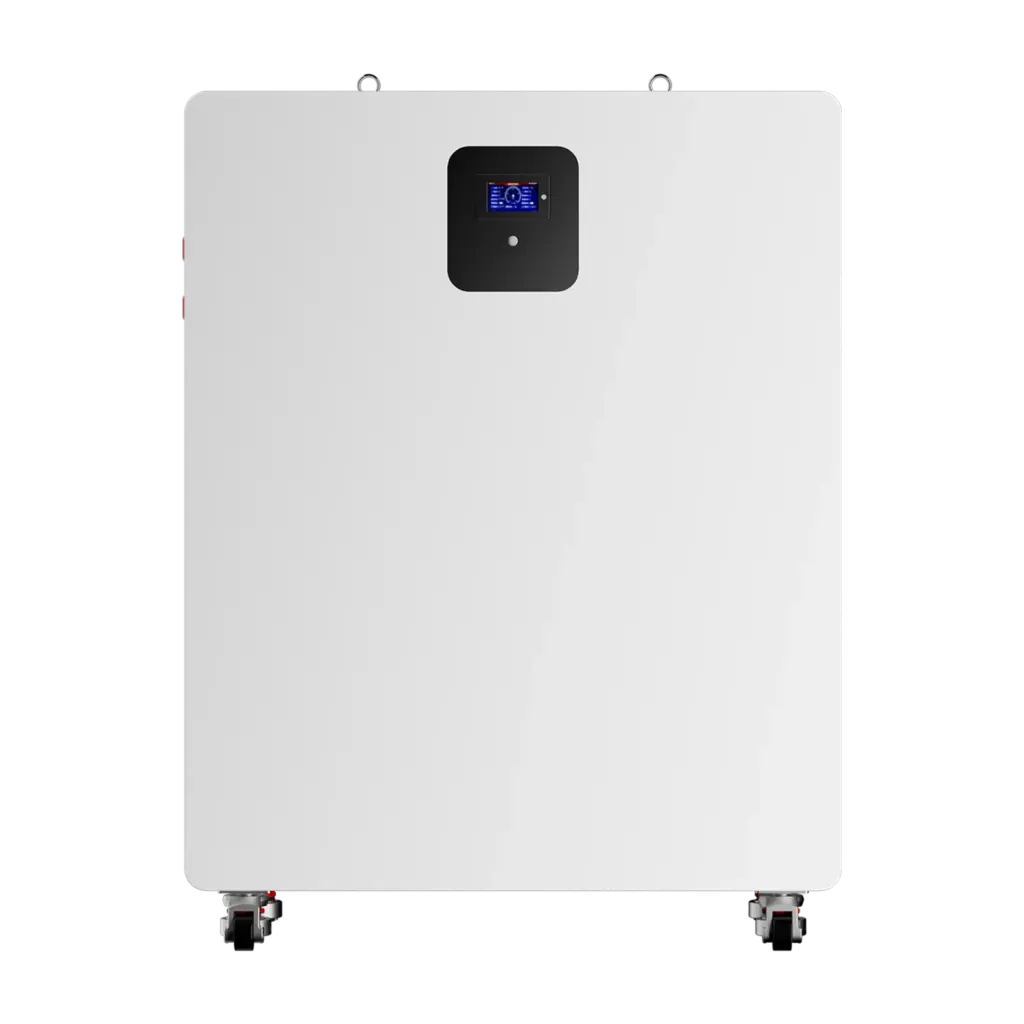
Avepower’s wall-mounted battery platform, for example, supports Bluetooth and Wi-Fi monitoring together with CAN, RS485 and RS232 communication for system integration.
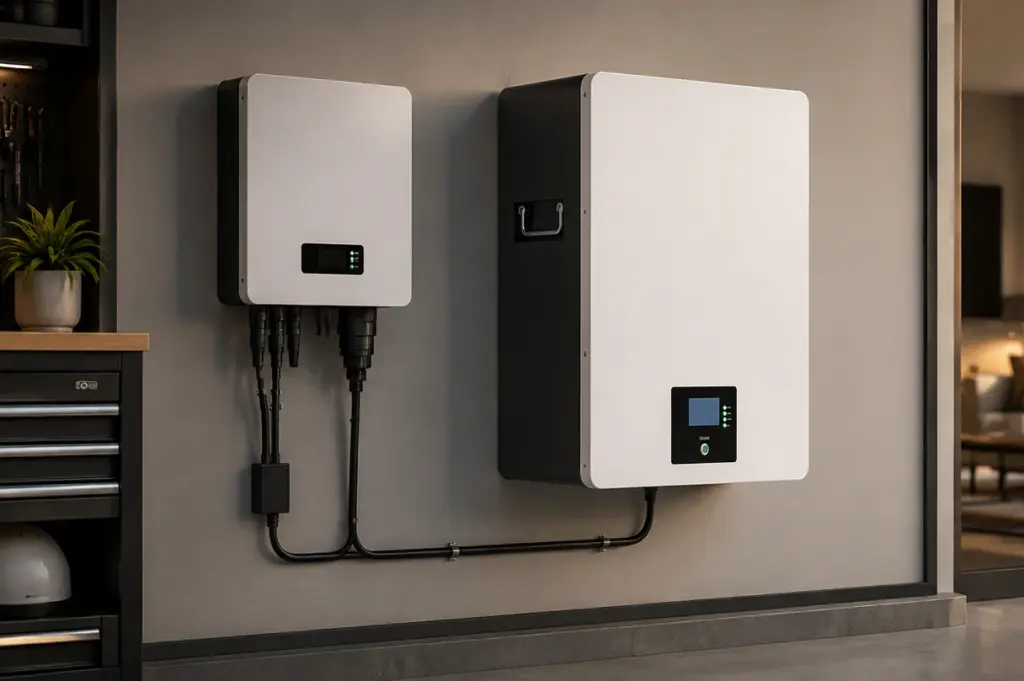
Power Your Home Smarter
Explore the Avepower 10kWh Smart Solar Battery and request a quote for your project.
Should You Choose Bluetooth, Wi-Fi or Cloud Monitoring?
Bluetooth is useful for local battery diagnostics, while Wi-Fi and cloud connectivity are more suitable for remote monitoring and advanced energy-management services. Many good systems use more than one communication layer.
| Connection | Best For | Main Limitation |
|---|---|---|
| Bluetooth | Local setup and diagnostics | Limited range |
| Wi-Fi | Home monitoring and remote access | Depends on local network |
| Ethernet | Stable fixed installations | Requires cabling |
| CAN / RS485 | Battery-inverter communication | Not a consumer interface |
| Cloud | Remote control, analytics and VPP | Internet/vendor dependency |
For installers, CAN and RS485 compatibility can be more technically important than whether an end-user app uses Bluetooth or Wi-Fi.
How Much Do Smart Solar Batteries Cost?
There is no consistent “smart battery premium” because most modern home batteries already bundle BMS, monitoring and software into the product. In the U.S. residential battery systems typically cost approximately $8,000–$15,000 fully installed, with higher costs possible for whole-home backup or electrical-panel upgrades.
Do not compare smart batteries by purchase price alone.
Compare:
installed cost ÷ usable kWh
together with power output, warranty, inverter integration and useful automation.
Smart Solar Battery vs Regular Solar Battery: Which Should You Buy?
A smart battery is worth considering when automated energy management can materially improve savings, backup reliability or convenience. A simpler battery may offer better value when the objective is only basic solar self-consumption and the local electricity tariff provides little benefit from active scheduling.
| Situation | Basic Battery | Smart Solar Battery |
|---|---|---|
| Store daytime solar for night | ✓ | ✓ |
| Basic backup | ✓ | ✓ |
| Remote monitoring | Sometimes | Usually |
| TOU optimization | Limited/manual | Strong |
| Dynamic pricing | Rare | Possible |
| Weather preparation | Rare | Possible |
| Smart load control | Rare | Possible |
| VPP participation | Limited | Possible |
| Remote diagnostics | Limited | Usually stronger |
| Automatic forecasting | No | Possible |
Conclusion
The best smart solar battery is not necessarily the battery with the most app features. It is the battery that combines safe energy storage, correct sizing, reliable inverter communication and automation that produces a measurable benefit for the user’s electricity tariff, solar system or backup requirements.
Avepower’s residential battery platforms focus on the hardware foundation required for intelligent energy-storage systems: LiFePO4 cells, integrated smart BMS protection, real-time monitoring, scalable capacity and communication with compatible inverter platforms.
The full inverter compatibility list is available through Avepower’s compatibility resource.
For installers, distributors and OEM/ODM projects, Avepower can also customize battery capacity, BMS configuration and communication protocols according to the intended inverter and market.
FAQ
Core battery protection should not normally depend on Wi-Fi, but internet-dependent functions such as remote monitoring, weather forecasting, tariff updates or VPP participation may stop when connectivity is lost.
Often yes, but compatibility depends on the existing inverter and system architecture. An AC-coupled battery can often be added without replacing the solar inverter, while DC-coupled solutions may require a compatible hybrid inverter.
No. A smart BMS primarily protects and manages battery cells. A smart solar battery system also requires inverter, metering and energy-management functions that control how stored electricity interacts with solar generation, household loads and the grid.
At minimum, a useful monitoring system should show battery SOC, charging and discharging power, solar generation, household consumption, grid import/export and alarms.