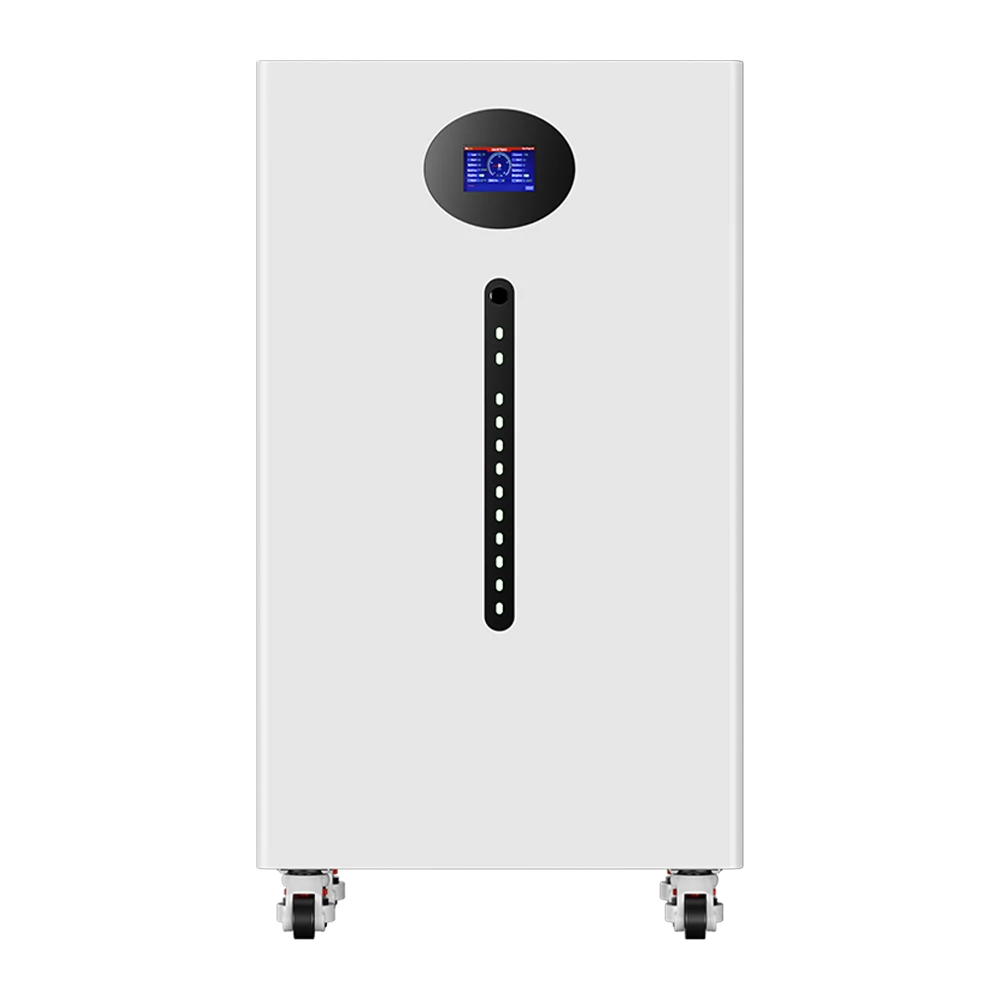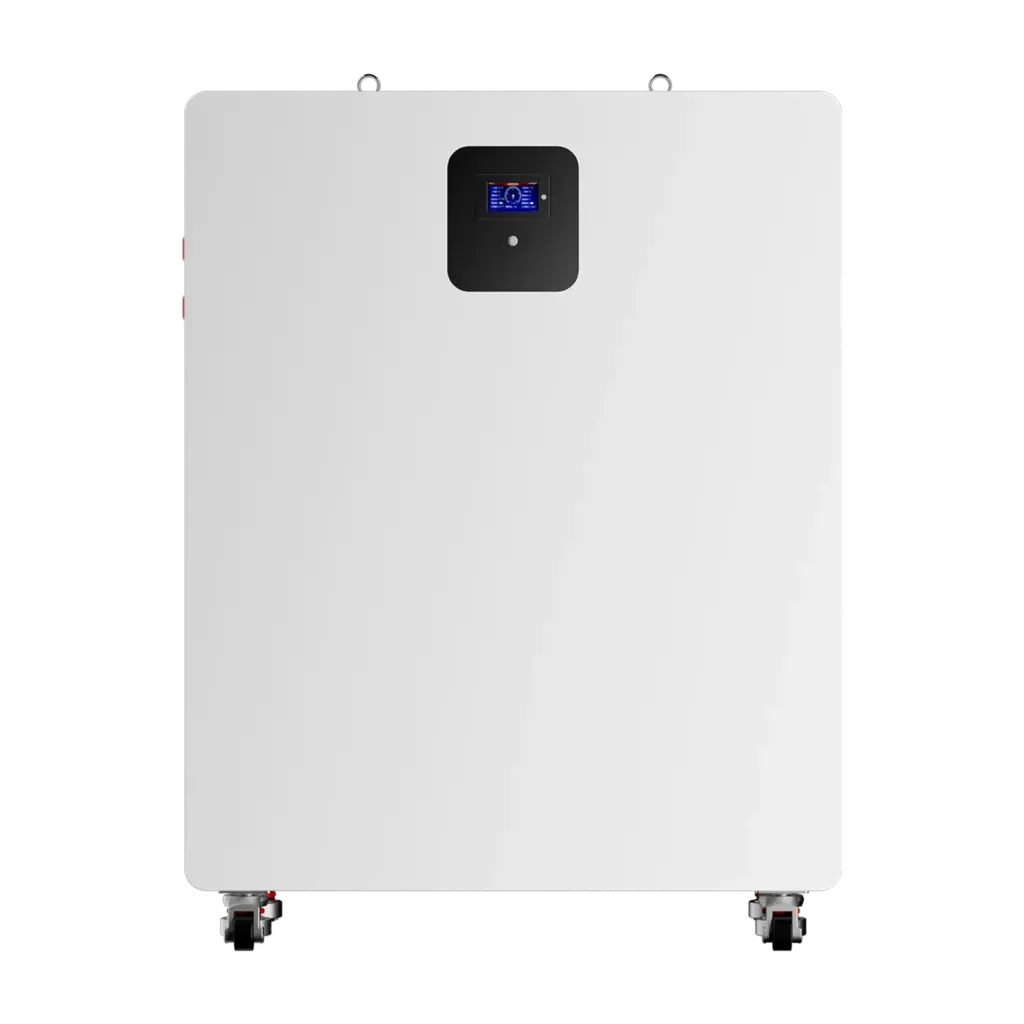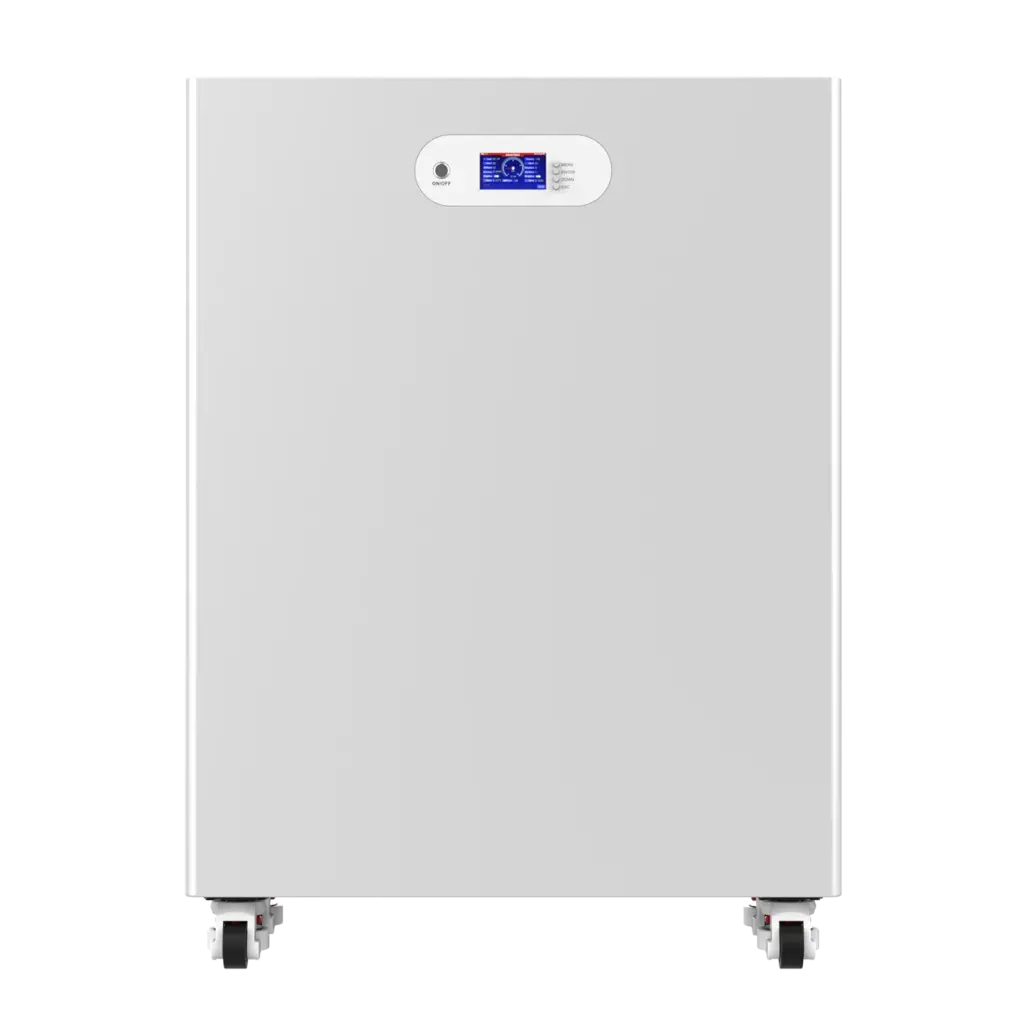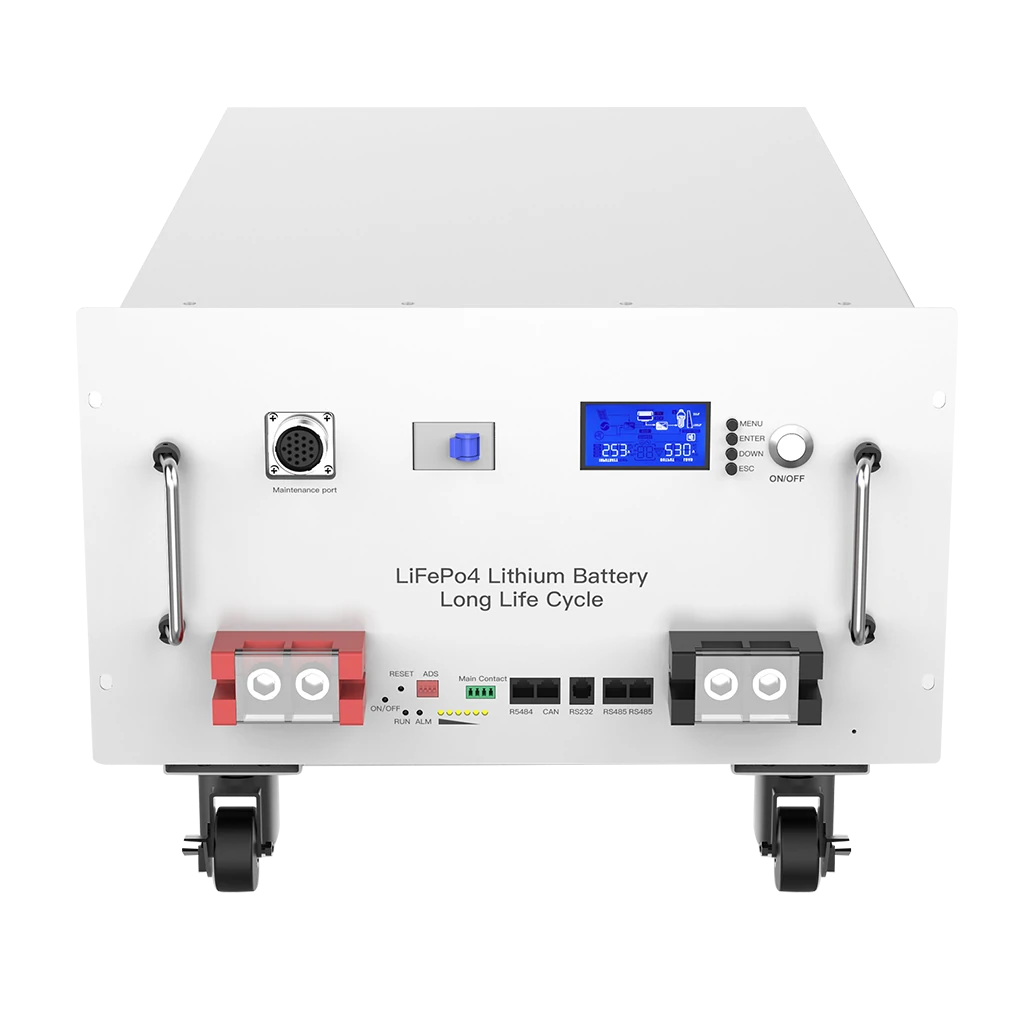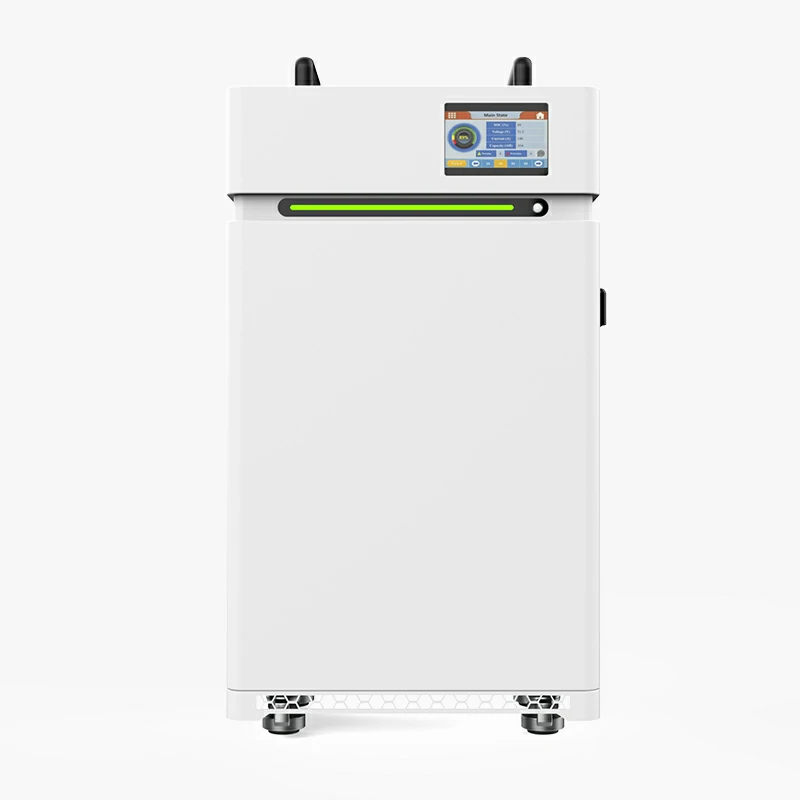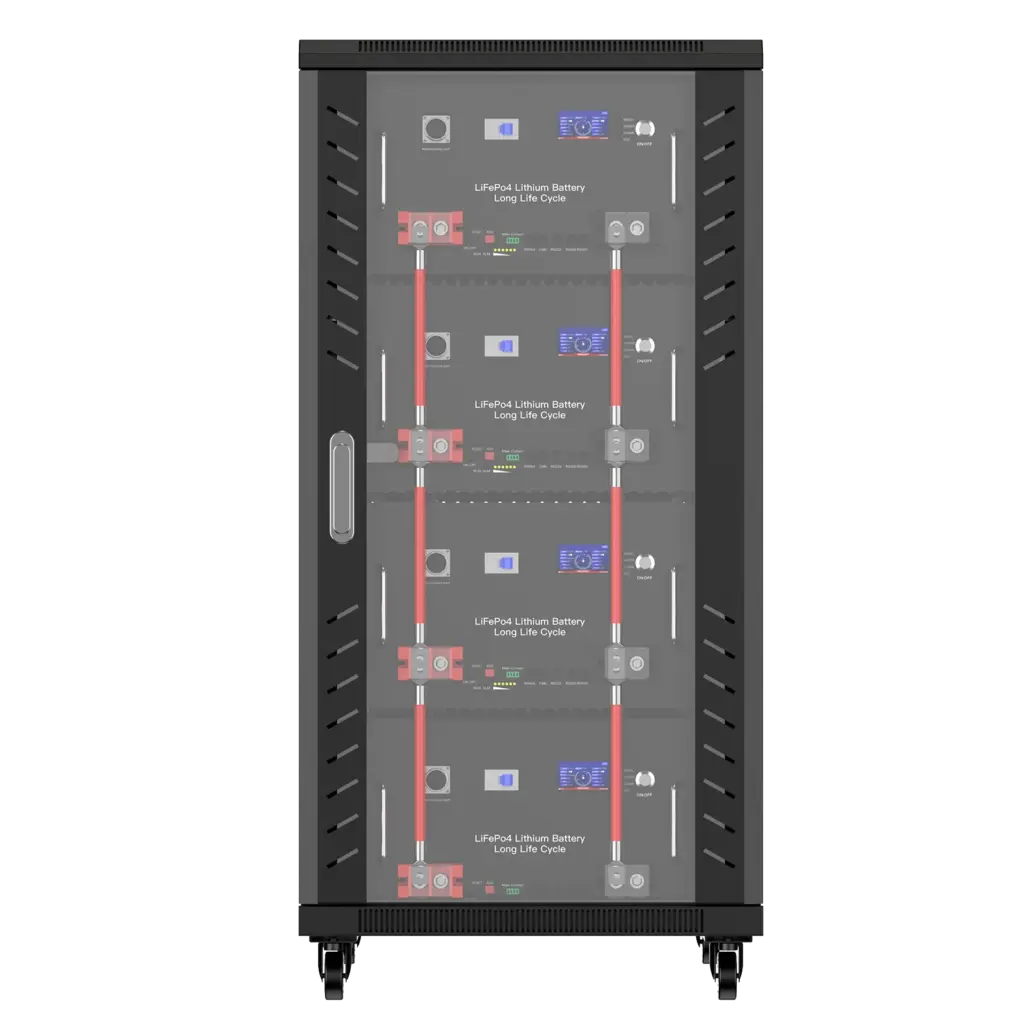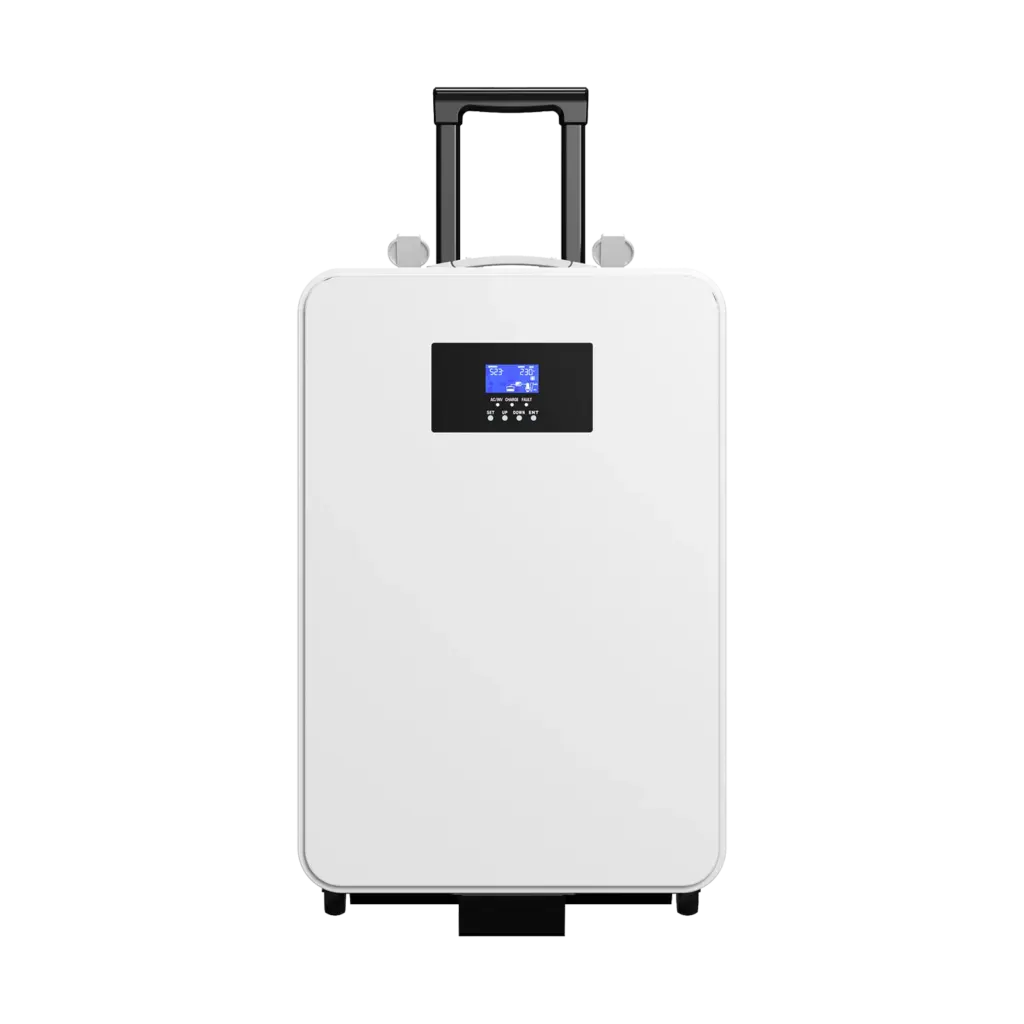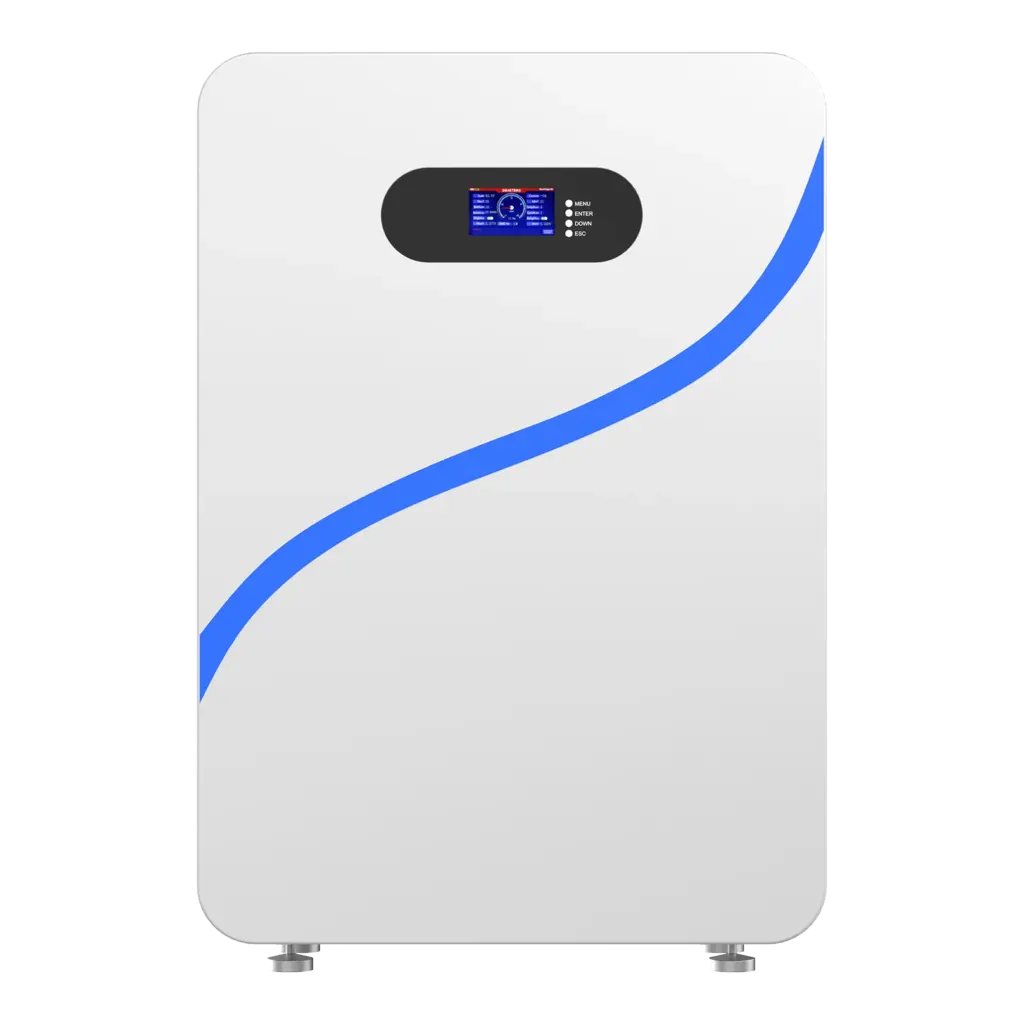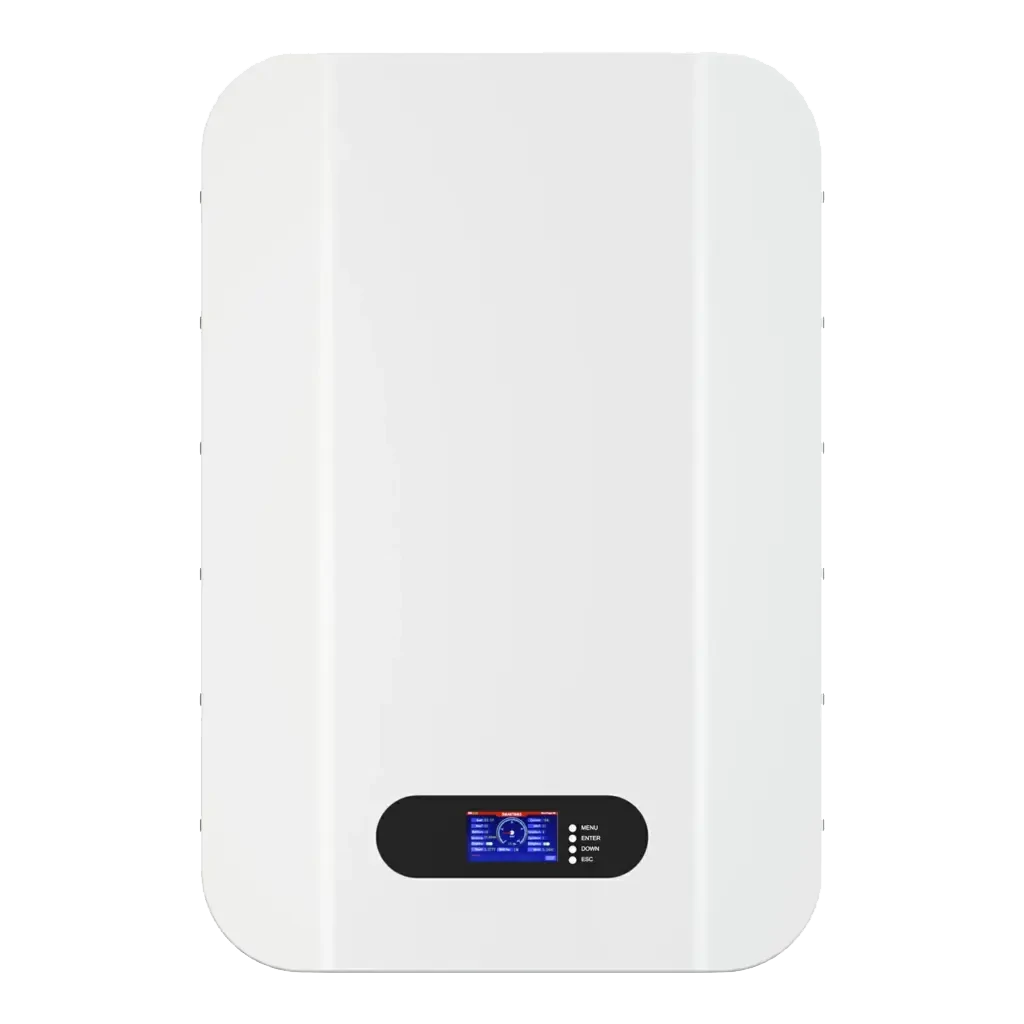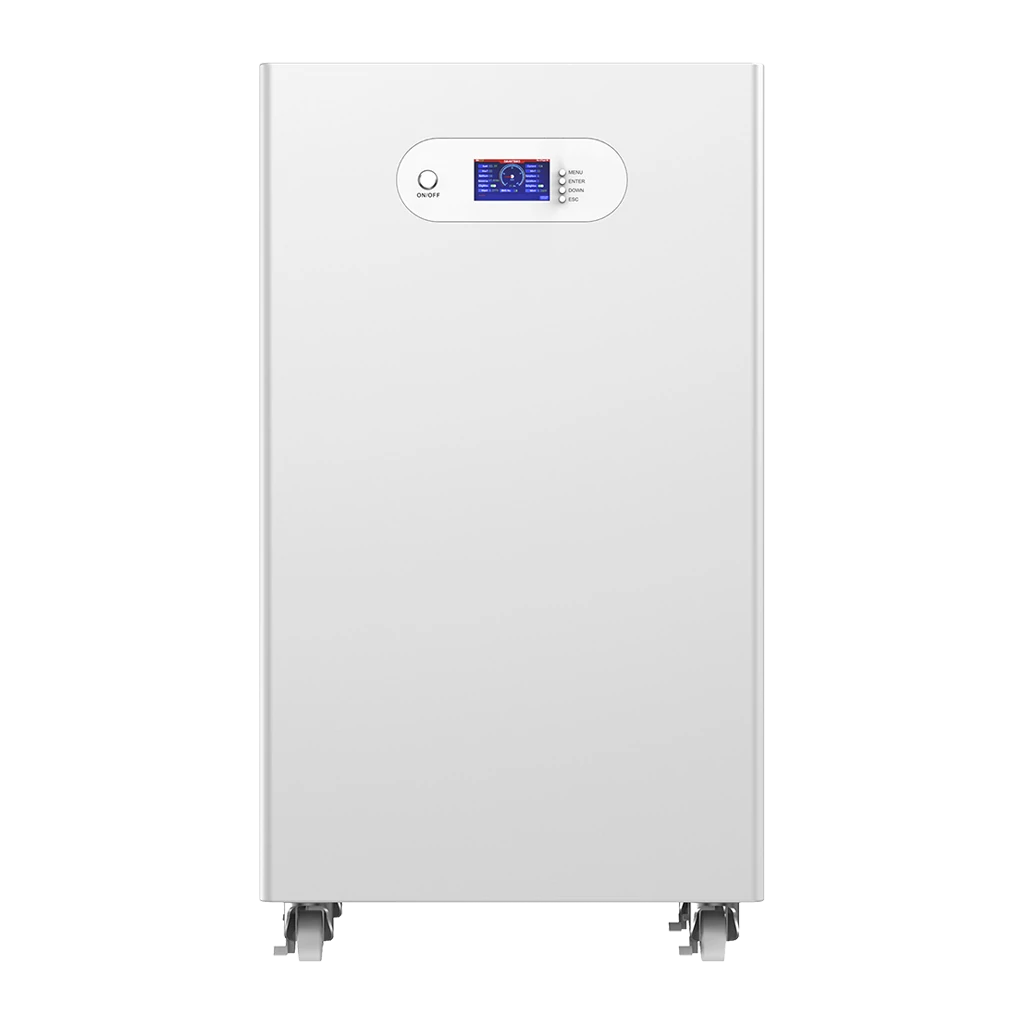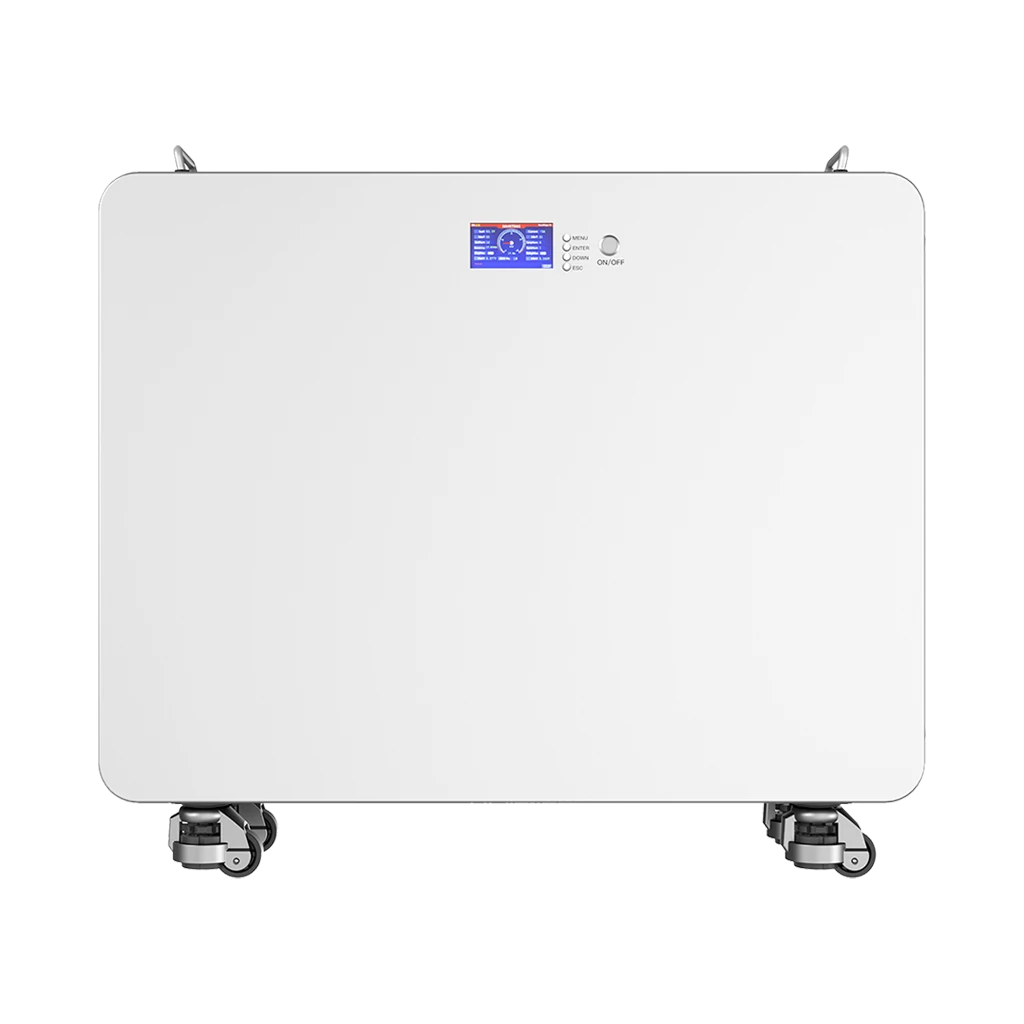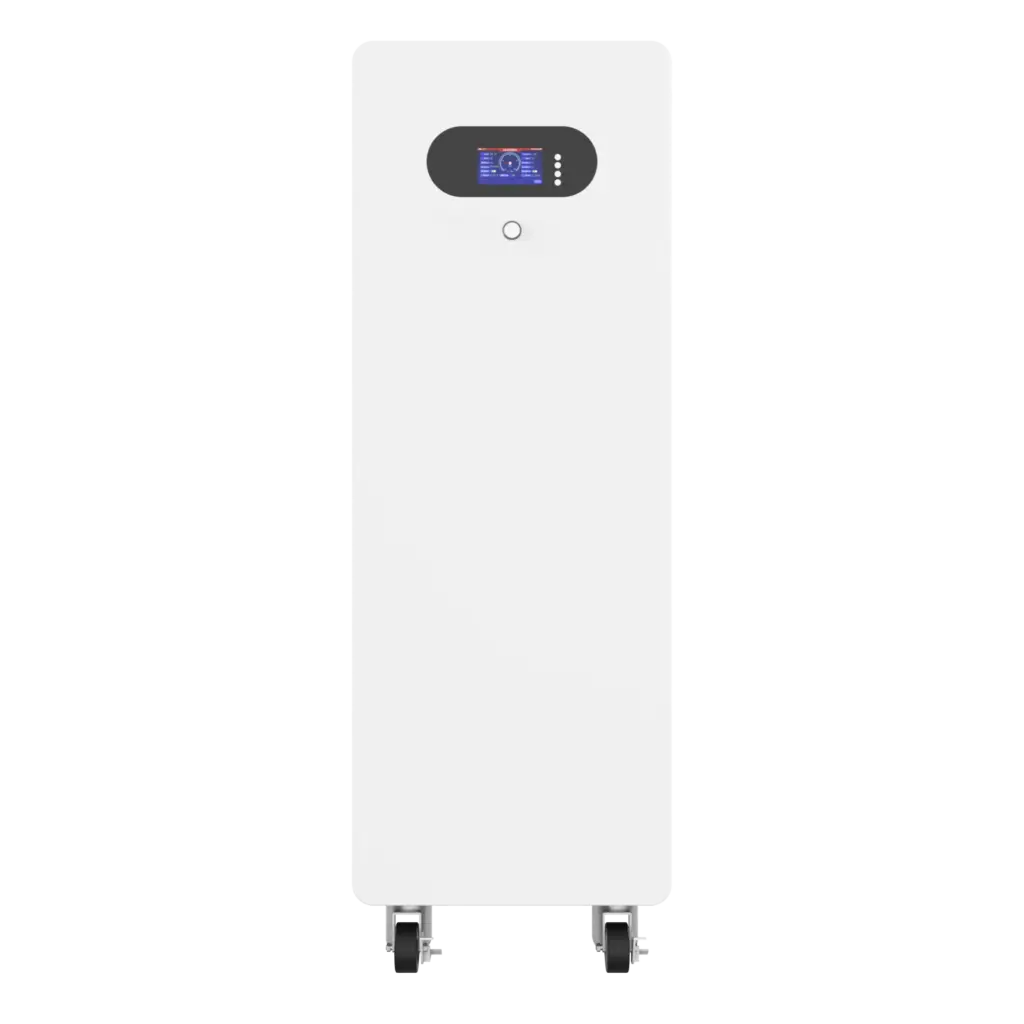

A battery monitoring system tracks battery voltage, current, temperature, state of charge, state of health, alarms, and communication data so users can operate batteries more safely, efficiently, and predictably. In lithium solar storage and BESS projects, it should work together with the built-in BMS, inverter, EMS, and remote monitoring platform—not replace them.
In this guide, you’ll learn what a battery monitoring system is, how it differs from a battery management system, what data it should monitor, how to choose one, and how it applies to home solar batteries, LiFePO4 packs, UPS systems, telecom backup, and commercial battery energy storage systems.
What Is a Battery Monitoring System?
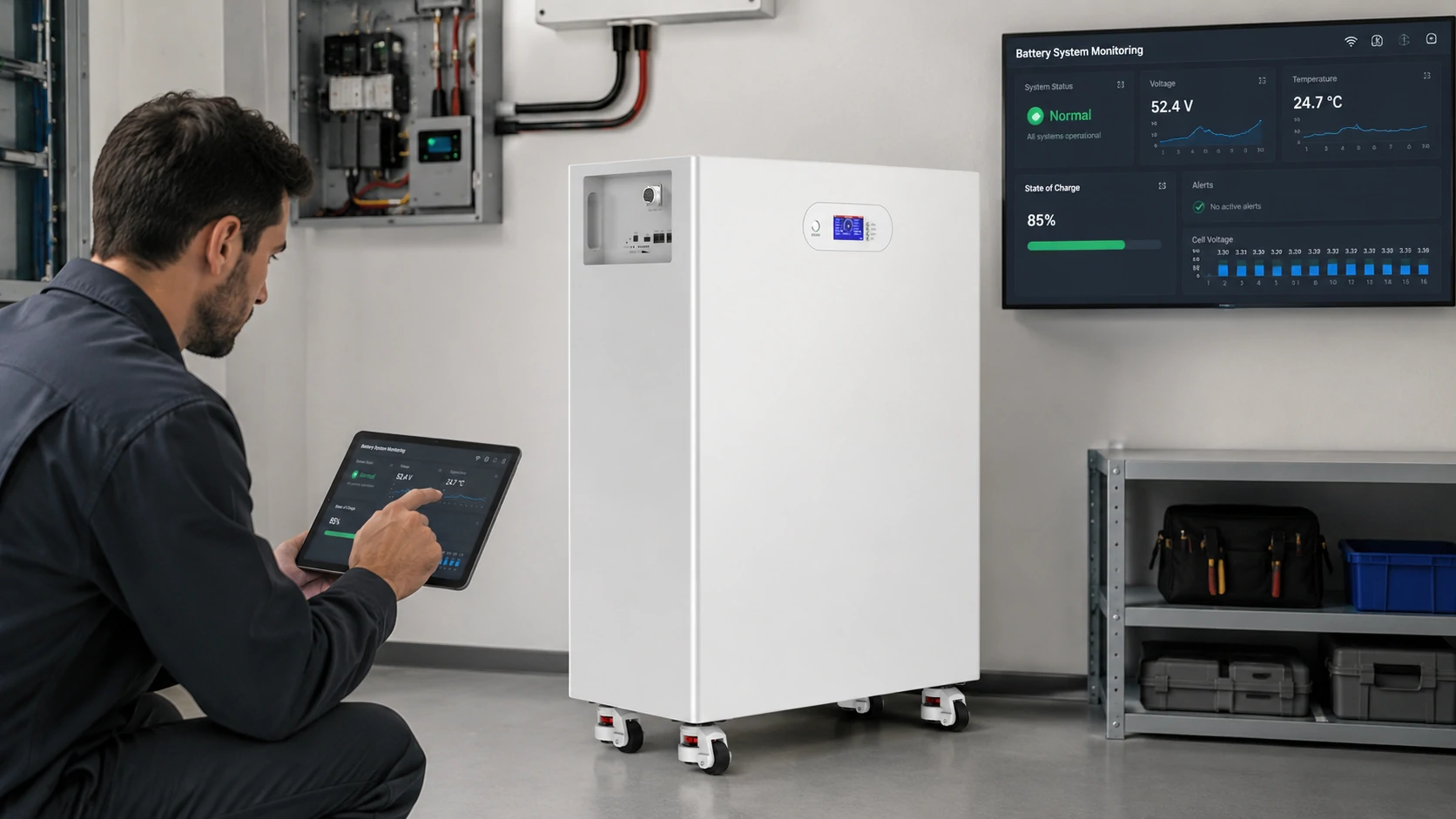
Battery monitoring system is a hardware-and-software solution that measures battery operating data, displays battery status, records trends, and alerts users when voltage, temperature, current, SOC, SOH, or communication signals move outside expected limits.
A battery monitoring system can be as simple as a shunt-based monitor for a 12V RV battery or as complex as a cloud-connected monitoring platform for a commercial energy storage project. Its purpose is to make battery condition visible.
For a deeper explanation of the protection side, read Avepower’s guide on what is BMS.
Battery Monitoring System vs Battery Management System
Battery monitoring system mainly observes, records, displays, and reports battery data, while a battery management system actively protects and controls battery operation through balancing, current limits, disconnect logic, and communication with other devices.
The two terms are often confused because both are abbreviated as BMS in different industries. However, they are not always the same thing.
| Item | Battery Monitoring System | Battery Management System |
|---|---|---|
| Main role | Observe and report battery condition | Protect, control, and optimize the battery |
| Typical location | External monitor, display, gateway, cloud platform, or monitoring module | Built inside or integrated with the battery pack |
| Key data | Voltage, current, temperature, SOC, SOH, alarms, history | Cell voltage, pack voltage, current, temperature, SOC, SOH, balancing, protection status |
| Control ability | Usually limited; may send alarms or reports | Can limit charge/discharge, disconnect the pack, balance cells, and communicate with inverter/EMS |
| Best use case | Visibility, maintenance, diagnostics, remote tracking | Battery safety, cell protection, lifespan management, inverter communication |
| Can it replace the other? | No. Monitoring alone does not protect cells | No. A BMS still needs a good interface for users and project operators |
For lithium battery storage, the most reliable setup is not “monitoring system or BMS.” It is both working together.
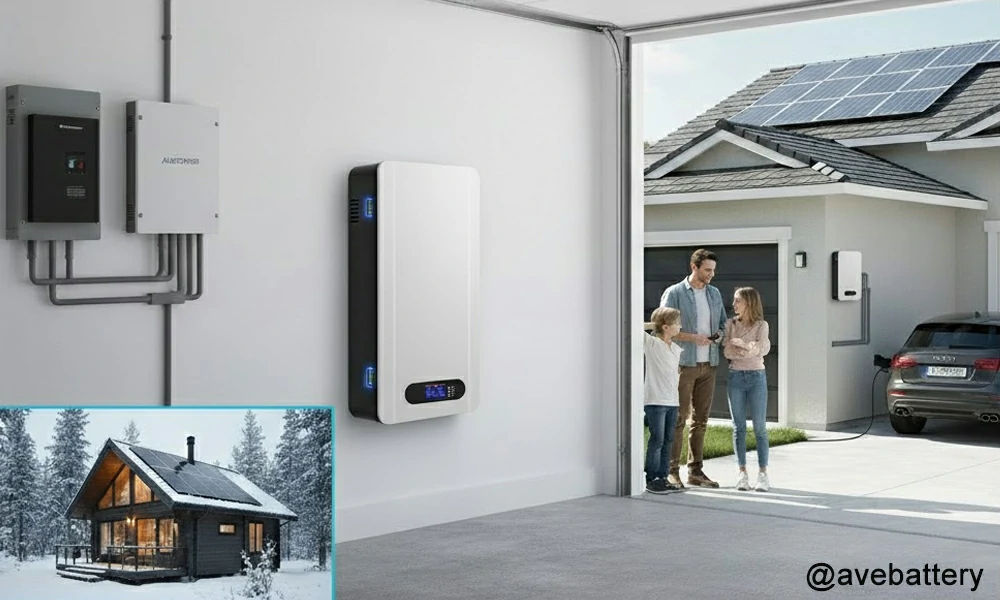
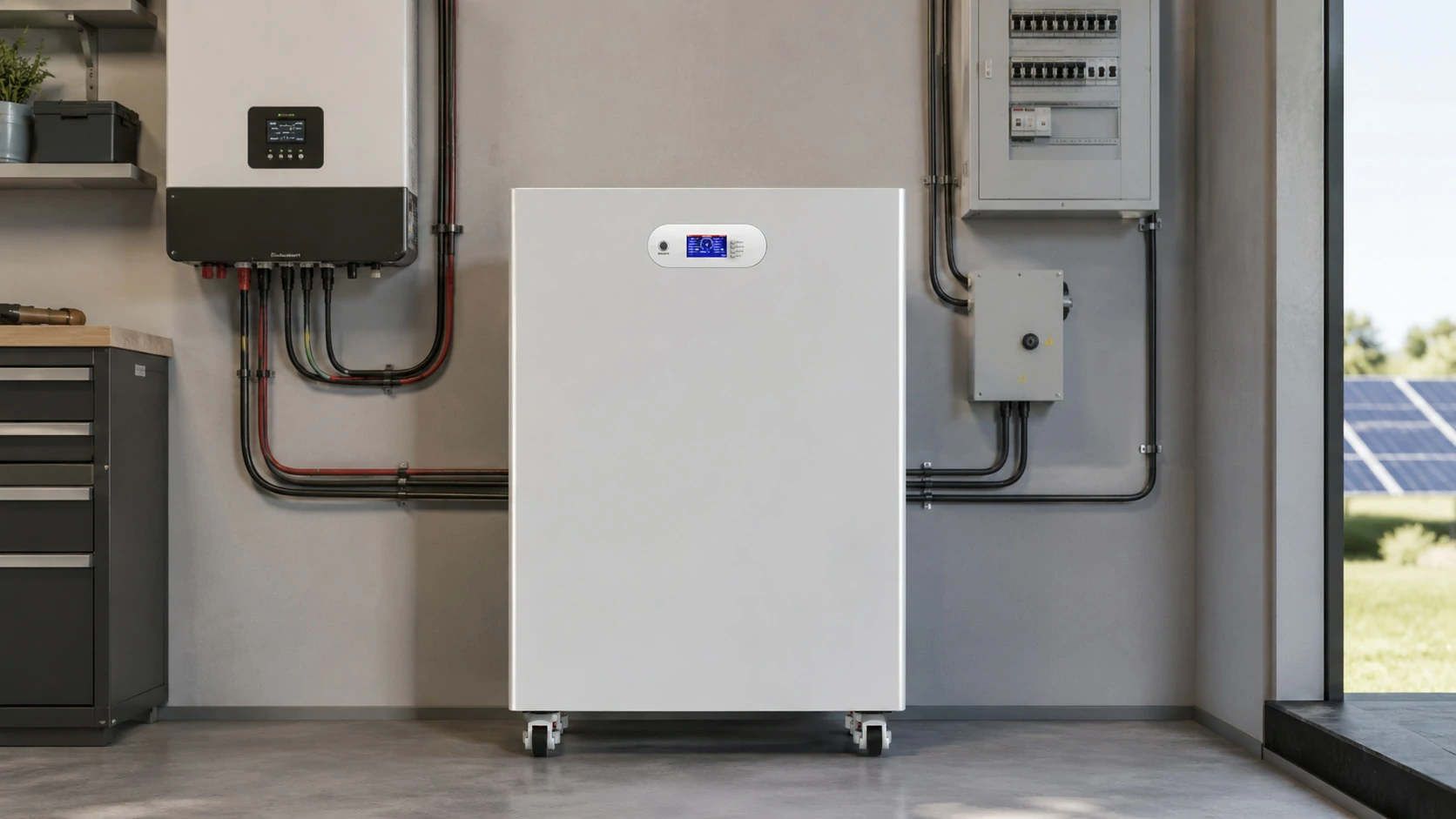
For example, a home energy storage system may use a built-in smart BMS to protect the battery cells, while Bluetooth, WiFi, CAN, RS485, or cloud monitoring gives the user and installer access to real-time system information.

Source Smart LiFePO4 Batteries with Built-In Monitoring
Contact Avepower to get a battery monitoring and BMS-compatible storage solution tailored to your inverter, capacity, voltage platform, and project requirements.
What Does a Battery Monitoring System Monitor?
Battery monitoring system should monitor voltage, current, temperature, SOC, SOH, cycle count, alarms, charge/discharge limits, communication status, and historical data because these metrics show both real-time safety and long-term health.
The exact monitoring depth depends on the battery type and application. A small 12V battery monitor may show only basic pack-level data. A commercial BESS monitoring system should provide module-level, rack-level, cluster-level, and system-level visibility.
| Monitoring Metric | What It Means | Why It Matters | Typical Use |
|---|---|---|---|
| Cell voltage | Voltage of each cell or cell group | Detects imbalance, overcharge, under-voltage | Lithium battery safety |
| Pack voltage | Total battery voltage | Confirms operating window and inverter matching | Solar battery systems |
| Current | Charge/discharge current | Prevents overload and supports runtime calculation | BMS and inverter control |
| Temperature | Cell, module, or cabinet temperature | Detects overheating or low-temperature charging risk | Safety and lifespan |
| SOC | State of Charge | Shows remaining energy | User display and backup planning |
| SOH | State of Health | Shows battery aging condition | Maintenance and replacement planning |
| Cycle count | Number of equivalent cycles | Helps estimate service history | Warranty and lifecycle tracking |
| Alarm logs | Historical fault and warning records | Speeds up troubleshooting | After-sales and O&M |
| Communication status | CAN, RS485, RS232, Ethernet, WiFi, Bluetooth | Confirms system integration | Inverter and EMS matching |
| Charge/discharge limits | Allowed current or power limits | Protects the battery under abnormal conditions | PCS and inverter control |
For lithium solar batteries, SOC and SOH are especially important because they connect daily operation with long-term investment value. Avepower explains this relationship in SOC and SOH in batteries.
How Does a Battery Monitoring System Work?
Battery monitoring system works by collecting data from sensors, shunts, cell monitoring circuits, BMS boards, or inverter communication ports, then converting that information into dashboards, alarms, logs, and control signals for users or system controllers.
A typical monitoring process looks like this:
- Measurement: Sensors or battery monitoring ICs measure voltage, current, and temperature.
- Calculation: The BMS or monitor estimates SOC, SOH, remaining runtime, cycle count, and fault status.
- Protection check: The battery compares operating data against safe thresholds.
- Communication: Data is sent through CAN, RS485, RS232, Bluetooth, WiFi, Ethernet, or cloud gateways.
- Display: Users see battery status through a screen, app, inverter portal, EMS platform, or monitoring dashboard.
- Action: The system may trigger alarms, reduce charge/discharge current, stop operation, or notify maintenance teams.
In a solar battery system, the battery does not work alone. It communicates with the inverter and sometimes with an energy management system. The BMS focuses on cell-level safety, while the EMS focuses on whole-system energy optimization, such as peak shaving, time-of-use control, and solar self-consumption. Avepower explains this difference in its guide to energy management systems.
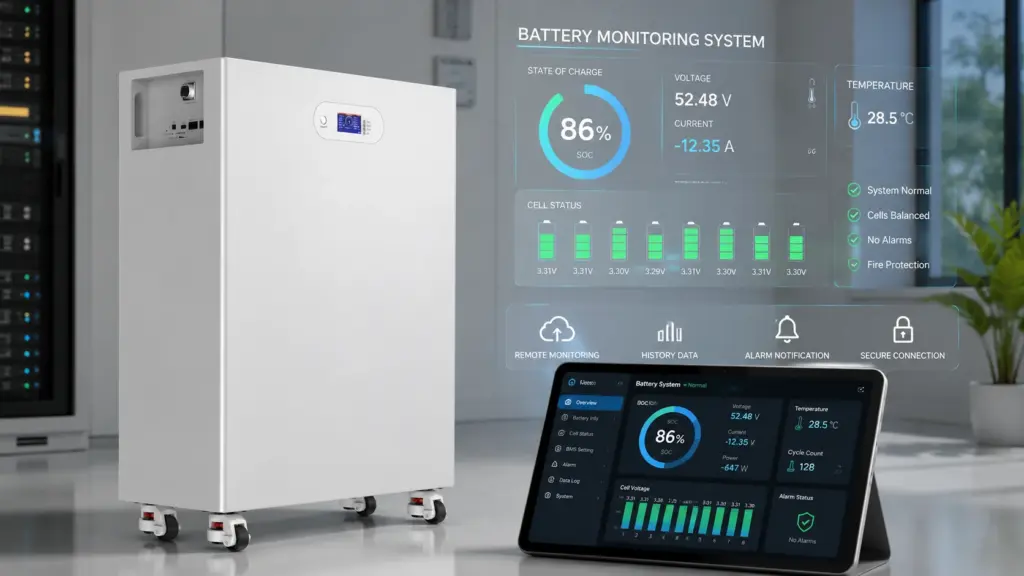
Key Battery Monitoring Metrics: SOC, SOH, Voltage, Current and Temperature
Battery monitoring system should not rely on SOC alone because SOC tells remaining charge, while voltage, current, temperature, SOH, cell balance, and alarm history explain whether the battery is operating safely and aging normally.
SOC is the most visible number, but it is not the whole story. A battery may show 70% SOC and still have a problem if one cell group is weak, the pack is overheating, or communication with the inverter is unstable.
SOC: State of Charge
SOC shows how much usable energy remains in the battery. It is usually shown as a percentage. For example, 80% SOC means the battery is estimated to have about 80% of its available charge remaining.
SOC is useful for daily operation, backup planning, and energy scheduling. However, SOC can drift if the battery is not periodically calibrated or if the algorithm lacks good voltage, current, and temperature data.
SOH: State of Health
SOH shows the battery’s aging condition compared with its original condition. A new battery is typically considered close to 100% SOH. As the battery ages, capacity and internal resistance change.
SOH is useful for warranty evaluation, preventive maintenance, fleet management, and project lifecycle planning. You can read more in Avepower’s guide to SOC and SOH in batteries.
Voltage
Voltage monitoring detects whether the battery is staying within its safe operating range. For lithium batteries, cell-level voltage is especially important because one weak or high-voltage cell group can limit the whole pack.
Current
Current monitoring shows how much power is entering or leaving the battery. It helps prevent overcurrent and supports runtime calculations.
A simple runtime estimate is:
Runtime = usable battery capacity ÷ average load
For example, if a system has 10kWh usable energy and the essential load is 1kW, estimated runtime is about 10 hours before considering inverter losses and safety reserves.
Temperature
Temperature monitoring protects battery safety and lifespan. High temperature can accelerate aging. Low temperature can reduce available capacity and may restrict lithium battery charging. For solar storage projects, temperature data is especially important in garages, equipment rooms, outdoor enclosures, and commercial battery cabinets.
Battery Monitoring System for Home, Commercial and High-Voltage ESS Projects
Battery monitoring system requirements become more demanding as capacity, voltage, current, and project risk increase, so home systems, commercial cabinets, and high-voltage ESS should not use the same monitoring checklist.
A small home battery system and a 500kWh commercial battery project both need monitoring, but not at the same depth.
| Application | Typical Capacity | Monitoring Focus | Recommended Features |
|---|---|---|---|
| Home solar battery | 5–20kWh | SOC, backup runtime, app monitoring, inverter communication | Smart BMS, Bluetooth/WiFi, CAN/RS485 |
| Off-grid system | 10–50kWh | SOC accuracy, low-voltage protection, generator/solar coordination | BMS + inverter communication + alarms |
| Installer project | 10–100kWh | Commissioning, troubleshooting, parallel battery status | Local display, app, protocol support, alarm logs |
| Commercial BESS | 100kWh–1MWh+ | Safety, cabinet status, EMS/PCS coordination, O&M | BMU/BCU, EMS integration, CAN/RS485/Ethernet |
| High-voltage ESS | 200kWh–MWh scale | Cluster voltage, insulation, contactor control, multi-level protection | Rack/cluster monitoring, BCU, PCS/EMS coordination |
For commercial applications, Avepower’s commercial battery energy storage systems are more relevant than basic home battery products because they involve BMS, EMS, PCS, cabinet-level safety, thermal control, and project-based customization.
For higher voltage projects, Avepower’s custom high-voltage battery storage system is more suitable when customers need BMU/BCU architecture, CAN/RS485 communication, scalable cabinet layout, and project-specific integration.
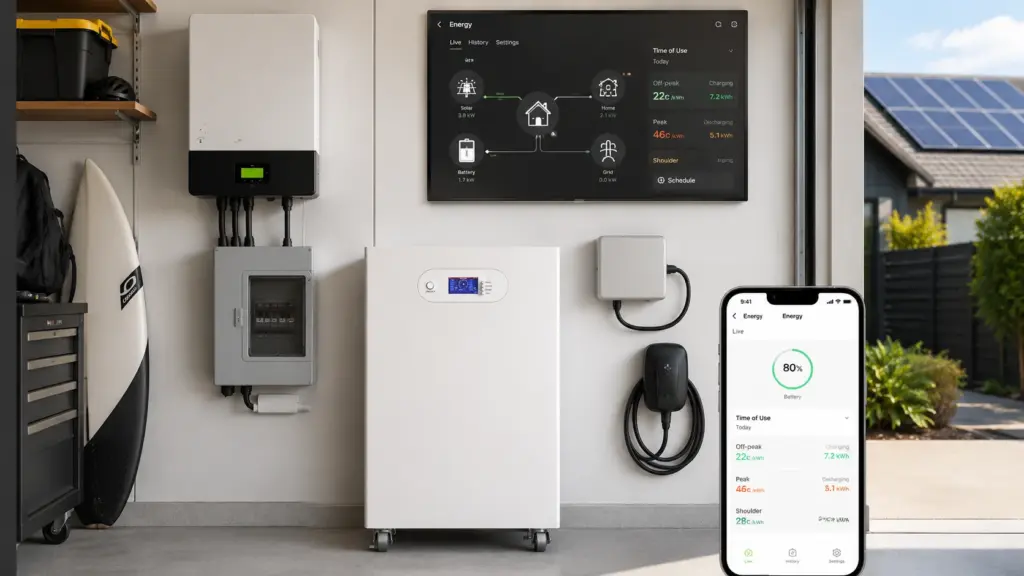
Build Safer Energy Storage Projects with Smarter Monitoring
For commercial BESS and high-voltage ESS projects, battery monitoring must support more than basic data display. Avepower can help configure battery systems with BMU/BCU architecture, CAN/RS485 communication, multi-level protection, and project-based technical support.
Main Types of Battery Monitoring Systems
Battery monitoring system type should be selected according to battery chemistry, system voltage, project size, safety requirements, data depth, remote access needs, and whether the battery is used for home solar, UPS, telecom, RV, marine, or C&I storage.
Different projects require different monitoring depth.
| Type | Best for | Strengths | Limitations |
|---|---|---|---|
| Basic voltage monitor | Simple lead-acid or small DC systems | Low cost and easy to install | Not enough for lithium SOC accuracy |
| Shunt-based battery monitor | RV, marine, off-grid, small solar systems | More accurate current and SOC tracking | Usually does not monitor individual cells |
| Built-in lithium BMS monitor | LiFePO4 battery packs and solar batteries | Cell-level safety, balancing, protection | User interface depends on manufacturer design |
| Inverter monitoring portal | Home solar + battery systems | Convenient energy flow and system overview | May not show detailed cell-level data |
| EMS-level monitoring | Commercial and industrial BESS | Coordinates battery, PCS, PV, loads, grid, and tariff logic | More complex design and integration |
| Cloud remote monitoring | Installer fleets, distributors, project owners | Remote diagnostics, alarms, data history | Requires stable communication and cybersecurity planning |
| Industrial cell monitoring | UPS, data centers, telecom, substations | Deep battery health and maintenance visibility | More expensive and often chemistry-specific |
For flexible home storage, Avepower stackable batteries are suitable when users want modular expansion and inverter-compatible communication. For compact integrated systems, Avepower all-in-one batteries combine the battery and inverter platform with remote monitoring for easier installation.
Communication Protocols: CAN, RS485, RS232, Bluetooth, WiFi and Cloud Monitoring
Battery monitoring system should support the right communication method for the project because local display is useful for commissioning, while CAN, RS485, RS232, WiFi, Bluetooth, or cloud access determine integration depth.
Communication is where many battery projects succeed or fail. A battery may have good cells and a strong BMS, but if it cannot communicate correctly with the inverter or EMS, the system may not charge and discharge as expected.
| Communication Method | Best For | Strength | Limitation |
|---|---|---|---|
| CAN | Hybrid inverters, BESS, real-time control | Fast, robust, commonly used for battery-inverter communication | Requires protocol matching |
| RS485 | Inverters, EMS, monitoring devices | Stable for industrial communication | Needs correct address and baud rate settings |
| RS232 | Local service, configuration, some inverter systems | Simple point-to-point connection | Limited distance and scalability |
| Bluetooth | Local mobile app monitoring | Easy user access near the battery | Not ideal for remote O&M |
| WiFi | App or cloud monitoring | Convenient remote visibility | Depends on network stability |
| Ethernet | Commercial systems and EMS | More stable for networked systems | More setup required |
| Cloud platform | Fleet monitoring and O&M | Useful for installers, distributors, and project operators | Requires data security and network access |
Before ordering batteries in bulk, installers and distributors should confirm:
- Inverter brand and model
- Battery voltage platform
- Communication protocol
- CAN or RS485 pin definition
- Battery parameter settings
- Parallel battery communication logic
- Monitoring app or platform access
- Alarm and fault code visibility
Avepower’s inverter compatibility support is relevant for buyers who need to match communication protocols before installation.
How to Choose the Right Battery Monitoring System
Battery monitoring system selection should start with battery chemistry, voltage, current range, communication protocol, monitoring depth, alarm logic, installation environment, data access, warranty support, and compatibility with the inverter or EMS.
Use this checklist before selecting a battery monitoring system:
| Selection Factor | What to Check | Practical Recommendation |
|---|---|---|
| Battery chemistry | LiFePO4, NMC, lead-acid, AGM, gel, Ni-Cd | Lithium requires a real BMS, not only a voltage monitor |
| Voltage platform | 12V, 24V, 48V, high-voltage DC | Match monitor voltage range to the full system |
| Current range | Continuous and peak current | Choose a shunt or BMS rating above real operating current |
| Cell-level data | Needed or not? | Essential for lithium packs and large BESS |
| Communication | CAN, RS485, RS232, Bluetooth, WiFi, Ethernet | Match inverter, EMS, or remote monitoring platform |
| Alarm functions | Overvoltage, undervoltage, overcurrent, temperature, communication fault | Customizable alarms are better for installers |
| Data logging | Historical data and export ability | Important for warranty, maintenance, and diagnostics |
| Remote access | App, web portal, cloud gateway | Useful for installers, distributors, and fleet support |
| Environment | Indoor, outdoor, cabinet, telecom room, garage | Consider IP rating, ventilation, and temperature range |
| Safety compliance | System certification and installation standard | Monitoring does not replace certified system design |
A useful rule is simple: the larger and more critical the battery system, the more detailed the monitoring should be.
- For a small RV battery, a shunt monitor may be enough.
- For a 10kWh wall-mounted LiFePO4 home battery, built-in BMS monitoring plus inverter communication is usually necessary.
- For a commercial BESS, you need BMS + EMS + PCS communication + alarms + data history + emergency planning.
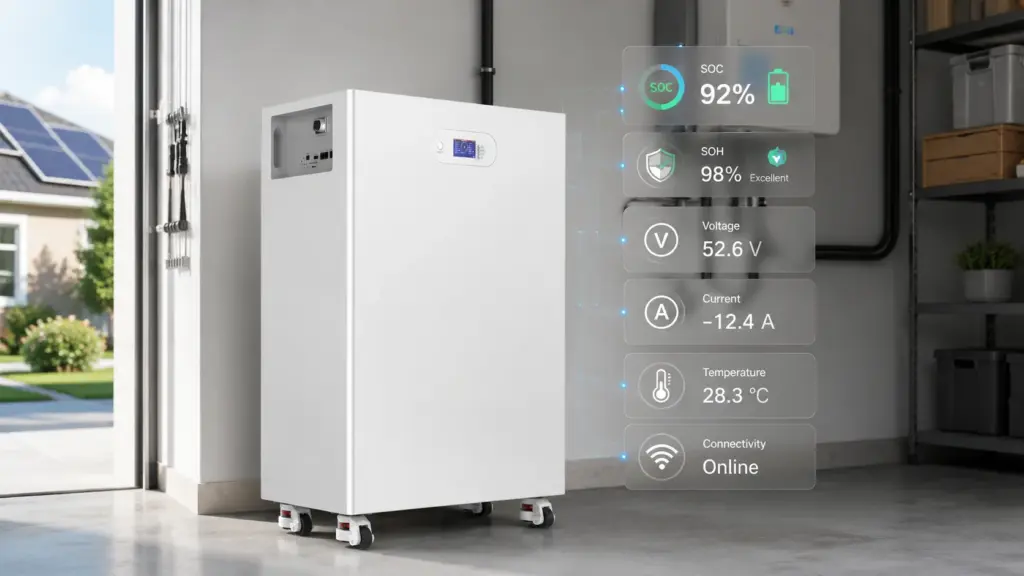
Practical Case: 522.5kWh High-Voltage ESS Monitoring
Battery monitoring system becomes especially valuable in high-voltage ESS projects because the system must coordinate many cells, modules, racks, protection layers, and communication signals under real operating conditions.
In Avepower’s 522.5kWh high-voltage ESS case study in Lithuania, the deployed system used robust cabinets and an intelligent BMS that continuously monitored voltage, current, and temperature. This type of project shows why monitoring is not an optional add-on for large battery systems.
A high-voltage ESS needs monitoring because:
- A small cell-level abnormality can affect module-level performance.
- Temperature differences can signal ventilation or load problems.
- Communication faults can interrupt inverter or EMS coordination.
- Historical data helps diagnose whether a fault is caused by installation, environment, operation, or battery aging.
- Project owners need confidence that the battery is operating within safe limits.
For installers, this means monitoring should be considered during system design—not after commissioning. Communication protocols, cable routing, cabinet layout, maintenance access, and remote data requirements should be confirmed before delivery.
When a Battery Monitoring System Is Enough—and When It Is Not
Battery monitoring system is enough for visibility, diagnostics, maintenance planning, and user awareness, but it is not enough when lithium cell protection, system-level safety certification, emergency shutdown, thermal management, or inverter control is required.
Monitoring works well when the goal is:
- Displaying SOC and remaining runtime
- Tracking charge/discharge current
- Recording voltage and temperature trends
- Sending alarms to users or installers
- Supporting preventive maintenance
- Improving troubleshooting speed
Monitoring is not enough when the goal is:
- Protecting lithium cells from overcharge or over-discharge
- Stopping unsafe current flow
- Balancing cells
- Preventing low-temperature charging
- Managing high-voltage safety logic
- Certifying an energy storage system
- Replacing proper electrical protection and fire safety design
For lithium storage, the correct approach is integrated protection: quality cells, smart BMS, suitable inverter communication, correct installation, and user-friendly monitoring.
Avepower’s LiFePO4 battery packs are designed around smart BMS protection, real-time monitoring options, long cycle life, and OEM/ODM flexibility for solar, RV, UPS, backup, and off-grid applications.
Battery Monitoring System Buying Checklist
Battery monitoring system should be evaluated with a project checklist because a feature that is enough for a small home battery may be insufficient for installer, distributor, commercial, or high-voltage ESS applications.
Use this checklist before choosing a battery storage product.
| Requirement | Home Battery | Installer Project | Commercial ESS | High-Voltage ESS |
|---|---|---|---|---|
| SOC display | Required | Required | Required | Required |
| Cell voltage monitoring | Recommended | Required | Required | Required |
| Temperature monitoring | Required | Required | Required | Required |
| SOH estimation | Recommended | Recommended | Required | Required |
| Alarm history | Recommended | Required | Required | Required |
| Bluetooth app | Useful | Useful | Optional | Optional |
| WiFi/cloud monitoring | Useful | Recommended | Required | Required |
| CAN/RS485 communication | Required | Required | Required | Required |
| EMS/PCS integration | Optional | Optional | Required | Required |
| Parallel battery monitoring | If expandable | Required | Required | Required |
| Protocol documentation | Recommended | Required | Required | Required |
| Supplier technical support | Recommended | Required | Required | Required |
Build Smarter Battery Storage with Avepower
Avepower provides LiFePO4 battery storage systems with smart BMS protection, scalable capacity, inverter communication, Bluetooth/WiFi monitoring options, and OEM/ODM customization for installers, distributors, EPCs, and energy storage brands.
Whether you need a wall-mounted home battery, rack-mounted LiFePO4 system, stackable solar battery, all-in-one battery with inverter, or customized storage platform, Avepower can help you match battery capacity, monitoring features, communication protocol, and project requirements.
Explore Avepower battery energy storage solutions or contact Avepower to discuss your next monitored battery storage project.
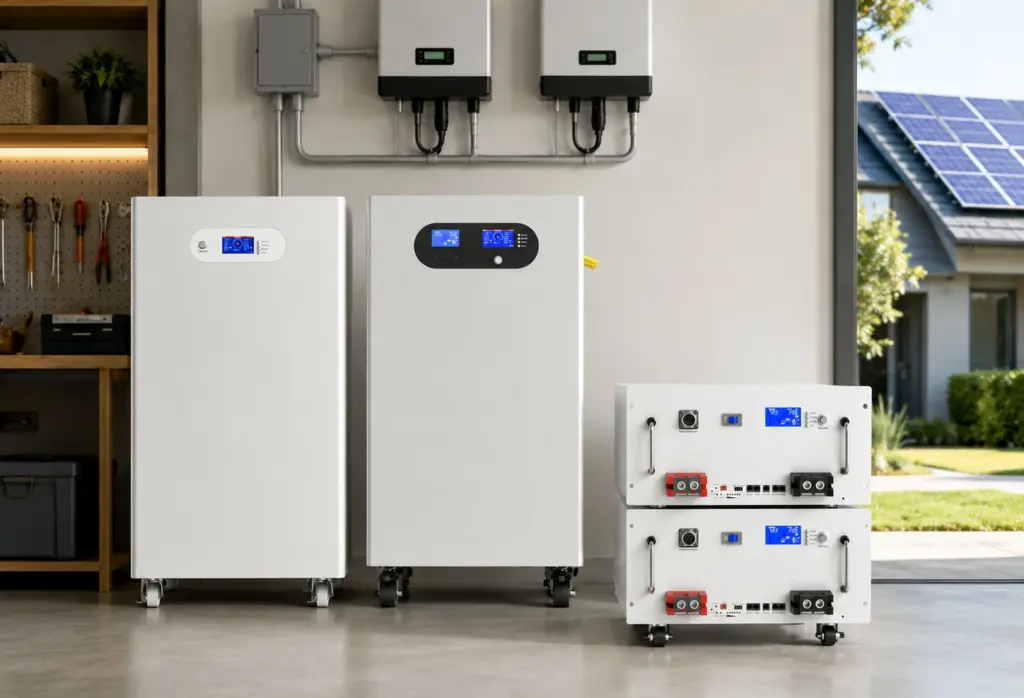
Take Control of Your Energy with Avepower!
Reliable home solar battery solutions with OEM/ODM customization and in-house manufacturing, tailored to the needs of distributors, installers, and energy partners.
Conclusion
Battery monitoring system is the visibility layer of a reliable battery storage project: it helps users understand battery status, installers diagnose problems, and project owners manage safety, performance, and long-term value.
For lithium batteries, monitoring should never be treated as a simple display. It should be part of a complete system that includes quality LiFePO4 cells, smart BMS protection, inverter communication, proper installation, and clear data access.
A good battery monitoring system helps you:
- Use more of your stored energy safely
- Detect faults earlier
- Improve SOC and SOH visibility
- Reduce maintenance uncertainty
- Support warranty and troubleshooting
- Improve system reliability
- Make better energy decisions
For home solar, telecom, UPS, RV, marine, and commercial BESS applications, the best monitoring solution is the one that matches your battery chemistry, voltage, current, communication protocol, installation environment, and long-term operating goals.
FAQ
A battery monitoring system is a device or platform that tracks battery data such as voltage, current, temperature, SOC, SOH, alarms, and communication status. It helps users understand battery condition and detect abnormal operation early.
No. A battery monitoring system mainly observes and reports battery data, while a battery management system protects and controls the battery. In lithium batteries, the BMS is usually built into the pack and is essential for safe operation.
Yes, lithium batteries should have built-in BMS protection and practical monitoring access. Without monitoring, users may not know the real SOC, fault status, temperature condition, or communication state of the battery system.
It may measure cell voltage, pack voltage, charge current, discharge current, temperature, SOC, SOH, internal resistance, cycle count, alarms, and communication status. The exact data depends on the battery and monitoring design.
No. Voltage alone is not enough, especially for LiFePO4 batteries. A better system calculates SOC using current measurement, voltage behavior, temperature, battery model, and BMS data.
SOC means State of Charge. It estimates how much usable energy remains in the battery, similar to a fuel gauge. Accurate SOC helps users decide when to charge, discharge, or reduce loads.
SOH means State of Health. It estimates the battery’s aging condition compared with its original capacity and performance. SOH is useful for maintenance planning, warranty evaluation, and replacement decisions.
Common protocols include CAN, RS485, RS232, Bluetooth, WiFi, Ethernet, and cloud gateway communication. In solar storage, CAN and RS485 are widely used for battery-to-inverter communication.
Commercial BESS usually requires multi-level monitoring across cells, modules, racks, cabinets, PCS, EMS, thermal systems, alarms, and data logs. It should support remote diagnostics, maintenance records, and safety integration.