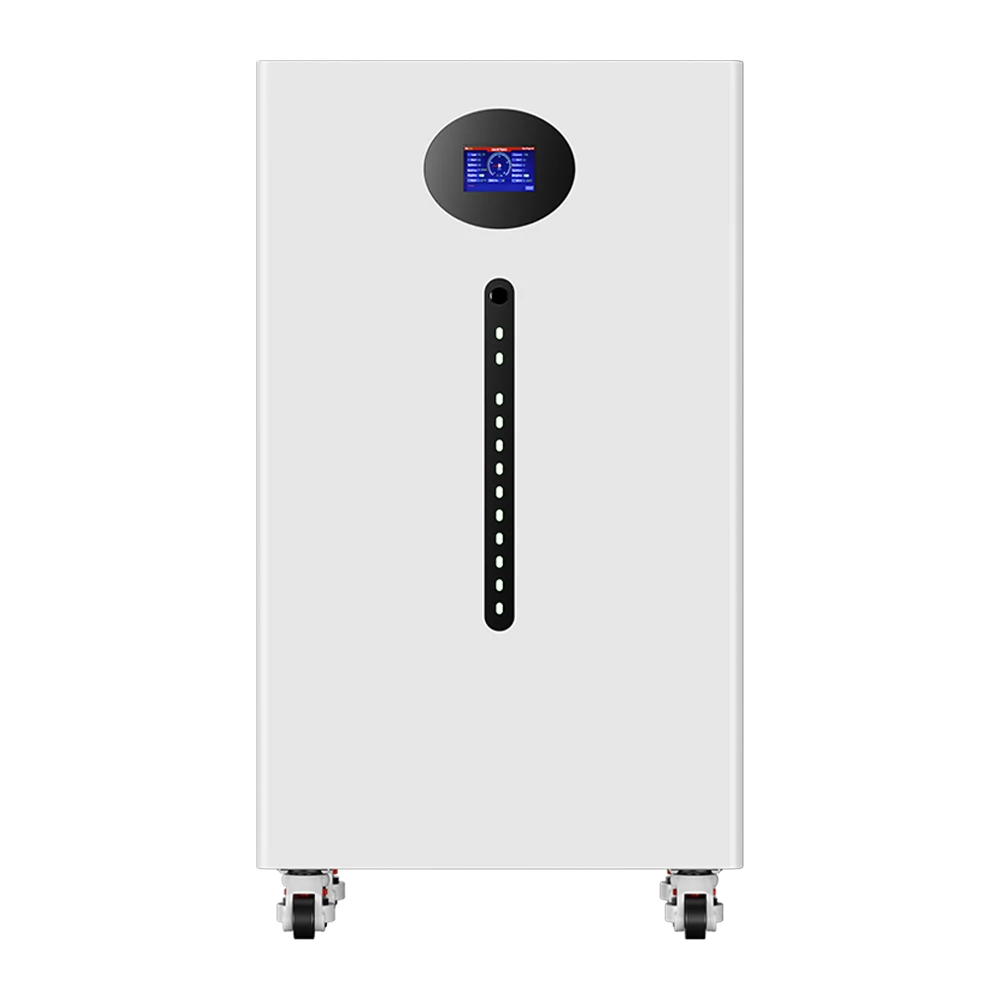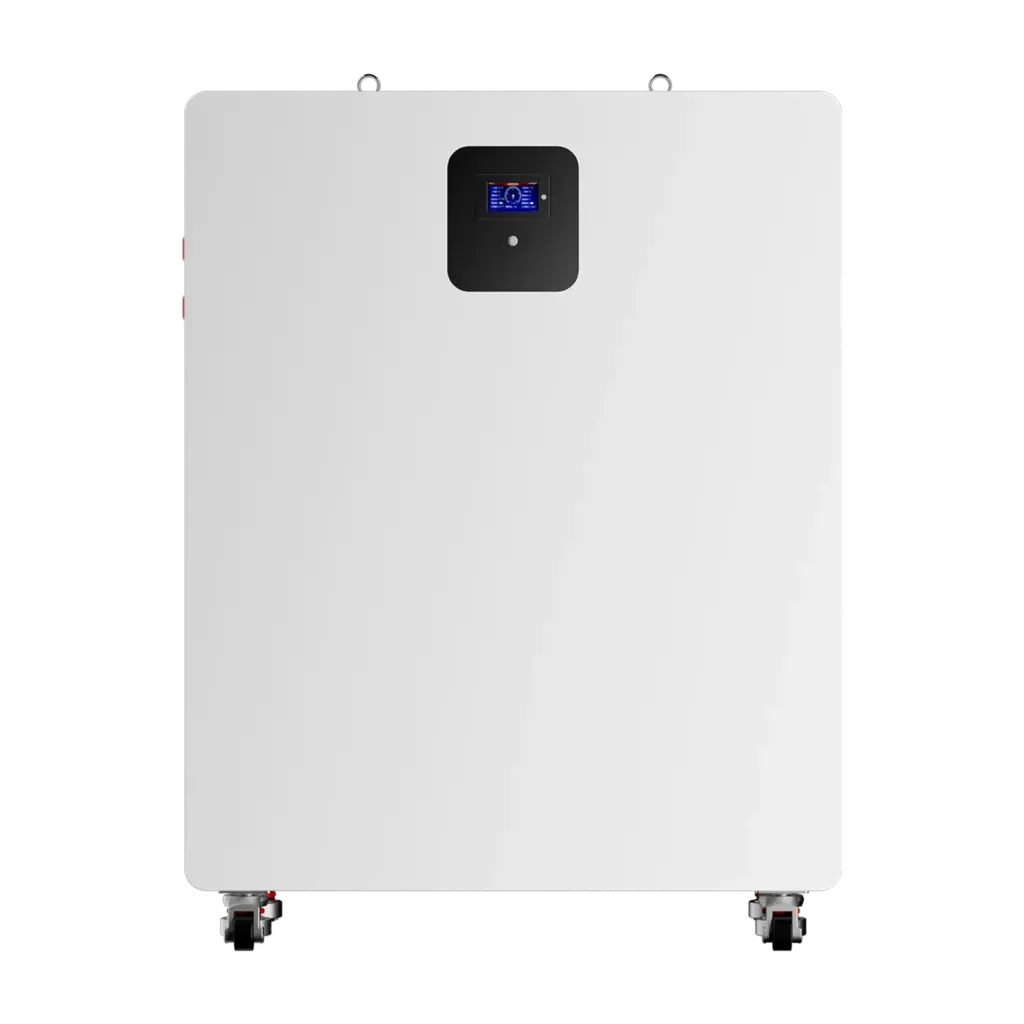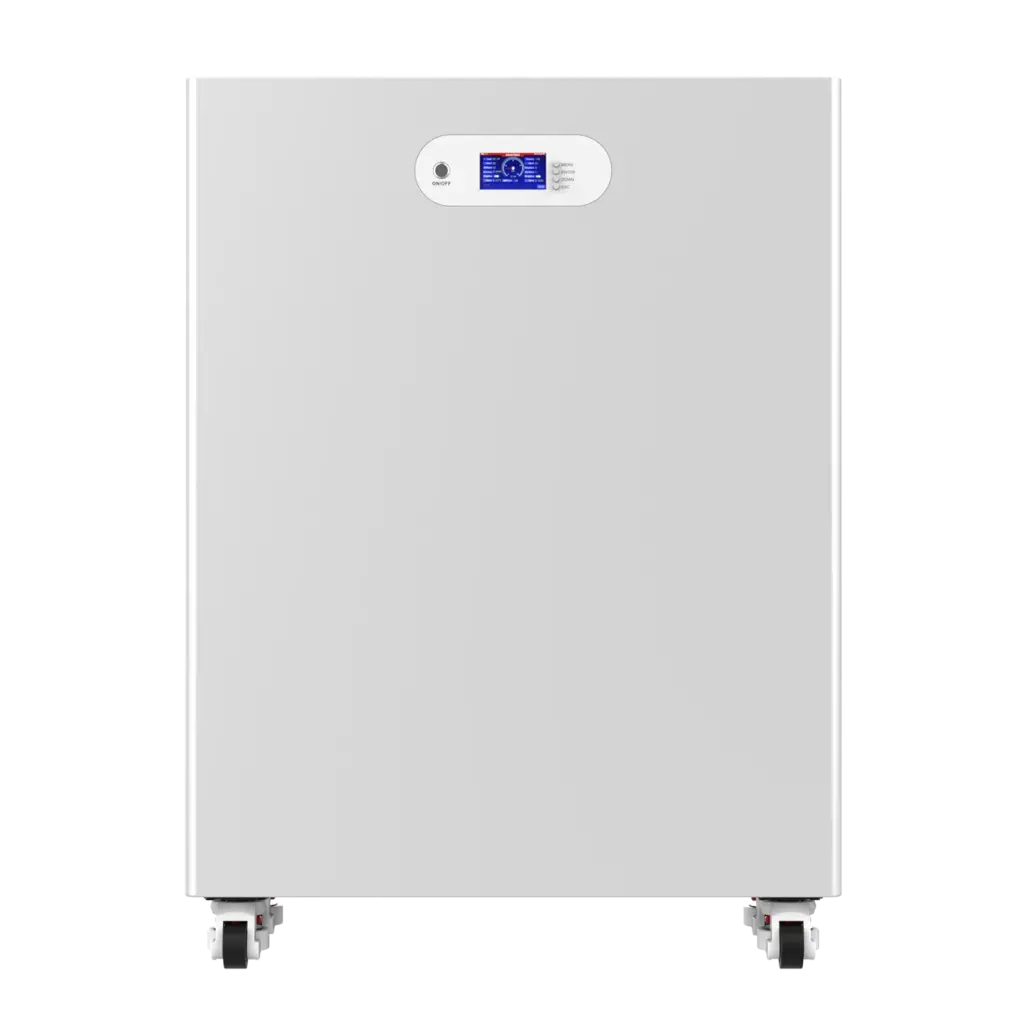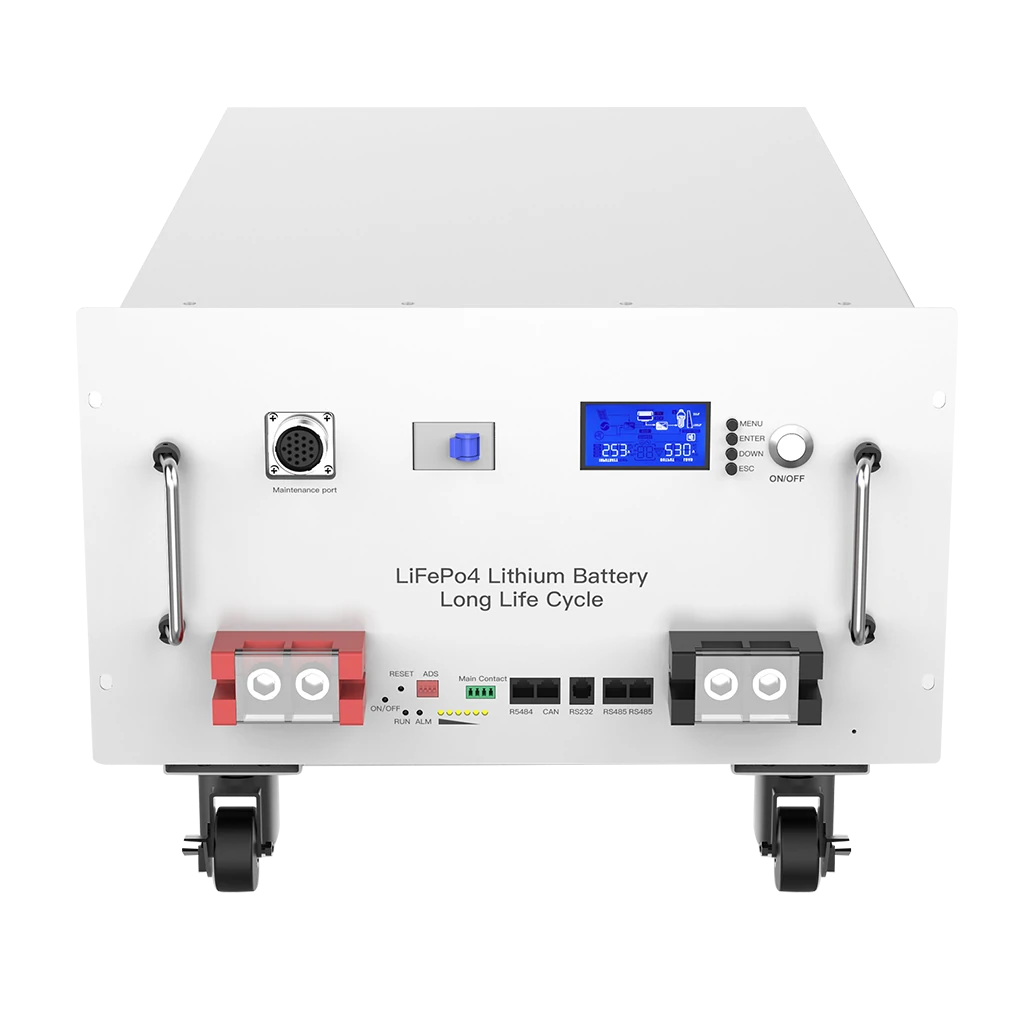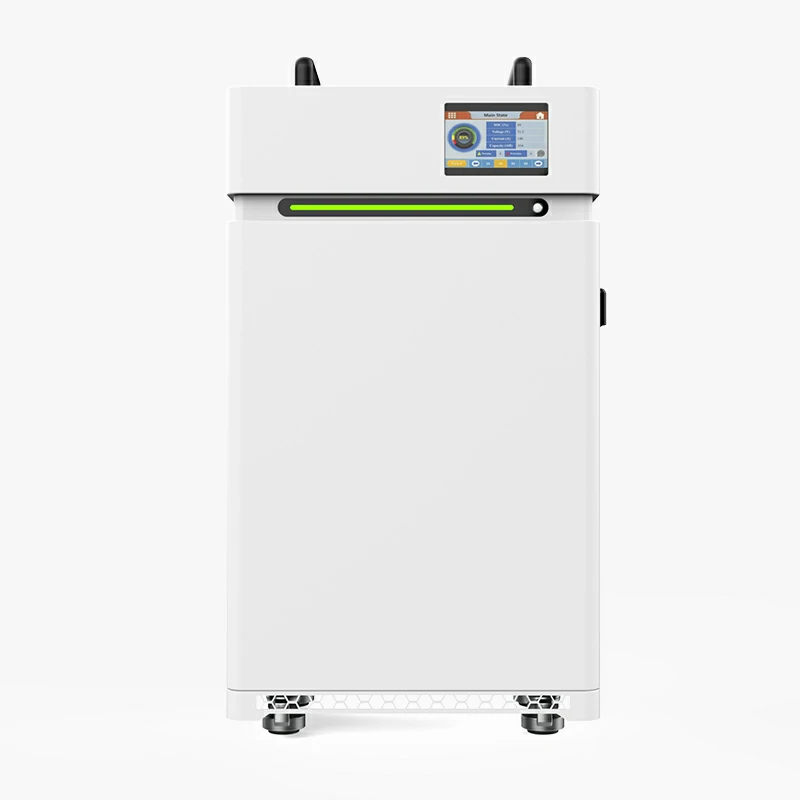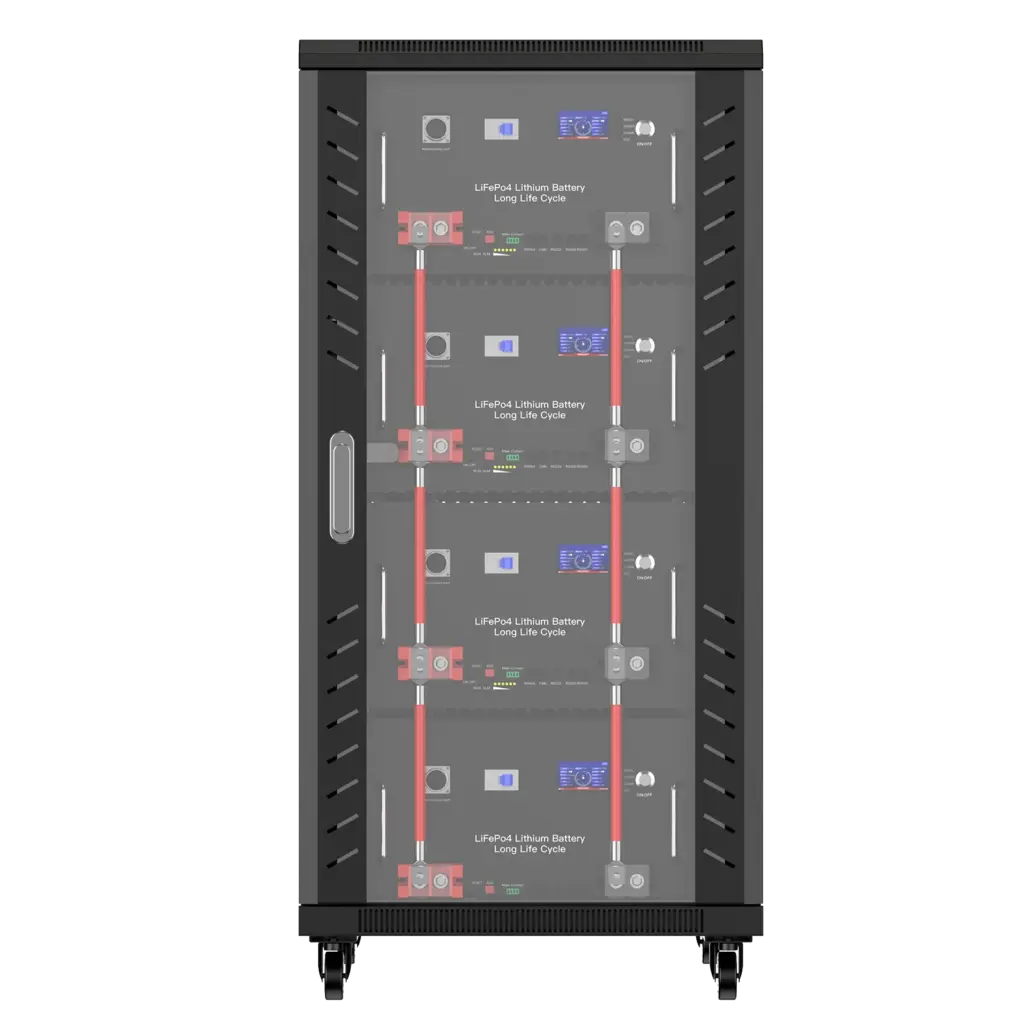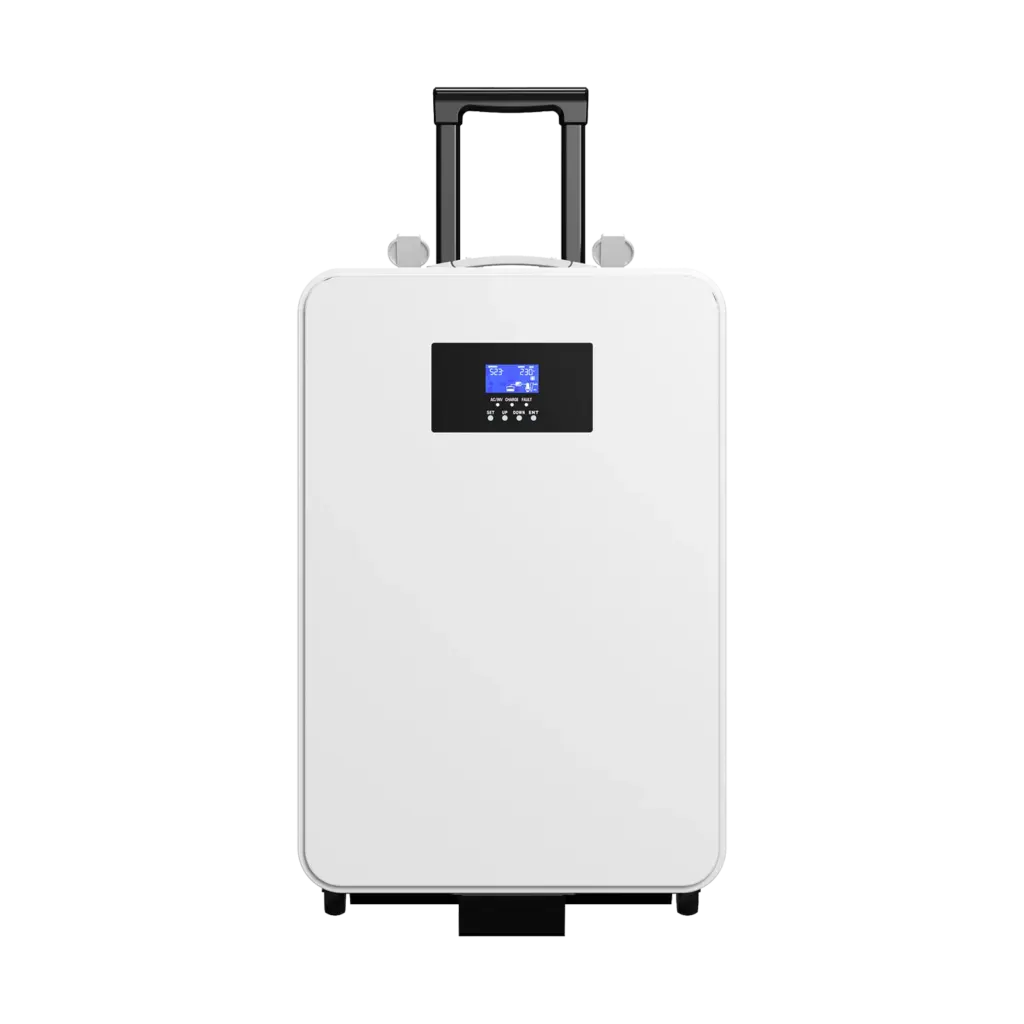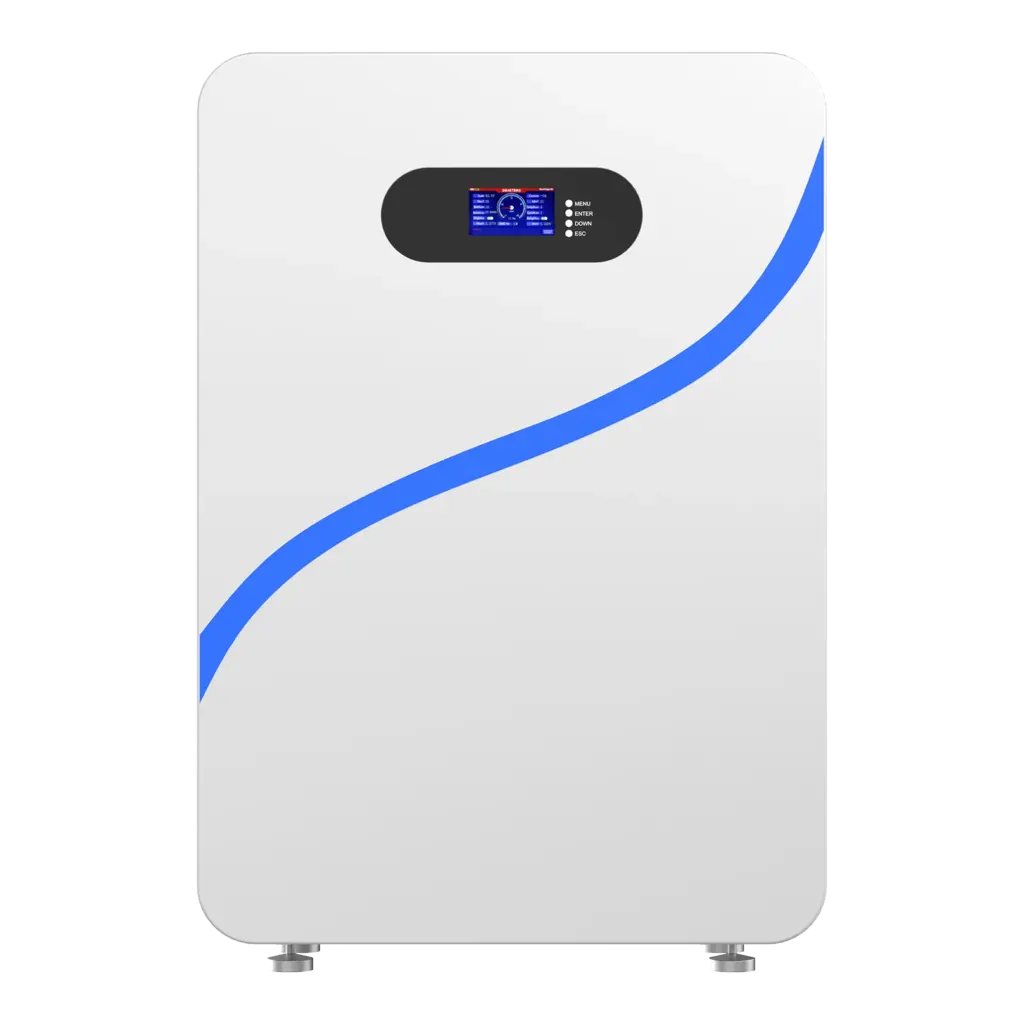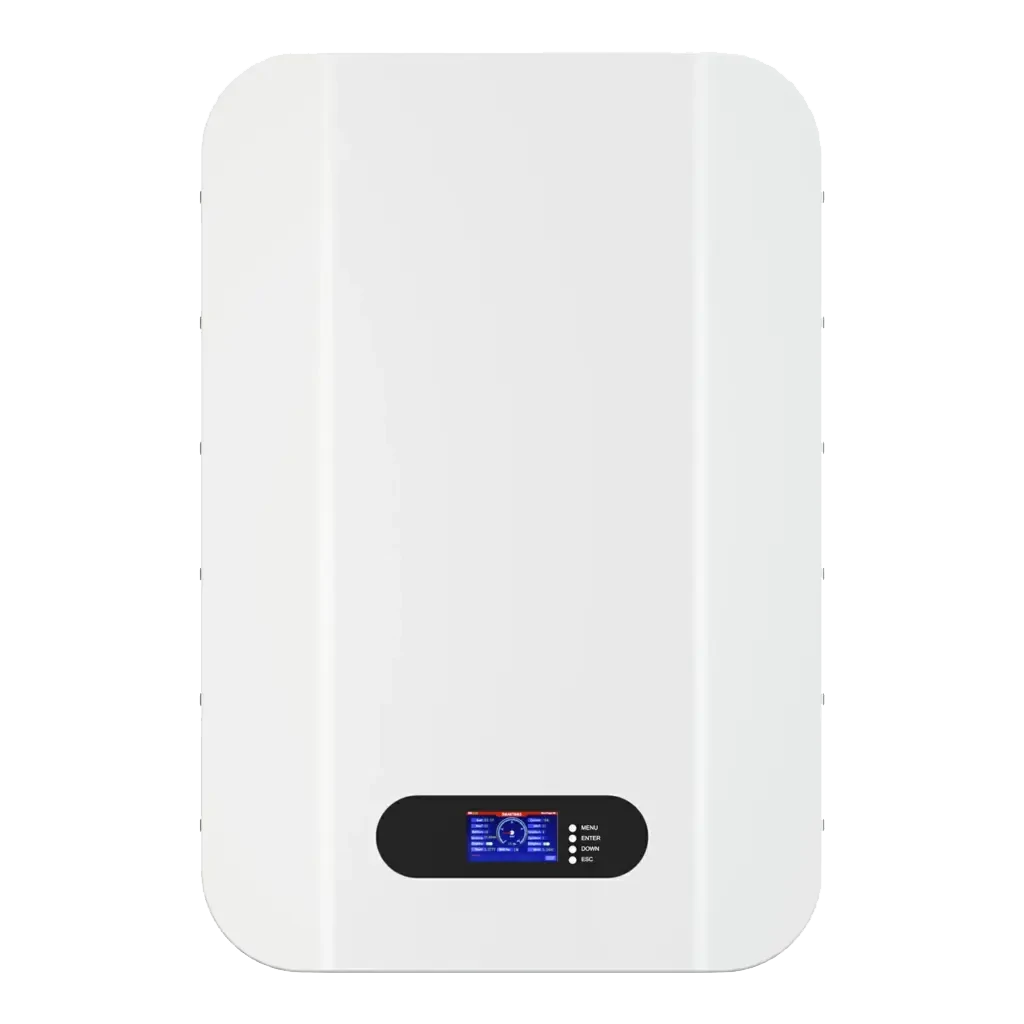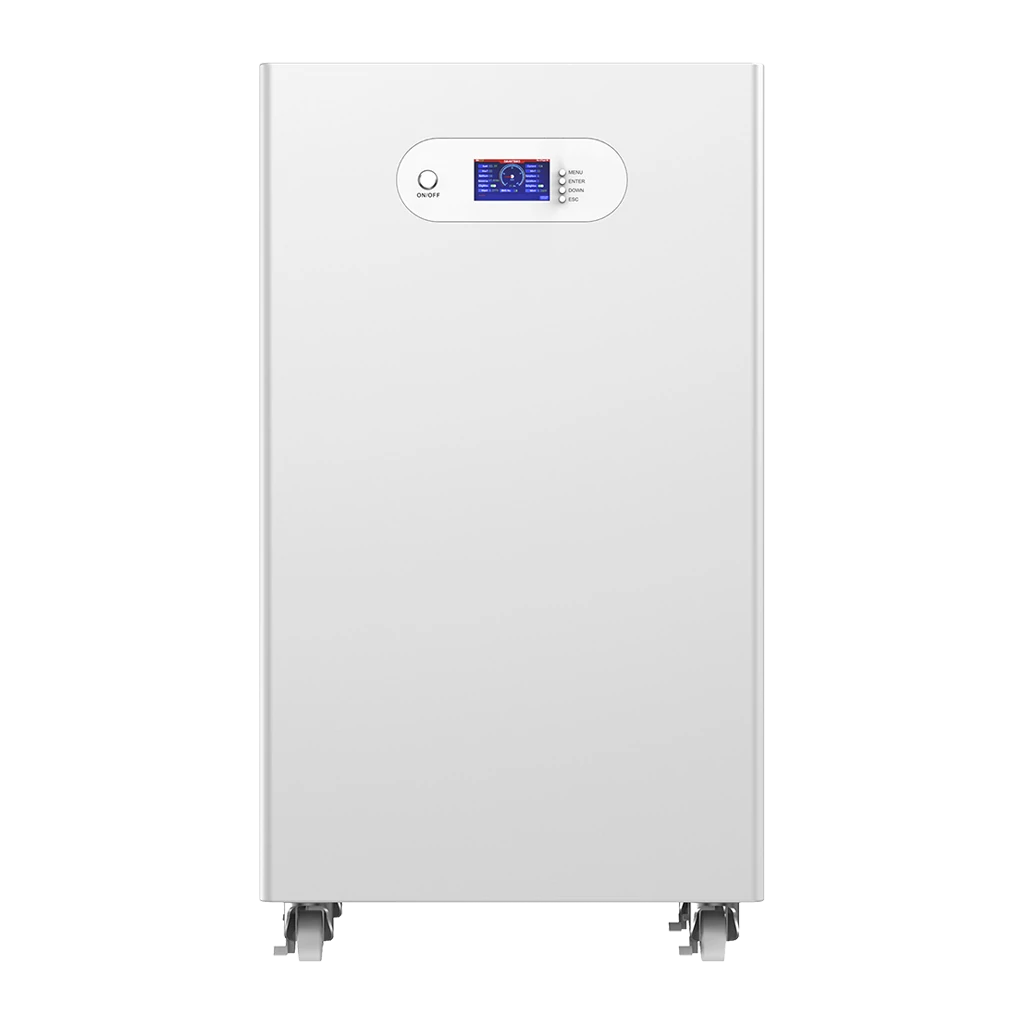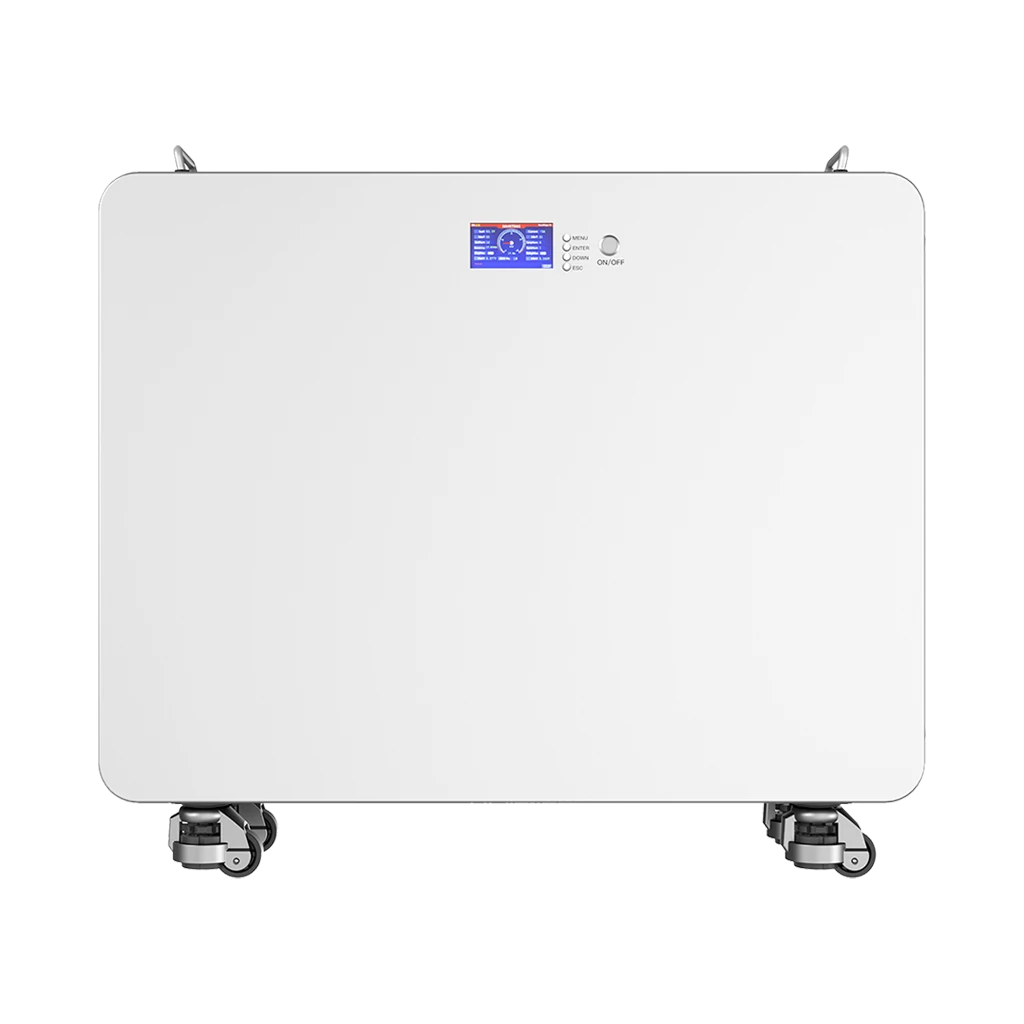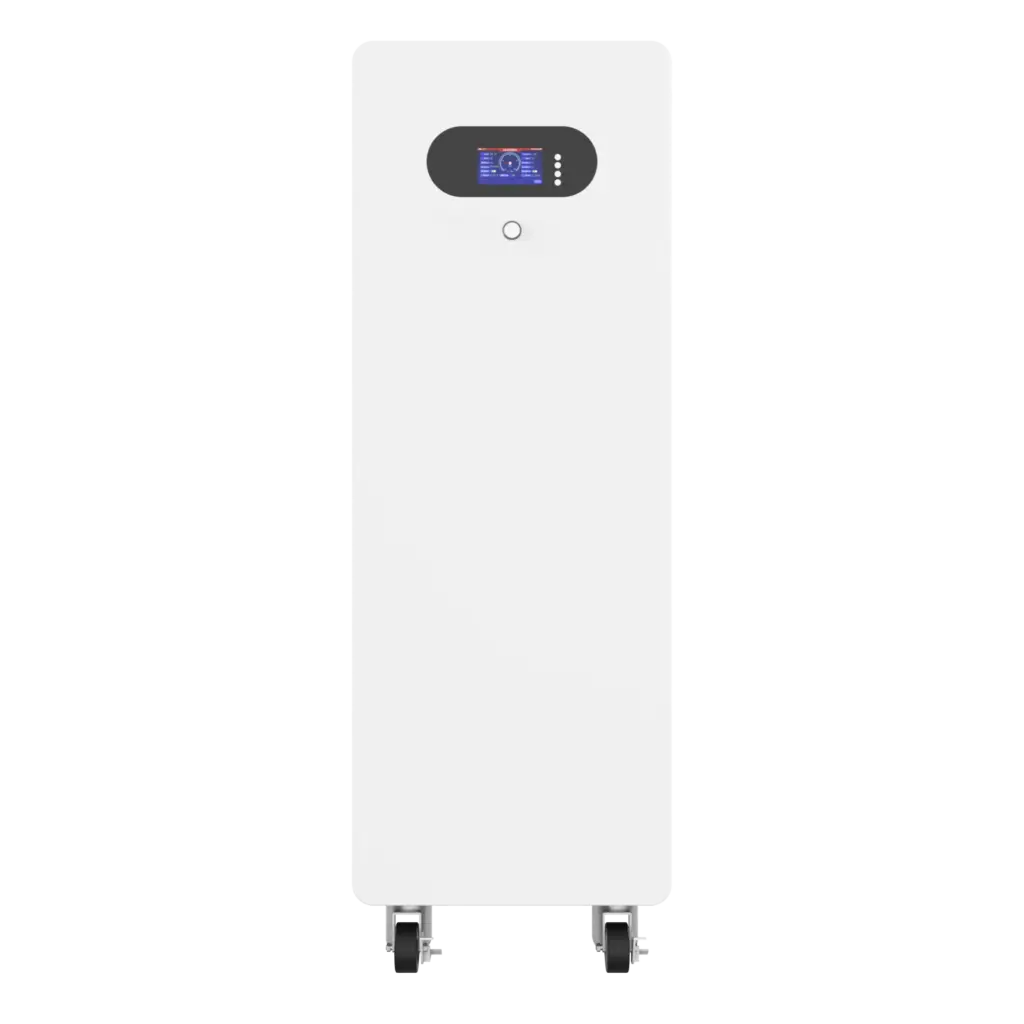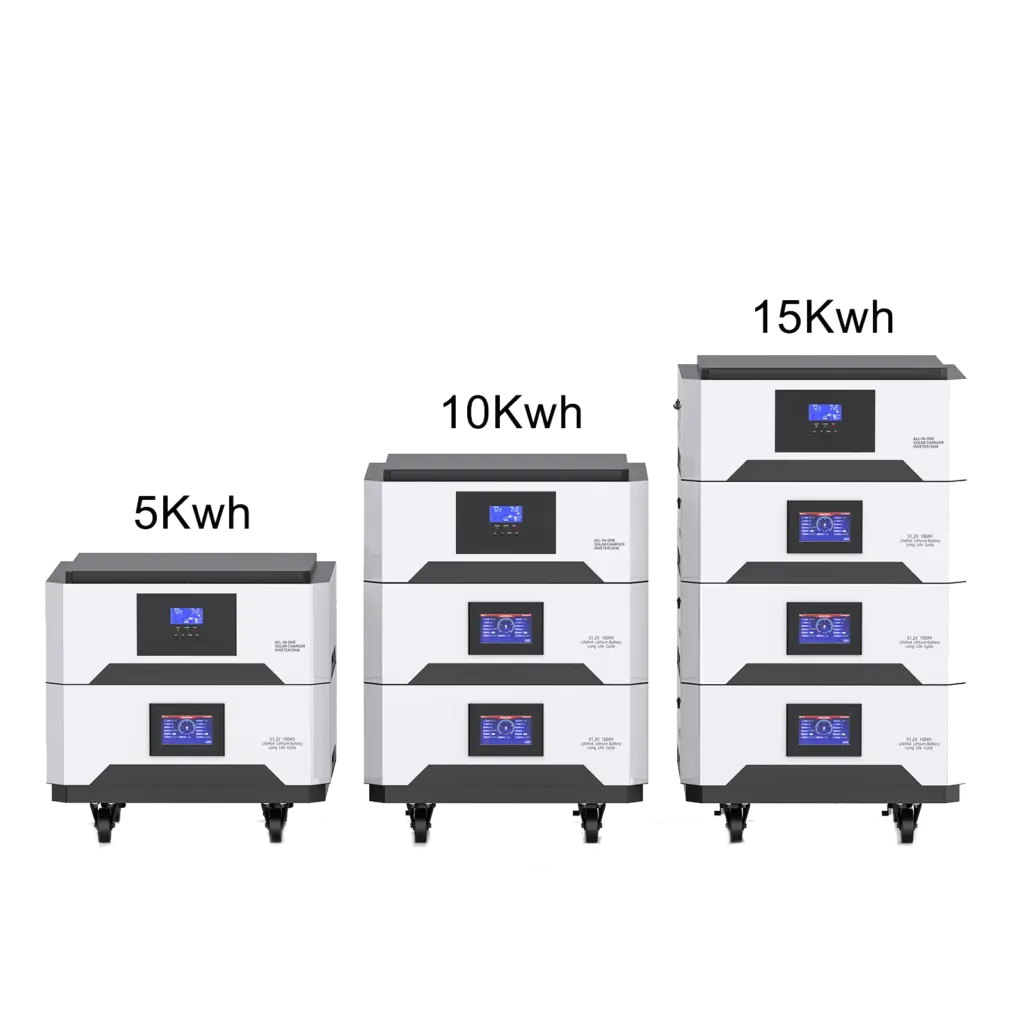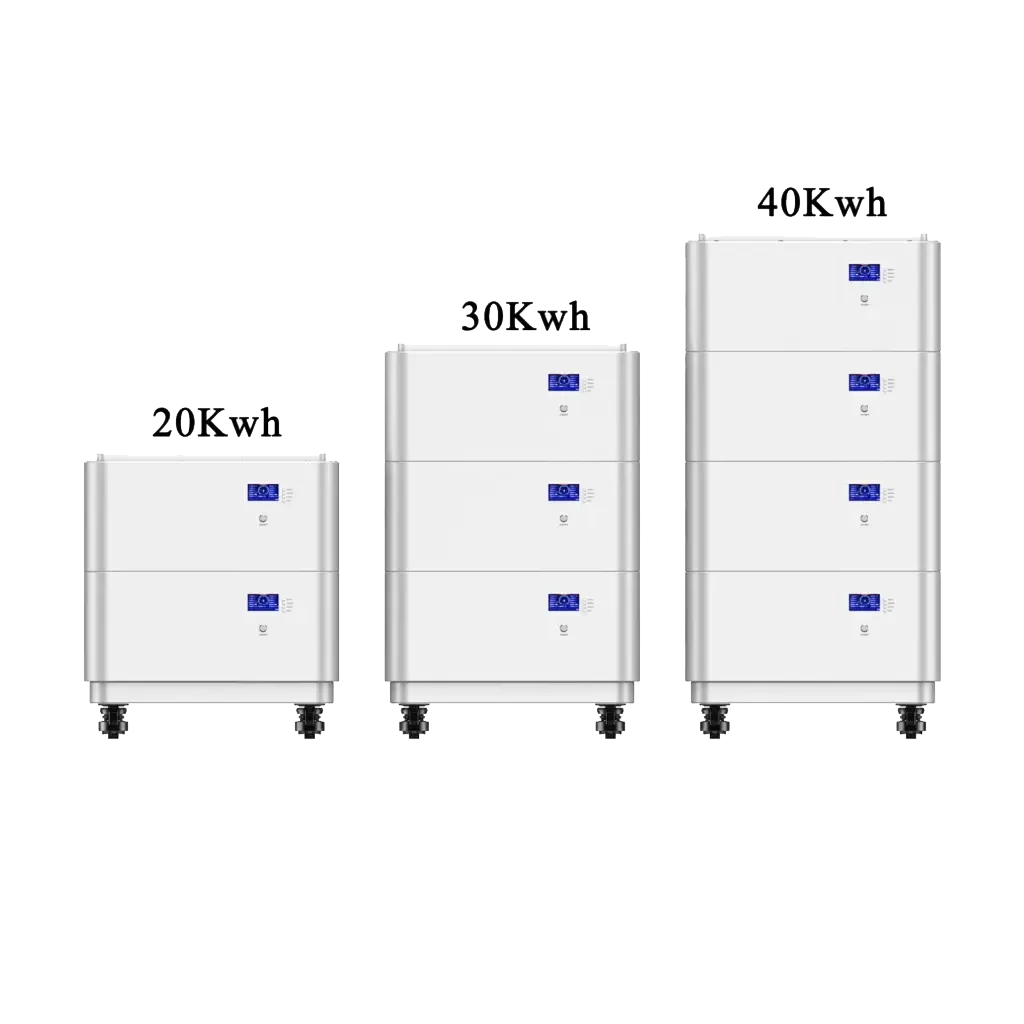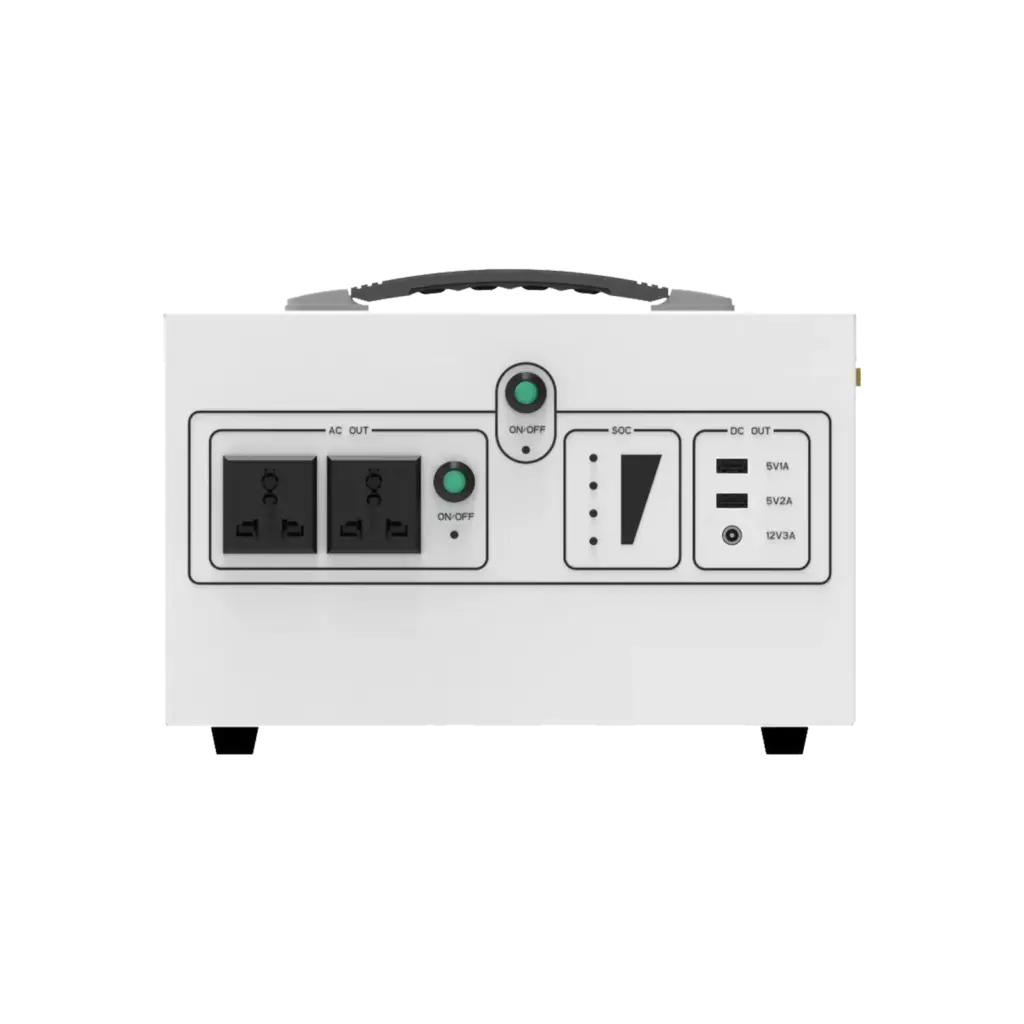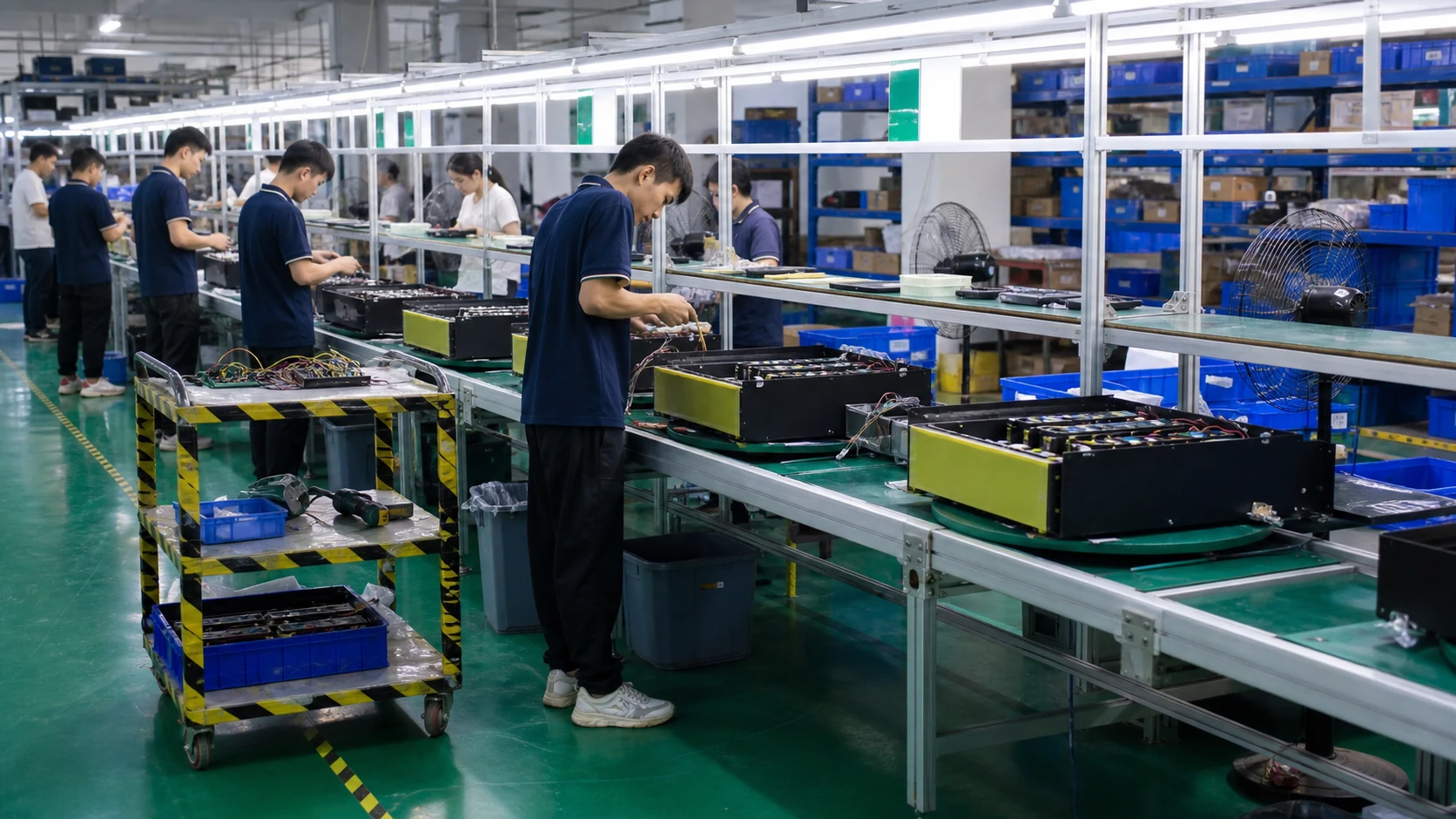

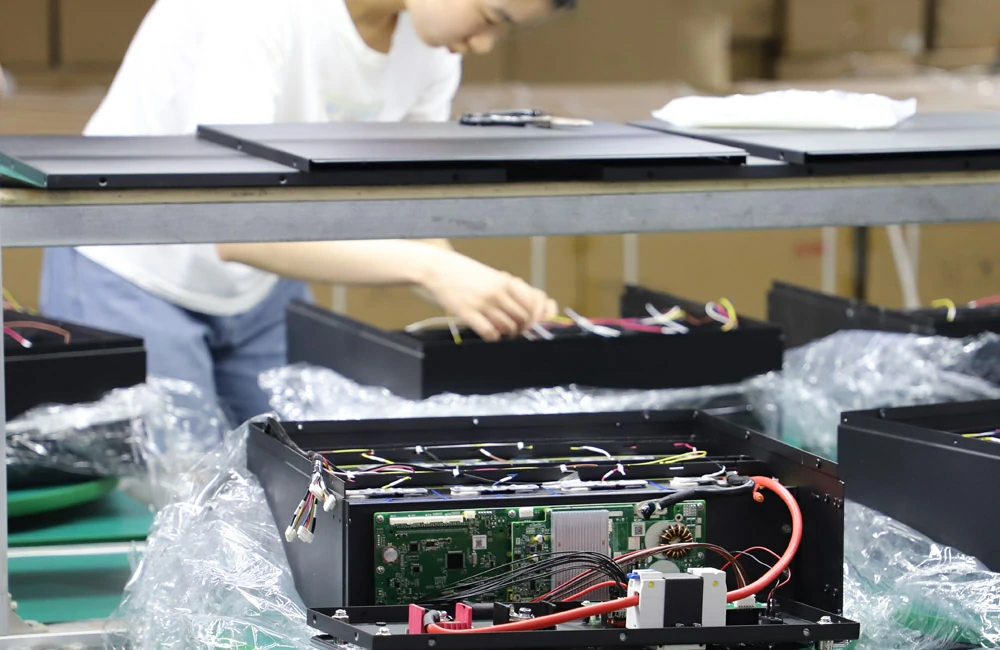
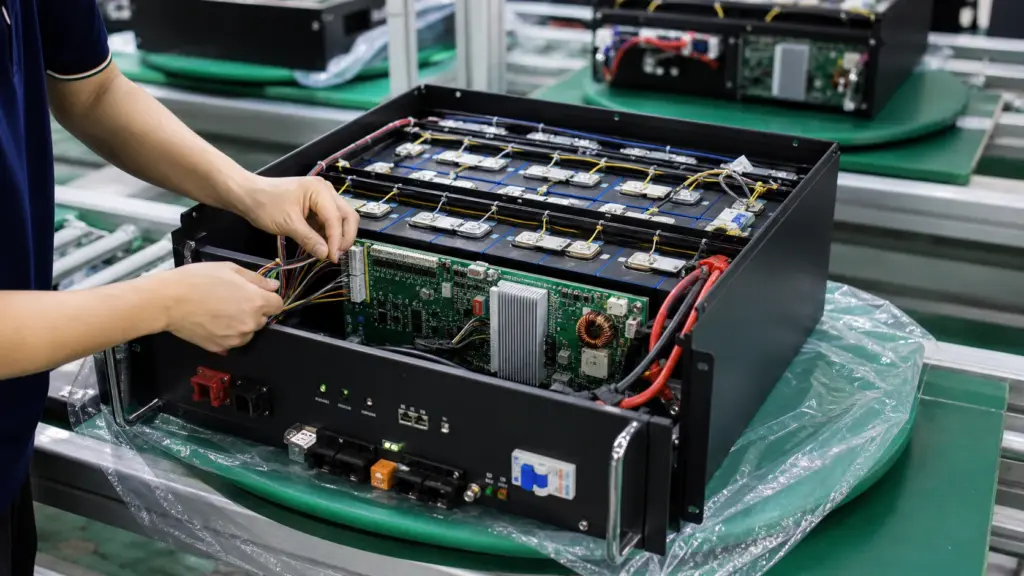
In B2B battery manufacturing, an OEM battery is generally a battery pack or energy storage system manufactured according to specifications approved by the customer. Those specifications may define electrical performance, dimensions, BMS behavior, communication, mechanical structure, labeling and compliance requirements rather than simply changing the product brand.
A typical energy storage OEM specification can include:
- Battery chemistry
- Nominal voltage
- Operating voltage range
- Ah or kWh capacity
- Continuous charge current
- Continuous discharge current
- Peak current
- Series/parallel architecture
- BMS protection settings
- CAN or RS485 communication
- Inverter or PCS compatibility
- Enclosure dimensions
- IP requirement
- Display or monitoring
- Connectors and cable harnesses
- Branding and labels
- Packaging
- Documentation and target-market compliance
For energy storage projects, Avepower’s OEM/ODM battery customization service covers battery configuration, BMS, system integration, enclosure, branding and project-specific engineering from requirement review through mass production.
What Is the Difference Between OEM, ODM and Private-Label Batteries?
OEM, ODM and private-label batteries differ mainly in who owns the design work and how much engineering is required. OEM normally follows a buyer-approved specification, ODM adds manufacturer-led design and development, while private labeling usually starts from an existing battery platform and changes branding or limited configuration.
| Model | Who Defines the Product? | Engineering Level | Typical Changes | Best For |
|---|---|---|---|---|
| OEM | Customer / jointly approved | Medium–High | Voltage, capacity, BMS, structure, protocol | Established brands and technical projects |
| ODM | Manufacturer + customer | High | Complete battery/system development | New products or markets |
| Private Label | Manufacturer platform | Low | Logo, label, packaging, color | Distributors and faster market entry |
| Standard Product | Manufacturer | Minimal | Usually none | Installers and smaller-volume buyers |
Avepower itself defines OEM as manufacturing according to the customer’s existing specifications, while ODM includes design, development, prototyping and manufacturing.
How to Start an OEM Battery Project With Avepower
The fastest way to evaluate an OEM battery project is to start with the electrical and application requirements rather than the exterior design. Avepower can use your inverter model, target capacity, voltage, installation environment, communication requirements and destination market to determine whether an existing platform can be adapted or a more customized battery architecture is required.
Avepower supports residential and commercial LiFePO4 battery development through a 20,000 m² manufacturing base, multiple production lines and engineering support, with customization covering battery configuration, BMS, communication protocols, enclosure, branding and packaging.
For buyers who want to verify manufacturing and compliance before purchasing, review:
Battery Manufacturing Factory
Battery Certifications
OEM/ODM Battery Solutions
Inverter Compatibility
Energy Storage Case Studies
Need an OEM LiFePO4 Battery for Your Market or Project?
Send Avepower your required capacity, system voltage, inverter model, project application, target country and estimated order quantity.
What Can Be Customized in an OEM Battery?
The main areas are:
| Custom Item | What Changes | Why It Matters |
|---|---|---|
| Chemistry | LFP or other chemistry | Safety, energy density, cycle behavior |
| Voltage | Series configuration | Inverter/PCS operating window |
| Capacity | Ah/kWh and parallel configuration | Runtime and usable energy |
| Current | Charge/discharge limits | Available power |
| Cells | Cell format/capacity | Pack architecture and performance |
| BMS | Protection thresholds and control | Battery safety and system operation |
| Communication | CAN/RS485/protocol | Inverter and EMS integration |
| Enclosure | Dimensions/material/layout | Installation and thermal design |
| Connectors | Power/communication interfaces | Installation compatibility |
| Monitoring | Display/Bluetooth/Wi-Fi | Service and user visibility |
| Branding | Logo/label/manual/packaging | Private-label market positioning |
| Documentation | Certificates/reports/manuals | Market and project approval |
Avepower’s current custom energy storage offering supports configurations from approximately 5 kWh to 800 kWh+, together with BMS optimization, system integration, enclosure and branding options. Final capability depends on the exact project specification and should be confirmed before design freeze.
What Information Should You Give an OEM Battery Manufacturer?
A useful OEM battery RFQ should describe the application before requesting a price. At minimum, provide voltage, required energy, continuous and peak power, inverter or PCS information, installation conditions, communications, target market and expected quantity; without these inputs, a quotation may be commercially attractive but technically meaningless.
Use this checklist:
Electrical Requirements
- Required nominal voltage
- Acceptable operating voltage range
- Required capacity in Ah or kWh
- Continuous charge power/current
- Continuous discharge power/current
- Peak load and duration
- Required backup duration
System Integration
- Inverter/PCS manufacturer
- Exact model
- Firmware version
- DC voltage window
- Maximum DC current
- CAN/RS485 requirement
- Communication protocol
- EMS requirement
Mechanical Requirements
- Maximum dimensions
- Maximum weight
- Rack, wall, floor or cabinet installation
- Indoor/outdoor environment
- Required IP rating
- Cooling method
- Cable entry direction
Commercial Requirements
- Target country
- Required documentation
- Branding
- Packaging
- Sample quantity
- Estimated mass-production quantity
- Expected annual volume
- Target production date
If you do not yet know the battery capacity, begin with the site’s battery storage design guide rather than choosing a battery model first. Proper storage design starts from load, generation, backup requirement, tariff strategy and site conditions.
How Should an OEM Battery Be Tested and Quality-Controlled?
OEM battery quality cannot be established by final inspection alone; control should begin with incoming components and continue through cell matching, assembly, welding, BMS configuration, electrical safety checks, charge/discharge verification and final traceability. Buyers should ask for evidence of the process rather than accepting a generic “strict QC” statement.
A practical quality chain is:
IQC → Cell Inspection → Cell Matching → Assembly → BMS → Electrical Safety → EOL Test → OQC
For LiFePO4 energy storage batteries, important checks include:
| Stage | Check | Why It Matters |
|---|---|---|
| Incoming cells | Voltage, capacity, internal resistance | Supports cell consistency |
| Cell matching | Electrical characteristics | Reduces imbalance |
| Welding | Weld position/integrity | Reduces connection defects |
| Wiring | Polarity/routing/connections | Prevents assembly errors |
| BMS | Protection and monitoring | Confirms control functions |
| Communication | CAN/RS485 | Confirms system integration |
| Electrical safety | Insulation/Hi-Pot where applicable | Verifies isolation |
| EOL | Charge/discharge/capacity/functions | Confirms finished battery |
| OQC | Appearance/label/SN/packaging | Confirms correct shipment |
Avepower’s dedicated battery quality control process currently describes incoming material control, cell inspection, welding and assembly control, BMS and communication verification, electrical safety checks, end-of-line testing and traceability.
Which Certifications and Standards Matter for an OEM Battery?
The correct battery documentation depends on the application, country and system level being evaluated. UN38.3 is primarily associated with lithium-battery transport, IEC 62619 covers safety requirements for industrial lithium batteries including stationary applications, while North American stationary ESS projects may involve UL 1973, UL 9540 and other applicable codes or standards.
| Standard / Requirement | Main Role | Typical Relevance |
|---|---|---|
| UN38.3 | Lithium battery transport testing | Shipping |
| IEC 62619 | Industrial lithium battery safety | Stationary/industrial applications |
| UL 1973 | Stationary battery safety | North America |
| UL 9540 | Energy storage system safety | Complete ESS |
| UL 9540A | Thermal runaway propagation test method | Fire-safety assessment |
| ISO 9001 | Quality management system | Manufacturer/QMS |
| EU Battery Regulation | EU battery sustainability/compliance framework | EU market |
Avepower maintains a separate certification and compliance document page. Certification availability should always be confirmed for the specific model, configuration and destination market, rather than assuming every logo shown at company level applies to every battery.
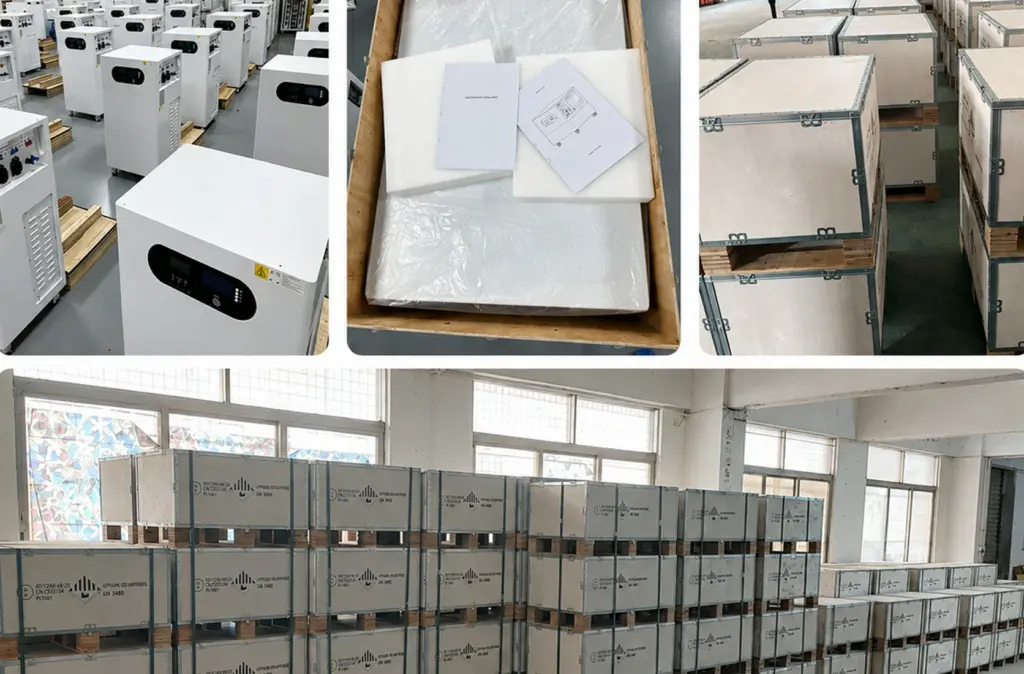
Build a Battery Around Your Project Requirements
Customize battery capacity, BMS settings, communication protocols, enclosure, branding and system configuration with Avepower’s OEM/ODM engineering support.
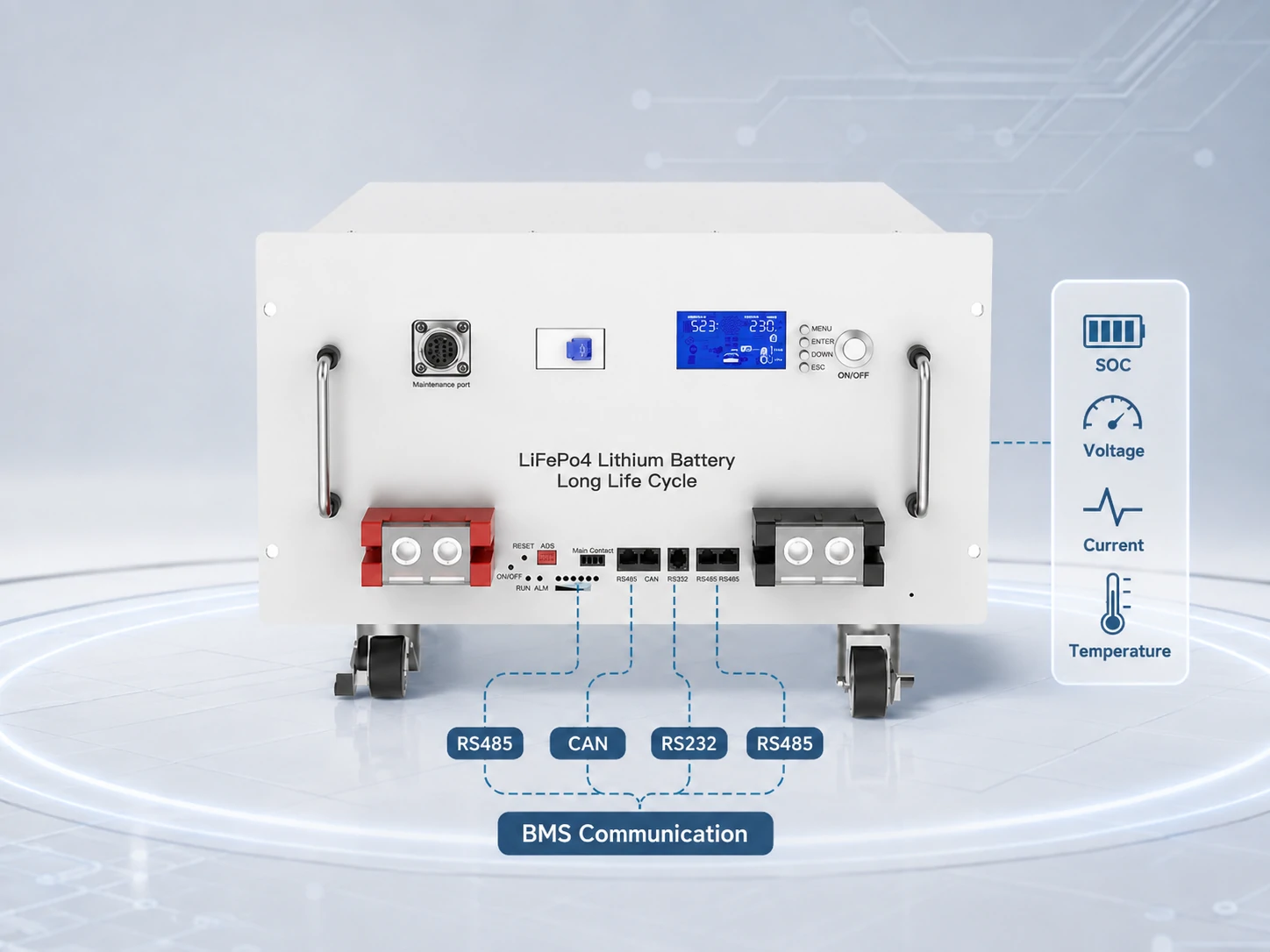
How Important Are BMS Communication and Inverter Compatibility?
The BMS may transmit:
- SOC
- pack voltage
- current
- temperature
- alarms
- charge voltage limit
- charge current limit
- discharge current limit
- charge enable
- discharge enable
A connector labeled CAN proves only that a CAN hardware interface exists.
It does not prove application-level compatibility.
| Layer | What Must Match |
|---|---|
| Electrical | Battery/inverter voltage and current |
| Physical interface | CAN/RS485 |
| Connector | Pin assignment |
| Network | Bitrate/address/termination |
| Protocol | IDs/register map/data format |
| Firmware | Supported protocol revision |
| Control | CCL/DCL/CVL and fault behavior |
Avepower’s CAN, RS485 and BMS communication guide explains these integration layers in detail, while its open- and closed-loop communication guide explains why displaying SOC alone does not necessarily mean that an inverter is actively following BMS operating limits.
OEM Battery Case Study
A high-voltage C&I project demonstrates why OEM battery engineering is more than private labeling: the battery voltage, pack architecture, current capability, BMU/BCU communication, cabinet configuration and project integration must work as one system. Avepower’s Lithuania project provides a useful published example with identifiable electrical and mechanical data.
The Lithuania 522.5kWh high-voltage ESS project used:
| Parameter | Project Data |
|---|---|
| Application | C&I / grid support / renewable integration |
| Total capacity | 522.496 kWh |
| Nominal voltage | 832 V DC |
| Cell capacity | 314 Ah |
| Cabinet configuration | 4 × 42U |
| Battery architecture | 2 clusters in parallel |
| Continuous current | 200 A |
| Communication | CAN / RS485 |
Avepower’s wider energy storage case study library also includes commercial and high-voltage projects in different regions and capacities.
When Is a Fully Customized OEM Battery Not the Best Choice?
A fully customized OEM battery is not always the most economical or lowest-risk solution. If an existing battery already satisfies voltage, power, communication, installation and compliance requirements, modifying a validated ODM platform may reduce engineering work, certification impact, tooling cost and time to production without sacrificing the functions the customer actually needs.
Avoid unnecessary full customization when:
- Standard voltage already matches the inverter.
- Required capacity can be achieved through approved modular expansion.
- An existing protocol already supports the inverter.
- Standard dimensions fit the installation.
- Branding is the main commercial requirement.
- Initial order volume is small.
- Time-to-market is critical.
- A design change would force unnecessary revalidation.
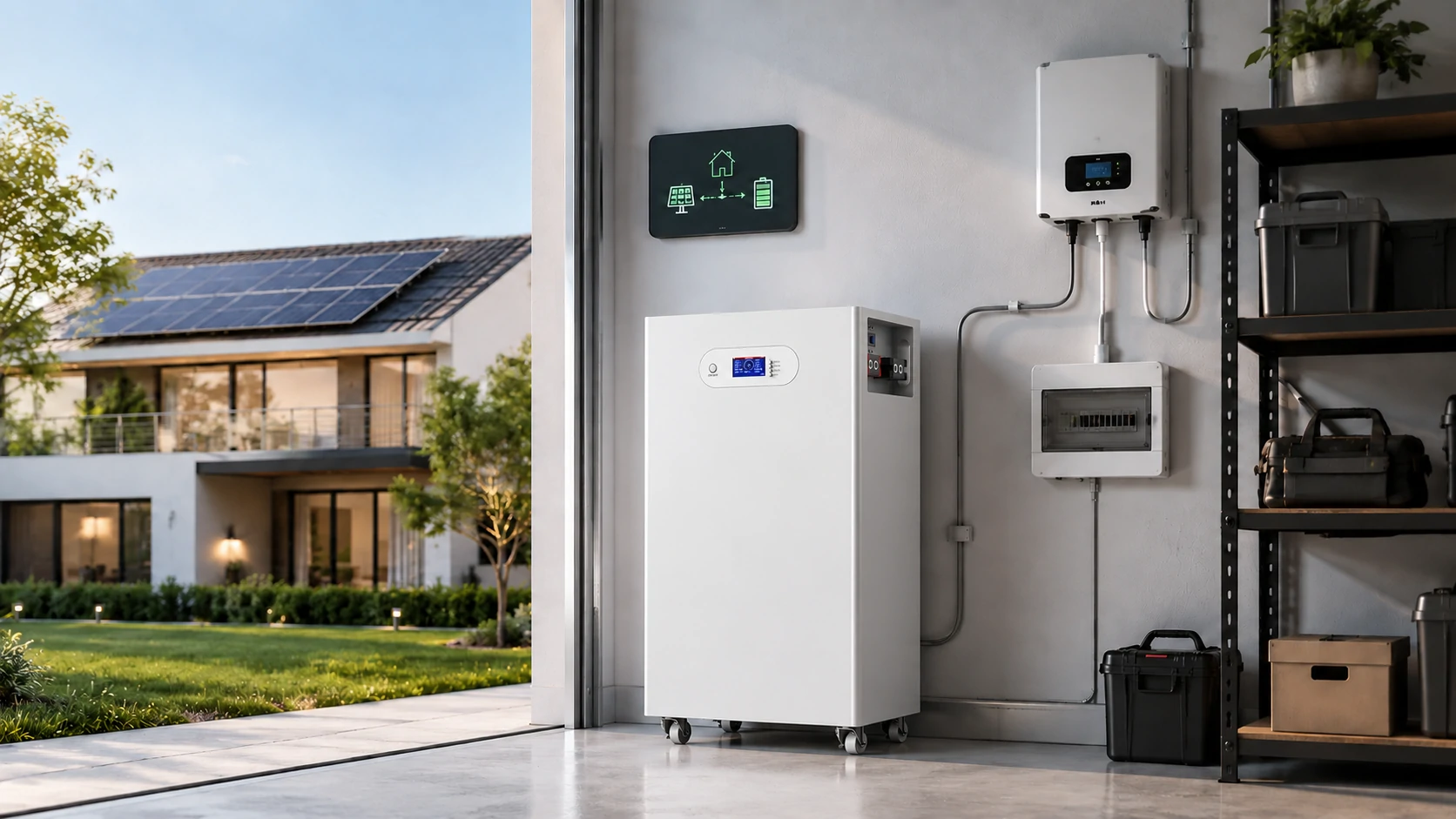
For a residential distributor, an existing home energy storage battery platform may therefore be a better base than developing a unique battery architecture.
For projects requiring unusual voltage, larger capacity or PCS integration, Avepower also provides commercial battery energy storage and custom high-voltage ESS options.
Conclusion: What Makes a Good OEM Battery Project?
A successful OEM battery project begins with a defined application and ends with a repeatable, documented production configuration. For simple projects, modifying an existing validated platform may be the better decision.
For projects that genuinely require custom voltage, capacity, BMS logic, communication, enclosure or high-voltage architecture, work with a manufacturer that can show the complete route from engineering requirement to validated production.
Avepower supports solar installers, distributors, EPC companies, project developers and energy storage brands with OEM/ODM LiFePO4 battery development, covering requirement analysis, battery configuration, BMS and communication integration, prototype validation, documentation and scalable production. Its current manufacturing information shows a 20,000 m² facility and 15 production lines, while published project cases include systems from residential storage through 500 kWh+ high-voltage C&I ESS.
Need an OEM Battery Solution for Your Market or Project?
Send Avepower your:
- inverter or PCS model
- required capacity
- system voltage
- charge/discharge power
- application
- destination market
- estimated quantity
- OEM/ODM requirements
Take Control of Your Energy with Avepower!
Reliable home solar battery solutions with OEM/ODM customization and in-house manufacturing, tailored to the needs of distributors, installers, and energy partners.
FAQ
OEM follows customer-defined specifications, while ODM adapts a manufacturer-developed platform. Always confirm specifications, BOM, tooling, and change-control terms in the contract.
Review the factory, engineering resources, incoming inspection, in-process QC, finished-product testing, traceability, certificates, sample-validation process and change-control system. Then select several production records or serial numbers and verify whether the supplier can actually retrieve the corresponding material and test information.