
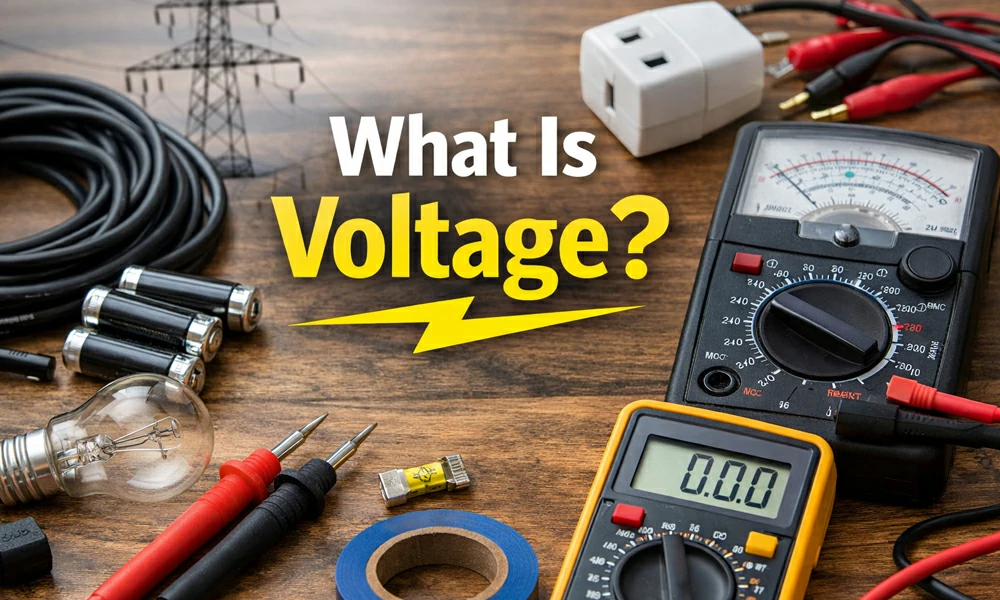
Voltage is one of those words you see everywhere—on phone chargers, wall outlets, solar inverters, home batteries, industrial equipment, and even medical devices—yet it often feels abstract. In simple terms, voltage is the “push” that makes electric charge move.
This article explains voltage in clear, simple language while also providing deeper technical insight. We will explore its definition, history, classification, measurement methods, practical importance, and its relationship with current and different types of electricity.
What Is Voltage? Definition and Meaning
In simple words: Voltage is the electrical “push” that drives current through a circuit.
Voltage Definition
Voltage is the difference in electric potential between two points in a circuit. It represents the energy available per unit of electric charge and is measured in volts (V).
| Term | Meaning |
|---|---|
| Voltage | Electrical potential difference |
| Symbol | V |
| Unit | Volt (V) |
| Related quantity | Current |
| Common analogy | Electrical pressure |
Who Invented the Concept of Voltage?
The term “voltage” recognizes the work of Alessandro Volta, an Italian physicist who lived from 1745 to 1827.
Volta invented the voltaic pile, which is considered the first true electrical battery. Before his invention, electricity could only be generated in short bursts using static electricity machines. Volta’s battery provided a steady and continuous flow of electric current.
The unit of voltage—the volt (V)—is named in his honor. His work laid the foundation for modern electrical science and energy storage technologies.
Classification of Voltage
In real engineering and safety standards, voltage is often classified in several ways. Different industries use slightly different boundaries, but these categories are widely used and helpful.
| Voltage Type | Typical Range | Key Notes | Applications |
|---|---|---|---|
| High Voltage (HV) | 400V–1000V+ DC, kV AC | High shock risk; needs insulation | Grid, commercial energy storage |
| Low Voltage (LV) | 12–48V DC, 120–230V AC | Lower shock risk; can still deliver high current | Residential, vehicles |
| Safe Voltage | ≤50V AC, ≤120V DC | Less harmful; still needs protection | Electronics, control circuits |
| Impedance Voltage | Transformer % impedance (e.g., 4–6%) | For rated current through transformer | Short-circuit, protection design |
| Medical Voltage | Very low, regulated | Patient safety critical | Medical devices, therapy |
1. High Voltage
High voltage typically refers to electrical potentials above 1000 volts for alternating current (AC) or 1500 volts for direct current (DC). High voltage is commonly used in power transmission lines, industrial machinery, and large-scale energy storage systems. These systems allow electricity to travel long distances with minimal energy loss.
2. Low Voltage Electricity
Low voltage usually covers household and commercial electrical applications. For example:
- 12V or 24V DC systems (vehicles, control systems)
- 48V battery systems (telecom, some home energy storage modules)
- 120V AC (typical North America household outlet)
- 230V AC (typical EU/UK/AU household outlet)
Low voltage is safer to handle but still requires proper precautions. Many home battery systems operate within low voltage ranges to integrate safely with solar panels and household circuits.
Related articles: high voltage vs low voltage batteries
3. Safe Voltage
Safe voltage is the voltage level considered harmless for humans under normal conditions. Typically, voltages below 50 V AC or 120 V DC are regarded as safe.
4. Impedance Voltage
Impedance voltage is a term often used in transformers and electrical machines. It represents the voltage drop caused by the internal resistance (impedance) of the device.
5. Medical Voltage
Medical equipment often uses carefully regulated low-voltage supplies to ensure patient safety. Devices such as hospital monitors, infusion pumps, and diagnostic equipment use voltages that minimize the risk of electric shock while maintaining proper function.
What Does Voltage Do?
Voltage isn’t just a number—it controls how energy flows and how devices perform.
Efficient Power Delivery
Voltage, together with current, determines the total electrical power in a system. Higher voltage allows electricity to travel long distances with minimal energy loss, which is essential for both residential and commercial power distribution.
Device Performance
Every electrical device is designed to operate at a specific voltage range. Supplying too high or too low voltage can cause malfunction, permanent damage, or reduced performance. Maintaining the correct voltage ensures devices function reliably and prolongs the life of sensitive electronics and batteries.
Energy Storage Efficiency
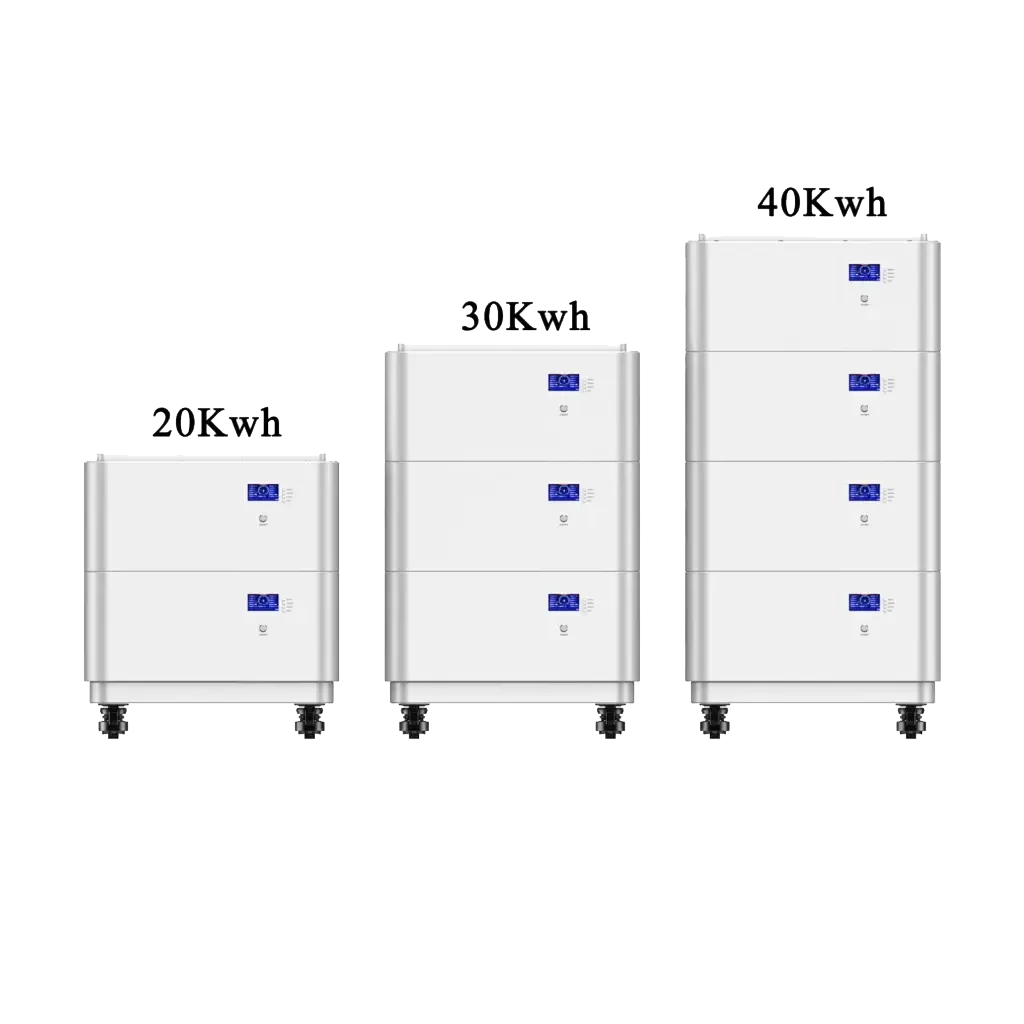
In battery and energy storage systems, proper voltage management is critical for safe operation. It ensures batteries charge and discharge efficiently, preventing overcharging or deep discharge that could harm the cells. For example, a 20 kWh residential battery depends on precise voltage regulation to deliver maximum capacity and lifespan.
Safety
Keeping voltage within safe levels protects both people and equipment from electrical hazards. Overvoltage or undervoltage conditions can lead to shocks, fires, or system failures. Consistent monitoring and regulation of voltage is therefore a key part of any safe electrical or energy storage system.
Voltage vs Current vs Power
Although often used together, voltage and current are distinct concepts:
| Electrical Quantity | What It Represents | Unit |
|---|---|---|
| Voltage | Electrical potential difference | Volt (V) |
| Current | Flow of electric charge | Ampere (A) |
| Power | Rate of electrical energy transfer | Watt (W) |
Power = Voltage × Current
Voltage pushes, and current flows. A battery may have high voltage, but without a closed circuit, current will not flow, and no energy is delivered to your home or commercial energy storage system.
Common Values of Voltage
Here are typical voltage values in various contexts:
| Application | Voltage (V) |
|---|---|
| AA or AAA battery | 1.5 |
| Car battery | 12 |
| Residential outlet (USA) | 120 |
| Residential outlet (Europe) | 230 |
| Home solar battery system | 48–400 |
| Commercial energy storage | 400–1000+ |
| High-voltage transmission lines | 110,000–765,000 |
For instance, a 48V home battery can safely store enough energy to power appliances for hours while being safe for residential use. Industrial systems, however, may operate at 400V or higher to efficiently manage energy at scale.
What Is Potential Difference?
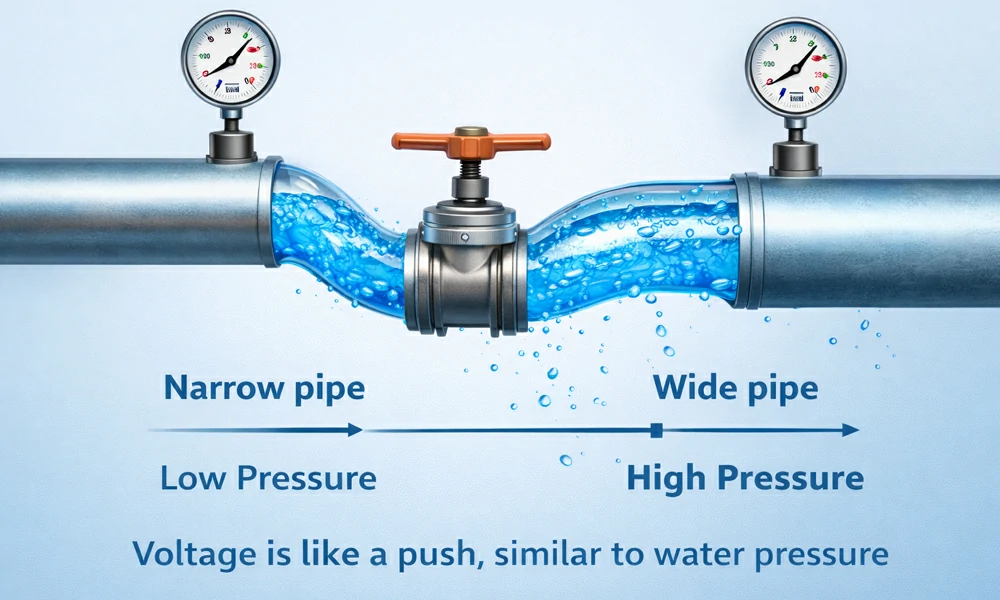
Voltage is often called the potential difference. This term highlights that voltage measures the difference in electric potential energy between two points. Think of it like water in a tank: the potential difference is like the difference in water levels between two tanks, which drives water flow. Similarly, electrons flow from a high potential point to a lower potential point.
In energy storage systems, the potential difference between battery terminals dictates how much energy can be delivered to your home or business loads.
How to Measure Voltage
Measuring voltage is straightforward with the right tools:
- Digital Multimeter (DMM): This common tool measures AC or DC voltage across two points.
- Oscilloscope: For more advanced applications, such as checking waveforms in inverter outputs or solar ene
- Voltage Sensors in Battery Systems: Modern home and industrial batteries often include built-in voltage monitoring. For example, smart LiFePO4 batteries provide real-time voltage data for efficient energy management.
Step-By-Step Example
To measure the voltage of a home battery:
- Turn off the inverter or load.
- Connect the multimeter probes to the positive and negative terminals.
- Read the voltage display. A fully charged 48V battery might read slightly above 50 V DC.
- Compare with manufacturer specifications for safe operation.
Tip for home battery systems: Always ensure the battery is disconnected from sensitive devices while measuring voltage to avoid accidental short circuits or damage.
Difference Between Direct and Alternating Current
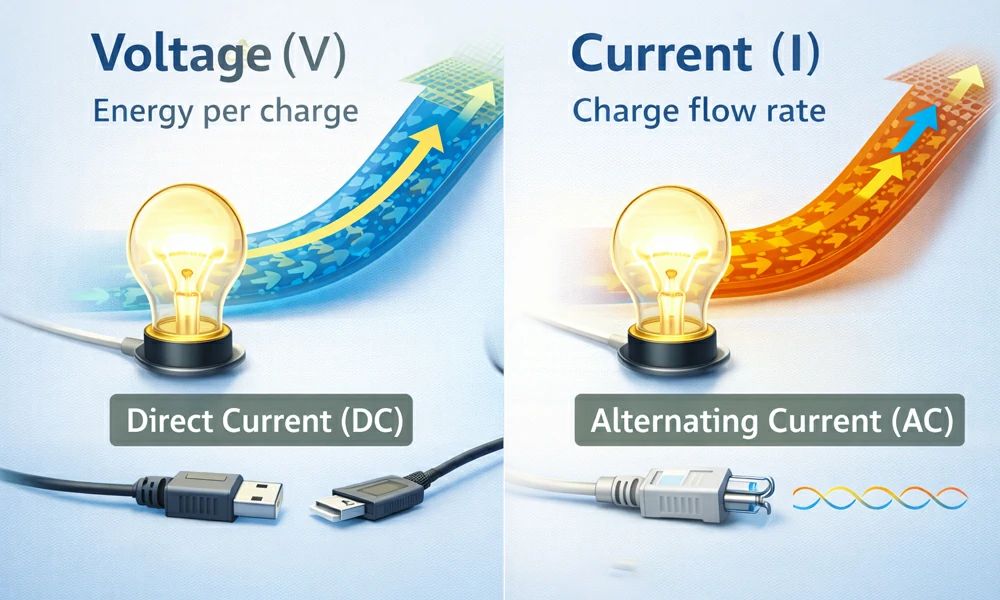
Voltage also differs depending on whether the current is direct (DC) or alternating (AC):
| Type | Voltage Characteristics | Applications |
|---|---|---|
| DC (Direct Current) | Constant polarity, voltage remains steady | Home batteries, solar panels, electric vehicles |
| AC (Alternating Current) | Polarity reverses periodically, typically 50/60 Hz | Household outlets, grid electricity, commercial storage inverters |
Most home battery systems store DC power. To use this energy with AC appliances, the battery connects to an inverter that converts DC to AC. Similarly, commercial storage systems use AC for grid integration but store energy as DC internally for efficiency.
Voltage in Energy Storage Systems
Voltage plays a critical role in energy storage:
- Residential Home Batteries – Typical voltages range from 48V. Proper voltage ensures appliances like refrigerators, lights, and EV chargers receive stable power.
- Commercial and Industrial Cabinets – Voltages can reach 1000V, optimized for higher power output, efficiency, and integration with solar farms or microgrids.
- Battery Safety – Voltage monitoring prevents overcharge, over-discharge, and thermal runaway in lithium-ion batteries.
- Energy Management Systems (EMS) – Voltage data allows intelligent distribution of electricity, ensuring backup loads are prioritized and solar generation is maximized.
Practical Example: Voltage in a Solar Battery System
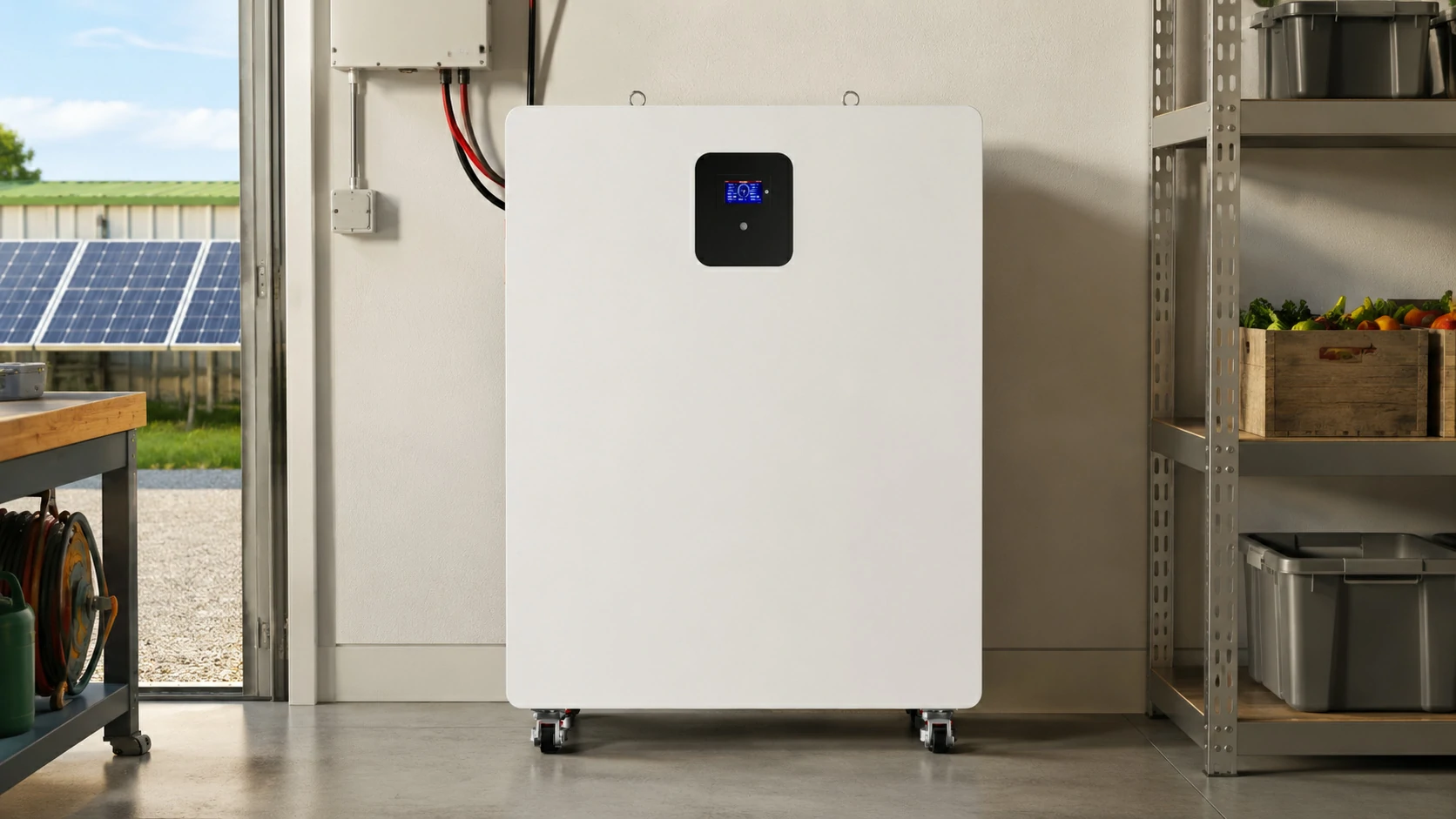
Consider a 20 kWh home battery with a nominal voltage of 48V:
- Energy stored (kWh) = 20
- Voltage (V) = 48
- Current (I) = Energy ÷ Voltage = 20,000 Wh ÷ 48 V ≈ 416.7 A
This means the battery can deliver 48V at approximately 417A for one hour to power your home. Monitoring voltage ensures the system delivers the correct current without overloading or damaging the battery.
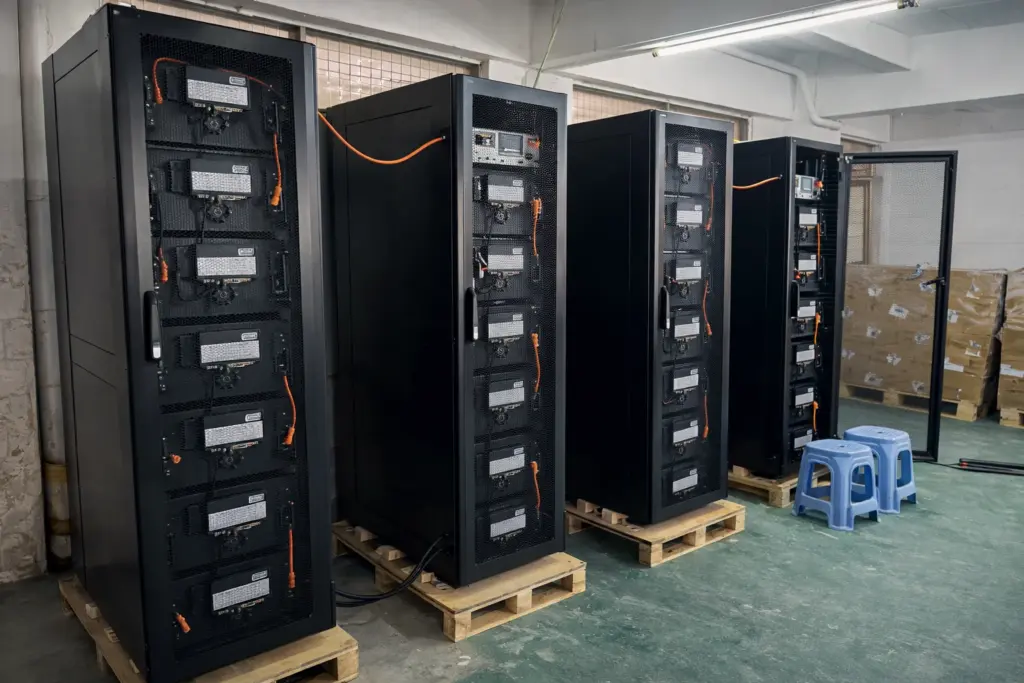
823V High-Voltage Energy Storage System Case Study
Avepower 522.5 kWh high-voltage energy storage system. Using MB31 cells evolved into fully integrated packs, the 832 V DC, 628 Ah system features smart BMS with multi-level protections and IP20 cabinets, providing reliable.
Safety Considerations with Voltage
Voltage, especially high voltage, can be dangerous. Here are some key safety tips:
- Never touch live wires – even household voltage can cause serious injury.
- Use proper insulation – protect against accidental contact.
- Follow manufacturer guidelines – especially with batteries and inverters.
- Install circuit protection – fuses and breakers prevent accidents.
For energy storage systems, manufacturers like Avepower implement multiple layers of protection, including voltage cut-off, thermal monitoring, and smart BMS to ensure safe operation.
Conclusion
Voltage is a fundamental aspect of electricity, acting as the driving force behind current flow. From household appliances to large-scale energy storage systems, understanding voltage helps optimize performance, safety, and efficiency. By bridging classical physics concepts with modern energy storage applications, voltage remains a key player in powering our homes, businesses, and the renewable energy revolution.
FAQ
The term voltage honors Italian physicist Alessandro Volta, inventor of the voltaic pile, the precursor to modern batteries.
Potential difference is another term for voltage. It represents the energy difference per unit charge between two points in a circuit, driving the flow of electricity.
Residential batteries often operate around 48V DC, while commercial rack-mounted systems may range from 400–600V DC to efficiently handle larger energy loads.
No. Electricity is a broad term that can refer to electric energy, current flow, or power systems. Voltage is only one part of electricity—it describes the potential difference that can drive current.
Voltage is the potential difference (the push). Current is the flow rate of charge (how much charge moves per second). Voltage can exist even when current is zero (for example, a battery not connected to anything).
Because power is roughly P = V × I. If power stays the same and voltage increases, the required current decreases. This is one reason power grids transmit electricity at high voltage to reduce losses.
In many standards, extra-low voltage systems are often treated as safer (for example, around ≤50V AC or ≤120V ripple-free DC). However, “safer” does not mean “risk-free,” especially in wet environments.
Yes. Potential difference is the formal physics term for voltage. It describes the energy change per unit charge between two points.
Set the meter to AC or DC voltage, connect the leads to COM and V, and place the probes in parallel across the two points you want to measure (for example, across a battery’s terminals).
DC voltage has a constant polarity (positive and negative stay the same direction), like a battery. AC voltage changes polarity back and forth over time, like household mains electricity.