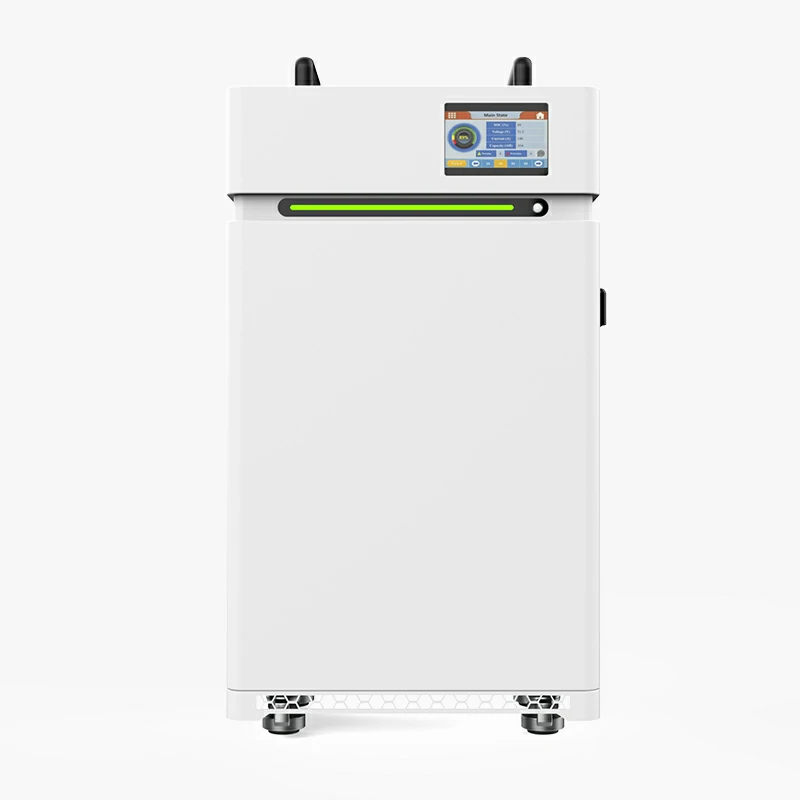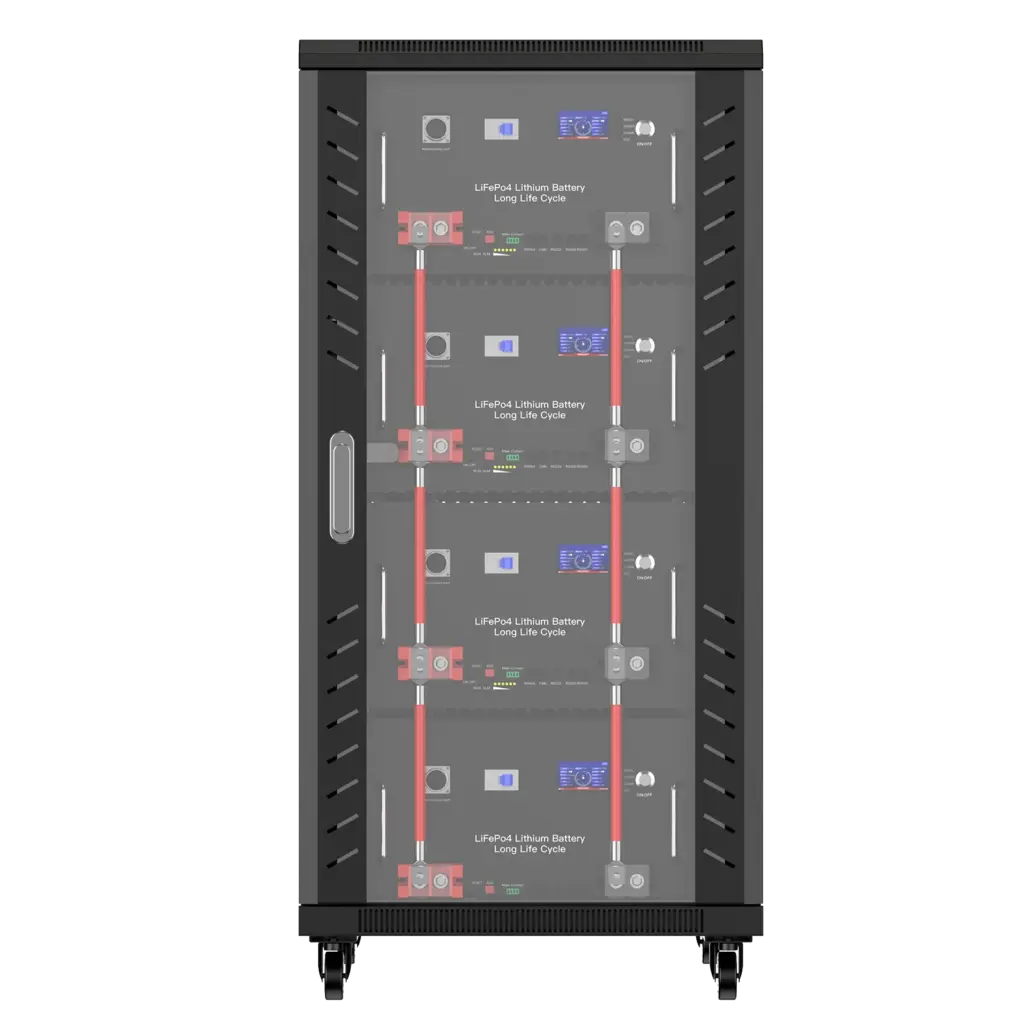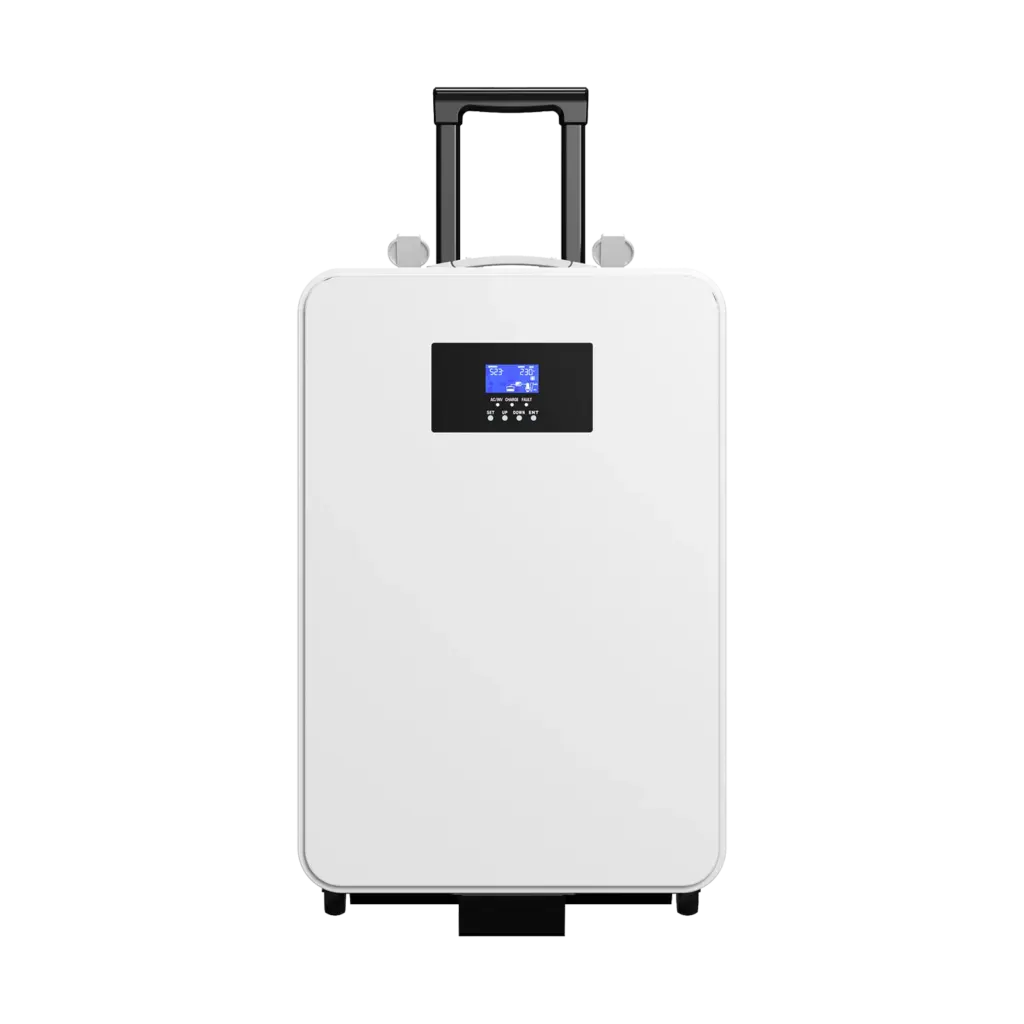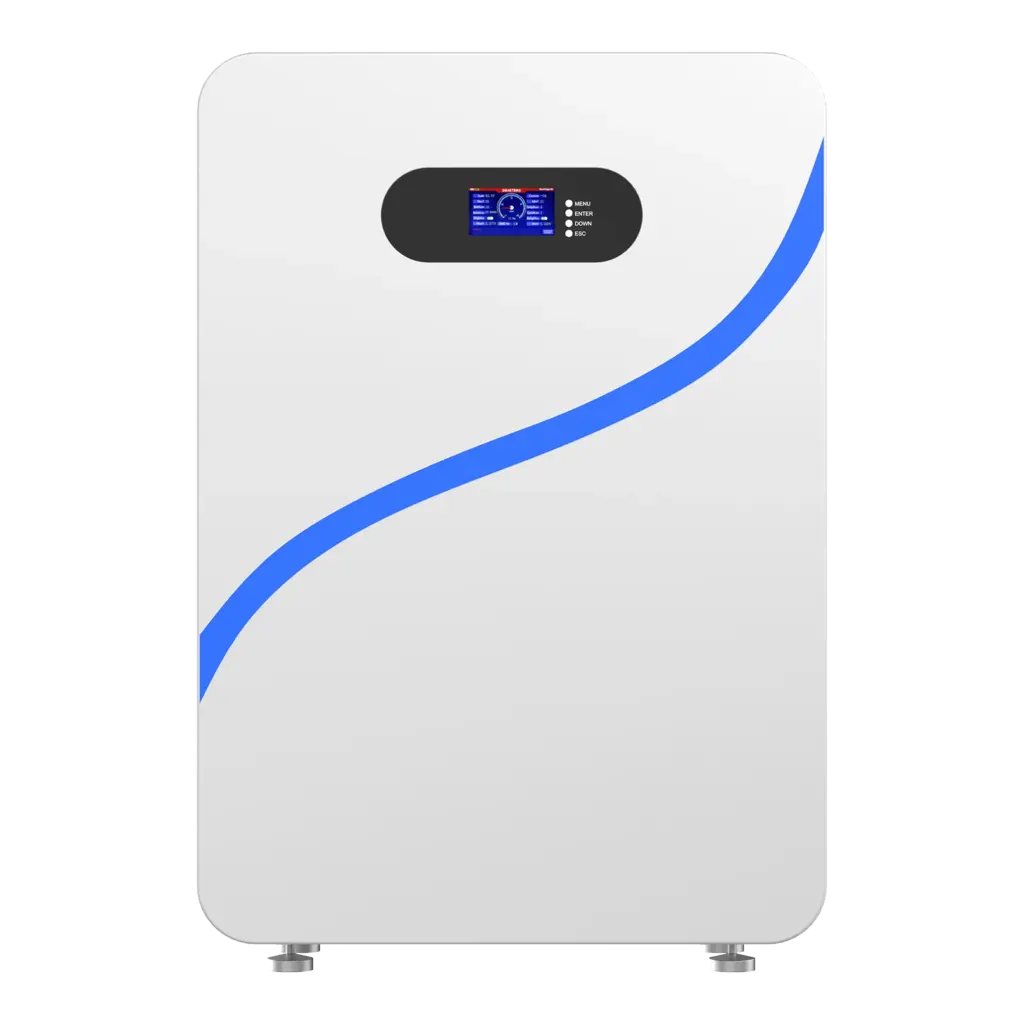

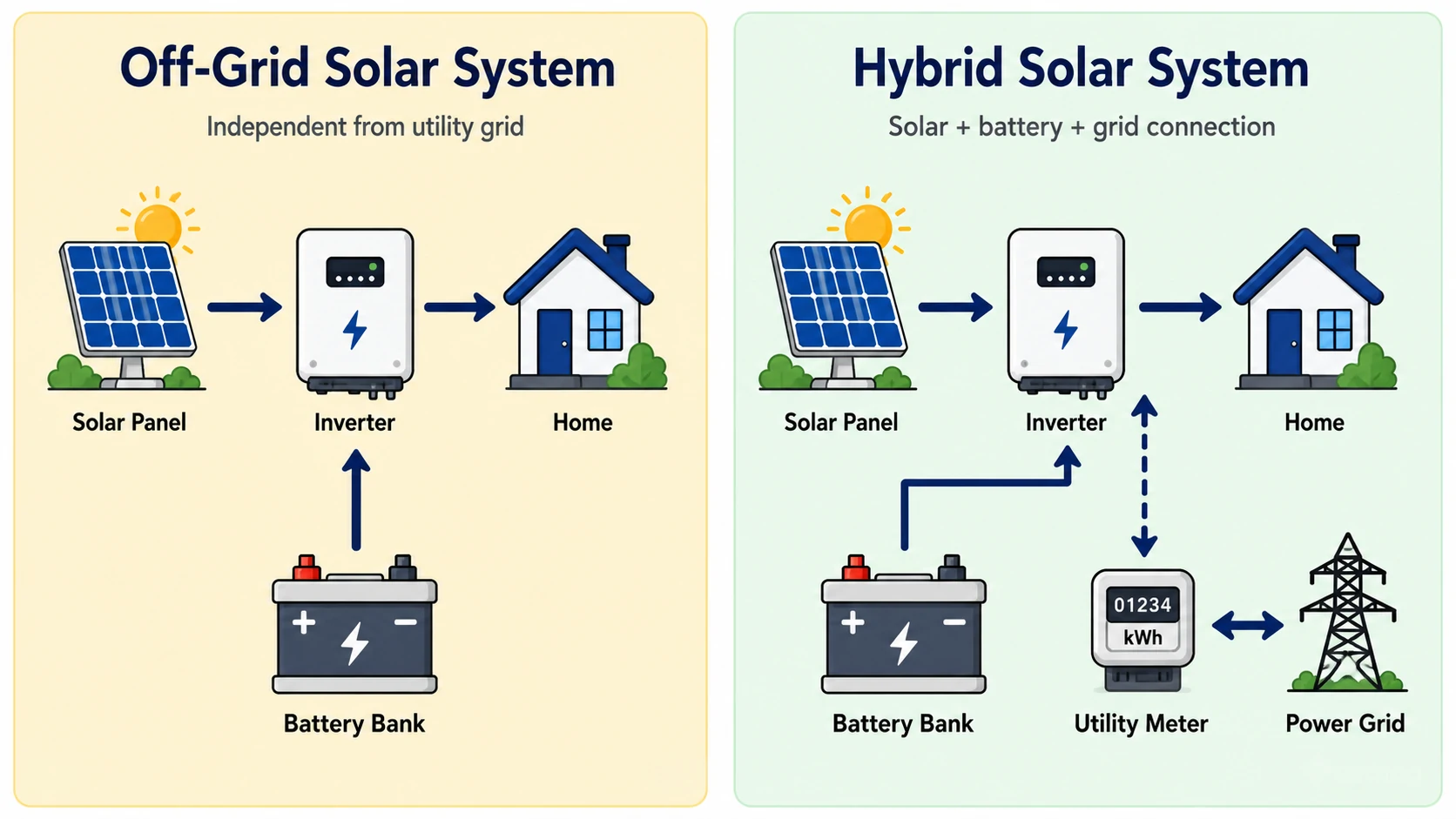
A hybrid solar system is usually the better choice when utility power is available because it combines solar, battery storage and grid backup. An off-grid system is more suitable when no practical grid connection exists, but it normally needs more battery capacity, additional solar panels and stricter energy management.
The right choice is not simply about which system offers more independence. It depends on grid availability, outage frequency, daily electricity use, critical loads, local electricity tariffs, winter solar production and the cost of extending utility service.
This guide compares hybrid solar system vs off-grid designs using practical sizing criteria, real equipment specifications and a worked residential example.
Hybrid Solar System vs Off-Grid: Quick Comparison
A hybrid system uses the utility grid as an additional energy source, while an off-grid system must produce and store all electricity locally. This difference affects battery size, solar array capacity, system cost, reliability, installation requirements and how carefully the owner must manage daily electricity consumption.
| Factor | Hybrid Solar System | Off-grid Solar System |
|---|---|---|
| Utility-grid connection | Connected | Not connected |
| Battery requirement | Optional for some configurations, but required for backup | Essential |
| Main energy sources | Solar, battery and grid | Solar, battery and often a generator |
| Battery sizing basis | Evening use, tariff savings or selected backup hours | Total daily load and required autonomy |
| Solar array sizing | Often based on annual savings and roof capacity | Usually based on worst-season energy demand |
| Power during grid outage | Only with battery, islanding and backup equipment | Available while battery and generation are sufficient |
| Exporting surplus solar | Possible where utility rules allow | Not possible |
| Risk of running out of power | Lower because the grid can provide backup | Higher during prolonged low-solar periods |
| Typical upfront cost | Medium to high | Usually highest for a comparable full-size home |
| Energy management | Mostly automatic | Requires stricter load control |
| Best application | Grid-connected homes needing savings and backup | Remote homes, farms, islands and sites without grid access |
| Expansion approach | Battery capacity can often be added gradually | Expansion should be planned around total system balance |
| Generator requirement | Usually unnecessary | Frequently recommended for long cloudy periods |
Hybrid systems are generally more practical for grid-connected homes, while off-grid systems are most valuable where utility service is unavailable or prohibitively expensive.
What Is the Main Difference Between Hybrid and Off-Grid Solar?
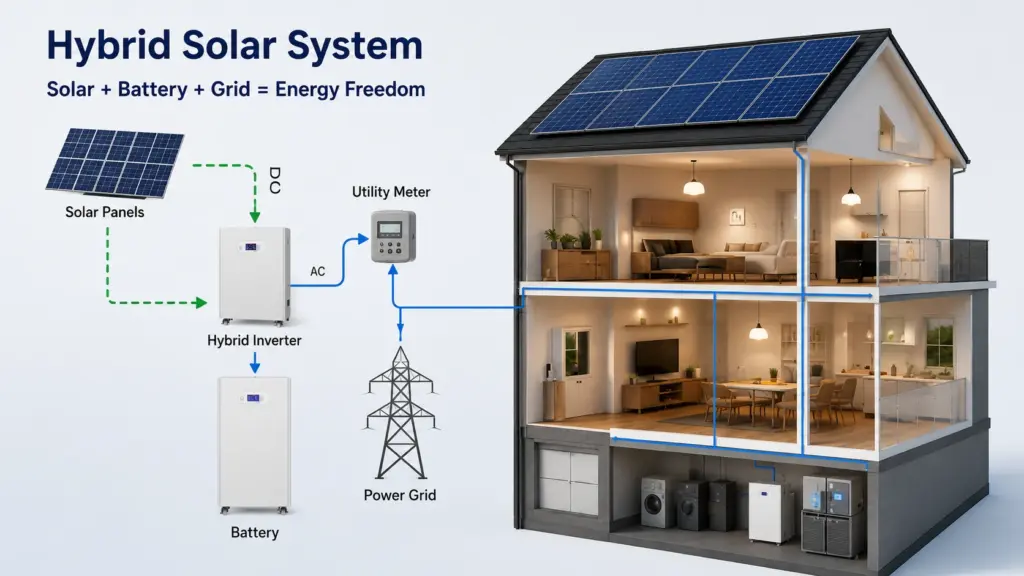
The main difference is whether the system can rely on the utility grid. A hybrid solar system remains connected to the grid and coordinates solar, battery and grid power, whereas an off-grid system operates as an independent electrical network that must meet every load without utility support.
A typical hybrid solar system contains:
- Solar panels;
- A hybrid or multimode inverter;
- Battery storage;
- Utility-grid connection;
- Energy meter or current transformers;
- Backup output or essential-load panel;
- Monitoring and energy-management controls.
A typical off-grid system contains:
- Solar panels;
- MPPT charge control;
- Off-grid or standalone inverter;
- Battery bank;
- Main AC distribution panel;
- System monitoring;
- Frequently, a diesel or gas generator.
The grid connection changes the design philosophy. A hybrid system can import electricity when solar and battery power are insufficient. An off-grid system cannot, so it must be sized for low-solar periods rather than only for average annual conditions.
Readers comparing all three common configurations can also review this guide to off-grid, on-grid and hybrid solar systems.
Not Sure Which Solar System Fits Your Project?
Share your daily energy use, backup requirements and installation location. Avepower will help you compare hybrid and off-grid configurations based on real load demand.
How Does Each System Work During Normal Operation?
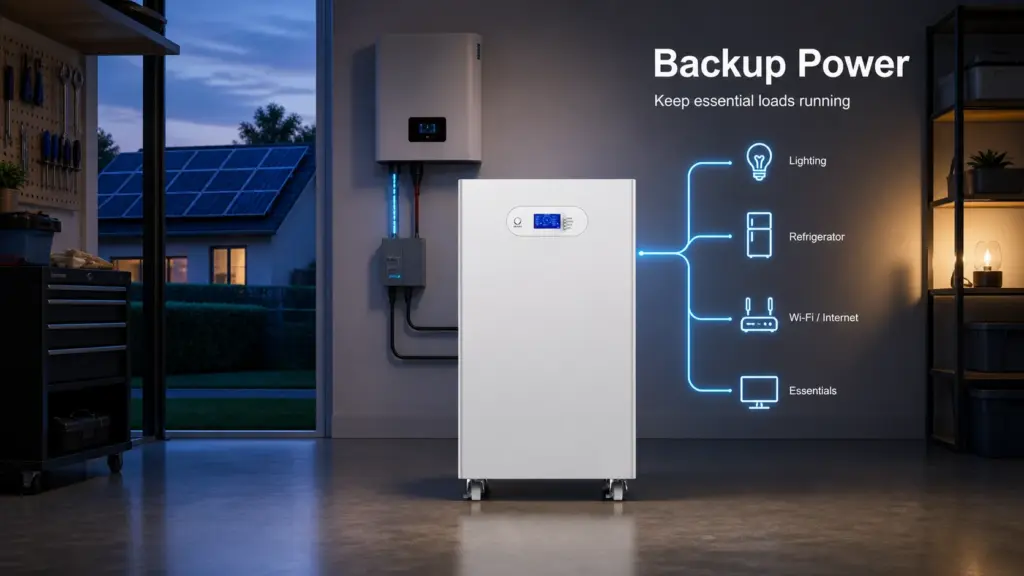
Both systems use solar energy first, but they handle energy shortages differently. A hybrid system can draw from the utility after solar and battery power are insufficient. An off-grid system must reduce loads, start a generator or shut down when available solar and stored battery energy cannot meet demand.
Hybrid System Energy Flow
A properly configured hybrid system usually follows this priority:
- Solar powers active loads.
- Surplus solar charges the battery.
- Remaining surplus may be exported.
- The battery supplies evening or peak-period loads.
- The grid covers any remaining shortfall.
The operating sequence can be changed according to electricity prices, backup reserve and local export rules. For a more detailed explanation of the central control device, see what a hybrid solar inverter does.
Off-grid System Energy Flow
An off-grid system normally follows this sequence:
- Solar powers loads and charges the battery.
- The battery supplies power when solar production is insufficient.
- Non-essential loads may be disconnected at low state of charge.
- A generator starts when the battery reaches a defined limit.
- The inverter shuts down if no energy source remains.
Load scheduling is therefore part of system design. Water heating, pumping, EV charging and other flexible loads should ideally operate during periods of high solar production. The off-grid solar inverter guide explains how standalone inverters manage solar charging, batteries, AC loads and generator input.
Which Is Cheaper: Hybrid or Off-Grid Solar?
A complete hybrid system is usually less expensive than a comparable whole-home off-grid system because the grid reduces the amount of battery capacity, reserve generation and solar oversizing required. Off-grid power may still be economical where extending utility lines is difficult or extremely expensive.
Comparing inverter prices alone produces misleading conclusions. An off-grid inverter may cost less than an advanced grid-interactive hybrid inverter, but the complete off-grid project usually requires more supporting equipment.
Main Hybrid-System Cost Drivers
- Hybrid inverter;
- Battery storage;
- Backup gateway or transfer equipment;
- Essential-load panel;
- Grid application and interconnection work;
- Smart meter or monitoring hardware.
Main Off-Grid Cost Drivers
- Larger battery bank;
- Solar array sized for low-production months;
- Generator and fuel system;
- Generator auto-start integration;
- Additional charge-control capacity;
- Remote transport and installation;
- Spare parts and service planning;
- Greater design and commissioning time.
The lowest initial quotation is therefore not necessarily the lowest lifecycle cost. Buyers should compare:
Installed equipment + grid or generator connection + expected battery replacement + generator maintenance + fuel + service access − electricity savings.
Build the Right Hybrid or Off-Grid Battery System
Share your daily energy use, peak load, required backup time, solar-array size and inverter model with Avepower. The engineering team can help installers, distributors and project buyers compare battery capacity, BMS current, communication protocol and expansion options before selecting a system.
Request a Project-Matched Battery Solution
Can a Hybrid Solar System Be Converted to Off-Grid Later?
Some hybrid systems can operate without the grid, but buying a hybrid inverter does not automatically make the installation suitable for permanent off-grid service. The equipment must support grid-forming operation, black start, generator integration and the required battery and PV capacity.
Check the following before planning a future conversion:
- Can the inverter start without grid voltage?
- Can it restart from the battery after a shutdown?
- Can solar recharge the battery while islanded?
- Is a generator input supported?
- Can the generator charge the battery?
- Does the backup output support all required phases?
- Is the neutral-earth arrangement suitable?
- Is the battery bank expandable?
- Is the maximum PV input sufficient?
- Can high-power loads be controlled?
- Are local permits and utility disconnection rules satisfied?
For an existing solar installation, Avepower’s solar battery retrofit guide explains the differences between AC-coupled and DC-coupled expansion and the compatibility checks required before adding storage.
How Should the Inverter Be Sized?
The inverter must be selected from the maximum simultaneous load and the starting surge of motors, pumps, compressors and air conditioners—not from battery capacity or daily kWh consumption alone. Energy capacity and power capacity answer different questions.
For example, a home may have:
- Refrigerator: 300W running, higher startup surge
- Lighting and electronics: 700W
- Water pump: 1,500W running, 3,000W startup
- Microwave or cooking load: 1,500W
- Other essential loads: 800W
The continuous simultaneous load may approach 4.8kW, while the short-duration startup requirement could be significantly higher.
A 6kW inverter may be appropriate if its surge rating, battery discharge capability and operating temperature are sufficient. However, a nominal 6kW label alone is not enough; installers must also check:
- Continuous output at operating temperature
- Peak output and permitted duration
- Maximum battery current
- Backup output limit
- PV input voltage and current
- MPPT operating window
- Generator input
- Phase configuration
- Communication protocol
Avepower’s inverter size chart provides a more detailed method for matching appliance loads, startup surges and battery discharge power.
How Much Battery Does an Off-Grid System Need?
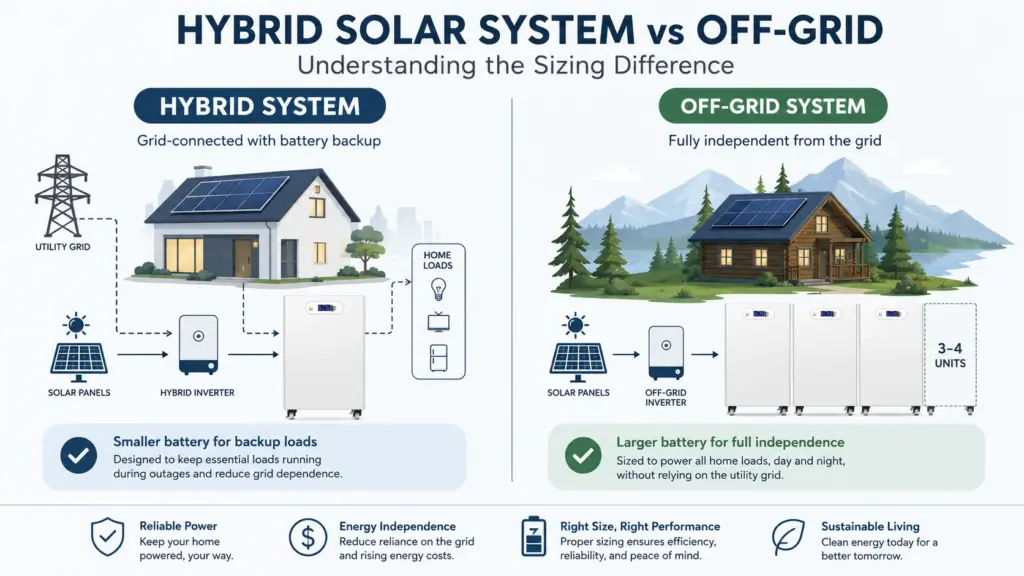
An off-grid battery must cover the full managed daily load for the selected autonomy period, which can make it several times larger than a hybrid backup battery serving the same property. Worst-season conditions and generator strategy must also be considered.
Consider the same home using 24kWh per day and requiring two days of battery autonomy.
- Daily electricity consumption: 24kWh
- Autonomy: 2 days
- Usable depth of discharge: 90%
- System efficiency: 92%
Calculation:
24 × 2 ÷ 0.90 ÷ 0.92 = 58.0kWh nominal capacity
After adding a 15% reserve:
58.0 × 1.15 = 66.7kWh
The off-grid design therefore requires approximately 67kWh of nominal battery storage, compared with roughly 17–20kWh for the essential-load hybrid design.
| Design Scenario | Load Covered | Autonomy | Calculated Capacity | Capacity With 15% Reserve |
|---|---|---|---|---|
| Hybrid essential-load backup | 12kWh | One backup period | 14.5kWh | 16.7kWh |
| Off-grid whole-property supply | 24kWh/day | 2 days | 58.0kWh | 66.7kWh |
For related calculations, see Avepower’s guides to battery capacity and battery reserve capacity.
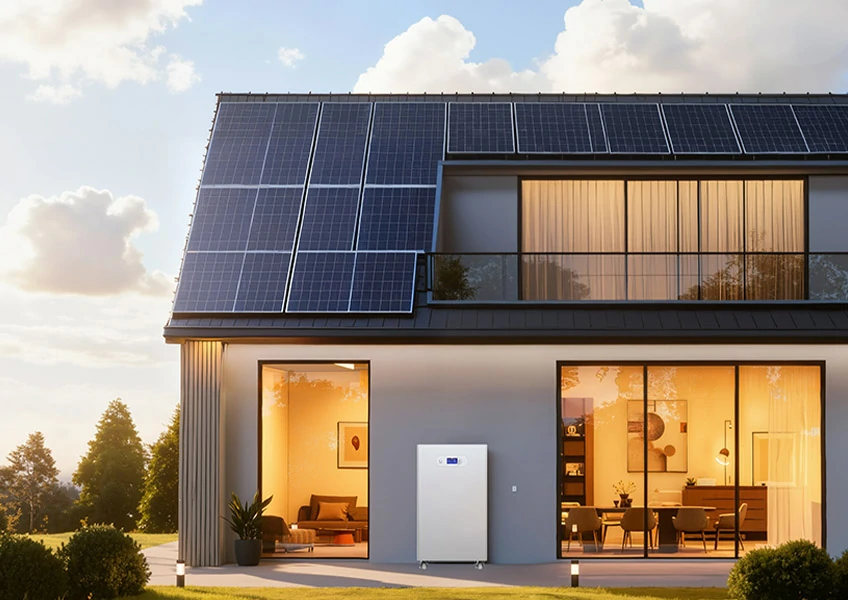
Size Your Battery Before You Buy
Avoid undersized backup or unnecessary overspending. Send us your critical loads, required backup time and inverter model for a practical battery configuration.
Worked Example: Hybrid vs Off-Grid for a 20kWh/Day Home
For the same 20kWh daily load, a hybrid home might use approximately 12–15kWh of battery storage for essential overnight loads, while a two-day off-grid design may require around 60–70kWh. The difference comes from the grid’s ability to cover shortages in the hybrid configuration.
Assumptions
| Parameter | Assumption |
|---|---|
| Total household consumption | 20kWh/day |
| Essential backup consumption | 8kWh/day |
| Maximum normal load | 5kW |
| Short motor-starting surge | 8kW |
| Design solar resource | 4 peak sun hours/day |
| PV derating factor | 75% |
| Usable battery DoD | 80% |
| Inverter efficiency | 92% |
| Off-grid autonomy | 2 days |
Hybrid Battery Calculation
8kWh ÷ 0.80 ÷ 0.92 = 10.87kWh
A practical selection would therefore be approximately 12–15kWh, assuming only essential loads are backed up.
A larger battery may be justified when the owner wants:
- Whole-home backup;
- Longer outages;
- More evening self-consumption;
- Time-of-use energy shifting;
- Additional future loads.
Off-Grid Battery Calculation
20kWh × 2 days ÷ 0.80 ÷ 0.92 = 54.35kWh
Adding a 15% operating and ageing reserve:
54.35kWh × 1.15 = 62.5kWh
A practical preliminary target would therefore be approximately 60–70kWh.
This figure may still be insufficient in a cold climate, for three or more consecutive low-solar days, or where the generator is not available.
Hybrid Solar Array Calculation
20kWh ÷ 4 hours ÷ 0.75 = 6.67kW
A preliminary hybrid design might use approximately 7–8kW of solar, subject to roof conditions and local production data.
Off-grid Solar Recovery Calculation
An off-grid array must support the daily 20kWh load and recharge energy used from the battery. If the design aims to restore another 15kWh during one suitable day:
(20kWh + 15kWh) ÷ 4 hours ÷ 0.75 = 11.67kW
The preliminary off-grid array could therefore be closer to 10–12kW, rather than the 7kW suggested by an average-energy calculation.
DC Current Check
At 51.2V nominal battery voltage, supplying 6kW through a 92% efficient inverter requires approximately:
6,000W ÷ 51.2V ÷ 0.92 = 127A
An 8kW surge requires approximately:
8,000W ÷ 51.2V ÷ 0.90 = 174A
The BMS, cables, terminals, fuses, busbars and disconnects must all support the expected continuous and surge current. Battery capacity in kWh alone does not prove that the system can start the required loads.
Which System Is More Reliable During a Power Outage?
A properly designed hybrid system generally offers the highest overall availability because it can use the grid during normal operation and switch to battery backup during an outage. An off-grid system is independent of grid failures but remains vulnerable to battery depletion, equipment faults and prolonged low-solar weather.
Hybrid backup nevertheless has clear boundaries:
- Only circuits connected to the backup output may remain powered;
- The battery must have sufficient energy;
- The inverter must support the required continuous and surge loads;
- Solar recharging during an outage depends on the inverter architecture;
- Some systems require a minimum battery state of charge to restart;
- High-power appliances may be excluded from the backup panel.
The purpose of islanding equipment is to isolate the home from utility lines before local generation continues. This protects utility personnel and prevents uncontrolled backfeed. IEEE 1547 includes requirements relating to distributed-energy interconnection, abnormal grid conditions, interoperability and islanding.
More detail is available in Avepower’s guide to islanding and anti-islanding in solar systems.
Off-grid systems do not need to respond to a utility outage because they are already operating independently. Their reliability instead depends on resource adequacy: enough solar, usable battery energy and backup generation must be available for the expected weather and load.
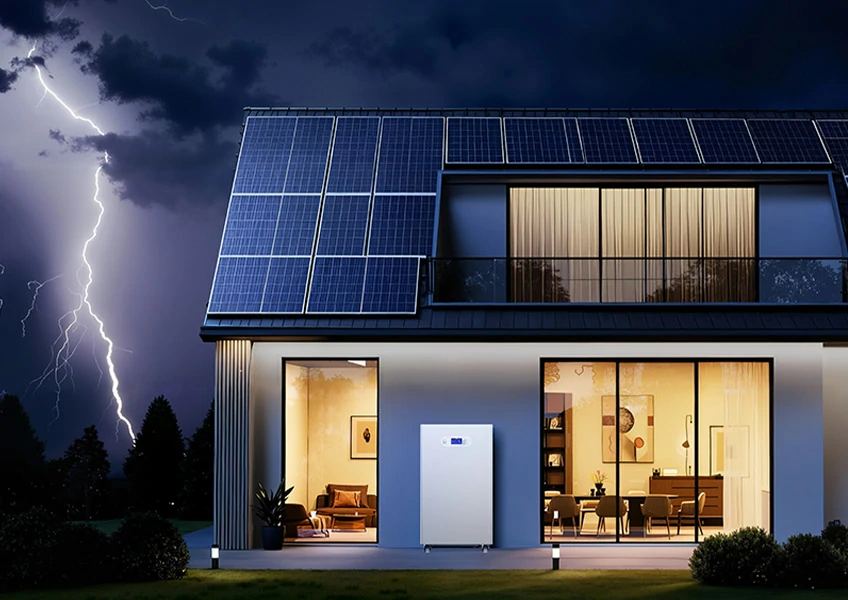
Build a Reliable Hybrid or Off-Grid Solution
Avepower supplies scalable LiFePO4 battery systems with inverter compatibility support, BMS protocol matching and OEM/ODM customization for installers, distributors and energy-storage projects.
Worked Example: Hybrid vs Off-Grid Battery Size for an 18kWh Home
For an illustrative home consuming 18kWh per day, an eight-hour essential-load backup target may require approximately 13kWh of nominal battery capacity, while two full days of off-grid autonomy can require roughly 49kWh before additional ageing and weather reserve is included.
Assume the property has the following daily consumption:
| Load Group | Daily Energy |
|---|---|
| Refrigerator and freezer | 2.0kWh |
| Lighting, router and security | 1.6kWh |
| Kitchen and small appliances | 3.2kWh |
| Water pump and laundry | 2.2kWh |
| Air conditioning or heating support | 5.0kWh |
| Electronics and miscellaneous loads | 4.0kWh |
| Total | 18.0kWh/day |
Hybrid Backup Calculation
Assume the owner only wants to support critical loads averaging 1.2kW for eight hours.
Required delivered energy:
1.2kW × 8 hours = 9.6kWh
Assume:
- Maximum planned depth of discharge: 80%;
- Inverter efficiency under the selected load: 92%.
Required nominal capacity:
9.6 ÷ 0.80 ÷ 0.92 = 13.04kWh
A 15kWh-class battery would therefore provide a practical starting point, subject to the actual inverter, temperature, reserve setting and battery discharge limits.
Off-Grid Calculation
Assume the same home must operate for two days without meaningful solar input.
Required delivered energy:
18kWh × 2 days = 36kWh
Required nominal battery capacity:
36 ÷ 0.80 ÷ 0.92 = 48.91kWh
Adding a 15% allowance for ageing, forecast uncertainty and operating reserve gives:
48.91 × 1.15 = 56.25kWh
This example suggests approximately 50–60kWh of nominal storage for two-day autonomy, compared with about 15kWh for selected hybrid backup loads.
The comparison demonstrates why “How many batteries do I need?” cannot be answered from house size alone. The same home may need 15kWh for overnight backup or more than 50kWh for off-grid autonomy.
Off-Grid Solar-Array Calculation
Assume average daily use remains 18kWh and the design month provides 3.5 peak-sun hours per day.
With a 75% overall system derating factor:
PV size = 18kWh ÷ 3.5 hours ÷ 0.75 = 6.86kW
Adding 20% recovery capacity to recharge after a poor-solar period:
6.86 × 1.20 = 8.23kW
An approximately 8kW array could therefore be a reasonable initial estimate under these assumptions. A final design must use local irradiance data, panel orientation, shading, temperature, charge-current limits and the lowest-production season.
Avepower Product Example: What Can a 15kWh All-in-One System Support?
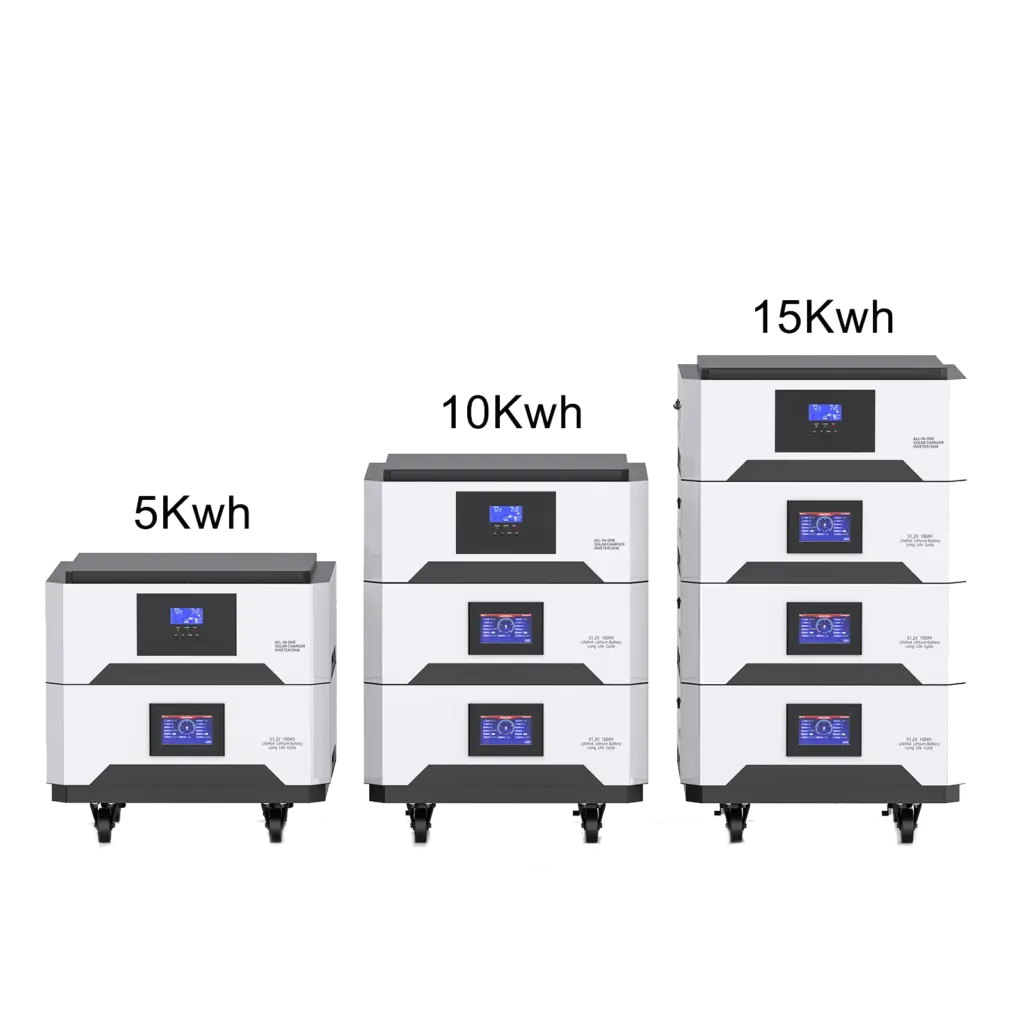
A 15kWh all-in-one battery with a 6.2kW inverter can be a practical hybrid or limited off-grid solution for homes whose continuous and surge loads remain within its output limits. It should not be treated as a universal whole-home off-grid system without checking daily demand, autonomy and seasonal solar production.
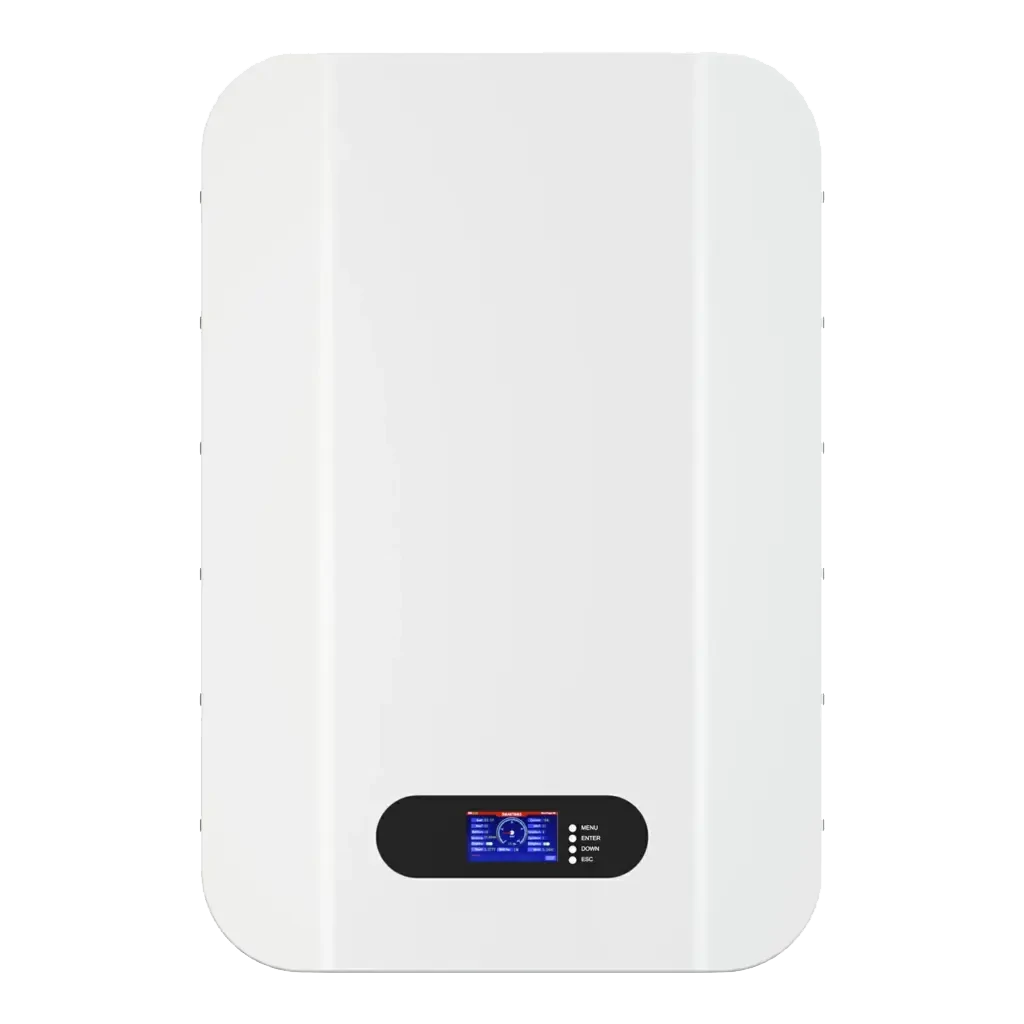
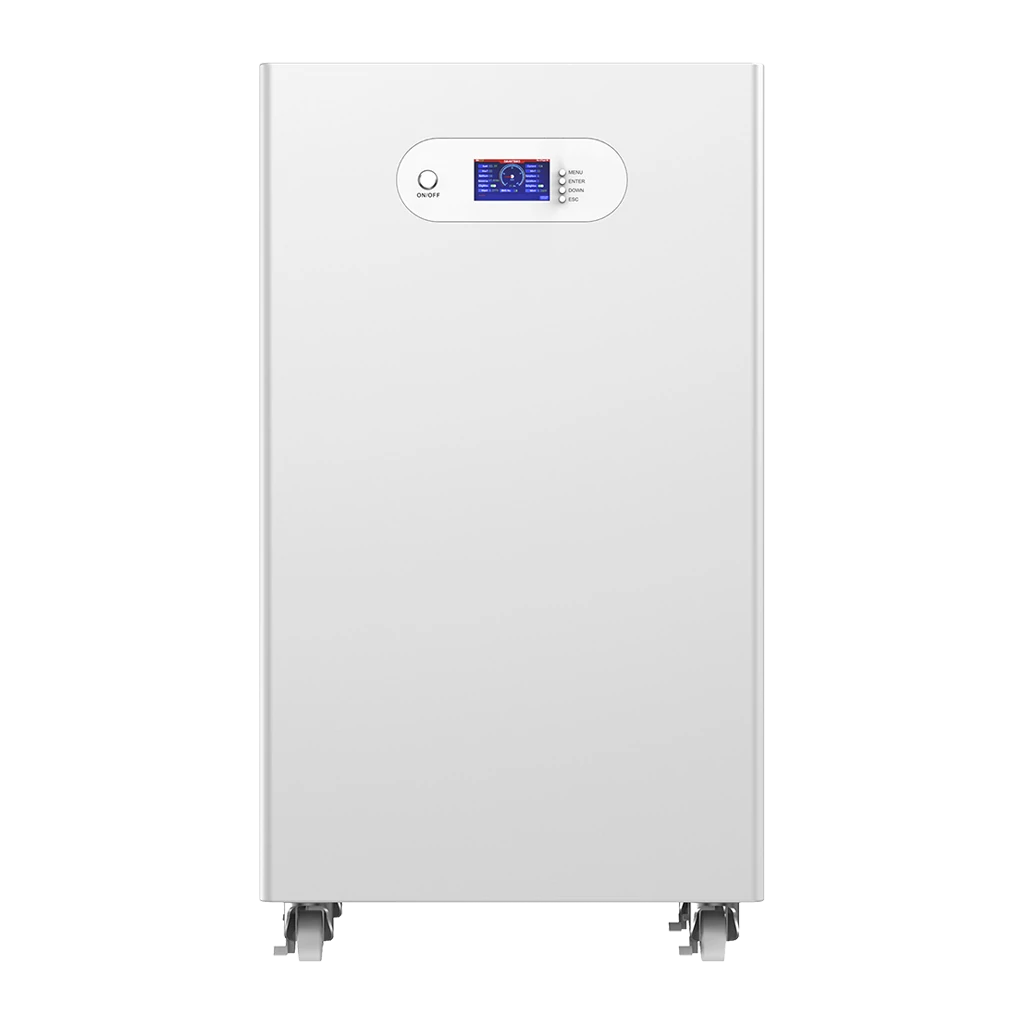
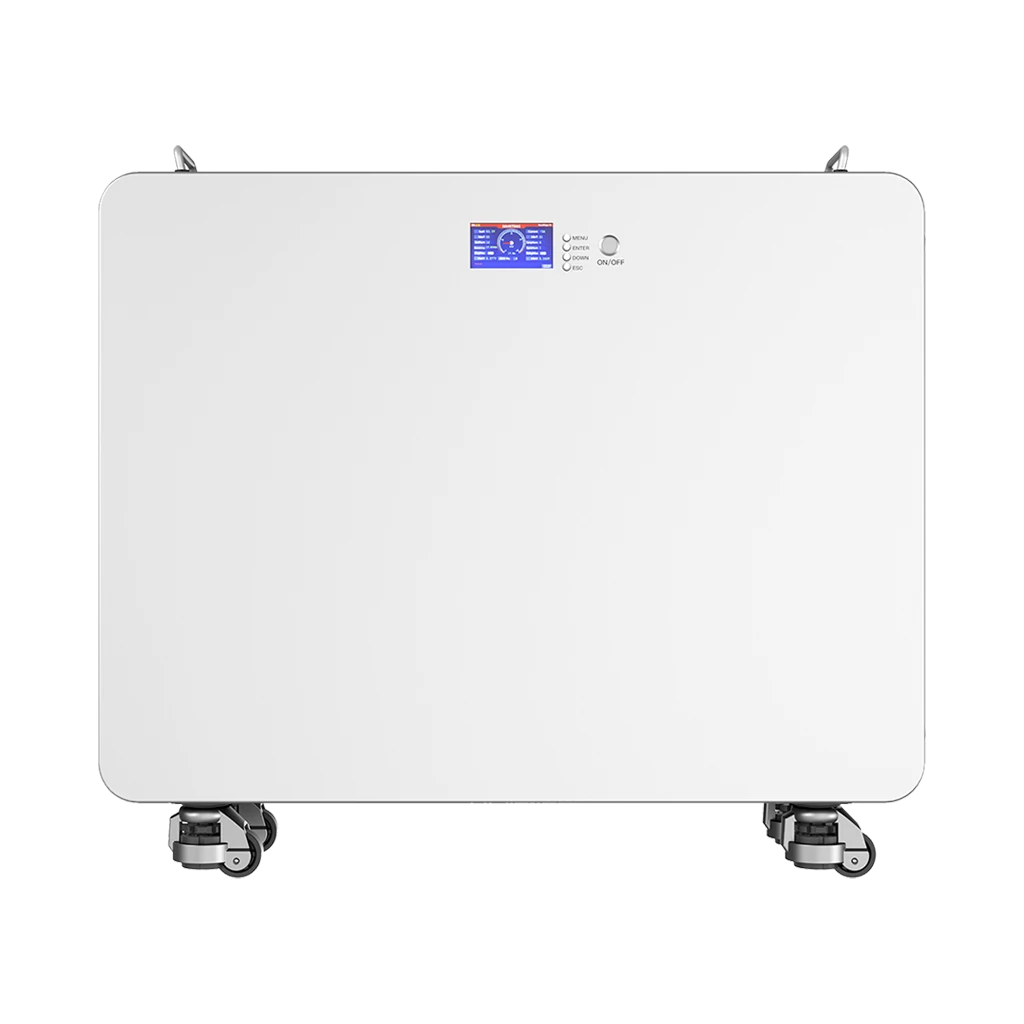
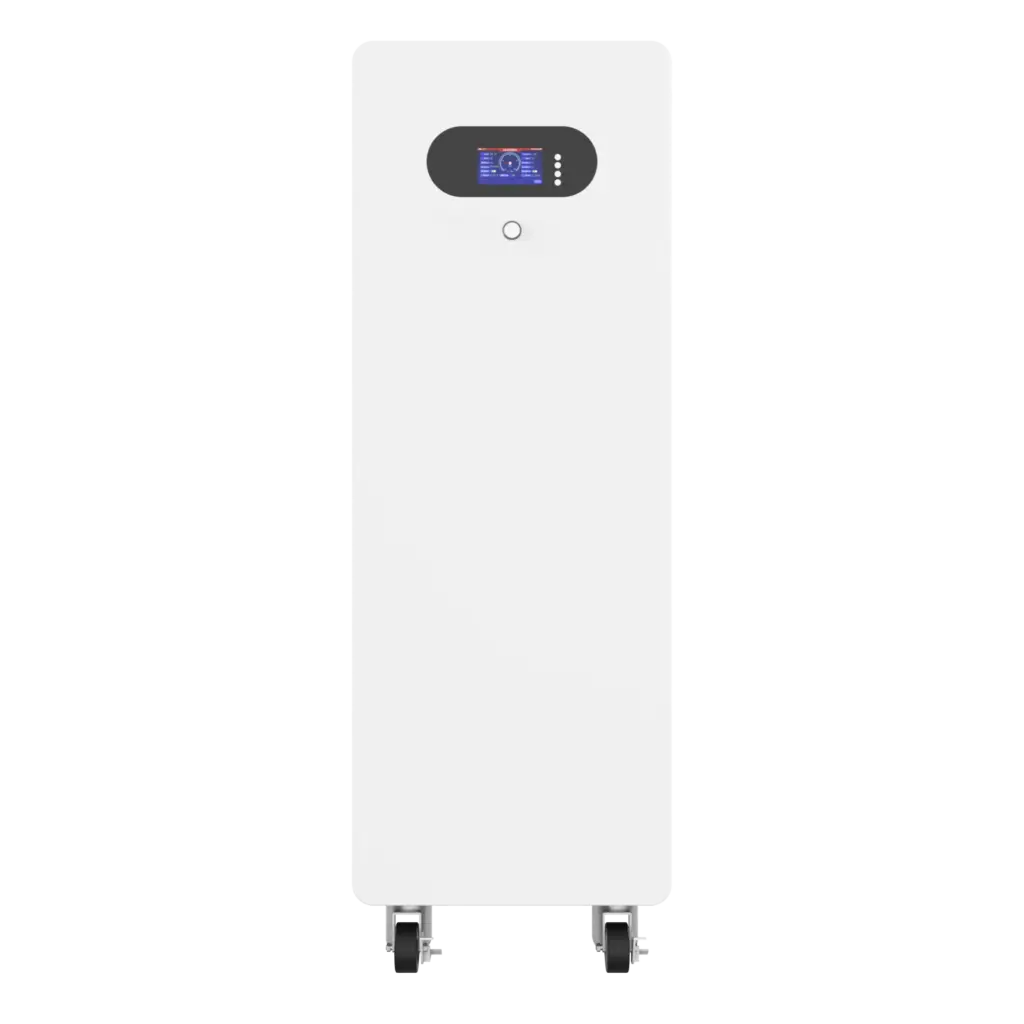
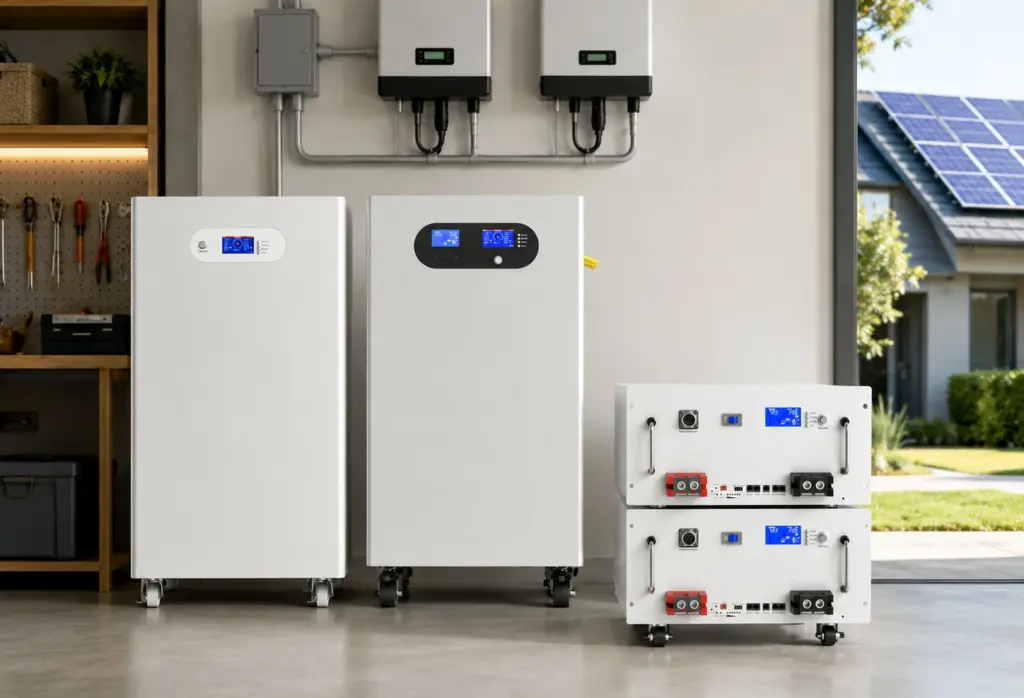
The Avepower 15kWh all-in-one solar battery combines:
- A 51.2V 314Ah LiFePO4 battery;
- 6,200W rated inverter output;
- 12,400VA peak output;
- Up to 6,200W PV input;
- 120–500V MPPT range;
- CAN, RS485 and RS232 communication;
- Bluetooth and Wi-Fi monitoring;
- Configurable 10ms or 20ms transfer time;
- More than 8,000 cycles under the stated 25°C and 80% DoD test condition.
For the earlier calculation, one 15kWh unit could reasonably align with a hybrid essential-load requirement of approximately 8kWh per day, provided that continuous loads remain below 6.2kW and starting surges remain within the inverter and battery limits.
The same single unit would not provide two full days of autonomy for a home using 20kWh per day. That off-grid requirement would need substantially more battery capacity, a larger solar array or scheduled generator support.
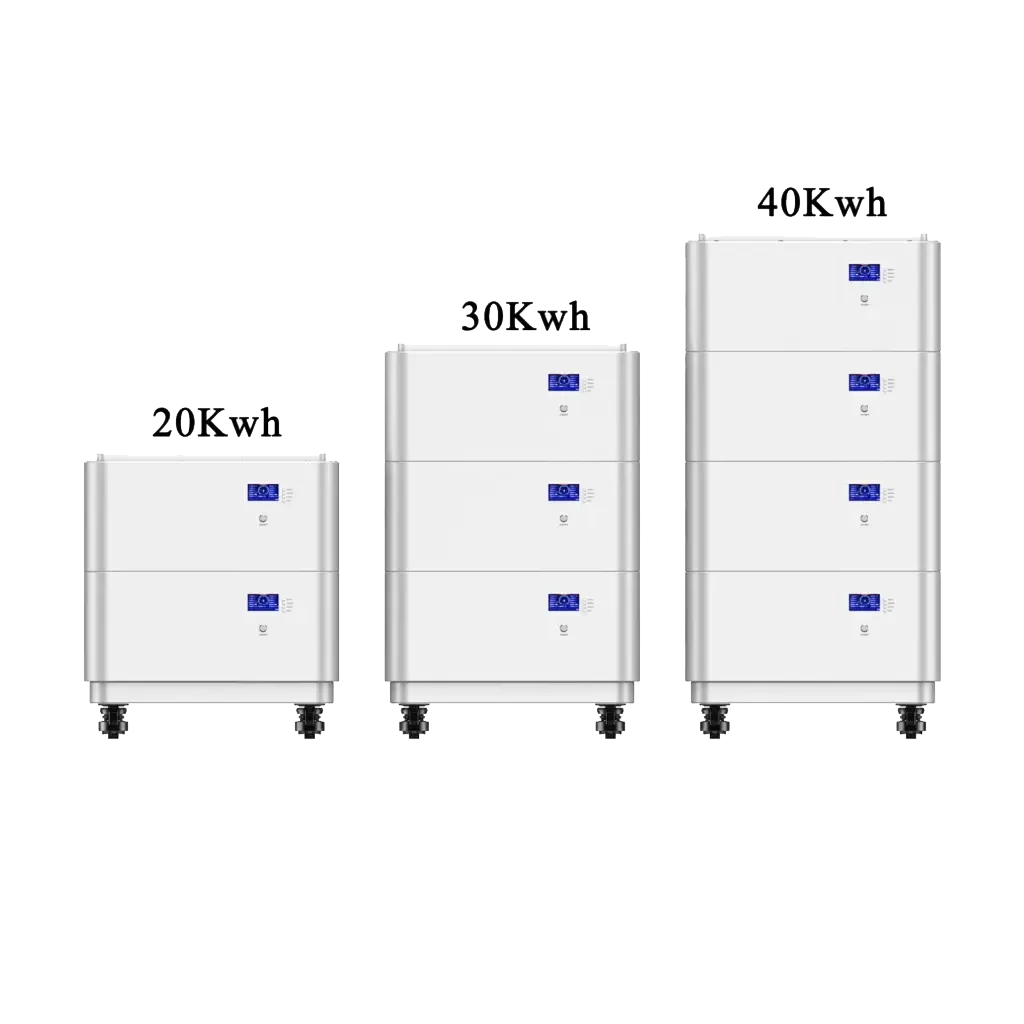
For separate-inverter designs, Avepower’s 16kWh vertical LiFePO4 battery supports up to 16 parallel units, providing a potential nominal bank of approximately 260kWh. Parallel capability does not remove the need to engineer the inverter, protection, cables, busbars and module-current sharing for the complete system.
Project Case: Combining Grid-Connected and Off-Grid Operation
A commercial hybrid system demonstrates that hybrid design is not limited to small homes: it can combine grid-connected energy management with independent backup operation. The key is coordinated control between batteries, smart inverters, EMS, solar production and the building’s critical-load requirements.
An Avepower hotel energy-storage project in Afghanistan uses:
- 640kWh total battery capacity;
- Twenty 32kWh LiFePO4 battery units in parallel;
- Smart inverters;
- An energy management system;
- Rooftop PV integration;
- Peak shaving and load shifting;
- Grid-connected and off-grid operating modes;
- Seamless support for critical loads.
The project stores excess solar production, discharges during peak periods and changes operating mode when backup is required. Its decision value is not that every hotel needs 640kWh, but that hybrid architecture can combine economic dispatch and resilience without forcing the site to remain permanently off-grid.
Read the complete 640kWh hotel solar BESS case study.
Build a Project-Matched Solar Battery System with Avepower
Choosing between hybrid and off-grid solar starts with your load profile—not a generic battery package. Avepower supports installers, distributors, EPCs and energy-storage brands with scalable LiFePO4 batteries, integrated inverter systems, BMS protocol matching, inverter compatibility checks and OEM/ODM configuration.
Explore Avepower’s home energy storage solutions or contact the Avepower team with your daily consumption, critical loads, backup duration, solar-array size, inverter model and project country to receive a configuration based on the actual application.
Take Control of Your Energy with Avepower!
Reliable home solar battery solutions with OEM/ODM customization and in-house manufacturing, tailored to the needs of distributors, installers, and energy partners.
FAQ
A hybrid system is better for most properties with an existing utility connection because it provides flexibility, backup and a lower risk of energy shortages. Off-grid is better for remote sites where connecting to the public grid is impossible or financially unreasonable.
Some hybrid inverters can operate without the grid, but not every model supports full standalone operation. Confirm black-start capability, generator input, neutral and grounding requirements, backup-output limits, MPPT behaviour and whether the manufacturer approves permanent off-grid use.
Off-grid systems usually have a longer financial payback when utility service is already available because they require more storage and generation. Where grid extension is extremely expensive, an off-grid system may be financially preferable even without conventional bill savings.
No. A hybrid inverter is generally designed to coordinate with the utility grid, solar panels and batteries. An off-grid inverter creates a standalone AC supply and is usually designed around battery and generator operation without grid synchronisation.
Divide the home’s daily energy demand by the usable battery fraction and inverter efficiency, then multiply by the desired days of autonomy. A home using 18kWh per day may need roughly 49kWh nominal capacity for two days under the assumptions used in this article, before additional reserve.
A hybrid solar system is normally better when a grid connection already exists and the user wants lower electricity bills, battery backup or greater solar self-consumption without paying for full off-grid autonomy. It is particularly valuable where outages occur but are not long enough to justify several days of battery storage.
An off-grid solar system is better when utility service is unavailable, grid extension is uneconomic or the project requires an independent local power network. It is most appropriate when the owner accepts the need for larger storage, active load management, seasonal design and possibly generator support.
Some hybrid inverters can operate without a utility connection, but this capability must be confirmed for the exact model, firmware and battery configuration. The inverter must be able to form a stable AC grid, start without utility voltage, manage battery charging and support the required neutral, earthing and generator arrangements.
The correct system should be selected from actual load data, required autonomy, seasonal solar production and verified equipment compatibility. A product list assembled only from matching voltage and capacity values can still fail because the inverter, battery communication, protection settings or surge requirements are incompatible.