
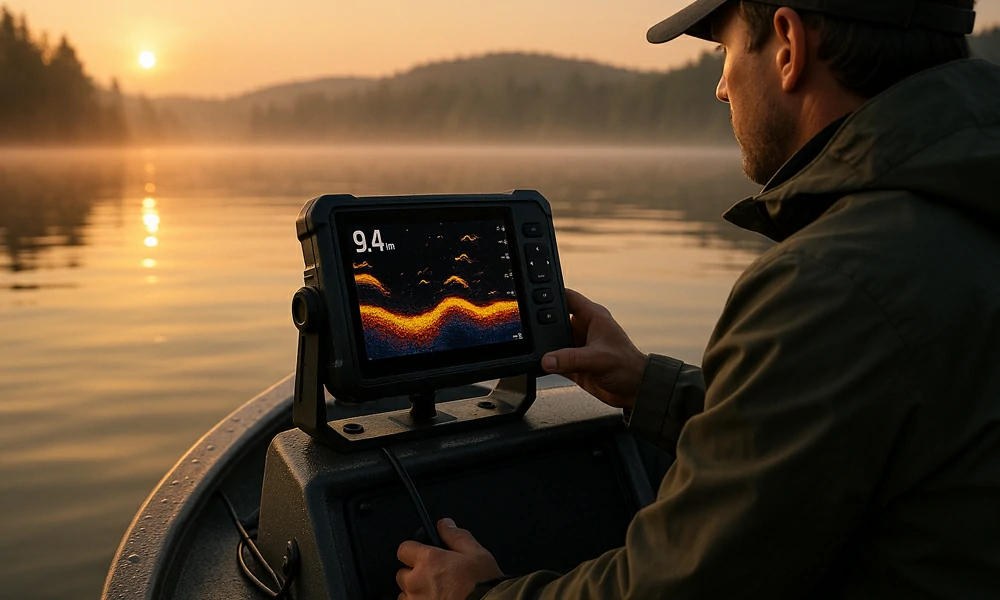
Have you ever been out on the water, tracking promising signs with your fish finder, only for the battery to suddenly give out just as things are getting exciting? If so, you’re not alone—“How long will my fish finder battery actually last?” is a question that resonates with anglers everywhere.
If your fish finder draws 5 watts on a 12-volt battery, the device pulls about 0.42 amps (because amps = watts ÷ volts = 5 ÷ 12 ≈ 0.42 A). Your runtime depends on usable battery capacity, not just the number on the label.
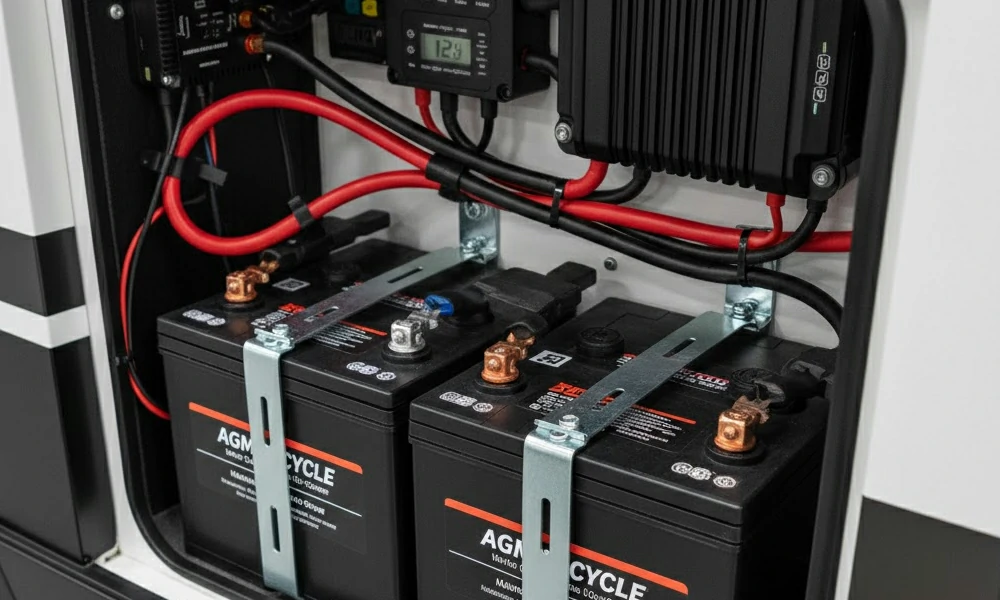
- A 7Ah sealed lead-acid (SLA) battery typically gives you ~9 hours.
- A 7Ah LiFePO4 battery typically gives you ~15 hours.
This difference exists because most users should only plan on using ~50–60% of an SLA’s rated capacity, while a LiFePO4 pack can safely deliver ~80–100% of its rating.
As fish finder technology becomes more advanced, understanding your battery’s performance and choosing the right one has never been more important. In this article, we’ll break down the key factors that affect battery life, compare the main battery types, and give you practical tools to estimate your runtime with confidence. Whether you’re heading out for a casual morning cast or staying on the lake all day, you’ll find actionable solutions here that fit your specific needs.
Read on to discover how to plan worry-free trips, make the most of your gear, and enjoy every moment on the water without the stress of a dying battery.
How to Read Your Fish Finder’s Power Draw
Your fish finder has a small spec that carries a big weight: power. The label or manual often lists power as watts (W). You can convert watts to current on a 12V system with a simple formula:
Current (A) = Power (W) ÷ Voltage (V)
If your unit draws 10W on a 12V battery, the current is:
10 ÷ 12 ≈ 0.83A
That 0.83A number is the heart of your runtime math. A larger display, a brighter backlight, GPS, Wi-Fi, and high-detail imaging features all push that number up. Your manual or product page usually lists a “typical” or “max” draw. You should size for typical use and add a bit of headroom.
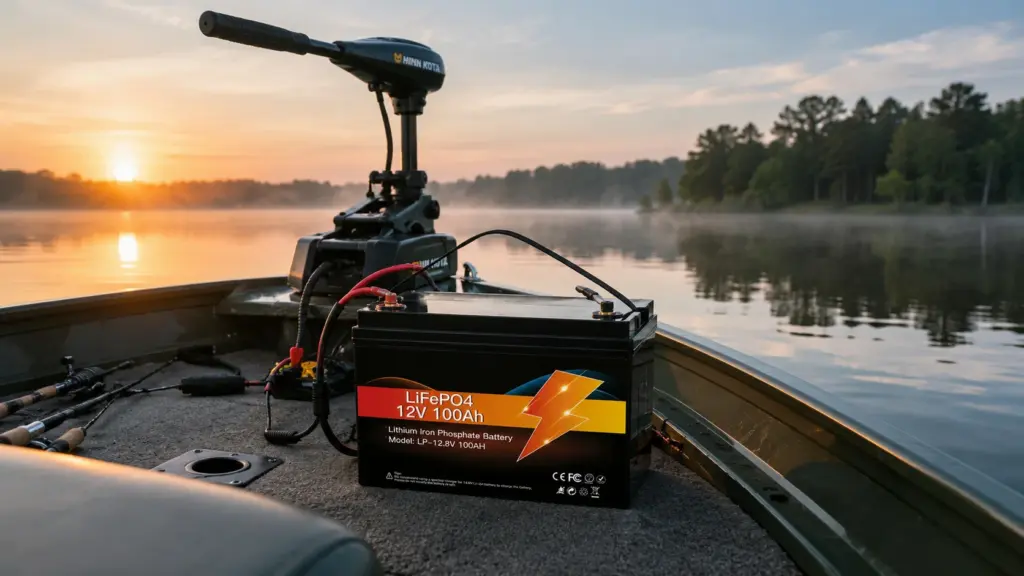
Need a Longer-Lasting Battery for Your Fish Finder?
A reliable fish finder battery can help you stay on the water longer without worrying about sudden power loss. Avepower 12V LiFePO4 batteries are lightweight, long-lasting and suitable for fish finders, trolling motors, kayaks, boats and other outdoor power applications.
How Long Will a Fish Finder Battery Last?
Fish Finder Battery Runtime Calculator
The most useful rule for anglers is also the simplest. You can estimate how long your fish finder battery will last by dividing the battery’s amp-hour rating by the current your device uses.
Runtime (hours) = Usable battery capacity (Ah) ÷ Device current (A)
Two things to note:
- Device current comes from your watts-to-amps conversion:
A = W ÷ V → 6 W ÷ 12 V = 0.5 A - Usable capacity is the portion of the rated Ah you can rely on without damaging the battery or hitting excessive voltage sag.
If you have a 12V 100Ah LiFePO4 battery and a fish finder that uses 2 amps: Runtime = 100 ÷ 5 ≈ 50 hours
This is an ideal calculation. Real-life conditions like temperature, battery age, and extra devices can reduce this time significantly.
Simple, safe usable-capacity rules of thumb
- Sealed lead-acid (SLA/AGM): use 50–60% of the label capacity. These don’t like deep discharges, especially at higher currents.
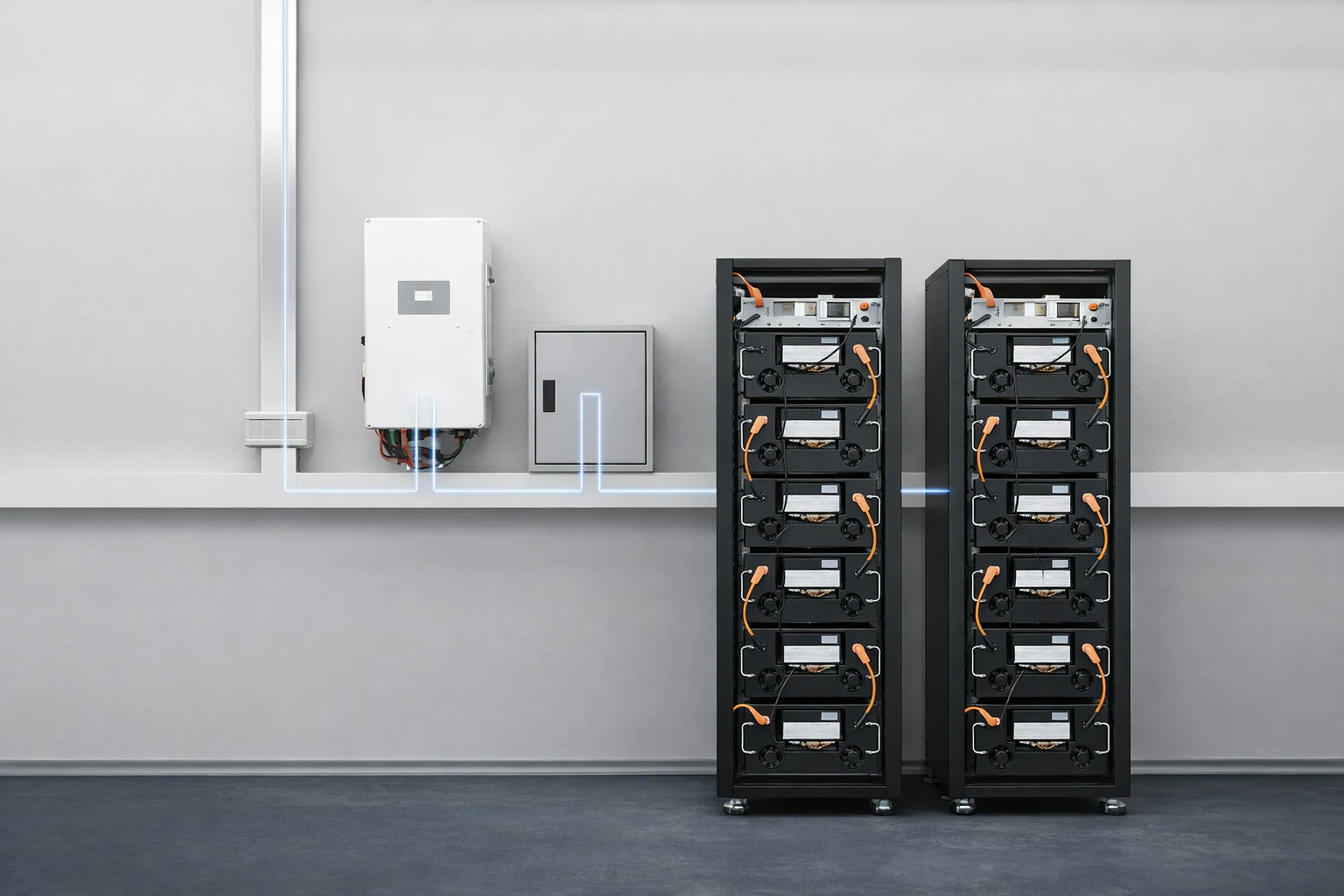
- LiFePO4: use 80–100% of the label capacity. These tolerate deep discharge and hold voltage well.
| Battery Type | Usable Capacity | Fish Finder Power | Approx. Current | Practical Runtime |
|---|---|---|---|---|
| 12 V 7 Ah SLA | 3.5–4.2Ah | 5W | 0.42A | ~8–10 hours |
| 12 V 7 Ah LiFePO4 | 5.6–7Ah | 5W | 0.42A | ~13–17 hours |
| 12 V 10Ah LiFePO4 | 8–10Ah | 5W | 0.42A | ~19–24 hours |
| 12 V 20Ah LiFePO4 | 16–20Ah | 10W | 0.83A | ~19–24 hours |
| 12 V 30Ah LiFePO4 | 24–30Ah | 12W | 1.00A | ~24–30 hours |
| 12 V 50Ah LiFePO4 | 40–50Ah | 15W | 1.25A | ~32–40 hours |
| 12 V 100Ah LiFePO4 | 80–100Ah | 20W | 1.67A | ~48–60 hours |
These are best-case estimates (warm weather, healthy batteries, short wiring, no extra loads). Real-world trips are usually lower. For comfort, plan a 20–30% buffer.
Why Your Real Runtime is Shorter Than the Math
You will notice a gap between paper math and lake reality. These common factors cause the drop:
- Cold weather lowers chemical activity. A cold pack gives less usable energy.
- High screen brightness and constant pinging pull more current.
- Old batteries lose capacity with age and cycle count.
- Other loads on the same battery (lights, pumps, phone chargers) eat into your budget.
- Thin wires or loose connections waste power as heat (voltage drop).
You should size your pack with those realities in mind. A small safety margin keeps your sonar and map alive all day.
Real-World Factors That Move Your Runtime Up or Down
Every angler sees different conditions. The list below explains why two “identical” setups can show different numbers on the same lake.
- Temperature: Cold weather reduces usable capacity and increases voltage sag, especially for SLA. Your winter plan should assume shorter runtime than your summer plan.
- Screen brightness and sonar modes: A bright display, side-scan, and high-power imaging modes raise power draw. A dim backlight and pared-down features lower draw.
- Wireless radios: Wi-Fi, Bluetooth, and network features consume extra power. Turning them off extends runtime.
- Age and health: Old batteries deliver less than their label. Heavy cycling, deep discharges, and heat all shorten life.
- Extra loads on the same battery: Lights, pumps, phone chargers, and cameras share the current budget. Every add-on trims your fish finder’s hours.
- Wiring losses: Undersized wire and poor connections waste energy as heat. Clean, crimped lugs and the right gauge keep voltage solid at the head unit.
Chemistry Choice: SLA vs. LiFePO4
Most anglers feel the difference on the first trip. A LiFePO4 battery weighs far less than an SLA battery with the same label. A LiFePO4 battery also holds voltage flatter as it discharges, so the screen stays bright and the unit stays stable.
| Feature | SLA/AGM | LiFePO4 |
|---|---|---|
| Weight at same Ah | Heavy | Light |
| Usable capacity | ~50–60% | ~80–100% |
| Cycle life | ~300–500 deep cycles | ~4000–6000+ cycles |
| Charge speed | Slow to moderate | Fast (with proper charger) |
| Maintenance | Low but needs care | Very low |
| Cost upfront | Low | Higher |
| Cost per cycle | Often higher | Often lower |
Most kayak and small-boat anglers prefer LiFePO4 because the pack is light, the voltage is steady, the charge is quick, and the real runtime matches the label far better than SLA. If you only fish short sessions and want the lowest upfront price, SLA can still do the job, but you should size it larger to account for the lower usable capacity.
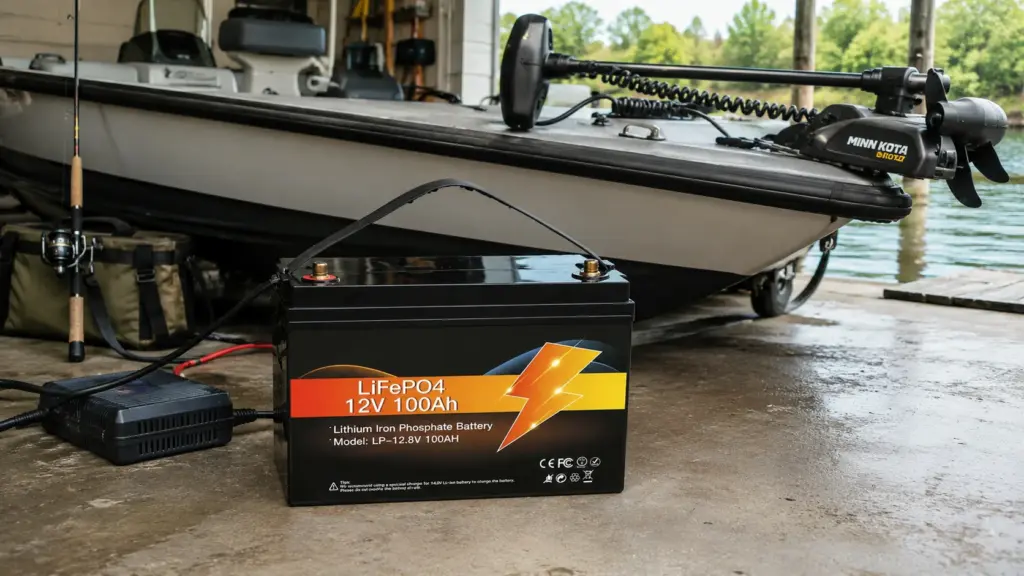
Not Sure What Battery Size Your Fish Finder Needs?
Battery runtime depends on your fish finder’s power draw, battery voltage, amp-hour capacity and how long you plan to fish. Share your device wattage, fishing time and installation setup, and Avepower can help recommend a suitable 12V battery capacity.
How to Pick the Right Capacity for Your Setup
Choosing the right battery size means balancing capacity with weight and usage time. A battery that’s too small will force you to recharge often or risk running out of power during fishing. A battery that’s too large can be heavy and bulky, especially if you use small boats or kayaks.
| Kit | Battery | Typical Use | Notes |
|---|---|---|---|
| Ultralight kayak day kit | 12V 10Ah LiFePO4 | Compact 4–5″ sonar, 6–10 hours | Mount in a small dry box; use a 3–5A fuse; keep runs short with 16–18AWG leads |
| All-day kayak or small-boat kit | 12V 20Ah LiFePO4 | 5–7″ sonar with GPS, 8–14 hours, winter buffer | Use a 10A fuse; choose 14–16AWG cable if the run is longer than 6–8 feet |
| Two displays or side-imaging focus | 12V 30–40Ah LiFePO4 (or two 20Ah packs) | Two midsize screens, mixed brightness, long scans | Consider a dedicated pack per screen for clean power |
| Budget starter kit | 12V 7–12Ah SLA | Short trips, basic sonar, warm weather | Plan on 50–60% usable capacity; recharge soon after each trip |
| Weekend and travel kit | 12V 50–100Ah LiFePO4 (small boat) | One large display all weekend or multiple devices in rotation | Add a small DC breaker panel or inline fuses for tidy power |
You can pair any of these recipes with a reputable brand. If you want lightweight power with strong protection features, you can look for LiFePO4 battery packs with a built-in BMS that guards against overcharge, over-discharge, short circuit, and temperature extremes.
Fish Finder Battery Size Calculator (Ah)
Do You Need a Separate Battery for Your Fish Finder?
A separate battery is not always required, but it can save a trip.
- When a separate battery helps: A kayak or a small boat without a strong house battery will benefit from a dedicated pack. A dedicated pack keeps sensitive screens away from trolling-motor noise and protects the starter battery from deep discharge.
- When a shared system is fine: A bigger boat with a solid house bank and clean wiring can run everything from one system. The wiring should stay neat, and the fuses should match the loads.
- The main trade-offs: A separate battery adds cost and weight, but it gives cleaner power, more runtime, and less risk of a dead starter.
Fish Finder Battery Charging Basics: How Long Does It Take to Fill Back Up?
Charging time depends on chemistry, capacity, and charger output.
- SLA/AGM accepts charge slowly, and the charge rate tapers hard. A 20Ah SLA on a 4A smart charger can take many hours to reach 100%.
- LiFePO4 accepts charge faster and stays efficient longer in the cycle. A 20Ah LiFePO4 on a 10A LiFePO4-specific charger can recover quickly.
You should always use a smart charger matched to the chemistry. You should never use a random automotive charger on a lithium pack. You should confirm that your charger supports LiFePO4 if you choose lithium. Related articles: How to Charge LiFePO4 Batteries Correctly
If you keep a battery on the boat, you can use an onboard smart charger. If you camp, you can use a portable AC charger or a small solar kit with a lithium-ready charge controller.
Fish Finder Battery Charging Time Calculator
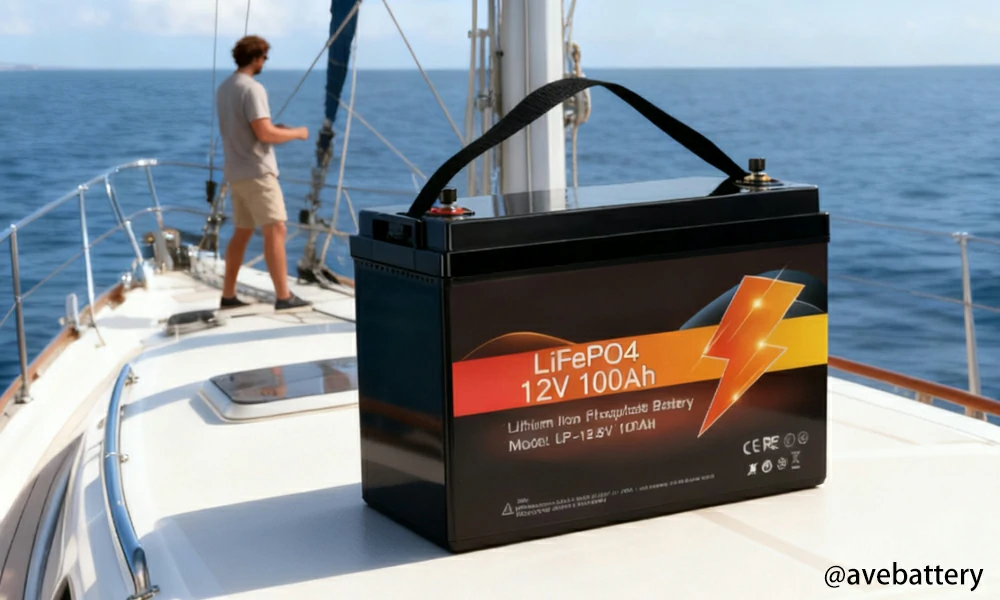
Best Fish Finder Batteries to Choose in 2025
Whether it’s a quick weekend outing or an extended expedition, having a dependable battery can significantly enhance your fishing experience. In 2025, several outstanding options stand out, each catering to different needs in terms of capacity, durability, and cost-effectiveness.
Avepower 12V 100Ah LiFePO4 Battery
For anglers who prioritize long-lasting performance, the Avepower 12V 100ah LiFePO4 battery offers an excellent balance of power and reliability. Thanks to its advanced LiFePO4 technology, it surpasses conventional lead-acid batteries by a large margin in lifespan and efficiency. With a 100Ah capacity, it provides stable and consistent energy to power your fish finder reliably.
Its ability to withstand over 4,000 charge cycles means it can support numerous fishing seasons without degradation. The battery’s compact, lightweight design makes it easy to install and carry, making it perfect for boaters who want to save space. Additionally, the integrated battery management system safeguards against overcharging and excessive discharge, ensuring safety during use.
ECO-WORTHY 12V 20Ah Battery
The ECO-WORTHY 12V 20Ah lithium iron phosphate battery is ideal for anglers seeking a lightweight yet powerful option to cover longer fishing trips or power larger electronics onboard. Despite its modest size, this battery offers a robust 20Ah capacity, making it suitable for bigger fish finders and additional devices.
It is also designed to endure over 4,000 deep charge cycles, greatly exceeding the lifespan of typical lead-acid alternatives. Weighing just under 5 pounds, it’s very portable and simple to handle. Its built-in management system provides essential protections against overcharge and short circuits, enabling reliable operation even in extreme temperatures.
Dakota 12V 10Ah Lithium Battery
When space is limited, such as on kayaks or smaller boats, the Dakota 12V 10Ah lithium battery proves to be a smart choice. This small but dependable battery weighs around 4 pounds and efficiently powers compact fish finders or portable electronics.
Designed for harsh environments, it performs well in both very cold and very hot conditions. Rapid charging and long-lasting power make it a solid companion for day-long fishing adventures. Plus, an 11-year warranty backs its durability, offering anglers peace of mind over long-term use.
Mighty Max ML7-12 SLA Battery
For those with a tighter budget, the Mighty Max ML7-12 sealed lead-acid battery offers reliable performance without breaking the bank. Providing 12V and 7.2Ah, this battery suits smaller fish finders or low-power devices well.
Its sealed design means it requires no maintenance, freeing users from the need to check fluid levels regularly. Although it doesn’t match the lifespan or power density of lithium batteries, it delivers dependable energy for users who don’t need extended run times. It is particularly well-suited for small vessels or as a backup energy source, featuring a leak-proof construction for safer handling.
TM133 12.8V 33Ah Lithium-Ion Battery
The TM133 12.8V 33Ah lithium-ion battery offers a compact yet powerful option for fish finders. With a total capacity of 422Wh, it provides roughly 30% longer run time compared to standard U1 lead-acid batteries, alongside a reserve capacity of approximately 65 minutes.
Rated IP65 for water resistance, it can withstand harsh marine conditions. The battery’s integrated management system protects against electrical faults and extreme temperature effects, ensuring reliable and safe operation. This model is perfect for smaller boats or kayaks that need a dependable and lightweight power solution.
Conclusion
Choosing the right battery for your fish finder can truly elevate your fishing experience. This article has explored the key factors—battery type, capacity calculation, and real-world usage—that determine how long your device will last on the water. With this knowledge, you can confidently plan your outings, knowing your fish finder will keep up, so you stay focused on what matters: enjoying each moment and maximizing your catch.
Reliable power is essential not just for convenience but for peace of mind. Lithium batteries, especially LiFePO4, stand out for their lightweight design, long lifespan, and excellent value, making them a smart choice for both casual and dedicated anglers. At Avepower, we’re committed to delivering trusted, smart energy solutions tailored to your needs—whether you fish weekends or venture out for longer expeditions. Feel free to reach out any time to explore which battery suits you best. We’re always here to make your adventures more seamless, so you can fish with confidence and discover new possibilities each trip.
Wishing you many successful days on the water, and memorable moments ahead!
Power That Lasts
If you want a battery you can just install and forget, go with an Avepower LiFePO4.
You get 4000+ cycles, around 10 years of use, a built-in BMS, and capacity you can expand later as your needs grow—just talk to Avepower for easy sizing advice and a no-pressure quote.
FAQ
A small sonar that draws about 0.4A can run 8–10 hours on a 7Ah SLA because you should use only ~50–60% of that pack. The same sonar can run 19–24 hours on a 10Ah LiFePO₄ due to higher usable capacity.
Two 6V batteries in series do make 12V. Two 6V SLA batteries weigh more than one 12V LiFePO₄ of similar usable energy.
You should use 16–18AWG for short kayak runs and 14–12AWG for longer boat runs. Larger wire keeps voltage drop low and prevents false shutdowns.
You should multiply your current draw by 10 hours, then divide by the usable fraction of your chemistry, then add 20–30% buffer. For a 0.5A draw and LiFePO₄, 0.5 × 10 ÷ 0.85 ≈ 5.9Ah → choose 10–15Ah.
A series connection raises voltage. A parallel connection raises capacity at the same voltage. Most fish finders expect 12V, so most anglers either use a single 12V pack or wire 12V packs in parallel to gain more Ah. Every angler should match the system voltage to the unit’s rating.
Many kayak anglers use 12V 10–20Ah LiFePO4 packs. A 10Ah pack suits small screens for short trips. A 20Ah pack suits medium screens for longer days or bright sunlight.
Yes. A 20Ah LiFePO₄ can run most kayak setups with a 5–10W unit for a very long day, and often for two light days, if you keep brightness moderate.
All batteries lose capacity in the cold. Lithium holds voltage better than lead-acid, but you should still plan for 15–30% less runtime on freezing days.