
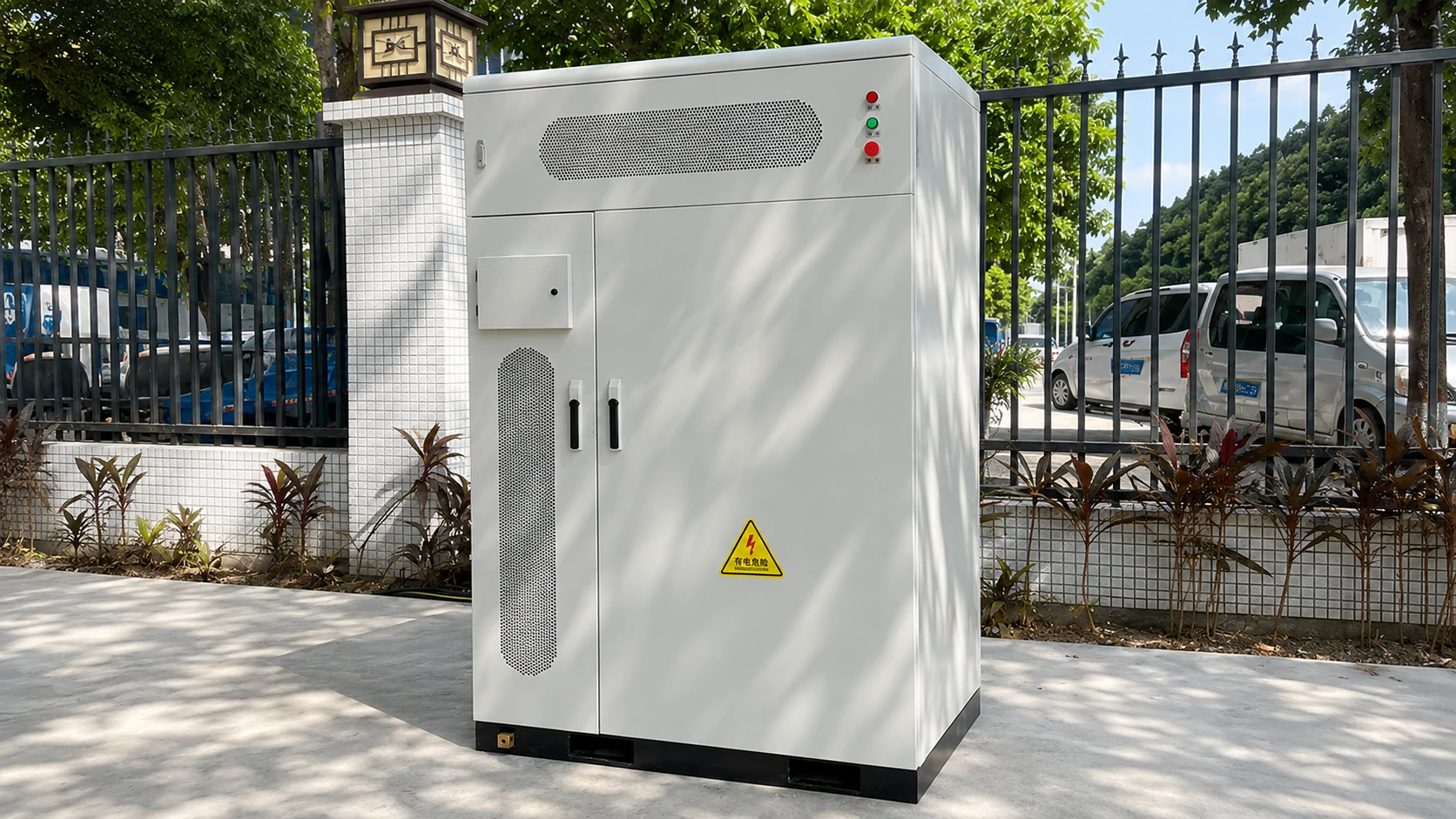
Liquid cooling is generally better for high-density, high-utilization C&I and utility-scale battery energy storage systems, while air cooling remains practical for smaller systems where lower upfront cost, simpler maintenance and moderate thermal loads matter more.
If battery temperature itself is unfamiliar, Avepower’s lithium battery temperature range guide explains the difference between allowable charging, discharging and preferred operating temperatures.
Liquid Cooling vs Air Cooling: Which Is Better at a Glance?
Liquid cooling normally offers stronger temperature uniformity, greater design flexibility at high battery density and better capability under sustained thermal loads. Air cooling normally wins on simplicity, initial equipment cost and service familiarity.
| Decision Factor | Air-Cooled BESS | Liquid-Cooled BESS |
|---|---|---|
| Heat-transfer medium | Conditioned air | Liquid coolant |
| Mechanical complexity | Lower | Higher |
| Initial system cost | Usually lower | Usually higher |
| Temperature uniformity | Good when well designed, harder at high density | Usually easier to control tightly |
| High power density | More challenging | Better suited |
| Cabinet packing density | More airflow space required | Can support compact module layouts |
| High ambient temperature | Requires sufficient HVAC margin | Often better for demanding conditions |
| Auxiliary equipment | Fans / HVAC | Pumps / chiller / heat exchanger |
| Typical maintenance | Filters, fans, ducts, HVAC | Pumps, coolant, piping, seals, leak detection |
| Main failure concerns | Blocked airflow, fan failure, dirty filters, HVAC fault | Pump fault, coolant leakage, blocked circuit, sensor/chiller fault |
| Small ESS | Often suitable | May add unnecessary complexity |
| Large C&I / utility | Possible with correct engineering | Increasingly preferred |
| Best selection criterion | Moderate thermal load + simplicity | High thermal load + density + tight temperature control |
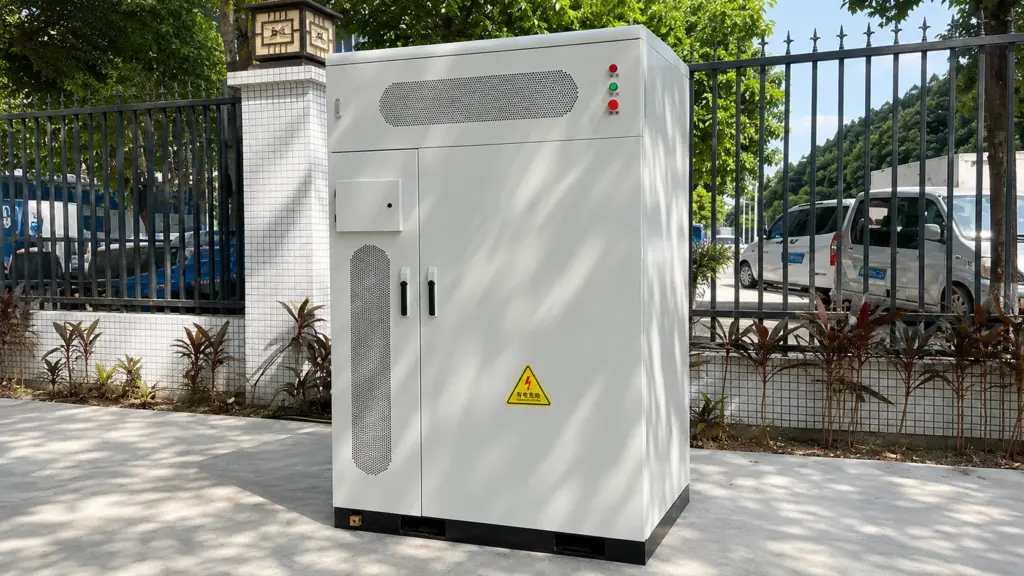
Not Sure Which Cooling System Fits Your Project?
Send us your required capacity, power, climate conditions and application. Our engineering team can help evaluate whether air cooling or liquid cooling is the better fit.
How Does Air Cooling Work in a Battery Energy Storage System?
Air cooling removes battery heat by circulating conditioned air around cells or modules and transferring that heat to the surrounding environment through fans, ducts and often HVAC equipment. It works well when airflow can reach all relevant battery surfaces and when system heat generation remains within the available cooling capacity.
In a properly engineered air-cooled BESS, the thermal path is roughly:
Cell → module surface → circulating air → HVAC or heat exchanger → ambient environment
The key engineering challenge is airflow distribution.
If the first battery modules receive cold air while downstream modules receive warmer return air, the system can develop a thermal gradient even when the average cabinet temperature appears normal.
This is why average cabinet temperature alone is not sufficient.
Engineers should also evaluate:
- Maximum cell temperature
- Minimum cell temperature
- Cell-to-cell ΔT
- Module-to-module ΔT
- Air inlet temperature
- Air outlet temperature
- Fan speed
- HVAC operating status
Air cooling can still achieve controlled battery temperatures when the system is designed around moderate power density and sufficient airflow.
For example, Avepower’s 108kWh air-cooled high-voltage energy storage cabinet uses industrial air-conditioning and dedicated air distribution. Under its specified 0.5P operating condition, the published design target is ≤5°C cell temperature variation and ≤10°C temperature rise.
How Does Liquid Cooling Work in a Battery Energy Storage System?
Liquid cooling moves coolant through cold plates or channels close to battery modules, allowing heat to travel through a shorter and more controlled thermal path before being rejected through a heat exchanger or chiller. This makes liquid cooling particularly useful when high cell density makes uniform airflow difficult.
A typical indirect liquid-cooling loop follows:
Battery cell → module → cold plate → coolant → heat exchanger/chiller → ambient environment
Liquid-cooled systems can adjust thermal performance through:
- Coolant inlet temperature
- Flow rate
- Cold-plate geometry
- Channel arrangement
- Pump control
- Chiller control
- Valve strategy
- BMS/EMS temperature feedback
The system should not simply maximize coolant flow.
Increasing flow can improve heat removal up to a point, but it also increases hydraulic losses and pump energy.
When Is Air Cooling the Better Choice?
Air cooling is often the better choice when thermal loads are moderate, sufficient cabinet volume exists for airflow, ambient conditions are manageable and the owner values lower equipment complexity and straightforward field service more than maximum energy density.
Typical candidates include:
Residential Energy Storage
A 5–20kWh home battery operating at relatively modest power normally does not require the same thermal architecture as a multi-hundred-kWh industrial cabinet.
Small Commercial Storage
Some lower-power commercial systems can be effectively managed with forced air or dedicated HVAC.
Moderate Climates
Where ambient temperature rarely approaches the system’s thermal limits, the additional complexity of liquid cooling may offer limited economic value.
Projects With Strong Maintenance Constraints
If local technicians are familiar with HVAC but not coolant circuits, a well-designed air-cooled platform may simplify service.
When Is Liquid Cooling the Better Choice?
Liquid cooling becomes increasingly attractive as battery density, sustained power, cycling frequency and ambient temperature increase. It is especially valuable where the project needs compact cabinets, tight cell-temperature consistency and stable performance during repeated high-energy-throughput operation.
Typical applications include:
Large C&I Energy Storage
Factories, industrial parks and large commercial facilities may charge and discharge daily for peak shaving, tariff optimization and solar self-consumption.
Utility-Scale BESS
High-density MWh systems place large numbers of cells into constrained footprints, increasing the importance of controlled thermal distribution.
Hot Climates
High ambient temperature reduces the available thermal margin and can make air-based cooling more demanding.
High-Utilization Projects
More annual energy throughput means more time generating heat and more economic value attached to maintaining battery consistency.
Space-Constrained Sites
Liquid cold plates allow engineers to design thermal paths without relying on large air gaps between every battery module.
How Do Air Cooling and Liquid Cooling Compare in a Real C&I Project?
A useful real-world comparison comes from examining actual system requirements rather than declaring one technology universally superior. Avepower currently uses both architectures: a 108kWh air-cooled high-voltage cabinet for moderate commercial applications and a 215.04kWh liquid-cooled C&I project where tighter temperature control was required.
Avepower’s Germany 215kWh liquid-cooled C&I energy storage project provides one example.
Published project specifications include:
| Parameter | Project Value |
|---|---|
| Nominal Energy | 215.04kWh |
| Rated Power | 100kW |
| Maximum Output | 110kW |
| Battery Chemistry | LFP |
| Rated Voltage | 768V |
| Cooling | Liquid cooling |
| Target Cell Temperature Difference | ≤3°C |
| Charge / Discharge Rate | ≤0.5P |
| Cycle Life | 8,000 cycles |
| Protection | IP54 |
| Operating Temperature | -20°C to 50°C |
| Communication | RS485 / Ethernet / CAN |
The cabinet specification targets a cell temperature difference within 3°C during its intended operating conditions.
Now compare that with Avepower’s 108kWh air-cooled high-voltage cabinet:
| Parameter | Value |
|---|---|
| Nominal Energy | 108kWh |
| Nominal Voltage | 345.6V |
| Charge / Discharge Rate | 0.5P |
| Cooling | Industrial air conditioning |
| Cell Temperature Variation | ≤5°C under specified conditions |
| Cell Temperature Rise | ≤10°C |
| Protection | IP55 |
Avepower does not treat liquid cooling as automatically required for every battery cabinet. Thermal architecture is matched to system scale, density and project operating conditions.
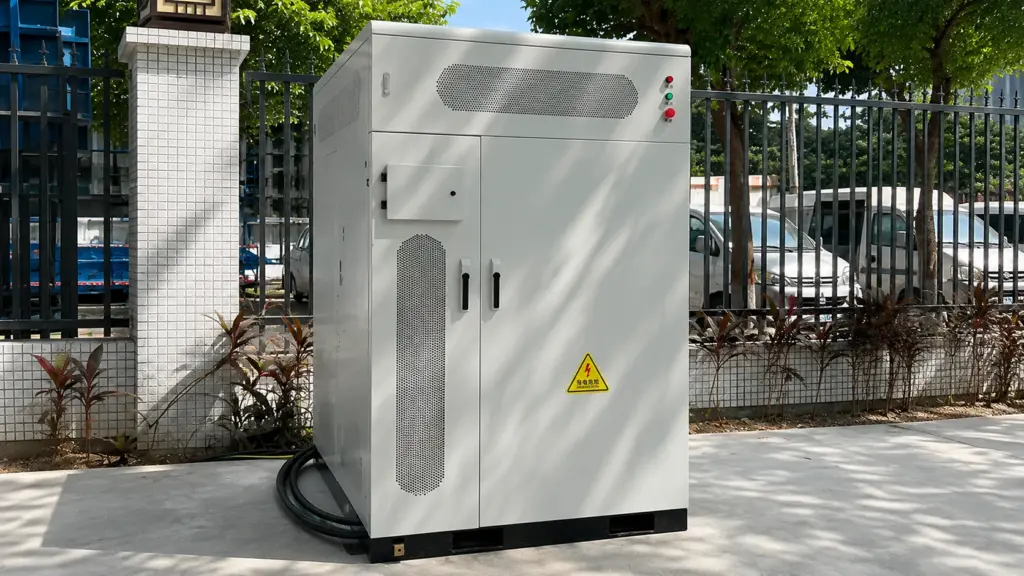
Need a Project-Based Battery Configuration?
Share your project country, required kWh/kW, PCS model and operating conditions. Avepower’s 50+ engineering team can support system configuration and compatibility evaluation.
What Does a Simple BESS Cooling Calculation Look Like?
Cooling demand begins with battery heat generation, not battery capacity alone. Electrical losses increase roughly with current squared, so raising power can increase heat much faster than a simple kWh comparison suggests. This is why two 200kWh systems with different power ratings may require very different thermal-management designs.
A simplified resistive heat relationship is:
Pheat ≈ I²R
and battery current can be approximated by:
I ≈ P / V
For the 215.04kWh Avepower project:
Rated Power = 100,000W
Nominal Voltage = 768V
So approximately:
I = 100,000 / 768 ≈ 130A
This does not tell us the complete heat load, because actual battery heat generation also depends on cell resistance, SOC, temperature, reversible heat, busbar losses and other system factors.
But it shows why current matters.
If two systems deliver the same 100kW at different DC voltages, their DC currents may differ substantially, affecting conductor and battery resistive losses.
A professional thermal model should therefore use actual cell heat-generation data and worst-case operating conditions rather than estimating cooling from kWh alone.
What Maintenance Does an Air-Cooled BESS Require?
Air-cooled systems are mechanically simpler but are not maintenance-free. Their performance depends heavily on unobstructed airflow, clean heat-exchange surfaces and functioning fans or HVAC equipment, so neglected filters and blocked ducts can gradually reduce cooling capacity without immediately producing an obvious electrical failure.
Typical checks include:
- Air filters
- Fans
- HVAC compressor
- Condenser and evaporator surfaces
- Duct cleanliness
- Airflow obstruction
- Temperature sensors
- Drainage and condensation management
- Door seals
- BMS thermal alarms
Dusty industrial environments require particular attention.
An IP-rated cabinet does not automatically guarantee good thermal performance. Environmental sealing and heat removal must be engineered together.
What Maintenance Does a Liquid-Cooled BESS Require?
Liquid cooling reduces dependence on large internal airflow paths but introduces a different maintenance set: pumps, coolant chemistry, seals, hoses, valves, cold plates and leak-detection systems must remain within specification. Proper commissioning and preventive inspection are therefore essential.
Maintenance may include:
- Coolant level
- Coolant concentration
- Freeze protection
- Corrosion protection
- Pump health
- Flow rate
- Pressure
- Hose and fitting inspection
- Leak detection
- Heat exchanger cleanliness
- Chiller operation
- Temperature sensors
For cold climates, coolant freeze protection must be verified.
For very hot climates, chiller capacity must be validated against the actual design ambient temperature.
For coastal or chemically aggressive environments, material compatibility and corrosion resistance also require attention.
Need Help Selecting an Air-Cooled or Liquid-Cooled BESS?
Avepower supports solar installers, EPC contractors, distributors and project developers with project-based LiFePO4 energy storage configuration.
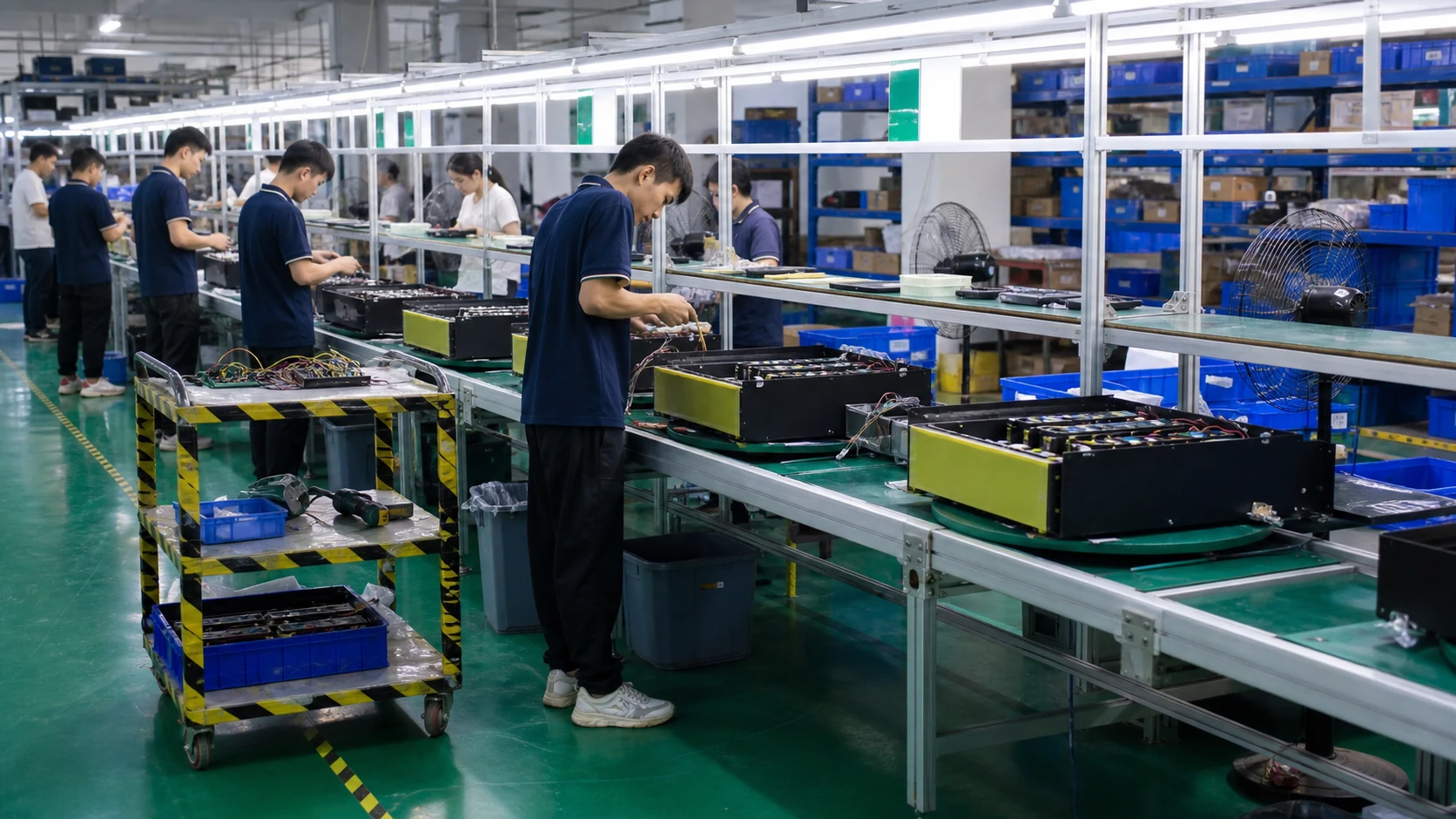
Current manufacturing and engineering resources include a 20,000m² manufacturing base, 15 production lines and 50+ R&D engineers, together with OEM/ODM support for battery capacity, voltage, cabinet architecture, BMS, communication protocols and project documentation.
Send your:
Project country + required kWh + required kW + PCS model + indoor/outdoor location + minimum/maximum ambient temperature + expected cycling profile
and Avepower can evaluate whether an air-cooled or liquid-cooled energy storage architecture better fits the project.
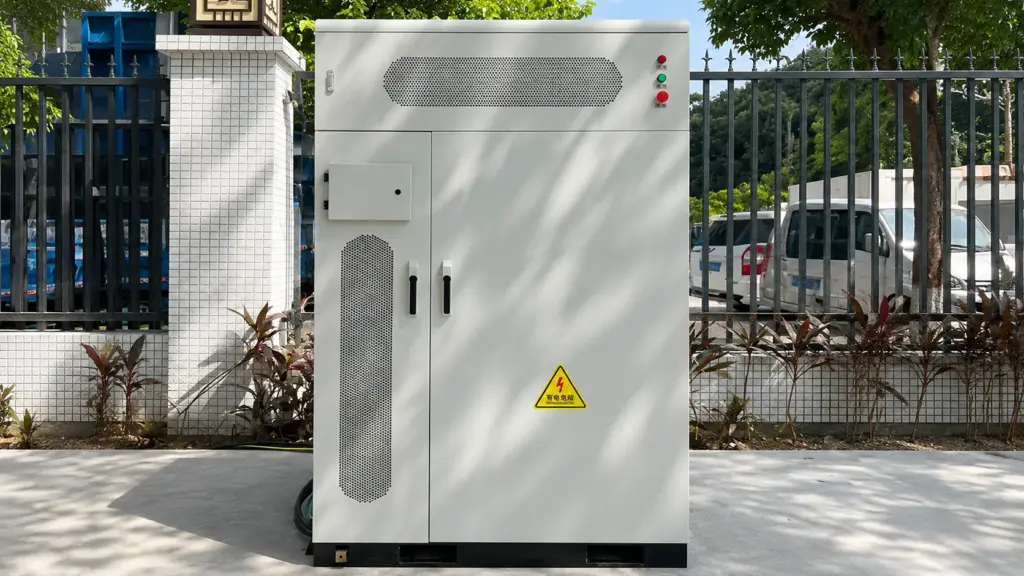
Source Your Next BESS Directly From the Manufacturer
Backed by a 20,000 m² manufacturing base, 15 production lines and OEM/ODM capabilities, Avepower supports installers, distributors and project developers with customized energy storage solutions.
FAQ
Liquid cooling generally provides stronger thermal control for high-density and high-utilization BESS, but air cooling can be more practical for smaller or moderate-power systems. System power, climate, duty cycle, temperature-uniformity requirements and lifecycle cost should determine the final choice.
Better temperature control can reduce uneven thermal stress and support more consistent cell aging, but no universal percentage increase in battery life applies to every BESS. Chemistry, SOC, C-rate, DoD, ambient temperature and control strategy also affect degradation.
There is no universal value. Well-designed systems may target only a few degrees of cell-to-cell variation, but the number must always be linked to defined test conditions. Avepower’s 215.04kWh liquid-cooled C&I project specifies a target cell temperature difference of ≤3°C.
Performance varies substantially with airflow design, system density and operating conditions. Avepower’s 108kWh air-conditioned high-voltage cabinet specifies ≤5°C cell temperature variation under defined 0.5P conditions, demonstrating why supplier-specific data is more useful than generic industry figures.
Indirect liquid-cooled systems commonly use an engineered coolant such as a water-glycol mixture, although formulation varies by manufacturer. Always follow the supplier’s approved coolant specification because freezing protection, corrosion control, electrical compatibility and service intervals matter.
Provide required energy capacity, charge/discharge power, project location, climate, PCS voltage, indoor or outdoor installation, cycling frequency, available footprint, applicable certifications and expected service life. These inputs allow the manufacturer to estimate thermal requirements rather than selecting cooling from capacity alone.