

EPC stands for Engineering, Procurement and Construction. In a solar project, a solar EPC contractor manages the technical design, equipment sourcing, installation, commissioning and often handover documentation under one coordinated scope.
That sounds simple, but in real projects, the difference between a well-run EPC process and a fragmented solar installation can affect system performance, project delays, warranty responsibility, safety compliance and long-term return on investment.
As solar projects increasingly combine PV panels, batteries, hybrid inverters, EV charging, EMS platforms and backup power requirements, solar EPC is no longer just about installing panels on a roof. It is about coordinating a complete energy system.
This guide explains what solar EPC means, what an EPC contractor actually does, how EPC differs from developers and non-EPC solar companies, what should be included in a solar EPC package, and how to evaluate the right EPC partner for a residential, commercial or solar-plus-storage project.
Quick Answer: What Is Solar EPC?
Solar EPC means Engineering, Procurement and Construction for solar energy projects. A solar EPC contractor usually manages system design, equipment selection, purchasing, installation, testing, utility coordination and commissioning under one project structure.
The main value of the EPC model is accountability. Instead of asking one company to design the system, another to supply equipment and another to install it, the project owner works with one lead contractor responsible for delivering the system according to the agreed scope, budget, schedule and performance requirements.
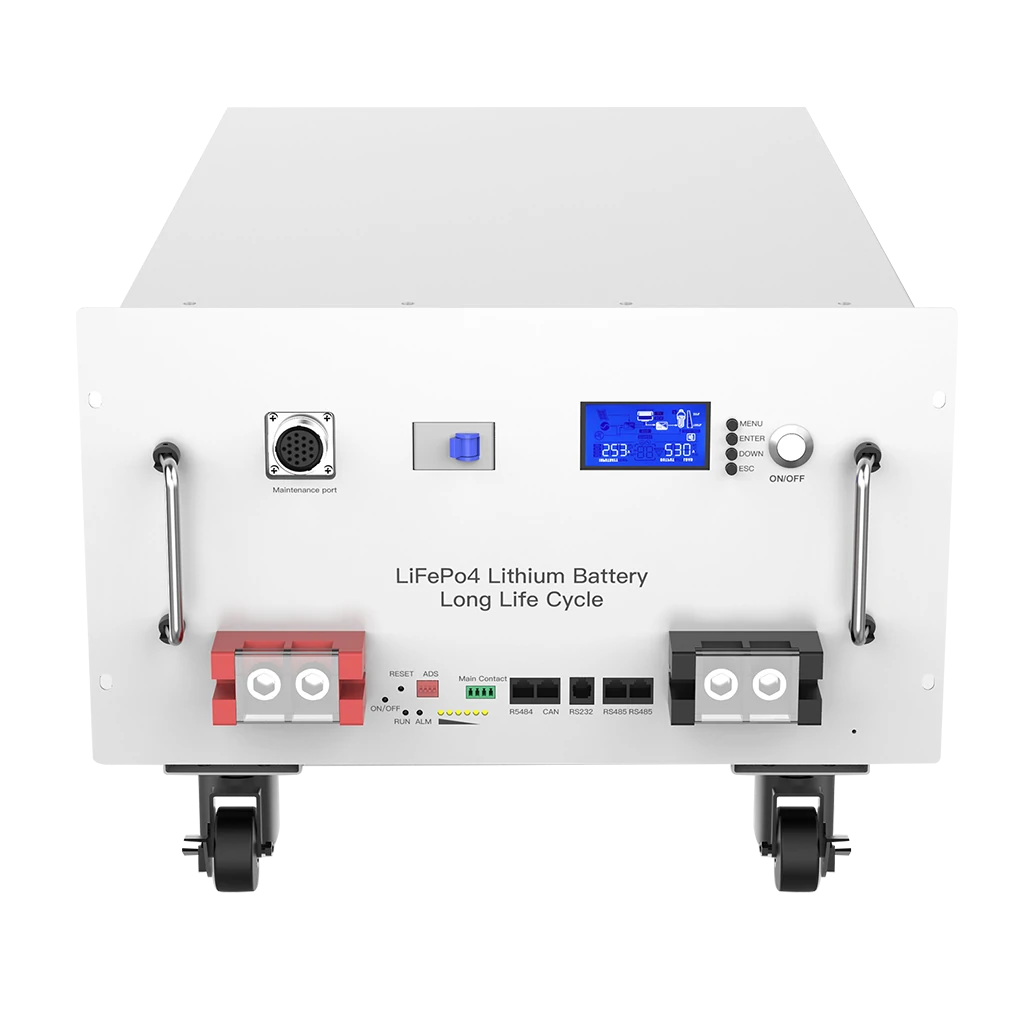
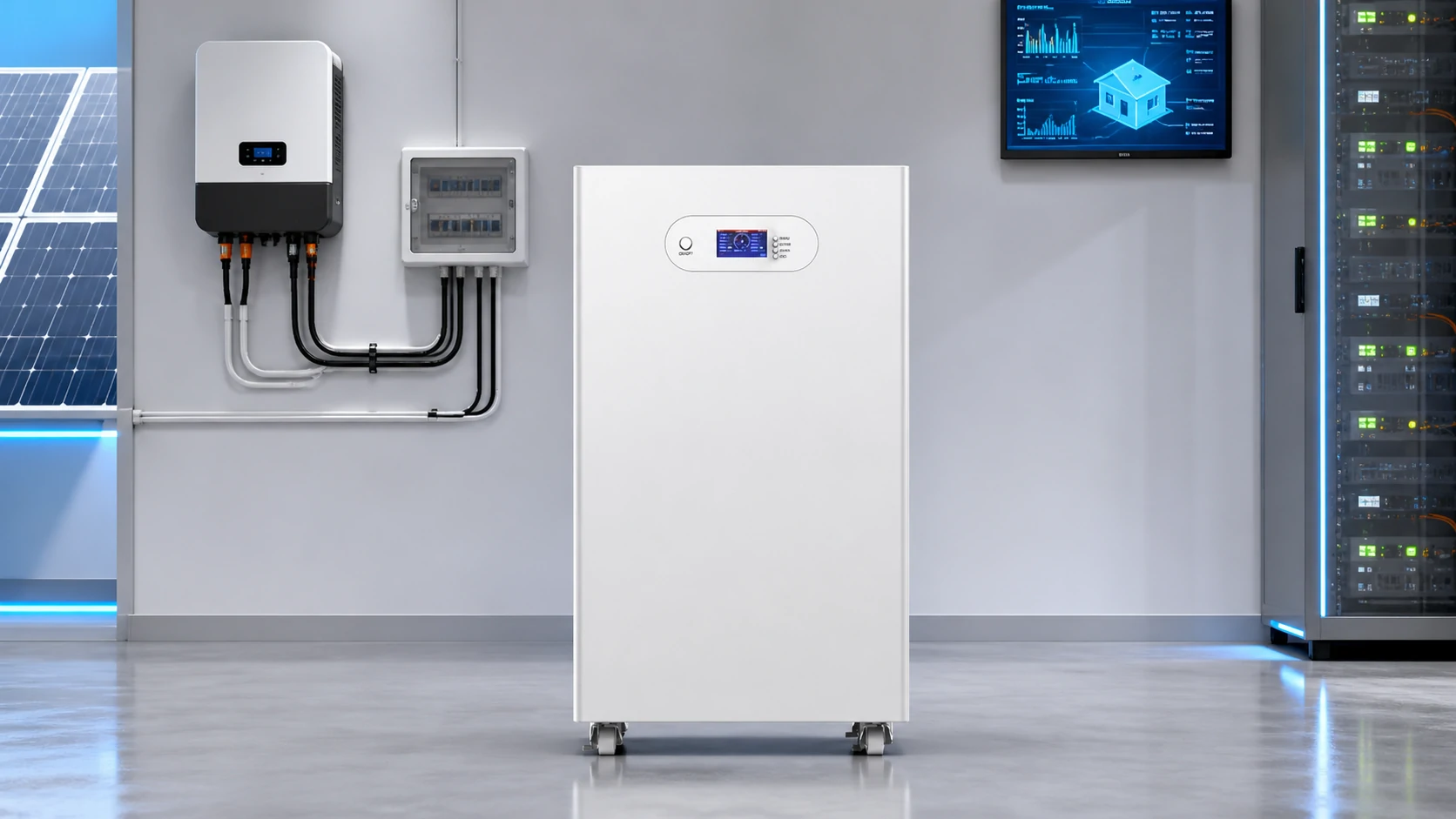
In solar-plus-storage projects, EPC scope may also include battery sizing, inverter compatibility, EMS integration, protection design, communication setup, monitoring and commissioning of the battery system. For example, Avepower supports installers and EPC teams with solar battery systems for installers and EPC projects, including LiFePO4 battery options, inverter compatibility assistance and project-based quotation support.
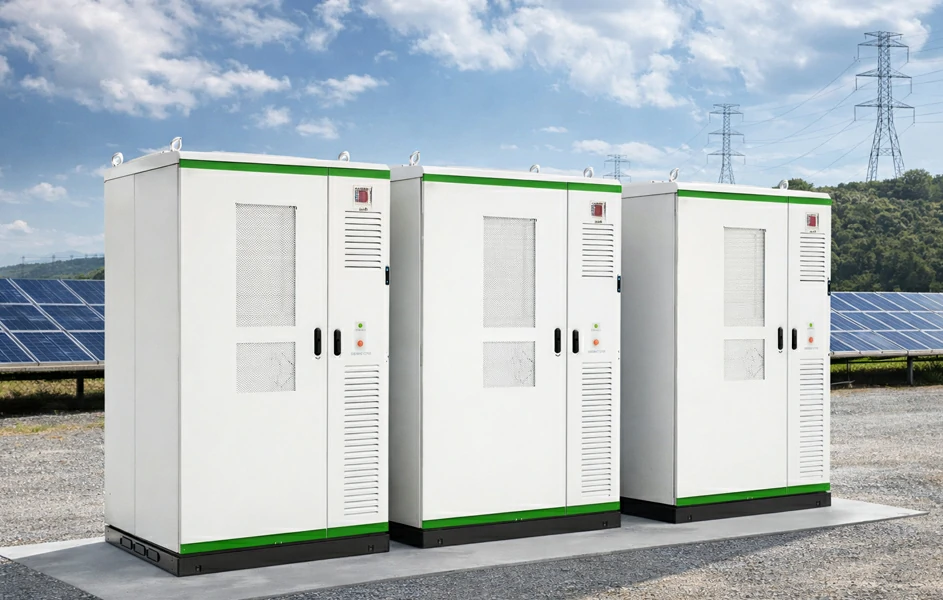
How can Avepower support solar EPC projects?
Avepower supports solar EPC projects with LiFePO4 battery storage systems, commercial and industrial energy storage solutions, custom high-voltage battery systems, inverter compatibility support, BMS protection, communication options, and OEM/ODM customization for installers, distributors, EPC teams, and project developers.
What Does EPC Stand for in Solar?
EPC stands for Engineering, Procurement and Construction. These three stages are connected. A weak decision in one stage can create problems in the next stage.
For example, if the engineering stage does not properly evaluate roof structure, shading, load profile or interconnection limits, the procurement team may buy the wrong equipment. If the procurement team selects components that are difficult to integrate, the construction team may face delays, redesign work or warranty issues.
That is why professional solar EPC is not just installation work. It is a complete delivery framework.
Engineering: The Technical Foundation of a Solar Project
Engineering is the first major phase of solar EPC. This stage converts project goals into a practical system design.
A good engineering process usually includes site assessment, energy consumption review, solar resource evaluation, shading analysis, roof or land layout, structural review, electrical design, single-line diagrams, inverter sizing, cable routing, protection design, monitoring architecture and interconnection planning.
For commercial and industrial projects, engineering also needs to consider demand charges, operating schedules, transformer capacity, backup requirements, fire access, roof loading, maintenance access and local code requirements.
For solar-plus-storage projects, engineering becomes more complex. The EPC team must decide whether the battery should be AC-coupled or DC-coupled, how much battery capacity is needed, what power rating is required, how the battery communicates with the inverter, and how the system should operate during outages, peak tariff periods or self-consumption periods.
Procurement: More Than Buying the Cheapest Equipment
Procurement is the stage where the EPC contractor sources the equipment, materials and services needed to build the project. This may include solar modules, inverters, racking, cables, combiner boxes, switchgear, transformers, monitoring devices, protection components, meters, battery systems and balance-of-system materials.
Good procurement is not only about price. It also affects system reliability, warranty handling, delivery schedule and long-term performance.
For example, a low-cost inverter may look attractive on paper, but it can become expensive if it has poor local support, limited communication compatibility or a high failure rate. A battery system may offer enough nominal capacity, but if the BMS, inverter protocol, enclosure, cooling strategy or certification does not match the project, the EPC team may face commissioning problems later.
For solar EPC contractors working on residential and commercial storage projects, Avepower provides residential battery energy storage systems and commercial and industrial energy storage solutions based on LiFePO4 technology, BMS protection, flexible communication options and project-level customization. This type of supplier support can help EPC teams reduce integration uncertainty during procurement.
Construction: Turning the Design into a Working System
Construction is the physical execution stage. It includes site preparation, equipment delivery, mounting system installation, solar module installation, DC and AC wiring, inverter installation, battery placement, protection device installation, grounding, labeling, monitoring setup, testing and final commissioning.
In a professional EPC project, construction should follow the approved engineering documents rather than informal site decisions. Field changes may still happen, but they should be documented, reviewed and approved.
A strong construction process should include quality control checkpoints, safety procedures, installation photos, cable management review, torque records, insulation testing, polarity checks, inverter configuration, battery communication testing and commissioning reports.
For long-term reliability, operation and maintenance planning should not be ignored. The National Renewable Energy Laboratory provides a detailed reference on best practices for operation and maintenance of photovoltaic and energy storage systems, which is useful for EPC teams planning handover documents and service procedures.
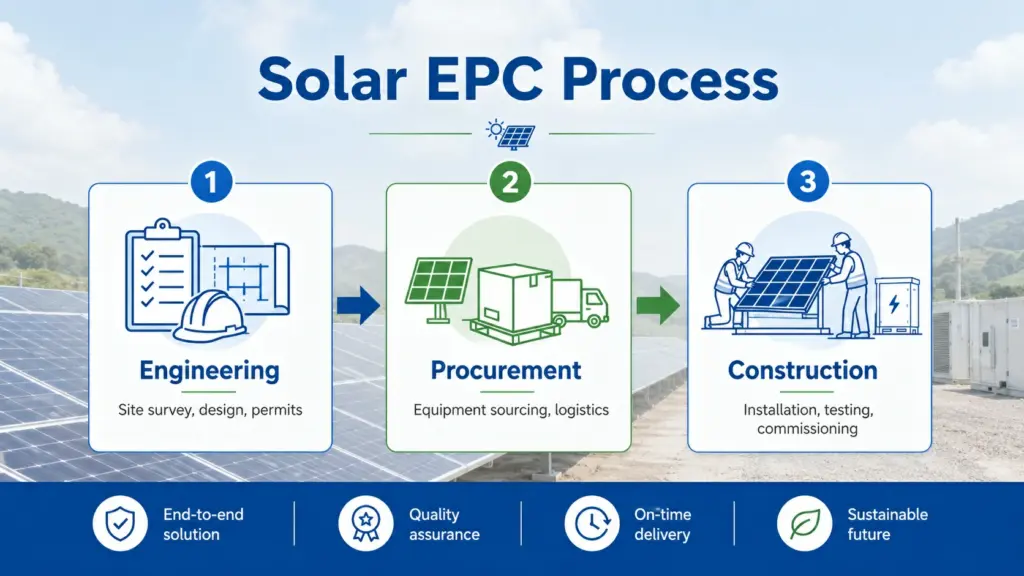
Solar EPC Process: Step-by-Step
Although every project is different, most solar EPC projects follow a similar sequence.
Step 1: Define the Project Goal
The owner should define what the solar project is expected to achieve. Common goals include reducing electricity bills, increasing self-consumption, lowering peak demand charges, improving energy resilience, meeting sustainability targets or supporting off-grid operation.
A project built only for energy savings will be different from a project designed for backup power. A factory with high daytime load may prioritize self-consumption. A farm or remote facility may need battery autonomy. A commercial building may care about payback period and visual impact.
Step 2: Review Energy Consumption and Site Conditions
The EPC team should review electricity bills, load curves, tariff structure, roof or land conditions, grid connection limits and site constraints. This prevents unrealistic system sizing.
For example, oversizing a PV system without considering export limits may lead to curtailed energy. Adding batteries without analyzing evening load may create poor return on investment. Ignoring roof condition may lead to expensive structural corrections later.
Step 3: Develop the Technical Design
The EPC team prepares system layout, electrical drawings, equipment specifications and interconnection documents. In this stage, the owner should ask whether the design supports future expansion, battery integration, monitoring and maintenance access.
If storage is included, the EPC team should clearly define battery capacity, inverter type, backup loads, operating mode, communication protocol and safety requirements.
Step 4: Procure Equipment and Plan Logistics
Once the design is approved, the EPC contractor sources equipment and schedules delivery. Procurement should be aligned with the construction plan so that modules, inverters, racking and batteries arrive at the right time.
For projects with battery storage, lead time can be a major schedule factor. EPC teams should confirm battery specifications, certifications, packaging, shipping method and inverter compatibility before the project reaches the installation stage.
Step 5: Build the System
The construction team installs the mechanical and electrical systems according to approved drawings. Good construction practice includes clear cable management, correct grounding, proper torque settings, weatherproof connections, labeling, safety protection and careful documentation of field changes.
Step 6: Commission, Verify and Handover
The EPC contractor tests the system, resolves issues, obtains approvals where required and hands over documentation to the owner. After commissioning, the owner should understand how to read monitoring data, identify abnormal performance and request service support.
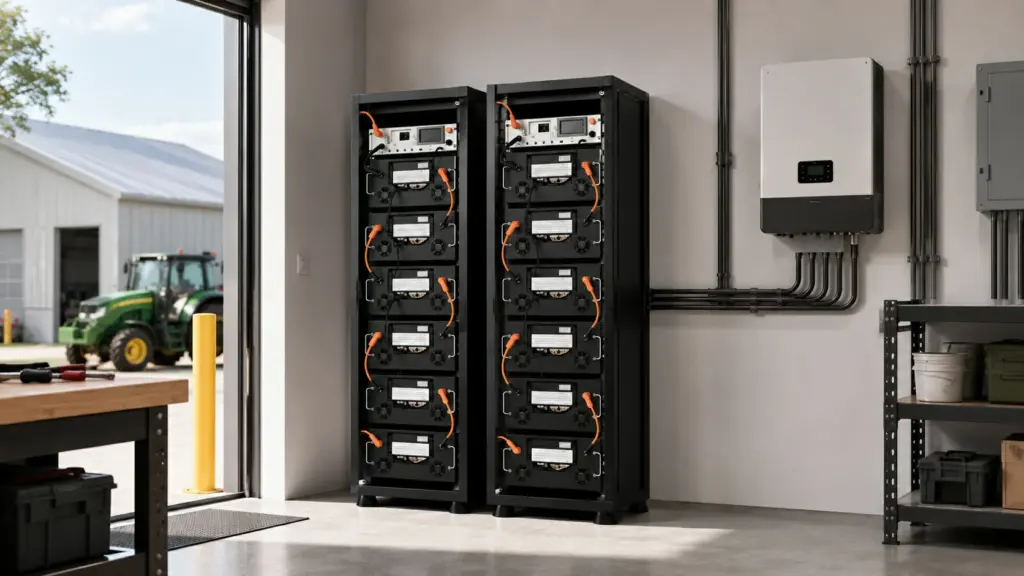
Need Battery Support for Your Solar EPC Project?
From residential backup systems to commercial and industrial storage projects, Avepower can help you select the right battery capacity, communication protocol and system configuration for your solar EPC design. Get support for inverter compatibility, OEM/ODM customization and project-based storage solutions.
Solar EPC vs Solar Developer vs Installer vs Non-EPC Company
Many people search for solar EPC because they are comparing different types of solar companies. These terms are often used loosely, but they are not the same.
| Type of Company | Main Role | Typical Responsibility | Best Fit |
|---|---|---|---|
| Solar EPC company | Builds the project | Engineering, procurement, construction, commissioning | Commercial, industrial, utility, solar-plus-storage |
| Solar developer | Creates the project opportunity | Site control, permits, financing, PPA, project planning | Large projects, investors, landowners |
| Solar installer | Installs the system | On-site installation, wiring, basic commissioning | Residential or smaller projects |
| Solar dealer or sales company | Sells solar offers | Customer acquisition, proposal, financing referral | Lead generation or sales-driven models |
| Equipment supplier | Provides components | Modules, inverters, batteries, racking, BOS | EPC procurement and system integration |
A solar developer may identify the project, secure land, arrange financing and manage early-stage feasibility. A solar EPC firm usually takes the project from approved design or development stage into physical execution.
A non-EPC solar company may focus on sales, financing, software, equipment supply or lead generation. That does not automatically make it bad, but the project owner should clearly understand who is responsible for engineering, installation, permits, warranty support and long-term service.
Why Work with a Solar EPC Contractor?
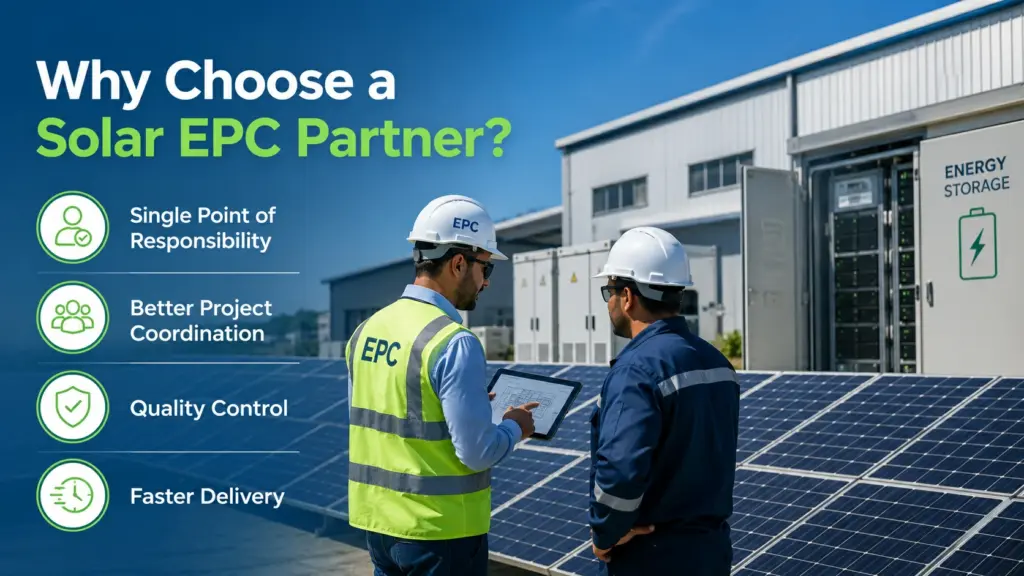
The biggest advantage of solar EPC is single-point accountability. One lead contractor manages the technical and construction process instead of forcing the owner to coordinate several disconnected parties.
This can reduce communication gaps, speed up project delivery and make quality control easier. If something goes wrong, the owner does not need to decide whether the designer, installer, equipment supplier or commissioning team is responsible. The EPC contractor is expected to manage those interfaces.
Solar EPC can also improve schedule control. Since engineering, procurement and construction are connected under one structure, the EPC team can plan delivery timelines, construction sequencing, utility approvals and commissioning more efficiently.
Another benefit is better system integration. This is especially important for projects that include battery storage, EV charging, diesel generator backup, microgrid controls or energy management systems. In these cases, the project is not just a PV array. It is an energy system.
What Should Be Included in a Solar EPC Scope?
A complete solar EPC scope should be specific. Vague promises like “complete solar installation” are not enough for serious projects.
The scope should define system capacity, equipment brands or technical requirements, engineering documents, permit responsibility, utility coordination, construction work, safety standards, commissioning procedure, monitoring access, warranty terms and O&M expectations.
For solar-plus-storage projects, the scope should also define battery capacity in kWh, power rating in kW, inverter compatibility, backup load design, EMS logic, communication protocol, BMS protection settings, battery placement, ventilation or temperature requirements, and system operation modes.
The owner should also ask for a clear list of exclusions. For example, structural reinforcement, roof repair, transformer upgrade, trenching, civil work, fire protection changes or utility-side upgrades may not be included unless written in the contract.
Common Challenges in Solar EPC Projects
1. Incomplete Site Data
Many project problems start with weak site information. If roof condition, shading, electrical capacity, load behavior, or grid constraints are not properly checked, the design may look good on paper but fail in real execution.
2. Permitting and Interconnection Delays
Permitting and grid approval can take longer than expected. Local rules, fire codes, utility requirements, export limits, transformer upgrades, and inspection schedules can all affect the timeline.
3. Equipment Compatibility Problems
Solar modules, inverters, batteries, PCS, EMS, meters, and monitoring platforms must work together. In solar-plus-storage projects, inverter-battery communication is especially important. Wrong protocol mapping or unsupported settings can delay commissioning.
4. Procurement and Delivery Risk
Modules, inverters, batteries, switchgear, and transformers may have different lead times. A project can be delayed even if only one critical component arrives late.
5. Poor Commissioning
Commissioning is not only turning the system on. It should verify performance, protection, communication, safety, monitoring, and documentation. Rushed commissioning can leave hidden problems that appear later as underperformance or service calls.
6. Unclear Warranty Responsibility
A project may include product warranties, workmanship warranties, performance guarantees, inverter warranties, battery warranties, and roof warranties. The EPC contract should clearly state who is responsible for each part.
7. Weak O&M Planning
Solar projects are long-life assets. If monitoring, cleaning, inspection, inverter maintenance, battery checks, and spare parts are not planned early, lifetime performance can suffer.
How to Choose the Right Solar EPC Partner
Choosing a solar EPC partner should be based on project fit, not just company size.
Start by reviewing relevant project experience. A company that mainly installs small residential systems may not be the best fit for a factory rooftop or multi-megawatt ground-mounted project. Likewise, a utility-scale EPC may not be the most practical choice for a small commercial solar-plus-storage system.
Next, check engineering strength. Ask whether the EPC team can provide load analysis, energy yield modeling, single-line diagrams, structural coordination, interconnection support and storage integration design.
Procurement capability is also important. A good EPC partner should be able to explain why specific modules, inverters, batteries, racking and protection devices are selected. They should not only say “this is the cheapest option.”
For U.S. projects, professional certifications such as NABCEP can be useful indicators of solar knowledge. You can learn more from the North American Board of Certified Energy Practitioners.
You should also evaluate commissioning and after-sales support. Ask what documents will be provided at handover, who handles warranty claims, how monitoring alerts are managed, and whether O&M service is available.
What Documents Should an EPC Provide at Handover?
A professional EPC project should end with a complete handover package. This may include approved drawings, as-built drawings, equipment datasheets, warranty certificates, commissioning reports, inspection records, monitoring login information, O&M manuals, emergency shutdown instructions and maintenance schedules.
For battery systems, the handover package should also include BMS settings, inverter communication configuration, battery wiring diagrams, safety instructions, alarm code references and recommended operating limits.
This documentation is not just paperwork. It helps owners, facility managers, maintenance teams and future service providers understand the system and solve problems faster.
Solar EPC for Commercial and Industrial Projects
Commercial and industrial solar EPC projects usually require more detailed engineering than standard residential projects. These sites often have higher power demand, complex load profiles, larger roof areas, multiple electrical rooms and stricter safety requirements.
Common C&I solar EPC applications include factories, warehouses, hotels, supermarkets, schools, farms, logistics centers, office buildings and industrial parks.
For these projects, the EPC team should consider daytime load matching, demand charge reduction, backup power needs, production downtime risk, roof condition, grid export limits and expansion potential.
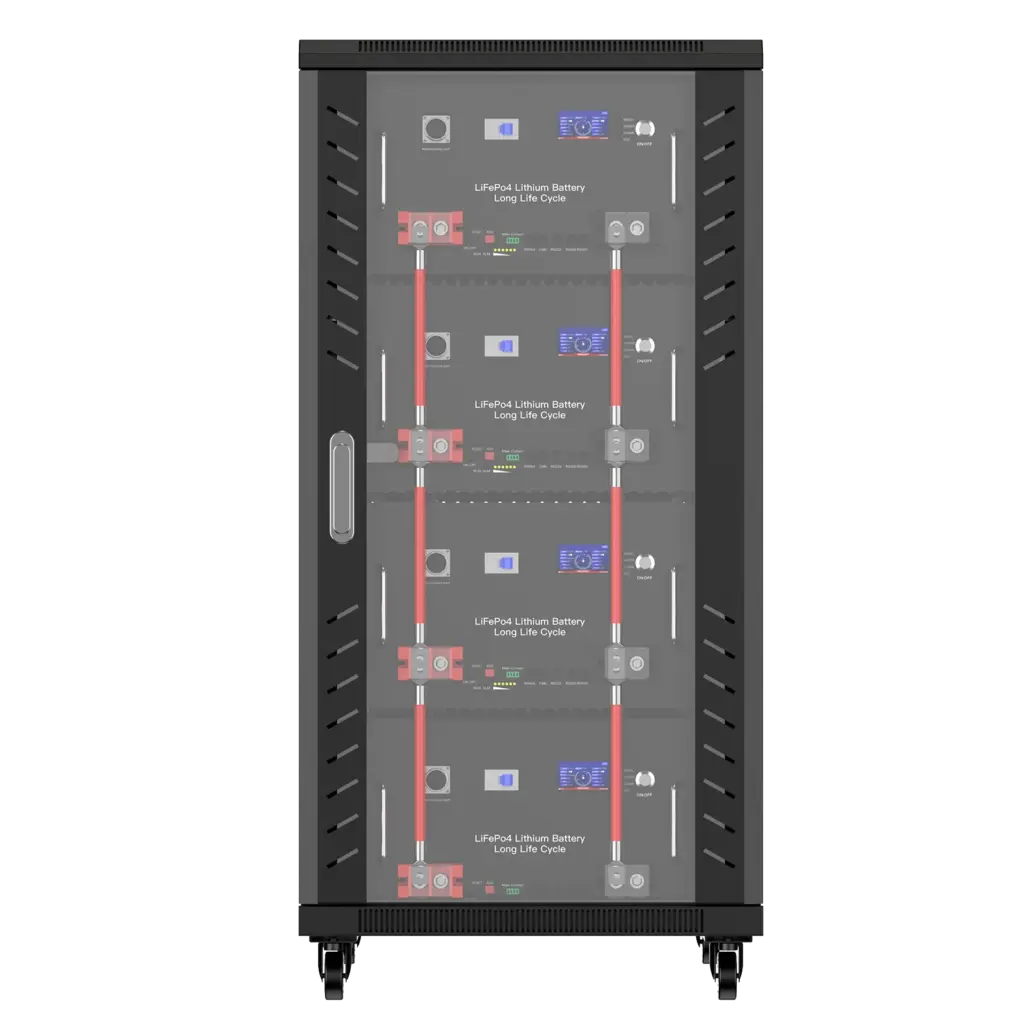
When energy storage is included, the EPC team should also evaluate whether the project needs low-voltage batteries, high-voltage batteries, cabinet-type systems or containerized storage.
Solar EPC for Residential and Installer-Led Projects
In residential projects, the EPC model can still be useful, especially when the system includes PV, battery storage, EV charging or backup circuits.
A homeowner may not think in terms of “EPC,” but the same principles apply. The project needs proper design, reliable equipment, safe installation and clear after-sales support.
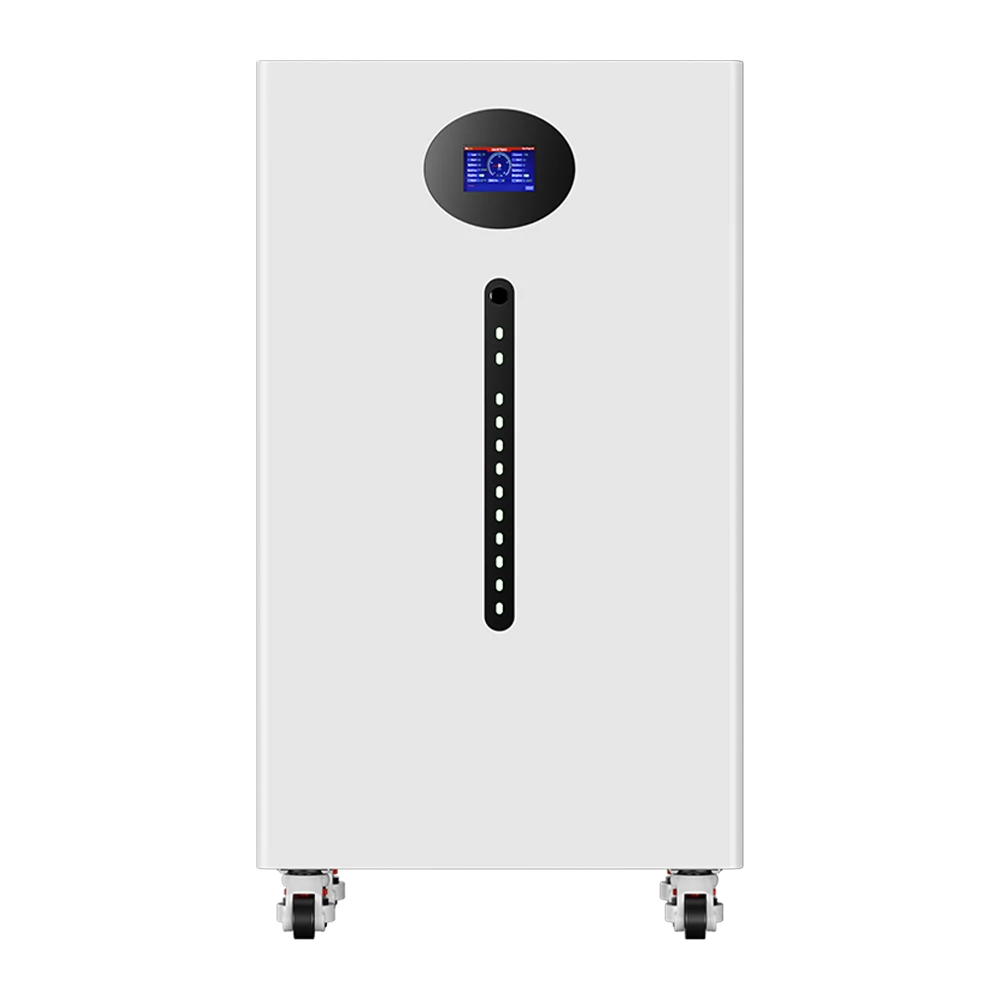
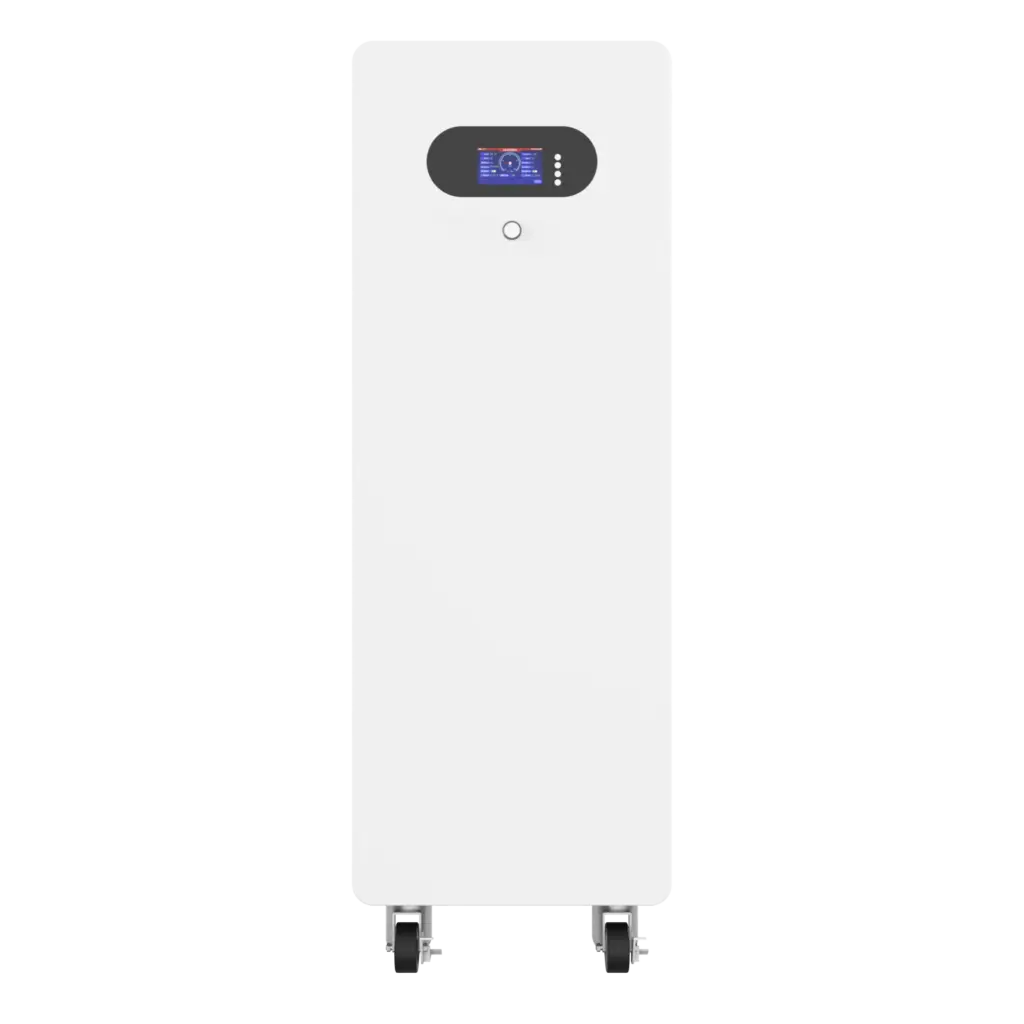
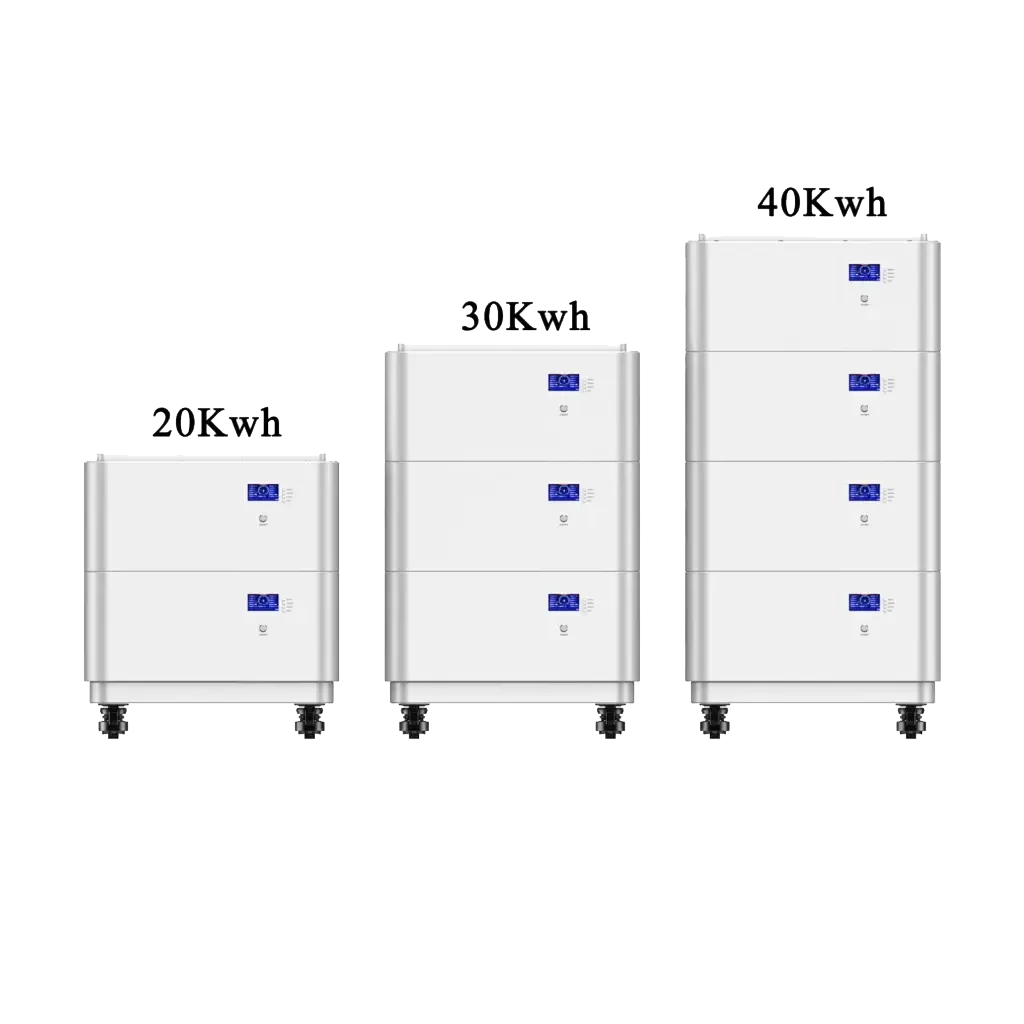
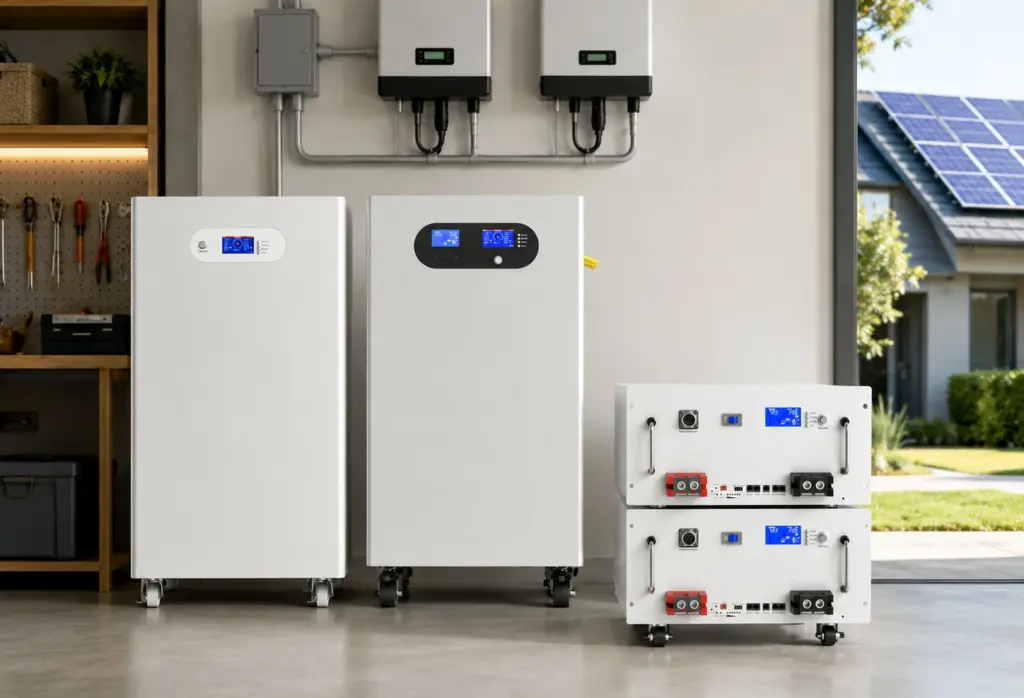
For installers and local solar companies, working with a reliable battery supplier can make the EPC process smoother. Avepower’s residential storage options include wall-mounted, rack-mounted, stackable, vertical and all-in-one battery solutions, allowing installers to select configurations based on space, capacity, inverter compatibility and user needs.
Is Solar EPC the Same as Turnkey Solar?
Solar EPC and turnkey solar are closely related, but they are not always identical.
A turnkey solar project usually means the customer receives a complete system ready for operation. EPC is the delivery model used to make that happen. In many cases, a solar EPC contractor provides a turnkey solution because it manages the project from design to commissioning.
However, the exact meaning depends on the contract. A project may be called turnkey but still exclude utility upgrades, roof repairs, structural reinforcement, monitoring subscriptions or O&M. Always check the written scope.
Solar EPC and Long-Term Performance
The real value of solar EPC is not only project completion. It is long-term system performance.
A project that is installed quickly but performs poorly is not successful. Long-term performance depends on accurate design, quality equipment, good installation practices, correct commissioning and maintenance planning.
This is why energy yield assumptions, degradation rates, inverter sizing, thermal conditions, shading, soiling, cable losses and monitoring strategy should be discussed before construction begins.
For storage projects, long-term performance also depends on battery cycle life, depth of discharge, temperature control, BMS protection, charge/discharge strategy and compatibility with the inverter or EMS.
Avepower Suggestion: Treat Storage as Part of EPC Design, Not a Late Add-On
For solar EPC teams, one of the most common mistakes is adding battery storage after the PV design is already fixed. This can create compatibility problems, space issues, communication failures or unclear backup logic.
A better approach is to define the storage purpose early. Is the battery for backup power, self-consumption, peak shaving, off-grid operation, grid support or a combination of these goals?
Once the purpose is clear, the EPC team can select battery capacity, inverter architecture, communication protocol, protection devices and monitoring logic more accurately.
Avepower works with installers, distributors, EPC teams and OEM/ODM customers to support project-specific battery selection, including residential storage, commercial storage and custom high-voltage battery systems. For EPC teams building solar-plus-storage projects, early technical coordination can help reduce integration risk and improve project delivery.
Take Control of Your Energy with Avepower!
Reliable home solar battery solutions with OEM/ODM customization and in-house manufacturing, tailored to the needs of distributors, installers, and energy partners.
Conclusion
Solar EPC is more than a simple installation service. It is a structured project delivery model that combines engineering, procurement and construction under one coordinated process.
For project owners, the EPC model can simplify communication, improve accountability and reduce delivery risk. For commercial and industrial users, it can help align technical design with financial goals. For solar-plus-storage projects, it becomes even more important because PV, batteries, inverters, EMS, protection and monitoring must work together as one system.
The best solar EPC partner should understand not only solar panels, but also grid requirements, equipment quality, commissioning, storage integration and long-term performance.
If your next solar project includes battery storage, Avepower can support your EPC team with residential, commercial and high-voltage energy storage solutions designed for flexible integration, reliable BMS protection and project-based customization.
FAQ
Solar EPC means Engineering, Procurement and Construction. It refers to a project delivery model where one contractor manages the technical design, equipment sourcing, installation and commissioning of a solar energy project.
A solar EPC company designs the solar system, selects and procures equipment, manages permits and approvals, installs the system, completes testing and delivers the project to the owner.
Not always. A solar installer may only handle physical installation. A solar EPC company usually has a broader role that includes engineering, procurement, project management, construction and commissioning.
A solar developer usually focuses on project origination, site control, feasibility, permits, financing and commercial structure. A solar EPC firm focuses on designing, building and commissioning the solar system.
For many commercial, industrial and complex solar projects, EPC can reduce coordination risk because one lead contractor manages the full delivery process. However, the quality of the EPC partner still matters.
It can. In modern solar-plus-storage projects, EPC scope may include battery sizing, inverter integration, EMS setup, BMS communication, protection design, monitoring and commissioning.
Check project experience, engineering capability, equipment selection, certifications, safety practices, financial stability, warranty support, commissioning process and O&M service.
Procurement affects equipment quality, delivery schedule, warranty support and system compatibility. Poor procurement can lead to delays, performance problems or higher long-term costs.
You should receive as-built drawings, datasheets, warranties, commissioning records, monitoring access, O&M manuals, safety instructions and maintenance recommendations.
Yes. Avepower supports EPC teams, installers, distributors and OEM/ODM customers with LiFePO4 battery storage products for residential, commercial and high-voltage energy storage projects.