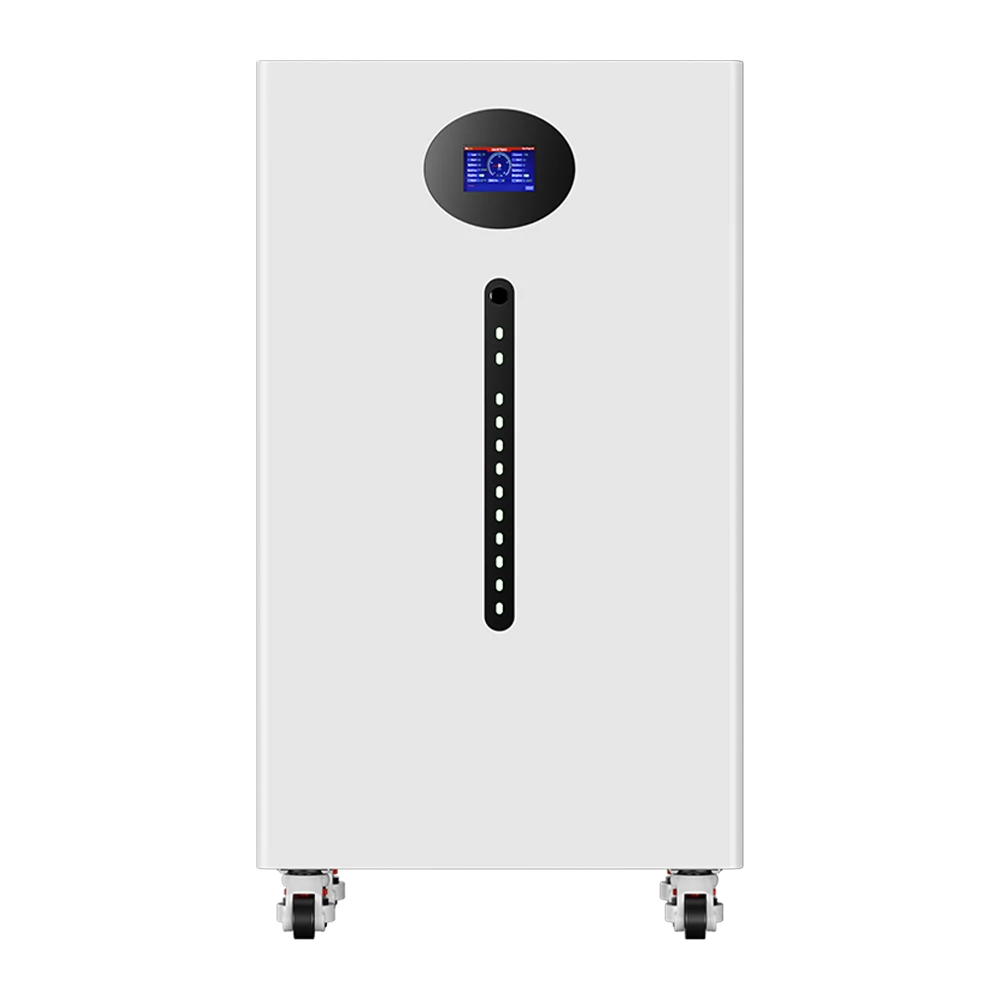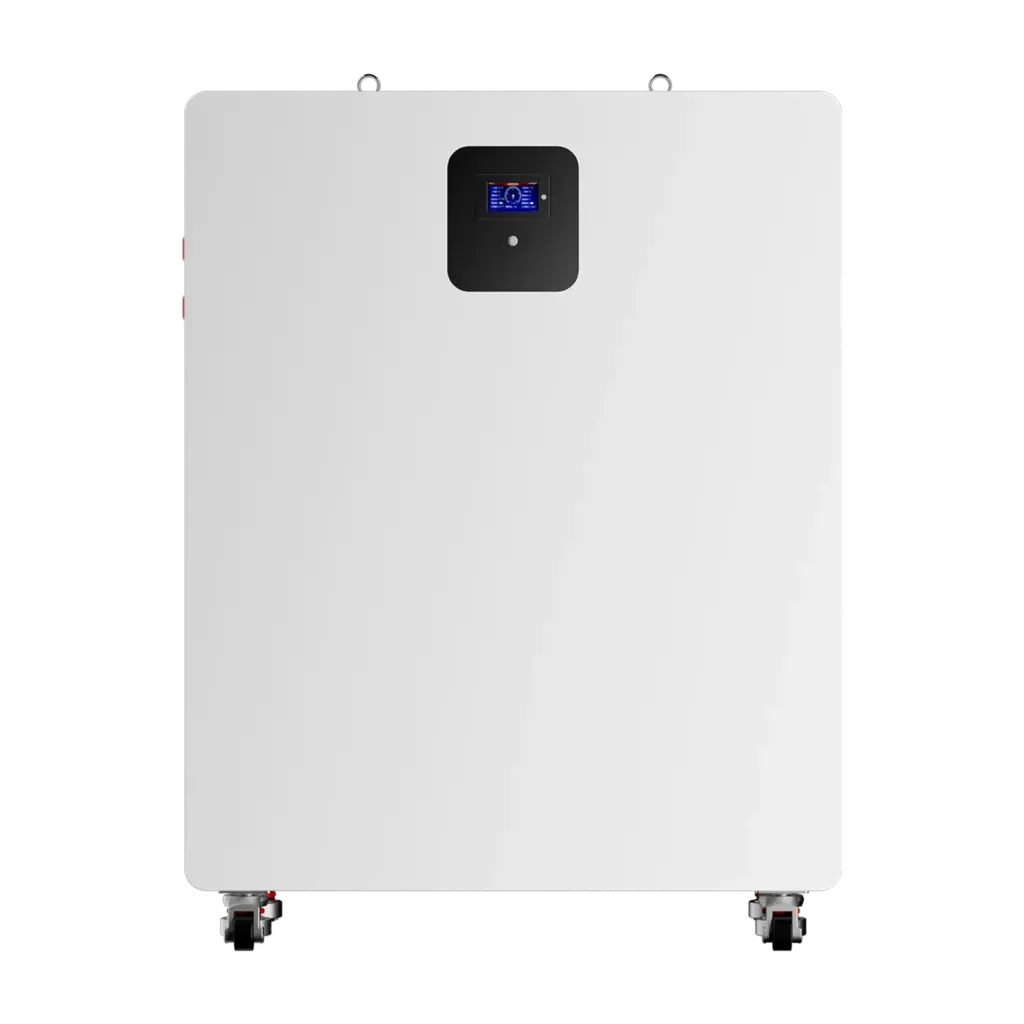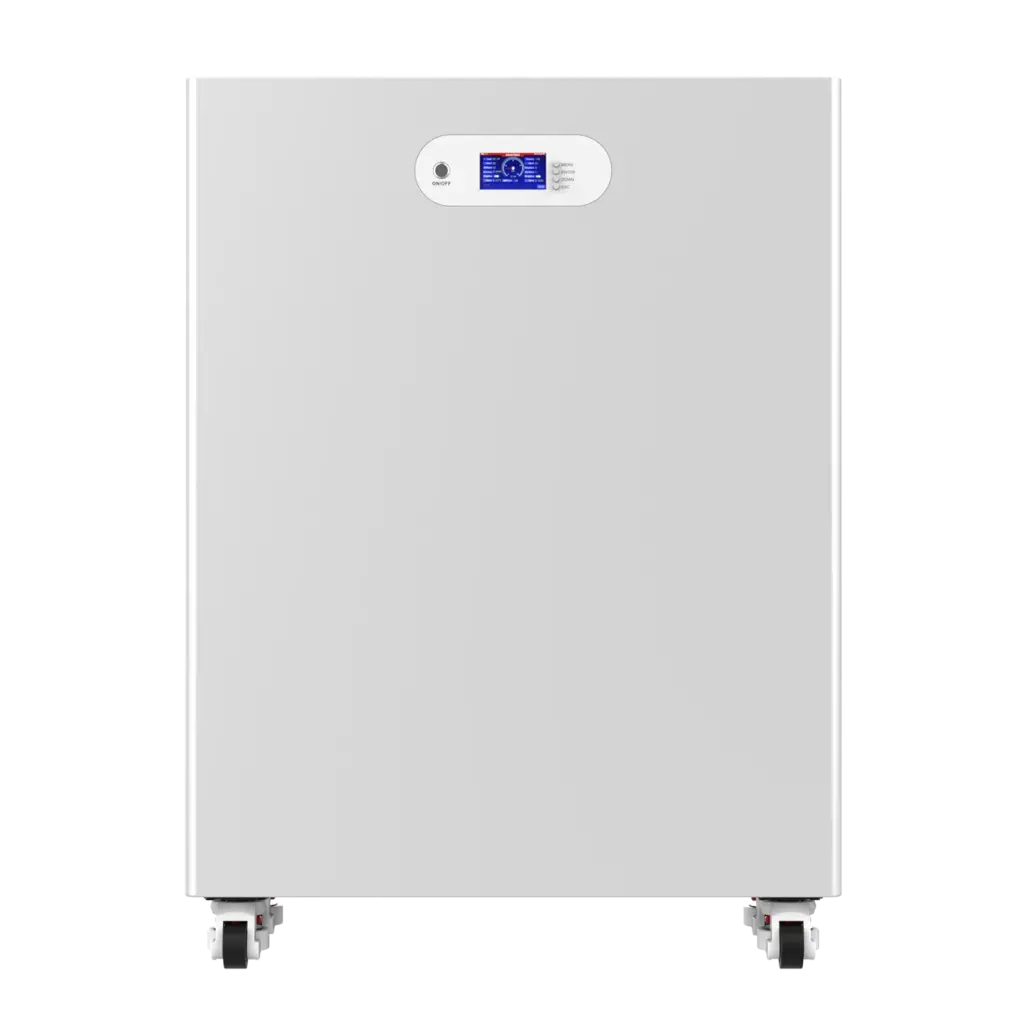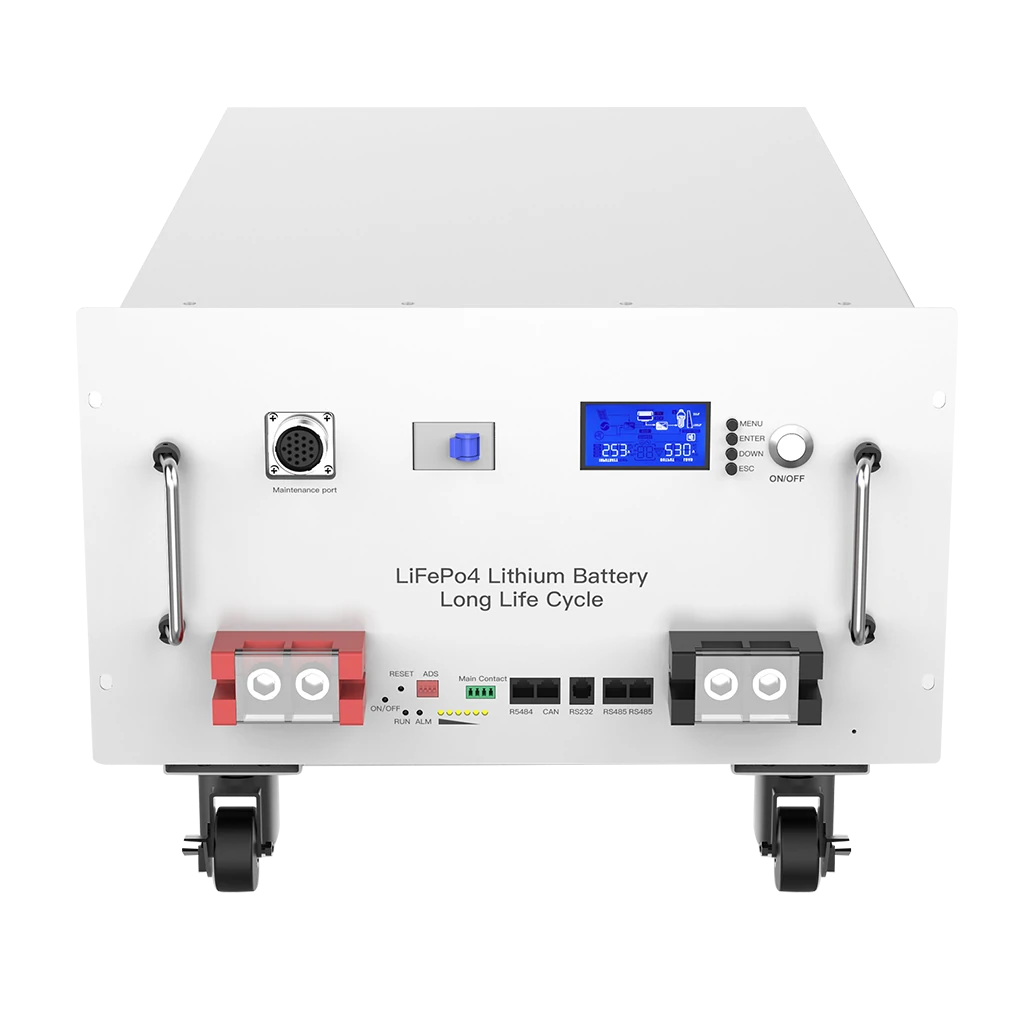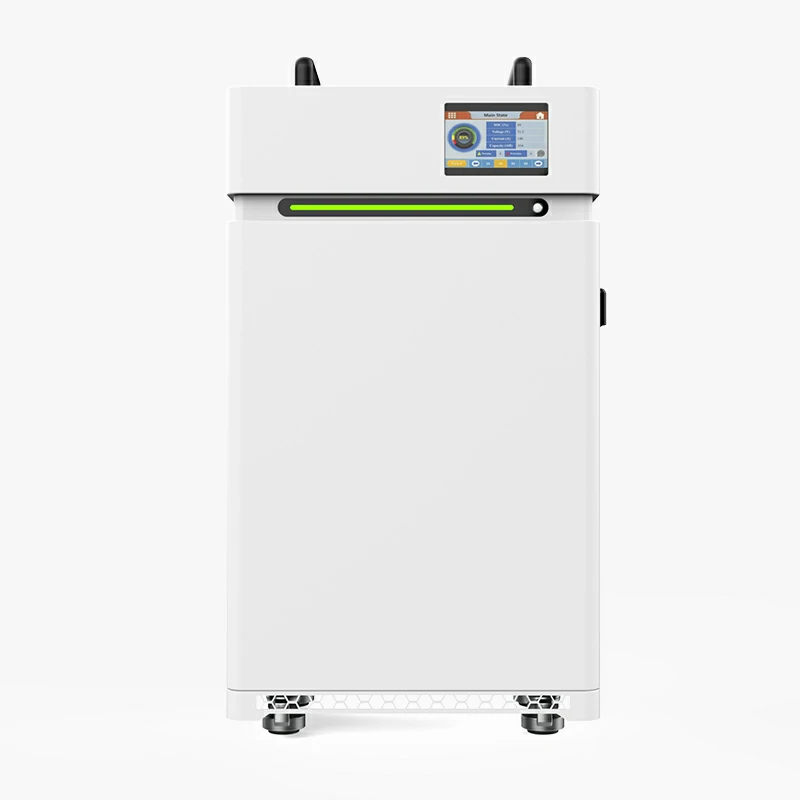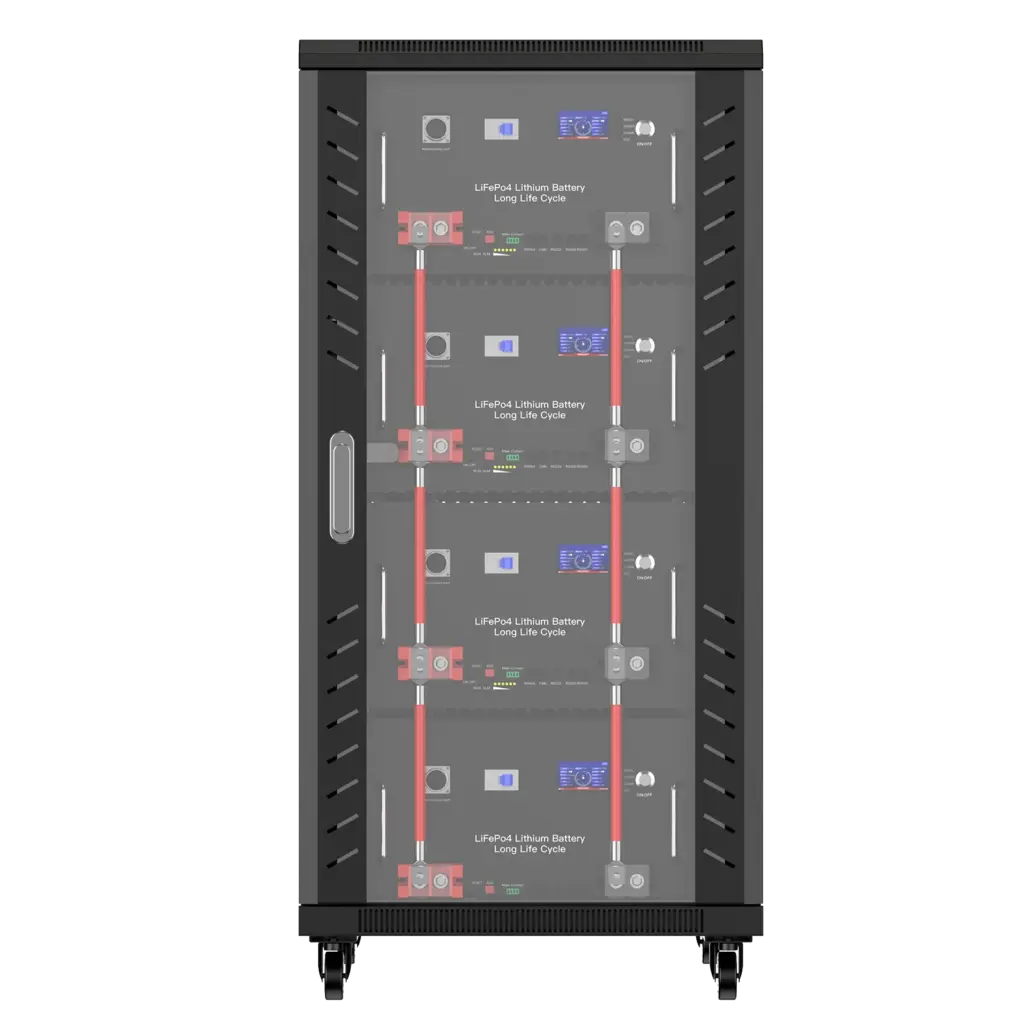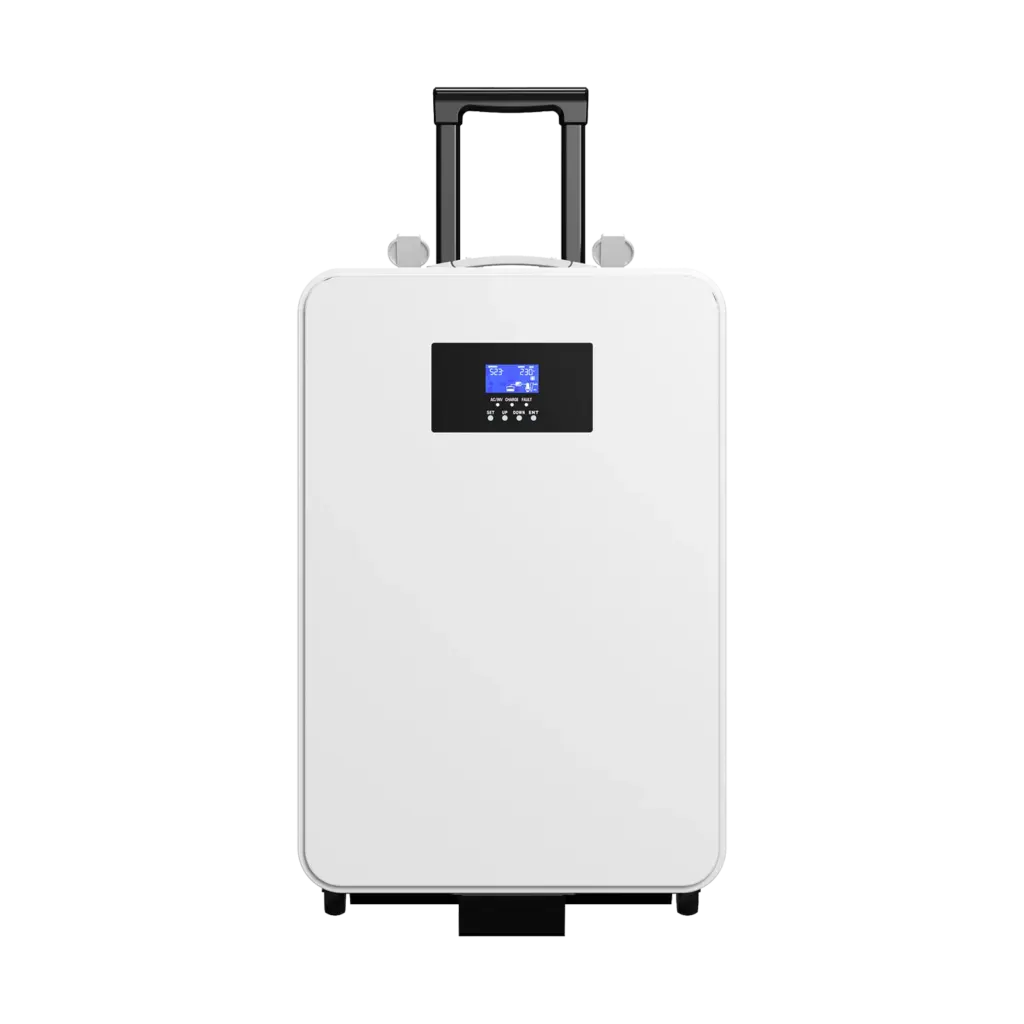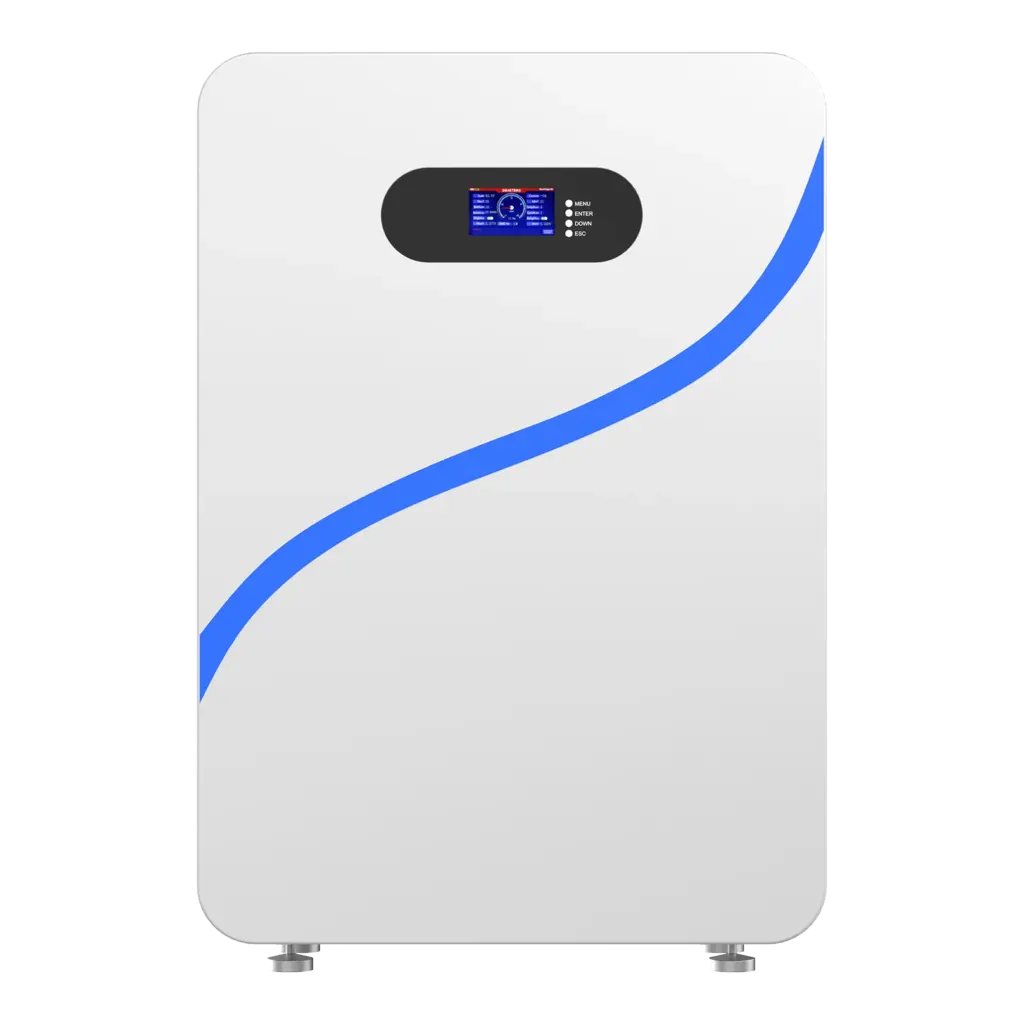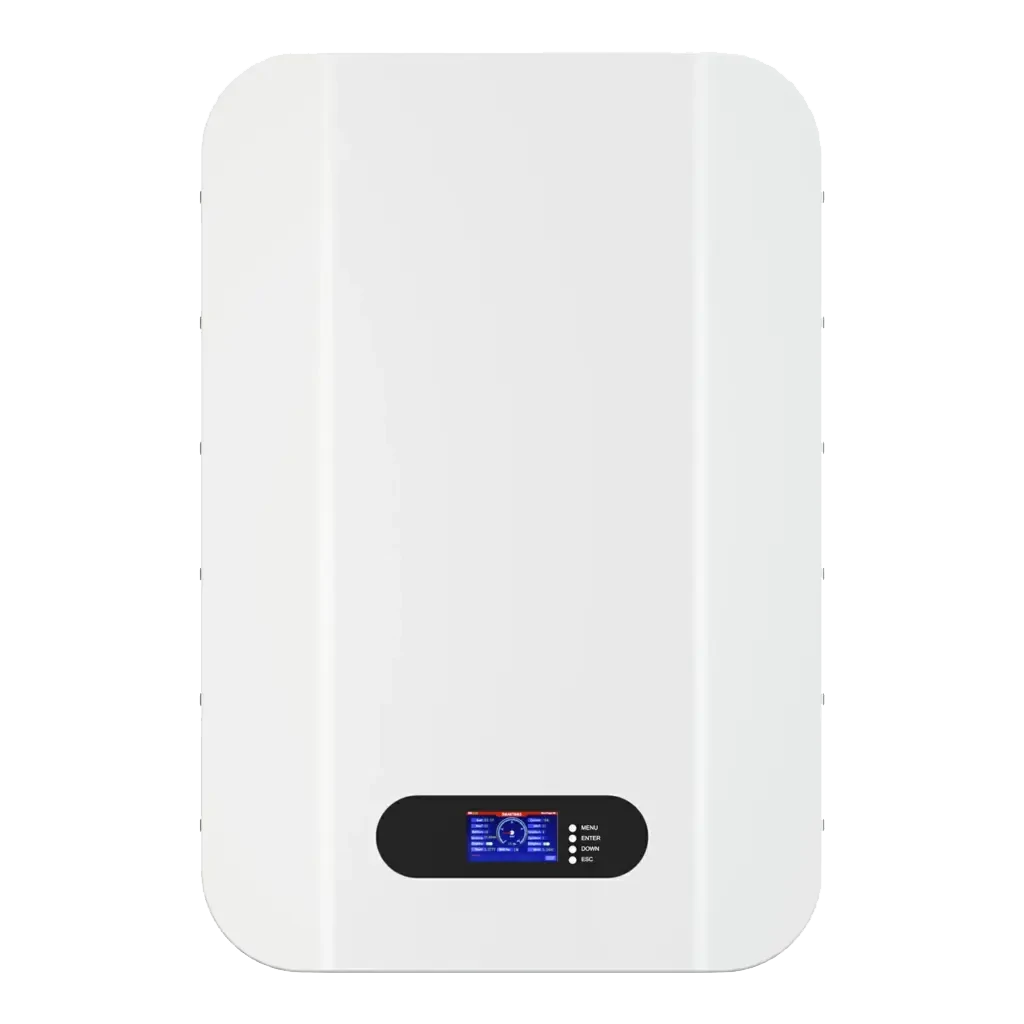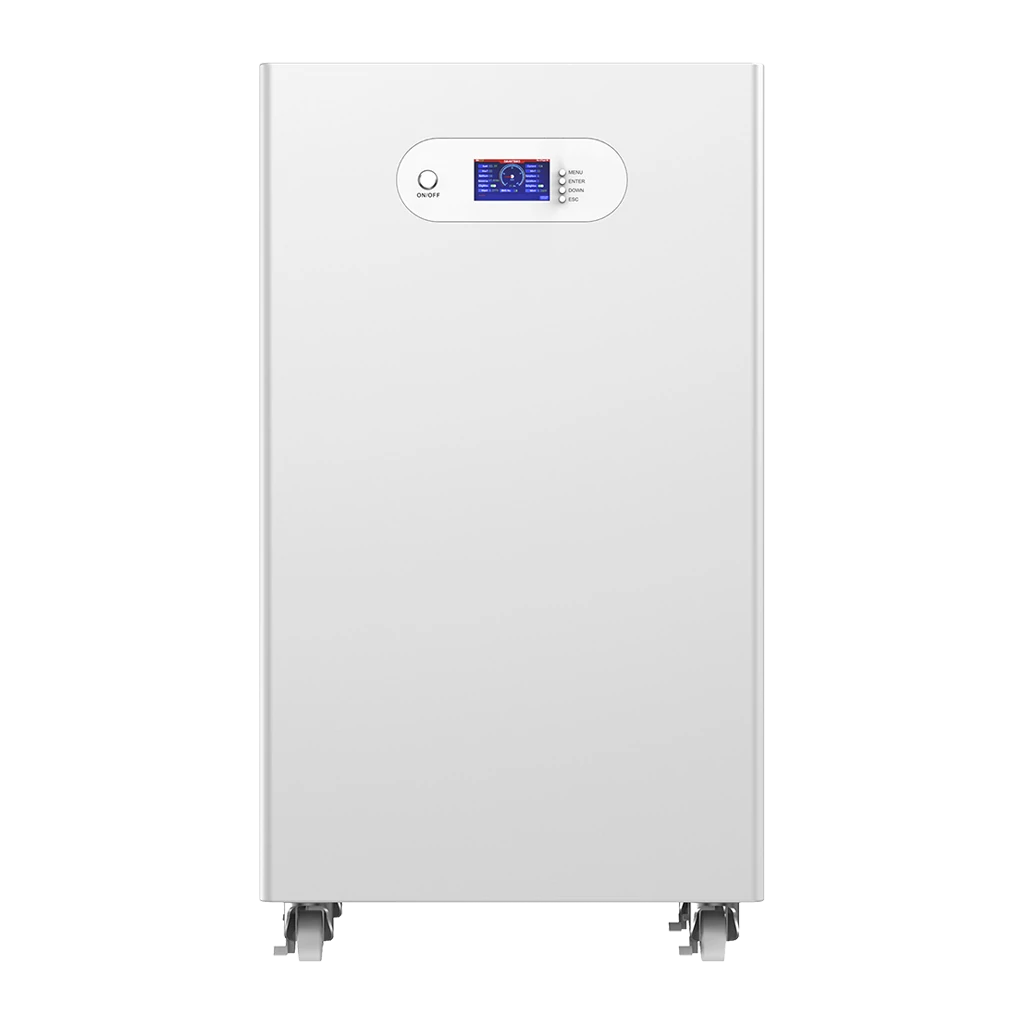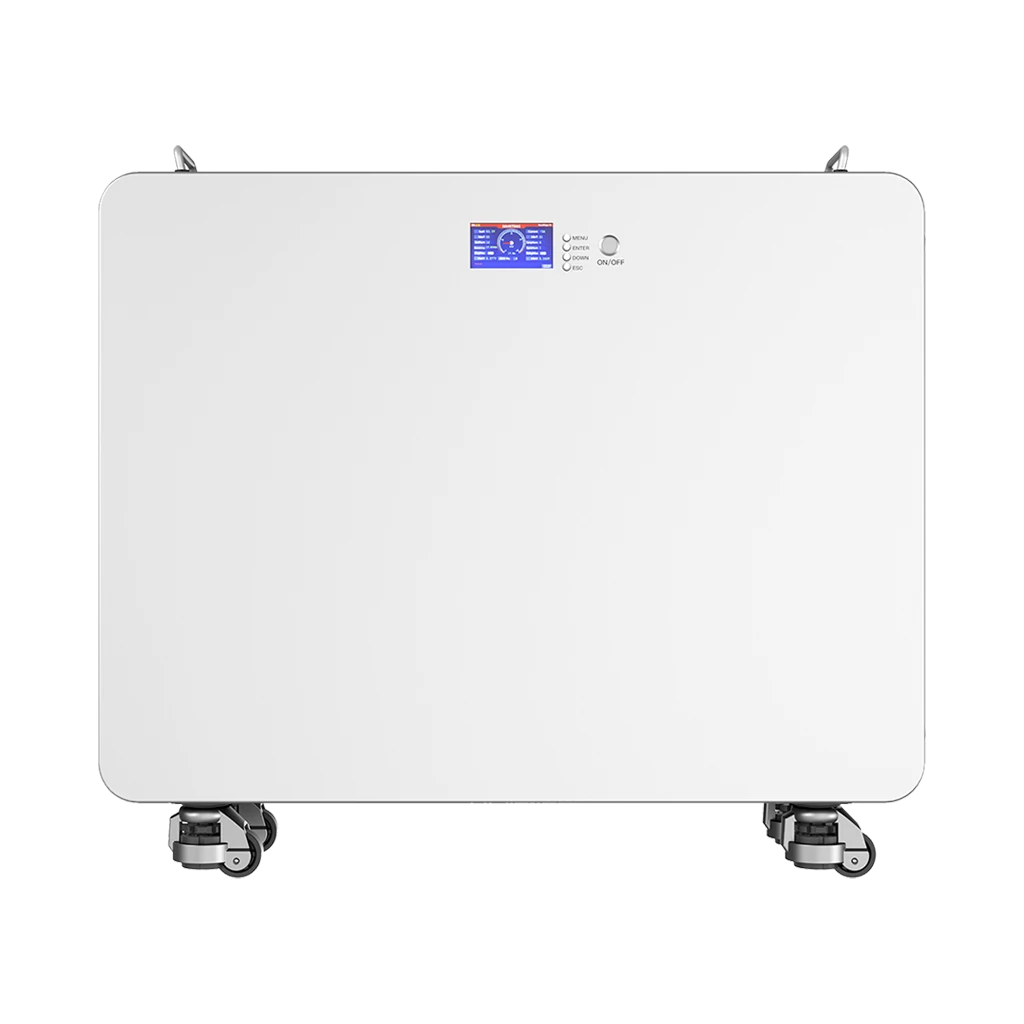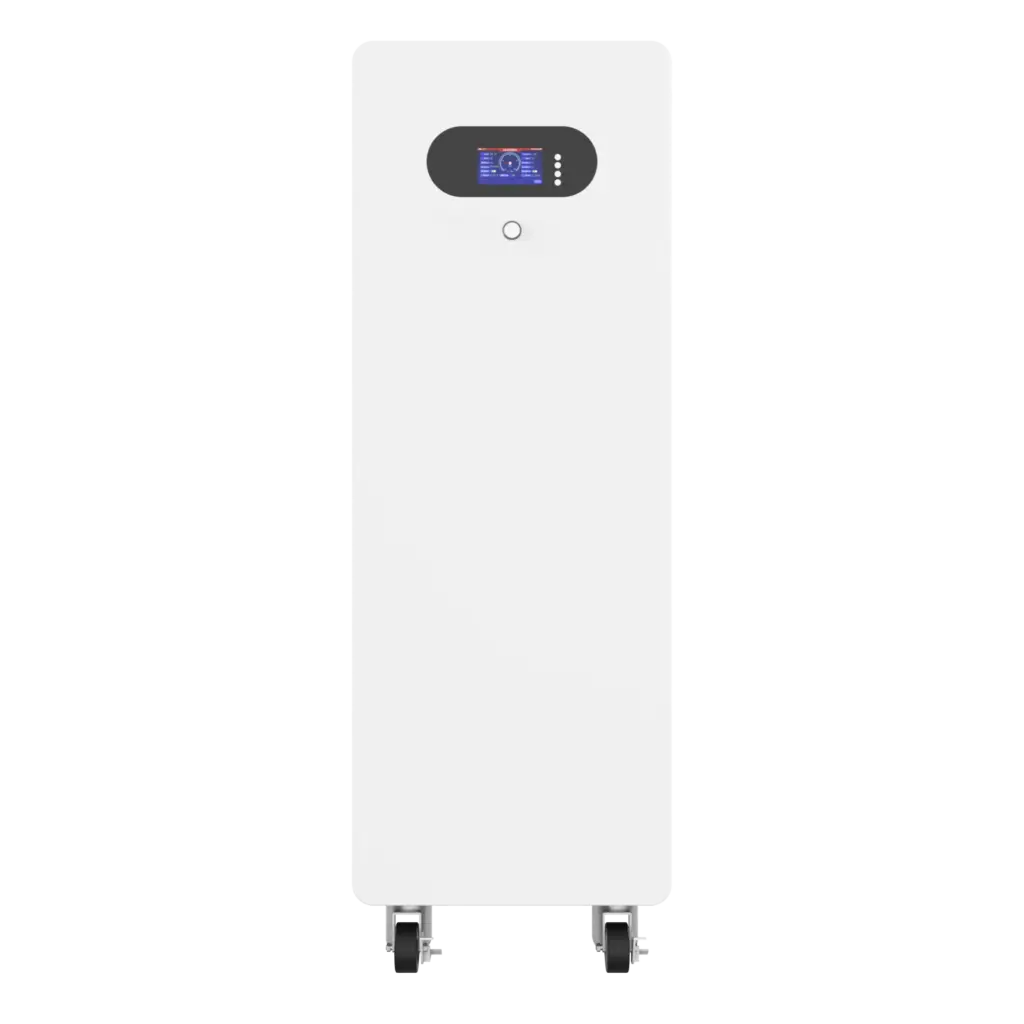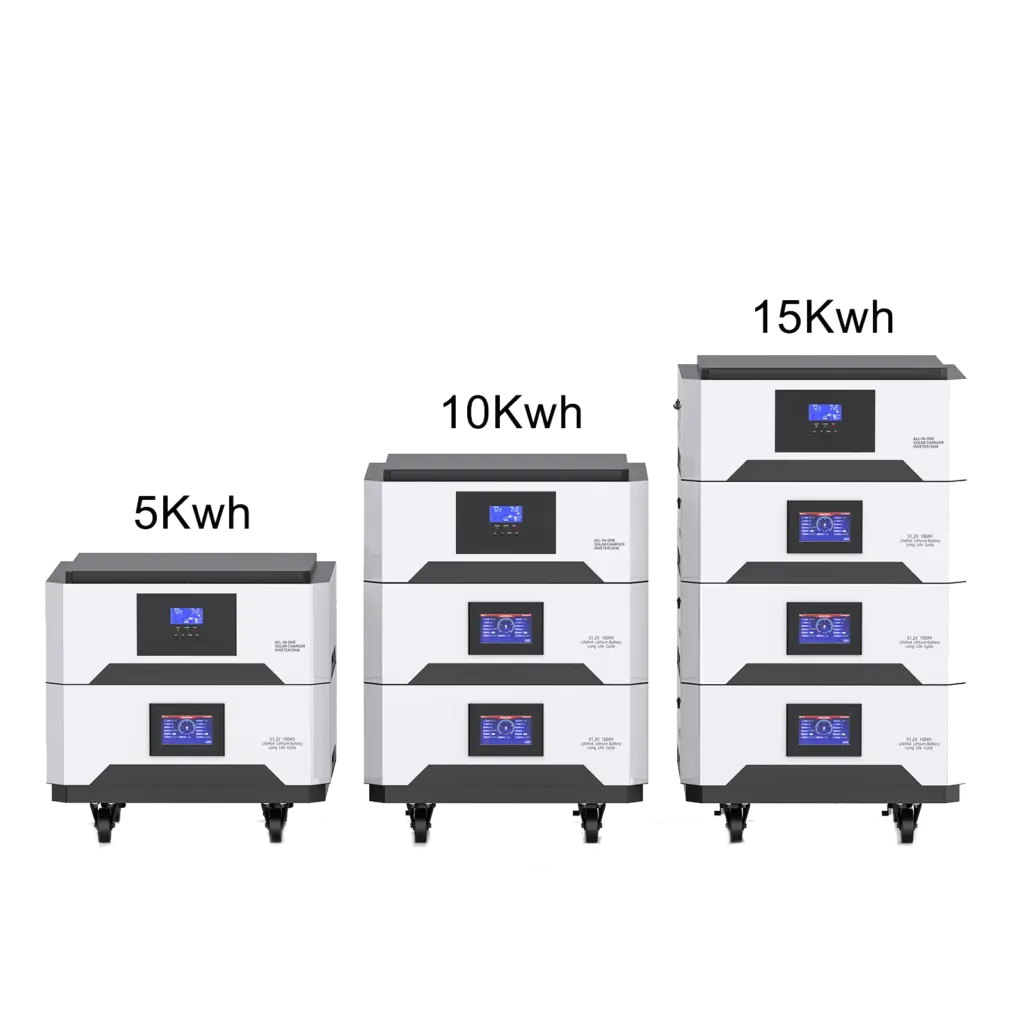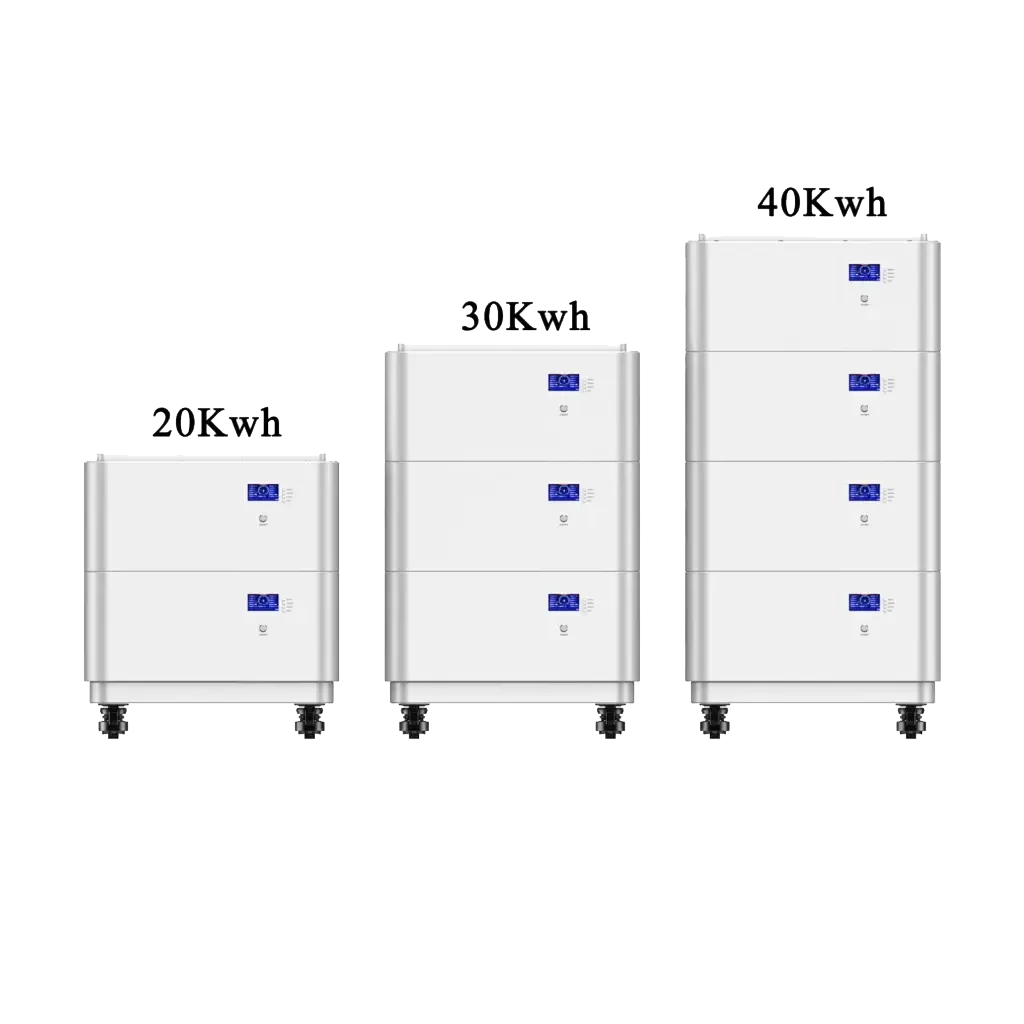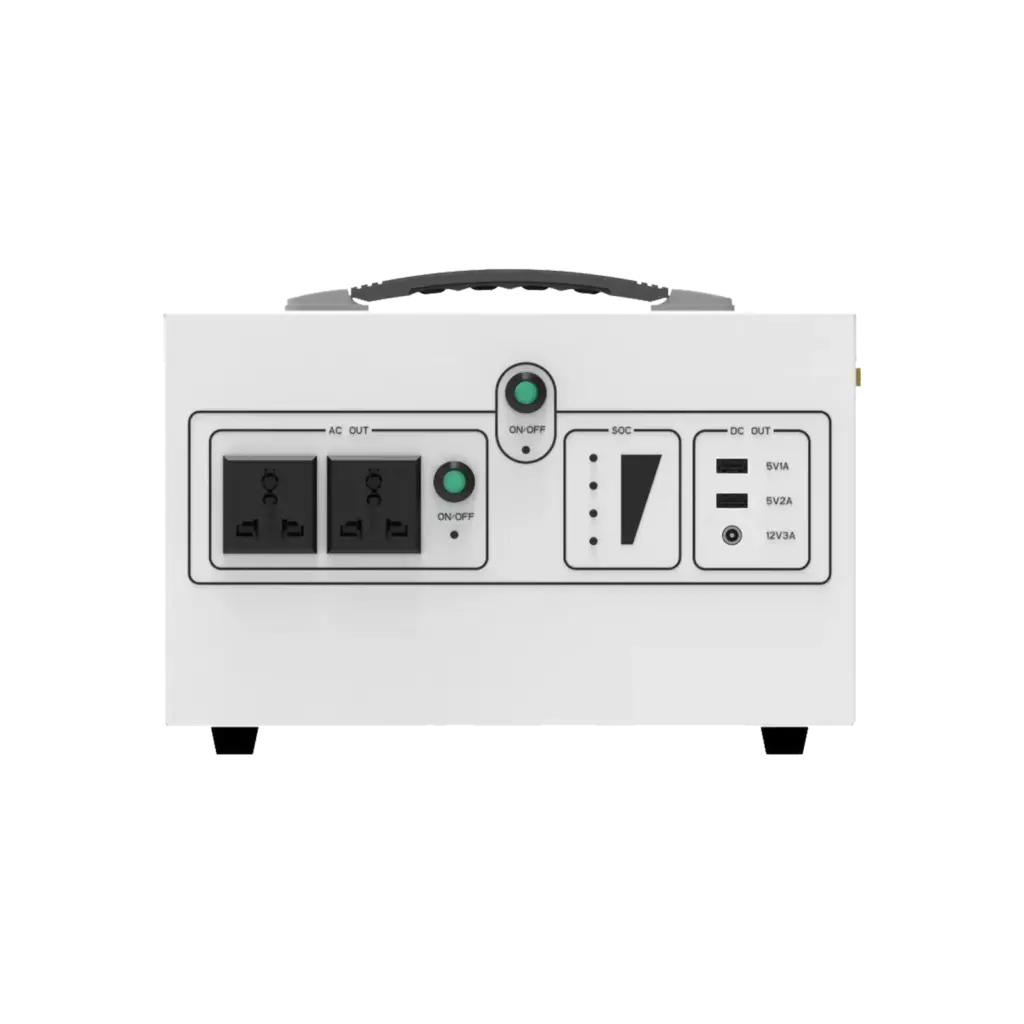

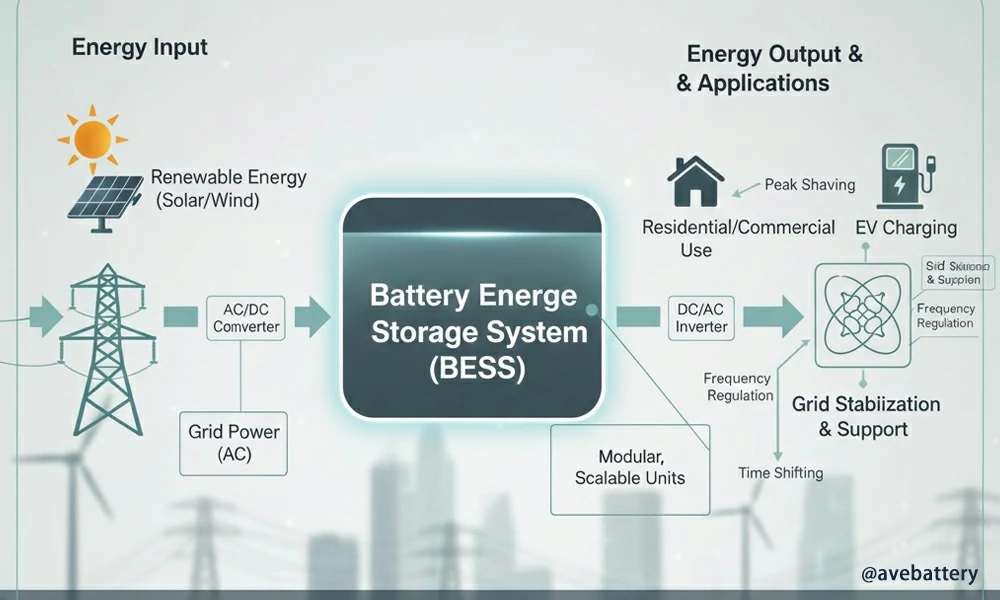
BESS stands for Battery Energy Storage System—a complete system that stores electricity in rechargeable batteries and releases it when power is needed or more valuable. A BESS normally combines battery cells, a Battery Management System (BMS), Power Conversion System (PCS), Energy Management System (EMS), thermal management, protection and communication equipment.
In simple terms:
Electricity → Charge → Store → Control → Discharge when needed
A BESS can store surplus solar power during the day, discharge during evening demand, reduce commercial peak loads, provide backup during outages or support an electrical grid.
The key point is that BESS does not mean the battery alone. It describes the complete engineered energy storage system that makes the battery safe, controllable and usable.
What Does BESS Mean?
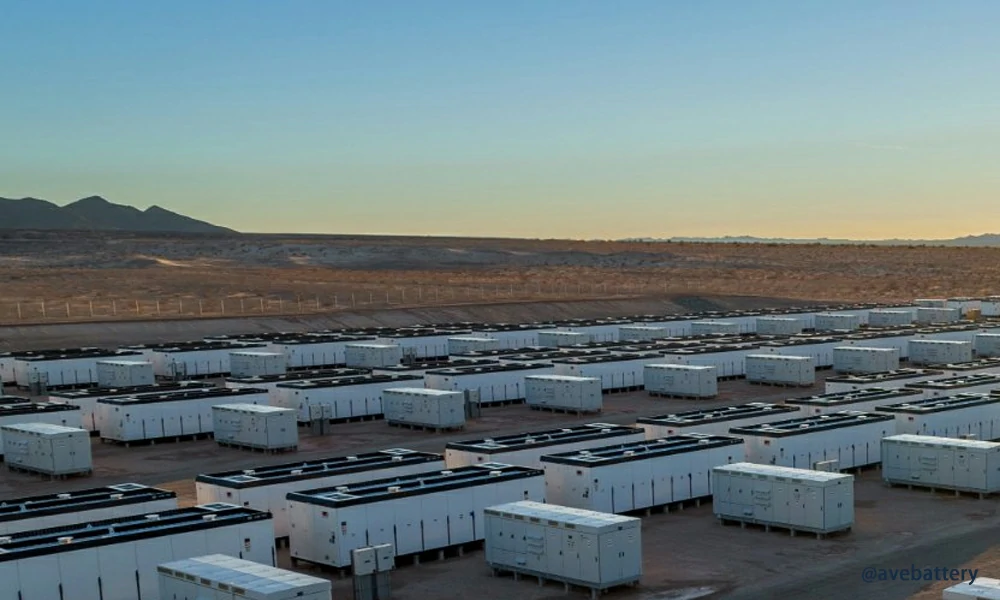
BESS means Battery Energy Storage System, the industry term for an integrated system that stores electrical energy in batteries for controlled use at a later time. Depending on the project, a BESS can range from a small residential battery installation to a multi-megawatt grid-scale storage plant.
A BESS may be used to:
- Store excess solar or wind generation
- Shift electricity use to lower-cost periods
- Reduce peak demand
- Provide backup power
- Improve renewable self-consumption
- Support grid stability
- Supply frequency-response services
- Reduce generator operating hours
A typical BESS as a collection of equipment including the batteries, BMS, inverter, switchgear, transformer, protection and control system.
What Is the BESS Meaning in English?
In English, BESS is the acronym for “Battery Energy Storage System.”
Breaking the definition down:
| Term | Meaning |
|---|---|
| Battery | Stores electrical energy electrochemically |
| Energy | The amount of electricity stored, normally measured in kWh or MWh |
| Storage | Keeps energy available for later use |
| System | Includes batteries plus power electronics, controls, protection and thermal management |
This is the most useful definition of BESS because it distinguishes a complete energy-storage system from a simple battery pack.
Is BESS the Same as a Battery?
No. A battery stores energy, while a BESS combines the battery with the equipment required to safely control, convert, monitor and dispatch that energy.
A simple comparison is:
| Component | Battery | Complete BESS |
|---|---|---|
| Battery cells/modules | ✓ | ✓ |
| BMS | Sometimes | ✓ |
| PCS / inverter | ✗ | ✓ |
| EMS | ✗ | Usually |
| Thermal management | Limited | ✓ |
| Fire/protection system | Limited | ✓ |
| Switchgear | ✗ | ✓ |
| Grid communication | ✗ | As required |
| Monitoring | Limited | ✓ |
| Energy dispatch control | ✗ | ✓ |
A battery is therefore the energy-storage component inside the larger BESS architecture.
What Are the Main Components of a BESS?
A complete BESS normally contains five core functional layers: battery storage, battery management, power conversion, energy management and protection/thermal control.
Keep your existing detailed component section, but reorganize it in this order:
1. Battery Cells, Packs, Racks, And Strings
The battery system consists of:
- Individual cells
- Combined into packs and modules
- Mounted in racks or cabinets
- Connected in strings to reach the desired voltage
This structure gives flexibility in design and simplifies maintenance. If one module has a problem, technicians can often replace that module without disturbing the rest of the system.
2. Battery Management System (BMS)
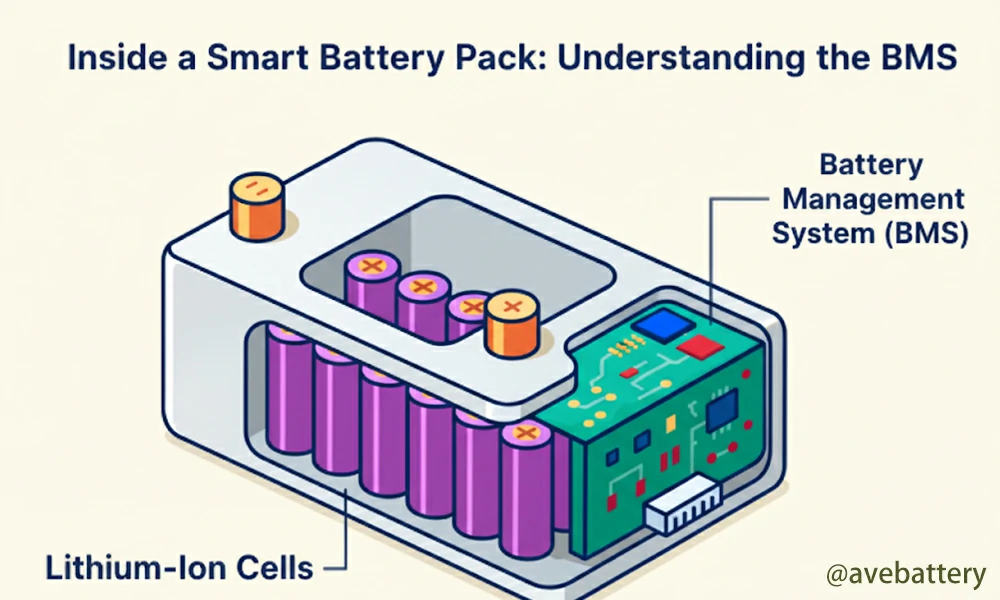
The Battery Management System (BMS) is the safety and health supervisor for the batteries. The BMS:
- Monitors voltage, current, and temperature of cells, packs, and modules
- Estimates State of Charge (SoC)
- Estimates State of Health (SoH)
- Balances cells to keep them at similar charge levels
- Enforces safe limits on charging and discharging
If the BMS detects unsafe conditions, such as over-voltage, under-voltage, over-current, or over-temperature, the BMS takes protective action. The BMS can reduce power, disconnect parts of the system, or trigger alarms.
3. Power Conversion System (PCS) Or Inverter
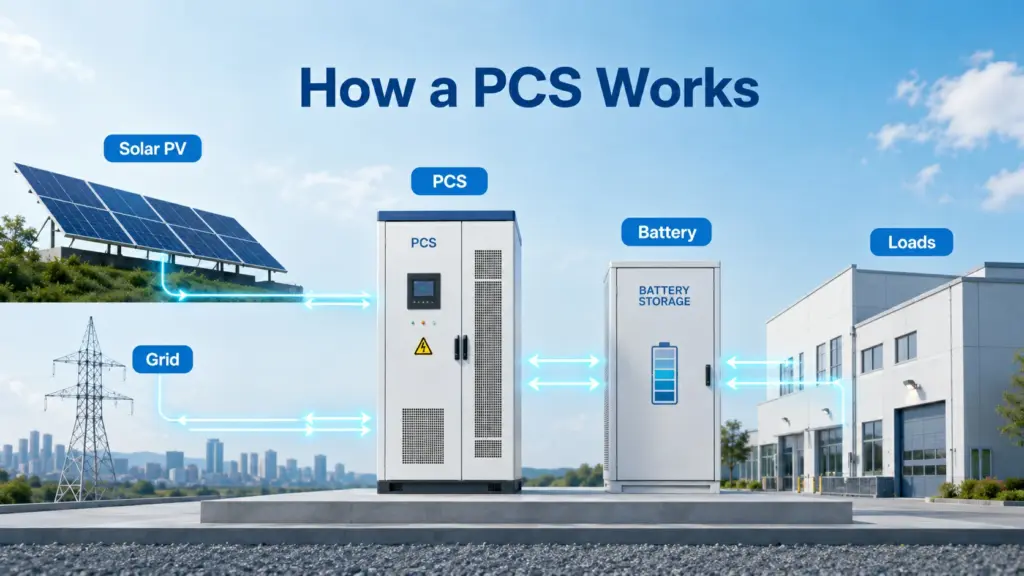
The Power Conversion System (PCS) connects the DC battery system to the AC world. The PCS:
- Converts AC to DC during charging
- Converts DC to AC during discharging
- Controls the power level and direction (bidirectional operation)
- Keeps the AC output synchronized with the grid (phase, frequency, and voltage)
Grid-connected BESS projects need very precise control. The PCS must follow grid codes and respond quickly to commands from the grid operator or the local control system.
4. Energy Management System (EMS)
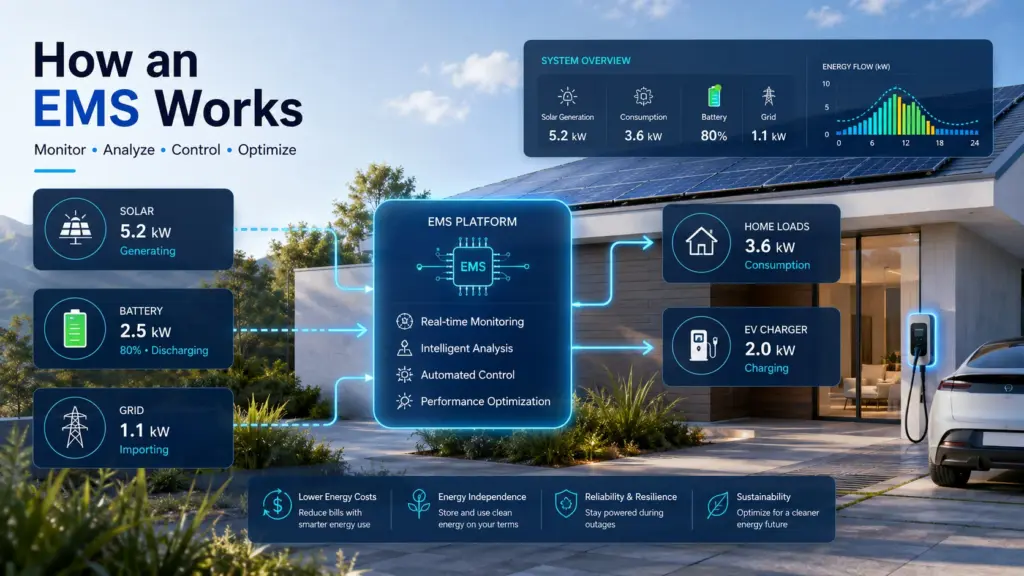
The Energy Management System (EMS) is the “brain” that looks at the bigger picture. The EMS:
- Monitors the state of the BESS, the site load, and the energy sources
- Receives price signals and control commands from the grid or market
- Decides when to charge, when to discharge, and at what power level
- Optimizes performance according to the project’s goals
The goals may include:
- Reducing energy costs
- Maximizing revenue from energy and grid services
- Protecting battery lifetime
- Ensuring backup power for critical loads
The EMS may run locally or connect to cloud-based software for forecasting and optimization.
5. Thermal, Electrical and Safety Systems
Depending on system size, these may include:
- Air cooling
- Liquid cooling
- Smoke/gas detection
- Fire protection
- DC protection
- AC switchgear
- Contactors
- Circuit breakers
- Emergency stop
- Isolation monitoring
- Transformer
- System controller
How Does a BESS Work?
A BESS charges when electricity is available, stores that energy electrochemically and then discharges it according to load demand, energy prices, renewable generation or grid commands.
The basic process is:
Step 1 — Charge
Electricity may come from:
- Solar PV
- Wind
- Utility grid
- Generator
- Other generation sources
The PCS converts and controls the electrical power so the batteries can charge safely.
Step 2 — Store
The energy remains stored inside the battery cells.
The BMS continuously monitors:
- Voltage
- Current
- Temperature
- SOC
- Battery limits
Step 3 — Decide
The EMS determines when the stored energy should be used.
For example:
Solar production high + site load low → charge
Electricity tariff high + battery SOC sufficient → discharge
Step 4 — Discharge
The battery supplies DC power to the PCS, which converts it into AC electricity for the site or grid.
This control layer is what turns batteries into a practical Battery Energy Storage System.
What Do kW and kWh Mean in a BESS?
kW tells you how much power a BESS can deliver at one moment, while kWh tells you how much energy it can store. Both values must be specified when sizing a BESS.
This distinction is fundamental.
| Rating | Meaning | Example |
|---|---|---|
| kW | Power | How large a load the system can support |
| kWh | Energy | How long the BESS can support that load |
| MW | Large-scale power | Utility/C&I power rating |
| MWh | Large-scale energy | Utility/C&I stored energy |
For example:
100kW / 200kWh BESS
means:
- Maximum rated power: approximately 100kW
- Stored energy: approximately 200kWh
- Nominal duration: approximately 2 hours at rated power
The basic relationship is:
Storage Duration (hours) = Energy Capacity (kWh) ÷ Power (kW)
Example:
400kWh ÷ 100kW = 4 hours
This would generally be described as a 4-hour BESS.
How Do You Calculate the BESS Capacity You Need?
Start with the load you want to support and the number of hours it must run, then adjust the result for usable depth of discharge and conversion efficiency.
A practical planning formula is:
Required Nominal BESS Energy ≈ Load × Runtime ÷ Usable DoD ÷ System Efficiency
Example: Commercial Backup Requirement
Assume a facility needs:
- Critical load: 100kW
- Required backup: 2 hours
- Usable battery DoD: 90%
- Assumed conversion efficiency: 92%
Energy required by the loads:
100kW × 2h = 200kWh
Allowing for DoD and conversion:
200 ÷ 0.90 ÷ 0.92 ≈ 242kWh
A project would therefore need at least approximately 242kWh nominal battery energy under these simplified assumptions.
In practice, engineers should also consider:
- Load variability
- Peak load
- Motor starting current
- Battery degradation
- Temperature
- Auxiliary loads
- Reserve SOC
- Future expansion
- Grid requirements
- Battery C-rate
- PCS rating
This is why a BESS should not be selected from kWh alone.
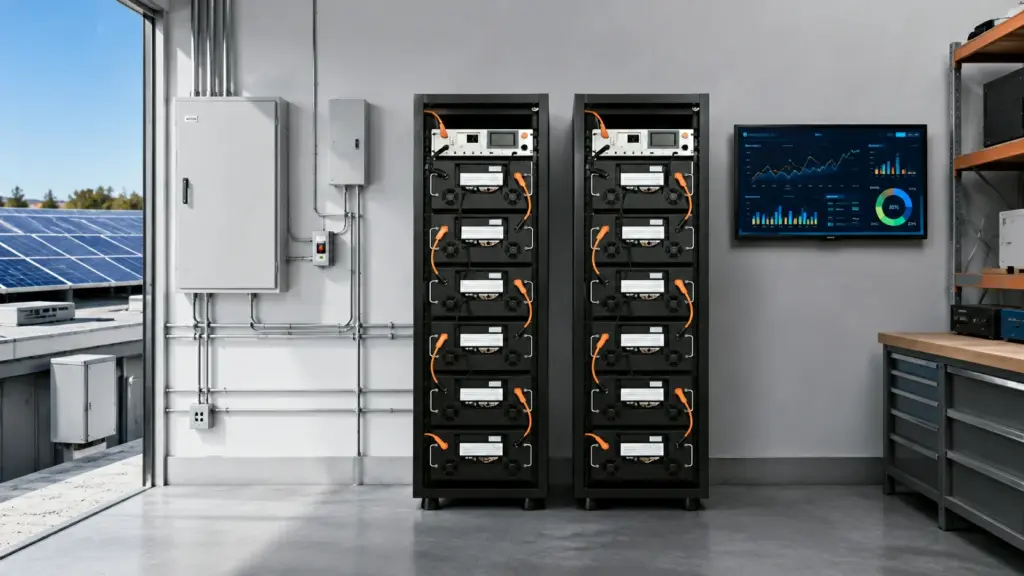
Not Sure Which BESS Configuration Fits Your Project?
The right BESS depends on your application, storage capacity, inverter power, backup load, solar system size and installation environment. Share your project details, and Avepower can help recommend a suitable battery storage configuration.
How Do You Choose the Right BESS?
The right BESS depends first on the application, then on required power, storage duration, battery chemistry, PCS configuration, grid connection and operating environment.
Start with the project objective.
| Application | Main Design Priority |
|---|---|
| Solar self-consumption | Daily solar surplus + evening load |
| Backup power | Critical load × required backup hours |
| Peak shaving | Peak reduction kW + duration |
| Load shifting | Tariff spread + daily energy |
| Off-grid | Daily load + solar autonomy |
| C&I microgrid | Load profile + resilience + EMS |
| Grid services | MW power + response speed |
| Renewable plant | Curtailment + dispatch profile |
| EV charging support | Charger peak demand + grid limit |
Then verify:
- Required Energy — How many kWh or MWh must be stored?
- Required Power — How many kW or MW must be delivered simultaneously?
- Storage Duration — Is the project designed for: 1 hour, 2 hours, 4 hours, 6+ hours
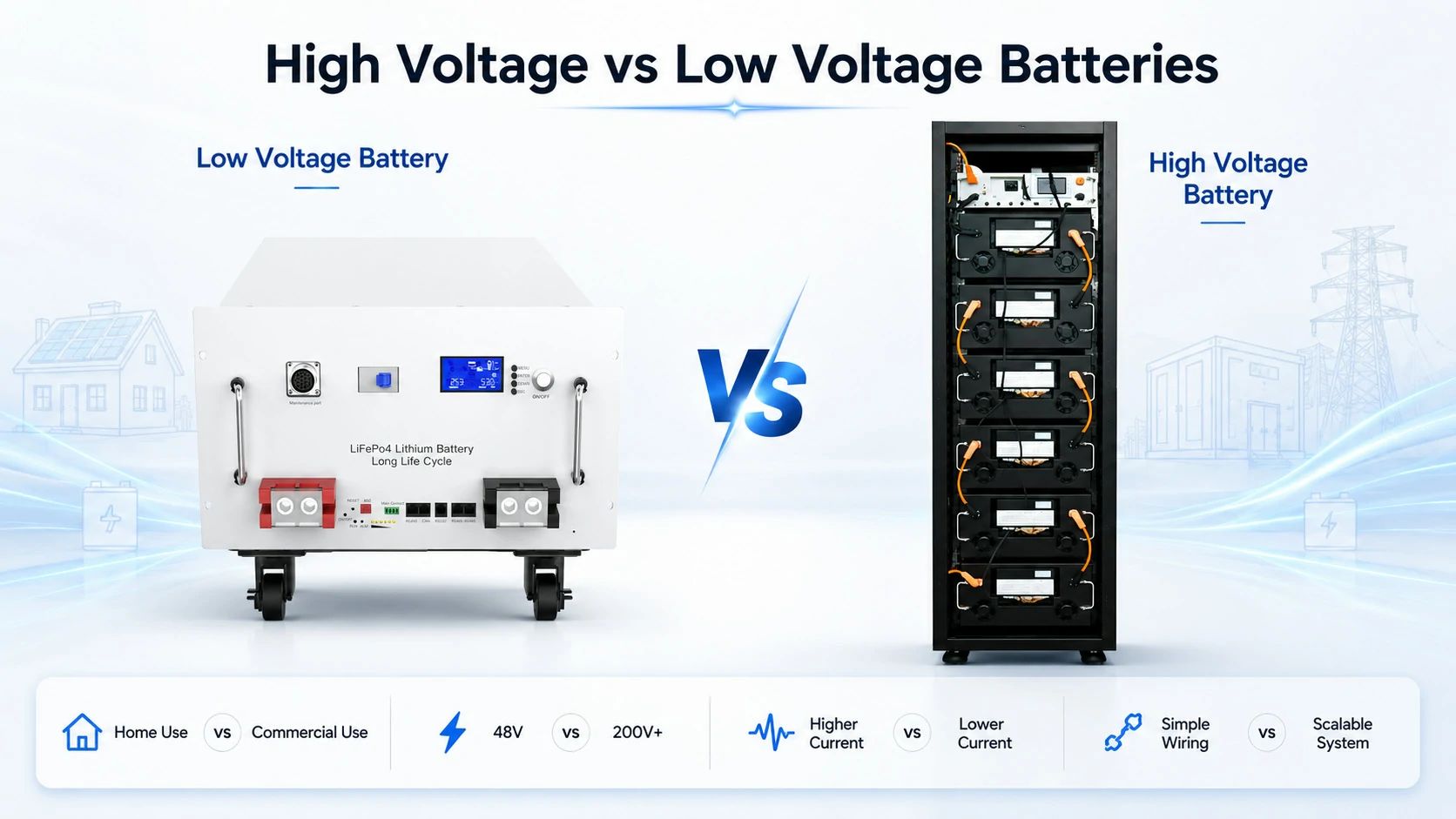
- Battery Chemistry — For many modern stationary applications, LiFePO₄ is widely used because of its cycle-life, thermal-stability and stationary-storage characteristics.
- Voltage Architecture — Choose between: Low-voltage systems, High-voltage commercial systems, Utility-scale architectures
- Cooling — Possible options include: Natural cooling, Air cooling, Liquid cooling
- Communication — Check: CAN, RS485, Modbus, BMS-to-PCS communication, EMS integration, SCADA requirements
- Project Compliance — The exact required certifications, grid codes and fire requirements depend on the destination country and installation type.
BESS For Home Use vs Grid Use: BTM And FTM
Energy storage systems are often grouped into two main categories: Behind-the-Meter (BTM) and Front-of-the-Meter (FTM).
| Feature | Behind-The-Meter (BTM) | Front-Of-The-Meter (FTM) |
|---|---|---|
| Typical Size | Small to medium (kWh to a few MWh) | Medium to very large (MWh to GWh) |
| Main User | Homeowners, businesses, facility owners | Utilities, grid operators, large energy companies |
| Main Goals | Bill savings, resilience, self-consumption | Grid stability, congestion relief, market services |
| Connection Point | On customer side of the meter | Directly to distribution or transmission network |
| Revenue Sources | Bill savings, sometimes feed-in or demand response | Ancillary services, capacity markets, energy arbitrage |
How Much Does a BESS Cost?
There is no reliable single BESS cost per kWh because system price depends on both energy capacity and power rating, as well as duration, PCS size, installation, controls, cooling, safety equipment and grid connection.
A BESS quote normally includes several cost layers:
| Cost Component | Typical Scope |
|---|---|
| Battery | Cells, modules, racks |
| BMS | Monitoring and battery protection |
| PCS | Bidirectional AC/DC conversion |
| EMS | Energy control and optimization |
| Thermal management | HVAC or liquid cooling |
| Fire/safety | Detection and protection |
| BOS | Cables, switchgear, protection |
| Transformer | Required for some projects |
| Engineering | System design and integration |
| Installation | Civil + electrical work |
| Commissioning | Testing and system validation |
| Grid connection | Utility/interconnection requirements |
As a useful benchmark, the U.S. national-laboratory commercial-storage cost model used an ex-factory lithium-ion pack assumption of about $199/kWh for a 4-hour commercial BESS, together with a separate central-inverter assumption of about $97.5/kW, in 2022 U.S. dollars.
For actual project budgeting, obtain a configuration-specific quote based on:
kW + kWh + duration + voltage + PCS + installation country + application + certification requirements.
How Do BESS Power and Duration Affect Cost?
Longer-duration BESS projects add more battery energy, while higher-power systems require larger PCS and electrical infrastructure, so two projects with the same kWh can have different costs.
Compare:
System A
100kW / 400kWh
Duration:
400 ÷ 100 = 4 hours
System B
200kW / 400kWh
Duration:
400 ÷ 200 = 2 hours
Both store 400kWh.
But System B needs twice the power capability.
That may change:
- PCS size
- C-rate
- Cabling
- Busbars
- Switchgear
- Transformer
- Cooling
- Grid connection
Therefore, asking:
“How much is a 400kWh BESS?”
does not provide enough information for an accurate quote.
A better request is:
400kWh / 200kW, 2-hour C&I BESS for peak shaving and backup.
What Are the Advantages of BESS?
The biggest advantage of BESS is flexibility: the same battery asset can shift energy in time, provide backup power, integrate renewables and support grid or site energy management.
- Higher Solar Self-Consumption — Store solar energy that would otherwise be exported or curtailed.
- Peak Shaving — Discharge the battery during high-demand periods to reduce site peak power.
- Energy Arbitrage — Charge when electricity is cheaper and discharge when prices are higher where tariff structures make this economical.
- Backup Power — Support selected loads during outages when the BESS and electrical architecture are designed for backup operation.
- Renewable Integration — Reduce the mismatch between renewable generation and consumption.
- Fast Response — Battery systems can respond quickly to control signals, making them useful for certain grid-support applications.
- Reduced Generator Runtime — In hybrid systems, BESS can reduce dependence on diesel generators and allow generators to operate more efficiently.
What Are the Disadvantages of BESS?
BESS adds flexibility but also introduces capital cost, conversion losses, degradation, safety requirements and system-integration complexity.
Important limitations include:
- Initial Investment — The project requires more than batteries; PCS, EMS, controls, installation and grid connection can represent significant cost.
- Battery Degradation — Battery capacity declines with: Cycles, Time, Temperature, High SOC operation, High C-rate, Operating conditions
- Conversion Losses — Charging and discharging both produce losses. Round-trip efficiency should therefore be included in financial and capacity calculations.
- Safety Engineering — Lithium battery systems require: Thermal monitoring, Electrical protection, Proper enclosure design, Fire-risk assessment, Approved installation practices
- Integration Complexity — A technically good battery can still create project problems if it is not correctly matched with the: PCS, EMS, Transformer, Communication system, Site loads, Grid requirements
- Permitting and Interconnection — Larger BESS projects may require substantial approvals before installation.
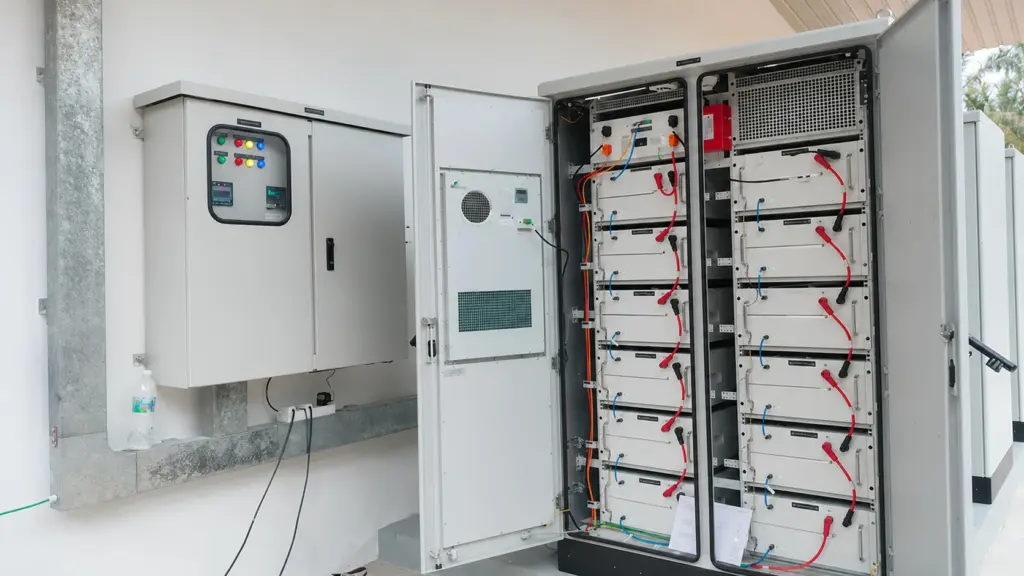
What Must Be Compatible When Installing a BESS?
BESS installation requires compatibility across the battery, BMS, PCS, EMS, grid connection, electrical protection and site safety requirements—not simply matching battery voltage.
Before commissioning, verify:
Battery and PCS
- DC voltage range
- Maximum current
- Charge/discharge power
- C-rate
- SOC limits
BMS Communication
- CAN
- RS485
- Modbus
- Protocol version
- Current/voltage commands
- Alarm exchange
PCS and Grid
- AC voltage
- Frequency
- Single/three-phase configuration
- Transformer
- Grid code
- Anti-islanding
- Power factor
- Export control
EMS
Confirm integration with:
- Battery BMS
- PCS
- Solar PV
- Grid meter
- Site loads
- Generator
- SCADA/cloud systems
Installation Environment
Check:
- Indoor/outdoor location
- IP rating
- Ambient temperature
- Altitude
- Cooling
- Ventilation
- Access clearance
- Fire separation
- Emergency access
For U.S. projects, UL 9540 is a foundational safety standard covering Energy Storage Systems and Equipment, while NFPA 855 addresses installation of stationary energy storage systems. UL 9540A is used to evaluate thermal-runaway fire propagation.
Local code adoption varies, so project compliance must be checked for the actual jurisdiction.
Types Of Batteries Used In BESS
Different battery chemistries offer different strengths.
| Battery Type | Efficiency | Energy Density | Cycle Life | Notes / Limitations | Best Use Cases |
|---|---|---|---|---|---|
| Lithium-Ion (Li-ion) | 90–95% | 150–250 Wh/kg | 3,000–10,000 cycles | • Raw material supply chain issues • Requires safety & thermal management | • Solar & wind storage • Grid support • EV charging stations • C&I backup |
| Sodium-Ion (Na-ion) | 85–90% | 100–160 Wh/kg | 2,000–4,000 cycles | • Lower energy density than Li-ion | • Stationary grid storage • Cost-sensitive BESS |
| Sodium-Sulfur (NaS) | 75–90% | 150–240 Wh/kg | 4,000–7,000 cycles | • Operates at 300–350°C • Complex thermal system | • Grid-scale long-duration storage |
| Lead-Acid | 70–85% | 30–50 Wh/kg | 500–1,500 cycles | • Heavy & bulky • Shorter cycle life | • Small UPS • Backup systems |
| Flow Batteries (Vanadium Redox) | 65–85% | < 40 Wh/kg(system-level) | 10,000–20,000+ cycles | • Lower energy density • Higher cost • Large footprint | • Grid-scale long-duration storage • Applications needing 6–12+ hour discharge daily |
What Does a Real BESS Project Look Like?
A real commercial BESS integrates battery capacity, inverter power, EMS controls and operating modes around a specific load profile rather than simply installing a large battery bank.
Avepower 640kWh Hotel Solar BESS
A hotel project in Afghanistan uses a 640kWh LiFePO4 Battery Energy Storage System designed around solar storage, peak management and power resilience.
| Project Parameter | Configuration |
|---|---|
| Application | Hotel solar + storage |
| Total Energy | 640kWh |
| Battery Chemistry | LiFePO₄ |
| Battery Configuration | 20 × 32kWh |
| Single Battery | 51.2V / 628Ah |
| Energy Management | EMS |
| Inverter | Project-matched smart inverter |
| Operating Mode | Grid-connected + off-grid |
| Functions | Solar storage, peak shaving, load shifting, backup |
The capacity calculation is:
32kWh × 20 = 640kWh
During the day, excess solar generation can charge the batteries.
During higher-demand periods, the EMS can dispatch stored energy to reduce grid consumption.
When backup is required, the battery and inverter architecture supports controlled switching according to the project configuration.
This case demonstrates why the definition of BESS includes more than batteries:
Battery + BMS + Inverter + EMS + Electrical Integration = Functional BESS
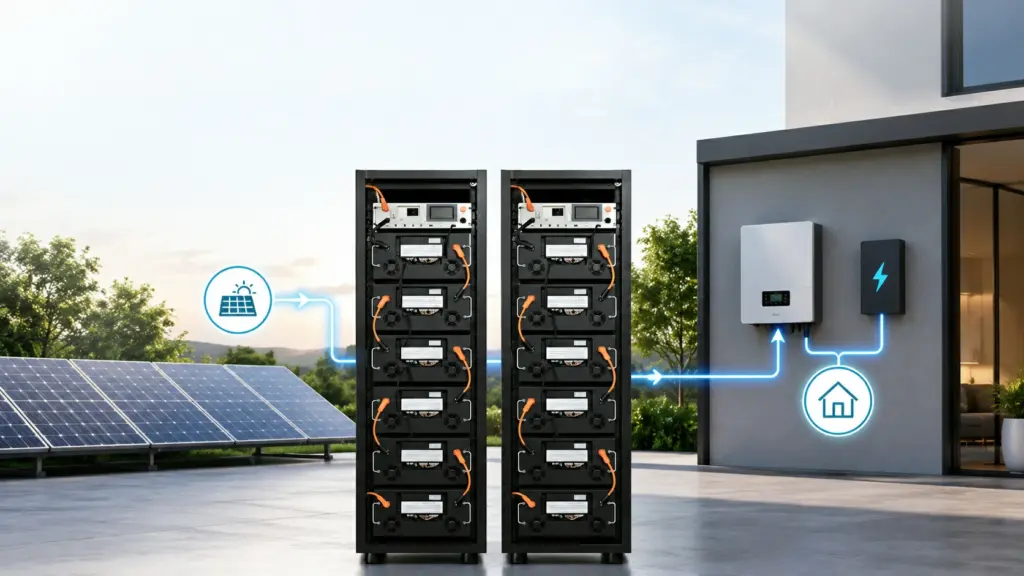
Build a Reliable Battery Energy Storage System with Avepower
Whether you need residential storage, commercial backup power or a scalable solar battery system, Avepower provides LiFePO4 BESS solutions with BMS protection, communication support and OEM/ODM customization for project buyers.
What Does a High-Voltage BESS Project Look Like?
Larger commercial BESS projects increasingly use high-voltage architectures because system voltage, current, PCS integration and control architecture must scale with project power.
Avepower’s Lithuania project uses:
- 522.496kWh total energy
- 832V DC nominal voltage
- 628Ah capacity
- 4 × 42U cabinets
- 2 battery clusters
- 13 packs per cluster
- 200A continuous current
- CAN + RS485
- BMU + BCU management
Energy verification:
20.096kWh × 13 × 2 = 522.496kWh
This example demonstrates another critical difference between a battery and a complete BESS:
The energy calculation may be straightforward, but reliable project operation also depends on BMS hierarchy, communication, protection and system-level integration.
When Does a BESS Make Sense?
A BESS makes the most sense when there is a clear operational or financial problem that stored electricity can solve.
Strong use cases include:
- Frequent power outages
- High peak-demand charges
- Large solar surplus
- Time-of-use electricity tariffs
- Grid power limitations
- Generator dependence
- Renewable curtailment
- Critical backup requirements
- Grid-services opportunities
A BESS may be less attractive when:
- Electricity is inexpensive at all hours
- Outages are extremely rare
- There is little renewable surplus
- The load profile provides few savings opportunities
- Installation costs are unusually high
- Grid rules limit potential revenue
The correct decision should therefore start with:
Load profile → project objective → economic model → BESS sizing
rather than:
Choose battery size first → search for an application later.
How Should You Specify a BESS When Requesting a Quote?
A useful BESS inquiry should include both electrical requirements and the operating goal so the supplier can size the battery, PCS and control architecture correctly.
Provide:
| Required Information | Example |
|---|---|
| Country | Germany |
| Application | Factory peak shaving |
| Maximum load | 150kW |
| Target peak reduction | 60kW |
| Required duration | 3 hours |
| Target capacity | Approx. 200kWh |
| Solar PV | 300kWp |
| Grid connection | 400V three-phase |
| Installation | Outdoor |
| Backup required | Yes |
| Existing inverter/PCS | Model if available |
| Communication | Modbus / RS485 |
| Certification | Market-specific |
| Customization | OEM / project configuration |
For project developers and EPCs, providing this information at the beginning can significantly reduce sizing errors and repeated technical confirmation.
Alternatives To BESS For Energy Storage
Battery storage is one part of a wider family of energy storage technologies.
Main Non-Battery Storage Options
| Technology | How It Stores Energy | Typical Scale | Key Strengths | Key Limits |
|---|---|---|---|---|
| Pumped Hydro | Water at height (gravitational energy) | Very large, grid-scale | Very long life, low running cost | Needs suitable geography and large sites |
| Compressed Air | Pressurized air in caverns or tanks | Large, grid-scale | Large capacity, long discharge durations | Needs suitable geology, complex systems |
| Flywheels | Spinning mass (kinetic energy) | Small to medium | Very fast response, high cycle life | Short storage duration, higher cost |
| Thermal Storage | Hot or cold materials (heat or cold) | Building to city level | Good for heating/cooling load shifting | Indirect use for electricity in many cases |
Conclusion
BESS means Battery Energy Storage System—a complete engineered system that stores electrical energy in batteries and dispatches it later according to the needs of a home, business or electrical grid.
The simplest BESS definition is:
Battery storage + BMS + PCS + EMS + protection + system integration
When evaluating a project, remember that:
- kW = power
- kWh = energy
- kWh ÷ kW = storage duration
- Battery capacity alone does not define the complete BESS
- PCS, communication and control compatibility matter
- Installed cost is not the same as battery-cell or pack $/kWh
- Application and load profile should determine system size
For commercial and high-voltage energy-storage projects, Avepower supports system configuration, LiFePO₄ battery development, BMS communication, OEM/ODM customization and project-based engineering.
Send us your required kW, kWh, application, project country and PCS/inverter information for a project-matched BESS configuration.
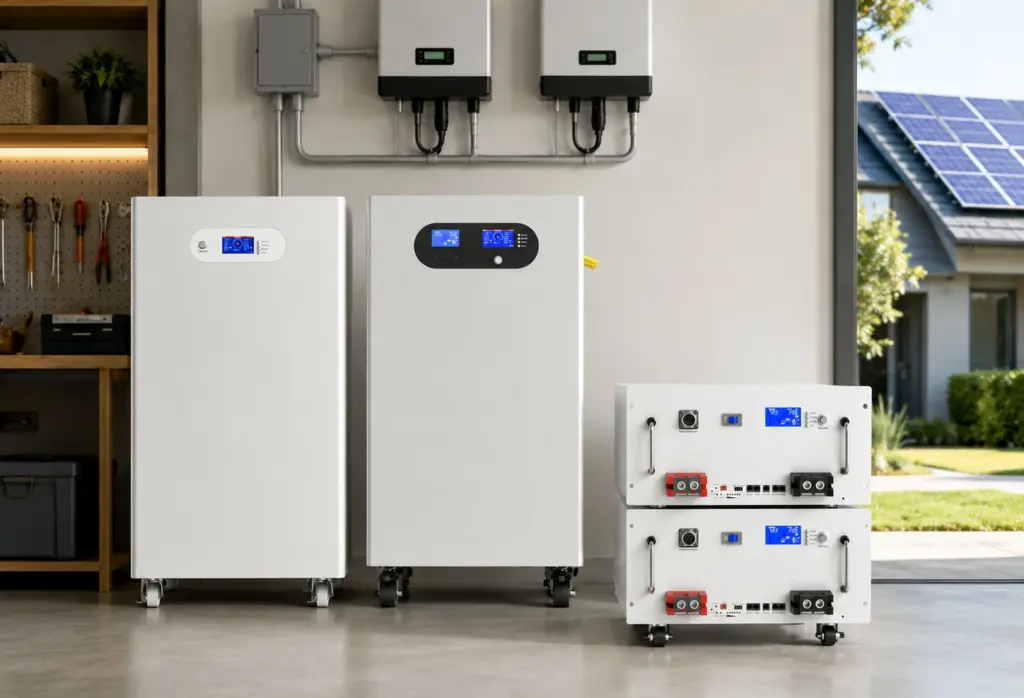
Take Control of Your Energy with Avepower!
Reliable home solar battery solutions with OEM/ODM customization and in-house manufacturing, tailored to the needs of distributors, installers, and energy partners.
FAQ
BESS means Battery Energy Storage System. It is a complete system that stores electricity in rechargeable batteries and releases it later, normally using a BMS, PCS or inverter, EMS and safety/control equipment.
In energy storage, BESS refers to the complete battery-based storage system rather than only the battery cells. It includes the equipment required to store, control, convert and safely deliver electricity.
BESS energy capacity is normally stated in kWh or MWh, while power is stated in kW or MW. For a basic duration calculation, divide stored energy by rated power: a 400kWh / 100kW system has approximately four hours of nominal storage duration.
BESS stands for Battery Energy Storage System. The acronym is commonly used across residential, commercial, industrial and utility-scale energy-storage projects.
No. A battery bank is primarily a group of connected batteries. A BESS normally adds a BMS, PCS/inverter, EMS, protection, thermal management, communication and system controls.
Not exactly. ESS means Energy Storage System and can include batteries, pumped hydro, compressed air, thermal storage and other technologies. BESS specifically refers to an ESS that uses batteries.
BESS cost depends on kW, kWh, duration, battery chemistry, PCS, cooling, safety equipment, installation, grid connection and project location. Battery pack $/kWh should not be treated as the complete installed system cost.
BESS life depends on chemistry, cycle frequency, depth of discharge, temperature, C-rate and operating strategy. Buyers should evaluate both calendar life and cycle-life assumptions for the intended duty profile.