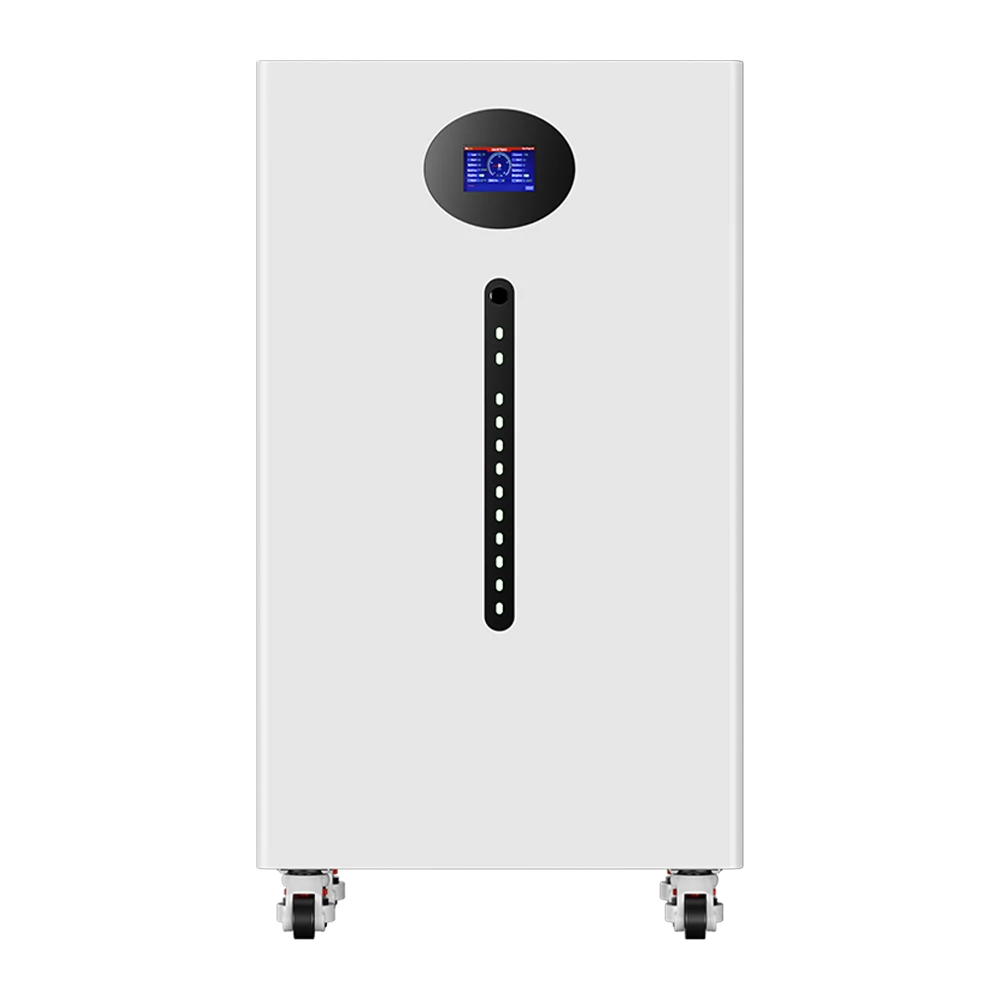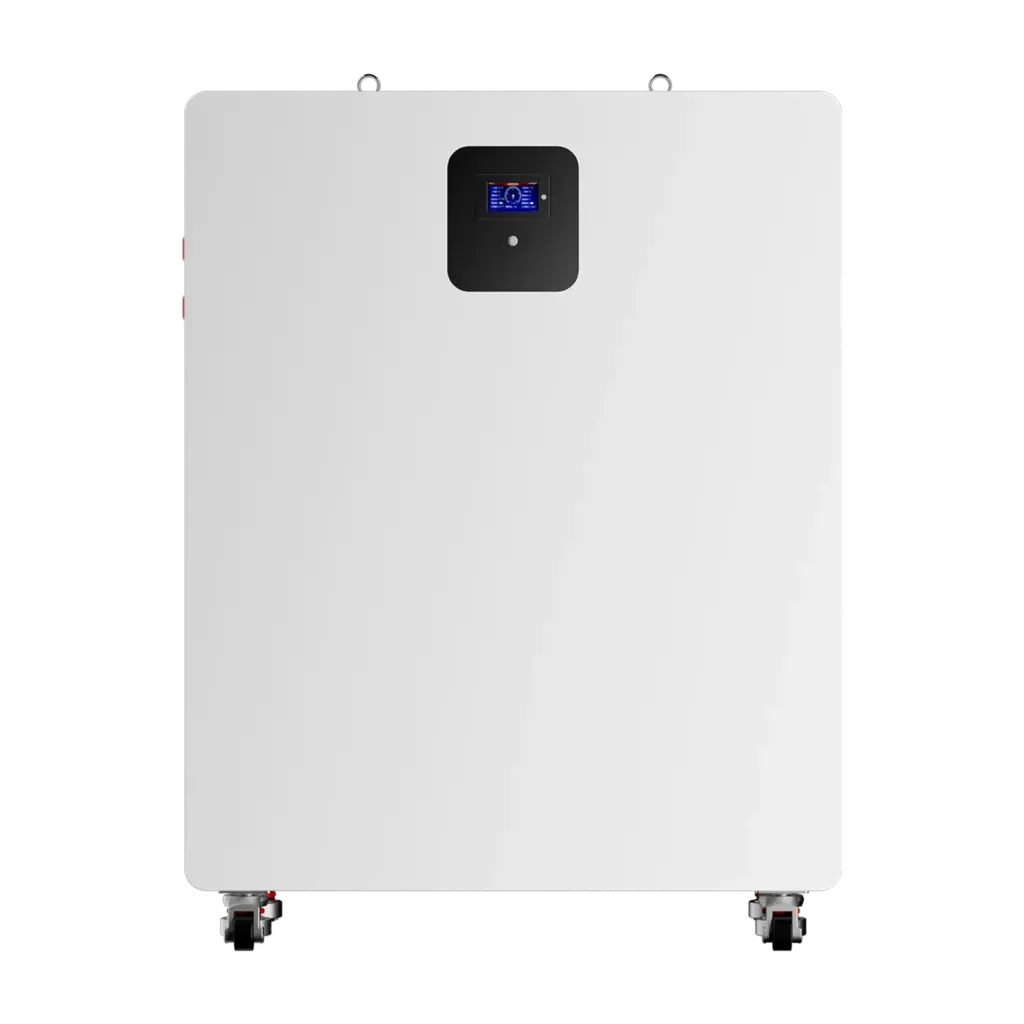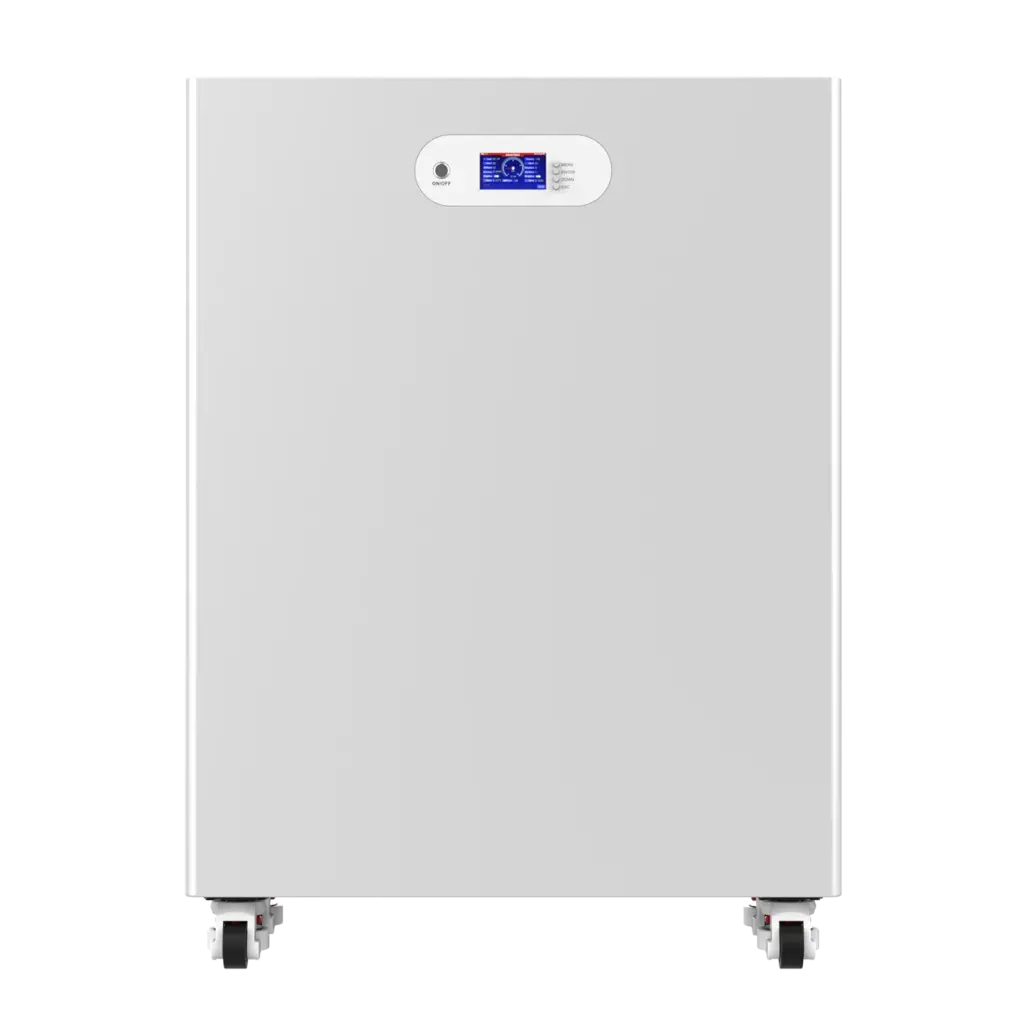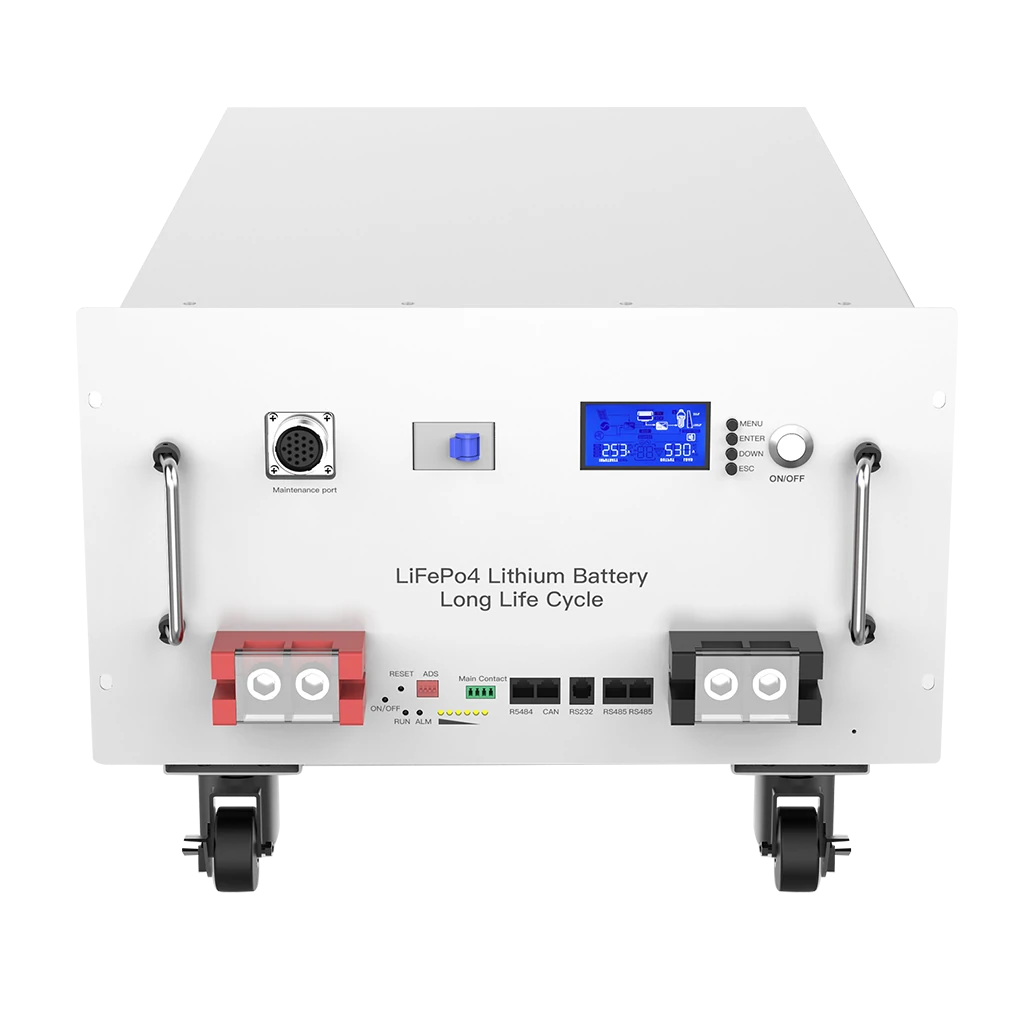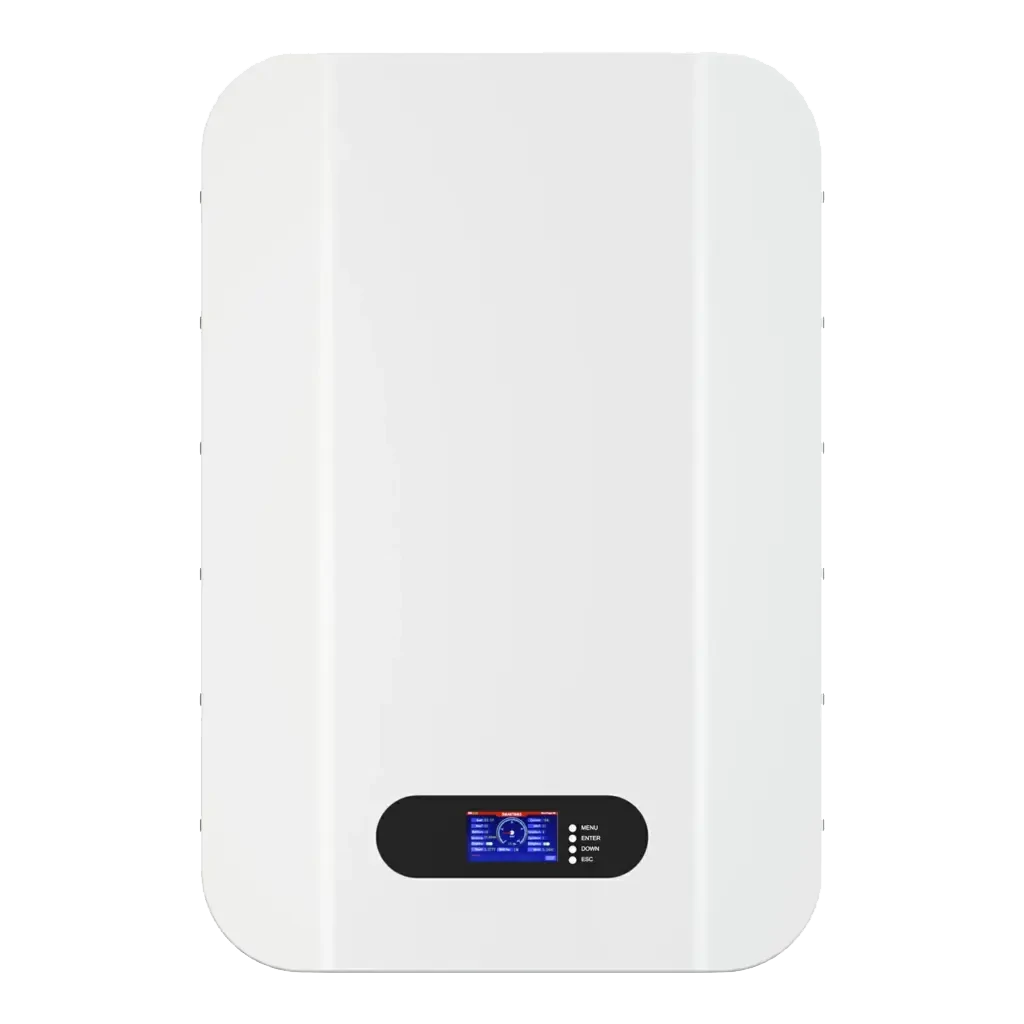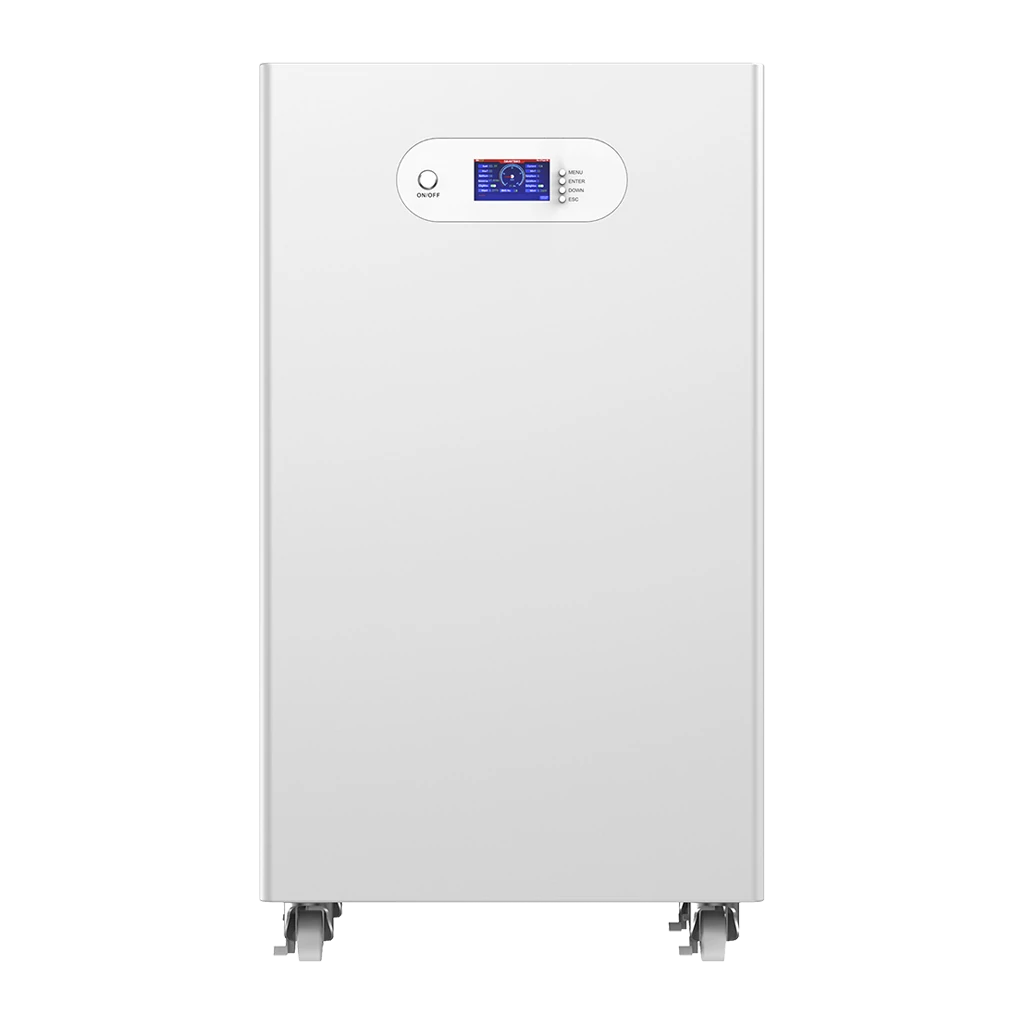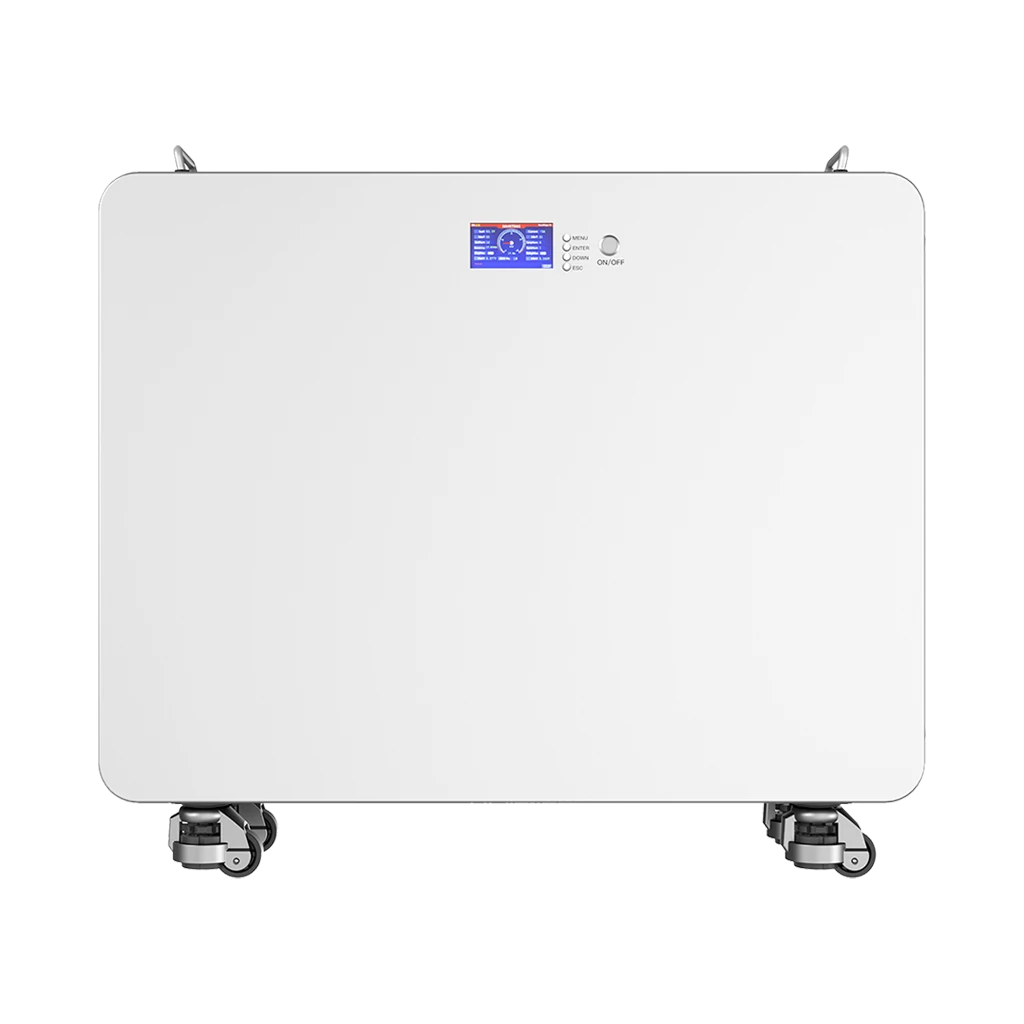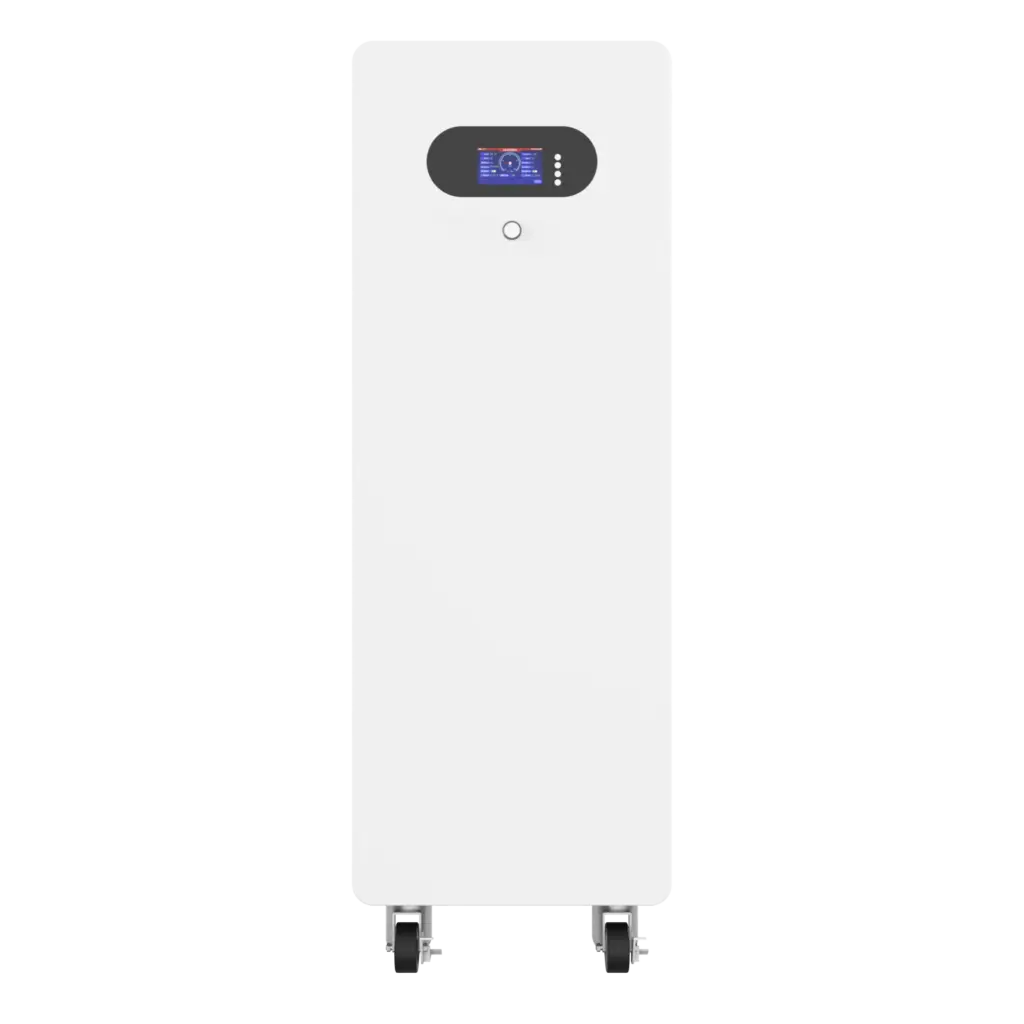

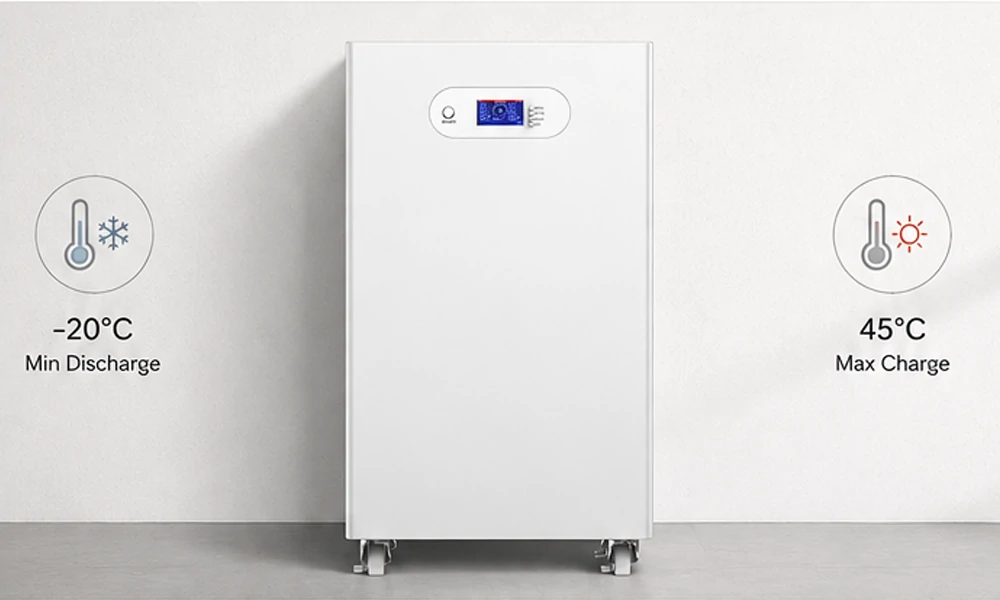
For many LiFePO₄ energy-storage batteries, a practical reference range is about 0°C to 45–55°C (32°F to 113–131°F) for charging and -20°C to 50–60°C (-4°F to 122–140°F) for discharging. However, these are not universal limits: the exact lithium battery temperature range must come from the specific cell, battery pack and BMS datasheet.
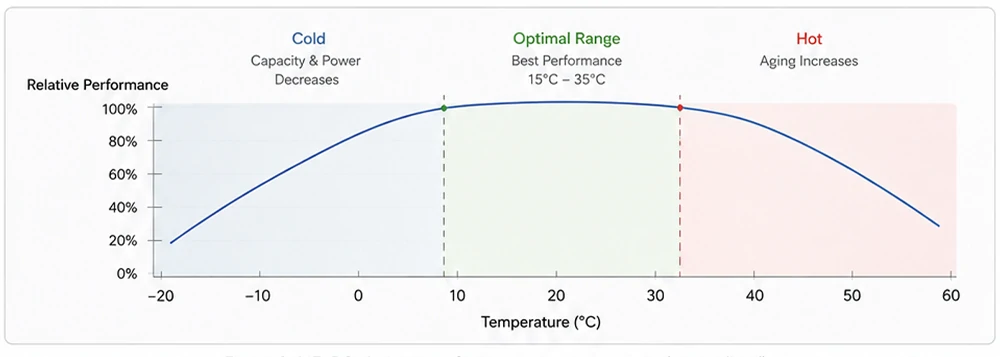
For long life rather than merely “still operating,” temperatures around 15°C to 35°C (59°F to 95°F) are generally much more favorable.
A battery may technically discharge at -20°C or 55°C while delivering less power, accepting less current or aging faster than it would around room temperature.
| Condition | Typical LiFePO₄ Reference | What It Means |
|---|---|---|
| Preferred operating region | About 15–35°C | Better balance of power, efficiency and life |
| Charging | Often 0–45°C or 0–55°C | Model-specific |
| Discharging | Often -20–50°C or -20–60°C | Wider than charge range |
| Below 0°C charging | Often restricted | Lithium-plating risk |
| Long-term storage | Usually cooler than max operating temp | Check storage duration |
| High-temperature operation | Possible within rating | Usually accelerates aging |
What Is the Normal Lithium Battery Temperature Range?
There is no single temperature range that applies to every lithium battery because charging, discharging and storage have different limits, and LiFePO₄, NMC and other lithium-ion chemistries use different cell designs and BMS strategies. Always start with the manufacturer’s model-specific specification rather than a generic internet chart.
For LiFePO₄ stationary energy storage, many products fall near:
Charging
0°C to 45–55°C
Discharging
-20°C to 50–60°C
Preferred Daily Operation
About 15°C to 35°C
for a 51.2V LiFePO4 battery platform.
Avepower stationary LiFePO₄ products commonly specify either:
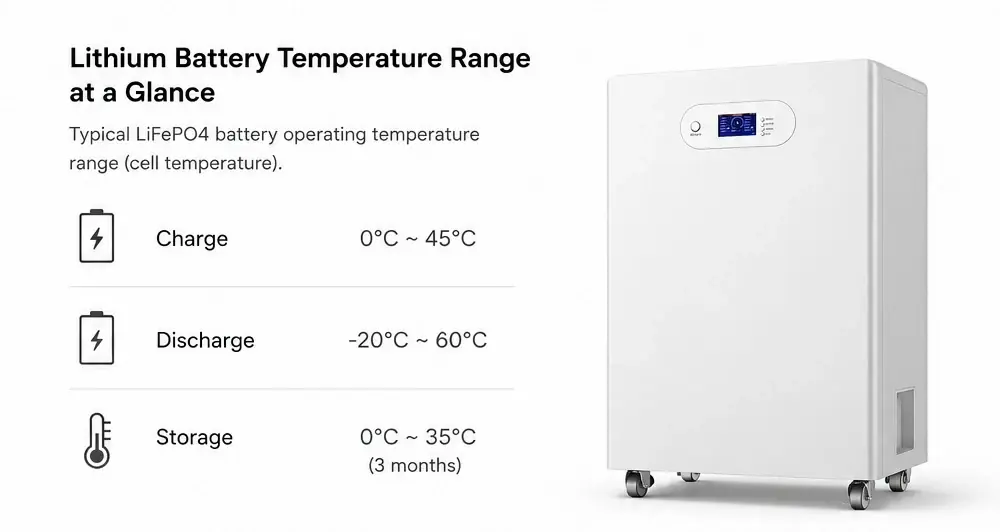
- Charge: 0°C to 45°C
- Discharge: -20°C to 60°C
or:
- Charge: 0°C to 55°C
- Discharge: -20°C to 60°C
What Is the LiFePO4 Charging Temperature Range?
Many conventional stationary LiFePO₄ batteries specify charging from approximately 0°C to 45–55°C, but some manufacturers use a more conservative minimum such as +5°C. Charging below the specified low-temperature threshold should be blocked unless the battery has a validated heating system or another manufacturer-approved low-temperature charging design.
Examples:
| Battery | Published Charge Range |
|---|---|
| Victron Lithium Smart | +5 to +50°C |
| Discover AES 51.2V | 0 to +45°C |
| Typical Avepower wall battery | 0 to +45°C |
| Selected Avepower vertical battery | 0 to +55°C |
Can a LiFePO4 Battery Be Charged Below 0°C?
Only when the exact battery is designed and approved for it. Standard LiFePO₄ packs often block charging at or near freezing, while some cold-climate batteries use self-heating systems that warm the cells before or during charging. A low-temperature charge specification should never be assumed from the chemistry name alone.
Some modern batteries contain:
- Internal heating pads
- Cell-temperature sensors
- Automatic BMS heating logic
- Reduced low-temperature charge current
- Specialized electrolyte/cell design
For example, self-heating products may be advertised with operating temperatures below 0°C because the heating system raises the cells into an acceptable charging region.
Therefore:
Standard LFP battery + -10°C ≠ charge normally
while:
Validated heated battery + -10°C ambient → warm cells → controlled charging
may be acceptable.
Always confirm the actual battery manual.
What Is the Lithium Battery Discharge Temperature Range?
Lithium batteries normally tolerate a wider temperature range while discharging than while charging. Many LiFePO₄ energy-storage batteries allow discharge down to approximately -20°C and up to 50–60°C, although available capacity, voltage and current capability can decrease substantially near the temperature limits.
A typical specification might show:
Charge: 0–45°C
but:
Discharge: -20–60°C
Avepower’s 51.2V 100Ah wall-mounted battery uses this type of operating envelope.
The wider discharge window does not mean performance is identical across that range.
At lower temperatures:
- Internal resistance increases
- Voltage sag increases
- Available capacity decreases
- Maximum current may need to fall
At high temperatures:
- Short-term power may remain strong
- Battery aging accelerates
- Thermal margin becomes smaller
Does Cold Permanently Damage a Lithium Battery?
Cold storage or discharge does not automatically cause permanent damage, but low-temperature charging can create irreversible degradation if charging occurs outside the manufacturer’s approved envelope. Cold conditions also reduce usable capacity and power, so the BMS may intentionally limit current or shut down the system.
This distinction matters:
Cold Discharge
Often allowed down to:
-20°C
with reduced performance.
Cold Charging
Often stopped around:
0°C or +5°C
unless special provisions exist.
Therefore, a winter solar system may still:
run household loads from the battery
while simultaneously:
refusing incoming solar charge
until the cells warm enough.
That behavior can be completely normal BMS protection.
What Is the Best Lithium Battery Storage Temperature?
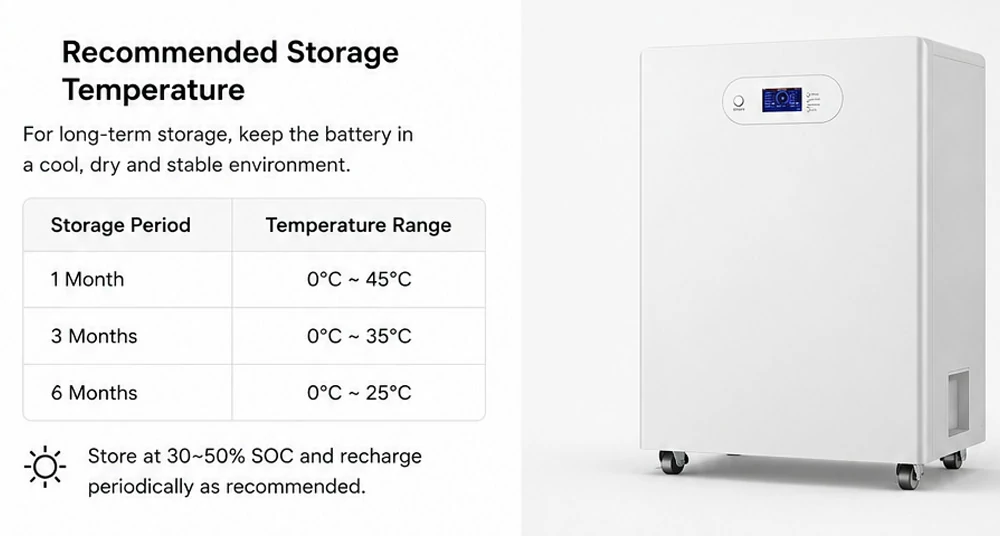
Lithium batteries should generally be stored in a cool, dry and stable environment, but long-term storage requirements are often narrower than short-term transportation or operating limits. Storage duration and state of charge matter, so one broad “storage temperature range” can be misleading.
For example, one Avepower 30kWh LiFePO₄ platform provides progressively tighter storage recommendations:
| Storage Period | Recommended Temperature |
|---|---|
| 1 month | 0–45°C |
| 3 months | 0–35°C |
| 6 months | 0–25°C |
What State of Charge Should a Lithium Battery Be Stored At?
Long-term storage normally favors a partial state of charge rather than keeping the battery permanently at 100%, but the exact storage SOC must follow the battery manufacturer. High SOC combined with high temperature can accelerate calendar aging.
Avepower’s 51.2V 100Ah wall-mounted battery recommends roughly:
30–50% SOC
for storage and periodic recharging during extended inactivity.
For warehouse and distributor management, store the battery according to:
- Specified SOC
- Specified storage temperature
- Recharge interval
- Humidity requirements
- Packaging requirements
- Inspection schedule
This is particularly important when batteries remain in inventory for several months before installation.
How Should Lithium Batteries Be Stored in a Warehouse?
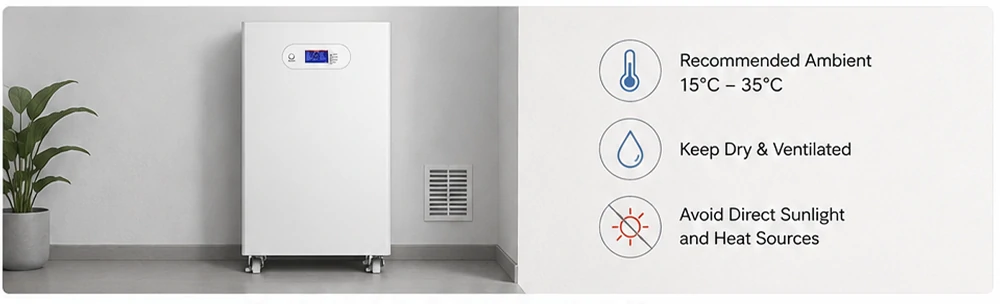
A battery warehouse should remain dry, ventilated, protected from direct sunlight and controlled against prolonged high temperatures. Distributors should also track storage duration, SOC and periodic inspection rather than treating batteries as passive products that can remain indefinitely on a pallet.
A practical storage process includes:
- Record incoming battery date.
- Verify battery SOC.
- Store away from direct sunlight and heat.
- Maintain appropriate ventilation.
- Avoid condensation and water exposure.
- Follow the model’s storage-temperature limits.
- Check SOC according to the required interval.
- Inspect for physical damage or abnormal condition.
- Maintain serial-number traceability.
- Follow transport and handling requirements.
For Avepower bulk orders, production and shipment traceability are incorporated into its quality-control workflow.
What Does a Cold-Climate Residential Battery Installation Look Like?
Avepower’s Finland 28kWh residential project illustrates one practical solution to cold-climate battery deployment: instead of exposing the battery bank directly to outdoor winter temperatures, the two LiFePO₄ batteries and Solis inverter are installed inside a protected utility room.
Project data:
| Parameter | Project |
|---|---|
| Location | Finland |
| Capacity | 28kWh |
| Battery quantity | 2 |
| Chemistry | LiFePO₄ |
| Inverter | Solis |
| Installation | Indoor utility room |
| Application | Solar storage + backup |
The installation area provides:
- Dry indoor environment
- Ventilation
- Protection from moisture
- Protection from excessive cold
- Stable flooring
- Electrical service clearance
This does not mean every Finnish battery requires exactly the same room configuration.
It demonstrates the engineering principle:
If outdoor temperature regularly falls outside the preferred battery range, control the battery environment instead of expecting the battery to tolerate extreme conditions continuously.
Real Case: How Does Liquid Cooling Control a 215kWh Battery System?
Avepower’s 215.04kWh C&I project in Germany uses liquid cooling because a high-capacity cabinet needs tighter cell-temperature consistency during repeated charging and discharging than a typical residential battery. The published project specification targets a cell temperature difference within approximately 3°C.
Project specification:
| Parameter | Value |
|---|---|
| Nominal energy | 215.04kWh |
| Rated power | 100kW |
| Chemistry | LFP |
| Nominal voltage | 768V |
| Cooling | Liquid cooling |
| Operating temperature | -20 to 50°C |
| Storage temperature | -30 to 60°C |
| Target cell temperature difference | ≤3°C |
| Protection | IP54 |
| Communication | CAN / RS485 / Ethernet |
Why control temperature difference?
Suppose one group of cells operates at:
24°C
while another group is continually at:
38°C.
Even if both values are individually inside a permitted range, the warmer cells may age faster.
Over time this can create:
temperature imbalance → aging imbalance → resistance imbalance → SOC imbalance
which makes system control more difficult.
Liquid cooling is therefore not simply about preventing overheating.
It is also about maintaining temperature uniformity across the battery system.
Air Cooling vs Liquid Cooling: Which Is Better?
Air cooling is simpler and lower-cost for many moderate-power systems, while liquid cooling can provide tighter temperature control for higher-energy and higher-power C&I batteries. Neither method is automatically better—the correct choice depends on heat generation, cabinet density, ambient conditions and lifecycle targets.
| Factor | Air Cooling | Liquid Cooling |
|---|---|---|
| Complexity | Lower | Higher |
| Initial cost | Lower | Higher |
| Maintenance | Simpler | More components |
| Thermal uniformity | Moderate | Usually better |
| High-density cabinet | More challenging | Better suited |
| Residential ESS | Common | Usually unnecessary |
| Large C&I ESS | Possible | Increasingly common |
| Control precision | Moderate | Higher |
The system designer should evaluate:
Battery energy + power + C-rate + ambient temperature + enclosure + duty cycle
For more information, please refer to our guide: “Liquid Cooling vs. Air Cooling”
How Can You Improve Lithium Battery Performance in Cold Weather?
Cold-climate battery performance is improved primarily by keeping the cells within their approved charging range and avoiding high current while the pack is cold. Heating, insulation and indoor placement are generally more effective than trying to override the BMS low-temperature protection.
Useful approaches include:
- Install the battery indoors where permitted.
- Use an insulated enclosure.
- Choose a battery with validated self-heating.
- Allow the pack to warm before charging.
- Use BMS temperature sensors.
- Reduce charge current at low temperature where specified.
- Avoid bypassing low-temperature cutoff.
- Keep the battery away from condensation.
- Confirm inverter/BMS communication.
Do not simply change a BMS cutoff from 0°C to -10°C because the installation is cold.
The cutoff exists to protect the battery chemistry.
How Can You Protect Lithium Batteries in Hot Climates?
Hot-climate protection starts with reducing heat entering the system and providing a path for internally generated heat to escape. Direct sunlight, enclosed equipment rooms and nearby inverter exhaust can push cell temperatures far above the weather forecast even when outdoor temperature appears acceptable.
Recommended design measures include:
- Avoid direct sunlight.
- Maintain ventilation clearance.
- Separate battery from heat-producing equipment.
- Use temperature-controlled rooms where needed.
- Monitor BMS temperature history.
- Reduce current if the manufacturer requires derating.
- Use active cooling for high-density systems.
- Keep filters and fans maintained.
- Check cabinet IP rating and ventilation design together.
A high IP rating is not automatically better thermally.
A tightly sealed enclosure may require engineered thermal management because natural ventilation is reduced.
What Temperature Range Do Avepower LiFePO4 Batteries Support?
Avepower LiFePO₄ battery platforms use model-specific temperature limits rather than one universal specification. Many residential systems charge from 0°C to 45°C or 55°C and discharge down to approximately -20°C, while larger C&I systems use dedicated thermal-management architectures according to project power and environment.
Examples:
| Avepower Platform | Charge | Discharge |
|---|---|---|
| 51.2V 100Ah Wall Battery | 0–45°C | -20–60°C |
| 48V 200Ah Wall Battery | 0–45°C | -20–60°C |
| 30kWh Vertical Battery | 0–55°C | -20–60°C |
| 50kWh Vertical Battery | 0–55°C | -20–60°C |
| 215kWh Liquid-Cooled C&I ESS | Integrated thermal control | System operating -20–50°C |
How Does Avepower Test Temperature-Related Battery Protection?
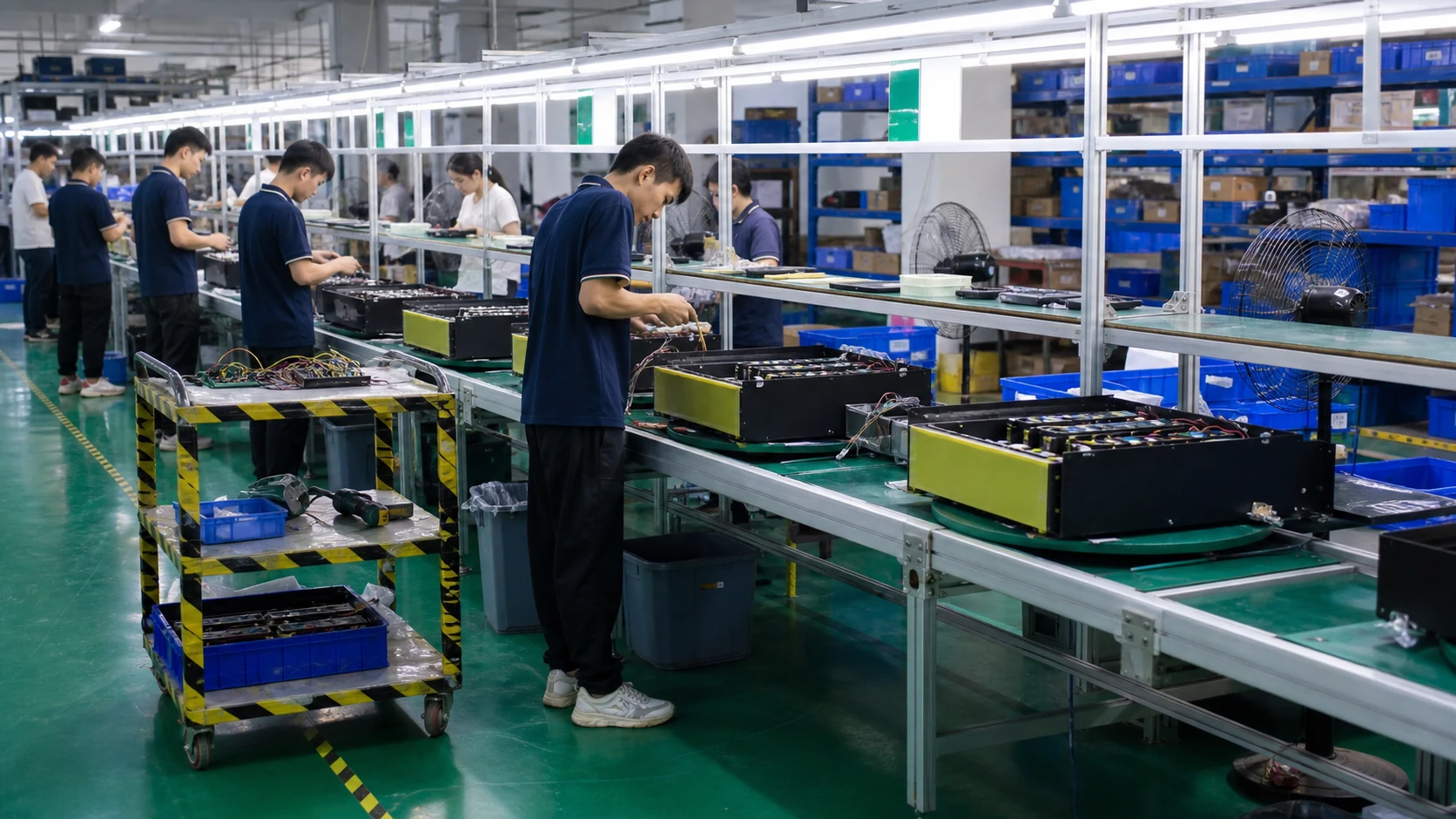
Temperature protection should be treated as part of BMS and finished-battery validation rather than only a specification-sheet number. Avepower’s QC process includes BMS verification, charge/discharge testing, electrical-safety checks, communication testing and end-of-line inspection before shipment.
Avepower’s quality process includes:
Incoming Materials → Cell Inspection → Cell Matching → Assembly → BMS → Communication → Electrical Safety → EOL Test → Final QC
The BMS stage verifies:
- Monitoring
- Protection logic
- Balancing
- Firmware
while EOL testing checks completed battery functions and charge/discharge performance.
For distributor qualification, EPC review or OEM projects, available QC and technical documents can be requested for the selected battery model. Avepower battery quality-control process
Lithium Battery Temperature Range: Quick Decision Table
| Battery Condition | Recommended Action |
|---|---|
| 20–30°C | Normal operation |
| 15–35°C | Generally favorable region |
| 5–15°C | Check charge-current derating |
| 0–5°C | Check model-specific charge minimum |
| Below 0°C | Do not charge unless approved/heated system allows it |
| -20–0°C discharge | Often possible, but expect lower capacity/power |
| Near upper operating limit | Check current derating and cooling |
| Sustained high temperature | Improve ventilation/cooling |
| Long-term storage | Use narrower model-specific storage limits |
| Large C&I ESS | Evaluate cell temperature uniformity and active cooling |
Conclusion: What Is the Safe Lithium Battery Temperature Range?
For many stationary LiFePO₄ batteries, charging is typically permitted around 0°C to 45–55°C and discharging around -20°C to 50–60°C, while a more moderate 15–35°C region is generally preferable for long-term performance. Exact limits, however, always depend on the specific battery, cells and BMS.
Match the Battery to Your Project Climate
Avepower supports solar installers, distributors, EPC contractors, project developers and OEM/ODM energy-storage partners with LiFePO₄ battery systems for different operating environments.
For project evaluation, provide:
Country / minimum and maximum site temperature / required kWh / inverter or PCS model / indoor or outdoor installation / expected charge-discharge power
Avepower’s engineering team can help evaluate the appropriate battery platform, BMS protection strategy, communication configuration and thermal-management solution before production or procurement.
Backed by a 20,000m² manufacturing facility, 15 production lines and 50+ engineering staff, Avepower supports standard battery supply as well as customized BMS, enclosure and project configurations.
Take Control of Your Energy with Avepower!
Reliable home solar battery solutions with OEM/ODM customization and in-house manufacturing, tailored to the needs of distributors, installers, and energy partners.
FAQ
Many lithium-ion batteries can operate over roughly -20°C to 60°C, but charging usually has a narrower range. For conventional LiFePO₄ energy-storage batteries, approximately 0–45/55°C charging and -20–50/60°C discharge are common reference values.
Around 15°C to 35°C is generally a favorable operating region for many lithium-ion batteries. Exact optimum conditions depend on cell chemistry, current, SOC and battery design.
Yes, many lithium batteries can discharge below 0°C, often to approximately -20°C, but available capacity and power decrease. Charging is usually more restricted and may be blocked at 0°C or +5°C.
Do not charge below the battery manufacturer’s minimum specified temperature unless the battery has an approved low-temperature charging or self-heating system. Conventional graphite-anode lithium-ion cells can experience lithium plating during inappropriate cold charging.
For many LiFePO₄ packs, discharge stops around -20°C and charging stops near 0°C or +5°C. These numbers are model-specific, so always use the battery’s BMS and datasheet limits.
Many LiFePO₄ batteries specify maximum operating temperatures around 50–60°C, but sustained operation near that limit is not ideal for lifespan. High temperature accelerates battery aging even before a safety cutoff occurs.
Not necessarily. Many manufacturers recommend partial SOC for long-term storage; Avepower’s selected wall-mounted platform recommends approximately 30–50% SOC.
Most residential batteries do not require liquid cooling, while high-density, high-power C&I storage can benefit from it. The decision depends on energy density, C-rate, cabinet design, ambient temperature and temperature-uniformity targets.
LiFePO₄ generally has stronger thermal stability than many NMC chemistries, but it still requires thermal monitoring, BMS protection and appropriate cooling. Higher thermal stability does not mean unlimited high-temperature operation.